
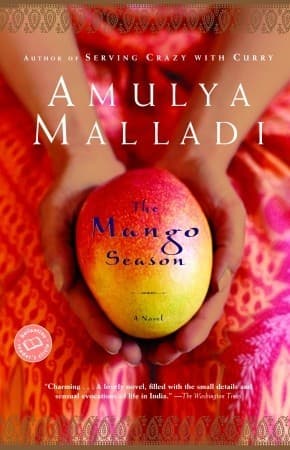
Synopsis
Covers the whole plot, including the ending.
- Difficulty
- Easy
- Pacing
- Moderate
- Mood
- Heartwarming, thoughtful, culturally rich, romantic
The Mango Season Plot Summary
Covers the whole plot, including the ending.
The Reluctant Return
Priya Rao, an Indian woman who has lived in the U.S. for seven years, returns to her family home in Bangalore, India, for the first time since leaving. She is nervous, primarily because she is secretly engaged to an American man named Nick Collins. Her parents and extended family expect her to marry an Indian man, ideally through an arranged marriage. She knows her news will be met with severe disapproval and potentially heartbreak. The difference between her American life and her family's traditional expectations is immediately clear, making her secret feel even more difficult to confess.
Family Expectations and Arranged Marriages
When she arrives, Priya is immediately back in the familiar, yet now strange, world of her extended family. Her parents, especially her mother, immediately discuss potential suitors for an arranged marriage. They show her profiles and photos, praising the 'nice Indian boys' who fit their criteria for a suitable husband. Priya feels overwhelmed by the constant marriage discussions, which highlight the wide cultural gap between her independent life in America and her family's traditions. She struggles to balance her love for her family with her desire for autonomy and her commitment to Nick.
Anand's Precedent
The family often talks about the scandal of Priya's Uncle Anand, who married for love outside their community. This decision still causes disapproval years later. This is a constant reminder to Priya of the potential backlash she will face if she reveals her engagement to Nick. Anand's story, while a story of love, also shows the family's strict adherence to tradition and their expectations for marriage. Priya sees herself in Anand's struggle, understanding the immense pressure he must have endured, and fears a similar, or even worse, rejection from her own family.
Reconnecting with Old Friends
Priya reconnects with her childhood friends, Meena and Rekha, who offer a break from her family's intense scrutiny. Meena, now married, follows a more traditional path, while Rekha, independent and career-focused, is a more modern Indian woman, though still living within societal norms. Their conversations give Priya different views on love, marriage, and tradition in India today. While they understand her problem, their advice often reflects their own experiences, some encouraging her to follow her heart, others urging caution, leaving Priya still unsure about what to do.
The Weight of Secrecy
The longer Priya stays, the heavier her secret becomes. She loves her family deeply and hates the idea of hurting them or causing a rift. She constantly makes excuses and avoids direct questions about her future, which adds to her stress. The joy of being with her family is overshadowed by the coming confrontation and the fear of their reaction. She observes the complex family relationships and duties, feeling more and more torn between her personal happiness and the desire to uphold family honor and expectations.
The Revelation of a Family Secret
Amidst her internal conflict, Priya finds an old box of letters and photographs, revealing a shocking secret about her parents' past. She discovers that her mother, as a young woman, was once in love with another man, a poet, and had intended to marry him. However, societal pressures and family duty forced her to abandon this love and enter into an arranged marriage with Priya's father. This discovery deeply affects Priya, showing her that even her seemingly traditional parents had faced similar dilemmas and made difficult sacrifices for the sake of family.
Understanding Her Mother's Sacrifice
The truth about her mother's past love story changes Priya's view of her mother. She had always seen her mother as a strict traditionalist, but now she sees a woman who once had dreams and passions similar to her own, only to suppress them for duty. This understanding brings a mix of empathy and sadness to Priya. It highlights the generational cycle of sacrifice and the impact of societal expectations on women's lives, making Priya question the true cost of following tradition versus pursuing personal happiness. She begins to see her mother not just as someone who enforces rules, but as a product of them.
Confronting Her Mother
With the knowledge of her mother's past, Priya confronts her, leading to an emotional discussion. Her mother, initially defensive, eventually talks about the pain and regret of her lost love. She explains the immense pressure she faced and the decisions she felt compelled to make for her family's honor and stability. This conversation is a turning point, breaking down barriers between mother and daughter, allowing for deeper understanding and empathy. Priya realizes the depth of her mother's own sacrifices and the complex reasons behind her strict adherence to tradition.
The Weight of Her Own Choice
The revelation of her mother's past, along with the ongoing pressure for an arranged marriage, increases Priya's internal conflict. She now understands the immense sacrifices her mother made, and this makes her own decision even more complicated. She loves Nick deeply and values their relationship, but she also feels the weight of her family's expectations and the desire not to cause them the pain her mother endured. She struggles with whether she can truly choose her own happiness without betraying her family's love and heritage, especially now that she understands the roots of their traditions.
A Difficult Confession
Gathering her courage, Priya finally tells her family about her engagement to Nick. As expected, the news is met with shock, disappointment, and anger, especially from her parents. They express their dismay at her choice of a foreigner and their feelings of betrayal, emphasizing the cultural differences and the loss of their dream for her to marry an Indian man. The confrontation is painful, filled with tears and heated words, as Priya tries to explain her love for Nick while her family struggles to accept a decision that goes against everything they believe in and have planned for her.
Seeking Acceptance
After the initial shock, Priya tries to help her family understand and, hopefully, accept Nick. She shares details about his character, his kindness, and their shared life, trying to make him more than just a 'foreigner.' She hopes that by explaining her feelings and Nick's qualities, she can slowly reduce their resistance. This period is full of tension and difficult conversations, as Priya acts as an intermediary, trying to reconcile two vastly different worlds and convince her family that her happiness with Nick is genuine and worth embracing, despite their cultural differences.
A Glimmer of Hope
While her parents remain deeply hurt, subtle shifts begin to occur within the extended family. Some relatives, particularly those who have seen the unhappiness of forced unions or who are more open-minded, show understanding or even quiet support for Priya's choice. Her mother, having thought about her own past, begins to soften, realizing the similarities between Priya's situation and her own youthful desires. This slow, tentative acceptance from some family members offers Priya a ray of hope that she might not have to choose entirely between her family and the man she loves.
The Path Forward
Priya decides to create a path that honors both her love for Nick and her Indian heritage. She understands that full acceptance from her family might take time, but she is committed to building a life where both aspects can coexist. She realizes that her identity is a blend of her traditional upbringing and her modern, independent choices. The novel concludes with Priya having made her choice, facing the consequences, and beginning the journey of bridging the cultural divide, hopeful for a future where her family can eventually embrace her and Nick, finding a new form of harmony.
Principal Figures
Priya Rao
Protagonist
A young Indian woman torn between tradition and love.
Priya is a twenty-seven-year-old Indian woman who has lived in the United States for seven years, pursuing her education and building an independent life. She is intelligent, thoughtful, and deeply affectionate towards her family, yet also fiercely independent and committed to her American fiancé, Nick. She struggles with the immense pressure to conform to traditional Indian expectations regarding marriage, especially after discovering her mother's past. Her internal conflict between duty and personal happiness forms the central tension of the novel. She is observant and reflective, often comparing her American experiences with her Indian upbringing.
Relationships: Nick Collins (fiancé); Priya's Mother (daughter); Priya's Father (daughter); Anand (Uncle) (niece); Meena (childhood friend); Rekha (childhood friend)
Nick Collins
Supporting
Priya's kind and understanding American fiancé.
Nick is Priya's American fiancé, a kind, loving, and supportive man who understands the complexities of her cultural background, though he hasn't fully experienced them firsthand. He is patient and reassuring, providing a stable anchor for Priya as she navigates her family's expectations. While he doesn't appear directly in much of the narrative, his presence is central to Priya's dilemma and her emotional journey. He represents the 'love' aspect of the 'love vs. tradition' conflict, and his unwavering support gives Priya the strength to confront her family.
Relationships: Priya Rao (fiancé)
Priya's Mother
Supporting
A traditional Indian mother who values duty and arranged marriages.
Priya's mother is a formidable figure, deeply rooted in Indian traditions and expectations. She is loving but also intensely focused on her daughter's marriage to a 'suitable' Indian boy, seeing it as both her duty and Priya's. Her insistence on arranged marriage and her initial disapproval of Nick stem from a place of deep cultural conviction and a desire for her daughter's perceived well-being and social standing. Her character undergoes a significant shift when her own hidden past is revealed, making her more empathetic and nuanced.
Relationships: Priya Rao (mother); Priya's Father (wife)
Priya's Father
Supporting
A pragmatic and somewhat softer counterpart to Priya's mother.
Priya's father is generally quieter and more pragmatic than her mother, though he shares similar traditional views regarding marriage. He is supportive of his wife's efforts to find Priya a match and is initially disappointed by Priya's engagement to Nick. While he might not express his emotions as overtly as his wife, his concern for Priya's future and adherence to family honor are equally strong. He represents the patriarchal head of the family, upholding customs even if with less vocal intensity.
Relationships: Priya Rao (father); Priya's Mother (husband)
Anand (Uncle)
Supporting
Priya's uncle who defied tradition by marrying for love.
Anand is Priya's uncle, whose 'love marriage' to a woman from another Indian state years ago caused a minor scandal within the family. His story serves as a precedent and a point of discussion for Priya's family, highlighting their rigid views on marriage. Anand himself is portrayed as a generally happy and content man, suggesting that defying tradition for love can lead to fulfillment. His past actions indirectly empower Priya to consider her own choices, even though he is not a central, active character in her immediate dilemma.
Relationships: Priya Rao (niece); Priya's Family (family member)
Meena
Supporting
Priya's childhood friend who chose a traditional path.
Meena is one of Priya's childhood friends, now married and seemingly content with her traditional life. She embodies the path that Priya's family expects her to take. While supportive of Priya, her advice often leans towards practicality and conforming to societal expectations, reflecting her own experiences. She provides a contrast to Priya's independent spirit and represents the conventional choices available to Indian women.
Rekha
Supporting
Priya's independent childhood friend.
Rekha is Priya's other childhood friend, more modern and career-focused than Meena. She is more empathetic to Priya's desire for independence and love marriage, offering a perspective that aligns more closely with Priya's own aspirations. She represents a different facet of contemporary Indian womanhood, one that balances tradition with personal ambition. Rekha's conversations with Priya provide a sounding board and a sense of solidarity for Priya's unconventional choices.
Themes & Insights
Tradition vs. Modernity
This is the central conflict of the novel, explored through Priya's struggle to reconcile her Western independence and love for Nick with her family's Indian traditions, especially regarding arranged marriage. The story highlights the tension between preserving cultural heritage and embracing individual autonomy and modern values. The clash is evident in everything from Priya's discomfort with the Indian summer heat to the family's expectations for her future, showing the difficulty of navigating a world where old customs meet contemporary desires.
“Happiness and love are not the point of her grandparents’ or her parents’ union. In her family’s rule book, duty is at the top of the list.”
Family Duty and Sacrifice
The theme of duty and sacrifice is common, particularly in the context of marriage. Priya's family believes that individual desires should be secondary to family honor and societal expectations. This theme is powerfully amplified by the revelation of Priya's mother's own past sacrifice of a love match for an arranged marriage, illustrating the generational burden of duty. The novel explores the emotional cost of these sacrifices and questions whether such duty truly leads to happiness or merely continues a cycle of unfulfilled desires.
“Now she is forced to choose between the love of her family and Nick, the love of her life.”
Love and Marriage
The novel explores different ideas of love and marriage: love marriages (like Anand's and Priya's with Nick) versus arranged marriages (Priya's parents and the family's expectation for her). It questions whether love is necessary for a successful marriage or if duty, compatibility, and family ties are more important. The story shows the deep emotional connection Priya shares with Nick as an example of romantic love, while also acknowledging the complex social and economic considerations that traditionally inform arranged marriages in India. It ultimately asks what makes a 'good' marriage.
“Not only did Anand marry a woman from another Indian state, but he also married for love.”
Identity and Belonging
Priya's journey is about her search for identity and belonging. Having lived in the U.S. for seven years, she feels like an outsider in her own homeland, struggling to reconnect with cultural norms that once felt natural. She grapples with her dual identity as an Indian woman shaped by Western independence. The conflict over her marriage choice becomes a central point for her struggle to define who she is and where she truly belongs – whether it's with her traditional family in India or with her American fiancé, or if she can create a new identity that includes both worlds.
“Everything looks dirtier than she remembered. And things that used to seem natural (a buffalo strolling down a newly laid asphalt road, for example) now feel totally chaotic.”
Plot Devices & Literary Techniques
The Mango Season
Symbolic backdrop for heat, passion, and change.
The 'mango season' serves as a powerful atmospheric and symbolic device. The intense heat of the Indian summer mirrors the emotional tension and passion within Priya's family and her own internal conflict. Mangoes themselves, ripe and bursting with flavor, symbolize abundance, fertility, and the sweetness of life, but also the messy, overwhelming aspects of India that Priya struggles to re-acclimate to. The season emphasizes a time of heightened emotions, growth, and inevitable change, reflecting Priya's pivotal moment of decision and transformation.
Hidden Letters and Photographs
A tangible link to the past that reveals a crucial family secret.
The discovery of old letters and photographs belonging to Priya's mother acts as a classic plot device to reveal a crucial family secret. These physical objects provide Priya with concrete evidence of her mother's past love and forced sacrifice, serving as a catalyst for her deeper understanding of her family's traditions and her mother's motivations. This device is essential for shifting Priya's perspective, adding complexity to her mother's character, and intensifying Priya's own internal struggle, making her decision more nuanced and empathetic.
Anand's Love Marriage
A pre-established family precedent that foreshadows Priya's dilemma.
The ongoing discussion and lingering disapproval within the family regarding Uncle Anand's past 'love marriage' serves as a powerful foreshadowing device. It clearly establishes the family's strict stance on tradition and arranged marriages, setting the stakes for Priya's own revelation. This pre-existing narrative within the family highlights the potential backlash and social consequences Priya faces, making her decision to reveal her engagement to Nick even more daunting and emphasizing the cultural divide she must bridge.
Quiz
10 questions on the plot and the characters. Each answer comes with a short explanation.
Question 1
What is the primary conflict Priya faces upon returning to India?
- She dislikes the food and climate.
- She is engaged to an American man, which goes against her family's traditions.
- She feels her parents are trying to arrange a marriage for her.
- She is overwhelmed by the cultural differences after living in the U.S.
Show answer
B. She is engaged to an American man, which goes against her family's traditions. Priya's main dilemma is that she is engaged to an American man, Nick, and knows her traditional Indian family will disapprove.
Question 2
What does the title 'The Mango Season' symbolize in the novel?
- The time of year when Priya grew up and felt happiest.
- A metaphor for the passionate and intense nature of romance.
- The abundance of fruit available during the summer.
- A symbol of the family's wealth and prosperity.
Show answer
A. The time of year when Priya grew up and felt happiest. The mango season is strongly associated with Priya's childhood memories and happiness. It also serves as a backdrop for the 'heat, passion, and controversy' that explode in the story, hinting at romance.
Question 3
Which of the following is NOT one of the typical orders given to young Indians leaving for the U.S. by their parents, according to the text?
- Don't eat any cow.
- Save your money.
- Don't go out too much.
- Pursue higher education at all costs.
Show answer
D. Pursue higher education at all costs. The text lists not eating cow, not going out too much, saving money, and not marrying a foreigner as parental directives. Pursuing higher education is implied by Priya's reason for leaving but not stated as a parental order.
Question 4
Priya's uncle Anand's marriage is mentioned. What is significant about it in the context of her family?
- He married a foreigner, setting a precedent for Priya.
- He married for love, which is considered unusual in her family.
- He married a woman from the same Indian state.
- His marriage was arranged by the grandparents.
Show answer
B. He married for love, which is considered unusual in her family. The text states that Anand married for love and also married a woman from another Indian state, both of which are points of discussion and considered unconventional within Priya's traditional family structure where duty is prioritized.
Question 5
How does Priya's perception of India change after living in the U.S. for seven years?
- She finds it much cleaner and more organized.
- She realizes her childhood memories were inaccurate.
- She finds it more chaotic and dirtier than she remembered.
- She feels a strong sense of belonging she never felt before.
Show answer
C. She finds it more chaotic and dirtier than she remembered. The text explicitly states that 'Everything looks dirtier than she remembered' and that things that seemed natural now 'feel totally chaotic' to her.
Question 6
What is the 'secret' revealed towards the end of the novel that leaves Priya stunned?
- Her parents have already arranged a marriage for her with an Indian man.
- Nick is not who he says he is.
- Her uncle Anand is planning to divorce his wife.
- The text does not reveal the specific nature of the secret, only its impact on Priya.
Show answer
D. The text does not reveal the specific nature of the secret, only its impact on Priya. The provided synopsis mentions that 'a secret is revealed that leaves her stunned and off-balance,' but it does not disclose the content of that secret. Therefore, we cannot identify it from the given text.
Question 7
The novel compares the experience of reading 'The Mango Season' to what sensory experience?
- The taste of spicy street food.
- The scent of jasmine flowers at night.
- The sweetness of sugarcane juice bought from a market cart.
- The cool breeze after a monsoon rain.
Show answer
C. The sweetness of sugarcane juice bought from a market cart. The text uses the simile: 'As sharp and intoxicating as sugarcane juice bought fresh from a market cart, The Mango Season is a delightful trip...'
Question 8
What is the core value prioritized by Priya's grandparents and parents in their own marriages?
- Love and happiness.
- Personal ambition.
- Duty.
- Financial security.
Show answer
C. Duty. The text explicitly states, 'Happiness and love are not the point of her grandparents’ or her parents’ union. In her family’s rule book, duty is at the top of the list.'
Question 9
What does Priya's return to India evoke regarding her past?
- A longing for the simplicity of her childhood.
- A sense of alienation and discomfort with familiar surroundings.
- A renewed appreciation for American culture.
- A desire to immediately reconcile with her family.
Show answer
B. A sense of alienation and discomfort with familiar surroundings. While she remembers mangoes fondly, her present experience is one of discomfort: 'she sweats as if she’s never been through an Indian summer before. Everything looks dirtier than she remembered.' This suggests alienation and a jarring contrast with her memories.
Question 10
The novel is described as a 'delightful trip into the heart and soul of both contemporary India and a woman on the edge of a profound life change.' This suggests the novel focuses on:
- A historical account of India's past.
- The political landscape of modern India.
- The personal journey of a woman navigating cultural expectations and love.
- An exploration of the economic disparities in India.
Show answer
C. The personal journey of a woman navigating cultural expectations and love. The description highlights 'contemporary India' and 'a woman on the edge of a profound life change,' pointing towards a focus on the personal and cultural challenges faced by the protagonist in her current environment.
The Mango Season FAQ
What is 'The Mango Season' by Amulya Malladi about?
'The Mango Season' is a romance novel set in modern India during the summer. It follows Priya Rao, an Indian woman living in the US, who returns home to announce her engagement to an American man, Nick Collins. Her return forces her to confront family traditions and societal expectations regarding marriage.
What are the main themes explored in 'The Mango Season'?
The novel explores themes of romance versus tradition, cultural identity, family expectations, the immigrant experience, and the complexities of navigating love across different cultural backgrounds.
How does Priya feel about returning to India?
Priya finds returning to India overwhelming. While she has nostalgic memories of mango season, she also experiences the heat and chaos of India differently after years away, feeling that things appear dirtier and more chaotic than she remembered.
What is the central conflict for Priya in the novel?
Priya's central conflict is deciding between her love for her American fiancé, Nick, and the expectations and traditions of her Indian family, who want her to marry an Indian man. A revealed secret further complicates her choice.
What role does Priya's family play in the story?
Priya's family, particularly her parents and extended relatives, represent traditional Indian values and expectations. They are concerned with arranged marriages to 'nice Indian boys' and prioritize duty over love, creating significant pressure for Priya.
How does the novel contrast love and duty?
The novel contrasts the modern idea of marrying for love, as Priya intends with Nick, against the traditional Indian emphasis on duty and arranged marriages. Her uncle Anand's marriage for love is presented as a deviation from the family's established norms.
Is 'The Mango Season' a typical romance novel?
While 'The Mango Season' features romance, it is also a story about cultural clashes, family dynamics, and personal identity. It offers a nuanced look at the challenges faced by individuals caught between different worlds.
What does the title 'The Mango Season' symbolize?
The mango season symbolizes Priya's childhood and a sense of nostalgia for her homeland. It also represents a time of ripeness, sweetness, and abundance, mirroring the passions and intense emotions that arise for Priya during her visit.
What advice do Indian parents typically give their children moving to the US, according to the book?
The book mentions that Indian parents often advise their children not to eat beef, to be frugal, to save money, and most importantly, not to marry a foreigner.
What kind of ending can readers expect from 'The Mango Season'?
The novel culminates in Priya having to make a difficult choice between her love for Nick and her family. The ending focuses on her decision and the consequences of choosing between personal happiness and familial duty.
About the author

Amulya Malladi is an Indian-American author known for her insightful fiction that often explores themes of cultural identity and personal relationships. Her notable works include "The Mango Season" and "Song of the Cuckoo Bird." Malladi's writing is recognized for its evocative prose and relatable characters, drawing from her own experiences and observations.
Similar books
- The Namesake
Jhumpa Lahiri
4.0 (234k) average on GoodreadsLiterary Fiction"The Mango Season" shares thematic similarities with Jhumpa Lahiri's "The Namesake" in its exploration of second-generation immigrant experiences and the clash between Indian heritage and Western upbringing. However, Malladi's novel focuses more intensely on the immediate pressure of arranged marriage and the protagonist's return to India, offering a more direct immersion into the traditional Indian family setting. Lahiri's work tends to be more melancholic and reflective, examining the long-term identity struggles, whereas Malladi's narrative is somewhat lighter and more focused on the immediate romantic and familial conflict during a specific, celebratory period.
- The Hunger Games
Suzanne Collins
4.3 (6.4M) average on GoodreadsFantasyIn a future where children fight to the death on live television, Katniss Everdeen volunteers for the arena, turning a death sentence into a fight for survival and a spark of rebellion.
- The Great Gatsby
F. Scott Fitzgerald
3.9 (3.8M) average on GoodreadsHistorical FictionIn the opulent Roaring Twenties, a mysterious millionaire's lavish parties hide his desperate, tragic pursuit of a lost love, exposing the emptiness within the American Dream.
- The Fault in Our Stars
John Green
4.2 (3.6M) average on GoodreadsYoung AdultA girl with a terminal illness finds her story rewritten when a charming boy with a similar past enters her life at a cancer support group, leading to a star-crossed romance.
- Pride and Prejudice
Jane Austen
4.3 (3M) average on GoodreadsHistorical FictionIn a society focused on status and money, Elizabeth Bennet navigates love and pride, challenging Mr. Darcy and social expectations to find true affection.
- Divergent
Veronica Roth
4.2 (2.9M) average on GoodreadsFantasyIn a society divided by virtues, a sixteen-year-old's difference from the norm starts a rebellion that threatens her world.





Enjoyed the summary?
A summary gives you the shape of the book. The book itself has the detail, the examples and the voice.
Find The Mango Season on AmazonAs an Amazon Associate, BookBrief earns from qualifying purchases. How we're funded