
Synopsis
Covers the whole plot, including the ending.
- Difficulty
- Hard
- Pacing
- Slow
- Mood
- Atmospheric, Disturbing, Unsettling, Experimental, Erotic
- Read it if
- You enjoy experimental, unsettling thrillers that delve into psychological manipulation, identity, and the grotesque, with a strong focus on evocative, literary prose.
- Skip it if
- You prefer straightforward narratives, clear resolutions, or are sensitive to themes of coercion, exploitation, and disturbing psychological content.
The Marbled Swarm Plot Summary
Covers the whole plot, including the ending.
The Arrival at the Chàteau
The story begins with the narrator's arrival at his ancestral chateau in the French countryside. His ailing father, a reclusive man, summoned him. The narrator feels uneasy, having been away for many years. He notices the peculiar atmosphere of the estate, the hidden passages, and the silence. His father, both revered and feared, hints at a family 'tradition' the narrator is expected to uphold. This tradition involves a cryptic language system and disturbing rituals, rooted in the family's history and the chateau's architecture. These initial observations set the novel's unsettling, mysterious tone.
The Marbled Swarm Revealed
The narrator's father introduces him to 'the marbled swarm,' a central, enigmatic part of their family's legacy. It is a complex, inherited system of language, gestures, and unspoken rules passed down through generations. This 'swarm' dictates how one perceives and interacts with the world, especially regarding the family's secret practices. The narrator struggles to understand it but knows it involves control, manipulation, and a unique way of 'scoring' human interactions. He senses a darkness and predatory nature to this system, though its exact purpose remains unclear.
The Introduction of the 'Boys'
The narrator discovers the chateau is home to young men, called 'the boys.' These young men are beautiful, passive, and their presence is a mystery. They are not servants, but their lives seem consumed by the chateau's routines and the father's demands. The narrator observes their interactions with his father, which show deference, fear, and a strange intimacy. He realizes these boys are central to the 'marbled swarm' and the family's secret practices, both participants and subjects in its web of control. Their silence and vacant expressions deepen the narrator's unease.
Exploring the Château's Secrets
Driven by curiosity and a desire to understand his inheritance, the narrator explores the chateau. He finds hidden rooms, secret passages, and concealed compartments that reveal a history of surveillance. These explorations uncover disturbing artifacts: peculiar drawings, fragmented notes in a coded language, and objects suggesting strange rituals. Each discovery deepens his sense of foreboding and reinforces that the chateau is an extension of the 'marbled swarm.' The architecture seems designed for observation and control, blurring the lines between observer and observed.
The Father's Decline and the Narrator's Succession
As his father's health declines, the pressure on the narrator to continue the family's 'game' grows. His father, through cryptic words and manipulations, pushes him to understand and accept the 'marbled swarm.' The narrator feels a hypnotic pull to follow his father, despite his repulsion. He begins to internalize the 'game's' rules, observing the boys with a new perspective, and experimenting with the control system. This transition marks his descent into the family's legacy, blurring the lines between observer and participant.
A Trip to Paris and the Outside World
Seeking a break from the chateau's oppressive atmosphere, the narrator travels to Paris. He hopes for normalcy or escape, but the city offers little comfort. Instead, he applies the 'marbled swarm's' principles to interactions with strangers, especially young men. The 'game' has begun to influence his perception of the outside world, turning ordinary encounters into potential 'scores.' He observes people through the lens of manipulation, realizing the 'swarm' is not confined to the chateau but is a state of mind he has internalized. This trip shows the pervasive nature of his inheritance.
The Narrator's Experiments with Control
Upon returning to the chateau, the narrator actively participates in the 'game.' He uses the 'marbled swarm's' principles to manipulate the boys, mirroring his father's methods. He experiments with subtle psychological tactics, observing reactions and finding satisfaction in his growing power. The boundaries between his identity and the 'swarm' dissolve as he adopts the predatory mindset of his family's legacy. These experiments are not physically violent but focus on psychological coercion and the erosion of individual will, pushing the boys into total surrender.
The Blurring of Identity
As the narrator delves deeper into the 'marbled swarm,' his identity becomes fluid. He questions his memories, motivations, and the reality of his past. The line between himself and his father, and between himself and the 'swarm's' rules, blurs. He embodies the system he initially found repellent, becoming a vessel for its continuation. This blurring is reflected in the narrative's fragmented style, mirroring the narrator's deteriorating mental state and his immersion into the family's traditions. He is no longer just playing the game; he is becoming the game.
The Ultimate Surrender
In the final stages, the narrator fully surrenders to the 'marbled swarm.' This surrender is not defeat but complete embrace and integration into the system. He achieves a perverse understanding of the 'swarm's' control mechanisms and the beauty of total submission, for himself and his 'boys.' Morality and conventional understanding dissolve, replaced by the 'swarm's' logic. The ending is ambiguous, not in events, but in the psychological state it leaves the reader with: a chilling portrait of a mind consumed by a dark, inherited legacy, finding peace in its depravity.
The Legacy Continues
The novel concludes with the implication that the 'marbled swarm' will continue, passed down to another generation. The narrator, having embraced his role, becomes the new custodian of this dark legacy. The cycle of coercion, surrender, and the 'game' continues, ensuring its survival within the chateau's isolated world. The ending offers no redemption or escape, presenting a chilling portrait of an inescapable system of control, forever linking the family to its traditions. The narrator has adopted the 'swarm' and become part of its ongoing existence.
Principal Figures
The Narrator
Protagonist
An unnamed man who inherits his family's disturbing legacy, becoming consumed by it.
The unnamed narrator is a detached, introspective man summoned back to his ancestral French château. Initially a reluctant participant, he is drawn into the enigmatic 'marbled swarm' and its rituals. He is highly observant, intelligent, and prone to philosophical rumination, but also deeply susceptible to the psychological manipulations of his father and the pervasive influence of the family's traditions. His journey is one of gradual seduction and surrender to a system he initially finds repellent. He grapples with his past, his identity, and the meaning of the 'swarm,' ultimately finding a perverse peace within its confines.
Relationships: The Father (Complex relationship of fear, reverence, and eventual succession; the father is the source of the narrator's inheritance.); The Boys (Subjects of his observation, manipulation, and eventual control within the 'marbled swarm's' rituals.)
The Father
Antagonist/Catalyst
The ailing, reclusive patriarch who initiates the narrator into the family's dark traditions.
The narrator's father is a mysterious, dying figure who embodies the 'marbled swarm' and its centuries-old legacy. He is a master manipulator, using cryptic language, subtle gestures, and the environment of the château to exert control over his son and the 'boys.' Though physically frail, his psychological power remains immense, guiding the narrator towards his predetermined role. He represents the insidious continuity of the family's perverse traditions, a living conduit for the 'swarm's' dictates. His presence, even in his decline, looms large over the entire narrative, a spectral architect of the narrator's fate.
Relationships: The Narrator (Father-son relationship defined by inheritance, manipulation, and the passing on of a dark legacy.); The Boys (Their primary controller and orchestrator of their roles within the 'marbled swarm' before the narrator takes over.)
The Boys
Supporting
Young men residing at the château, who are subjects of the family's rituals and the 'marbled swarm.'
The 'boys' are a group of young, attractive, and largely silent individuals who live at the château under the father's, and later the narrator's, control. They are passive, seemingly devoid of individual will, and their existence is entirely subsumed by the 'marbled swarm's' intricate 'game.' They serve as both objects of observation and subjects of manipulation, their bodies and minds used to fulfill the family's perverse rituals. Their lack of agency and their almost ethereal presence underscore the chilling power of the 'swarm' and the extent of the psychological coercion at play. They are the 'canvas' upon which the 'game' is enacted.
Relationships: The Narrator (Subjects of the narrator's observation, manipulation, and eventual control.); The Father (Were previously under the father's complete control and manipulation.)
Themes & Insights
The Inherited Nature of Evil/Perversion
The novel explores how destructive thought patterns and behaviors pass through generations, becoming an inescapable legacy. The 'marbled swarm' is a deeply ingrained way of perceiving and interacting with the world. The narrator's struggle and surrender show the powerful grip of inherited pathology, suggesting some destinies are set by ancestral actions. This is clear as the narrator, despite initial repulsion, continues his father's 'game,' becoming a mirror of what he feared.
“The game was never about winning or losing, but about becoming the game itself.”
Control and Surrender
A central theme is the dynamic between controlling others and complete surrender, both by the manipulated and the manipulator. The 'marbled swarm' is a system designed for total psychological control, leading its subjects to a state of willing submission. Paradoxically, the narrator's journey to becoming the controller involves his own profound surrender to the 'swarm's' logic. Scenes where the narrator manipulates the boys, and his own internal capitulation, show this interplay, blurring lines between power and submission.
“To truly control, one must first understand the beauty of being controlled.”
The Fluidity of Identity and Memory
The narrator's sense of self constantly shifts as he becomes immersed in the 'marbled swarm.' His memories are unreliable, and his identity intertwines with the 'game' and his father's legacy. The novel suggests that identity is not fixed but can be reshaped by powerful external or inherited internal forces. This is clear in the narrator's blurring memories and his inability to distinguish his own desires from the 'swarm's' dictates, becoming a vessel for its continuation.
“My past was a series of echoes, distorted by the present, or perhaps by the swarm itself.”
The Nature of Performance and Artifice
The world of the chateau and the 'marbled swarm' is full of artifice, where interactions are performances and reality is constructed. The family's rituals are a form of perverse theater, with specific 'scores' and unspoken rules. High art, old money, and haute cuisine cover the dark core of coercion. This theme shows how appearances create a compelling, yet false, reality, where genuine emotion is replaced by calculated performance. The 'boys' are performers, playing roles in the 'game' for the narrator's and his father's amusement.
“Every gesture, every silence, was a note in the symphony of the game.”
Plot Devices & Literary Techniques
The Unreliable Narrator
The narrator's subjective and deteriorating perception blurs the line between reality and delusion.
The unnamed narrator's perspective is highly subjective and increasingly unreliable as he succumbs to the 'marbled swarm.' His memories are fragmented, his interpretations are colored by his growing immersion in the family's perverse logic, and his mental state deteriorates. This device creates a constant sense of unease and ambiguity for the reader, making it difficult to discern what is objectively real and what is a product of the narrator's warped perception or the 'swarm's' influence. It forces the reader to question the reality of events and the narrator's motivations, deepening the mystery and psychological horror.
The Labyrinthine Setting (Château)
The isolated, complex château mirrors the psychological maze of the 'marbled swarm.'
The ancestral château functions as more than just a setting; it is a character in itself, a physical manifestation of the family's dark legacy and the 'marbled swarm.' Its hidden passages, secret rooms, and oppressive atmosphere create a sense of entrapment and surveillance. The intricate architecture mirrors the complex, convoluted nature of the 'swarm's' rules and the narrator's psychological journey into its depths. Its isolation reinforces the idea of a self-contained, inescapable world where conventional morality does not apply, further immersing both the characters and the reader in its perverse reality.
Cryptic Language and Symbolism
The 'marbled swarm' itself is a complex, symbolic language system that dictates the family's rituals.
The 'marbled swarm' is a central plot device, functioning as a complex, inherited system of language, gestures, and unspoken rules. It is not literally a swarm but a metaphor for a pervasive, intricate network of control and meaning. This cryptic 'language' dictates how the family members, particularly the father and narrator, interact with and manipulate the 'boys.' Its abstract nature makes it deeply unsettling, as its exact mechanisms are never fully explicit, leaving much to the reader's imagination and contributing to the pervasive sense of mystery and dread surrounding the family's practices.
The 'Game' Metaphor
Life within the château is framed as an intricate, perverse game with specific rules and 'scores.'
The concept of a 'game' is used throughout the novel to describe the family's rituals and interactions. This metaphor dehumanizes the 'boys' into mere pawns or players and reframes morally reprehensible acts as strategic moves within a structured system. It allows the characters, particularly the narrator, to detach themselves from the ethical implications of their actions, viewing them as part of a complex, inherited challenge rather than acts of cruelty. The 'game' provides a framework for the 'marbled swarm,' giving its abstract principles a tangible, albeit perverse, application within the château.
The Marbled Swarm Quotes
“The thing about secrets is that they’re like living things. They grow, they change, they fester.”
“There are some wounds that never close, no matter how much time passes, no matter how many bandages you apply.”
“Every lie is a brick in a wall you build around yourself, until you can no longer see out, or let anyone in.”
“The city, at night, was a different creature entirely. All its sharp edges softened, its hidden desires brought to the surface by the neon glow.”
“Sometimes, the most dangerous people are the ones who seem the most ordinary.”
“Memory is a treacherous thing. It can betray you, or it can save you, depending on what you choose to remember.”
“The truth, like a shard of glass, can be incredibly painful when you finally grasp it.”
“Fear has a way of twisting everything, making shadows into monsters and whispers into screams.”
“You can run from your past, but you can never truly escape it. It always catches up, eventually.”
“There's a certain kind of beauty in destruction, if you're willing to look for it.”
“The silence was heavier than any sound, a suffocating blanket that pressed down on everything.”
“Every choice you make, no matter how small, sends ripples through the fabric of your life.”
“Trust is a fragile thing, easily broken, and almost impossible to fully mend.”
“The darkness wasn't empty; it was filled with all the things you didn't want to see, didn't want to admit.”
Quiz
10 questions on the plot and the characters. Each answer comes with a short explanation.
Question 1
What is the primary physical setting for the majority of the narrator's initial investigations and daily life?
- A bustling Parisian apartment building
- A secluded villa in the French countryside
- A modern art gallery in Marseille
- A historical library in Lyon
Show answer
B. A secluded villa in the French countryside The narrator primarily lives and conducts his initial investigations from a secluded villa in the French countryside, which is central to the mystery's unfolding.
Question 2
What is 'the marbled swarm' described as in the book's synopsis?
- A rare type of insect found in the French countryside
- A complex amalgam of language passed down from father to son
- A collection of ancient, marble sculptures
- A secret society operating within the art world
Show answer
B. A complex amalgam of language passed down from father to son The synopsis explicitly states 'the marbled swarm' is 'a complex amalgam of language passed down from father to son,' making it a crucial element of the mystery.
Question 3
What kind of 'system' does the book suggest is obscured by appearances of high art, old money, and haute cuisine?
- A benevolent network of philanthropic endeavors
- An unspeakable system of coercion and surrender
- A competitive market for rare antiquities
- A sophisticated culinary apprenticeship program
Show answer
B. An unspeakable system of coercion and surrender The synopsis clearly indicates that the sophisticated facade 'obscure[s] an unspeakable system of coercion and surrender,' highlighting the dark undercurrents of the story.
Question 4
The narrator's journey takes him between which two main locations?
- London and Rome
- French countryside and Paris
- Berlin and Amsterdam
- New York and Los Angeles
Show answer
B. French countryside and Paris The synopsis explicitly states the narrator travels 'from the French countryside to Paris and back again,' charting his geographical movement.
Question 5
What is a key characteristic of the narrator's mind as described in the synopsis?
- Exceptionally clear and logical
- Preoccupied with mundane financial concerns
- Troubled and prone to internal conflict
- Focused solely on artistic creation
Show answer
C. Troubled and prone to internal conflict The synopsis mentions the mystery taking shape in 'the troubled mind of our narrator,' indicating a significant psychological component to the story.
Question 6
What kind of 'world' does Cooper ensnare the reader in, according to the description?
- A world of scientific discovery
- A world of political intrigue
- A world of appearances
- A world of natural beauty
Show answer
C. A world of appearances The text states, 'Cooper ensnares the reader in a world of appearances,' emphasizing the deceptive nature of the setting and its inhabitants.
Question 7
What makes 'the marbled swarm' the most compelling clue to the mystery's final nature?
- Its physical location within a hidden chamber
- Its direct connection to a generational linguistic construct
- Its symbolic representation of a rare artistic movement
- Its association with a particular criminal organization
Show answer
B. Its direct connection to a generational linguistic construct The synopsis describes 'the marbled swarm' as 'a complex amalgam of language passed down from father to son,' making its linguistic and generational nature key to unraveling the mystery.
Question 8
How is the narrator's pursuit of truth characterized?
- As a casual inquiry into local folklore
- As a desperate search for lost treasure
- As stalking an elusive truth
- As documenting historical architectural features
Show answer
C. As stalking an elusive truth The text states, 'And as the narrator stalks an elusive truth,' indicating a persistent and perhaps obsessive search for something difficult to grasp.
Question 9
Beyond physical locations, what other elements contribute to the mystery perpetually taking shape?
- Global economic indicators and stock market fluctuations
- Ancient astrological charts and celestial alignments
- Secret passageways, hidden rooms, and the troubled mind of the narrator
- Public political debates and social media trends
Show answer
C. Secret passageways, hidden rooms, and the troubled mind of the narrator The synopsis explicitly lists 'secret passageways, hidden rooms, and the troubled mind of our narrator' as crucial elements where the mystery unfolds, alongside physical settings.
Question 10
What is the intended effect of Dennis Cooper's unique narrative voice on the reader?
- To inform and educate about French history
- To confuse and alienate the reader with obtuse language
- To seduce the reader into the story's world
- To challenge the reader with complex philosophical arguments
Show answer
C. To seduce the reader into the story's world The synopsis concludes by stating, 'the reader will be seduced by a voice only Dennis Cooper could create,' indicating the author's intent to draw the reader into the narrative.
The Marbled Swarm FAQ
What is the central mystery the narrator is trying to solve in 'The Marbled Swarm'?
The narrator, referred to as 'the son,' is trying to decipher the meaning and purpose of 'the marbled swarm'—a cryptic, inherited language system passed down from his father. He suspects it holds the key to understanding his family's dark history and the 'unspeakable system of coercion and surrender' that seems to govern their lives and those around them.
Who is 'the father' and what is his role in the narrator's quest?
The father is the progenitor of 'the marbled swarm' and a powerful, enigmatic figure whose influence pervades the narrative even after his death. His journals, coded messages, and the very existence of the swarm are the primary clues the narrator uses to piece together the family's disturbing legacy and the nature of their hidden world.
Where does the story primarily take place, and how do these settings contribute to the atmosphere?
The story primarily unfolds between a secluded estate in the French countryside and the sophisticated, yet unsettling, urban landscape of Paris. The isolated countryside estate fosters an atmosphere of claustrophobia and hidden secrets, while Paris represents both a potential escape and a deeper entanglement in the deceptive world of high art and old money.
What is the significance of 'high art, old money, and haute cuisine' in the novel?
These elements serve as a deceptive facade, obscuring the sinister 'unspeakable system of coercion and surrender' at the heart of the family's world. They are the 'trappings' that maintain an illusion of normalcy and sophistication, distracting outsiders and victims from the underlying depravity and control. The narrator often interacts with this superficial layer.
How does the narrator's voice contribute to the novel's unique tone and mystery?
The narrator's voice is highly introspective, analytical, and often detached, yet deeply disturbed. His meticulous descriptions and intellectual approach to unraveling the mystery create a sense of unease and a constant questioning of reality, drawing the reader into his troubled mind and the elusive nature of truth.
What are some specific examples of 'the marbled swarm' in action or how it manifests?
The marbled swarm isn't a physical entity but a complex, inherited system of language and unspoken rules. It manifests through coded phrases in the father's journals, specific gestures, and an intuitive understanding shared among those initiated into the family's secrets. It dictates behaviors and maintains the 'unspeakable system' without explicit commands.
Are there any recurring symbols or motifs beyond the swarm itself that hint at the underlying system?
Yes, mirrors and reflections frequently appear, symbolizing the deceptive nature of appearances and the distorted reality the characters inhabit. Secret passageways and hidden rooms represent the concealed truths and the labyrinthine structure of the family's control. Certain types of 'performance' or 'tableau' also hint at the orchestrated nature of their lives.
What is the role of memory and unreliable narration in uncovering the truth?
Memory is highly fragmented and subjective, often influenced by trauma and the manipulative nature of the family's past. The narrator's own memories are suspect, and he frequently questions what is real versus what has been implanted or distorted. This unreliability forces the reader to constantly re-evaluate information and doubt easy conclusions.
Are there any subtle connections between the 'high art' presented and the 'unspeakable system'?
The 'high art' often mirrors the themes of control, manipulation, and the objectification of individuals that are central to the unspeakable system. Specific artworks or performances might subtly comment on or even be used as tools within the system, blurring the lines between aesthetic appreciation and complicity in darker deeds.
How does the narrator's relationship with his father, even after death, impact his psychological state?
The father's pervasive influence, through his legacy and the swarm, creates a profound psychological burden on the narrator. He is simultaneously repulsed by and compelled to understand his father's world, leading to an internal conflict that borders on obsession and identity crisis as he grapples with his own potential inheritance of the system.
What psychological defense mechanisms does the narrator employ to cope with the disturbing revelations?
The narrator often employs intellectualization, analyzing the horror rather than directly feeling it, and dissociation, detaching himself from the emotional impact of the discoveries. He also engages in extensive self-deception and rationalization, particularly regarding his own complicity or proximity to the 'unspeakable system.'
In what ways does the 'unspeakable system' exploit psychological vulnerabilities of its victims?
The system preys on desires for belonging, love, or artistic recognition, slowly manipulating individuals through subtle coercion and gaslighting. It isolates victims, eroding their sense of self and reality until they willingly surrender, becoming complicit in their own subjugation without fully understanding the extent of their entrapment.
How does the novel explore themes of inherited trauma and the cycle of abuse?
The narrative deeply explores how the father's legacy, particularly through 'the marbled swarm,' perpetuates a cycle of psychological and potentially physical abuse across generations. The narrator's struggle is fundamentally about breaking free from or succumbing to this inherited trauma, questioning whether he can escape his predetermined role.
Is 'the marbled swarm' a metaphor, or does it represent a tangible, albeit abstract, entity within the story's world?
While highly metaphorical for inherited dysfunction and systemic control, 'the marbled swarm' also functions as a tangible, albeit abstract, entity within the narrative. It's a specific, learned language system with real-world consequences, acting as a code and a set of rules that govern the characters' lives, making it both symbolic and concrete.
Does the narrator ever truly escape the influence of the swarm and his family's past, or is his fate ambiguous?
The narrator's ultimate fate regarding escape is left ambiguous. While he gains a deeper understanding of the swarm, the novel suggests that its influence is deeply ingrained. His journey is more about the process of understanding and confronting the truth than a clear-cut liberation, leaving the reader to ponder his long-term psychological freedom.
How does Cooper use the elusive nature of truth to heighten the suspense and horror?
Cooper consistently blurs the lines between reality and illusion, making the truth perpetually out of reach for both the narrator and the reader. This elusiveness creates a pervasive sense of dread and psychological horror, as the uncertainty itself becomes a source of terror, forcing constant re-evaluation and a feeling of being ensnared.
What is the implied nature of the 'unspeakable system of coercion and surrender'? Is it supernatural, criminal, or purely psychological?
The system is primarily psychological and criminal, rooted in extreme manipulation and power dynamics, rather than supernatural. It leverages inherited wealth and social standing to create a closed, cult-like environment where individuals are coerced into specific roles and behaviors, often involving hidden acts of depravity and control.
To what extent is the narrator a victim, and to what extent might he be complicit in the system he investigates?
The narrator is undeniably a victim of his inheritance and upbringing, psychologically scarred by the swarm. However, his deep dive into its mechanics, his eventual understanding, and his proximity to its operations suggest a degree of complicity, or at least an inability to fully extricate himself, making his moral standing complex and ambiguous.
About the author

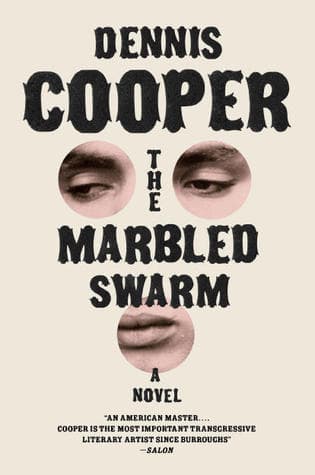
Dennis Cooper is an experimental novelist known for his transgressive and often controversial works that explore themes of youth culture, sexuality, and violence. His notable novel, "The Marbled Swarm," is characteristic of his challenging and boundary-pushing literary style. Cooper's writing is recognized for its unique voice and unflinching examination of dark subject matter.
Similar books
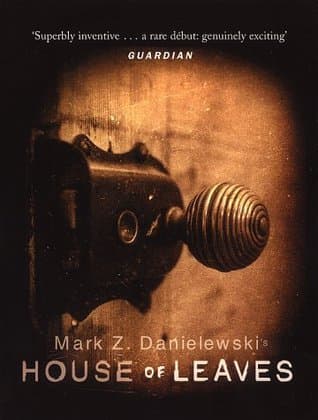
- House of Leaves
Mark Z. Danielewski
4.1 (131k) average on GoodreadsThrillerExplores experimental narrative structures, unsettling environments, and psychological horror.
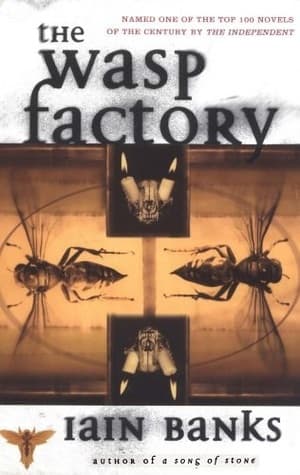
- The Wasp Factory
Iain Banks
3.8 (83k) average on GoodreadsThrillerFeatures a disturbing protagonist, a secluded setting, and explores themes of childhood cruelty and inherited madness.
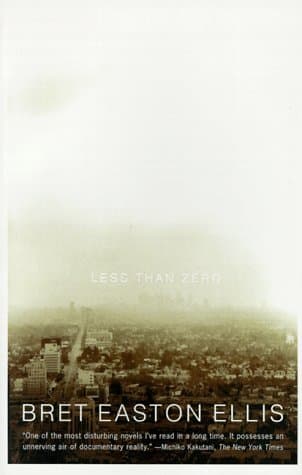
- Less Than Zero
Bret Easton Ellis
3.6 (73k) average on GoodreadsLiterary FictionCaptures a detached, unsettling atmosphere and explores the dark underbelly of privileged youth.
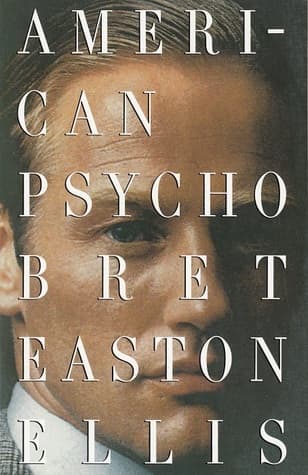
- American Psycho
Bret Easton Ellis
3.8 (242k) average on GoodreadsThrillerWhile both The Marbled Swarm and American Psycho delve into extreme psychological states and graphic violence, Cooper's novel is arguably more abstract and philosophical. Ellis's work uses hyper-realism and consumerism to critique superficiality, whereas Cooper's focus is on the inherited nature of evil, the dissolution of identity, and the grotesque as an aesthetic. Cooper's narrative is less about social critique and more about an internal, almost mythic, exploration of decay. Both are challenging, but Cooper's horror is often more existential than visceral.
- Angels & Demons
Dan Brown
3.9 (2.7M) average on GoodreadsThrillerA Harvard symbologist races through Rome's ancient sites, deciphering cryptic clues to unmask the Illuminati and stop a vengeful plot to destroy the Vatican with a stolen antimatter weapon.
- Gone Girl
Gillian Flynn
4.1 (2.3M) average on GoodreadsThrillerA wife's sudden disappearance on her fifth anniversary reveals a web of lies and psychological warfare, exposing the secrets within a seemingly perfect marriage.


Enjoyed the summary?
A summary gives you the shape of the book. The book itself has the detail, the examples and the voice.
Find The Marbled Swarm on AmazonAs an Amazon Associate, BookBrief earns from qualifying purchases. How we're funded