

Synopsis
Covers the whole plot, including the ending.
- Difficulty
- Medium
- Pacing
- Variable
- Mood
- Satirical, Absurdist, Philosophical, Romantic, Darkly Humorous
- Read it if
- You enjoy satirical fantasy that blends the mundane with the magical, philosophical depth with slapstick comedy, and a passionate love story with profound theological questions.
- Skip it if
- You prefer straightforward narratives without multiple interwoven plots, allegorical layers, or dark humor.
The Master And Margarita Plot Summary
Covers the whole plot, including the ending.
The Devil Arrives in Moscow
The novel starts at Moscow's Patriarch Ponds. Mikhail Berlioz, chairman of the literary association MASSOLIT, and the poet Ivan Bezdomny are discussing that Jesus Christ did not exist. A mysterious foreign man, who calls himself Voland, joins them. He shares a detailed story of Pontius Pilate and Jesus's crucifixion, saying he saw it. He then predicts Berlioz will soon die by decapitation by a Komsomol girl. This comes true when Berlioz slips and a tram runs him over. Ivan sees this, becomes sure Voland is the devil, and tries to chase him. Voland's strange group, including a giant black cat named Behemoth, stops him. Ivan ends up in a psychiatric hospital.
Ivan's Encounter with the Master
In the psychiatric hospital, Ivan Bezdomny tries to understand the strange events of the day. He tells his story to Dr. Stravinsky, who says he has schizophrenia and suggests a calming bath. Later, Ivan meets another patient, an unnamed man called 'the Master.' The Master says he was a brilliant writer who wrote a novel about Pontius Pilate. The literary establishment and critics rejected it, which led to his mental breakdown and the burning of his manuscript. He tells Ivan about his love for Margarita, who supported him, and how he now believes his novel is gone and his life ruined.
The Variety Theatre Incident
Voland and his group take over the Variety Theatre. Korovyov and Behemoth host a 'black magic' performance. During the show, they make money appear from nowhere, which rains on the audience. It turns into paper or labels shortly after. They also offer women new fashionable clothes, which disappear when they go outside. The audience's greed, vanity, and superficiality are exposed and made fun of. The master of ceremonies, Arkady Apollonovich Sempleyarov, tries to expose the 'trickery,' but Korovyov humiliates him publicly by revealing details of his private life. The show ends in chaos. The theatre director, Styopa Likhodeyev, was sent to Yalta by Voland earlier. The financial director, Rimsky, barely escapes a vampiric Hella.
Nikanor Ivanovich's Ordeal
Nikanor Ivanovich Bosoy, the chairman of the housing cooperative where Berlioz lived, is visited by Korovyov. Korovyov offers to rent Berlioz's apartment to Voland. Korovyov pays him with foreign currency, which Nikanor Ivanovich reluctantly takes. However, he soon finds that the rubles in his pockets become foreign currency, specifically dollars, which is illegal to have. Scared, he tries to get rid of them but is caught by agents who accuse him of currency speculation. He is arrested and, like Ivan, ends up in the psychiatric hospital, where he has strong hallucinations of Korovyov and a talking cat, making reality even more confusing for him.
Margarita's Despair and Opportunity
Margarita Nikolaevna, the Master's secret lover, lives a comfortable but unfulfilled life with her wealthy husband. Her only real happiness came from her relationship with the Master and his novel. After the Master disappeared and was thought to be mad, Margarita feels deep sadness and longing, believing he is dead or left her. One day, in a park, she meets Azazello, a member of Voland's group. He offers her a magic cream. He promises that if she uses it, she will get her youth and beauty back, and, more importantly, have a chance to see the Master again. But she must agree to host Voland's annual Spring Ball.
Margarita's Flight and Vengeance
Margarita, desperate to find the Master, puts on Azazello's cream. She instantly becomes a beautiful, naked witch, regaining her youth and gaining the ability to fly. Before the ball, she gets revenge on Latunsky, the literary critic who wrote the harshest review of the Master's novel. She flies to his apartment building, smashing windows and causing general trouble, scaring the residents. Her flight over Moscow gives her a freeing view of the city. She then meets Azazello again, who takes her to Voland's apartment, which is now a strange, ever-growing space.
The Great Ball at Satan's
Margarita arrives at Voland's apartment, where she is introduced to him and his group. She is asked to be the hostess for Voland's Great Ball, an annual event where the souls of sinners and historical figures from different times come from hell to honor Satan. Naked and wearing only a heavy chain, Margarita spends hours greeting an endless line of murderers, traitors, and other condemned souls, including famous figures like Messalina and Caligula. Despite being tired and uncomfortable, she stays calm, earning Voland's respect and fulfilling her part of the deal, all while hoping to be reunited with the Master.
Margarita's Wish and the Master's Return
After the ball, Voland offers Margarita one wish. Though she could ask for her own happiness or revenge, her selfless love for the Master wins out, and she asks for his return. To her great joy, the Master appears, looking the same but still in his hospital gown. He expresses his disbelief, still thinking his novel is gone. Voland, amused, produces the burned manuscript, saying, 'Manuscripts do not burn.' The Master and Margarita are reunited, but their happiness is brief as Voland says their earthly lives are not truly over and he has more plans for them.
Pilate and Yeshua's Final Encounter
Throughout the main story, the tale of Pontius Pilate and Yeshua Ha-Notsri (Jesus) unfolds at the same time, told by Voland and later read by Ivan and the Master. This part details Pilate's inner struggle and his unwilling choice to condemn Yeshua to death, even though he knew Yeshua was innocent and wise. Pilate is troubled by Yeshua's words and feels great guilt and loneliness for two thousand years. The Master's novel ends with Pilate's suffering on a moonlit path, always wanting to talk with Yeshua. This story contrasts with the corruption in Moscow.
The Fate of the Master and Margarita
Voland, after seeing the Master and Margarita's strong love, decides their future. He determines that they do not deserve 'light' (heaven) but deserve 'peace' (a form of eternal rest and companionship). Azazello gives them poisoned wine, killing them in their sleep. Their bodies are found, and authorities start an investigation into the strange events in Moscow. However, Voland and his group arrange their escape from Moscow, disappearing in a dramatic show of magic and destruction, leaving behind a confused and shocked city.
Journey to Eternal Peace
The Master and Margarita, now spirits, join Voland and his group on a final, mystical flight through the moonlit land. Their earthly forms are gone, and they travel toward their eternal home. During this journey, Voland frees Pilate, letting him finally walk and talk with Yeshua on the moonlit path, ending his two-thousand-year suffering. The Master and Margarita are led to a beautiful, peaceful place, a house where they can be together forever, and the Master can keep writing, free from the world's judgments. They find their ultimate comfort and calm.
Moscow's Aftermath and Ivan's Destiny
Moscow is confused after Voland's departure. The authorities struggle to explain the many disappearances, the currency changes, and the general chaos. Many characters affected by Voland's mischief are left traumatized or in mental care, trying to make sense of their experiences. Ivan Bezdomny, after leaving the asylum, stops writing poetry and becomes a professor of history and philosophy. He is forever changed by meeting Voland and the Master. Every year, on the spring full moon, he remembers the events at Patriarch Ponds and the Master's story, thinking about the mysteries he saw.
Principal Figures
Voland
Antagonist
The Devil, visiting Moscow to observe humanity's moral state
Voland is the enigmatic, sophisticated, and powerful Devil, who arrives in Moscow with his retinue to orchestrate a series of fantastical and often terrifying events. He is not purely evil but acts as a force of justice and judgment, exposing the hypocrisy, greed, and corruption of Soviet society. He is observant, witty, and possesses immense magical powers, often using illusion and psychological manipulation. His presence serves to test and reveal the true nature of humanity, particularly the Muscovites, and to bring about a form of cosmic justice for the Master and Margarita.
Relationships: Korovyov (First assistant/demon); Behemoth (Demon-cat assistant); Azazello (Fanged demon assistant); Hella (Vampire maid assistant); The Master (Observer and judge of his fate); Margarita (Hostess of his ball, judge of her fate)
The Master
Protagonist
A persecuted writer seeking recognition and peace for his novel about Pilate
The Master is a brilliant but anonymous writer, broken by the rejection of his novel about Pontius Pilate by the Soviet literary establishment. He is sensitive, passionate, and deeply devoted to his art and to Margarita. The harsh criticism and the subsequent burning of his manuscript lead him to a mental breakdown and confinement in a psychiatric hospital. He represents the suppressed artistic spirit and the individual crushed by an oppressive system. His journey is one of suffering, loss, and ultimately, a yearning for peace and validation for his work.
Relationships: Margarita (Lover and muse); Ivan Bezdomny (Fellow patient, confessor); Voland (Arbiter of his fate)
Margarita Nikolaevna
Protagonist
The Master's devoted lover, who makes a pact with the Devil to save him
Margarita is a beautiful, passionate, and fiercely loyal woman, deeply in love with the Master. Despite her comfortable life, she feels unfulfilled until she meets him. After the Master's disappearance, she is consumed by grief and a desperate longing to find him. Her unwavering love and courage lead her to make a pact with Voland, transforming into a witch to serve as the hostess of his Great Ball. She is selfless, determined, and ultimately proves her worth through her compassion, even when given the chance for personal gain. She embodies love's power to transcend earthly limitations.
Relationships: The Master (Lover and soulmate); Voland (Benefactor, host of her pact); Azazello (Voland's envoy, grants her powers)
Ivan Bezdomny
Supporting
A young, naive poet who witnesses the Devil's arrival and becomes a changed man
Ivan Bezdomny (whose surname means 'Homeless') is a young, didactic Soviet poet at the beginning of the novel, characterized by his simplistic worldview and adherence to official ideology. After his encounter with Voland and witnessing Berlioz's death, he is driven to madness and confined to a psychiatric hospital. There, he meets the Master and begins to question his previous beliefs. His journey is one of disillusionment and a gradual awakening to a more complex reality, eventually leading him to abandon poetry for a more academic life, though forever marked by his experiences.
Relationships: Mikhail Berlioz (Colleague, initial mentor); Voland (Initial antagonist, catalyst for his madness); The Master (Confessor, source of new understanding)
Pontius Pilate
Supporting
The Roman procurator of Judea, tormented by his decision to condemn Yeshua
Pontius Pilate is a central figure in the Master's novel and the story within a story. He is a powerful, yet deeply conflicted Roman official who is forced to condemn Yeshua Ha-Notsri to death, despite recognizing his innocence and wisdom. Pilate is characterized by his migraines, his fear of political repercussions, and his profound moral cowardice. His decision leads to two millennia of agonizing guilt and loneliness, yearning for a conversation he never had with Yeshua. He embodies the theme of moral responsibility and the torment of an unquiet conscience.
Relationships: Yeshua Ha-Notsri (Condemned prisoner, source of his torment); The Master (Author of his story, ultimately grants him peace)
Yeshua Ha-Notsri
Supporting
The gentle philosopher, a figure of Christ-like wisdom and forgiveness
Yeshua Ha-Notsri is the character representing Jesus in the Master's novel. He is depicted as a gentle, wise, and compassionate philosopher who preaches truth and goodness, believing that all people are good, even those who harm him. He possesses a profound understanding of human nature and forgiveness, even towards his executioners. He is a figure of pure innocence and moral clarity, contrasting sharply with the corrupt world of Moscow and the cynical Pilate. His teachings and calm demeanor deeply affect Pilate, setting in motion Pilate's two-thousand-year torment.
Relationships: Pontius Pilate (Condemner, object of his compassion); Levi Matvei (Sole disciple)
Korovyov (Fagotto)
Supporting
Voland's eccentric, long-nosed chief assistant and master of disguise
Korovyov, also known as Fagotto, is Voland's first assistant and a key member of his retinue. He is a tall, thin man with a pince-nez and a permanently crooked smile, often appearing in a checked suit. He is a master of disguise, deception, and witty, often sarcastic, commentary. Korovyov serves as Voland's primary agent in causing chaos and exposing the moral failings of Muscovites, particularly at the Variety Theatre. He is a trickster figure, enjoying the confusion and discomfort he creates, but always operating under Voland's ultimate authority.
Relationships: Voland (Master and leader); Behemoth (Fellow demon, accomplice in mischief)
Behemoth
Supporting
A giant, talking, gun-toting black cat, Voland's most bizarre assistant
Behemoth is arguably the most memorable and outlandish member of Voland's retinue: a colossal, intelligent, and anthropomorphic black cat who can walk on two legs, talk, and has a penchant for pistols and chess. He is a mischievous, gluttonous, and often absurd character, providing much of the novel's dark humor. Behemoth's antics range from drinking vodka and arguing philosophy to causing property damage and engaging in gunfights. He embodies the sheer irrationality and surrealism that Voland brings to Moscow, serving as a constant source of disruption and comic relief.
Relationships: Voland (Master and leader); Korovyov (Fellow demon, accomplice in mischief)
Azazello
Supporting
Voland's fanged, brutal enforcer who grants Margarita her powers
Azazello is another of Voland's demonic assistants, characterized by his single fang, small stature, and often cruel demeanor. He is the most physically menacing of the retinue, responsible for some of the more violent and direct supernatural interventions, such as transporting Styopa Likhodeyev to Yalta. He is also the one who gives Margarita the magical cream that transforms her into a witch, serving as the direct link between Voland's world and Margarita's desperate quest. Azazello represents the more brutal and pragmatic side of Voland's justice.
Relationships: Voland (Master and leader); Margarita (Grants her powers, guides her to Voland)
Mikhail Berlioz
Mentioned
Chairman of MASSOLIT, whose atheism leads to his predicted death
Mikhail Alexandrovich Berlioz is the chairman of the literary association MASSOLIT and a prominent atheist. He is highly educated and represents the official, dogmatic Soviet intellectual elite. His rigid adherence to rationalism and his dismissal of the supernatural are directly challenged by Voland at the novel's opening. His gruesome, predicted death by decapitation by a tram sets the stage for the supernatural chaos that engulfs Moscow and immediately establishes Voland's power and prophetic abilities.
Relationships: Ivan Bezdomny (Colleague, initial mentor); Voland (Predictor of his death)
Nikanor Ivanovich Bosoy
Supporting
Chairman of the housing committee, tormented by foreign currency
Nikanor Ivanovich Bosoy is the chairman of the housing cooperative for Berlioz's apartment building. He is a corrupt, opportunistic man who readily accepts foreign currency from Korovyov for the illegal subletting of Berlioz's apartment. His subsequent torment, wherein rubles transform into dollars in his pockets, and his eventual arrest for currency speculation, are part of Voland's broader scheme to expose the greed and hypocrisy prevalent in Moscow. He ends up in the psychiatric hospital, experiencing hallucinations, further blurring his reality.
Relationships: Korovyov (Deceiver, source of his torment)
Themes & Insights
Good vs. Evil and Moral Responsibility
The novel changes common ideas of good and evil. While Voland is the Devil, his actions often bring a kind of justice, punishing the corrupt and hypocritical, and rewarding the pure-hearted like the Master and Margarita. The story of Pontius Pilate and Yeshua directly looks at the moral duty of people to stand for truth, even when facing political pressure. Pilate's suffering for his cowardice shows the lasting effects of moral failures, while Yeshua's goodness shows the power of truth and forgiveness. The Muscovites' small faults are exposed, showing that 'evil' can appear in everyday human corruption.
“What would your good do if evil did not exist, and what would the earth look like if shadows disappeared from it?”
Truth, Art, and Censorship
The Master's persecution for his novel about Pilate directly addresses artistic freedom and censorship under a harsh government. His work, called 'anti-religious' and 'foreign,' is rejected and causes his mental breakdown. The novel supports the lasting power of truth and real art, famously stating, 'Manuscripts do not burn,' meaning true art cannot be destroyed. Voland's help ensures that the Master's work, which speaks to universal truths, is saved and recognized. This contrasts with the superficial and politically driven literature of MASSOLIT.
“Manuscripts don't burn.”
Love and Loyalty
The strong love and loyalty between the Master and Margarita are at the novel's emotional center. Margarita's deep devotion makes her make a deal with the Devil, go through the horrors of the Great Ball, and sacrifice her own immediate desires for the Master's well-being. Their love goes beyond earthly suffering and even death, becoming a powerful, saving force. This idea is compared to the more superficial relationships and selfish desires of many Muscovite characters. It shows love as a deep and changing power that can last against everything.
“Love leaped out in front of us like a murderer in an alleyway, and struck us both at once! This is how lightning strikes, this is how a Finnish knife strikes!”
The Absurdity and Hypocrisy of Soviet Society
Bulgakov makes fun of the bureaucratic, materialistic, and rigid nature of 1930s Soviet Moscow. Through Voland and his group's actions, the novel shows the widespread corruption, greed, self-importance, and small arguments of literary figures, housing officials, and ordinary citizens. The characters' focus on possessions, their willingness to accuse others, and their fear of authority are strongly ridiculed. The supernatural events remove the pretense of socialist realism and show the underlying absurdity and moral decay, demonstrating how easily order can fall into chaos when human nature is flawed.
“They're people like any other people, but they've been spoiled by the housing problem.”
Justice and Retribution
Voland's visit to Moscow is mostly about delivering a kind of cosmic justice. He punishes those who are corrupt, vain, greedy, or cowardly (Berlioz, Nikanor Ivanovich, the critics) and rewards those who are pure of heart, selfless, and truly artistic (the Master and Margarita). His justice is often dramatic, funny, and deeply unsettling, but it balances things in a world where official justice is often random or unfair. Pilate's final release after two thousand years of suffering also speaks to a form of ultimate, though long-delayed, punishment and redemption.
“Everything will be as it should be, that's how the world is built.”
Plot Devices & Literary Techniques
Story-within-a-story (The Pilate Narrative)
A parallel narrative that provides moral and thematic counterpoint
The novel features a continuous, interwoven narrative about Pontius Pilate and Yeshua Ha-Notsri, written by the Master. This 'novel within a novel' serves several crucial functions: it provides a timeless moral and philosophical counterpoint to the contemporary Moscow narrative, exploring themes of truth, cowardice, and responsibility. It also validates the Master's artistic genius, as Voland himself acknowledges its profound truth. The Pilate story acts as a key to understanding the larger themes of good and evil, and ultimately, its completion brings peace to Pilate and the Master.
Magical Realism/Fantasy Elements
The supernatural intrudes upon and exposes the mundane reality of Moscow
Bulgakov masterfully blends fantastical and supernatural elements (the Devil's arrival, talking cats, flying witches, disappearing money) into the otherwise mundane, bureaucratic reality of 1930s Moscow. This device creates a sense of the absurd and the uncanny, challenging the rationalist, atheist ideology of Soviet society. The magical elements are not merely decorative; they serve to expose the hypocrisy, greed, and moral failings of the Muscovites, acting as a catalyst for chaos and a vehicle for Voland's unique brand of justice. It highlights the irrationality lurking beneath the surface of a supposedly rational world.
Satire and Irony
Humorous ridicule used to criticize Soviet society and human foibles
Satire and irony are pervasive throughout the novel, used to mock and criticize various aspects of Soviet society, including its bureaucracy, censorship, official atheism, and the materialistic tendencies of its citizens. Voland and his retinue, through their elaborate pranks and pronouncements, expose the absurdity and hypocrisy of the Muscovite characters. The contrast between the characters' self-importance and their actual moral failings is frequently highlighted through ironic situations and dialogue. This device allows Bulgakov to deliver sharp social commentary while maintaining a darkly comedic tone.
The Devil as a Moral Arbiter
The traditional antagonist acts as a force for justice and truth
Instead of being a purely destructive force, Voland (the Devil) acts as a moral arbiter and a catalyst for justice. He punishes the corrupt, the greedy, and the dishonest, while showing compassion and a unique form of reward to the pure-hearted, like the Master and Margarita. This subversion of the traditional role of the Devil allows Bulgakov to explore complex ethical questions and to critique the prevailing social order, suggesting that true evil lies not in the supernatural, but in the everyday moral failings of humanity. Voland's actions, though often violent and chaotic, ultimately serve a higher, if unconventional, purpose.
The Master And Margarita Quotes
“Manuscripts don't burn.”
“Cowardice is the most terrible of vices.”
“Everything will be correct, the world is built on that.”
“What would your good do if evil did not exist, and what would the earth look like if shadows disappeared from it?”
“For some reason, people always imagine that the darker the forces, the more primitive they are.”
“You spoke as if you denied the existence of shadows or evil, but think: where would your good be if there were no evil?”
“He did not deserve light, he deserved peace.”
“Never talk to strangers.”
“There are no evil people, there are only unhappy people.”
“The most important thing is to be honest with yourself.”
“Every department has a right to its own opinion. But in the end, it must be correct.”
“The apartment house at Sadovaya, 302-bis, was so famous because of its extraordinary inhabitants.”
“You are a writer, aren't you? So you should know that everything is possible in the world.”
“One must agree that it is not pleasant to live in a world where everything is determined by chance.”
Quiz
10 questions on the plot and the characters. Each answer comes with a short explanation.
Question 1
What is the name of the devil who comes to Moscow?
- Behemoth
- Woland
- Koroviev
- Azazello
Show answer
B. Woland Woland is the name the devil uses when he appears in Moscow, initiating the chaos and supernatural events.
Question 2
What is the most distinctive characteristic of Woland's feline accomplice?
- It can fly and turn invisible.
- It speaks, walks on two legs, and carries a gun.
- It has glowing red eyes and can hypnotize people.
- It can shapeshift into any human form.
Show answer
B. It speaks, walks on two legs, and carries a gun. Behemoth, the demonic tomcat, is famously depicted as speaking, walking upright, and wielding a gun, making him one of the most memorable characters.
Question 3
What profession does Margarita's lover, the Master, hold?
- A musician
- A poet
- A historian
- A writer
Show answer
D. A writer The Master is a writer who has authored a novel about Pontius Pilate and Jesus, which becomes a central element of the story.
Question 4
What is the initial reaction of the Moscow literary elite to Woland's appearance and claims?
- They immediately recognize him as the devil and flee.
- They dismiss him as a madman or a foreign agent.
- They try to recruit him into their literary circle.
- They are fascinated and try to learn his magic.
Show answer
B. They dismiss him as a madman or a foreign agent. Many characters, particularly the atheistic literary figures, initially dismiss Woland as insane or a charlatan, unable to comprehend the supernatural reality he represents.
Question 5
What does Margarita do to try and save the Master after he vanishes?
- She reports his disappearance to the police.
- She searches the city relentlessly on her own.
- She makes a bargain with the devil and uses black magic.
- She consults with other writers to find him.
Show answer
C. She makes a bargain with the devil and uses black magic. Driven by love, Margarita makes a pact with Woland, becoming a witch and flying over Moscow, eventually hosting the Devil's Great Ball.
Question 6
Which historical figure's story is interwoven throughout the novel, often presented as chapters from the Master's manuscript?
- Ivan the Terrible
- Pontius Pilate
- Rasputin
- Julius Caesar
Show answer
B. Pontius Pilate The Master's novel details the story of Pontius Pilate and his encounter with Yeshua Ha-Notsri (Jesus), offering a parallel narrative that explores themes of truth, cowardice, and power.
Question 7
What is the primary theme explored through Woland's actions in Moscow?
- The triumph of good over evil.
- The corruption and hypocrisy of human nature, particularly under an oppressive regime.
- The beauty of artistic creation and its reception.
- The importance of faith in a secular society.
Show answer
B. The corruption and hypocrisy of human nature, particularly under an oppressive regime. Woland and his retinue expose the greed, vanity, corruption, and cowardice of Soviet Moscow's inhabitants, acting as a force that reveals rather than causes these human failings.
Question 8
What happens to the Master's manuscript that is a crucial plot point?
- It is stolen by a rival writer.
- He burns it in despair, but it is later restored.
- It is published to great acclaim, but he receives no credit.
- It is confiscated by the authorities and never seen again.
Show answer
B. He burns it in despair, but it is later restored. The Master burns his manuscript out of frustration and rejection, but Woland famously declares, 'Manuscripts don't burn,' and it is miraculously restored to him through Woland's power.
Question 9
At the Devil's Great Ball, what is Margarita's role?
- She is a guest who observes the proceedings.
- She is the grand hostess, greeting and enduring the spirits of the damned.
- She performs a magical act for the guests.
- She attempts to escape with her lover during the chaos.
Show answer
B. She is the grand hostess, greeting and enduring the spirits of the damned. As part of her bargain, Margarita becomes the naked hostess of Woland's annual spring ball, greeting a parade of historical villains and the damned, a physically and emotionally demanding role.
Question 10
What is the ultimate fate of the Master and Margarita?
- They are separated forever, one returning to Moscow, the other to the afterlife.
- They achieve peace and eternal rest in a secluded, eternal dwelling provided by Woland.
- They are returned to Moscow to live normal lives, with no memory of the events.
- They are granted immortality and join Woland's retinue.
Show answer
B. They achieve peace and eternal rest in a secluded, eternal dwelling provided by Woland. Woland, at the behest of Yeshua, grants the Master and Margarita 'peace' rather than light. They are taken to a quiet, eternal home where the Master can finish his novel and they can be together, free from earthly suffering.
The Master And Margarita FAQ
What is "The Master and Margarita" about?
"The Master and Margarita" intertwines two main narratives: the devil, Woland, and his demonic retinue wreaking satirical havoc in 1930s Moscow, and the story of Pontius Pilate's encounter with Jesus Christ. The novel explores themes of good and evil, corruption, artistic freedom, and the power of love through the intertwined fates of the Master, a persecuted writer, and his devoted lover, Margarita.
Why should I read "The Master and Margarita"?
You should read "The Master and Margarita" for its unique blend of biting satire, profound philosophical questions, and fantastical elements. It offers a hilarious yet dark critique of Soviet society while simultaneously delivering a timeless story of love, sacrifice, and the enduring nature of truth, all wrapped in Bulgakov's distinctive, imaginative prose.
What is the background/setting of "The Master and Margarita"?
The novel is primarily set in 1930s Moscow, a period of intense political repression and artistic censorship under Stalin's regime, which Bulgakov critiques through the devil's chaotic visit. The secondary, interwoven narrative takes place in ancient Judea during the time of Pontius Pilate and Jesus Christ, providing a historical and philosophical counterpoint to the contemporary events.
What are the most memorable quotes?
Memorable quotes include Woland's chilling "Manuscripts don't burn," which speaks to the indestructibility of art and truth, and Margarita's defiant declaration of love. The phrase "Cowardice is undoubtedly the most terrible of vices" also stands out, reflecting the novel's deep moral explorations through Pontius Pilate's internal struggles.
What writing style does the author use?
Mikhail Bulgakov employs a distinctive writing style characterized by its sharp satire, vivid imagery, and a seamless blend of realism and the fantastic. He uses dark humor, irony, and elaborate descriptions to create a rich, multi-layered narrative that is both entertaining and deeply philosophical, often shifting perspectives between characters and timelines.
What minor details add significant meaning?
The repeated motif of the "unlit gas-burner" in apartment 50, which becomes Woland's lair, subtly symbolizes the spiritual darkness and emptiness within the building and, by extension, Moscow itself. Also, the detail of Pontius Pilate's migraine, which he shares with Woland, hints at a deeper, almost cosmic connection between the characters and their respective moral burdens.
What are some subtle foreshadowing moments?
Early on, Berlioz's dismissal of the existence of the devil and his subsequent gruesome, predicted death by a tram is a stark foreshadowing of the consequences of denying the supernatural and the chaos Woland brings. Similarly, the Master's burning of his manuscript, though seemingly an act of despair, foreshadows Woland's later intervention to restore it, reinforcing the idea that "manuscripts don't burn."
What unexpected character connections exist?
The most profound unexpected connection is between Woland, the devil, and Pontius Pilate. Woland seems to have knowledge of Pilate's inner thoughts and his encounter with Jesus, suggesting a timeless, perhaps even omniscient, understanding of moral failings. Furthermore, the Master's novel about Pilate directly links the Moscow narrative to the ancient Judean one, making him an unwitting chronicler of events known to the devil.
What are unspoken character motivations?
Ivan Bezdomny's initial motivation to expose Woland and his gang is driven by a desire for order and rational explanation, but his deeper, unspoken motivation becomes a search for truth and meaning after his sanity is questioned. For Woland, beyond the surface-level mischief, his true motivation seems to be to test humanity, expose hypocrisy, and perhaps even to offer a form of justice or spiritual cleansing through chaos.
What psychological complexities do characters exhibit?
The Master exhibits the psychological complexity of an artist crushed by censorship and public rejection, leading to despair and a retreat from the world. Pontius Pilate grapples with immense psychological torment, torn between his duty as procurator and his moral conscience regarding Yeshua, ultimately leading to eternal regret and a longing for peace.
What are the major emotional turning points?
A major emotional turning point is Margarita's decision to make a pact with Woland, sacrificing her soul and embracing witchcraft out of desperate love for the Master, transforming her from a grieving woman into a powerful, vengeful witch. Another is the Master's initial burning of his manuscript, a moment of profound artistic and personal despair that marks his complete surrender to the forces against him.
How do relationship dynamics evolve?
The relationship between the Master and Margarita evolves from a passionate, secretive affair to one of profound, unwavering devotion tested by adversity. Margarita's love becomes the driving force behind her supernatural transformation and her ultimate quest to save the Master. Conversely, the dynamic between Woland and his retinue, while master-servant, also shows a strange camaraderie and shared purpose in their chaotic endeavors.
Which parts remain ambiguous or open-ended?
The precise nature of Woland's existence and his ultimate purpose remains somewhat ambiguous; is he merely the devil, a force of cosmic justice, or something more? Also, the exact 'crime' of the Master that leads to him not deserving light but only peace, as determined by Woland's superior, remains open to interpretation, sparking debate about the nature of forgiveness and artistic compromise.
What are controversial scenes or decisions?
Margarita's decision to attend Woland's Grand Ball, naked and covered in a magic ointment, and her subsequent acts of revenge against the critics and officials who persecuted the Master, are often seen as controversial. These scenes depict a fierce, almost violent, form of justice that challenges conventional morality, raising questions about the ethics of using diabolical means for righteous ends.
"The Master and Margarita" ending explained: how it ends & what it means
The novel concludes with the Master and Margarita being granted "peace" rather than "light" by Woland, on the instruction of Yeshua. They are taken to a timeless, idyllic retreat where the Master can finally finish his novel and live in peace with Margarita, free from earthly suffering. This ending signifies that while they may not have achieved divine salvation, their love and artistic integrity are preserved in a state beyond human judgment, implying that true peace can be found outside conventional notions of heaven or hell.
About the author
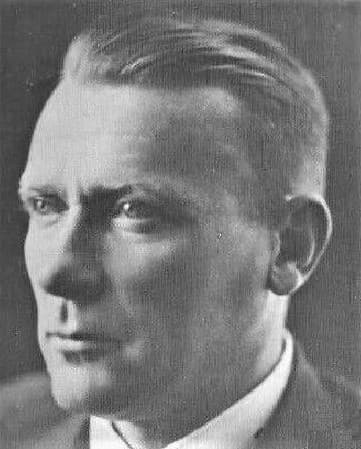
Mikhail Afanasyevich Bulgakov was a Russian, later Soviet writer, medical doctor, and playwright active in the first half of the 20th century. He is best known for his novel The Master and Margarita, published posthumously, which has been called one of the masterpieces of the 20th century.
Similar books
- One Hundred Years of Solitude
Gabriel García Márquez
4.1 (753k) average on GoodreadsLiterary FictionShares a blend of magical realism, sprawling narrative, and social commentary.
- Catch-22
Joseph Heller
4.0 (723k) average on GoodreadsHistorical FictionFeatures biting satire, absurd situations, and an critique of institutional irrationality.
- Harry Potter and the Sorcerer's Stone
J.K. Rowling
4.5 (7M) average on GoodreadsFantasyRescued from a miserable life under the stairs, an orphaned boy discovers he's a wizard destined for a magical school, where he uncovers a dangerous secret tied to the dark wizard who murdered his parents.
- The Hunger Games
Suzanne Collins
4.3 (6.4M) average on GoodreadsFantasyIn a future where children fight to the death on live television, Katniss Everdeen volunteers for the arena, turning a death sentence into a fight for survival and a spark of rebellion.
- 1984
George Orwell
4.2 (3.1M) average on GoodreadsPoliticsIn a future where surveillance and thought control are absolute, a man's search for truth clashes with the Party, showing that hope can be a form of rebellion.
- Divergent
Veronica Roth
4.2 (2.9M) average on GoodreadsFantasyIn a society divided by virtues, a sixteen-year-old's difference from the norm starts a rebellion that threatens her world.






Enjoyed the summary?
A summary gives you the shape of the book. The book itself has the detail, the examples and the voice.
Find The Master And Margarita on AmazonAs an Amazon Associate, BookBrief earns from qualifying purchases. How we're funded