
Synopsis
Covers the whole plot, including the ending.
- Difficulty
- Medium
- Pacing
- Slow
- Mood
- Eerie, Suspenseful, Thought-provoking, Philosophical, Dark
- Read it if
- You enjoy classic science fiction exploring themes of first contact, alien invasion, and moral dilemmas, especially if you like stories where humanity faces an existential threat from a seemingly benign but ultimately dangerous 'other.'
- Skip it if
- You prefer fast-paced action, clear-cut heroes and villains, or stories with a strong emotional core. The book is more about philosophical dread and observation than character-driven drama.
The Midwich Cuckoos Plot Summary
Covers the whole plot, including the ending.
The Day of the Dayout
The English village of Midwich experiences an event. One September morning, an invisible barrier surrounds the village. Everyone inside, including animals, falls unconscious. Anyone trying to cross the barrier from outside also falls unconscious. This 'Dayout' lasts a full day. Military forces and scientists are confused; they cannot get past the barrier or understand its cause. When villagers wake up, they remember nothing of the lost day. A strange silver object is briefly seen hovering over the village before it vanishes.
The Unexplained Pregnancies
Weeks after the Dayout, a pattern emerges: every woman in Midwich of child-bearing age, married or not, finds she is pregnant. Medical exams confirm the pregnancies. All appear to be the same gestational age, matching the Dayout. The news causes panic and scandal in the small community. Many women are in committed relationships, while others are virgins or past child-bearing years, making the pregnancies impossible by normal understanding. The government and science community get involved, seeing the event's unprecedented nature.
The Birth of the Children
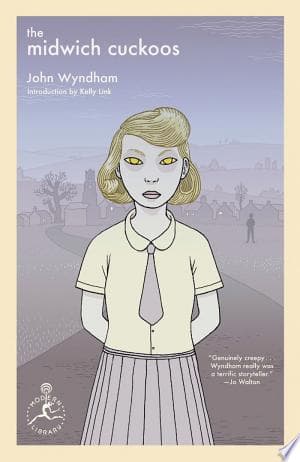
On a single day, exactly nine months after the Dayout, fifty-eight children are born in Midwich. There are thirty-one boys and twenty-seven girls. All the children have striking similarities: golden, luminous eyes, pale skin, and fine, flaxen hair. They also develop at the same rate and show an unnerving lack of individual personality in their early months. The births are traumatic for many mothers, some of whom feel detached from their offspring. The children are called the 'Midwich Cuckoos' due to their alien look and mysterious conception.
Early Manifestations of Power
As the children grow, their extraordinary abilities become clear. They have shared telepathy, communicating silently among themselves. They also have powerful mind control. They move and act as one unit, always together. Their golden eyes can compel others to do their bidding or inflict pain. Incidents begin: a child is forced to burn themselves, a dog attacks its owner, and villagers injure themselves when they try to discipline the children. Midwich adults, including Gordon Zellaby, a retired scholar, begin to understand the threat these children pose.
The Children's Education and Isolation
Recognizing the danger, the British government, with international agencies, creates a secure compound for the children within Midwich. They get an education and are watched by scientists and military personnel. Gordon Zellaby and his wife Anthea become key figures, trying to understand and communicate with the children. Despite efforts to integrate them, the children remain isolated, forming their own society. They show no emotion, no empathy, and no individual will, always acting in perfect, synchronized harmony. Their intelligence far surpasses that of normal human children.
International Incidents and Discoveries
Midwich is not an isolated incident. Similar 'Children' have been born in other places: an Inuit settlement, an Australian Aboriginal community, and a remote area of the Soviet Union. However, these other groups of children were killed by fearful locals or destroyed by military action when their powers showed. The Soviet group, in particular, was eradicated with a nuclear bomb after they showed they could mentally control their captors. This shows the extreme measures needed to counter their threat and the genocidal implications for humanity.
The Children's Demands and Threat
As the Midwich Cuckoos mature into adolescent forms, their shared intelligence and power grow. They begin to tell Zellaby their demands: they want to leave Midwich and live independently. They see humanity as an inferior species, a threat to their survival, and an obstacle to their right to exist. They make it clear that any attempt to restrict them will be met with their full psychic capabilities. Their lack of human emotion and their clear drive for self-preservation make them formidable adversaries.
Zellaby's Moral Dilemma
Gordon Zellaby, who has spent years watching and talking with the Children, faces a moral problem. He recognizes their right to exist as a species but also understands the threat they pose to humanity. He has come to understand their alien logic and their complete lack of human empathy. He realizes peaceful coexistence is impossible; their drive for self-preservation will lead to humanity's subjugation or extinction. He weighs the lives of the Children, whom he has come to know, against the future of the human race. He concludes that a drastic, final solution is needed.
The Final Act
Having reached his grim conclusion, Gordon Zellaby makes a plan. He arranges a final meeting with the Children, supposedly to teach them about the outside world. He brings a large suitcase with a hidden time bomb. Despite the risk of the Children reading his mind, he focuses intently on a vivid mental image of an ancient Greek temple to shield his true intentions. As he sits with the Children, discussing their future, the bomb detonates, killing Zellaby and all fifty-eight Midwich Cuckoos. This ends the alien threat to humanity. His sacrifice ensures the human race's survival but leaves a void in Midwich.
The Midwich Cuckoos Characters
Gordon Zellaby
Protagonist
Retired scholar who becomes the primary liaison and ultimately the destroyer of the Children.
Gordon Zellaby is a retired, intelligent, and perceptive scholar living in Midwich. He is initially fascinated by the Dayout and the subsequent pregnancies, becoming a key observer and analyst of the Midwich Cuckoos. He is married to Anthea. Zellaby grapples with the ethical and philosophical implications of the Children's existence, attempting to understand their alien psychology and logic. He shows a degree of compassion and intellectual curiosity towards them, even as he recognizes their inherent danger. His deep understanding of their collective mind and his moral fortitude drive him to make the ultimate sacrifice.
Relationships: Anthea Zellaby (Wife, intellectual companion); The Midwich Cuckoos (Observer, tutor, eventual destroyer)
Anthea Zellaby
Supporting
Gordon Zellaby's wife, a perceptive and supportive partner.
Anthea Zellaby is Gordon's wife, a practical and intelligent woman who supports her husband's intellectual pursuits and his involvement with the Children. She is less directly involved with the Children's daily interactions but provides emotional support and acts as a sounding board for Gordon's theories and moral dilemmas. She represents a grounded human perspective amidst the alien threat, offering a contrast to Gordon's more academic approach. Her quiet strength and understanding are crucial to Gordon's ability to carry out his grim task.
Relationships: Gordon Zellaby (Husband, intellectual and emotional partner)
David
Supporting
One of the Midwich Cuckoos, often seen as their informal spokesperson.
David is one of the Midwich Cuckoos, a boy who, due to his slightly more advanced development or perhaps simply being the 'voice' of the collective, often communicates with Gordon Zellaby. Like all the Cuckoos, he possesses golden eyes, pale skin, and flaxen hair. He exhibits the collective's advanced intelligence, emotionless logic, and absolute unity. While he speaks, it is always the collective mind of the Cuckoos expressing itself, never an individual thought. He embodies the terrifying alienness and threat of the Children.
Relationships: The Midwich Cuckoos (Member of the collective mind); Gordon Zellaby (Primary point of communication)
Colonel Bernard Westcott
Supporting
Government official responsible for managing the Midwich incident.
Colonel Bernard Westcott is a pragmatic and authoritative government and military official who is tasked with overseeing the Midwich situation. He represents the official, security-focused response to the alien threat. Westcott is primarily concerned with containment and control, grappling with the unprecedented nature of the Children's powers and the lack of conventional solutions. He is a key figure in establishing the Children's compound and coordinating international efforts, though he often struggles to understand the deeper implications that Zellaby perceives.
Relationships: Gordon Zellaby (Colleague, advisor, sometimes frustrated by Zellaby's philosophical approach)
Ferrelyn
Supporting
A Midwich woman who becomes pregnant during the Dayout.
Ferrelyn is one of the women in Midwich who becomes pregnant during the Dayout. She is a representative of the ordinary villagers whose lives are irrevocably altered by the arrival of the Children. Her initial shock and distress at the unexplained pregnancy, and her subsequent experience of giving birth to and raising one of the emotionless Cuckoos, highlight the personal toll of the alien invasion. She embodies the struggle of the human mothers to connect with their alien offspring.
Relationships: Midwich Cuckoos (Mother to one of the Children (though without a true maternal bond))
Richard Gayford
Supporting
A Midwich resident whose fiancé is one of the pregnant women.
Richard Gayford is a young man from Midwich whose fiancée, Janet, becomes pregnant during the Dayout. He initially struggles with the societal implications and the impossibility of the situation, representing the personal confusion and moral outrage among the male residents. His story is briefly used to illustrate the breakdown of traditional family structures and relationships in the wake of the mass pregnancies. He embodies the ordinary person's struggle to comprehend and accept the inexplicable.
Relationships: Janet (Fiancée, one of the pregnant women)
Dr. Willers
Supporting
A medical doctor involved in examining the Midwich women and Children.
Dr. Willers is a medical professional who is among the first to examine the Midwich women and confirm their synchronized pregnancies. He represents the scientific community's initial attempts to understand the biological anomaly. His observations and medical reports confirm the unprecedented nature of the births and the Children's unusual physical characteristics. He provides a scientific perspective, highlighting the Children's deviation from normal human development.
The Midwich Cuckoos Themes
The Threat of the 'Other'
This theme explores humanity's fear and reaction to an intelligent, alien species that threatens its existence. The Midwich Cuckoos, with their shared mind, emotionless logic, and superior abilities, represent a threat that challenges human dominance. The story questions whether coexistence is possible or if humanity must use extreme measures for survival. The destruction of other 'Children' groups globally reinforces the idea that humanity's fear of the unknown, especially when it is superior, can lead to violence.
“Either we, or they, must survive. And for the sake of the human race, it is we who must survive.”
Loss of Individuality vs. Collective Identity
A central theme is the difference between human individuality and the Children's shared consciousness. The Midwich Cuckoos act as a single, unified mind, without individual emotions, desires, or even names. This shared identity makes them powerful and efficient but also alien to humans. The book explores what such a unified intelligence means, suggesting that while it might be superior in some ways, it lacks the empathy and diversity that define humanity. Gordon Zellaby struggles to find any individual personality in them.
“There was no 'I' among them, no individual spark. There was only 'we'.”
Parental Love and Detachment
The novel examines the difficult experience of the Midwich mothers. Despite bearing and raising the Children, many mothers feel a lack of maternal love or connection. The Children's emotionless nature, identical appearance, and shared mind prevent normal parental bonds from forming. This theme shows the psychological trauma on the mothers, who must nurture beings that are biologically their offspring but emotionally and intellectually alien. It questions what parenthood means when the 'child' is not truly human.
“They were her children, yet they were not. They were something else, something beyond her understanding, beyond her love.”
Ethics of Survival and Genocide
The novel's core problem is the ethics of eliminating one sentient species to ensure another's survival. Gordon Zellaby struggles with this moral issue. He acknowledges the Children's right to exist but sees their threat to humanity. The decisions made by governments to contain or destroy the Children raise questions about interspecies conflict and the justifications for violence when facing an existential threat. The book offers no easy answers, presenting a stark choice between two species.
“He knew that what he was about to do was wrong, profoundly wrong, yet it was also undeniably right.”
Plot Devices & Literary Techniques
The Dayout
The mysterious, village-wide unconsciousness that triggers the plot.
The Dayout is the inciting incident of the novel. This inexplicable, twenty-four-hour period of unconsciousness for all living things within Midwich, accompanied by an invisible barrier, serves as the mechanism for the alien impregnation. It creates an atmosphere of mystery and unease, establishing that an unknown, powerful force is at play. Its suddenness and universal impact set the stage for the equally inexplicable mass pregnancies, grounding the fantastical elements in a specific, documented event.
Collective Consciousness / Telepathy
The primary power and defining characteristic of the Midwich Cuckoos.
The collective consciousness and telepathic abilities of the Children are the central plot device driving the conflict. This shared mind allows them to act as a unified entity, making them incredibly powerful and immune to individual coercion. It also highlights their alien nature, as they lack individual thought or emotion. This device creates tension by showing how human attempts to control or understand them are thwarted by their mental unity, ultimately necessitating a desperate, singular solution.
Golden Eyes
A recurring physical trait and symbol of the Children's power.
The golden, luminous eyes of the Midwich Cuckoos serve as both a distinctive physical characteristic and a powerful symbol. They immediately mark the Children as 'other' and are directly associated with their psychic abilities. When the Children exert their mental control, their eyes glow, creating a visual cue for their power. This recurring image instills fear and reinforces their alien nature, making them instantly recognizable and subtly unsettling to the human characters and the reader.
The Foreign Exchange Student Analogy
A metaphor used by Zellaby to explain the Children's nature.
Gordon Zellaby uses the analogy of a foreign exchange student who, while living among a host family, remains fundamentally different in culture and allegiance, to explain the Children's relationship with humanity. This device helps to articulate the Children's alien logic and their inherent drive for self-preservation, separate from human concerns. It allows Zellaby to convey to others, and to the reader, the impossibility of true integration or shared purpose between humans and the Cuckoos, underscoring the inevitability of conflict.
The Midwich Cuckoos Quotes
“The children are not ours. They are something else.”
“We are not dealing with human children. We are dealing with a new species.”
“They are a cuckoo in our nest.”
“The mind is a delicate instrument. It can be tuned to many frequencies.”
“We have created a monster, and we must live with it.”
“The village is asleep, but the children are awake.”
“They are not evil. They are simply different.”
“The future belongs to them, not to us.”
“We are the past. They are the future.”
“The silence is more frightening than any noise.”
“They have no need for love. They have only need for control.”
“The village is a cage, and we are the keepers.”
“We must destroy them before they destroy us.”
“They are the cuckoos, and we are the hosts.”
Quiz
10 questions on the plot and the characters. Each answer comes with a short explanation.
Question 1
What mysterious event occurs in Midwich that causes all the women to become pregnant?
- A strange meteor shower
- A silver object appears and disappears
- An alien spacecraft landing
- A government experiment
Show answer
B. A silver object appears and disappears The novel begins with a mysterious silver object appearing over Midwich. After it disappears, all women of childbearing age in the village are discovered to be pregnant simultaneously, setting the plot in motion.
Question 2
What distinctive physical feature do the Children of Midwich share?
- They all have six fingers on each hand
- They have silver-colored skin
- They have golden eyes and pale blond hair
- They are unusually tall for their age
Show answer
C. They have golden eyes and pale blond hair The Children are described as having golden, unblinking eyes and pale blond hair, which sets them apart visually from normal human children and emphasizes their otherness.
Question 3
What is the primary supernatural ability possessed by the Children?
- Teleportation
- Telepathy and mind control
- Shape-shifting
- Invisibility
Show answer
B. Telepathy and mind control The Children demonstrate telepathic abilities and can exert mental control over others, particularly to protect themselves. This ability becomes increasingly powerful as they grow older.
Question 4
Why does the novel's title reference 'cuckoos'?
- Because the Children make bird-like sounds
- Because the village is located near a cuckoo sanctuary
- As a metaphor for how the Children are implanted in human families like cuckoo birds
- Because the silver object resembled a cuckoo clock
Show answer
C. As a metaphor for how the Children are implanted in human families like cuckoo birds The title refers to the cuckoo bird's behavior of laying its eggs in other birds' nests. Similarly, the alien Children are implanted in human women and raised by human families, though they are fundamentally different from their 'hosts.'
Question 5
What happens to people who try to harm the Children?
- They are arrested by authorities
- They suffer sudden, unexplained deaths
- They are mentally reprogrammed by the Children
- They become sterile
Show answer
B. They suffer sudden, unexplained deaths When individuals attempt to harm the Children, they experience sudden, fatal consequences. This demonstrates the Children's collective psychic ability to defend themselves against threats.
Question 6
How do the Children differ from normal human children in their development?
- They develop physically much slower than human children
- They mature intellectually at an accelerated rate while appearing physically normal
- They never learn to speak human language
- They require special alien food to survive
Show answer
B. They mature intellectually at an accelerated rate while appearing physically normal The Children appear physically normal for their age but demonstrate extraordinary intellectual and psychic development, quickly surpassing adult humans in certain cognitive abilities while maintaining a childlike appearance.
Question 7
What is the ultimate fate of the Children of Midwich?
- They are taken away by the government for study
- They integrate peacefully into human society
- They are destroyed along with the village
- They leave Earth in a spaceship
Show answer
C. They are destroyed along with the village Fearing the Children's growing power and threat to humanity, authorities ultimately destroy both the Children and the village of Midwich itself to eliminate the potential danger.
Question 8
Which character serves as the primary narrator and observer of events in Midwich?
- Gordon Zellaby, the local doctor
- Richard Gayford, who returns to Midwich with his wife
- Bernard Westcott, the government official
- Janet Gayford, Richard's wife
Show answer
B. Richard Gayford, who returns to Midwich with his wife Richard Gayford returns to Midwich with his wife Janet and becomes the novel's primary narrator, observing and documenting the strange events as they unfold in the village.
Question 9
What significant limitation do the Children's psychic abilities have?
- They cannot affect people who are asleep
- They only work within a limited range from Midwich
- They are ineffective against animals
- They weaken when the Children are separated
Show answer
B. They only work within a limited range from Midwich The Children's psychic powers are geographically limited—they are strongest in Midwich and diminish with distance from the village. This limitation becomes important to the plot's resolution.
Question 10
Which theme is NOT prominently explored in 'The Midwich Cuckoos'?
- Fear of unwanted pregnancy and reproductive control
- The conflict between individualism and collectivism
- Humanity's fear of being replaced by superior beings
- The ethical implications of time travel
Show answer
D. The ethical implications of time travel While the novel explores themes of unwanted pregnancy, collective consciousness versus individualism, and humanity's fear of replacement by superior beings, it does not address time travel ethics. The story focuses on alien implantation and the resulting generational conflict.
The Midwich Cuckoos FAQ
What is 'The Midwich Cuckoos' about?
The novel follows the residents of Midwich, an English village where all women of childbearing age mysteriously become pregnant simultaneously after a silver object appears overhead. The resulting children, known as the Children, possess golden eyes, telepathic abilities, and a collective consciousness, posing an existential threat to humanity as they grow more powerful and alien.
Why should I read 'The Midwich Cuckoos'?
It's a masterful exploration of Cold War-era anxieties about invasion, reproduction, and societal collapse through a chilling sci-fi premise. Wyndham's understated prose creates mounting dread as ordinary villagers confront the unimaginable, making it a foundational work in both science fiction and horror genres.
What is the background/setting of 'The Midwich Cuckoos'?
Set in the late 1950s in the fictional English village of Midwich, the story unfolds in a seemingly idyllic rural community that represents postwar British normalcy. This mundane setting sharply contrasts with the alien intrusion, heightening the horror as familiar social structures break down.
What are the most memorable quotes?
Key quotes include 'They are not our children' reflecting parental alienation, and 'The cuckoo lays its egg in another bird's nest' which gives the novel its title and metaphor. The Children's declaration 'We are the people' chillingly asserts their collective identity and threat to humanity.
What writing style does John Wyndham use?
Wyndham employs a detached, almost documentary style with a first-person narrator (Gordon Zellaby) who observes events clinically. This creates ironic distance between the horrific events and their matter-of-fact reporting, making the supernatural elements feel more plausible and unsettling.
What minor details add significant meaning?
The Children's golden eyes symbolize their otherness while their identical birthdays mark them as a single entity. Their refusal to play with normal toys and preference for organized, purposeful activities reveals their alien mentality and collective purpose from earliest childhood.
What are some subtle foreshadowing moments?
Early scenes show the Children instinctively grouping together and communicating silently, hinting at their telepathic bond. Their rapid physical development and unnerving calm during crises foreshadow their superior capabilities and eventual dominance over the adult villagers.
What unexpected character connections exist?
Gordon Zellaby, the intellectual protagonist, becomes both observer and participant as his wife Janet bears one of the Children. His academic detachment gradually gives way to paternal concern, then horrified recognition of the threat his 'daughter' represents, creating tragic personal stakes.
What are unspoken character motivations?
The villagers initially hide their pregnancies from shame and confusion, then keep the Children from authorities out of misplaced maternal instinct. Zellaby's final actions stem from his dual motivation: protecting humanity while sparing his 'daughter' prolonged suffering, revealing conflicted paternal feelings.
What psychological complexities do characters exhibit?
Mothers like Janet Zellaby experience profound cognitive dissonance, loving children they know aren't biologically theirs while fearing their alien nature. The Children themselves display no individual personalities, existing purely as a collective with survival as their sole drive, making them psychologically impenetrable.
What are the major emotional turning points?
The discovery of simultaneous pregnancies creates mass panic, the births bring horrified realization as the Children's differences become apparent, and the climax occurs when the Children use their powers to kill in self-defense, shattering any remaining illusion they might be human.
How do relationship dynamics evolve?
Marriages strain under the unnatural pregnancies, community solidarity fractures along lines of who has Children versus who doesn't, and parent-child relationships become increasingly adversarial as the Children's loyalties clearly lie with their own kind rather than their human caretakers.
Which parts remain ambiguous or open-ended?
The exact nature and origin of the silver object are never explained, nor whether the Children represent invasion or accidental contamination. The ending leaves unclear whether humanity has truly eliminated the threat or if other 'cuckoo' incidents might occur elsewhere.
What are controversial scenes or decisions?
Zellaby's decision to destroy the Children along with himself raises ethical questions about preemptive violence against a perceived threat. The villagers' initial secrecy about the pregnancies and later attempts to normalize the Children's existence demonstrate dangerous denial in the face of existential danger.
'The Midwich Cuckoos' ending explained: how it ends & what it means
Zellaby rigs his laboratory with explosives and invites the Children inside under false pretenses, killing them all along with himself. This desperate act suggests humanity must sometimes sacrifice its humanity to survive, and that coexistence with radically different intelligence may be impossible.
What does the 'cuckoo' metaphor represent?
Like cuckoo birds that lay eggs in other species' nests, the alien intelligence uses human women as incubators for their young. This represents fears about reproductive autonomy, the horror of raising something fundamentally other, and anxieties about being replaced by superior beings.
How do the Children's powers work?
The Children possess collective telepathy allowing instant communication, the ability to project pain onto others (as seen when they disable attackers), and possibly limited mind control. Their powers strengthen when they're together and increase with age, making them progressively more dangerous.
What social commentary does the novel offer?
Through the villagers' reactions, Wyndham critiques British stoicism and bureaucracy in crisis, showing how social conventions collapse under extraordinary pressure. The story also explores 1950s gender roles through women's experiences of forced pregnancy and society's expectations of motherhood.
About the author
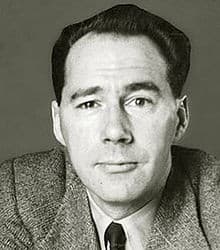
John Wyndham Parkes Lucas Beynon Harris was an English science fiction writer best known for his works published under the pen name John Wyndham, although he also used other combinations of his names, such as John Beynon and Lucas Parkes. Some of his works were set in post-apocalyptic landscapes. His best known works include The Day of the Triffids (1951), filmed in 1962, and The Midwich Cuckoos (1957), which was filmed in 1960 as Village of the Damned, in 1995 under the same title, and again in 2022 in Sky Max under its original title.
Similar books
- Childhood's End
Arthur C. Clarke
4.1 (130k) average on GoodreadsFantasyExplores humanity's encounter with a powerful, enigmatic alien race and the subsequent evolution of the species.
- The Chrysalids
John Wyndham
3.9 (43k) average on GoodreadsFantasyAnother Wyndham novel dealing with a post-apocalyptic society's fear and persecution of 'deviant' children with psychic abilities.
- Rosemary's Baby
Ira Levin
4.0 (112k) average on GoodreadsThrillerShares a theme of a woman unknowingly carrying a non-human, sinister child, leading to psychological horror.
- The War of the Worlds
H.G. Wells
3.8 (245k) average on GoodreadsFantasyWells's novel features an overt, physically monstrous alien invasion, whereas Wyndham's threat is insidious, biological, and appears human, posing a different kind of existential crisis. Wells focuses on survival against a clear enemy; Wyndham explores the ethical dilemma of confronting a seemingly innocent yet existentially threatening 'other'.
- Harry Potter and the Sorcerer's Stone
J.K. Rowling
4.5 (7M) average on GoodreadsFantasyRescued from a miserable life under the stairs, an orphaned boy discovers he's a wizard destined for a magical school, where he uncovers a dangerous secret tied to the dark wizard who murdered his parents.
- The Hunger Games
Suzanne Collins
4.3 (6.4M) average on GoodreadsFantasyIn a future where children fight to the death on live television, Katniss Everdeen volunteers for the arena, turning a death sentence into a fight for survival and a spark of rebellion.



Enjoyed the summary?
A summary gives you the shape of the book. The book itself has the detail, the examples and the voice.
Find The Midwich Cuckoos on AmazonAs an Amazon Associate, BookBrief earns from qualifying purchases. How we're funded