
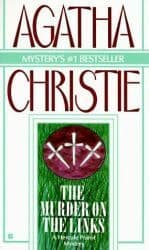
Synopsis
Covers the whole plot, including the ending.
- Difficulty
- Medium
- Pacing
- Moderate
- Mood
- Intriguing, Puzzling, Classic
- Read it if
- You love classic Golden Age mysteries with intricate plots, multiple suspects, and a brilliant detective who solves the case through pure deduction.
- Skip it if
- You prefer fast-paced thrillers with minimal exposition or character-driven stories over puzzle-box mysteries.
The Murder on the Links Plot Summary
Covers the whole plot, including the ending.
A Desperate Summons and a Grisly Discovery
Hercule Poirot gets an urgent letter from Monsieur Paul Renauld, a rich South American in Merlinville-sur-Mer, France, asking for immediate help. Poirot and Captain Hastings travel to France, but when they arrive, they learn Renauld has been murdered. His body is found on the golf course next to his villa, 'Genevieve', stabbed in the back with a paper-knife and put in a fresh grave. Madame Renauld is found tied up in her room, claiming two masked men broke in, kidnapped her husband, and stole his money. Local French Sûreté detective, Monsieur Giraud, immediately takes charge, disagreeing with Poirot's careful methods.
Initial Investigations and Conflicting Accounts
Poirot starts his investigation by looking at the crime scene and interviewing the household. He notices several strange details, such as Renauld wearing an overcoat too big for him, and a passionate love letter in his pocket addressed to an 'Eloise'. Madame Renauld's account of the kidnapping is vague, and her son, Jack Renauld, seems unusually calm. Jack says his father recently disinherited him, giving him a strong reason. The police focus on Marthe Daubreuil, a neighbor Jack loves, who has a mysterious past involving a former lover of Paul Renauld. Poirot also learns of a secret passage connecting the Renauld and Daubreuil properties.
The Second Body and a Tangled Web of Identities
The case changes when a second body is found, similarly murdered and buried in a grave nearby. This body is identified as Georges Conneau, a known criminal. More investigation shows that Paul Renauld had a secret past; he was once Georges Rowland, who left England years ago after being wrongly accused of murder. This connects to Madame Renauld, who was once Bella Duveen, an actress involved in Rowland's past. The love letter found on Renauld's body is now thought to be from a different woman, adding another layer of deception.
A Secret Marriage and a Daughter's Revelation
Jack Renauld admits to a secret marriage with Marthe Daubreuil, which his now-dead father disliked. Meanwhile, a young woman named Cinderella, who had been seen on the golf course, says she is the daughter of Georges Conneau and Bella Duveen. She explains that Conneau had been blackmailing Renauld, threatening to expose his past as Georges Rowland. This suggests Renauld might have faked a kidnapping to escape his blackmailer, but it does not explain his actual murder or the second body.
Poirot's Deductions and the Truth About the Second Body
Poirot carefully puts the events together. He concludes that the first body found was not Paul Renauld but Georges Conneau. Renauld, desperate to escape Conneau's blackmail, planned to fake his own disappearance and frame Conneau. He arranged to meet Conneau on the golf course, intending to incapacitate him and switch clothes. However, someone else intervened. The overcoat being too large for the first victim (Conneau) was a key clue, showing it belonged to Renauld.
The Revelation of the Real Murderer
Poirot confronts Madame Renauld, revealing she killed Paul Renauld. She confesses, explaining she found out about her husband's plan to fake his disappearance and frame Conneau. She also knew about his affair with a young woman named Bella Duveen (not her own past identity, but a different woman), and feared he would leave her. In anger and desperation, she met Renauld on the golf course after he had incapacitated Conneau and switched clothes, and stabbed him with the paper-knife. She then tied herself up to pretend to be a victim of the 'kidnapping'.
The Complicity of Jack and Marthe
Jack Renauld and Marthe Daubreuil helped cover up the crime. Jack, finding his mother upset and his father dead, helped her move Paul Renauld's body from where she killed him to the grave where Conneau was supposed to be buried. Marthe, knowing the situation and protecting Jack, also helped hide details and give misleading information to the police. Their actions, while not directly involving murder, made the investigation much harder and kept Madame Renauld from immediate suspicion.
The Love Letter's True Recipient
The love letter found in the pocket of the deceased (Conneau, but wearing Renauld's overcoat) was from Paul Renauld, but it was addressed to another woman named Bella Duveen. This Bella Duveen was a young English actress with whom Paul Renauld was having an affair. This affair was a significant reason for Madame Renauld's jealousy and, ultimately, her decision to kill her husband, fearing he would leave her for this younger woman and take his money.
Justice and Poirot's Triumph
With all the parts of the puzzle in place, Poirot presents his full solution to Monsieur Giraud and the other authorities. Madame Renauld is arrested for the murder of her husband, Paul Renauld. The complications of the two bodies, the switched identities, the blackmail, and the various love affairs are explained, proving Poirot's superior understanding of people and attention to detail over Giraud's more direct, but flawed, approach. Hastings, as always, is impressed by Poirot's skill.
Aftermath and New Beginnings
After the case, Jack Renauld and Marthe Daubreuil face the results of their involvement but move on. Captain Hastings, who liked Cinderella during the investigation, learns she is Lucia, the daughter of Georges Conneau and Bella Duveen (the younger actress). They fall in love and decide to marry, planning a new life together in Argentina. The ending brings closure for everyone, with justice done and new futures formed from the deception and murder.
The Murder on the Links Characters
Hercule Poirot
Protagonist
Belgian detective, renowned for his 'little grey cells' and meticulous methods.
Hercule Poirot is a retired Belgian police officer who has become a private detective, known for his distinctive egg-shaped head, fastidiously neat appearance, and reliance on psychological insight rather than brute force. He is summoned to France by Paul Renauld, only to arrive after the murder. Throughout the investigation, Poirot clashes with the more aggressive and evidence-focused French Sûreté detective, Monsieur Giraud, but ultimately proves his superior deductive abilities by uncovering the complex web of lies, switched identities, and motives. He often expresses frustration with Hastings's lack of insight.
Relationships: Captain Hastings (Long-time friend and confidant, often serving as a sounding board); Monsieur Giraud (Rival detective, whose methods Poirot often criticizes)
Captain Arthur Hastings
Supporting
Poirot's loyal companion and the story's narrator.
Captain Hastings accompanies Poirot on his investigations, providing a first-person narrative perspective. He is often less perceptive than Poirot, frequently drawing incorrect conclusions or missing crucial details, which allows Poirot to explain his deductions to the reader. Hastings is a romantic at heart and finds himself drawn to the mysterious 'Cinderella' during the case. His character serves as a foil to Poirot's brilliance, highlighting the detective's unique abilities. He is generally good-natured but sometimes impetuous.
Relationships: Hercule Poirot (Close friend and investigative partner); Cinderella (Lucia) (Love interest, later marries her)
Paul Renauld (Georges Rowland)
Victim/Antagonist
Wealthy South American millionaire with a hidden past and multiple deceptions.
Paul Renauld is the initial victim of the murder, a rich man living in France who had summoned Poirot. He is revealed to have a secret past as Georges Rowland, who fled England after being implicated in a crime. Renauld is a manipulative figure, attempting to stage his own disappearance to escape a blackmailer and pursue an affair. His actions set in motion the entire complex plot, and his multiple deceptions and relationships provide numerous motives for murder. He disinherited his son, Jack, and was having an affair with a younger woman named Bella Duveen.
Relationships: Madame Renauld (Wife, also with a secret past, and his eventual murderer); Jack Renauld (Son, whom he disinherited); Georges Conneau (Blackmailer); Bella Duveen (younger) (Mistress)
Madame Renauld (Bella Duveen)
Antagonist
Paul Renauld's wife, a former actress with a hidden past and the true murderer.
Madame Renauld is initially presented as a victim, found bound and gagged after her husband's supposed kidnapping. However, Poirot eventually uncovers her as the true murderer of Paul Renauld. She was once an actress named Bella Duveen, and like her husband, had fled a difficult past. Her motive stems from a combination of jealousy over her husband's affair with a younger Bella Duveen, fear of abandonment, and a desperate attempt to protect her future. She is a strong-willed woman driven to extreme measures by her circumstances.
Relationships: Paul Renauld (Husband, whom she murders); Jack Renauld (Son, who helps her cover up the crime); Cinderella (Lucia) (Daughter from a previous relationship with Georges Conneau)
Jack Renauld
Supporting
Paul Renauld's embittered son, secretly married to Marthe Daubreuil.
Jack Renauld is the son of Paul and Madame Renauld. He is initially a prime suspect due to his strained relationship with his father, who had recently disinherited him. Jack is secretly married to Marthe Daubreuil, a fact he tries to conceal. He is protective of his mother and, upon discovering her crime, helps her move his father's body, further complicating the investigation. He is impulsive and passionate, particularly in his love for Marthe, which often leads him to make rash decisions.
Relationships: Paul Renauld (Father, with whom he had a contentious relationship); Madame Renauld (Mother, whom he protects); Marthe Daubreuil (Wife)
Marthe Daubreuil
Supporting
Jack Renauld's secret wife, with a mysterious past connected to Paul Renauld.
Marthe Daubreuil is a young woman living next door to the Renaulds, secretly married to Jack Renauld. She is beautiful and intelligent, but also has a secretive nature due to her mother's past. Her mother, Madame Daubreuil, had a past connection with Paul Renauld, adding another layer of intrigue. Marthe is fiercely loyal to Jack and, like him, becomes involved in the cover-up of Paul Renauld's murder. She is pragmatic and resourceful, trying to navigate the complex situation.
Relationships: Jack Renauld (Husband); Madame Daubreuil (Mother, with a past connection to Paul Renauld)
Georges Conneau
Victim/Antagonist
Criminal and blackmailer, whose body is mistaken for Paul Renauld's.
Georges Conneau is a known criminal who was blackmailing Paul Renauld over his past as Georges Rowland. He is the second body discovered on the golf course, initially identified as Renauld. Conneau is also revealed to be the father of Cinderella (Lucia). His blackmail scheme and his past connection to Madame Renauld (Bella Duveen) are crucial to unraveling the complex plot. He is a shadowy figure whose actions directly lead to the elaborate deception orchestrated by Renauld and, indirectly, to Renauld's murder.
Relationships: Paul Renauld (Victim of his blackmail); Madame Renauld (Former lover and father of her daughter); Cinderella (Lucia) (Daughter)
Cinderella (Lucia)
Supporting
Mysterious young woman, daughter of Georges Conneau and Madame Renauld, and Hastings's love interest.
Cinderella is a young woman of mysterious origins who works as a maid and is often seen on the golf course. She captures Captain Hastings's attention and affection. She is eventually revealed to be Lucia, the daughter of Georges Conneau and Madame Renauld (from her past life as Bella Duveen). Her true identity and connection to the victims are vital to understanding the full extent of the family's tangled history and motives. She is innocent of the murders but holds key information about the various characters' pasts.
Relationships: Captain Hastings (Love interest, later marries him); Georges Conneau (Father); Madame Renauld (Mother)
Monsieur Giraud
Supporting
French Sûreté detective, representing a more traditional, evidence-focused investigative approach.
Monsieur Giraud is the French detective in charge of the initial investigation. He is a younger, more energetic detective who prides himself on his speed and efficiency, often dismissing Poirot's more contemplative methods. Giraud is focused on tangible evidence and quick arrests, leading him to jump to conclusions and make mistakes. He serves as a foil to Poirot, highlighting the contrast between logical deduction and empirical observation. Despite his confidence, he is ultimately outsmarted by Poirot.
Relationships: Hercule Poirot (Rival detective)
The Murder on the Links Themes
Identity and Deception
The novel has strong themes of identity and deception. Paul Renauld lives under a false name (Georges Rowland), having escaped a past crime. His wife, Madame Renauld, also has a hidden past as Bella Duveen. Finding two bodies, one first misidentified, further blurs who is who. Characters like Cinderella also have secret identities. This theme shows how people create and hide their pasts, and how these hidden identities eventually affect them, driving much of the plot's complexity and the characters' reasons.
“The truth, Monsieur Poirot, is often more fantastic than any lie.”
Past Sins and Their Consequences
The entire murder plot happens because of past actions and secrets. Paul Renauld's original crime as Georges Rowland, his escape, and the blackmail he faces from Georges Conneau all come from his past. Madame Renauld's own past and her fear of being left because of her husband's affairs and hidden life directly lead to her killing him. The novel shows that no matter how far one runs or how complex the deception, past wrongs eventually appear and require payment or cause more problems, shaping the characters' present and future.
“The past, my friend, is a ghost that always returns to haunt us.”
Love, Jealousy, and Betrayal
These strong emotions are central to why the murder happened. Paul Renauld's affair with a younger Bella Duveen makes Madame Renauld jealous and afraid of abandonment, which leads her to kill him. Jack Renauld's secret marriage to Marthe Daubreuil and his father's disapproval show family betrayal. The passionate love letter found on the first victim's body adds another layer of romantic problems and deceit. These intense emotional drives show the human side of the crime, demonstrating how love can become possessiveness and betrayal, leading to sad results.
“Ah, the human heart, Hastings, it is a complicated mechanism, full of dark corners and surprising impulses.”
The Nature of Justice and Truth
The difference between Poirot's careful, psychological approach to justice and Giraud's more direct, evidence-based methods shows different ways of finding truth. Giraud is quick to accuse and wants quick answers, while Poirot looks deeper into reasons, character, and the events. The novel favors Poirot's method, showing that real justice needs a full understanding of the human element, the hidden truths, and the small inconsistencies that lead to the correct solution, rather than just surface evidence.
“It is the little details, my friend, the seemingly insignificant things, that often hold the key to the greatest mysteries.”
Plot Devices & Literary Techniques
The Double Murder and Switched Identities
A core misdirection involving two bodies and exchanged roles.
This is the central plot device that creates much of the mystery and confusion. The discovery of two identically murdered bodies, with the first body initially misidentified as Paul Renauld, is a brilliant red herring. Poirot deduces that the first body found was actually Georges Conneau, wearing Renauld's overcoat, and Renauld himself was the second victim. This device forces the reader (and Hastings) to constantly re-evaluate who is dead, who is alive, and what their true motives were, making the solution incredibly intricate and satisfying.
The Love Letter
A misleading clue used to point towards an incorrect motive or suspect.
The passionate love letter found in the pocket of the first victim (Conneau, but in Renauld's coat) is a classic misdirection. Initially, it suggests that Renauld was killed by a jealous lover or that the letter was from a secret admirer. Poirot eventually reveals that the letter was indeed from Renauld, but to a different woman (the younger Bella Duveen), adding to Madame Renauld's motive, and was part of Renauld's own elaborate deception. This device manipulates reader expectations and provides a false trail.
The Secret Passage/Hidden Connections
A physical link between properties symbolizing hidden relationships and opportunities for crime.
The secret passage connecting the Renauld and Daubreuil properties serves a dual purpose. On a literal level, it provides a means for characters like Jack and Marthe to move between houses unobserved, facilitating their secret relationship and later, their involvement in the cover-up. Symbolically, it represents the hidden and intertwined histories of the two families, particularly the past connection between Paul Renauld and Madame Daubreuil, and the complex web of relationships and secrets that bind them together.
The Foil Detective (Monsieur Giraud)
A contrasting detective character used to highlight the protagonist's unique abilities.
Monsieur Giraud serves as a direct foil to Hercule Poirot. Giraud represents the more conventional, aggressive, and evidence-driven approach to detective work, often boasting about his speed and dismissing Poirot's psychological methods. His repeated incorrect conclusions and missed details, contrasted with Poirot's meticulous deductions, highlight Poirot's superior intellect and unique 'little grey cells'. This device allows Christie to showcase Poirot's brilliance by having him triumph over a seemingly competent, but ultimately flawed, rival.
The Murder on the Links Quotes
“The truth, however ugly in itself, is always curious and beautiful to seekers after it.”
“The little grey cells—it is up to them.”
“One must always look at the psychology of the case.”
“The impossible cannot have happened, therefore the impossible must be possible in spite of appearances.”
“It is the brain, the little grey cells on which one must rely.”
“A man's past is not like a woman's—it is not so easily forgotten.”
“There is nothing so dangerous for anyone who has something to hide as conversation!”
“The facts are there, but they are not in order.”
“It is a capital mistake to theorize before one has data.”
“The murderer is not necessarily the one who has the most obvious motive.”
“In a case like this, one must look for the little things.”
“The heart of the mystery lies in the past.”
“It is not the criminal things which are difficult to believe, but the coincidences.”
“Every murderer is probably somebody's old friend.”
Quiz
10 questions on the plot and the characters. Each answer comes with a short explanation.
Question 1
What is the profession of Hercule Poirot in 'The Murder on the Links'?
- A French police inspector
- A Belgian detective
- A British journalist
- A South American millionaire
Show answer
B. A Belgian detective Hercule Poirot is explicitly described as a Belgian detective, which is a key detail about his character throughout Agatha Christie's works, including this book.
Question 2
Where is Monsieur Renauld's body found in the book?
- In his bedroom at the villa
- In a freshly dug open grave on the golf course
- In the nearby woods
- On the beach at Merlinville-sur-Mer
Show answer
B. In a freshly dug open grave on the golf course The body of Monsieur Renauld is discovered flung into a freshly dug open grave on the golf course adjoining his property, which is a central plot point in the mystery.
Question 3
What is found in the pocket of the overcoat worn by the dead Monsieur Renauld?
- A map of the golf course
- A key to the villa
- An impassioned love-letter
- A distress letter from his wife
Show answer
C. An impassioned love-letter Poirot notices that the dead man is wearing an overcoat that is too big for him, and in its pocket, he finds an impassioned love-letter, which becomes a crucial clue in the investigation.
Question 4
Why does Poirot have doubts about the initial police theory of the crime?
- Because the murder weapon belongs to Renauld's son
- Because the overcoat on the body is too big and contains a love-letter
- Because he suspects the mistress immediately
- Because the golf course was closed that night
Show answer
B. Because the overcoat on the body is too big and contains a love-letter Poirot questions the police's conclusion of a failed break-in due to inconsistencies like the ill-fitting overcoat and the love-letter, which suggest a more complex motive.
Question 5
Who is found bound and gagged in her room at the Renauld villa?
- Monsieur Renauld's mistress
- Monsieur Renauld's wife
- A housekeeper
- A neighbor
Show answer
B. Monsieur Renauld's wife Madame Renauld is discovered bound and gagged in her room, initially supporting the theory of a break-in, but this becomes suspicious as the investigation unfolds.
Question 6
What event turns the case upside down in the investigation?
- The discovery of a second, identically murdered corpse
- The arrest of Renauld's son
- A confession from the mistress
- The recovery of stolen jewels
Show answer
A. The discovery of a second, identically murdered corpse The discovery of a second corpse, murdered in the same way as Monsieur Renauld, complicates the case and forces Poirot to reconsider all suspects and motives.
Question 7
Which of the following is NOT listed as a suspect in Monsieur Renauld's murder?
- His embittered son
- His mistress
- A jealous business partner
- His wife
Show answer
C. A jealous business partner The book specifically mentions the wife, son, and mistress as suspects due to motives related to fortune and personal grievances; a business partner is not highlighted in the provided summary.
Question 8
What is the significance of the dagger used in the murder?
- It belongs to Renauld's son, implicating him
- It is a rare antique from South America
- It belongs to Madame Renauld, making her a suspect
- It was found at the mistress's house
Show answer
C. It belongs to Madame Renauld, making her a suspect The murder weapon is identified as Madame Renauld's dagger, which initially points suspicion toward her, adding to the complexity of the case.
Question 9
How does the theme of deception manifest in the plot of 'The Murder on the Links'?
- Through multiple false confessions by the suspects
- Through the staging of a break-in and bound wife to mislead investigators
- Through Poirot disguising himself as a golfer
- Through forged documents about Renauld's fortune
Show answer
B. Through the staging of a break-in and bound wife to mislead investigators Deception is central to the mystery, as events like the bound wife and staged break-in are designed to misdirect the police and Poirot, highlighting themes of appearance versus reality.
Question 10
What role does the setting of Merlinville-sur-Mer play in the story?
- It is a remote location that isolates the suspects, aiding the murder plot
- It is a bustling city that provides many witnesses
- It is where Poirot lives, making the case personal
- It is known for its harsh weather, which complicates the investigation
Show answer
A. It is a remote location that isolates the suspects, aiding the murder plot Merlinville-sur-Mer, a coastal town in France, provides a secluded setting with the golf course and villa, which helps in staging the crime and limiting outside interference, key to the mystery's execution.
The Murder on the Links FAQ
What is 'The Murder on the Links' about?
Belgian detective Hercule Poirot investigates the murder of South American millionaire Monsieur Renauld, found stabbed and dumped in a freshly dug grave on a golf course in Merlinville-sur-Mer, France. The case involves multiple suspects including Renauld's wife (found bound and gagged), his embittered son, and his mistress, all with motives tied to his fortune, and becomes more complex with the discovery of a second identically murdered corpse.
Why should I read 'The Murder on the Links'?
This early Poirot novel showcases Agatha Christie's mastery of misdirection and intricate plotting, with a clever double-murder twist that challenges readers to spot clues like the oversized overcoat and love letter. It's a classic whodunit with a rich cast of suspects and Poirot's signature 'little grey cells' deduction at its best.
What is the background/setting of 'The Murder on the Links'?
The story is set in the coastal French town of Merlinville-sur-Mer, primarily at the Villa Geneviève, Renauld's residence adjoining a golf course where the murder occurs. The post-World War I European setting adds a layer of social tension, with characters like the wealthy Renauld family and local police reflecting class dynamics.
What are the most memorable quotes from the book?
Poirot's declaration, 'The truth, however ugly in itself, is always curious and beautiful to the seeker after it,' highlights his philosophical approach. Another key line is when he notes the oddity of the crime scene: 'Why was Monsieur Renauld wearing an overcoat too big for him? That is a question that cries aloud for an answer.'
What writing style does Agatha Christie use in this book?
Christie employs a brisk, dialogue-driven narrative with Captain Hastings as the narrator, providing a Watson-like perspective that often misses clues Poirot spots. The style is concise and focused on logical deduction, with vivid descriptions of clues like the grave and love letter to build suspense.
What minor details add significant meaning to the mystery?
The oversized overcoat on Renauld's corpse and the impassioned love letter in its pocket are minor details that Poirot fixates on, revealing they were planted to misdirect the investigation. Similarly, the fresh grave on the golf course, initially seeming like a hasty burial, is later understood as a deliberate part of the murderer's plan.
What are some subtle foreshadowing moments in the story?
Early mentions of Renauld's troubled relationships with his wife and son foreshadow their motives, while the discovery of the bound and gagged Madame Renauld subtly hints at staged evidence. Poirot's initial skepticism about the 'failed break-in' theory foreshadows the more complex truth behind the murders.
What unexpected character connections exist in the plot?
A key connection is between the two victims, Monsieur Renauld and the second corpse, who share a past linked to a love triangle and financial dealings. The mistress, Bella Duveen, is connected not just to Renauld but also to other suspects through hidden alliances, which Poirot unravels to expose the conspiracy.
What are the unspoken character motivations in the case?
Madame Renauld's apparent victimhood hides her potential greed for her husband's fortune, while their son Jack's resentment masks a deeper desire for freedom from paternal control. The mistress Bella Duveen's refusal to be ignored stems from a blend of love and vengeance, driving her actions in the plot.
What psychological complexities do characters like Poirot exhibit?
Poirot demonstrates a blend of empathy and ruthlessness, as seen when he pities the suspects but relentlessly pursues the truth. Characters like Jack Renauld show conflicted loyalty, torn between family duty and personal ambition, adding depth to their potential guilt or innocence.
What are the major emotional turning points in the narrative?
The discovery of the second corpse is a major turning point, shifting the investigation from a simple murder to a complex conspiracy. Another is when Poirot confronts the suspects with the truth about the overcoat and love letter, leading to emotional breakdowns and revelations about their roles.
How do relationship dynamics evolve among the suspects?
Initially, Madame Renauld and Jack present a united front of grief, but Poirot's probing exposes tensions and hidden conflicts over inheritance. The dynamic between Bella Duveen and the Renauld family evolves from secret affair to central suspicion, revealing how love and money corrupt relationships.
Which parts of the mystery remain ambiguous or open-ended?
The exact emotional fallout for characters like Jack Renauld after the truth is revealed is left ambiguous, as is the full extent of Madame Renauld's complicity. Some readers debate whether the murderer's motives were purely financial or also driven by deeper personal grievances.
What are controversial scenes or decisions in the book?
Poirot's decision to withhold key evidence early on, potentially endangering others, is controversial, as is the portrayal of Madame Renauld's binding and gagging, which some see as overly dramatic. The murder method—stabbing with her dagger—sparks debate about her possible involvement versus framing.
'The Murder on the Links' ending explained: how it ends & what it means
Poirot reveals that the murders were part of an elaborate scheme involving mistaken identity and financial gain, with the second corpse being the intended target all along. The ending underscores themes of greed and deception, showing how appearances can deceive and justice relies on meticulous deduction.
What role does the love letter play in solving the mystery?
The love letter found in Renauld's overcoat pocket is initially assumed to be for his mistress, but Poirot deduces it was planted to mislead investigators. It actually connects to the second victim's romantic entanglements, helping Poirot unravel the true relationships and motives behind the murders.
How does Poirot's method of deduction differ from the police in this case?
While the local police, led by Giraud, focus on obvious clues and quick conclusions, Poirot uses psychological insight and attention to细节 like the ill-fitting overcoat to see through the staged crime scene. His method highlights the importance of questioning assumptions in detective work.
About the author
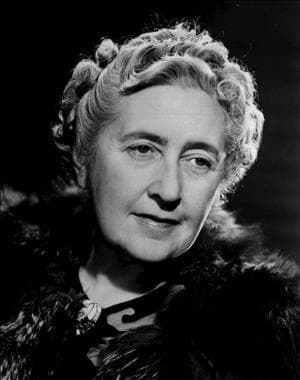
Dame Agatha Mary Clarissa Christie, Lady Mallowan, was an English writer known for her 66 detective novels and 14 short story collections, particularly those revolving around fictional detectives Hercule Poirot and Miss Marple. She also wrote the world's longest-running play, the murder mystery The Mousetrap, which has been performed in the West End since 1952. A writer during the "Golden Age of Detective Fiction", Christie has been called the "Queen of Crime". She also wrote six novels under the pseudonym Mary Westmacott. In 1971, she was made a Dame (DBE) by Queen Elizabeth II for her contributions to literature. Guinness World Records lists Christie as the best-selling fiction writer of all time, her novels having sold more than two billion copies.
Similar books
- THE MURDER OF ROGER ACKROYD
Agatha Christie
4.2 (153k) average on GoodreadsThrillerAnother complex Poirot mystery with shocking twists and a clever murderer.
- The Moonstone
Wilkie Collins
3.9 (79k) average on GoodreadsHistorical FictionA pioneering detective novel with multiple narrators and a stolen jewel at its heart.
- A Study in Scarlet
Arthur Conan Doyle
4.2 (324k) average on GoodreadsHistorical FictionFeatures a brilliant, eccentric detective solving a seemingly impossible murder.
- Angels & Demons
Dan Brown
3.9 (2.7M) average on GoodreadsThrillerA Harvard symbologist races through Rome's ancient sites, deciphering cryptic clues to unmask the Illuminati and stop a vengeful plot to destroy the Vatican with a stolen antimatter weapon.
- Gone Girl
Gillian Flynn
4.1 (2.3M) average on GoodreadsThrillerA wife's sudden disappearance on her fifth anniversary reveals a web of lies and psychological warfare, exposing the secrets within a seemingly perfect marriage.
- The Girl on the Train
Paula Hawkins
3.9 (2.1M) average on GoodreadsThrillerA woman’s fascination with a seemingly perfect couple she watches from her daily train commute leads her into a dark investigation when she witnesses something that shatters their idyllic image.




Enjoyed the summary?
A summary gives you the shape of the book. The book itself has the detail, the examples and the voice.
Find The Murder on the Links on AmazonAs an Amazon Associate, BookBrief earns from qualifying purchases. How we're funded