

Synopsis
Covers the whole plot, including the ending.
- Difficulty
- Medium
- Pacing
- Moderate
- Mood
- Witty, Observational, Humorous, Culturally Rich
- Read it if
- You enjoy satirical novels about social climbing and the absurdities of human nature, set in a unique cultural context.
- Skip it if
- You prefer fast-paced thrillers or straightforward narratives without much irony or social commentary.
The Mystic Masseur Plot Summary
Covers the whole plot, including the ending.
Ganesh's Early Life and Ambitions
Ganesh Ramsumair, a young man from a Trinidad village, returns home after failing teacher's training. People see him as educated, but he lacks practical skills or a clear path. His father, a pundit, encourages him to write, but Ganesh's early attempts fail. He marries Leela, the daughter of the rich and unpredictable shopkeeper Ramlogan. Leela, though educated, doubts Ganesh's lack of immediate prospects and his vague intellectual goals. Their marriage starts with tension due to Ganesh's laziness and Leela's criticism, as they live in Ramlogan's house, subject to his moods.
The Move to Fuente Grove and the Birth of the Masseur
Frustrated by his lack of progress and Leela's constant complaints, Ganesh and Leela move to Fuente Grove, a small, remote village. There, Ganesh tries different things, including writing a book on Indian culture, but again finds little success. Due to a misunderstanding and the villagers' belief in his healing touch, Ganesh is convinced to become a masseur. He is hesitant at first and unsure of his skills, but he slowly accepts the role. He finds that simply rubbing and comforting people brings him respect and income, which pleases Leela's practical side.
The Rise of the 'Mystic'
Ganesh realizes his massage practice could make more money if he added a spiritual element. He begins to study Hindu scriptures, philosophy, and basic psychology, carefully building an image as a mystic. He adopts a more disciplined life, grows a beard, and starts offering consultations that mix physical massage with spiritual advice. He tells his patients to believe in his divine connection and their own faith. This change is planned, meant to increase his clients and reputation, which it does, drawing people from further away.
The Publication of 'The Years of Guilt'
Building on his mystic image, Ganesh finishes his long-planned book, 'The Years of Guilt.' The book is a rambling mix of philosophy, autobiography, and spiritual advice, but its publication is timed with his growing fame. To Ganesh's surprise, and largely because of his reputation as a holy man, the book becomes a bestseller. Its success further solidifies his image as a deep thinker and spiritual guide, attracting more followers and patients, and bringing him much money.
The Expansion of the Enterprise
With more money and popularity, Ganesh expands his work. He hires assistants to manage the many patients and followers, effectively creating a small business around his mystic identity. He sets up a 'school' or ashram-like place where he offers spiritual guidance and training, attracting young, impressionable students. Leela, who was skeptical at first, becomes a practical manager of his growing business, handling money and logistics. Ganesh's influence spreads beyond Fuente Grove, as people travel far to seek his advice and healing, making him a local celebrity.
The Political Ambition
Ganesh's ambitions go beyond spiritual healing and writing. He sees the power politicians have and decides to enter politics. He starts attending public meetings, dealing with local issues, and using his reputation and speaking skills to gain support. His followers, already sure of his wisdom and good nature, easily become his political base. He presents his political goals as a continuation of his service to the people, aiming to bring his mix of wisdom and common sense to government.
The Election Campaign
Ganesh starts a strong campaign for a seat in the Legislative Council. He travels across the district, giving speeches that blend spiritual ideas with promises to the public. He cleverly uses his 'mystic' image to appeal to those who are superstitious and hopeful, while also showing himself as a man of the people who understands their problems. His campaign combines real connection with voters and clever political moves. Leela plays a key role, managing his schedule and money, making sure the campaign runs well despite Ganesh's occasional mistakes.
The Triumph and the Transformation
Ganesh Ramsumair wins the election, surprising many established politicians. His victory marks a big change, proving his ability to adapt and succeed in different areas. After entering the Legislative Council, Ganesh, always the opportunist, decides to drop his 'mystic' image and fully embrace his new political identity. He changes his name to G. Ramsay Muir, showing a move away from his rural, Indian roots toward a more English, professional image. This reflects his fitting into the colonial political system.
G. Ramsay Muir, Politician
As G. Ramsay Muir, Ganesh adapts to colonial politics. He learns to handle parliamentary procedures, debate, and form alliances. While he keeps a certain public image, he mostly leaves behind the obvious mysticism that defined his past career. His political career, though it had challenges, proves to be another success. He becomes a respected, if somewhat mysterious, figure in Trinidadian politics. He is known for his unique journey and his ability to connect with different groups of people. His journey from failed teacher to respected mystic to successful politician is complete.
The Enduring Legacy
The novel ends by looking back at Ganesh's journey and what it means for Trinidadian society. His story shows the possibilities and difficulties of post-colonial identity, where tradition and modern life, spirituality and practicality, often meet in unexpected ways. Ganesh, despite his planned changes, shows a certain strength and ability to adapt, which is typical of the island's diverse population. His ultimate success, moving from a humble village masseur to a national political figure, leaves a lasting, though somewhat unclear, legacy.
The Mystic Masseur Characters
Ganesh Ramsumair (G. Ramsay Muir)
Protagonist
A failed teacher who transforms into a mystic, entrepreneur, and politician.
Ganesh is a complex and opportunistic character, initially struggling with ambition and a lack of direction. He possesses a keen observational intelligence and an ability to adapt to circumstances, often driven by a desire for respect and financial security. He is a master of self-reinvention, carefully cultivating personas to achieve his goals, whether as a spiritual healer or a politician. Despite his calculated moves, there's an underlying earnestness in his desire to be someone of importance.
Relationships: Leela (Wife; initially critical and pragmatic, later supportive and managerial.); Ramlogan (Father-in-law; volatile, wealthy, and initially disapproving.); The Great Belcher (Aunt; a minor but memorable relative.)
Leela
Supporting
Ganesh's pragmatic and initially skeptical wife.
Leela is Ganesh's wife, a practical and outspoken woman whose education has made her acutely aware of social niceties and grammatical precision. Initially, she is critical of Ganesh's idleness and vague intellectual pursuits, often expressing her frustration with a barrage of punctuation marks. As Ganesh's fortunes rise, she transitions from a nagging wife to an indispensable manager of his growing enterprise, demonstrating shrewd business sense and unwavering loyalty, albeit with a persistent underlying skepticism.
Relationships: Ganesh Ramsumair (Husband; their relationship evolves from conflict to partnership.); Ramlogan (Father; respects his wealth but is also wary of his temperament.)
Ramlogan
Supporting
Leela's wealthy and temperamental father.
Ramlogan is Leela's father, a prosperous shopkeeper known for his volatile temper and sudden mood swings. He is a powerful figure in his village, commanding respect through his wealth and his readiness to wield a cutlass. Initially, he views Ganesh with suspicion and disdain, seeing him as an unproductive son-in-law. Despite his intimidating demeanor, he eventually comes to accept, and even grudgingly respect, Ganesh's success, particularly when it translates into social standing and wealth.
Relationships: Ganesh Ramsumair (Son-in-law; initially adversarial, later a relationship of grudging respect.); Leela (Daughter; he is protective of her and expects her to marry well.)
The Great Belcher
Supporting
Ganesh's eccentric and superstitious aunt.
The Great Belcher is Ganesh's aunt, a minor but memorable character known for her excessive belching, which she attributes to various ailments and spiritual disturbances. She embodies the superstitious and traditional beliefs prevalent in the rural Trinidadian community. Her character highlights the cultural context in which Ganesh operates, showing the kind of people who would readily believe in a 'mystic masseur.' She is one of Ganesh's early patients and a testament to the local's belief in his healing powers.
Relationships: Ganesh Ramsumair (Nephew; an early patient and believer in his mystic abilities.)
Pundit Ganesh's Father
Mentioned
A traditional pundit who encourages Ganesh's intellectual pursuits.
Ganesh's father is a pundit, a learned Hindu priest, who instills in Ganesh a respect for education and intellectual endeavors. He encourages Ganesh's early, albeit unfocused, attempts at writing and scholarship. His influence shapes Ganesh's initial self-perception as an intellectual, even when he struggles to translate that into tangible success. He represents the traditional, scholarly aspect of Ganesh's heritage.
Relationships: Ganesh Ramsumair (Father-son; encourages Ganesh's intellectual development.)
The Patients of Fuente Grove
Supporting
The diverse group of villagers who seek Ganesh's healing.
These are the various individuals from Fuente Grove and surrounding areas who come to Ganesh for massages and spiritual advice. They represent the common people of rural Trinidad, often superstitious, afflicted with various physical and mental ailments, and eager for relief and guidance. Their belief in Ganesh's abilities is crucial to his rise, providing him with both income and the validation he craves. They are a collective character, illustrating the community's needs and beliefs.
Relationships: Ganesh Ramsumair (Patients/disciples; they are the foundation of his mystic practice.)
The Political Opponents
Mentioned
The established politicians Ganesh competes against.
These are the existing members of the Legislative Council and other political figures whom Ganesh challenges during his campaign. They represent the established order and often view Ganesh as an outsider or an eccentric. Their skepticism and underestimation of Ganesh contribute to the surprise of his electoral victory. They serve to highlight Ganesh's unique appeal and his ability to subvert traditional political expectations.
Relationships: Ganesh Ramsumair (Political rivals; represent the established order he disrupts.)
The Mystic Masseur Themes
Identity and Reinvention
The novel shows how people create and change their identities based on what society expects and what they want. Ganesh Ramsumair constantly remakes himself—from a failed teacher to a masseur, then a mystic, an author, and finally a politician named G. Ramsay Muir. Each change is a deliberate act to gain status and respect, showing how identity can shift in post-colonial Trinidad. His journey questions if the self is real or if a persona is just useful, as when he grows a beard to look more 'mystic' or changes his name to sound more 'respectable' in politics.
“He knew that the mystic masseur had to be a man of sorrows, a man of profound spiritual insights, a man who had suffered much and was now ready to heal the sufferings of others.”
The Nature of Belief and Superstition
The story explores the power of belief, both real and made-up, and how common superstition is in rural Trinidadian society. Ganesh's success as a 'mystic' depends on the villagers' willingness to believe in his spiritual powers, even when he himself doubts them at first. Patients' problems, often mental or cultural, are 'cured' by Ganesh's massages and statements. This shows how faith and expectation can change what people think is real. This theme is clear in the many strange problems people bring to Ganesh, like the man followed by a bad cloud or those who love bicycles, all of which Ganesh handles with a mix of common sense and fake mysticism.
“He found that the people of Fuente Grove were simple folk, ready to believe anything, and he saw his opportunity.”
Ambition and Social Mobility
The novel closely examines ambition and the ways to move up in society in a colonial setting. Ganesh, despite starting poor and failing at first, deeply wants recognition and success. He cleverly navigates the social world, using education, spirituality, and eventually politics to move up. His journey from a poor village to the Legislative Council shows the possibilities, and often the compromises, involved in rising in society. This is especially clear in his planned decision to write a book and then enter politics, always looking for the next step up.
“He had always known that he was meant for something more than teaching, something more than massaging.”
Colonialism and Post-Colonial Identity
The story indirectly explores how colonialism affected Trinidadian identity and culture. Ganesh's change into G. Ramsay Muir, an English name, shows the desire to fit into the main colonial culture for social and political gain. The mix of traditional Indian customs, local superstitions, and Western education shows the blended nature of post-colonial society. The political system Ganesh enters is a colonial creation, and his success within it highlights the complex relationship between the colonizer and the colonized, and how individuals adapt to gain power in such systems.
“He had shed his old name, his old self, like a snake shedding its skin. He was G. Ramsay Muir now, a name that sounded solid, respectable, British.”
Plot Devices & Literary Techniques
Irony
The contrast between Ganesh's actual abilities and his perceived mystical powers.
Irony is a pervasive device in 'The Mystic Masseur.' Ganesh, who initially struggles as a teacher and only reluctantly becomes a masseur, achieves his greatest success by cultivating a persona of mystical wisdom, which he himself largely fabricates. The irony lies in the fact that his most profound impact comes not from genuine spiritual insight, but from his shrewd understanding of human psychology and his ability to exploit the villagers' credulity. His 'healing' often stems from the patients' belief rather than any inherent power, creating a humorous and critical commentary on the nature of belief and perception.
Character Foil (Leela)
Leela's pragmatism contrasts with Ganesh's evolving personas.
Leela serves as a character foil to Ganesh. Her grounded, pragmatic, and often critical nature provides a stark contrast to Ganesh's intellectual pretenses and later, his mystic and political posturing. While Ganesh is concerned with image and ambition, Leela is focused on tangible results and financial stability. Her skepticism and common sense help to highlight the constructed nature of Ganesh's various identities and provide a voice of reason within the narrative. Their dynamic adds both humor and a sense of realism to Ganesh's often fantastical journey, grounding his aspirations in domestic reality.
Symbolism (The Name Change)
Ganesh's change to G. Ramsay Muir symbolizes his assimilation and ambition.
Ganesh Ramsumair's decision to change his name to G. Ramsay Muir is a potent symbol of his complete transformation and assimilation into the colonial establishment. It represents his shedding of his traditional Indian identity and rural background in favor of a more Anglicized, 'respectable' persona suitable for politics. This act symbolizes not just personal ambition but also the broader societal pressures and aspirations within a post-colonial context, where 'progress' was often associated with adopting Western norms and shedding indigenous ones. The name change marks the culmination of his journey from an outsider to an insider.
Humor (Dickensian Cast)
The use of eccentric characters and situations to create comedic effect.
The novel employs a rich vein of humor, often derived from its 'Dickensian cast of rogues and eccentrics.' Characters like the volatile Ramlogan, the belching aunt, and patients with unusual ailments (e.g., amorous fascination with bicycles) contribute to a comic atmosphere. The humor also arises from the absurd situations Ganesh finds himself in and his often-pompous pronouncements. This lighthearted approach allows Naipaul to satirize societal flaws and human foibles without becoming overly didactic, making the social commentary more palatable and engaging for the reader.
The Mystic Masseur Quotes
“Believe me, I am no charlatan. I am a man of God. I am a healer.”
“The people wanted a pundit, and a pundit they got.”
“What is wrong with being a masseur? It is an honourable profession.”
“He began to write his books. He wrote about everything.”
“His fame grew, and with it, his responsibilities.”
“The truth was, Ganesh never really meant to be a pundit. He meant to be a writer.”
“He knew that if he was to succeed, he had to give the people what they wanted.”
“The people believed in him, and that was all that mattered.”
“He was a man who understood the psychology of the crowd.”
“From masseur to mystic, from mystic to politician. It was a natural progression.”
“He had started as a simple man, and he had ended as a complicated one.”
“He had become a symbol, and symbols are hard to control.”
“The world was full of men who wanted to be something else.”
“He had given them what they wanted, and in doing so, he had found his own way.”
Quiz
10 questions on the plot and the characters. Each answer comes with a short explanation.
Question 1
What is Ganesh Ramsumair's initial profession before he becomes a mystic and politician?
- A lawyer
- A schoolteacher
- A shopkeeper
- A farmer
Show answer
B. A schoolteacher Ganesh Ramsumair is described as a 'failed schoolteacher' before he begins his career as a village masseur and later a mystic.
Question 2
Who is Leela in relation to Ganesh Ramsumair?
- His mother
- His sister
- His wife
- His aunt
Show answer
C. His wife The text explicitly states, 'There’s his skeptical wife, Leela...'
Question 3
What unusual habit does Leela have, as mentioned in the description?
- She is excessively fond of cooking
- She is excessively fond of punctuation marks
- She is excessively fond of singing
- She is excessively fond of sleeping
Show answer
B. She is excessively fond of punctuation marks Leela's schooling has made her 'excessively, fond. of; punctuation: marks!'
Question 4
What does the character Ramlogan carry with him, indicating his volatile nature?
- A book
- A walking stick
- A cutlass
- A basket of fruit
Show answer
C. A cutlass Ramlogan is described as 'a man of startling mood changes and an ever-ready cutlass.'
Question 5
In the 1940s in Trinidad, what was the common perception of masseurs?
- They were seen as charlatans.
- They were considered the island's primary medical practitioners.
- They were mostly respected for their athletic abilities.
- They were seen as entertainers.
Show answer
B. They were considered the island's primary medical practitioners. The description states, 'in the 1940s masseurs were the island’s medical practitioners of choice.'
Question 6
What specific criticism is mentioned about doctors in Trinidad by one character?
- They are too expensive.
- They are too slow to respond.
- They are prone to killing patients carelessly.
- They prescribe too much medicine.
Show answer
C. They are prone to killing patients carelessly. A character observes, 'I know the sort of doctors they have in Trinidad. They think nothing of killing two, three people before breakfast.'
Question 7
Which Nobel Prize-winning author wrote 'The Mystic Masseur'?
- Gabriel García Márquez
- V. S. Naipaul
- Salman Rushdie
- Derek Walcott
Show answer
B. V. S. Naipaul The introductory paragraph clearly states, 'The Nobel Prize-winning author delivers a Dickensian novel...' and then identifies him as 'V. S. Naipaul'.
Question 8
What literary style is 'The Mystic Masseur' compared to in the description?
- Gothic literature
- Romantic poetry
- Dickensian novel
- Stream of consciousness
Show answer
C. Dickensian novel The book is explicitly described as a 'Dickensian novel' and featuring a 'Dickensian cast of rogues and eccentrics'.
Question 9
What is the primary setting of 'The Mystic Masseur'?
- India
- England
- Trinidad
- Jamaica
Show answer
C. Trinidad The novel 'traces the unlikely career... in Trinidad' and is filled with 'the sights, sounds, and smells of Trinidad’s dusty Indian villages'.
Question 10
Which of the following describes a type of patient Ganesh encounters, as mentioned in the text?
- Patients suffering from chronic insomnia
- Patients with an amorous fascination with bicycles
- Patients who are afraid of water
- Patients who can only speak in rhymes
Show answer
B. Patients with an amorous fascination with bicycles The text mentions 'patients pursued by malign clouds or afflicted with an amorous fascination with bicycles.'
The Mystic Masseur FAQ
What is the central premise of 'The Mystic Masseur'?
The novel follows Ganesh Ramsumair, a failed schoolteacher in rural Trinidad, who reinvents himself as a village masseur. Through a combination of shrewdness, opportunism, and an evolving public perception, he transforms into a revered mystic, a successful entrepreneur, and ultimately a prominent politician.
Who is Ganesh Ramsumair, and what is his initial profession?
Ganesh Ramsumair is the protagonist, initially a young man with a modest education who fails as a schoolteacher. He then returns to his village and takes up the profession of a masseur, which was a common medical practice in Trinidad during the 1940s.
How does Ganesh transition from a masseur to a 'mystic'?
Ganesh initially struggles, but he begins to cultivate an image of wisdom and spiritual insight by writing books, often plagiarizing or adapting existing texts. His patients and the public, desperate for guidance and cures, start to attribute mystical powers and profound knowledge to him, which he subtly encourages.
Who are some of the key supporting characters in Ganesh's life?
Key characters include his skeptical wife, Leela, known for her excessive use of punctuation; her volatile father, Ramlogan, who often carries a cutlass; and the memorable Aunt known as The Great Belcher. These characters provide both support and comedic obstacles for Ganesh.
What role does public perception and credulity play in Ganesh's rise?
Public perception is crucial to Ganesh's ascent. The villagers' belief in alternative medicine, their desire for a local hero, and their willingness to overlook his humble origins and dubious methods all contribute to his growing reputation as a genuine mystic and, later, a political figure.
How does Ganesh's initial failure as a schoolteacher foreshadow his later success?
Ganesh's failure as a teacher highlights his ambition and his inability to conform to conventional paths. It forces him to seek alternative means of livelihood and respect, ultimately pushing him towards the more unconventional and entrepreneurial path of a 'mystic' and politician, where he can define his own rules.
What is the significance of Leela's 'excessive use of punctuation'?
Leela's peculiar speech pattern, marked by excessive punctuation, subtly indicates her attempt to appear educated and refined, perhaps overcompensating for her background or expressing a certain internal anxiety. It also serves as a comedic quirk that highlights her skepticism towards Ganesh's ventures.
How does Ganesh's 'writing' contribute to his persona, even if it's not entirely original?
Ganesh's act of writing, regardless of the originality of the content, is instrumental in establishing his intellectual and spiritual authority. In a community with limited access to formal education and literature, the mere production of books elevates his status and makes him appear wise and learned to his followers.
What does the character of Ramlogan, Leela's father, symbolize or represent?
Ramlogan, with his volatile moods and ever-present cutlass, embodies a certain raw, unpredictable, and sometimes violent aspect of rural Trinidadian life. He represents the pragmatic, often intimidating, forces Ganesh must navigate and occasionally appease, highlighting the complex social dynamics of the community.
How does Ganesh's 'masseur' role tap into the psychological needs of the community?
As a masseur, Ganesh provides not just physical relief but also a sense of personalized care and attention, often combined with an element of spiritual counsel. In a society where formal medical care is mistrusted or inaccessible, his practice fulfills a deep psychological need for healing, comfort, and belief in a local, relatable practitioner.
Discuss Ganesh's character development from a 'failed' individual to a 'beloved politician'.
Ganesh's journey is one of continuous adaptation and self-reinvention. He starts as a dreamer, fails, then learns to observe, manipulate, and capitalize on the needs and superstitions of his community. His development shows a progression from naive ambition to calculated opportunism, culminating in a shrewd understanding of public relations and power.
What psychological vulnerabilities of his patients does Ganesh exploit?
Ganesh exploits his patients' anxieties about health, their superstitions, their longing for meaning, and their trust in traditional or spiritual remedies over formal medicine. He offers simple, often common-sense advice framed in mystical language, playing on their desperation and desire for easy solutions to complex problems.
Is Ganesh a genuine mystic, a charlatan, or something in between?
Ganesh is presented as a complex figure, largely a charlatan who shrewdly capitalizes on public credulity. However, his journey also suggests a gradual internalisation of his role, blurring the lines between performance and belief. He may not possess true mystical powers, but he genuinely becomes a symbol of hope and authority for many.
What is Naipaul's broader commentary on post-colonial Trinidadian society through Ganesh's story?
Naipaul uses Ganesh's story to comment on the social and political landscape of post-colonial Trinidad, highlighting issues like the limited opportunities for educated individuals, the prevalence of superstition, the distrust of official institutions, and the rise of populist figures who exploit these conditions for personal gain and power.
How does the novel satirize the pursuit of knowledge and intellectualism?
The novel satirizes intellectualism by showing Ganesh's superficial engagement with books and ideas. He uses knowledge not for genuine understanding, but as a tool for self-promotion and to impress others. This highlights the performative aspect of intellect in a society where genuine scholarship might be less valued than perceived wisdom.
Does the novel portray Ganesh's rise as a positive or negative phenomenon?
The novel maintains an ambiguous, often satirical tone, suggesting that Ganesh's rise is both a testament to his resilience and a critique of the societal conditions that enable such a figure. While he achieves success, it's often through manipulation, implying a critical view of the 'mystic masseur' phenomenon.
What does the quote about doctors 'killing two, three people before breakfast' reveal about the setting?
This quote highlights the deep-seated distrust in formal medical practitioners and institutions prevalent in Trinidad at the time. It underscores the community's reliance on traditional healers like masseurs and provides context for why someone like Ganesh could gain such influence and trust.
How does Ganesh's relationship with Leela evolve throughout his career?
Leela begins as a skeptical and often critical partner, initially a burden due to her family. As Ganesh's fame and wealth grow, her skepticism often remains, but she becomes more integrated into his public life, acting as a supportive, if still slightly detached, wife. Their relationship is a blend of domestic reality and public performance.
About the author
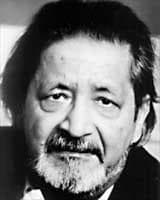
Sir Vidiadhar Surajprasad Naipaul was a Trinidadian-born British writer of works of fiction and nonfiction in English. He is known for his comic early novels set in Trinidad, his bleaker novels of alienation in the wider world, and his vigilant chronicles of life and travels. He wrote in prose that was widely admired, but his views sometimes aroused controversy. He published more than thirty books over fifty years.
Similar books
- A House for Mr Biswas
V. S. Naipaul
3.8 (18k) average on GoodreadsLiterary FictionAnother Naipaul novel exploring an individual's struggle and ambition in Trinidadian society.
- The Adventures of Augie March
Saul Bellow
3.8 (16k) average on GoodreadsLiterary FictionFeatures a picaresque journey of a protagonist navigating life's challenges with a blend of humor and philosophical reflection.
- Catch-22
Joseph Heller
4.0 (723k) average on GoodreadsHistorical FictionShares a similar satirical tone and a cast of eccentric characters amidst societal absurdities.
- Miguel Street
V. S. Naipaul
3.9 (5k) average on GoodreadsFictionMiguel Street, Naipaul's collection of interconnected short stories, shares the Trinidadian setting and a keen observational style with The Mystic Masseur. However, Miguel Street offers a more episodic and fragmented view of local life through the eyes of a young narrator, focusing on a diverse cast of eccentric characters and their individual stories. The Mystic Masseur, in contrast, follows a single protagonist's linear progression and transformation, offering a more sustained and focused critique of ambition and social climbing. While both capture the 'picaro-like' spirit of Trinidad, Miguel Street is more an affectionate sketch of a community, and The Mystic Masseur is a pointed character study of an individual's strategic ascent.
- The Lonely Londoners
Samuel Selvon
3.7 (14k) average on GoodreadsSelvon's The Lonely Londoners (1956) offers a contemporaneous perspective on the West Indian experience, but shifts the geographical focus to the lives of Caribbean immigrants in post-war London. While both Naipaul and Selvon employ humor and a distinct Caribbean voice, Selvon's novel is characterized by its warmth and communal spirit, even amidst the hardships faced by its characters. The Mystic Masseur is rooted in the specific social and political landscape of Trinidad and critiques internal societal structures, whereas The Lonely Londoners explores themes of displacement, adaptation, and the formation of a diasporic identity. Naipaul's satire in The Mystic Masseur is often more biting and critical of individual ambition, while Selvon's narrative, though acknowledging difficulties, frequently celebrates the resilience and camaraderie of the immigrant community.
- Harry Potter and the Sorcerer's Stone
J.K. Rowling
4.5 (7M) average on GoodreadsFantasyRescued from a miserable life under the stairs, an orphaned boy discovers he's a wizard destined for a magical school, where he uncovers a dangerous secret tied to the dark wizard who murdered his parents.






Enjoyed the summary?
A summary gives you the shape of the book. The book itself has the detail, the examples and the voice.
Find The Mystic Masseur on AmazonAs an Amazon Associate, BookBrief earns from qualifying purchases. How we're funded