

Synopsis
Covers the whole plot, including the ending.
- Difficulty
- Medium
- Pacing
- Variable
- Mood
- Philosophical, Witty, Rambling, Observational, Picaresque
- Read it if
- You enjoy sprawling, character-driven narratives with philosophical depth, a strong sense of place (especially historical Chicago), and a unique narrative voice.
- Skip it if
- You prefer tightly plotted stories, clear resolutions, or protagonists with definitive goals and linear progression.
The Adventures of Augie March Plot Summary
Covers the whole plot, including the ending.
Childhood in Depression-Era Chicago
Augie March tells about his early life in a working-class Jewish home in Chicago during the Great Depression. He lives with his mentally disabled younger brother, Georgie, his older brother, Simon, and his nearly blind mother, all under the strong influence of their grandmother, Grandma Lausch. Grandma Lausch, a shrewd Russian immigrant, controls the family's small finances and dictates their lives with her statements and plans. Augie sees the struggles and quirks of his family and neighbors, developing an early sense of independence and a detached, observant nature amid the widespread poverty and lack of a stable father figure. He engages in petty theft and odd jobs, already showing his adaptability and resistance to being fully defined by his circumstances.
Early Jobs and Encounters
As Augie grows, he takes on many jobs, including working for a newspaper vendor, a shoemaker, and eventually for William Einhorn, a local businessman who runs a pool hall and other ventures. Einhorn, a charismatic and thoughtful figure, becomes a mentor to Augie, showing him a world of ambition, risk, and street wisdom. Augie observes Einhorn's rise and fall, learning about human nature and the pursuit of success. During this time, Augie also has his first romantic relationships, notably with Sophie Gueswiller, and begins to explore his own identity through these diverse experiences and the many unique people he meets in Chicago.
Simon's Ambition and Augie's Drift
Augie's older brother, Simon, wanting financial security and social status, falls in love with and marries Charlotte Magnus, the rich daughter of a coal magnate. Simon, now part of the wealthy Magnus family, tries to bring Augie into their world, offering him a job in the coal business and urging him to marry a suitable woman. Augie, however, resists Simon's attempts to shape his life, feeling an aversion to being tied down by conventional expectations or the pursuit of money. He feels drawn to different experiences and people, keeping his independent spirit even as he temporarily benefits from Simon's connections, ultimately rejecting the path Simon wants for him.
Thea Fenchel and the Eagle
Augie leaves Simon's influence and becomes involved with Thea Fenchel, a wealthy, strong-willed, and unconventional woman. Thea is set on training a wild eagle, Caligula, to hunt lizards in the desert. Augie goes with her to Mexico, where they live a bohemian life, funded by Thea's family money. Their relationship is intense but difficult, marked by Thea's controlling nature and her focus on the eagle. Augie, while interested in Thea's intensity and the unusual pursuit, ultimately feels limited by her desires and her attempts to define his purpose. The eagle's failure to hunt successfully reflects the failure of their relationship to give Augie the freedom or meaning he seeks.
Mexico and Stella
After his relationship with Thea ends, Augie stays in Mexico for a time. He becomes involved with Stella, a woman he meets there. This relationship is less intense and demanding than with Thea, offering Augie a different kind of companionship. However, it also proves to be temporary. During this period, Augie continues to observe the diverse human experiences around him, thinking about his own journey and the paths he has taken or avoided. His time in Mexico strengthens his sense of being an 'independent man,' unwilling to be fully absorbed into any single identity or lifestyle, continually searching for something undefined.
Return to Chicago and Further Entanglements
Augie eventually returns to Chicago, where he continues his pattern of moving between jobs and relationships. He reconnects with various people from his past, including Einhorn, whose fortunes have changed, and Simon, who remains focused on his business and family life. Augie also meets and becomes involved with a woman named Mimi, who is a dedicated communist. Their relationship shows Augie the world of political activism and strong beliefs, but he resists fully embracing any single cause or idea, viewing it with his usual mix of fascination and skepticism. He keeps his detachment, even as he experiences the intensity of Mimi's beliefs and her group.
World War II and Europe
With the start of World War II, Augie enlists in the Merchant Marine, a decision that takes him out of America and across the Atlantic. His wartime experiences are marked by a series of misadventures and encounters with new, unique characters. He survives a shipwreck and finds himself in various European locations, including France. During this time, Augie continues to deal with questions of identity, purpose, and the meaning of freedom, far from Chicago. The war serves as another background against which Augie's independent spirit and his refusal to be confined by circumstances are tested and confirmed.
Meeting Stella (Again) and Marriage
In a turn of events, Augie meets Stella, the woman he knew in Mexico, in wartime Europe. Their reunion leads to marriage. Stella, an actress, gives Augie a more stable, though still unconventional, partnership than his previous relationships. They settle in France, trying to build a life together amid the lingering chaos of the war and its aftermath. Their marriage, while offering companionship, still shows Augie's fundamental restlessness and his ongoing search for an authentic existence that aligns with his inner self, one that resists definition by external forces or societal expectations.
Life in Post-War France
Augie and Stella establish a life in post-war France, where Augie becomes involved in various questionable business ventures, often with shady characters. He works with his friend Marcel, engaging in smuggling and other opportunistic schemes to make a living. These ventures are rarely successful long-term, but they give Augie a constant stream of experiences and interactions. He continues to meet diverse individuals, engaging in discussions about life, freedom, and human nature, always keeping his unique perspective as an observer and participant in the 'human comedy.' His experiences solidify his understanding of himself as a man who chooses his own way, even if that way is often wandering and undefined.
The Search for a 'Worthwhile Fate'
Throughout his adventures in France and beyond, Augie continues to think about his lifelong search for a 'worthwhile fate' – a life that is truly his own, free from the demands of others or the constraints of society. He struggles with the idea of being 'a born recruit' who resists recruitment, a man who consistently avoids definition. The novel ends with Augie and Stella on a road trip, having just completed a minor, semi-legal deal. Augie looks out at the landscape, contemplating the vastness of life and his place within it. He acknowledges the absurdity and complexity of existence, reaffirming his belief in finding joy and meaning in the act of living and embracing one's own unique, unscripted path, even if it remains perpetually open-ended.
Principal Figures
Augie March
Protagonist
An independent and observant man, constantly searching for his 'worthwhile fate.'
Augie March is the quintessential 'born recruit' who resists being recruited into any fixed identity or life path. He is intelligent, observant, and possesses a profound inner freedom that makes him resist the expectations of others, be they family, lovers, or society. Growing up in poverty, he learns to adapt and survive, but always maintains a core sense of self that refuses to be defined by his circumstances. He is a philosophical wanderer, drawn to eccentric characters and unusual experiences, often finding himself in situations that test his resilience and his understanding of human nature. He is driven by a desire for an authentic life, though he struggles to articulate exactly what that means.
Relationships: Grandma Lausch (dominated by her, but resists her influence); Simon March (brother, whose conventional ambitions Augie rejects); William Einhorn (mentor figure, a 'street operator'); Thea Fenchel (intense, controlling lover, shares an unusual adventure); Stella (eventual wife, offers a different kind of companionship and stability); Mimi (communist lover, exposes Augie to political ideology)
Grandma Lausch
Supporting
The manipulative and shrewd matriarch of the March family.
Grandma Lausch is Augie's Russian-immigrant grandmother, a formidable and manipulative figure who dominates the March household in their early years. Despite her advanced age and infirmities, she possesses a sharp mind and an unyielding will, controlling the family's meager finances and dictating their lives with her pronouncements and schemes. She is a survivor, pragmatic and often cynical, embodying a certain kind of Old World wisdom and ruthlessness. Her influence shapes Augie's early understanding of power dynamics and resistance, as he learns to navigate her controlling nature while maintaining his own internal freedom.
Relationships: Augie March (dominates his early life, but Augie resists her control); Augie's Mother (her daughter-in-law, under her control); Simon March (her grandson, who eventually escapes her direct influence)
Simon March
Supporting
Augie's older brother, driven by ambition for wealth and social status.
Simon is Augie's older brother, a stark contrast to Augie's wandering spirit. He is ambitious, practical, and deeply concerned with achieving financial security and social respectability. He sees the world in terms of opportunities and hierarchies, and he is determined to climb the social ladder, eventually marrying into the wealthy Magnus family. Simon genuinely cares for Augie but constantly tries to mold him into his own vision of success, which Augie consistently rejects. Simon represents the conventional path that Augie consciously chooses to avoid, highlighting Augie's unique philosophy of life.
Relationships: Augie March (brother, tries to guide Augie to conventional success); Charlotte Magnus (wife, her wealth and family are key to his social ascent)
William Einhorn
Supporting
A charismatic and philosophical Chicago 'operator' who mentors Augie.
William Einhorn is a complex and magnetic figure, a 'lame emperor' of the Chicago streets. He runs a pool hall and various other businesses, embodying a shrewd, street-smart intelligence blended with a philosophical outlook on life. Despite being physically disabled, he possesses immense vitality and a talent for observation and manipulation. Einhorn becomes a significant mentor to Augie, exposing him to the realities of ambition, human nature, and the art of navigating the world outside conventional society. He represents a kind of 'independent man' whom Augie admires, though Augie ultimately seeks a different kind of freedom than Einhorn's pursuit of influence.
Relationships: Augie March (mentor figure, employer, and philosophical confidant)
Thea Fenchel
Supporting
A wealthy, strong-willed, and unconventional woman obsessed with training an eagle.
Thea Fenchel is one of Augie's most significant romantic entanglements. She is a wealthy, independent, and intensely focused woman with a singular passion: training a wild eagle, Caligula, to hunt lizards in the Mexican desert. Thea is strong-willed, demanding, and seeks to mold Augie into her vision of a partner, someone who shares her unique purpose. She represents a powerful, almost overwhelming, force in Augie's life, challenging his independence while offering him an exotic and adventurous experience. Her desire for control and her inability to accept Augie's inherent freedom ultimately lead to their separation.
Relationships: Augie March (intense romantic and adventurous partner, but ultimately too controlling for him)
Stella
Supporting
Augie's eventual wife, an actress who offers a different kind of companionship.
Stella is a woman Augie first meets in Mexico and later encounters again in Europe, eventually marrying her. As an actress, she possesses a certain theatricality and adaptability, but she is less demanding and controlling than Thea. Stella offers Augie a more stable and accepting partnership, allowing him more space for his independent spirit. While their marriage is not without its challenges or unconventional aspects, she represents a kind of companionate love that Augie can finally embrace, one that accommodates his ongoing search for his 'worthwhile fate' rather than attempting to define it for him.
Relationships: Augie March (romantic partner and eventual wife)
Georgie March
Supporting
Augie's mentally disabled younger brother.
Georgie is Augie's younger brother, who is mentally disabled. His presence in the March household adds to the family's burdens and complexity. Georgie is largely cared for by his mother and grandmother, and his condition serves as a constant reminder of the family's vulnerability and the harsh realities of their poverty. Augie feels a protective affection for Georgie, and his brother's innocence and dependence highlight Augie's own burgeoning independence and his observations of life's arbitrary cruelties.
Relationships: Augie March (younger brother, Augie feels protective of him)
Mimi
Supporting
A committed communist with whom Augie has a relationship.
Mimi is a passionate and ideologically driven communist whom Augie encounters upon his return to Chicago. Their relationship is marked by Mimi's fervent political beliefs and her attempts to engage Augie in her cause. While Augie is fascinated by her conviction and the intellectual discussions around communism, he ultimately remains resistant to fully embracing any single ideology. Mimi represents a different kind of 'recruitment' that Augie again sidesteps, reinforcing his inherent skepticism towards grand systems and his preference for individual freedom and experience.
Relationships: Augie March (romantic partner, attempts to introduce him to political activism)
Charlotte Magnus
Supporting
Simon's wealthy wife, from a prominent Chicago family.
Charlotte Magnus is the wealthy daughter of a coal magnate whom Augie's brother, Simon, marries. She represents the upper echelon of Chicago society and the material success that Simon so desperately craves. Charlotte, while initially welcoming to Augie, embodies the conventional expectations and social climbing that Augie finds stifling. Her world is one of comfort and established order, a stark contrast to Augie's fluid and unpredictable existence. Her presence underscores the divergent paths taken by the two brothers.
Relationships: Simon March (wife, her family's wealth and status are central to his ambitions); Augie March (sister-in-law, a symbol of the conventional life he avoids)
Themes & Insights
The Search for a 'Worthwhile Fate' and Individual Freedom
This theme is key to Augie's entire journey. He constantly seeks a life that is truly his own, not dictated by external forces, societal expectations, or the desires of others. From his resistance to Grandma Lausch's control and Simon's ambitions, to his rejection of Thea's possessiveness and Mimi's strong beliefs, Augie consistently shows his independence. His 'worthwhile fate' is not a destination but a continuous process of self-definition, a refusal to be 'recruited' into any set role, even if it means a life of wandering. His adventures in Mexico and Europe, and his various unconventional jobs, all reflect this relentless pursuit of an unscripted existence.
“I am an American, Chicago born — Chicago, that somber city — and go at things as I have taught myself, free-style, and will make the record in my own way: first to knock, first admitted; sometimes an innocent knock, sometimes not.”
Identity and Self-Definition in a Shifting World
Augie March deals with the question of who he is amidst a constantly changing group of characters and environments. He is 'a born recruit' in that many try to define him or enlist him in their plans, but he ultimately resists all such attempts. His identity is not fixed but fluid, shaped by his experiences but never fully contained by them. The novel explores how one maintains a core sense of self when faced with poverty, war, diverse cultures, and many influences. Augie's ability to observe, adapt, and yet remain fundamentally himself is central to this theme, suggesting that identity is an ongoing process of choosing what to accept and what to reject.
“I had a look for myself and saw that I was a person of original experience, and would have to find my own way to go through it.”
The American Dream and Its Discontents
The novel questions and redefines the traditional American Dream. While characters like Simon pursue wealth and social status, Augie finds these goals empty and limiting. His version of the American Dream is not about money but about personal freedom, the right to pursue an individual, unscripted existence. Growing up poor during the Great Depression, Augie sees the limits and contradictions of conventional success. His encounters with figures like Einhorn, who embodies a more unconventional, street-smart ambition, further complicate the idea of what constitutes a 'successful' life in America, suggesting that true fulfillment might lie outside the established paths.
“What did I want to be? A good question. To be what I am, as I am, and to become what I am capable of becoming.”
The Nature of Relationships and Human Connection
Augie's life is defined by a series of intense, often temporary, relationships with many unique individuals. From the chaotic dynamics of his family to his romantic relationships with Thea, Mimi, and Stella, the novel explores the complexities of human connection. Augie is drawn to people but often keeps an emotional distance, observing them with curiosity. He seeks companionship but resists being fully absorbed or defined by any single relationship. This theme highlights the human need for connection balanced against the desire for individual autonomy, and how relationships can both enrich and challenge one's sense of self.
“I had a lot of human nature to deal with, and it was mostly in the other person.”
The Absurdity and Vitality of Life
Throughout his adventures, Augie encounters life's inherent absurdity, its unpredictable turns, and its often-comical characters. He embraces this chaos with wonder and resilience. From Einhorn's bizarre plans to Thea's obsession with her eagle, and his own involvement in smuggling, Augie approaches life with a philosophical acceptance of its inherent strangeness. This theme is reflected in the novel's episodic structure and its energetic, often humorous, portrayal of human folly and aspiration. Augie's narrative voice, with its mix of wit and deep observation, shows that life, despite its difficulties, is a rich and vital experience to be lived fully.
“A man's character is his fate. Or must be. And what a character, what a fate!”
Plot Devices & Literary Techniques
First-Person Narrative with Philosophical Digressions
Augie's distinct voice guides the story, interweaving plot with his reflections.
The novel is told entirely from Augie March's first-person perspective, giving the reader direct access to his thoughts, observations, and unique philosophical outlook. His narrative style is expansive, colloquial, and often digressive, blending vivid descriptions of events and characters with profound meditations on freedom, identity, and the meaning of life. This device allows Bellow to explore complex ideas through Augie's engaging and highly individual voice, making the reader a confidant in his lifelong search for a 'worthwhile fate.' It also highlights Augie's role as an observer and interpreter of the human comedy.
Picaresque Structure
A series of episodic adventures as Augie drifts through life.
The novel largely follows a picaresque structure, where Augie, the 'picaro' or rogue hero, moves from one episode, job, and relationship to another without a fixed destination or overarching plot. Each chapter or section presents a new set of characters, challenges, and experiences, reflecting Augie's restless spirit and his resistance to being tied down. This structure allows for a broad exploration of different social strata, philosophical ideas, and human types, emphasizing Augie's journey of self-discovery through continuous interaction with a diverse and ever-changing world, rather than a linear progression towards a specific goal.
Foil Characters
Characters who highlight Augie's unique qualities through contrast.
Bellow frequently uses foil characters to illuminate Augie's distinct personality and philosophy. Simon, with his ambition for conventional success, serves as a direct contrast to Augie's rejection of material wealth and social climbing. Thea Fenchel's controlling nature and singular obsession with the eagle highlight Augie's desire for unencumbered freedom. Even figures like William Einhorn, while admired by Augie, represent a different kind of 'independent man' – one focused on influence and operation, rather than Augie's more existential quest. These foils underscore Augie's core values and his consistent resistance to being defined or confined by others' expectations.
Symbolism of the Eagle (Caligula)
Thea's eagle represents untamed nature and the futility of trying to control freedom.
Thea Fenchel's wild eagle, Caligula, serves as a powerful symbol. It represents untamed nature, fierce independence, and the inherent resistance of certain spirits to domestication or control. Thea's obsessive and ultimately futile attempts to train Caligula to hunt lizards in the desert parallel her efforts to control Augie and mold him to her will. The eagle's refusal to perform its assigned role mirrors Augie's own refusal to be 'recruited' into a life that isn't his own. Its wildness and freedom, even when constrained, reflect Augie's own essential, untamable spirit and his deep-seated aversion to being captured or defined.
The Adventures of Augie March Quotes
“I am an American, Chicago born—Chicago, that somber city—and go at things as I have taught myself, freestyle, and will make the record in my own way: first to knock, first admitted; sometimes an innocent knock, sometimes a criminal.”
“Everybody is an unknown quantity, a mystery, a problem, but it's not a mystery for me. They're all the same. They're all full of ideas and schemes, and they all want to get ahead. But they don't know how to do it.”
“A man's character is his fate.”
“I don't mind a little suffering if it's for something good.”
“What did I want to be? A good human being. But that's not a thing you can be. It's something you are or you aren't.”
“Columbus too thought he was on his way to China, and discovered America. But his discovery was a mistake. America was a mistake. I am a mistake.”
“To be able to choose! That's the great thing. To be able to choose your own life, your own fate, your own friends, your own woman, your own everything.”
“There was a time when I was a boy and I thought I was going to be a great man. But I found out that I was going to be a man, and that was enough.”
“Truth, if it's true, is always beautiful.”
“You can't get away from yourself. You can only get away with yourself.”
“I had a feeling that there were other things besides money, and that they were more important.”
“The world is a very strange place, and people are very strange in it.”
“I'm not a man to stay in one place, or to stay with one idea.”
“You can't just live for yourself. You have to live for others too.”
“Why must I be a sort of a sport, a kind of a freak, a person of exception?”
Quiz
10 questions on the plot and the characters. Each answer comes with a short explanation.
Question 1
Which city is Augie March growing up in during the Great Depression?
- New York City
- Chicago
- Detroit
- St. Louis
Show answer
B. Chicago The novel explicitly states that Augie is a 'poor Chicago boy growing up during the Great Depression.'
Question 2
What unique companion does Thea, one of Augie's acquaintances, travel with?
- A trained monkey
- A hunting dog
- An eagle trained to hunt small creatures
- A talking parrot
Show answer
C. An eagle trained to hunt small creatures The description mentions Thea, a 'would-be siren,' who 'travels with an eagle trained to hunt small creatures.'
Question 3
What is Augie's general attitude towards the various occupations he takes on throughout the novel?
- He enthusiastically embraces each one as his true calling.
- He accepts them reluctantly but remains committed.
- He proudly rejects each one as unworthy after a period.
- He is constantly fired from them against his will.
Show answer
C. He proudly rejects each one as unworthy after a period. Augie is described as a 'born recruit' who 'makes himself available for a series of occupations, then proudly rejects each one as unworthy.'
Question 4
Who provided the introduction to the Penguin Classics edition of 'The Adventures of Augie March'?
- Martin Amis
- Saul Bellow
- Christopher Hitchens
- A distinguished scholar selected by Penguin
Show answer
C. Christopher Hitchens The description states, 'This Penguin Classics edition, with an introduction by celebrated writer and critic Christopher Hitchens.'
Question 5
What type of individuals are Augie's companions generally characterized as?
- Hard-working, conventional citizens
- Academics and intellectuals
- Plungers, schemers, risk-takers, and 'hole-and-corner' operators
- Quiet, introspective artists
Show answer
C. Plungers, schemers, risk-takers, and 'hole-and-corner' operators The text notes that Augie's 'own oddity is reflected in the companions he encounters—plungers, schemers, risk-takers, and “hole-and corner” operators.'
Question 6
What does the phrase 'born recruit' suggest about Augie March's character?
- He is naturally inclined to join the military.
- He is easily influenced and available for various roles or experiences.
- He is destined to lead others.
- He is always looking for a new job.
Show answer
B. He is easily influenced and available for various roles or experiences. The phrase 'born recruit' is immediately followed by 'Augie makes himself available for a series of occupations,' implying a readiness to be drawn into different situations and roles.
Question 7
What specific characteristic makes Augie's companions Einhorn and Thea 'odd' according to the description?
- Their extreme wealth and social status.
- Their quiet and reserved personalities.
- Their ambitious, unconventional, and sometimes dubious pursuits.
- Their lack of ambition and desire for a simple life.
Show answer
C. Their ambitious, unconventional, and sometimes dubious pursuits. Einhorn is described as a 'would-be tycoon' and Thea as a 'would-be siren' who travels with a hunting eagle, fitting the pattern of 'plungers, schemers, risk-takers, and “hole-and corner” operators.'
Question 8
How does the novel's initial reception in 1953 characterize its significance?
- It was considered a controversial and divisive work.
- It was immediately hailed as an American classic.
- It received mixed reviews and took time to gain recognition.
- It was overlooked by most critics at the time.
Show answer
B. It was immediately hailed as an American classic. The text states: 'As soon as it first appeared in 1953, this novel by the great Saul Bellow was hailed as an American classic.'
Question 9
Martin Amis's quote, 'The Adventures of Augie March is the great American Novel. Search no further,' suggests what about the book's thematic scope?
- It is a definitive portrayal of the American experience and identity.
- It is the longest American novel ever written.
- It is a highly localized story with limited universal appeal.
- It focuses solely on the economic struggles of the Great Depression.
Show answer
A. It is a definitive portrayal of the American experience and identity. The 'Great American Novel' typically refers to a work that captures the essence of the American experience, culture, and national character, implying a broad and definitive thematic scope.
Question 10
Given Augie's tendency to reject occupations as 'unworthy,' what underlying theme might this suggest about his character's journey?
- A consistent desire for financial stability.
- A search for authenticity and a meaningful purpose beyond conventional roles.
- A fear of commitment and responsibility.
- A critical view of the American economic system.
Show answer
B. A search for authenticity and a meaningful purpose beyond conventional roles. Augie's repeated rejection of occupations as 'unworthy' implies a quest for something more profound or personally fulfilling than the roles society offers, pointing to a search for authenticity and self-definition.
The Adventures of Augie March FAQ
Who is Augie March and what is his central struggle throughout the novel?
Augie March is the eponymous narrator, a 'born recruit' from Depression-era Chicago, who grapples with the desire for self-definition and independence. His central struggle involves resisting the various identities and life paths thrust upon him by numerous strong-willed individuals, seeking instead an authentic self not dictated by external forces or societal expectations.
What role does Augie's family, particularly his mother and brother Simon, play in his early life?
Augie's family provides his initial environment of poverty and disorder, with his nearly blind mother and mentally challenged brother, George, contributing to a chaotic household. His older brother, Simon, later becomes a wealthy businessman and attempts to mold Augie into his own image, offering financial security but demanding conformity, which Augie ultimately rejects.
Describe the significance of Augie's relationship with Thea Fenchel.
Thea Fenchel represents one of Augie's most significant attempts at finding a stable, yet unconventional, life path. Their relationship is marked by grand, impractical schemes, like training an eagle to hunt iguanas in Mexico, and ultimately fails because Thea's intense, controlling nature clashes with Augie's inherent need for personal freedom and resistance to being 'fixed' by others.
How does the character of William Einhorn influence Augie's worldview?
William Einhorn, a crippled but shrewd businessman, serves as an early mentor to Augie, exposing him to the complexities of human nature and the art of survival in the urban landscape. Einhorn's cynical wisdom and pragmatic approach to life offer Augie an education in observing people and situations, though Augie ultimately chooses a different kind of freedom than Einhorn's 'hole-and-corner' operations.
What is the ultimate fate of Augie March by the novel's conclusion?
By the novel's conclusion, Augie is living in France with his wife, Stella, working as an antique dealer and engaged in various schemes, still searching for meaning and resisting definitive categorization. He is not settled in a conventional sense but embraces his ongoing journey and 'human contradiction,' remaining true to his essential nature as a free, unattached individual.
What is the implied meaning behind Augie's recurring observation about the 'axial lines' of human beings?
Augie's concept of 'axial lines' suggests an innate, unchangeable core or destiny within each person, a central truth that guides their actions and identity. He often feels others try to impose their own axial lines on him, and his journey is about finding and following his own, even if it remains elusive or undefined to others.
How do the various women in Augie's life, such as Mimi Villars and Stella, represent different aspects of his desires or potential paths?
The women in Augie's life symbolize different facets of his search for identity and belonging. Mimi Villars represents a passionate, intellectual connection that ultimately proves too chaotic, while Stella, his eventual wife, offers a more accepting, if still unconventional, partnership that allows Augie greater freedom than previous relationships.
What is the significance of Augie's brief stint working for the Communist Party?
Augie's involvement with the Communist Party is another example of him trying on an ideology or 'fixed' path, but he quickly finds it too rigid and dogmatic for his independent spirit. It highlights his continuous rejection of systems that demand absolute commitment and stifle individual expression, reinforcing his core resistance to being defined.
How does the setting of Chicago during the Great Depression shape Augie's early experiences and outlook?
Depression-era Chicago provides the raw, gritty backdrop for Augie's formative years, exposing him to poverty, crime, and a diverse array of characters struggling for survival. This environment instills in him a sharp observational wit, a resilience, and an understanding of the precariousness of life, contributing to his skepticism of conventional success.
Analyze Augie's psychological need to resist being 'fixed' by others.
Augie's resistance stems from a profound psychological need for self-determination and authenticity. He perceives attempts by others—like Simon, Thea, or even Mrs. Renling—to 'fix' him as threats to his inherent freedom and individuality. This resistance is not purely rebellious but a deeply ingrained impulse to define his own existence, even if it means constant movement and uncertainty.
How does Augie's narrative voice reflect his psychological state?
Augie's narrative voice is characterized by its exuberance, philosophical digressions, and keen observational humor, reflecting his active mind and his constant engagement with the world around him. His introspective yet detached tone allows him to analyze his experiences and the motives of others without fully committing himself, mirroring his psychological evasiveness from definitive roles.
Discuss the concept of 'freedom' as Augie understands and pursues it.
For Augie, freedom is not merely the absence of constraint but the active pursuit of an undefined self, unburdened by external expectations or societal roles. He sees it as the ability to move through life, experiencing various situations and people without being permanently attached or molded, always reserving the right to choose his own path, however circuitous.
In what ways does Augie exhibit traits of an existential hero?
Augie embodies traits of an existential hero through his relentless search for meaning in a seemingly absurd world, his emphasis on individual choice, and his refusal to conform to predetermined roles or societal norms. He accepts the burden of his freedom and constantly creates his own values, even when faced with uncertainty and the lack of an inherent purpose.
Is Augie a reliable narrator? What impact does his perspective have on the story?
Augie is a highly subjective narrator, filtering events through his unique philosophical lens and personal biases, making him an unreliable narrator in a traditional sense. His perspective, however, is central to the novel's charm and depth, allowing readers to experience his internal struggles and the colorful world he inhabits with a vivid, personal immediacy, even if it's not strictly objective.
How does the novel challenge or affirm traditional notions of the 'American Dream'?
The novel challenges the traditional American Dream by showing Augie's rejection of conventional success, material wealth, and stable family life, as exemplified by his brother Simon. Instead, Augie implicitly redefines the American Dream as the freedom to pursue self-discovery and authenticity, even if it means a life of wandering and uncertainty, prioritizing personal liberty over societal achievement.
What is the significance of the novel's open ending, with Augie in France?
The open ending signifies that Augie's journey of self-discovery is ongoing and that he remains an evolving, un-fixed individual. It suggests that true freedom for Augie is not about reaching a destination but about the continuous process of living and adapting. It reinforces his philosophy of embracing 'human contradiction' and the endless possibilities of existence.
To what extent is Augie's 'picaresque' journey a critique of modern society?
Augie's picaresque journey, marked by his encounters with various schemers and his refusal to settle, can be interpreted as a subtle critique of modern society's pressures for conformity, material success, and fixed identities. His resistance highlights the superficiality and sometimes absurdity of the roles society expects individuals to play, advocating for a more authentic, albeit unconventional, existence.
How does Saul Bellow use humor and irony in the novel?
Saul Bellow employs humor and irony through Augie's sharp observations, witty philosophical digressions, and the often absurd situations he finds himself in. This serves to lighten the existential weight of Augie's search for identity, allowing the reader to engage with profound themes through an entertaining and often comical lens, highlighting the inherent contradictions of human life.
About the author

Saul Bellow was a Canadian–American writer. For his literary work, Bellow was awarded the Pulitzer Prize, the Nobel Prize for Literature, and the National Medal of Arts. He is the only writer to win the National Book Award for Fiction three times, and he received the National Book Foundation's lifetime Medal for Distinguished Contribution to American Letters in 1990.
Similar books
- Herzog
Saul Bellow
3.8 (19k) average on GoodreadsLiterary FictionShares Bellow's distinctive style, intellectual protagonist, and philosophical musings on life.
- On The Road
Jack Kerouac
3.6 (349k) average on GoodreadsLifestyleFeatures a wandering protagonist, a search for meaning, and a series of encounters across America.
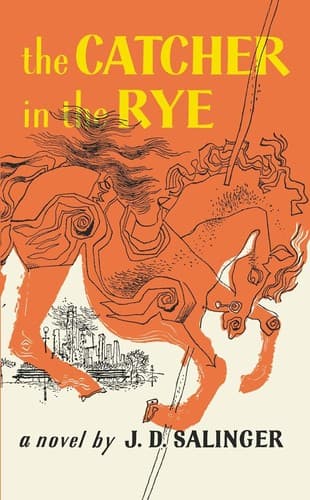
- The Catcher in the Rye
J.D. Salinger
3.8 (2.7M) average on GoodreadsYoung AdultExplores youthful disillusionment and a protagonist's struggle against societal expectations, though in a different tone.
- The Old Man and the Sea
Ernest Hemingway
3.8 (831k) average on GoodreadsLiterary FictionA Cuban fisherman's long struggle with a giant marlin becomes a story of endurance and dignity, now retold for young adults with illustrations, phonetic guides, and writing prompts in Traditional Chinese.
- One Hundred Years of Solitude
Gabriel García Márquez
4.1 (753k) average on GoodreadsLiterary FictionThrough the multi-generational story of the Buendía family, a mythical town deals with the repeating patterns of time, love, and solitude, as the extraordinary mixes with the ordinary.
- The Goldfinch
Donna Tartt
3.9 (720k) average on GoodreadsLiterary FictionHaunted by a tragic explosion and clutching a stolen Dutch masterpiece, a young orphan navigates the opulent drawing rooms of New York and the gritty underbelly of the art world, desperately seeking connection and redemption amidst a life spiraling into crime and obsession.





Enjoyed the summary?
A summary gives you the shape of the book. The book itself has the detail, the examples and the voice.
Find The Adventures of Augie March on AmazonAs an Amazon Associate, BookBrief earns from qualifying purchases. How we're funded