

Synopsis
Covers the whole plot, including the ending.
- Difficulty
- Hard
- Pacing
- Slow
- Mood
- Melancholy, Introspective, Philosophical, Lyrical, Brooding
- Read it if
- You appreciate stream-of-consciousness, philosophical musings, and poetic prose, and are interested in the inner life of an artist.
- Skip it if
- You prefer plot-driven narratives, clear resolutions, or light, easy reads.
The Notebooks of Malte Laurids Brigge Plot Summary
Covers the whole plot, including the ending.
Arrival in Paris and Initial Observations
Malte Laurids Brigge, a 28-year-old Danish man, moves to Paris and rents a cheap room on a side street. He is a poet, but struggles to write, finding himself distracted and overwhelmed by the city's harsh realities. His early notebook entries describe the squalor, noise, anonymity, and human suffering he sees daily. He observes the sick, the dying, the poor, and the isolated, feeling an intense, almost physical, empathy that borders on terror. The city's indifference and fast pace begin to wear down his sense of self and his ability to create, leaving him exposed and vulnerable.
The Weight of the City and the Nature of Fear
As Malte continues his observations, he becomes more aware of the widespread fear that seems to define Paris's inhabitants. He notes how people carry their illnesses and deaths within them, almost visibly. He reflects on how the city itself seems to be alive, consuming and changing its residents. This leads him to think about individuality and the terrifying idea of losing oneself in the crowd. He recounts mistaking a sick woman for a wall, showing his blurred perception of reality and his struggle to separate himself from the surrounding misery. This period involves an intense inner fight against growing despair.
Memories of Childhood and Family Estates
Overwhelmed by Paris, Malte often thinks back to his childhood in Denmark, especially to the family estates, Ulsgaard and Urnekloster. He vividly recalls the grand, decaying houses, long corridors, tapestries, and portraits of his ancestors. These memories are not just nostalgic; they carry the lingering presence of the past and the weight of his aristocratic lineage. He remembers his grandfather, Count Christoph, and his mother, Sophie, as well as the family's quirks and their unique relationship with death. This introspection offers refuge from the present, and also helps him understand his own sensitivities and the legacy he carries.
The Brigge Family and Their Deaths
Malte writes much of his notebooks about the deaths of various Brigge family members, highlighting their individual and often unusual ways of dying. He recalls his grandfather, Count Christoph, whose death was a grand, dramatic event, and his aunt, Abelone, whose life was marked by a deep, almost spiritual, connection to death. He contrasts these 'owned' deaths with the anonymous, impersonal deaths he sees in Paris, where people die without a sense of their own unique end. This exploration of his family's history with death is key to understanding Malte's anxieties and his search for an authentic life.
The Experience of Fear and the Hospital
Malte recounts a deeply unsettling experience of intense, irrational fear that grips him in his room, making him feel utterly alone and vulnerable. This fear is not tied to a specific external threat but seems to come from within, a sign of his existential dread. He also describes a visit to a hospital, where he sees the raw reality of illness and mortality. The sterile environment and suffering patients increase his sense of alienation and his view of the body as a fragile, temporary container. These experiences push him further into introspection, questioning life's meaning and death's inevitability.
Childhood Illnesses and the 'Great Fevers'
Malte returns to his childhood memories, specifically recalling his periods of illness. He describes these 'great fevers' not just as physical ailments but as deep, almost spiritual, experiences that changed his view of the world. During these times, he felt a heightened sensitivity, a blurring of lines between reality and imagination, and a deeper connection to the unseen. These childhood experiences of vulnerability and heightened perception seem to predict his adult sensitivities and poetic nature, suggesting his unique way of seeing the world formed early through suffering and introspection.
The Legend of the False Dmitry
Malte dedicates a long section to the historical figure of the False Dmitry, who claimed to be the rightful Tsar of Russia. This story is a detailed digression, allowing Malte to explore identity, authenticity, and the burden of living a life that is not truly one's own. He analyzes Dmitry's motivations, successes, and eventual downfall, seeing in him a reflection of the human struggle for recognition and self-definition. The story of Dmitry's pretense and his ultimate failure resonates with Malte's own struggles with his identity as a poet and his feeling of inadequacy in the world.
The Nature of Love and God
Toward the end of his notebooks, Malte's reflections become more philosophical, moving from specific observations to abstract ideas. He grapples with the nature of love, suggesting that true love is not about possession or expectation, but about giving and letting the beloved exist freely. He also explores his understanding of God, seeing God not as a distant, all-powerful figure, but as something 'made' through human experience, suffering, and longing. These meditations reflect Malte's ongoing search for meaning and transcendence amidst the chaos and suffering he perceives.
The Parable of the Prodigal Son
In a new interpretation of the biblical parable of the Prodigal Son, Malte focuses not on the son's return to his father, but on his journey of self-discovery and alienation. He argues that the son's true act of love was not his return, but his initial departure, which allowed him to experience life, suffering, and ultimately, to become himself. Malte suggests that the son's true 'return' was an internal one, a coming to terms with his own identity and experiences, independent of his family's expectations. This re-reading highlights Malte's own struggles with belonging and his belief in the need for individual experience.
The Search for Authentic Experience and the Poet's Task
Malte's notebooks end with his continued struggle to express his experiences and find his voice as a poet. He recognizes that the poet's task is not to avoid suffering or the grotesque, but to confront it, absorb it, and change it into something meaningful. He believes that true art comes from deep personal experience and a willingness to embrace the full range of human existence, including its darkest aspects. His entries suggest an ongoing process of learning to 'see' and to 'live' authentically, even amidst the overwhelming challenges of modernity, hinting at a new understanding of his artistic purpose.
Principal Figures
Malte Laurids Brigge
Protagonist
A young, sensitive Danish poet grappling with existence and identity in early 20th-century Paris.
Malte is a highly sensitive and introspective young man, struggling to find his voice as a poet while living in poverty in Paris. He is overwhelmed by sensory input, particularly the suffering and anonymity of the city, which he absorbs with an almost painful empathy. He is deeply reflective, constantly analyzing his internal states, his memories, and the world around him. His aristocratic Danish background contrasts sharply with his current squalid existence, creating a tension between his past and present. He is driven by a profound need to understand life, death, and the nature of authentic experience, often feeling isolated and terrified by his own perceptions.
Relationships: His Ancestors (Deeply influenced by their lives and deaths, carrying their legacy.); The City of Paris (Both a muse and a tormentor, overwhelming him with its realities.)
Count Christoph Brigge
Supporting
Malte's formidable grandfather, whose grand and theatrical death influenced the family's view of mortality.
Count Christoph is Malte's grandfather, a figure of great presence and authority in the Brigge family. Malte remembers him as a man who lived and died with a sense of ceremony and self-possession. His death was not a quiet fading but a grand, almost theatrical event, carefully orchestrated and embraced. He represents an older, more aristocratic way of life where individuals had a distinct 'own death.' His influence on Malte is significant, shaping Malte's understanding of how one might confront mortality with dignity and even a certain artistic flair.
Relationships: Malte Laurids Brigge (Grandfather, a significant ancestral influence on Malte's perceptions of death.)
Sophie Brigge
Supporting
Malte's mother, remembered for her delicate nature and her own unique relationship with illness and death.
Sophie is Malte's mother, remembered through his fragmented, sensitive recollections. She appears as a gentle, somewhat melancholic figure, whose life and eventual death are tinged with a quiet dignity. Malte recalls her illnesses and her way of being in the world, which was distinct from the more robust figures of his male ancestors. Her presence in his memories contributes to his understanding of the varied ways individuals experience and embody their own mortality, particularly through the lens of sensitivity and introspection, traits he shares with her.
Relationships: Malte Laurids Brigge (Mother, a gentle ancestral influence.)
Abelone
Supporting
Malte's aunt, a complex figure whose life was marked by unrequited love and a profound engagement with death.
Abelone is Malte's aunt, a figure of profound sensitivity and introspection. She is remembered for her unrequited love for the poet Erik Brahe and her intense, almost spiritual, relationship with the concept of death. Unlike the more outward, ceremonial deaths of other family members, Abelone's engagement with death is internal and philosophical. She embodies a different facet of the Brigge family's relationship with mortality, one characterized by longing, contemplation, and a deep, personal understanding of the end of life. Her story further expands Malte's canvas of individual experiences of death.
Relationships: Malte Laurids Brigge (Aunt, a significant ancestral figure who embodied a unique relationship with death and love.)
The Anonymous City Dwellers
Mentioned
The countless, suffering inhabitants of Paris who serve as catalysts for Malte's observations and existential dread.
These are the nameless, faceless individuals Malte encounters daily in the streets, hospitals, and parks of Paris. They represent the collective human condition of suffering, poverty, illness, and anonymous death that so overwhelms Malte. They are not characters in a traditional sense but rather a composite figure, embodying the harsh realities of modernity. Malte's intense empathy for them, coupled with his terror of losing his own individuality amongst them, drives much of his early introspection and his struggle to define himself against the backdrop of their immense, undifferentiated pain.
Relationships: Malte Laurids Brigge (Subjects of his observation and empathy, represent the overwhelming reality of human suffering.)
Themes & Insights
The Nature of Modernity and Urban Alienation
The novel shows the overwhelming and alienating parts of early 20th-century city life, especially in Paris. Malte is constantly bombarded by the city's noise, squalor, and the sheer amount of anonymous human suffering. He feels a deep sense of isolation and a terror of losing his individuality within the faceless crowds. The city is shown as a place where traditional identities and deaths are lost, replaced by a harsh, impersonal reality. This theme appears in Malte's descriptions of the sick and dying in the streets, the crumbling buildings, and his own inability to truly connect with others.
“I am sitting here in my room, a man of twenty-eight, and I am afraid, afraid of the city, of the people, of the darkness.”
Death and the Individual
A main theme is the different ways people face and 'own' their deaths. Malte contrasts the 'great deaths' of his aristocratic ancestors, who died with self-possession and ceremony, with the anonymous, unnoticed deaths he sees in Paris. He regrets the loss of a person's unique death, seeing it as part of a larger loss of identity in modern times. This theme is explored through his detailed recollections of Count Christoph and Abelone, whose deaths were central to their lives, versus the undifferentiated suffering of the urban poor.
“Ah, but there are no more such deaths. We die as best we can, and if we die because we have no more strength, then it is a death that cannot be ours.”
The Poet's Task and Authentic Seeing
Malte grapples with the poet's role in a world full of suffering and superficiality. He believes the poet must not shy away from life's harsh realities but must confront them, absorb them, and turn them into art. This involves a deep act of 'seeing' – not just observing, but deeply experiencing and internalizing the world's pain and beauty. His notebooks show this struggle, as he tries to express the inexpressible and find meaning in chaos. This theme is clear in his self-reminders to write, to truly perceive, and to not be overwhelmed.
“It is not enough to have thoughts; one must know how to make them into things.”
Memory, Childhood, and the Weight of the Past
Malte often retreats into his childhood memories, especially those of his aristocratic Danish family and their grand, decaying estates. These recollections are not just nostalgia; they help him understand his own identity, his sensitivities, and his ancestors' legacy. The past is shown as a powerful, living force that constantly shapes the present. His memories of childhood illnesses, family quirks, and the unique ways his relatives lived and died provide a contrast to the alienating present of Paris, offering both refuge and a deeper understanding of his own being.
“I am sitting here and remembering, and it is as if the past were alive within me, more alive than the present.”
Identity and the Self
A constant theme is Malte's struggle with his own identity and sense of self. He often questions who he is, feeling his individuality threatened by the overwhelming external world and his own inner anxieties. He feels himself dissolving, becoming just an observer, or even an object. His reflections on the False Dmitry, the Prodigal Son, and his own family's unique identities all contribute to this exploration. He seeks to create an authentic self amidst the pressures of heredity, environment, and his own deep sensitivity, suggesting that identity is a fluid, constantly changing process.
“God, if I am going to have a new life, then it must be a life that is truly mine.”
Plot Devices & Literary Techniques
Stream of Consciousness
A narrative technique that directly presents Malte's unfiltered thoughts, feelings, and perceptions.
The entire novel is presented as Malte's notebooks, allowing for a non-linear, associative flow of his inner life. This device immerses the reader directly into Malte's subjective experience, blurring the lines between observation, memory, and philosophical reflection. It highlights his intense sensitivity and his struggle to organize his thoughts amidst the overwhelming stimuli of Paris. The lack of a conventional plot or external dialogue reinforces the focus on his internal world and his fragmented perception of reality.
Epistolary/Diary Format
The novel is structured as a series of diary entries or 'notebooks,' giving it an intimate and confessional tone.
By presenting the narrative as Malte's personal notebooks, Rilke creates a sense of immediacy and authenticity. This format allows for jumps in time, shifts in focus from external observations to internal meditations, and the inclusion of various genres (memories, philosophical essays, historical accounts). It emphasizes Malte's isolation and his attempt to make sense of his experiences through writing, making the act of narration itself a central theme. The reader becomes a privileged witness to his most private thoughts and struggles.
Intertextuality and Allusion
The novel frequently references historical figures, biblical parables, and literary concepts.
Rilke employs numerous allusions, such as the detailed recounting of the False Dmitry's story and the reinterpretation of the Prodigal Son parable. These intertextual references serve multiple purposes: they broaden the thematic scope beyond Malte's personal experiences, allow for philosophical exploration through historical and religious narratives, and provide intellectual frameworks for Malte's own struggles with identity, authenticity, and the nature of love and God. They enrich the text with layers of meaning and connect Malte's individual journey to broader human experiences.
Sensory Overload and Synesthesia
The narrative frequently describes overwhelming sensory experiences, often blurring different senses.
Malte's descriptions are often characterized by an intense focus on sensory details – sounds, smells, sights – which he experiences with heightened sensitivity. This often leads to synesthetic descriptions, where one sense is described in terms of another (e.g., 'the smell of the street was thick'). This device effectively conveys Malte's overwhelmed state in Paris, his difficulty in processing the sheer volume of stimuli, and his unique poetic perception. It immerses the reader in his subjective, often disorienting, experience of the world.
The Notebooks of Malte Laurids Brigge Quotes
“For the sake of a few words I have to make a long journey.”
“Oh, but there are so many dead people because there are so many who have not lived.”
“Is it possible that one has not seen anything, not experienced anything, not understood anything, and yet has lived?”
“I am learning to see. I don't know why, but everything enters me more deeply and is not staying where it once used to stay. I have an interior that I never knew. Everything goes into it now. I don't know what is happening.”
“But the fear of the great is not the fear of the small. The fear of the small is a fear of the great, which is not understood.”
“For verses are not, as people imagine, simply feelings (these one has early enough),—they are experiences. In order to write a single verse, one must see many cities, people and things, one must know animals, one must feel how the birds fly and know the gesture with which the small flowers open in the morning.”
“And it is not yet enough to have memories. One must be able to forget them when they are many, and one must have the great patience to wait until they come again. For it is not the memories themselves. It is when they have turned to blood within us, to glance, to gesture, nameless and no longer distinguishable from ourselves, that they can become something within us.”
“And what is terrible is not death, but the lives that people live or don't live up to their death.”
“My God, what a life. The life of a city. The life of a man. The life of God. Everything is so infinitely different and yet so infinitely the same.”
“Perhaps all the dragons in our lives are princesses who are only waiting to see us act, just once, with beauty and courage. Perhaps everything that frightens us is, in its deepest essence, something helpless that wants our love.”
“What are you going to do, God, when I die? When I am your water, your drink? (I am your garb, your trade, and your profession, with me you lose your meaning.)”
“Ah, what did I know of fear? Nothing. I knew only a little fright, a little trembling, a little anxiety. But this was something else. This was the fear that has no object, the fear that is itself the object.”
“I sit here and am afraid. And I am afraid because I am here.”
“It is not enough to have a past. One must love it to be worthy of the future.”
Quiz
10 questions on the plot and the characters. Each answer comes with a short explanation.
Question 1
Where does Malte Laurids Brigge live for the majority of the novel?
- Copenhagen
- Paris
- Rome
- Berlin
Show answer
B. Paris Malte, a young Danish man, lives in a cheap room in Paris, observing the city and its inhabitants, which forms the core of his 'notebook entries.'
Question 2
What is one of Malte's primary observations about the people he encounters in the city?
- Their vibrant artistic talents
- Their profound sense of community
- Their unique individual 'deaths' carried within them
- Their relentless pursuit of wealth
Show answer
C. Their unique individual 'deaths' carried within them A recurring theme and observation for Malte is that every person seems to carry their own unique, individualized death within them, a concept explored throughout his reflections.
Question 3
Which historical figure does Malte frequently reflect upon, particularly regarding their personal death?
- Napoleon Bonaparte
- Charles VI, King of France
- Countess Greffulhe
- Charles the Bold, Duke of Burgundy
Show answer
D. Charles the Bold, Duke of Burgundy Malte dedicates significant reflection to historical figures like Charles the Bold, often delving into their specific, individual deaths and the way they faced them, contrasting with modern, 'mass-produced' deaths.
Question 4
What distinguishes Malte from the 'city's untouchables,' according to the description?
- A substantial inheritance
- A library card
- A prestigious academic degree
- An artistic commission
Show answer
B. A library card The description highlights that Malte has 'little but a library card to distinguish him from the city's untouchables,' emphasizing his precarious and isolated existence.
Question 5
What happens to Malte's personal belongings while he is in Paris?
- They are stolen
- They are stored and begin to rot
- He sells them for money
- He sends them back to Denmark
Show answer
B. They are stored and begin to rot Malte lives in a cheap room in Paris 'while his belongings rot in storage,' an detail that underscores his detachment and the decay he perceives around him.
Question 6
Malte's reflections frequently delve into the 'ghosts' of what group?
- Famous Parisian artists
- His aristocratic family
- Figures from ancient mythology
- His former lovers
Show answer
B. His aristocratic family Malte is the 'sole living descendant' of his aristocratic family, and he often thinks of the 'deaths, and ghosts, of his aristocratic family,' connecting his present isolation to his past lineage.
Question 7
Which of the following best describes the novel's narrative structure?
- A linear, chronological plot
- A series of interconnected short stories
- Fragmented, impressionistic observations and reflections in a notebook format
- A dialogue between two main characters
Show answer
C. Fragmented, impressionistic observations and reflections in a notebook format The novel is presented as 'notebook entries,' characterized by fragmented, subjective observations, philosophical reflections, and memories rather than a traditional linear plot.
Question 8
The novel is described as a 'semi-autobiographical' work. What does this imply about the relationship between Rilke and Malte?
- Malte is a direct, factual representation of Rilke's life events.
- Malte's experiences and thoughts are inspired by or reflect Rilke's own, but are fictionalized.
- Rilke merely edited Malte's actual notebooks.
- Malte is a character entirely unrelated to Rilke's personal life.
Show answer
B. Malte's experiences and thoughts are inspired by or reflect Rilke's own, but are fictionalized. The term 'semi-autobiographical' indicates that while the novel is fictional, it draws heavily on the author's (Rilke's) personal experiences, observations, and philosophical struggles, particularly his time in Paris.
Question 9
What is a prominent theme explored through Malte's observations of the city and his memories?
- The triumph of human progress and innovation.
- The beauty of romantic love and companionship.
- Isolation, decay, and the confrontation with death.
- The joy of communal life and urban vibrancy.
Show answer
C. Isolation, decay, and the confrontation with death. Malte's experiences in Paris, from the rotting belongings to the individualized deaths he perceives, are suffused with themes of isolation, decay, and a deep, often unsettling, confrontation with mortality.
Question 10
Rilke's work, including 'The Notebooks of Malte Laurids Brigge,' is recognized for its contribution to what literary movement?
- Romanticism
- Realism
- Modernism
- Postmodernism
Show answer
C. Modernism The description explicitly states it is 'one of the first great modernist novels,' and Rilke is a key figure in early 20th-century modernism, known for his innovative prose and poetic style.
The Notebooks of Malte Laurids Brigge FAQ
What is the central premise of 'The Notebooks of Malte Laurids Brigge'?
The novel follows Malte Laurids Brigge, a young Danish poet living in impoverished isolation in Paris. He grapples with the overwhelming sensory input of the modern city, his own profound loneliness, and the haunting memories of his aristocratic family's past, all while attempting to forge a new identity as a writer.
Who is Malte Laurids Brigge, and what is his primary struggle?
Malte is the protagonist, a sensitive and introspective young man, the last descendant of a noble Danish family. His primary struggle is to confront and understand the overwhelming realities of existence—death, suffering, urban alienation, and his own inherited anxieties—without succumbing to despair or madness, ultimately seeking a way to articulate these experiences through his writing.
How does Paris function as a character or force in Malte's narrative?
Paris is not merely a setting but a powerful, almost oppressive, entity in Malte's life. It assaults him with its poverty, sickness, and anonymity, forcing him to confront the raw, unfiltered aspects of modern existence. The city's vastness and indifference amplify his sense of isolation and fragility.
What role do Malte's family memories and ancestral past play in the novel?
Malte's memories of his aristocratic family, particularly his grandfather, Count Christoph, and his mother, are crucial. These recollections provide a stark contrast to his present squalor and serve as a source of both nostalgia and existential dread, as he feels the weight of his lineage and the inevitability of death that plagued his ancestors.
What is the significance of the 'deaths' Malte observes and contemplates?
Malte is preoccupied with the concept of 'one's own death,' a unique and personal death that individuals carry within them. He observes the 'hospital deaths' and anonymous deaths in Paris, contrasting them with the more 'lived' and significant deaths of his ancestors, which he believes modern society has lost the capacity for.
Are there any recurring symbolic images or motifs in the text, beyond death and Paris?
Yes, mirrors are a significant motif, reflecting Malte's fragmented self and his struggle with identity. Walls, both physical and metaphorical, represent both confinement and the potential for interiority. The 'mask' is another recurring image, symbolizing the facades people wear and Malte's own difficulty in presenting a coherent self.
How does Rilke's own biography influence Malte's experiences and observations?
The novel is semi-autobiographical, drawing heavily on Rilke's own experiences of poverty and isolation in Paris, his aristocratic background, and his artistic struggles. Malte's heightened sensitivity, his profound observations of suffering, and his preoccupation with death closely mirror Rilke's own psychological landscape and poetic concerns.
What is the implied significance of Malte's 'library card' mentioned in the synopsis?
The library card is a subtle but potent symbol of Malte's intellectual identity and his last connection to a world of knowledge and culture amidst his destitution. It distinguishes him from the 'untouchables' of Paris, suggesting that despite his poverty, his mind and his pursuit of art remain his defining characteristics and his only form of social currency.
What specific historical figures or literary allusions does Malte encounter or reference?
Malte extensively references and reinterprets historical figures like Charles VI of France, the False Dmitri, and particularly Giacomo Casanova, often projecting his own anxieties and interpretations onto their lives and deaths. These allusions serve to broaden his internal world and explore themes of identity, fate, and the nature of history.
How does Malte's extreme sensitivity impact his perception of reality?
Malte's heightened sensitivity makes him acutely vulnerable to external stimuli, blurring the lines between objective reality and his subjective experience. He perceives the world with an almost unbearable intensity, leading to sensory overload, hallucinations, and a profound empathy for suffering, but also an inability to function 'normally' in society.
What psychological defense mechanisms, if any, does Malte employ?
Malte primarily employs intellectualization and artistic sublimation as defense mechanisms. He attempts to process his overwhelming anxieties and fears by observing, analyzing, and ultimately trying to transform them into poetic material. However, he also exhibits withdrawal and a degree of dissociation from his immediate circumstances.
How does the novel explore themes of identity formation and self-discovery?
The novel is a profound exploration of identity formation under duress. Malte struggles to shed his inherited aristocratic identity and embrace a new, authentic self as a writer. His encounters with the city, his ancestors' pasts, and his own internal world are all part of a painful, ongoing process of self-creation and the search for meaning.
What is the psychological significance of Malte's 'fear' and 'dread'?
Malte's pervasive fear and dread are not merely anxieties but existential states, stemming from his acute awareness of mortality, the indifference of the universe, and the overwhelming nature of modern life. They are symptoms of his struggle to find meaning and order in a world that often seems chaotic and hostile.
Is 'The Notebooks of Malte Laurids Brigge' ultimately a hopeful or despairing work?
This is debatable. While Malte's journey is fraught with despair, the act of writing the notebooks itself, and his attempt to 'learn to see,' suggests a glimmer of hope. The novel can be seen as an exploration of suffering as a necessary precursor to profound artistic creation and a more authentic way of being.
How does the non-linear, fragmented structure of the novel contribute to its meaning?
The fragmented, non-linear structure, composed of diary entries, reflections, and historical anecdotes, mirrors Malte's own fragmented consciousness and his struggle to impose order on his experiences. It reflects the modernist rejection of conventional narrative and emphasizes the subjective, internal nature of reality.
What is the 'coming-of-age' aspect of Malte's story, given his internal focus?
While not a traditional external coming-of-age, Malte's journey is an internal one. He 'comes of age' by confronting the harsh realities of life and death, shedding naive illusions, and attempting to mature as an artist capable of truly 'seeing' and articulating the human condition, even amidst profound personal suffering.
How does Rilke's concept of 'love' manifest in the novel, if at all?
Rilke's concept of love, often explored in his poetry as a difficult, transformative process, is subtly present. While Malte experiences no romantic love, his deep empathy for suffering, his connection to his ancestors, and his yearning for profound understanding can be seen as forms of love—a love for existence itself, in all its terror and beauty.
To what extent is the novel a critique of modernity and urban life?
The novel functions as a powerful critique of modernity, particularly the dehumanizing aspects of urban life. It decries the anonymity, the erosion of individual identity, the prevalence of 'hospital deaths,' and the sensory overload that Malte experiences in Paris, suggesting a loss of meaningful existence in the modern world.
About the author
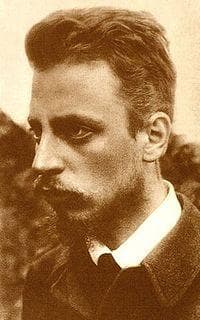
René Karl Wilhelm Johann Josef Maria Rilke, shortened to Rainer Maria Rilke, was an Austrian poet and novelist. Acclaimed as an idiosyncratic and expressive poet, he is widely recognized as a significant writer in the German language. His work is viewed by critics and scholars as possessing undertones of mysticism, exploring themes of subjective experience and disbelief. His writings include one novel, several collections of poetry and several volumes of correspondence.
Similar books
- Ulysses
James Joyce
3.7 (111k) average on GoodreadsLiterary FictionBoth are modernist novels employing stream-of-consciousness and deep psychological insight, though 'Ulysses' is more experimental in form.
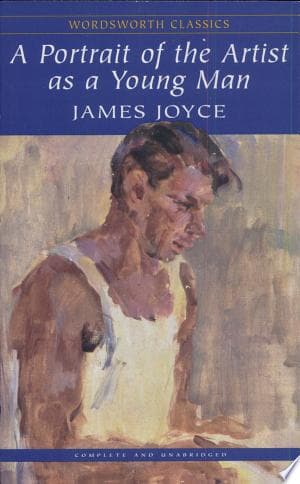
- A Portrait of the Artist as a Young Man
James Joyce
3.6 (128k) average on GoodreadsLiterary FictionExplores the development of an artist's consciousness and his struggle with identity and vocation.
- Nausea
Jean-Paul Sartre
3.9 (86k) average on GoodreadsPhilosophyFeatures an alienated protagonist grappling with existential dread and the absurdity of existence through journal entries.
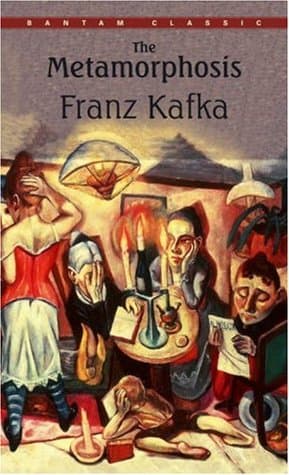
- The Metamorphosis
Franz Kafka
3.8 (643k) average on GoodreadsFantasyBoth share themes of alienation and existential dread. However, Kafka's genius lies in his stark, almost journalistic realism applied to the absurd, creating an inescapable nightmare. Rilke, conversely, uses a more poetic, impressionistic rendering of internal states, blurring subjective experience and objective reality, and focusing on the cumulative weight of psychological input rather than a singular event.
- The Old Man and the Sea
Ernest Hemingway
3.8 (831k) average on GoodreadsLiterary FictionA Cuban fisherman's long struggle with a giant marlin becomes a story of endurance and dignity, now retold for young adults with illustrations, phonetic guides, and writing prompts in Traditional Chinese.
- One Hundred Years of Solitude
Gabriel García Márquez
4.1 (753k) average on GoodreadsLiterary FictionThrough the multi-generational story of the Buendía family, a mythical town deals with the repeating patterns of time, love, and solitude, as the extraordinary mixes with the ordinary.



Enjoyed the summary?
A summary gives you the shape of the book. The book itself has the detail, the examples and the voice.
Find The Notebooks of Malte Laurids Brigge on AmazonAs an Amazon Associate, BookBrief earns from qualifying purchases. How we're funded