

Synopsis
Covers the whole plot, including the ending.
- Difficulty
- Medium
- Pacing
- Moderate
- Mood
- Cynical, Witty, Observational, Darkly Humorous, Suspenseful
- Read it if
- You enjoy a unique narrative voice, a blend of dark humor and mystery, and a protagonist who is both intelligent and deeply flawed.
- Skip it if
- You prefer traditional, straightforward mysteries or protagonists who are immediately likable and morally upright.
The November Criminals Plot Summary
Covers the whole plot, including the ending.
The Application Essay and a Murder
Addison Schacht, a cynical and smart high school senior in Washington D.C., starts writing his University of Chicago application essay. The prompt asks: 'What are your best and worst qualities?' Instead of a typical response, Addison uses it to recount his senior year, particularly his investigation into the murder of his classmate, Kevin Broadus. Kevin was a popular, seemingly unremarkable student shot and killed outside a local convenience store. The police investigation quickly stalls, and the school community, including Addison, struggles to process the senseless violence. Addison, who sells drugs to many classmates, including Kevin, finds himself unexpectedly obsessed with finding the killer. He is driven by a mix of boredom, curiosity, and a strange sense of obligation.
Initial Suspicions and Digger's Involvement
Addison immediately recruits his best friend, Phoebe 'Digger' Schacht, into his impromptu detective work. Digger, a sharp and street-smart girl with whom Addison has a complex, non-romantic relationship (they are often mistaken for siblings or a couple, much to their mutual annoyance), initially dismisses his obsession but soon gets drawn in. Their first lead comes from a rumor circulating among students that the murder was a gang-related initiation. They focus on the 'November Criminals,' a local gang known for its petty crimes and intimidating presence. Addison believes that by understanding the gang's dynamics and recent activities, they might uncover a motive or a witness overlooked by the police. Digger, while skeptical of the gang theory, agrees to help Addison navigate D.C.'s tougher areas and gather information.
Following the Gang Lead
Addison and Digger start by subtly questioning students who might have connections to the November Criminals, particularly those who buy drugs from Addison. They learn about the gang's hangouts and some of its members. Addison, ever the strategist, plans to get closer to the gang's activities without directly confronting them. They visit a convenience store known to be a common gathering spot for gang members, hoping to overhear conversations or spot anything unusual. Their presence is met with suspicion, and they realize the danger involved in their amateur sleuthing. Digger expresses increasing concern about Addison's recklessness, but his determination to solve the case overrides her warnings. They continue to piece together fragmented rumors and observations.
The Complications of Friendship and Romance
Throughout their investigation, Addison's unique relationship with Digger is a constant undercurrent. They share a deep bond, intellectual sparring, and a comfort that borders on intimacy, yet they maintain a strict platonic boundary. Addison’s parents are oblivious to the true nature of their friendship, often assuming they are dating. Digger frequently challenges Addison's self-important pronouncements and provides a much-needed grounding force. However, as the investigation deepens and becomes more dangerous, the strain on their friendship becomes evident. Digger worries about Addison's safety and the potential consequences of their actions, while Addison is often too consumed by his own theories to fully acknowledge her concerns, leading to tension and arguments between them.
A New Theory Emerges
After several dead ends and increasing frustration with the lack of progress on the gang front, Addison starts to re-evaluate his initial assumptions. He revisits his interactions with Kevin, particularly their drug transactions, and other seemingly innocuous details. He begins to suspect that Kevin's murder might not have been a random act of violence or a gang initiation, but something more personal. He considers the possibility that Kevin was involved in something more serious than he let on, or that he had an enemy within his own social circle. This shift in focus marks a turning point in Addison's investigation, moving it away from external threats and towards the internal dynamics of their high school world, a place Addison understands intimately.
Uncovering Kevin's Secrets
Addison and Digger start looking into Kevin's personal life more closely. They talk to his friends, his girlfriend, and even his parents, under the guise of offering condolences. They discover that Kevin, despite his popular and seemingly straightforward facade, had a hidden life. He was involved in a relationship that was more complicated than anyone knew, and he had been struggling with some personal issues. Addison begins to connect these new pieces of information, realizing that Kevin's death might be linked to a secret he was keeping. Digger helps Addison sift through the gossip and half-truths, using her keen observational skills to discern what is relevant. They uncover details about a secret relationship Kevin was having, which complicates the narrative of his innocent victimhood.
The Confrontation and Revelation
Addison, armed with his deductions and the information Digger helped him gather, identifies a likely suspect: Kevin's secret girlfriend, whom he had been seeing behind his main girlfriend's back. He confronts her, not directly accusing her, but laying out the facts and his theory about what happened. The pressure of Addison's relentless questioning and her guilt lead to a confession. It is revealed that Kevin's death was not a gang-related hit but a crime of passion, an accidental shooting during a heated argument with his secret girlfriend, who felt betrayed and cornered. The gun, it turns out, belonged to her father, and the whole situation was a tragic, impulsive act fueled by emotional turmoil, not premeditated violence.
Aftermath and Reflection
The revelation of Kevin's true killer and the circumstances surrounding his death are anticlimactic for Addison, yet deeply impactful. The 'November Criminals' theory was a red herring, and the truth is far more mundane and tragic than he had imagined. Addison grapples with the implications of this discovery, realizing that justice is often messy and unsatisfying. He reflects on his own obsession, his methods, and the moral ambiguities of his actions. The experience forces him to confront his own cynicism and the limits of his intellectual detachment. Digger, who was instrumental in his investigation, helps him process the emotional fallout, further solidifying their unique bond.
The Application Essay's Conclusion
Addison concludes his University of Chicago application essay, having used the prompt to tell the entire story of Kevin's murder and his investigation. He reflects on his 'best and worst qualities,' acknowledging his intellectual arrogance and his manipulative tendencies, but also his genuine curiosity and a strange, almost altruistic drive to uncover the truth. He doesn't offer a neat resolution or a simplified moral, but rather a complex, nuanced understanding of himself and the world around him. The essay is a testament to his unique perspective, his growth, and his refusal to conform to conventional expectations, showing his potential as a critical thinker even if his methods are unorthodox. He ultimately finds a sense of closure, not in a perfect resolution, but in the honest recounting of his journey.
The Future
With the essay submitted and the truth about Kevin's murder revealed, Addison looks towards his future. He acknowledges the uncertainty that lies ahead but also a sense of readiness. His experience has matured him in unexpected ways, forcing him to engage with the real world beyond his intellectual bubble. His bond with Digger remains strong, a constant in his ever-shifting life. While the murder investigation is over, the lessons learned and the transformation Addison underwent will undoubtedly shape his next steps. He remains the cynical, witty, and intelligent individual he always was, but with a deeper understanding of human nature and the complexities of life, preparing him for the challenges and opportunities of college and beyond.
The November Criminals Characters
Addison Schacht
Protagonist
A cynical, intellectually precocious high school senior obsessed with solving a classmate's murder.
Addison is a highly intelligent, articulate, and often arrogant high school senior who sells drugs to his classmates. He possesses a sharp wit and a cynical worldview, using his intellect to observe and dissect the world around him. He is driven by a desire for intellectual stimulation and a disdain for what he perceives as the superficiality of others. His obsession with solving Kevin Broadus's murder stems from a mix of boredom, a need for a challenging puzzle, and a strange, almost detached sense of justice. He is socially adept in his own way, using charm and manipulation, but struggles with genuine emotional connection, often hiding behind his intellect.
Relationships: Phoebe 'Digger' Schacht (Best friend, intellectual sparring partner, platonic confidante.); Kevin Broadus (Deceased classmate, drug client, catalyst for Addison's investigation.)
Phoebe 'Digger' Schacht
Supporting
Addison's street-smart, pragmatic best friend and partner in investigation.
Digger is Addison's closest friend, characterized by her practicality, sharp wit, and grounded nature. She is often the voice of reason and caution, challenging Addison's more outlandish theories and impulsive decisions. Though initially skeptical of Addison's murder investigation, she becomes an invaluable partner, using her social intelligence and street smarts to gather information and navigate dangerous situations. She has a complex, platonic bond with Addison, marked by deep loyalty, mutual respect, and frequent verbal sparring. She is fiercely independent and protective of Addison, despite her frustrations with his recklessness.
Relationships: Addison Schacht (Best friend, intellectual sparring partner, platonic confidante.)
Kevin Broadus
Mentioned
The murdered classmate whose death propels Addison's investigation.
Kevin Broadus is the high school senior whose murder sets the entire plot in motion. Initially portrayed as a popular, seemingly unremarkable student, his death is initially attributed to gang violence. As Addison investigates, Kevin's character is revealed to be more complex and secretive than he appeared on the surface. He was a drug client of Addison's and maintained a hidden romantic relationship, which ultimately leads to his demise. He serves as the central mystery, a catalyst for Addison's journey into understanding the hidden lives and motivations of his peers.
Relationships: Addison Schacht (Drug client-dealer relationship.); The Killer (Victim of a crime of passion.)
The Killer (unnamed in description)
Antagonist
Kevin Broadus's secret girlfriend, whose impulsive act leads to his death.
The true killer of Kevin Broadus is revealed to be his secret girlfriend, a character who is initially peripheral to the narrative. Her actions stem from a moment of intense emotional turmoil, betrayal, and impulsivity, rather than premeditated malice. The murder is an accidental shooting during a heated argument, highlighting the tragic consequences of hidden relationships and uncontrolled emotions. Her role underscores the novel's theme that the truth is often less grand and more tragically mundane than imagined, challenging Addison's initial theories of a larger criminal conspiracy.
Relationships: Kevin Broadus (Secret girlfriend, accidental killer.)
Addison's Parents
Supporting
Affluent, somewhat oblivious parents of Addison.
Addison's parents are portrayed as well-meaning but somewhat detached and upper-middle-class. They are largely unaware of the complexities of Addison's life, including his drug dealing and his deep involvement in a murder investigation. They are more concerned with his college applications and maintaining a veneer of normalcy. Their interactions with Addison highlight his intellectual independence and his ability to operate in a world largely separate from theirs. Their characterization serves to emphasize Addison's self-reliance and the generational gap in understanding.
Relationships: Addison Schacht (Parent-child, somewhat strained by Addison's independence.)
The November Criminals
Mentioned
A local gang initially suspected of Kevin's murder.
The November Criminals are a local D.C. gang, initially identified by Addison as the prime suspects in Kevin Broadus's murder due to rumors circulating in the school. They represent the more obvious, sensational explanation for the crime. Addison's initial focus on them reflects his tendency to look for grand, intricate conspiracies. However, they ultimately serve as a red herring, diverting attention from the true, more personal motive behind Kevin's death. Their presence adds an element of danger and urban realism to the setting, but their direct involvement in the murder is disproven.
Relationships: Addison Schacht (Object of suspicion and investigation.)
The November Criminals Themes
The Nature of Truth and Justice
The novel explores how truth is often messy, elusive, and far less sensational than imagined. Addison initially seeks a grand, intricate conspiracy, but the reality of Kevin's murder is a tragic, impulsive act driven by personal emotion. This theme challenges the notion of clear-cut justice, showing that outcomes can be unsatisfying and morally ambiguous. Addison's journey forces him to confront the limitations of his intellectual detachment when faced with the raw, human element of crime, as he pieces together the mundane yet devastating truth about Kevin's secret relationship and its violent end.
“The truth, I found, was rarely elegant. It was usually a mess, like a drunk trying to tie his shoelaces.”
Adolescent Cynicism vs. Emerging Empathy
Addison begins the novel as a highly cynical and intellectually detached observer of the world, often using his wit and intelligence to distance himself from genuine emotion. His investigation into Kevin's murder starts as an intellectual exercise, a puzzle to solve. However, as he goes deeper into Kevin's life and the lives of those around him, he is subtly forced to confront the emotional realities and complexities of human relationships. This journey, particularly his interactions with Digger and the ultimate tragic truth of the murder, chips away at his cynicism, allowing for glimpses of empathy and a more nuanced understanding of human vulnerability, as he grapples with the impact of the murder on real people.
“I was a connoisseur of human weakness, a scholar of the absurd. But even I was surprised by the sheer, devastating banality of it all.”
The Complexity of Relationships
The novel deeply examines various forms of relationships, particularly the unique and complex bond between Addison and Digger. Their friendship defies easy categorization, being intensely close yet strictly platonic, filled with intellectual sparring and unwavering loyalty. The story also explores the hidden complexities of Kevin Broadus's romantic relationships, revealing a secret affair that ultimately leads to his death. These relationships highlight the facades people present to the world versus their hidden truths, and how miscommunication, betrayal, and intense emotions can have devastating consequences, proving that even seemingly simple connections can hide profound depths.
“Digger was my best friend, my confidante, my co-conspirator. She was also not my girlfriend, a fact that seemed to confuse everyone but us.”
The Search for Meaning in a Meaningless World
Addison, an intelligent and somewhat alienated teenager, grapples with finding meaning and purpose in a world he often perceives as absurd and superficial. Kevin's murder, initially a senseless act, becomes a focal point for Addison's need to impose order and understanding on chaos. His obsessive investigation is not just about solving a crime but about making sense of a world where random violence can shatter lives. Ultimately, the 'meaning' he finds is not a grand revelation but a deeper, albeit often bleak, understanding of human nature and the tragic consequences of ordinary lives, reflecting an existential search for significance.
“Maybe that was the point of it all: to find some kind of sense, however small, in the vast, indifferent machinery of the world.”
Plot Devices & Literary Techniques
First-Person Narrative (Application Essay)
The entire story is framed as Addison's college application essay.
The novel is told entirely through Addison Schacht's college application essay for the University of Chicago. This device allows for a highly subjective, intimate, and unfiltered look into Addison's cynical mind, his intellectual prowess, and his unique voice. It justifies his detailed, often tangential observations and philosophical digressions, as he is ostensibly answering a personal essay prompt. This framing also adds a meta-narrative layer, as Addison is not just recounting events but actively shaping them for an audience, influencing how the reader perceives the 'truth' he presents.
Red Herring
The initial focus on the 'November Criminals' as suspects.
The 'November Criminals,' a local gang, serve as a significant red herring in the plot. Addison and Digger initially pursue the theory that Kevin's murder was a gang-related initiation or retaliation. This diverts their investigation and the reader's attention from the true, more personal motive behind the crime. The red herring effectively builds suspense and misdirection, making the ultimate revelation of the killer more surprising and underscoring the novel's theme that the truth is often less dramatic and more mundane than perceived.
Unreliable Narrator
Addison's subjective and often biased recounting of events.
While Addison is highly intelligent and observant, his narrative is filtered through his cynical, arrogant, and often self-serving perspective. He frequently offers his opinions and judgments as facts, and his intellectual detachment sometimes blinds him to emotional nuances. The reader must interpret his account, questioning his motives and the completeness of his story, especially regarding his own actions and feelings. This device enhances the complexity of the narrative and encourages critical engagement with the text, reflecting the subjective nature of memory and truth.
Didactic Dialogue
Addison's tendency to explain and analyze concepts at length.
Addison frequently engages in lengthy, often philosophical monologues or dialogues where he explains his theories, analyzes human behavior, or expounds on various intellectual concepts. This didactic style reflects his precocious intelligence and his need to intellectualize everything, even emotional experiences. While sometimes verbose, it serves to showcase his unique voice and worldview, providing insight into his thought processes and motivations. It also allows the author to explore deeper themes through Addison's analytical lens.
The November Criminals Quotes
“I'm not a criminal. I'm a November criminal. That's different.”
“The thing about grief is that it doesn't care if you're a good person or a bad person. It just rips you apart.”
“Sometimes you have to break a few rules to find out what the real rules are.”
“Everyone has secrets. It's just a matter of how well they hide them.”
“There's a difference between not knowing something and not wanting to know it.”
“The world doesn't make sense, but you still have to live in it.”
“You can't trust anyone who doesn't like dogs.”
“Being a teenager is like being stuck in a waiting room for the rest of your life.”
“Sometimes the answers are right in front of you, but you're too busy looking for something else.”
“The truth is a messy business.”
“You never really know what's going on inside someone else's head.”
“We're all just trying to figure things out, even the adults.”
“Silence can be louder than any scream.”
“There's a certain freedom in knowing you have nothing left to lose.”
Quiz
10 questions on the plot and the characters. Each answer comes with a short explanation.
Question 1
What is Addison Schacht's primary academic goal at the beginning of the novel?
- Getting a scholarship for football.
- Getting into the University of Chicago.
- Graduating high school with honors.
- Winning the school's debate competition.
Show answer
B. Getting into the University of Chicago. Addison's college application, specifically the essay for the University of Chicago, is a recurring frame for his narrative.
Question 2
Besides investigating Kevin Broadus's murder, what other illegal activity is Addison involved in?
- Shoplifting from local stores.
- Hacking into school computers.
- Selling drugs to classmates.
- Vandalizing public property.
Show answer
C. Selling drugs to classmates. The synopsis explicitly states Addison's preoccupation with 'Selling drugs to his classmates.'
Question 3
What is the name of Addison's best friend, who is NOT his girlfriend?
- Chloe
- Digger
- Samantha
- Brenda
Show answer
B. Digger The synopsis mentions 'His complicated relationship with his best friend (NOT his girlfriend) Digger.'
Question 4
What is the specific essay question Addison is asked for his University of Chicago application that provokes his narrative?
- Describe a moment that changed your perspective.
- What are your best and worst qualities?
- Discuss a current event that impacts you.
- Why do you want to attend the University of Chicago?
Show answer
B. What are your best and worst qualities? The synopsis states, 'When presented with an essay question on his application to the University of Chicago—What are your best and worst qualities?—Addison finds himself provoked into giving his final, unapologetic say.'
Question 5
What is Addison's initial, 'absurd, obsessive plan' regarding Kevin Broadus's death?
- To organize a school-wide memorial for Kevin.
- To write a newspaper article exposing the police's incompetence.
- To lead his own investigation into the murder.
- To convince the school administration to suspend classes until the killer is found.
Show answer
C. To lead his own investigation into the murder. The synopsis describes Addison's 'own absurd, obsessive plan to investigate the death' of Kevin Broadus.
Question 6
Which of the following best describes Addison's narrative voice as implied by the synopsis?
- Optimistic and hopeful.
- Detached and purely objective.
- Reflective and unapologetic.
- Fearful and hesitant.
Show answer
C. Reflective and unapologetic. The synopsis states Addison is 'provoked into giving his final, unapologetic say,' implying a reflective and direct, unreserved tone.
Question 7
What is the primary genre of 'The November Criminals'?
- Science Fiction
- Romantic Comedy
- Thriller, Mystery, Young Adult
- Historical Fiction
Show answer
C. Thriller, Mystery, Young Adult The provided information clearly states the genres as 'Thriller, Mystery, Young Adult'.
Question 8
The title 'The November Criminals' likely hints at which thematic element of the story?
- A specific group of criminals active only in November.
- The dark, unsettling nature of the crime and perhaps a sense of cold, autumnal dread.
- A historical reference to a political scandal in November.
- The characters being born in November.
Show answer
B. The dark, unsettling nature of the crime and perhaps a sense of cold, autumnal dread. While not explicitly stated, titles often evoke mood and context. 'November' suggests cold, short days, and a time often associated with darker, more somber moods, fitting a thriller/mystery about a murder. It's a common literary device to use seasonal titles to reflect atmosphere.
Question 9
How does Addison's investigation into Kevin Broadus's murder relate to his other preoccupations, such as college applications and drug dealing?
- The investigation distracts him completely, causing him to abandon his other interests.
- The investigation is a separate, unrelated plot line that doesn't intersect with his other concerns.
- The investigation becomes intertwined with his existing life, likely influencing his application essay and potentially his drug dealing contacts.
- He uses his drug dealing profits to fund his murder investigation.
Show answer
C. The investigation becomes intertwined with his existing life, likely influencing his application essay and potentially his drug dealing contacts. The synopsis frames the college application essay as a vehicle for Addison to reflect on 'all of the above and more,' implying that the murder investigation, drug dealing, and relationship with Digger are integrated aspects of his complex life rather than isolated events.
Question 10
What does the phrase 'his final, unapologetic say' suggest about Addison's character and his approach to the narrative?
- He is remorseful about his actions and seeks redemption through the essay.
- He intends to present a candid, perhaps even defiant, account of his experiences and perspectives without seeking approval.
- He plans to confess to a crime in his college application essay.
- He wants to avoid discussing his personal feelings at all costs.
Show answer
B. He intends to present a candid, perhaps even defiant, account of his experiences and perspectives without seeking approval. To be 'unapologetic' implies a lack of regret or desire for forgiveness, and to have his 'final say' suggests a definitive, unfiltered statement of his truth, indicating a candid and possibly defiant narrative voice.
The November Criminals FAQ
What is the central mystery Addison Schacht is trying to solve?
Addison Schacht is trying to solve the murder of his classmate, Kevin Broadus. He believes the police are not adequately investigating the case and takes it upon himself to uncover the truth, often putting himself in precarious situations.
Who is Digger, and what is her relationship with Addison?
Digger is Addison's best friend, though their relationship is complicated and often blurs the lines of platonic friendship. She is a constant presence in his life, providing both support and challenge, and frequently accompanies him during his investigation into Kevin's death.
How does Addison's college application essay connect to the main plot?
Addison's college application essay for the University of Chicago, specifically the question about his best and worst qualities, serves as the narrative framework for the entire novel. He uses it as an opportunity to reflect on his life, his involvement in Kevin's murder investigation, and his complex relationships.
What illegal activities is Addison involved in at the start of the book?
At the beginning of the book, Addison is actively involved in selling drugs to his classmates. This illicit activity contributes to his cynical worldview and provides him with connections and observations that sometimes aid, or complicate, his amateur detective work.
Who is Kevin Broadus, and what are the initial theories about his murder?
Kevin Broadus is a classmate of Addison's who is found murdered. Initially, there are few concrete leads, and the police seem to focus on vague theories, leaving Addison unsatisfied and fueling his personal quest for justice.
What is the significance of the 'November Criminals' title beyond the obvious plot point?
The title 'The November Criminals' refers to a specific revelation about the true perpetrators of Kevin's murder. However, it also subtly alludes to a broader sense of criminality, perhaps hinting at the moral ambiguities and less overt transgressions committed by various characters, including Addison himself, throughout the narrative.
Are there any subtle clues about the killer's identity before Addison explicitly discovers it?
Yes, there are subtle clues scattered throughout Addison's observations and interactions, particularly concerning characters who seem to be acting suspiciously or have unusual reactions to Kevin's death. These hints often involve inconsistencies in their stories or their behavior around Addison's probing questions.
How does Addison's drug dealing background inadvertently provide him with useful information for the investigation?
Addison's drug dealing network gives him access to parts of the high school's social hierarchy and underground conversations that law enforcement might miss. His contacts often overhear rumors or have information from less conventional sources that prove vital to piecing together the truth of Kevin's murder.
What role does Addison's cynical worldview play in his investigation, both positively and negatively?
Addison's cynicism allows him to question authority and conventional wisdom, pushing him to look beyond superficial explanations for Kevin's death. However, it can also make him distrustful of potential allies and sometimes leads him down unproductive paths due to his preconceived notions about others.
How does Addison's relationship with Digger evolve under the pressure of the murder investigation?
Under the pressure of the investigation, Addison and Digger's relationship becomes more intense and defined. They rely on each other for support and collaboration, but the dangerous situations they encounter also force them to confront the unspoken feelings and boundaries between them, leading to moments of profound closeness and conflict.
In what ways does Addison exhibit traits of an unreliable narrator, and how does this affect the reader's perception of events?
Addison is an unreliable narrator due to his subjective perspective, his involvement in illegal activities, and his emotional state. His narrative is filtered through his sarcastic, cynical voice, which can lead readers to question the absolute truth of his observations and interpretations of other characters' motives and actions.
What psychological impact does Kevin's murder have on Addison beyond just motivating his investigation?
Kevin's murder profoundly impacts Addison by forcing him to confront mortality, justice, and his own place in the world. It shatters his youthful complacency, making him question the safety of his community and the effectiveness of the systems meant to protect it, leading to a deeper introspection about his own life choices.
Is Addison's decision to investigate Kevin's murder primarily altruistic, or are there selfish motivations at play?
Addison's motivations are complex; while he genuinely desires justice for Kevin, there are also selfish elements. His investigation provides a sense of purpose and intellectual challenge, allowing him to prove his intelligence and perhaps escape the mundane aspects of his life and college application stress.
How does the ending of the novel challenge or confirm the reader's initial perceptions of Addison?
The ending of the novel both challenges and confirms initial perceptions of Addison. While his tenacity and intelligence are confirmed, the ultimate resolution of the mystery and his reflections in the essay might reveal a deeper vulnerability or a more nuanced understanding of his character than his initial cynical persona suggested.
What themes about justice and the legal system does the book explore through Addison's amateur investigation?
The book explores themes of perceived injustice and the flaws within the legal system. Addison's investigation highlights how official channels can fail, suggesting that sometimes personal initiative is required to uncover truth, but also demonstrating the dangers and ethical dilemmas inherent in taking justice into one's own hands.
Could Addison and Digger's relationship be interpreted as a form of co-dependency, especially during the investigation?
Yes, their relationship could be interpreted as co-dependent, particularly during the high-stakes investigation. They rely heavily on each other for emotional support, validation, and even practical assistance in their dangerous pursuit of the killer, blurring healthy boundaries as they navigate the trauma.
How does Addison's 'best and worst qualities' essay question serve as a metaphor for the entire narrative?
The essay question acts as a perfect metaphor for the narrative, as the entire story is Addison's extended answer. He implicitly explores his best qualities—his intelligence, loyalty, and drive for justice—alongside his worst—his cynicism, recklessness, and involvement in crime—all within the context of the murder investigation.
Similar books
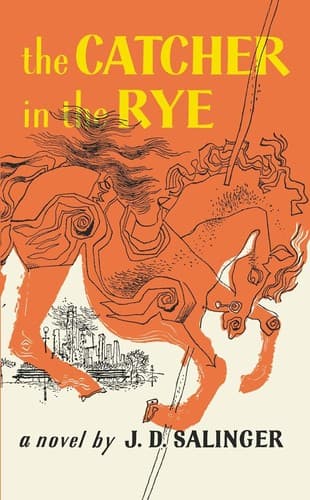
- The Catcher in the Rye
J.D. Salinger
3.8 (2.7M) average on GoodreadsYoung AdultFeatures a cynical, observant teenage protagonist with a unique voice and a critical view of society.
- A Separate Peace
John Knowles
3.6 (191k) average on GoodreadsHistorical FictionExplores complex male friendships, coming-of-age, and a dark undercurrent of mystery within a school setting.
- Paper Towns
John Green
3.8 (919k) average on GoodreadsMysteryInvolves a teenage protagonist investigating a mysterious disappearance, with themes of friendship and self-discovery.
- We Were Liars
E. Lockhart
3.8 (465k) average on GoodreadsThrillerWhile both novels deal with hidden truths and the complexities of youth, Munson's 'The November Criminals' prioritizes character voice and intellectual exploration, whereas 'We Were Liars' relies heavily on an unreliable narrator and a shocking plot twist. Munson's approach is less emotionally manipulative and more focused on the protagonist's internal journey and cynical wit. Lockhart's novel also features a more insular, affluent setting that drives its specific brand of family secrets, while Munson's world feels more grounded in everyday high school life, albeit with an intellectual bent.
- One of Us Is Lying
Karen M. McManus
4.0 (216k) average on GoodreadsThriller'The November Criminals' differs significantly from 'One of Us Is Lying' in its narrative structure and character focus. McManus's novel features multiple perspectives from a diverse ensemble cast, offering a broad, high-stakes mystery with a rapid pace. Munson's book, by contrast, is a singular, deeply personal first-person narrative, delving intimately into Addison's mind. While both are YA mysteries, Munson's is more introspective and character-driven, sacrificing the broader appeal of a multi-perspective thriller for a more unique and stylized voice.
- Angels & Demons
Dan Brown
3.9 (2.7M) average on GoodreadsThrillerA Harvard symbologist races through Rome's ancient sites, deciphering cryptic clues to unmask the Illuminati and stop a vengeful plot to destroy the Vatican with a stolen antimatter weapon.



Enjoyed the summary?
A summary gives you the shape of the book. The book itself has the detail, the examples and the voice.
Find The November Criminals on AmazonAs an Amazon Associate, BookBrief earns from qualifying purchases. How we're funded