
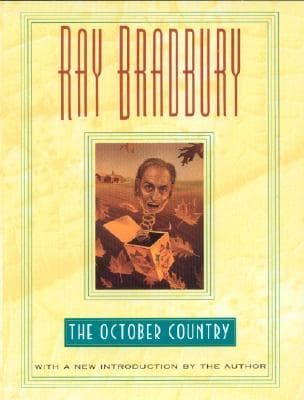
Synopsis
Covers the whole plot, including the ending.
- Difficulty
- Medium
- Pacing
- Variable
- Mood
- Atmospheric, Eerie, Melancholy, Whimsical, Dark
- Read it if
- You enjoy classic, atmospheric short horror and fantasy stories with a touch of poetic prose and psychological depth.
- Skip it if
- You prefer fast-paced, explicit horror or straightforward narratives without much ambiguity.
The October Country Plot Summary
Covers the whole plot, including the ending.
The Dwarf
Mr. Bigelow, self-conscious about his small stature, visits a carnival funhouse. He finds a mirror that makes him appear tall and imposing. He becomes obsessed with this image, believing it to be his true self. After the carnival leaves, Bigelow convinces the owner, Mr. Kobert, to sell him the mirror. He takes it home, but it reverts to its original, unflattering reflection when not in the funhouse. Driven to despair, he smashes the mirror, destroying his idealized self-image and forcing him to confront reality.
The Next in Line
Marie, traveling in Mexico with her husband Joseph, is plagued by an intense fear of death and burial. This phobia worsens when Joseph insists they visit the catacombs of Guanajuato, filled with mummified corpses. The sight of the bodies, especially the children, deeply disturbs Marie. She feels a morbid pull towards the mummies, imagining herself among them. Despite Joseph's attempts to comfort her, her fear intensifies, ending in a terrifying vision where she sees herself as the 'next in line' to join the silent dead, hinting at a psychological breakdown.
The Watchful Poker Chip of H. Matisse
O'Neill, a struggling writer, observes his friend H. Matisse, an eccentric artist, who carries a single, large, red poker chip everywhere. Matisse claims the chip is alive, that it 'watches' him and inspires his art. O'Neill initially dismisses this as artistic eccentricity, but the chip's constant presence and Matisse's belief in its sentience begin to unnerve him. Matisse even attributes his creative successes and failures to the chip's influence. The story leaves the reader to wonder if the chip truly has a supernatural quality or if it's a powerful psychological projection of Matisse's artistic muse and neuroses, blurring the line between reality and delusion.
Skeleton
Clavell, a hypochondriac obsessed with his own bones, believes his skeleton is an unwelcome, foreign entity within him. He seeks Dr. Burleigh, a dubious physician known for unorthodox treatments, and proposes the impossible: to have his skeleton removed. Burleigh, intrigued by the challenge and the potential for a macabre medical first, agrees. The procedure is performed in secret, and Clavell emerges a soft, shapeless mass, experiencing a fleeting sense of liberation before realizing the horror of his new, boneless existence. The story concludes with the implication that Burleigh has preserved Clavell's skeleton, perhaps for exhibition, and Clavell himself is reduced to a grotesque, helpless blob.
The Jar
Charlie, a poor farmer, buys a large, sealed jar from a traveling showman. Inside, preserved in cloudy fluid, is an ambiguous, grotesque specimen that no one can identify; it is both fascinating and repulsive. The jar becomes the centerpiece of Charlie's home, attracting all the local townsfolk who gather nightly to speculate about its contents. Its presence fuels superstitions, gossip, and fear, with different people seeing different things within the murky glass. The jar affects the community, bringing them together in morbid curiosity while sowing discord and suspicion, particularly between Charlie and his jealous wife, Thedy.
The Lake
Harold, now an adult, returns to the lake of his childhood. The lake holds a painful memory: the drowning of his first love, Tally, when they were children. He recalls their innocent games by the water and the sudden, tragic accident that took her life. Over the years, Tally has remained vivid in his mind, and he often dreams of her, particularly of her hair floating in the water. Harold confronts his lingering grief and the sense of loss that has shaped his life. He finds a measure of peace by the lake, accepting that Tally will always be a part of him, a ghost of childhood summers.
The Emissary
Martin, a young boy, is confined to his bed by a mysterious illness. His only connection to the outside world is his beloved terrier, which he sends out to explore. Martin describes the world to the dog, and the dog brings back objects that seem to fulfill Martin's subconscious desires for experience and connection, albeit morbidly. One day, the dog brings back a strange, small black glove. Later, it brings back a woman; a beautiful, kind woman named Miss Haight, who cares for Martin. However, the dog's affection for Miss Haight takes a dark turn when it brings her back again, after her death, implying the dog is a supernatural emissary of Martin's dark will.
The Small Assassin
Alice and David Leiber welcome their new baby boy, but Alice is immediately plagued by an unsettling feeling. She believes the infant is not a helpless child but a malevolent, conscious entity plotting their demise. Her husband, David, dismisses her fears as postpartum depression. However, a series of strange 'accidents' occur around the house, ending in the death of Alice's nurse. Alice becomes convinced the baby is responsible, using its apparent helplessness as a disguise. The story builds tension as Alice tries to convince David of the baby's sinister nature, leading to a terrifying climax where the baby's true, murderous intent is revealed.
The Crowd
Spallner, involved in a severe car accident, observes a peculiar phenomenon: a group of people, a 'crowd,' always seems to gather instantly at the scene of every accident, long before emergency services arrive. Recovering from his injuries, he becomes obsessed with this observation. He investigates, finding that the same faces reappear at different accident sites. He confronts one of them, Mr. Smith, who reveals that they are drawn to accidents, almost ritually. Spallner suspects they are not merely observers but somehow involved in the creation of these tragedies, feeding off the suffering. His investigation leads him into a chilling confrontation with the crowd, implying he too might become their next 'spectacle.'
The Scythe
Drew Erickson, a man on the brink of despair and starvation, stumbles upon an abandoned farm with a field of ripe wheat. Inside the farmhouse, he finds a dead old man and a mysterious, ancient scythe. A note instructs him to harvest the wheat, warning him of a 'terrible job.' As Drew begins to cut the wheat, he discovers that each stalk he cuts corresponds to a human life ending somewhere in the world. He has unwittingly inherited the mantle of Death. Initially horrified, he tries to resist, but the scythe compels him. He is trapped in this grim role, forced to reap the lives of humanity, forever bound to the tool and its grim purpose.
Uncle Einar
Uncle Einar is a beloved but melancholic member of a family of winged beings. Unlike his relatives, Einar has difficulty flying; his wings are too large and make too much noise, startling humans and preventing him from soaring gracefully. He longs to fly freely, to experience the joy of the sky like his siblings. He tries various methods to achieve silent flight, even considering surgery, but nothing works. His family, understanding his sadness, creates a special, quiet place for him, a 'nest' of sorts where he can feel at peace. The story is a tender portrayal of an outsider yearning for belonging and finding solace in acceptance.
Homecoming
Timothy, a seemingly ordinary ten-year-old boy, is the only mortal in a large, eccentric family of supernatural beings; vampires, ghosts, witches, and other creatures of the night. It is the annual family reunion, a grand, macabre affair held in a decaying mansion. While his relatives revel in their ghoulish traditions and supernatural abilities, Timothy feels profoundly out of place, longing for a normal life and the warmth of the sun. He tries to participate but finds he cannot truly belong. His aunt, who understands his plight, offers him comfort, acknowledging his unique and lonely position within their strange family, highlighting themes of belonging and difference.
The Wonderful Death of Dudley Stone
Dudley Stone is an ancient man, seemingly immortal, who has lived for centuries, experiencing countless lives, loves, and historical epochs. He is utterly weary of existence, having seen and done everything, and now yearns for the oblivion of death. He tries various methods to end his life, but nothing works. He visits an old, wise woman, who understands his plight. She explains that his immortality is a curse, not a blessing. The story explores his profound ennui and his desperate search for an escape from his endless life, hinting that true death may only come when he truly accepts and understands his unique condition, or when he has finally learned all there is to learn.
The October Country Characters
Mr. Bigelow
Protagonist
A man tormented by his short stature.
Mr. Bigelow is a deeply insecure and self-conscious man, whose entire identity is consumed by his physical height. He views his shortness as a profound flaw, leading him to seek solace and validation in the distorted reality of a funhouse mirror. His obsession reveals a fragile ego and a desperate yearning for an idealized self, highlighting his inability to accept his own appearance. He is ultimately a tragic figure, unable to escape his self-perception.
Relationships: Mr. Kobert (carnival owner, seller of the mirror)
Marie
Protagonist
A woman gripped by a debilitating fear of death and burial.
Marie is a sensitive and highly anxious woman whose journey through Mexico is overshadowed by an intense phobia of mortality. Her fear is not merely intellectual; it's a visceral, almost prophetic dread that makes her susceptible to the macabre surroundings of the Guanajuato catacombs. She struggles with her inner demons, unable to find comfort or escape from the pervasive presence of death. Her character embodies a profound existential terror, making her vulnerable to psychological collapse.
Relationships: Joseph (her well-meaning but ultimately uncomprehending husband)
H. Matisse
Supporting
An eccentric artist who believes a poker chip is his artistic muse.
H. Matisse is an artist whose creative process is intertwined with a peculiar belief in the sentience of a poker chip. He is eccentric, perhaps delusional, but his conviction is unwavering. He attributes his artistic inspiration and even his life's direction to the chip, demonstrating a mind that blurs the lines between reality and imagination. His character serves as a vehicle to explore the nature of artistic creation, obsession, and the power of belief, however strange.
Relationships: O'Neill (writer friend, observer of Matisse)
Clavell
Protagonist
A hypochondriac obsessed with removing his own skeleton.
Clavell is a man consumed by a bizarre and extreme form of hypochondria, viewing his own skeleton as a foreign, unwanted entity. His obsession is so profound that it overrides all reason, driving him to seek out a grotesque and impossible 'cure.' He is a figure of extreme body dysphoria, willing to undergo radical transformation to achieve an imagined state of freedom. His character represents the ultimate rejection of the physical self and a descent into the absurd and horrifying consequences of such a desire.
Relationships: Dr. Burleigh (dubious physician who performs the procedure)
Charlie
Protagonist
A poor farmer who acquires a mysterious, unsettling jar.
Charlie is a simple, somewhat naive farmer whose life is irrevocably changed by the purchase of a strange jar. He is driven by a desire for something extraordinary, something to elevate him from his mundane existence. The jar becomes his prized possession, a source of both fascination and marital strife. He is a character who grapples with the power of the unknown and the impact of the uncanny on a closed community, ultimately becoming a victim of its divisive influence.
Relationships: Thedy (his jealous and suspicious wife)
Harold
Protagonist
A man haunted by the memory of his childhood love who drowned.
Harold is a man deeply affected by a childhood tragedy. He carries the weight of Tally's death into adulthood, his memories vivid and poignant. He is introspective and melancholic, revisiting the past to confront his unresolved grief. His character explores the lasting impact of loss, the power of memory, and the struggle to find peace with an unalterable past. He represents the enduring pain of first love and the quiet resilience of the human spirit.
Relationships: Tally (his childhood love who drowned)
Martin
Protagonist
A bedridden boy with a mysterious illness and a sinister connection to his dog.
Martin is a young boy confined to his bed, his physical helplessness contrasting sharply with a subtly implied, chilling power over his dog. He is isolated, yet through his pet, he projects his desires and perhaps even his subconscious malevolence onto the outside world. He is a character who evokes both pity and unease, blurring the lines between victim and manipulator. His story suggests a dark, telepathic connection with his dog, making him a chilling force of quiet, destructive will.
Relationships: Miss Haight (his kind nurse, who becomes a victim of the dog's actions)
Alice Leiber
Protagonist
A new mother who believes her baby is a malevolent killer.
Alice Leiber is a woman plunged into a terrifying psychological ordeal after giving birth. Her maternal instincts are twisted into fear and suspicion, as she perceives her newborn not as an innocent child but as a cunning, murderous entity. She is isolated in her conviction, battling not only the perceived threat of her baby but also the disbelief of her husband and the medical community. Her character explores themes of maternal paranoia, the fragility of sanity, and the primal fear of something monstrous disguised as innocent.
Relationships: David Leiber (her husband, who dismisses her fears)
Spallner
Protagonist
A man who uncovers a sinister 'crowd' drawn to accidents.
Spallner is an ordinary man who, after a traumatic accident, develops a keen and unsettling awareness of a recurring phenomenon. He is a determined investigator, driven by a need to understand the strange 'crowd' he observes. His character embodies human curiosity and the desire to expose hidden truths, even when those truths are deeply disturbing. He is courageous but ultimately vulnerable, as his pursuit of knowledge draws him into the sinister world of the accident-watchers.
Relationships: Mr. Smith (a member of the crowd whom Spallner confronts)
Drew Erickson
Protagonist
A desperate man who unwittingly becomes the embodiment of Death.
Drew Erickson is a man at the lowest point of his life, facing destitution and despair. His discovery of the scythe and the subsequent revelation of its power transforms him from a victim of circumstance into an unwilling agent of cosmic forces. He is initially resistant and horrified by his new role, highlighting his inherent humanity and empathy. His character explores the burden of immense power and the inescapable nature of destiny, as he is forced to accept a grim and eternal responsibility.
Uncle Einar
Protagonist
A winged man who struggles with his inability to fly silently.
Uncle Einar is a gentle and melancholic figure, an anomaly even within his fantastical family. Despite possessing wings, he is unable to achieve the graceful, silent flight of his relatives, making him feel like an outcast. His character embodies the universal longing for belonging and the pain of feeling different. He is sensitive and yearns for a specific freedom, but ultimately finds solace in the acceptance and love of his family, showcasing themes of self-acceptance and familial understanding.
Relationships: His family (supportive but initially uncomprehending)
Timothy
Protagonist
A mortal boy in a family of supernatural creatures.
Timothy is a unique character in a family of monsters, as he is entirely human. He feels like an outsider at his family's ghoulish reunion, longing for normalcy and the warmth of the sun, which his relatives shun. He is a symbol of innocence and difference, navigating a world that is both his home and alien to him. His character explores themes of belonging, the definition of 'normal,' and the quiet struggle of being unique within a strongly defined family identity.
Relationships: His Aunt (understanding and supportive of his mortal nature)
The October Country Themes
The Monstrous Within and Without
Many stories explore monstrosity, not just as external creatures, but as something inherent in human nature or even in the mundane. In 'The Small Assassin,' the ultimate horror comes from a seemingly innocent baby. 'Skeleton' externalizes a man's self-loathing into a literal desire to shed his bones. 'The Jar' shows how an ambiguous, grotesque object can bring out the worst in a community, turning neighbors against each other through suspicion and fear. This theme shows Bradbury's fascination with the psychological underpinnings of fear and the uncanny.
“What if it was a monster? What if it was a thing that only looked like a baby?”
Loss and Lingering Grief
Several stories look at the lasting impact of loss, especially from childhood. 'The Lake' is a poignant exploration of enduring grief, as Harold revisits the site of his first love's drowning, unable to fully escape the memory. The story captures how past tragedies continue to shape present lives. This theme often gives fantastical elements deep human emotion, grounding the horror or fantasy in relatable sorrow and the struggle for acceptance.
“She was dead, and I had been left alive. It was as simple as that.”
The Search for Identity and Belonging
Characters often struggle with their sense of self and their place in the world. Mr. Bigelow in 'The Dwarf' is consumed by his physical appearance, seeking an idealized reflection to define himself. Uncle Einar, despite being part of a family of winged beings, feels like an outcast due to his noisy flight, yearning for acceptance and a quiet space. Timothy in 'Homecoming' is a mortal boy in a family of monsters, desperately trying to find where he belongs. These narratives explore the pain of being different and the universal desire for self-acceptance and connection.
“He tried to fly, but his wings were too big, too noisy.”
The Allure and Peril of the Unknown
Bradbury uses the unknown to evoke both fascination and dread. 'The Jar' is a prime example, where an ambiguous specimen captivates an entire community, fueling morbid curiosity and escalating paranoia. The mystery itself becomes a catalyst for human drama and conflict. Similarly, 'The Watchful Poker Chip of H. Matisse' presents an object whose sentience is never fully explained, leaving the reader to ponder the thin line between artistic inspiration and delusion. This theme highlights humanity's attraction to the mysterious and the potential dangers it brings.
“It was a thing that no one could name, or guess at, or explain.”
The Inevitability of Death and Fate
The collection often touches upon the inescapable nature of death and a predetermined destiny. Marie in 'The Next in Line' is consumed by a terrifying premonition of her own mortality, unable to escape the psychological grip of the Mexican mummies. In 'The Scythe,' Drew Erickson is thrust into the role of Death itself, forced to reap lives, illustrating that some destinies cannot be avoided. Even Dudley Stone, in 'The Wonderful Death of Dudley Stone,' yearns for death, finding it elusive, suggesting that one's fate, even immortality, can be a burden. These stories explore humanity's confrontation with its own mortality and the power of fate.
“You are the Reaper now. The job is yours.”
Plot Devices & Literary Techniques
The Unreliable Narrator/Perception
Characters' subjective experiences distort or create their reality.
Bradbury frequently employs characters whose perceptions are skewed, making the reader question the reality of events. Alice Leiber in 'The Small Assassin' is convinced her baby is evil, a belief dismissed by her husband as postpartum delusion, leaving the reader to wonder if she's sane or if the horror is real. Similarly, H. Matisse's belief in the sentience of his poker chip in 'The Watchful Poker Chip of H. Matisse' could be artistic eccentricity or genuine supernatural connection. This device creates psychological tension and blurs the lines between internal fear and external threat.
The Macabre Object
An ordinary or mysterious object becomes a focal point for horror or obsession.
This device is central to several stories. The funhouse mirror in 'The Dwarf' becomes an object of intense obsession, reflecting a man's internal struggle with self-image. The ambiguous specimen in 'The Jar' acts as a catalyst for fear, superstition, and conflict within a community. Even the poker chip in 'The Watchful Poker Chip of H. Matisse' takes on a life of its own through the artist's belief. These objects are not inherently evil but become conduits for human anxieties, desires, and dark projections, transforming the mundane into the terrifying.
Folkloric/Mythic Archetypes
Drawing on established supernatural figures or roles to explore human conditions.
Bradbury often grounds his fantastical elements in traditional folklore or myth. 'The Scythe' directly positions its protagonist, Drew, as the embodiment of Death, inheriting a grim, ancient role. 'Homecoming' populates a family reunion with classic monsters like vampires, witches, and ghosts, but explores their humanity and their outsider status. This device allows Bradbury to tap into collective unconscious fears and archetypes, giving his unique stories a resonant, timeless quality while simultaneously subverting expectations by focusing on the emotional and psychological aspects of these figures.
Psychological Horror
Terror derived from characters' internal states, fears, and mental instability.
Many stories in 'The October Country' derive their horror not from explicit gore or jump scares, but from the psychological distress of the characters. Marie's overwhelming fear of death in 'The Next in Line' leads to a terrifying breakdown, fueled by her own mind. Clavell's obsession with his skeleton in 'Skeleton' is a profound psychological disorder that manifests in a grotesque physical transformation. This device allows Bradbury to explore the fragility of the human mind and how internal anxieties can warp perception and reality, making the reader question what is real and what is a product of mental anguish.
The October Country Quotes
“The world was a library of all the words ever spoken, and he was reading them one by one.”
“The wind was a whetting stone for the stars, sharpening them to a fine, cold glitter.”
“He knew it. He knew it all. The autumn country. The October country. The country of the things that were not and yet were.”
“Death is a lonely business.”
“We are a lost people, a forgotten tribe, a race of dreamers who have awakened in a nightmare.”
“There are nights when the wind is a carnival of voices, and you can hear them all, if you listen.”
“He wanted to take the world and shake it till it woke up.”
“The dust was everywhere, a fine, grey powder that settled on everything, like a shroud.”
“What do you want a tombstone for? You're not dead. You're just... different.”
“He felt like a man who had suddenly discovered that the world was not solid, but made of smoke and mirrors.”
“Some people are born on a rainy day, and some on a sunny day, and some on a day when the wind blows and the leaves fall.”
“The dead are always with us, if we only know how to listen.”
“He loved the smell of books, the feel of their pages, the secrets they held within their covers.”
“There are no monsters, no demons, nothing in the dark that isn't in your own mind.”
Quiz
10 questions on the plot and the characters. Each answer comes with a short explanation.
Question 1
In 'The Dwarf,' what physical characteristic does the protagonist, Mr. Bigelow, become obsessed with after visiting the funhouse?
- His height, wanting to be taller
- His reflection, wanting to be shorter like the dwarf in the mirror
- His weight, wanting to be thinner
- His face, wanting a different expression
Show answer
B. His reflection, wanting to be shorter like the dwarf in the mirror Mr. Bigelow is captivated by the dwarf's reflection in the funhouse mirror and develops a desperate desire to become small himself.
Question 2
What unusual item does H. Matisse possess in 'The Watchful Poker Chip of H. Matisse' that seems to grant him strange insights and control over situations?
- A rare antique watch
- A glowing crystal ball
- A unique, watchful poker chip
- An ancient, cursed coin
Show answer
C. A unique, watchful poker chip The story centers around H. Matisse and his mysterious, seemingly sentient poker chip that influences events around him.
Question 3
In 'The Lake,' what is the primary source of the protagonist's enduring sadness and nostalgia?
- The loss of his first love in a boating accident
- The memory of a childhood friend who drowned in the lake
- Regret over never learning to swim
- A family secret buried near the lake
Show answer
B. The memory of a childhood friend who drowned in the lake 'The Lake' is a poignant elegy to childhood loss, specifically the memory of a young girl, Tally, who drowned in the lake.
Question 4
What is the unique ability of Uncle Einar in the story named after him?
- He can speak to animals
- He has wings but cannot fly without making noise
- He can turn invisible at will
- He can predict the future with perfect accuracy
Show answer
B. He has wings but cannot fly without making noise Uncle Einar is a winged creature, but his inability to fly silently causes him distress, as he fears disturbing the human world.
Question 5
In 'The Jar,' what macabre object does the poor man, Charlie, acquire and keep in his home, becoming an object of fascination and dread for the community?
- A jar containing a preserved, grotesque creature
- A jar filled with rare, glowing insects
- A jar of ancient, cursed coins
- A jar holding a mythical plant that never wilts
Show answer
A. A jar containing a preserved, grotesque creature Charlie buys a large jar containing a strange, ambiguous specimen preserved in fluid, which becomes a focal point for the town's morbid curiosity and dark desires.
Question 6
What is the central conflict in 'The Small Assassin'?
- Parents struggling with a child's unusual magical powers
- A newborn baby is believed by its mother to be malevolent and intentionally trying to harm her
- A couple haunted by the ghost of a child they never had
- A doctor trying to save a child from a mysterious illness
Show answer
B. A newborn baby is believed by its mother to be malevolent and intentionally trying to harm her The story features a mother who, after giving birth, becomes convinced her infant son is a conscious, malevolent entity trying to kill her.
Question 7
In 'The Scythe,' what is the grim inheritance the protagonist, Drew, receives that forces him into an inescapable, macabre duty?
- A haunted house filled with vengeful spirits
- A magical book that grants wishes, but with terrible consequences
- A magical scythe that makes him the new embodiment of Death
- A vast fortune, but only if he commits a heinous act
Show answer
C. A magical scythe that makes him the new embodiment of Death Drew and his family inherit a farm with a mysterious scythe; he soon discovers that whoever wields it is responsible for reaping souls.
Question 8
Which story features a family of monstrous, Halloween-like beings who gather for an annual reunion, and explores themes of belonging and difference through the eyes of a 'normal' family member?
- The Emissary
- Homecoming
- The Cistern
- The Man Upstairs
Show answer
B. Homecoming 'Homecoming' depicts a gathering of an eccentric, monstrous family, with the protagonist, Timothy, feeling like an outsider due to his human appearance.
Question 9
In 'The Wind,' what supernatural entity torments the protagonist, specifically targeting him with a relentless, personified force of nature?
- A vengeful spirit of a sailor lost at sea
- A sentient, malevolent wind that hunts him
- A creature that emerges only during storms
- The ghost of a rival meteorologist
Show answer
B. A sentient, malevolent wind that hunts him The story features a man haunted and eventually pursued to his death by a malevolent, personified wind.
Question 10
What is the bizarre predicament of the title character in 'The Wonderful Death of Dudley Stone'?
- He is immortal and desperately seeks death
- He dies repeatedly but always resurrects
- He can only die if a specific ritual is performed
- He is slowly turning to stone and fears his final transformation
Show answer
A. He is immortal and desperately seeks death Dudley Stone is an immortal man who has lived for centuries and has grown weary of life, actively seeking a way to finally die.
The October Country FAQ
What is the overarching theme connecting the diverse stories in 'The October Country'?
The collection broadly explores themes of mortality, the uncanny, and the hidden darkness beneath mundane life, often through the lens of childhood fears and the grotesque. Many stories feature characters confronting their own death, the death of others, or unsettling transformations that challenge their perception of reality.
Which stories best exemplify Bradbury's exploration of childhood nostalgia and loss?
'The Lake' is a poignant elegy to childhood loss, where a man revisits the lake where his childhood friend, Tally, drowned, haunted by her memory. 'Uncle Einar,' in contrast, celebrates the fantastical side of childhood, depicting a whimsical uncle with wings who longs to fly, embodying a childlike wonder and acceptance of the extraordinary.
Can you describe the premise of 'The Dwarf' and its central conflict?
'The Dwarf' tells the story of Robert Premiere, a man obsessed with a funhouse mirror that makes him appear tall and thin, his ideal self. He tries to steal the mirror to preserve this illusion, revealing his deep-seated insecurities about his actual short stature and his inability to accept himself.
What is the unsettling concept behind 'The Small Assassin'?
'The Small Assassin' features a couple, Alice and David, who believe their newborn baby is a malevolent, conscious entity plotting their deaths. The story taps into postpartum anxieties and the primal fear of helplessness, suggesting the infant is a tiny, calculating killer seeking revenge for its birth.
How does 'The Jar' explore themes of obsession and rural superstition?
'The Jar' centers on Charlie, a poor farmer who buys a mysterious jar containing a grotesque specimen from a carnival. The jar becomes the focal point of his community, drawing people to his home and sparking dark obsessions and jealousies, ultimately leading to violence and murder fueled by the jar's enigmatic power.
What is the significance of the 'Theater of Morning Voices' mentioned in Bradbury's introduction?
Bradbury describes the 'Theater of Morning Voices' as the subconscious wellspring of ideas and stories that emerge from his dreams and waking thoughts. It represents the creative process of listening to one's inner muse and translating those ephemeral inspirations into tangible narratives, highlighting the intuitive nature of his writing.
Are there any recurring motifs or symbols across multiple stories in the collection?
Mirrors, reflections, and distorted images appear in 'The Dwarf' and subtly in other stories, symbolizing self-perception and illusion. The theme of death and the afterlife is pervasive, often personified or made tangible, as seen with the family in 'Homecoming' or the spectral presence in 'The Emissary.' Carnivals and circuses also serve as a backdrop for the uncanny, as in 'The Jar.'
How does 'The Watchful Poker Chip of H. Matisse' connect to broader artistic themes?
This story, though seemingly whimsical, can be interpreted as a commentary on the artist's gaze and the subjective nature of perception. H. Matisse's poker chip, with its painted eye, suggests an all-seeing, perhaps judgmental, artistic consciousness that observes and judges the world, reflecting Bradbury's own attentiveness to detail and human foibles.
What psychological anxieties are explored in 'The Crowd'?
'The Crowd' delves into the primal fear of being a spectacle and the morbid curiosity of humanity. It follows a man who, after a car accident, realizes that a specific, unchanging 'crowd' always appears at every fatal incident, suggesting a collective, almost parasitic, fascination with death and tragedy.
How does 'The Emissary' use psychological elements to explore grief and attachment?
'The Emissary' features a bedridden boy, Martin, whose only connection to the outside world is his dog. When the dog dies, it returns as a spectral presence, bringing back a woman who embodies Martin's longing for connection and the outside world, blurring the lines between grief, imagination, and the supernatural.
What can be inferred about the psychological state of the protagonist in 'The Wind'?
The protagonist of 'The Wind,' Allin, is a man tormented by the personified, vengeful wind that seems to stalk and whisper to him. His increasing paranoia and terror suggest a fragile mental state, perhaps bordering on psychosis, where natural forces become a manifestation of his internal fears and guilt, ultimately leading to his demise.
In 'Homecoming,' what psychological comfort or discomfort do the strange family members experience?
The story centers on Timothy, the only 'normal' human in a family of supernatural beings (vampires, ghosts, witches). He feels like an outsider, longing for a normal life, while his family finds comfort and belonging in their macabre existence. This highlights the psychological need for acceptance and identity, even within an unconventional family structure.
Is 'Uncle Einar' purely a celebratory fantasy, or does it contain deeper interpretive layers?
While celebratory, 'Uncle Einar' can be interpreted as an allegory for embracing one's unique identity and passions, even if they are unusual. Uncle Einar's struggle with his wings and his desire to fly represents the universal human yearning for freedom and self-expression, even in the face of societal norms or physical limitations.
How does Bradbury use the concept of the 'other' in stories like 'The Man Upstairs' or 'The Next in Line'?
In 'The Man Upstairs,' a young boy perceives his new boarder as a vampire, reflecting childhood fears and the 'othering' of strangers. 'The Next in Line' features a couple visiting a Mexican crypt, where the preserved dead are displayed, forcing them to confront their own mortality and the 'otherness' of death itself, blurring the line between life and decay.
What is the philosophical implication of 'The Wonderful Death of Dudley Stone'?
This story explores the desire for a meaningful end to a long, illustrious life. Dudley Stone, a famous writer, feels he has lived too long and seeks a dramatic, poetic death. It's a meditation on legacy, the fear of irrelevance, and the human need to control one's narrative, even to its conclusion.
How might 'There Was an Old Woman' be interpreted beyond a simple horror story?
Beyond its literal horror of a woman whose body parts keep escaping, the story can be seen as an allegory for the disintegration of the self in old age, or the struggle to maintain wholeness and identity. It humorously yet grotesquely portrays the body as something separate from the conscious mind, prone to rebellion and decay.
What is the debate surrounding the ending of 'The Scythe'?
The ending of 'The Scythe' sees Drew and his family inheriting a mysterious farm and a scythe that forces Drew to become Death. The debate often centers on whether Drew truly becomes the literal personification of Death or if he simply succumbs to a powerful delusion, driven by the farm's strange influence and his own desperation during a time of famine. It questions the nature of fate versus free will.
About the author
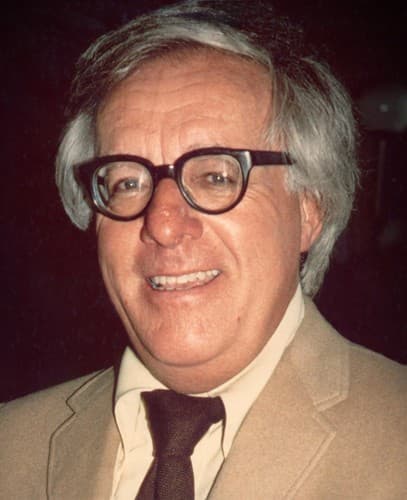
Ray Douglas Bradbury was an American author and screenwriter. One of the most celebrated 20th-century American writers, he worked in a variety of modes, including fantasy, science fiction, horror, mystery, and realistic fiction.
Similar books
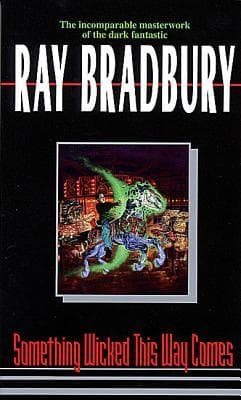
- Something Wicked This Way Comes
Ray Bradbury
3.9 (100k) average on GoodreadsFantasyShares Bradbury's signature blend of dark fantasy, carnival atmosphere, and childhood nostalgia.
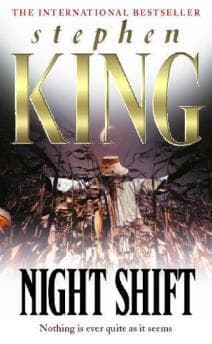
- Night Shift
Stephen King
4.0 (147k) average on GoodreadsThrillerA classic collection of horror short stories with a similar focus on the unsettling and the macabre.
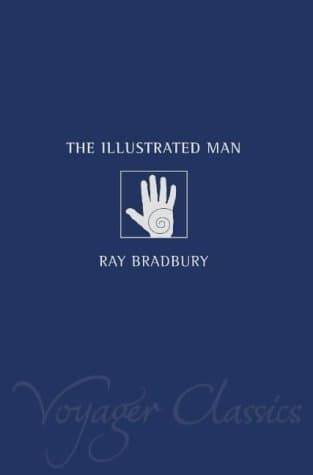
- The Illustrated Man
Ray Bradbury
4.1 (79k) average on GoodreadsFantasyAnother iconic Bradbury short story collection, exploring a range of speculative and often dark themes.
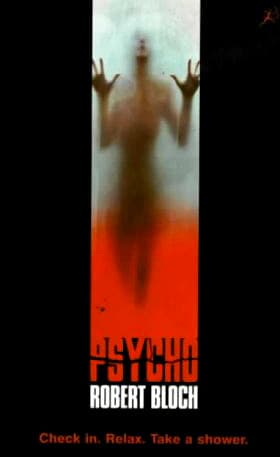
- Psycho
Robert Bloch
4.1 (55k) average on GoodreadsThrillerBloch's Psycho offers a stark contrast with its direct, brutal, and psychologically disturbing narrative focusing on explicit violence and a singular, terrifying antagonist. While Bradbury evokes dread through atmosphere and suggestion, Bloch delivers visceral shocks and a more conventional, plot-driven horror, making The October Country feel more subtle and less overtly shocking.
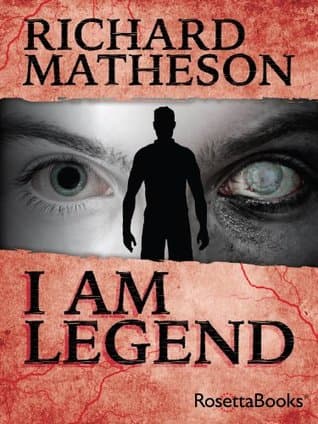
- I Am Legend
Richard Matheson
4.1 (96k) average on GoodreadsFantasyMatheson's I Am Legend presents a more survival-oriented, post-apocalyptic horror with a scientific bent, exploring themes of isolation and evolution through a singular protagonist against a world of vampires. Bradbury's collection, in contrast, is more varied in its horror, drawing from folklore, psychological unease, and gothic traditions, often with multiple characters and settings, and less focused on a singular, overarching threat or scientific explanation.
- Harry Potter and the Sorcerer's Stone
J.K. Rowling
4.5 (7M) average on GoodreadsFantasyRescued from a miserable life under the stairs, an orphaned boy discovers he's a wizard destined for a magical school, where he uncovers a dangerous secret tied to the dark wizard who murdered his parents.

Enjoyed the summary?
A summary gives you the shape of the book. The book itself has the detail, the examples and the voice.
Find The October Country on AmazonAs an Amazon Associate, BookBrief earns from qualifying purchases. How we're funded