
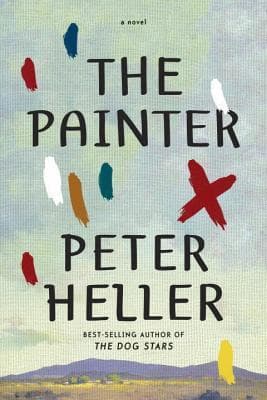
Synopsis
Covers the whole plot, including the ending.
- Difficulty
- Medium
- Pacing
- Variable
- Mood
- Atmospheric, Melancholy, Suspenseful, Reflective
- Read it if
- You enjoy literary fiction with a strong sense of place, exploring themes of violence, art, grief, and redemption through the eyes of a complex, troubled protagonist.
- Skip it if
- You prefer fast-paced thrillers without deep psychological introspection or are sensitive to depictions of violence and animal abuse.
The Painter Plot Summary
Covers the whole plot, including the ending.
A Quiet Life Interrupted
Jim Stegner, an acclaimed expressionist painter, has moved to a quiet life in rural Colorado. He seeks peace through art and fly-fishing after a past marked by violence—shooting a man, a failed marriage, and the death of his daughter, Alce. He lives in a cabin, paints with a local model, and maintains a sense of calm. One afternoon, while driving, Jim sees a man brutally beating a small horse. Overwhelmed by a familiar surge of anger and his violent impulses, Jim intervenes, assaulting the man and leaving him injured. This impulsive act immediately shatters his carefully built tranquility, signaling the return of the darkness he has tried to escape.
The Aftermath and Mounting Threat
After assaulting the horse abuser, Jim feels a brief sense of justice, but apprehension quickly replaces it. He learns the man he attacked, Clay, has ties to a dangerous local family. The next day, Jim discovers his cabin ransacked and his valuable paintings slashed, a clear message of retribution. His peace is further disturbed when he finds a dead deer, its throat cut, left as a warning near his property. These growing threats confirm that his violent past is catching up to him, and the quiet life he built is no longer sustainable. He realizes he must leave Colorado to escape the coming danger from Clay's family.
Fleeing to New Mexico
Driven by the threats and his restless conscience, Jim flees Colorado for New Mexico, a place tied to his past. He first settles in Taos, staying with an old friend, a gallery owner, who offers him a place to paint and hide. The new surroundings bring back many memories, especially of his late daughter, Alce, whose death remains a deep source of grief and guilt. He tries to paint, using the raw emotion of his flight and past trauma as fuel for his art, but the feeling of being hunted, combined with his inner demons, makes true peace hard to find.
A New Romance and Renewed Hope
While in New Mexico, Jim meets Sofia, a warm and understanding woman. Their connection is immediate and strong, offering Jim a rare moment of comfort and companionship. Sofia, seeing his deep pain and artistic drive, becomes a source of support. Through their growing relationship, Jim sees a glimmer of hope for a future beyond his self-imposed isolation and cycles of violence. He begins to open up, sharing parts of his past, and allowing himself to feel a connection he thought was lost. This relationship becomes an important anchor amidst his ongoing internal and external struggles.
The Shadow of the Past Looms
Despite Jim's attempts to disappear, the men seeking retribution for the assault on Clay eventually track him to New Mexico. Their presence casts a dark shadow over his new life with Sofia. Jim grows increasingly paranoid, constantly scanning his surroundings, knowing his fragile peace will soon be broken again. He tries to protect Sofia from the danger, but a confrontation becomes unavoidable. The past he tried to escape has caught up, forcing him to prepare for a violent reckoning that will test his resolve and his ability to control his destructive impulses.
Confrontation in the Desert
The inevitable confrontation happens in a remote, desolate part of the New Mexico desert. Jim, armed and ready, is ambushed by Clay and his associates. A brutal fight ensues, a chaotic display of violence Jim knows well. He is forced to use the very instincts he despises within himself, fighting for his life. During the struggle, Jim is injured, but manages to incapacitate his attackers, showing his formidable, though dangerous, capacity for violence. The encounter leaves him shaken, reaffirming the constant battle he wages against his own nature, even as he defends himself.
The Weight of Guilt and Grief
The recent violence, along with the ongoing threat, intensifies Jim's inner struggle, especially his grief and guilt over his daughter, Alce. He often experiences vivid flashbacks and dreams of her, reliving the moments leading to her death and his own part in it. Alce's memory is a constant, haunting presence, fueling both his artistic drive and his deep sadness. He grapples with the idea that his violent nature might have contributed to the instability that led to her death, creating an inescapable cycle of self-blame and a longing for redemption that seems out of reach.
Art as Redemption
Throughout his ordeal, Jim continues to paint with an almost desperate intensity. His canvases hold his grief, anger, and the beauty he still finds in the world. He paints the stark landscapes, the vivid colors of the desert, and the raw emotions that consume him. His art is not just an escape but a way to process his trauma and find meaning in his chaotic life. The act of creation becomes a form of redemption, a way to channel his destructive impulses into something beautiful and lasting, transforming his suffering into strong artistic expression. His work gains a new, raw power born from his experiences.
A Moment of Peace, A Lingering Threat
After the confrontation, Jim and Sofia find a brief period of calm. They retreat to a secluded cabin, trying to rebuild their lives and find some peace together. Jim continues to paint, finding new depth in his work, inspired by Sofia and the harsh beauty of the landscape. However, the experience has left a lasting mark. He knows his violent tendencies are a part of him, a shadow that will always lurk. While he has found a fragile happiness with Sofia, the story suggests that the threat of his past, and his own dark impulses, will always be a part of his life, requiring constant vigilance and self-awareness.
An Unresolved Future
The novel ends without a clear resolution to Jim's internal or external conflicts. He has survived the immediate threats, found love and some peace, and continues to create powerful art. Yet, the story emphasizes that his struggle with violence, grief, and his past is ongoing. He accepts that darkness is a part of him, but his commitment to painting and his love for Sofia give him a framework for living. His future is uncertain, but he faces it with a newfound, though fragile, sense of purpose, determined to use his experiences to create a meaningful life, even if it means constantly battling his own demons.
Principal Figures
Jim Stegner
Protagonist
A renowned expressionist painter haunted by violence and grief.
Jim Stegner is a complex and tormented artist, known for his powerful, often dark, expressionistic paintings. He carries the heavy burden of a past marked by violence—having shot a man, a failed marriage, and the devastating loss of his daughter, Alce. Jim is driven by an intense creative urge but constantly battles his own violent impulses and a profound sense of guilt. He seeks solace in the solitude of nature and the act of painting, attempting to outrun the darkness within him. Despite his artistic success, he remains deeply wounded and perpetually in search of redemption and peace.
Relationships: Alce Stegner (Deceased daughter, source of profound grief and guilt); Sofia (Love interest, offers companionship and hope); Clay (Antagonist, victim of Jim's violence, instigator of retribution); Old Gallery Owner Friend (Supportive friend and art dealer)
Sofia
Supporting
Jim's love interest, who offers him understanding and a path to connection.
Sofia is a compassionate and insightful woman who enters Jim's life in New Mexico. She sees beyond his rough exterior and recognizes the depth of his pain and the brilliance of his artistic spirit. Sofia is patient, understanding, and provides Jim with a much-needed emotional anchor. Her presence allows Jim to open up and experience a connection he thought he had lost forever. She represents hope, love, and the possibility of a future free from his solitary torment, offering him a glimpse of a life where his art and relationships can coexist.
Relationships: Jim Stegner (Love interest, source of stability and hope for Jim)
Alce Stegner
Mentioned/Catalyst
Jim's deceased daughter, whose memory fuels his grief and guilt.
Alce is Jim's late daughter, whose death is a central, haunting event in his life. Though she never appears directly in the narrative, her memory is a constant presence, driving Jim's profound grief, guilt, and his artistic expression. Her loss is the deepest wound Jim carries, and he frequently relives the circumstances surrounding her death, questioning his own role and responsibility. Alce represents the innocence Jim feels he failed to protect and the profound love he lost, making her memory a powerful internal force shaping his character and actions.
Relationships: Jim Stegner (Deceased daughter, central to Jim's grief and motivation)
Clay
Antagonist
A violent man who becomes a target of Jim's rage and seeks retribution.
Clay is the man Jim assaults for beating a horse in Colorado. He is depicted as a cruel and petty individual, connected to a dangerous local family. Clay's actions against the horse trigger Jim's violent intervention, setting off the chain of events that forces Jim to flee. He becomes the primary antagonist, relentlessly pursuing Jim for revenge, representing the external manifestation of the violence Jim tries to escape. His presence forces Jim to confront his own capacity for brutality and the consequences of his actions.
Relationships: Jim Stegner (Victim of Jim's assault, seeks retribution)
Gallery Owner Friend
Supporting
Jim's long-standing friend and art dealer in New Mexico.
This unnamed gallery owner is a loyal and understanding friend to Jim, providing him with refuge and support when he flees to New Mexico. He recognizes Jim's talent and the tormented nature of his genius, offering him a space to paint and a safe haven. He represents the enduring connections from Jim's past that still offer him comfort and stability, contrasting with the violence and isolation he often experiences. His presence highlights Jim's professional success and the respect he commands within the art world.
Relationships: Jim Stegner (Long-time friend, art dealer, and confidant)
Themes & Insights
The Nature of Violence and Its Consequences
The novel explores the dual nature of violence: both destructive and, strangely, a source of moral drive for Jim. Jim's past involves a shooting and his daughter's death, and his present is shaped by his impulsive violence against Clay. This theme shows in Jim's struggle to control his violent impulses, which he both hates and relies on for justice (as with the horse beating). The consequences are relentless, forcing him to flee and face retribution, yet his art often draws power from this raw aspect of his being. The novel suggests that while violence scars, it can also lead to creation and be a necessary evil in a world that sometimes demands it.
“He knew the darkness. He knew it in his bones, in his hands, in the way he saw the world. It was a part of him, always had been. And sometimes, it was all that saved him.”
Art as Redemption and Expression
For Jim, painting is not just a job but a lifeline, a way to process his grief, guilt, and violent tendencies. His art is expressionistic, reflecting the turmoil and beauty he experiences. Creation becomes a form of catharsis, allowing him to channel destructive impulses into something meaningful and lasting. His paintings, born from suffering and the harsh realities of his life, gain an intensity that captivates others. The novel portrays art as a transformative force, offering a path to redemption and a way to understand a chaotic and painful existence, as seen when he pours his recent flight and memories of Alce onto the canvas.
“He painted what he knew, what he feared, what he loved. The canvas was a battlefield, a confessional, a silent prayer.”
Grief and Loss
The theme of grief, especially over the death of Jim's daughter, Alce, underlies much of his character and motivation. Her memory is a constant, haunting presence, fueling his guilt and his desperate search for meaning. Jim's inability to fully process this loss contributes to his restlessness and self-destructive tendencies. The novel explores how deep grief can shape a life, influencing decisions, relationships, and even artistic output. His attempts to find comfort, whether in solitude, new relationships, or his art, are an ongoing negotiation with the immense void left by Alce's absence, showing the lasting impact of personal tragedy.
“Her absence was a weight he carried, heavier than any paint box, more persistent than any shadow.”
The Search for Peace and Solitude
Jim's retreat to rural Colorado and his flight to New Mexico are driven by a desire for peace and solitude, a chance to escape his past and societal demands. He seeks refuge in remote landscapes, finding comfort in nature, especially fly-fishing. However, the novel shows that true peace is not just a place but an internal state, constantly disrupted by his own nature and the consequences of his actions. His quest highlights the difficulty of outrunning oneself and the persistent intrusion of the past into any attempt at a quiet life, suggesting that genuine peace comes through confrontation and acceptance, not evasion.
“He craved the silence, the vast, empty spaces where his own thoughts were the loudest sound.”
Plot Devices & Literary Techniques
Flashbacks and Memories
Fragments of Jim's past, particularly involving Alce and the shooting, interrupt the present narrative.
Flashbacks and internal memories serve to reveal Jim's traumatic past, particularly the death of his daughter, Alce, and the incident where he shot a man. These fragmented recollections are not linear but emerge organically, triggered by current events or Jim's emotional state. They create a sense of his burdened conscience and provide crucial context for his violent impulses, his grief, and his artistic drive. This device deepens the reader's understanding of Jim's complex character and the pervasive influence of his past on his present actions and internal world, explaining his motivations without explicitly stating them.
Symbolism of Art and Painting
Jim's paintings are symbolic representations of his inner turmoil, grief, and search for beauty.
Jim's art is a central symbolic device. His expressionist paintings are not just a profession but a direct manifestation of his internal landscape. The colors, subjects, and intensity of his work reflect his violent urges, his profound grief over Alce, and his attempts to find beauty and meaning in a harsh world. The descriptions of his painting process and the impact of his art on others underscore the theme of art as redemption and a way to channel destructive energy into creation. The slashing of his paintings by Clay's family is also symbolic of the vulnerability of his inner world and the destructive power of external threats.
The Wild/Natural Landscape
The rugged landscapes of Colorado and New Mexico mirror Jim's internal wilderness and provide both solace and challenges.
The natural landscapes of rural Colorado and the New Mexico desert are more than just settings; they are active forces that reflect and influence Jim's emotional state. The wild, untamed nature of these environments mirrors Jim's own internal wilderness—his untamed impulses and his solitary existence. The act of fly-fishing in pristine rivers offers him temporary solace and a connection to a simpler, more ordered world, while the harsh, desolate beauty of the desert provides a backdrop for his confrontations and his existential struggles. The landscape is both a refuge and a metaphor for the raw, beautiful, and dangerous aspects of life Jim constantly grapples with.
The Painter Quotes
“Art is a way of holding on to what you love the most before it goes away.”
“The only way out of a bad painting is to paint a new one.”
“He painted what he saw, and what he felt, and sometimes what he feared.”
“There was a darkness in him, and it was a part of his painting, and it was a part of his life.”
“The mountains were a balm and a challenge, a place to heal and a place to fight.”
“You don't just paint what's there. You paint what's missing, too.”
“Every stroke was a decision, a commitment, a small act of faith.”
“He knew about the way light fell, and the way it lied.”
“The wind carried the scent of pine and something else, something wild and untamed.”
“Grief was a color, too. A deep, impossible blue.”
“He wanted to paint a painting that would hold all of it: the beauty, the violence, the fragile hope.”
“Sometimes the best way to find yourself is to get lost in something else.”
“The silence of the woods was a kind of music, complex and profound.”
“He understood that some things, once broken, could never be fully mended, only reassembled into something new.”
Quiz
10 questions on the plot and the characters. Each answer comes with a short explanation.
Question 1
Where does Jim Stegner initially try to start fresh after leaving the Santa Fe art scene?
- The mountains of rural Montana
- The valleys of rural Colorado
- A quiet coastal town in California
- A remote cabin in upstate New York
Show answer
B. The valleys of rural Colorado After the disintegration of his marriage and the loss of his loved one, Jim Stegner abandoned Santa Fe to start fresh in the valleys of rural Colorado.
Question 2
What is Jim Stegner's profession?
- A sculptor
- A novelist
- An expressionist painter
- A musician
Show answer
C. An expressionist painter The book explicitly states that Jim is a 'well-known expressionist painter.'
Question 3
What incident on a dirt road directly leads to Jim Stegner's quiet life being disrupted?
- He witnesses a car accident.
- He finds a lost child.
- He comes across a man beating a small horse.
- He discovers a stash of illegal drugs.
Show answer
C. He comes across a man beating a small horse. The synopsis states, 'one afternoon, on a dirt road, Jim comes across a man beating a small horse, and a brutal encounter rips his quiet life wide open.'
Question 4
What is one significant past event that contributes to Jim Stegner's tormented conscience?
- He was involved in a major financial fraud.
- He shot a man in a bar.
- He abandoned his family without a trace.
- He caused a fire that destroyed his studio.
Show answer
B. He shot a man in a bar. The description mentions that 'Years ago he shot a man in a bar,' which is a key part of his violent past and contributes to his dark impulses and conscience.
Question 5
After the incident with the horse beater, where does Jim Stegner flee to?
- Back to Santa Fe
- To a remote island
- Back to New Mexico
- Further into the Colorado wilderness
Show answer
C. Back to New Mexico Fleeing Colorado after the brutal encounter, Jim returns to New Mexico, chased by men seeking retribution.
Question 6
What is the primary internal conflict Jim Stegner faces throughout the novel?
- His struggle to find inspiration for his art.
- His battle to control his dark impulses and come to terms with his violent past.
- His desire to reconnect with his estranged family.
- His fear of public speaking and social interaction.
Show answer
B. His battle to control his dark impulses and come to terms with his violent past. The description highlights 'trying to find a way to live with the dark impulses that sometimes overtake him' and being 'tormented by his own relentless conscience,' indicating his internal struggle with his violent nature.
Question 7
Besides painting, what other activity does Jim Stegner enjoy in rural Colorado?
- Hunting big game
- Fly-fishing
- Gardening
- Wood carving
Show answer
B. Fly-fishing The text states, 'Now he spends his days painting and fly-fishing, trying to find a way to live with the dark impulses that sometimes overtake him.'
Question 8
What is the central theme that Jim Stegner is attempting to achieve by using his past losses?
- To gain financial wealth and recognition.
- To exact revenge on those who wronged him.
- To create a meaningful life and transcend the shadows in his heart.
- To completely forget his past and start anew.
Show answer
C. To create a meaningful life and transcend the shadows in his heart. The final sentence of the synopsis clearly states, 'The Painter is the story of a man who longs to transcend the shadows in his heart, a man intent on using the losses he has suffered to create a meaningful life.'
Question 9
What specific type of art scene did Jim Stegner abandon in New Mexico?
- The abstract expressionist movement of New York
- The traditional landscape art scene of Taos
- The art scene of Santa Fe
- The indigenous art community of Albuquerque
Show answer
C. The art scene of Santa Fe The description mentions he 'abandoned the art scene of Santa Fe to start fresh in the valleys of rural Colorado.'
Question 10
The novel is described as 'wildly suspenseful' due to what ongoing threat Jim faces?
- His struggle with a terminal illness.
- Being chased by men set on retribution after the incident with the horse.
- A looming deadline for a major art exhibition.
- The threat of a natural disaster in Colorado.
Show answer
B. Being chased by men set on retribution after the incident with the horse. The synopsis states, 'Fleeing Colorado, chased by men set on retribution, Jim returns to New Mexico,' highlighting the external suspense from those seeking revenge.
The Painter FAQ
What is the central conflict Jim Stegner faces at the beginning of 'The Painter'?
Jim Stegner, an expressionist painter, struggles with his violent past and dark impulses after moving to rural Colorado. He attempts to find peace through painting and fly-fishing, but the lingering trauma of shooting a man and losing his daughter, Katie, constantly haunts him.
What incident shatters Jim's attempt at a quiet life in Colorado?
Jim's quiet life is violently disrupted when he witnesses a man beating a small horse on a dirt road. He intervenes by beating the man with a shovel, leading to severe consequences and forcing him to flee Colorado.
Who is Jim Stegner and what is his profession?
Jim Stegner is a renowned expressionist painter known for his powerful and often dark artwork. He abandoned the Santa Fe art scene for rural Colorado in an attempt to escape his past and find solace, continuing to paint despite his inner turmoil.
What significant loss does Jim grieve throughout the novel?
Jim deeply grieves the loss of his daughter, Katie, whose death is a central tragedy that fuels much of his remorse and internal struggle. Her memory influences his art and his longing for redemption.
Where does Jim flee to after the incident with the horse beater?
After the violent encounter and subsequent retribution, Jim flees Colorado and returns to New Mexico, specifically to areas he knows from his past. This return brings him closer to unresolved aspects of his life.
What is the significance of fly-fishing in Jim's life?
Fly-fishing serves as a meditative and grounding activity for Jim, offering him moments of peace and connection with nature. It is a stark contrast to the violence he has experienced and perpetrated, symbolizing his desire for a simpler, more tranquil existence.
How does Jim's art reflect his internal struggles?
Jim's expressionist paintings are a direct manifestation of his inner turmoil, depicting the violence, grief, and dark impulses he constantly battles. His art becomes a cathartic outlet, allowing him to process his traumatic experiences and express his profound sorrow.
What is the role of the 'lovely model' mentioned in the synopsis?
The 'lovely model' represents a brief period of stability and connection for Jim in Colorado, offering a glimpse of potential normalcy. Her presence highlights his capacity for tenderness and beauty amidst his violent tendencies, though this peace is ultimately shattered.
How does Jim's past act of shooting a man in a bar connect to his current actions?
The past act of shooting a man in a bar establishes Jim's history of violence and impulsivity, foreshadowing his later brutal encounter with the horse beater. It demonstrates a recurring pattern of his inability to control his dark impulses when provoked, despite his desire for peace.
How does Jim's grief over Katie's death impact his decision-making?
Jim's profound grief over Katie's death leaves him emotionally vulnerable and with a deep sense of guilt, which often clouds his judgment. This grief fuels his desire for redemption but also contributes to his reckless behavior, as he sometimes acts without fully considering consequences.
Discuss Jim's struggle with his 'dark impulses' from a psychological perspective.
Jim's 'dark impulses' can be seen as manifestations of unresolved trauma and anger, possibly stemming from his past violent acts and the loss of his daughter. He grapples with a fragmented self, oscillating between a desire for peace and an inability to control his destructive urges, reflecting a deep internal conflict.
How does the novel explore the concept of toxic masculinity through Jim's character?
The novel subtly explores toxic masculinity through Jim's tendency to resort to violence as a primary response to perceived threats or injustices. His inability to fully process emotions through non-violent means, coupled with his self-destructive patterns, highlights the detrimental aspects of traditional masculine ideals he embodies.
What is the psychological impact of Jim being 'chased by men set on retribution'?
Being chased by men seeking retribution intensifies Jim's paranoia and isolation, reinforcing his perception of himself as a hunted figure. This external threat mirrors his internal torment, amplifying his guilt and forcing him to confront the inescapable consequences of his actions.
Is Jim Stegner a sympathetic character despite his violent actions?
Jim is presented as a complex character designed to evoke both sympathy and judgment. While his violent acts are undeniable, his deep grief, artistic sensibility, and persistent struggle for redemption encourage readers to understand the internal forces driving his behavior, fostering a nuanced view.
What does the ending of the novel suggest about Jim's potential for redemption?
The ending of the novel is often left open to interpretation regarding Jim's ultimate redemption. While he may not achieve complete peace, his continued struggle, his commitment to his art, and his willingness to confront his past suggest an ongoing journey towards self-acceptance and a meaningful life, rather than a definitive resolution.
How does the theme of 'art as catharsis' play out in 'The Painter'?
Art serves as Jim's primary means of catharsis, allowing him to channel his intense grief, anger, and guilt into tangible expressions. His paintings become a visual diary of his emotional landscape, providing a release for his tormented soul and a way to process his experiences, even if not fully heal them.
Does the novel suggest that violence is an inherent part of Jim's nature, or a reaction to circumstance?
The novel suggests that while Jim possesses an inherent capacity for violence, it is often triggered and amplified by extreme circumstances and his unresolved trauma. His 'dark impulses' are deep-seated, but his actions are frequently reactions to perceived injustices or threats, making it a complex interplay of nature and nurture.
What is the significance of the title 'The Painter' beyond Jim's profession?
The title 'The Painter' goes beyond Jim's profession to symbolize his role in 'painting' his own life story through his actions and art, often with broad, visceral strokes. It also suggests the way he perceives and interprets the world, translating his raw experiences into a personal, expressionistic narrative.
About the author

Peter Heller is an American author known for his fiction works, including "The Dog Stars" and "The Painter." His writing often explores themes of survival and the human experience, blending elements of adventure and introspection. Heller's novels have garnered attention for their lyrical prose and vivid storytelling.
Similar books
- The Dog Stars
Peter Heller
3.9 (53k) average on GoodreadsLiterary FictionShares Heller's distinctive prose, focus on survival, and character introspection.
- Blood Meridian
Cormac McCarthy
4.2 (227k) average on GoodreadsFictionExplores themes of violence, morality, and the stark beauty of the American West, though 'The Painter' is less relentlessly bleak.
- A River Runs Through It
Norman Maclean
4.2 (8k) average on GoodreadsHistorical FictionFeatures a strong connection to nature, particularly fly-fishing, and deals with complex family dynamics and the weight of the past.
- No Country for Old Men
Cormac McCarthy
4.1 (148k) average on GoodreadsThrillerBoth novels deal with violence and its aftermath, but McCarthy's is a more relentless and fatalistic thriller with less internal reflection, focusing on the external chase. Heller prioritizes the protagonist's internal landscape and the redemptive power of art.
- My Name Is Lucy Barton
Elizabeth Strout
3.5 (112k) average on GoodreadsLiterary FictionBoth explore an artist's inner life and past traumas. However, Strout's work is more focused on memory, family relationships, and the quiet resilience of its protagonist, lacking the active, albeit restrained, external threat and mystery present in The Painter.
- The Old Man and the Sea
Ernest Hemingway
3.8 (831k) average on GoodreadsLiterary FictionA Cuban fisherman's long struggle with a giant marlin becomes a story of endurance and dignity, now retold for young adults with illustrations, phonetic guides, and writing prompts in Traditional Chinese.





Enjoyed the summary?
A summary gives you the shape of the book. The book itself has the detail, the examples and the voice.
Find The Painter on AmazonAs an Amazon Associate, BookBrief earns from qualifying purchases. How we're funded