

Synopsis
Covers the whole plot, including the ending.
- Difficulty
- Medium
- Pacing
- Slow
- Mood
- Reflective, Melancholy, Poetic, Meditative, Nostalgic
- Read it if
- You appreciate lyrical prose, introspective family dramas, and stories where nature plays a central, almost spiritual role.
- Skip it if
- You prefer fast-paced plots with clear resolutions and explicit dialogue over subtle character exploration and metaphorical storytelling.
A River Runs Through It Plot Summary
Covers the whole plot, including the ending.
Early Life and the Maclean Household
Norman Maclean, the narrator, introduces his family and the central role of fly fishing in their lives. His father, a Presbyterian minister, taught Norman and his younger brother, Paul, the art of fly fishing with a precise, almost religious devotion. The boys learn to cast with rhythm and grace, their father emphasizing that 'all good things come by grace, and grace comes by art, and art does not come easy.' Their mother, though less involved in fishing, provides a loving and stable home. This early period establishes the deep bond between the brothers and their shared connection to the Big Blackfoot River, a bond that will be tested throughout their lives.
Paul's Early Brilliance and Rebelliousness
As the brothers grow, Paul's exceptional talent for fly fishing becomes clear. He has an innate understanding of the river and its fish, often outshining Norman and even their father. However, Paul also develops a rebellious streak, often disappearing for days without explanation and engaging in activities that suggest a wilder nature. Despite his father's attempts to guide him, Paul's independent spirit and his growing fondness for gambling and drinking hint at future struggles. Norman observes these tendencies with a mixture of admiration for his brother's gifts and concern for his increasingly reckless behavior, foreshadowing Paul's tragic path.
The Brothers' Divergent Paths
Norman attends Dartmouth College in the East, pursuing an academic career. This period marks a physical separation from his family and the familiar Montana landscapes. Meanwhile, Paul stays in Montana, working as a newspaper reporter and continuing to improve his fly-fishing skills. Despite the distance, their bond remains strong, sustained by letters and shared memories of the river. Norman's education and exposure to a wider world contrast with Paul's more rooted connection to his home state, highlighting their differing life paths. Norman's eventual return to Montana will bring him face-to-face with the changes in Paul and the escalating challenges he faces.
Paul's Return and Troubled Life
Upon Norman's return to Montana after college, he finds Paul still an extraordinary fly fisherman, known for his unique casting style and ability to catch the largest fish, especially the elusive Big Blackfoot rainbow trout. However, Paul's life has become increasingly troubled. He is often involved in card games, accumulating significant gambling debts, and his drinking has become more pronounced. Norman and his father are aware of Paul's struggles, but their attempts to intervene are often met with Paul's cheerful evasiveness or his insistence on managing his own problems. The family struggles to understand the depth of Paul's self-destructive tendencies.
Norman's Growing Concern and Attempts to Help
Norman spends more time with Paul, often fishing together, and becomes increasingly aware of the severity of his brother's problems. He notices the signs of Paul's late nights and the toll his lifestyle is taking. Norman attempts to talk to Paul about his gambling and drinking, but Paul often deflects or minimizes the issues. Norman feels a deep sense of frustration and helplessness, recognizing that Paul is withdrawing further into his own world, despite the love and concern of his family. These interactions highlight the limits of brotherly love when faced with profound personal demons, a central theme of the story.
The Last Fishing Trip Together
The family goes on what will be their last fishing trip together on the Big Blackfoot River. This trip is a poignant culmination of their shared history. Paul, despite his personal troubles, shows his skill, catching a magnificent rainbow trout using his unique 'shadow cast.' This moment is described with reverence, showing Paul's almost mystical connection to the river. Norman, his father, and Paul share a final, perfect day of fishing, a brief break from the looming darkness. The river's beauty and tranquility contrast sharply with the brewing storm in Paul's life, making the memory even more bittersweet.
The News of Paul's Death
Shortly after their final fishing trip, Norman receives a phone call with the shocking news that Paul has been found brutally murdered in an alley. The details are vague and disturbing, suggesting a connection to Paul's gambling debts or other illicit activities. The news shatters the family. Norman grapples with the sudden, violent end to his brother's life and the realization that he may never fully understand the forces that led to Paul's death. The abruptness of Paul's death leaves Norman with a lasting sense of loss and unanswered questions, forever changing his perspective on life and family.
Grief and Unanswered Questions
After Paul's murder, the Maclean family is consumed by grief and the haunting mystery of his death. Norman and his father try to piece together what happened, but the police investigation yields no clear answers or arrests. Norman's father, in particular, struggles with the inability to help Paul, even in death, echoing his earlier struggles to understand and save his son. The family is left with the painful burden of 'not knowing,' a profound sense of incompleteness and the lasting question of why Paul, so gifted and loved, met such a tragic end. The river, once a source of joy and connection, now carries a shadow of sorrow.
The Father's Sermon and Acceptance
Norman recounts a poignant sermon his father delivers years after Paul's death. The sermon, ostensibly about faith and God's grace, becomes a thinly veiled meditation on Paul's life and the family's inability to save him. The father speaks of the limits of human understanding and intervention, acknowledging that 'we can love completely without complete understanding.' This sermon is a powerful moment of acceptance for the father, who grapples with the profound mystery of his son's path. It highlights the central theme that while love is abundant, it cannot always bridge the chasm of another's self-destructive choices.
Norman's Enduring Haunting
As the story concludes, Norman is an old man, and his parents and brother are long gone. He reflects on his life and the indelible mark his family and the Big Blackfoot River have left on him. He still returns to the river to fish, finding solace but also a persistent echo of his past. He acknowledges that despite the passage of time, he is still unable to fully understand Paul or the forces that shaped his life and death. The narrative ends with the iconic line, 'I am haunted by waters,' signifying that the river, and the memories it holds, will forever be a part of him, a source of both beauty and profound melancholy.
Principal Figures
Norman Maclean
Protagonist/Narrator
The reflective older brother who narrates the story of his family and their relationship with fly fishing.
Norman is the older, more academic, and observant brother. He is a Presbyterian minister's son who goes on to become a professor. He is deeply connected to his family and the traditions of fly fishing, but he views life with a more intellectual and introspective lens than Paul. He struggles with understanding Paul's self-destructive tendencies and the limits of his ability to help him. His journey is one of grappling with loss, the mystery of human nature, and the enduring power of memory and the natural world.
Relationships: Paul Maclean (Younger brother, deeply loved but never fully understood.); Reverend Maclean (Father, teacher of fishing and morals, shares a similar intellectual and spiritual struggle.); Mrs. Maclean (Mother, source of unconditional love and stability.)
Paul Maclean
Supporting/Central Figure
Norman's younger brother, a gifted fly fisherman with a wild, self-destructive streak.
Paul is charismatic, exceptionally talented, and fiercely independent. He possesses an almost mystical connection to the Big Blackfoot River and is a master fly fisherman, renowned for his unique casting style. However, he also harbors a dark side, struggling with gambling, drinking, and a propensity for violence that ultimately leads to his murder. He embodies a raw, untamed spirit, constantly pushing boundaries and resisting conventional paths. His actions are often inscrutable to his family, leaving them with a profound sense of mystery and helplessness.
Relationships: Norman Maclean (Older brother, close bond, but often frustrated by Paul's choices.); Reverend Maclean (Father, tries to guide Paul but ultimately cannot save him.); Mrs. Maclean (Mother, loves him unconditionally.)
Reverend Maclean
Supporting
Norman and Paul's father, a strict Presbyterian minister and a revered fly fisherman.
The Reverend Maclean is a man of deep faith, strict morals, and precise teaching methods, especially when it comes to fly fishing. He instills in his sons a respect for nature and a disciplined approach to life. He is a loving father but struggles profoundly with Paul's rebellious nature and self-destructive tendencies. His inability to 'help' Paul, despite his best efforts and spiritual guidance, becomes a central part of his own sorrow and reflection. He embodies the conflict between faith, free will, and the limits of parental influence.
Relationships: Norman Maclean (Son, shares intellectual and moral common ground.); Paul Maclean (Son, deeply loves him but struggles to understand and save him.); Mrs. Maclean (Wife, partner in their shared family life.)
Mrs. Maclean
Supporting
The mother of Norman and Paul, a source of quiet strength and unconditional love.
Mrs. Maclean is the steady, loving presence in the Maclean household. While less directly involved in the fly-fishing lessons, she provides a foundation of warmth and stability for her family. She is deeply devoted to her sons and husband, offering emotional support and understanding. Her grief over Paul's death is profound, and she represents the quiet, enduring sorrow of a mother who has lost a child. She is the emotional anchor of the family, often mediating between the strong personalities of her husband and sons.
Relationships: Norman Maclean (Son, loves and supports him.); Paul Maclean (Son, loves him unconditionally, grieves his loss deeply.); Reverend Maclean (Husband, shares a loving and supportive partnership.)
Neal
Mentioned
Norman's brother-in-law, a hapless drunk.
Neal is Norman's brother-in-law, who is depicted as a down-on-his-luck alcoholic who struggles to hold a job or take care of himself. He represents a different kind of self-destruction than Paul's, one that is more pathetic and less charismatic. Norman and Paul attempt to help him, often with comedic and frustrating results, highlighting the pervasive nature of addiction and the difficulty of truly helping someone who cannot help themselves.
Relationships: Norman Maclean (Brother-in-law, Norman tries to help him.); Paul Maclean (Brother-in-law, Paul also tries to help him, often with more direct (and sometimes misguided) methods.)
Themes & Insights
The Elusive Nature of Understanding and Help
A central theme is the tragic limitation of love and effort in truly understanding or saving another person. Despite the deep love and concern Norman and his father have for Paul, they are ultimately unable to comprehend the full scope of his self-destructive path or intervene effectively. This is powerfully articulated in the father's sermon, where he muses, 'We can love completely without complete understanding.' Paul's murder leaves an unfillable void of 'not knowing,' highlighting that some human mysteries remain impenetrable, even to those closest to us. This theme is also explored through their attempts to help Neal, which similarly prove futile.
“For it is true that we can seldom help those closest to us. Either we don't know what part of ourselves to give or, more often than not, the part we have to give is not wanted. And so it is those we live with and love and should know who elude us.”
The Intertwined Nature of Religion, Art, and Nature
The Maclean family's life is deeply rooted in a unique blend of Presbyterian discipline, the art of fly fishing, and the raw beauty of the Montana landscape. For the Reverend Maclean, fly fishing is not merely a hobby but a spiritual practice, a pursuit of 'grace.' The precise, rhythmic casting is like a religious ritual, demanding discipline, patience, and an almost mystical connection to the river. The Big Blackfoot River itself becomes a sacred space, a source of both profound joy and lingering sorrow. This theme suggests that for the Macleans, the spiritual and the natural world are inseparable, and art (in this case, fishing) is the medium through which they connect to both.
“In our family, there was no clear line between religion and fly fishing.”
The Power of Memory and Nostalgia
The entire narrative is a retrospective reflection by an older Norman Maclean, looking back on his youth and the lasting impact of his family and the Big Blackfoot River. Memory is not presented as perfect recall but as a haunting, persistent presence that shapes his understanding of the past. The story is filled with a deep sense of nostalgia for a lost time and lost loved ones, particularly Paul. Norman constantly revisits past events, trying to make sense of them, especially Paul's tragic end. The river becomes a powerful reminder, continuously pulling him back to the beauty and sorrow of his past, illustrating how our identities are formed by the memories we carry.
“Eventually, all things merge into one, and a river runs through it. The river was cut by the world's great flood and runs over rocks from the basement of time. On some of the rocks are the words of the prophets written on them. As for me, I'm haunted by waters.”
Brotherhood and Family Bonds
At its heart, the story is an exploration of the complex, enduring bond between two brothers, Norman and Paul, and their relationship with their parents. Despite their different personalities and life choices, a deep, unspoken love and connection persist. Norman's narrative is driven by his love for Paul and his attempt to understand him, even in death. The family unit, though tested by Paul's self-destructive behavior and ultimate tragedy, remains a fundamental source of identity and meaning for Norman. The shared experience of fishing solidifies their bond, even as their individual paths diverge, emphasizing the formative power of family ties.
“Each one of us has a God-given talent. Mine is to fish. And I am good at it.”
Plot Devices & Literary Techniques
Flashback/Retrospection
The entire story is a reflection by an older Norman Maclean on his past.
The narrative is framed as a long flashback, with Norman Maclean as an old man recounting his youth, particularly his relationship with his brother Paul and their family's connection to fly fishing. This device allows for a reflective, philosophical tone, as the narrator can interject with insights gained from decades of perspective. It emphasizes themes of memory, the passage of time, and the enduring impact of past events on the present, allowing for a deeper exploration of the unknowable aspects of life and human nature.
Symbolism of the River
The Big Blackfoot River represents life, grace, mystery, and the passage of time.
The Big Blackfoot River is perhaps the most prominent symbolic element in the novella. It represents life itself, with its currents, depths, and unpredictable nature. It is a source of joy, a classroom for moral discipline (through fly fishing), and a place of profound connection for the Maclean family. It also symbolizes grace and the elusive beauty of life, particularly through Paul's masterful fishing. After Paul's death, the river becomes a symbol of haunting memory and the persistent mystery of human existence, embodying the idea that 'all things merge into one, and a river runs through it.'
Foil Characters
Norman and Paul, and Paul and Neal, serve as contrasts to highlight character traits.
The relationship between Norman and Paul acts as a primary foil. Norman, the academic and introspective older brother, contrasts sharply with Paul, the wild, intuitive, and self-destructive younger brother. This highlights their differing approaches to life, fishing, and their struggles. Additionally, Paul's complex, charismatic self-destruction is contrasted with Neal's more pathetic and less graceful alcoholism. These contrasts serve to illuminate the unique qualities and tragic paths of each character, particularly emphasizing the distinct nature of Paul's gifts and his demons.
Foreshadowing
Early descriptions of Paul's wildness and gambling habits hint at his tragic end.
From early in the narrative, Norman subtly foreshadows Paul's eventual tragic demise. References to Paul's late nights, his gambling, his quick temper, and his general 'wildness' all hint at a dangerous path. Norman's own feelings of helplessness and his father's struggles to understand Paul also create a sense of impending doom. This foreshadowing builds tension and emotional weight, making Paul's murder, though shocking, feel like an inevitable consequence of the life he chose, reinforcing the theme of the limits of understanding and intervention.
A River Runs Through It Quotes
“Eventually, all things merge into one, and a river runs through it.”
“It was in the cards of the world, and there was nothing we could do about it.”
“And yet, I knew that I had not really learned anything until I had learned it with my whole body.”
“We can seldom help those closest to us. Either we don't know what to say or we say the wrong thing.”
“For it is not fly-fishing if you are not looking for answers to questions.”
“Each one of us has a call to the river.”
“It is those we live with and love and should know who elude us.”
“The greatest gift God can give us is a sense of humor.”
“Then in the Arctic half-light of the canyon, all existence fades to a being with my soul and memories and the sounds of the Big Blackfoot River and a four-count rhythm and the hope that a fish will rise.”
“Help is the word that is only used by the helpless.”
“Like many of us, he was a master of the past and a victim of the future.”
“When we are young, we are always looking for the biggest fish.”
“I am haunted by waters.”
“My father was very sure about certain matters pertaining to the universe.”
“He was a beautiful boy, with a beautiful mind, and a terrible way of living.”
Quiz
10 questions on the plot and the characters. Each answer comes with a short explanation.
Question 1
What activity does the Maclean family consider to have 'no clear line between religion and' it?
- Hunting
- Fly fishing
- Logging
- Reading scripture
Show answer
B. Fly fishing The opening line of the book explicitly states, 'In our family, there was no clear line between religion and fly fishing,' establishing the central importance of this activity.
Question 2
Which river is prominently featured in the story, serving as a setting for much of the fly fishing?
- Missouri River
- Yellowstone River
- Big Blackfoot River
- Columbia River
Show answer
C. Big Blackfoot River The book description specifically mentions 'vivid descriptions of life along Montana's Big Blackfoot River,' highlighting its significance to the narrative.
Question 3
What is the narrator's last name, shared with the author of the book?
- Maclean
- Moser
- Montana
- Blackfoot
Show answer
A. Maclean The book is based on Norman Maclean's childhood experiences, and he is also the narrator, making Maclean the family name.
Question 4
What is a central theme explored through the relationship between the Maclean brothers and their shared love of fly fishing?
- The pursuit of wealth and material success
- The complexities of familial love, unspoken understanding, and the inability to save those we love
- The importance of competitive sportsmanship
- The struggle against oppressive religious dogma
Show answer
B. The complexities of familial love, unspoken understanding, and the inability to save those we love The description mentions the 'near magical blend of fly fishing with the troubling affections of the heart,' pointing to the deep and often difficult emotional bonds within the family, especially between the brothers.
Question 5
What is the ultimate fate of Paul Maclean, the narrator's younger brother?
- He moves away to a big city and becomes a successful writer.
- He dies in a fishing accident on the Big Blackfoot River.
- He is murdered, likely due to gambling debts, though the details remain vague.
- He becomes a respected fly-fishing guide.
Show answer
C. He is murdered, likely due to gambling debts, though the details remain vague. Paul's tragic and violent death, a consequence of his gambling and drinking habits, is a pivotal and haunting event in the book, deeply affecting the narrator.
Question 6
How does the father, a Presbyterian minister, teach his sons to cast a fly rod?
- He focuses on the practical mechanics of the wrist and arm movement.
- He instructs them using a rhythmic, almost spiritual analogy to a metronome and the 'rhythm of the universe.'
- He emphasizes brute force and long casts.
- He sends them to a professional fishing instructor.
Show answer
B. He instructs them using a rhythmic, almost spiritual analogy to a metronome and the 'rhythm of the universe.' The father's method of teaching fly casting is deeply entwined with his religious and philosophical views, emphasizing rhythm and the natural order, making it a key detail of character and theme.
Question 7
The phrase 'I am haunted by waters' concludes the book. What does this phrase primarily convey about the narrator?
- His desire to return to fishing more frequently.
- His lingering grief, love, and inability to fully comprehend or save his brother, all irrevocably tied to the river and their shared past.
- His fear of drowning or other water-related accidents.
- His passion for environmental conservation of rivers.
Show answer
B. His lingering grief, love, and inability to fully comprehend or save his brother, all irrevocably tied to the river and their shared past. This powerful closing line encapsulates the narrator's enduring connection to the river, which serves as a metaphor for his family, his past, and his unresolved feelings, particularly concerning his brother Paul.
Question 8
How does Norman, the narrator, describe his brother Paul's fly fishing style?
- Careful and methodical, always following his father's precise instructions.
- Aggressive and powerful, often breaking lines and losing flies.
- Fluid, artistic, and almost magical, surpassing even their father's skill.
- Inconsistent and often frustrating, showing little natural talent.
Show answer
C. Fluid, artistic, and almost magical, surpassing even their father's skill. Paul's fishing is consistently depicted as extraordinarily graceful and effective, almost a natural art form, highlighting his unique connection to the river and his innate gifts.
Question 9
What is the significance of the 'four-count rhythm' in the Maclean family's approach to fly fishing?
- It's a practical technique to avoid tangling the line.
- It represents a spiritual discipline, a connection to the universe, and a metaphor for life's larger rhythms, taught by their father.
- It's a competitive scoring system used to determine who catches the most fish.
- It dictates the specific type of fly they should use in different conditions.
Show answer
B. It represents a spiritual discipline, a connection to the universe, and a metaphor for life's larger rhythms, taught by their father. The father instills in his sons that the four-count rhythm of casting is more than just a technique; it's a spiritual and philosophical principle, linking their physical actions to a deeper order, reflecting the blend of religion and fishing.
Question 10
Despite his love and concern for Paul, what does Norman ultimately realize about his ability to help his brother?
- He believes he could have saved Paul if he had tried harder to control his brother's choices.
- He understands that he could offer love and support, but he could not ultimately change or save Paul from his self-destructive path.
- He realizes that Paul never wanted his help and actively pushed him away.
- He believes that Paul's problems were solely due to external circumstances beyond anyone's control.
Show answer
B. He understands that he could offer love and support, but he could not ultimately change or save Paul from his self-destructive path. A core theme of the book is the narrator's struggle with the limits of love and understanding, and his eventual, painful acceptance that despite his deep affection, he was powerless to prevent Paul's tragic end.
A River Runs Through It FAQ
What is the central theme of 'A River Runs Through It'?
The central theme explores the unbreakable yet often troubled bonds of family, particularly between the narrator, Norman, and his brother, Paul, against the backdrop of their shared love for fly fishing and the Montana wilderness. It delves into the struggle to truly understand and help loved ones, even when deep affection exists.
Who are the main characters in the story?
The main characters are the narrator, Norman Maclean, his younger brother Paul Maclean, their father Reverend Maclean, and their mother. Jessie Burns, Paul's girlfriend and later Norman's wife, also plays a significant role in their lives.
Where does the story primarily take place?
The story is set in Missoula, Montana, and the surrounding wilderness, with the Big Blackfoot River being a central and symbolic location. The Maclean family's home and various fishing spots along the river are key settings for the narrative's events.
What is the significance of fly fishing in the Maclean family?
Fly fishing is more than just a hobby; it's a spiritual practice, a form of communication, and a metaphor for life and their Presbyterian faith. Their father taught them that 'all good things — trout as well as salvation — come by grace and grace comes by art and art does not come easy.'
What is Paul Maclean's ultimate fate?
Paul Maclean tragically dies after being beaten to death in an alley in Chicago, a detail revealed towards the end of the novella. His death remains unsolved and casts a long shadow over Norman and his family, emphasizing the limitations of love and understanding.
How does the father's sermon on 'grace' relate to the brothers' lives?
The father's sermon, stating that 'all good things... come by grace and grace comes by art and art does not come easy,' directly reflects Paul's extraordinary, almost artistic, talent for fly fishing, which seems to be a natural grace. Conversely, it underscores the difficulty of extending grace and understanding to Paul in his troubled life.
What is implied by Paul's increasingly erratic behavior and gambling issues?
Paul's behavior, including his heavy drinking, gambling, and involvement in fights, implies a deep-seated self-destructive tendency and an inability to conform to societal expectations or his family's values. These actions foreshadow his eventual tragic end, despite his family's efforts to help.
Are there any subtle indications of Paul's future beyond his immediate struggles?
While not explicitly stated, the repeated emphasis on Paul's wildness and his inability to be 'helped' by his family or the church, combined with the stark contrast between his fishing prowess and his personal life, subtly hints at a fate beyond their reach. The narrator's constant worry and inability to intervene effectively contribute to this sense of impending doom.
How does Norman's return from Dartmouth influence his relationship with Paul?
Norman's return from Dartmouth highlights the growing divergence between the brothers. While Norman pursues an academic path, Paul remains rooted in Montana, increasingly entangled in his own destructive patterns. This period marks a shift where Norman tries to understand and help Paul, but ultimately feels helpless.
Analyze the psychological dynamic between Norman and Paul.
Norman acts as the responsible, intellectual older brother, constantly trying to understand and save Paul, who embodies wildness and raw talent but struggles with self-destruction. This creates a dynamic of loving frustration, where Norman feels a profound connection but an insurmountable distance from Paul's inner turmoil.
How does the father cope with Paul's struggles and ultimate death?
The father, a Presbyterian minister, grapples with Paul's self-destructive path through his faith, attempting to offer grace and understanding. After Paul's death, he struggles with the profound grief and the theological question of not being able to 'help' his son, leading to his poignant reflection on being 'haunted by waters' and the limits of human intervention.
What psychological impact does Paul's death have on Norman?
Paul's death leaves Norman with profound grief, guilt, and an enduring sense of helplessness. He is forever 'haunted by waters,' reflecting on the unanswerable questions of why Paul couldn't be saved and the enduring mystery of his brother's nature, which he could never fully comprehend.
How does the mother's role contribute to the family's psychological landscape?
The mother serves as a grounding, loving presence, often the emotional center of the family who tries to mediate and provide comfort. Her quiet strength and unwavering affection for both sons, especially Paul, highlight the deep familial bonds and the collective pain they experience.
Is Paul's self-destruction an act of rebellion or a deeper psychological issue?
Paul's self-destruction appears to be a complex mix. While some actions could be seen as rebellion against his strict upbringing or societal norms, his deep-seated struggles with gambling, drinking, and violence suggest a more profound psychological issue, possibly an inability to integrate his wild spirit with the demands of a conventional life.
How does the book challenge the idea of 'saving' loved ones?
The book profoundly challenges the idea that love or effort alone can 'save' someone from their self-destructive path. Despite the Maclean family's deep love, moral guidance, and practical attempts, Paul remains beyond their help, illustrating the limitations of intervention when an individual is set on their own course.
What is the ultimate meaning behind the narrator being 'haunted by waters'?
Being 'haunted by waters' signifies the enduring presence of memory, grief, and the unanswered questions surrounding Paul's life and death. The river, once a symbol of shared joy and connection, becomes a poignant reminder of loss, the mysteries of human nature, and the irreversible flow of time and fate.
Could Paul have been helped by professional intervention in modern terms?
Given Paul's severe struggles with addiction, gambling, and violence, it's highly plausible that in modern terms, professional intervention, therapy, or addiction treatment could have offered him different avenues for help. However, the story is rooted in a time when such resources were less understood or accessible, highlighting the family's limited options.
How does the natural setting of Montana influence the characters' lives and the story's themes?
The rugged Montana landscape, particularly the Big Blackfoot River, is deeply intertwined with the characters' identities and spiritual lives. It's a place of solace, freedom, and profound connection, but also a stark backdrop against which the wildness and untamable aspects of Paul's nature and the harsh realities of life unfold.
About the author

Norman Maclean was an American author known for his works that often explore themes of nature and human experience. His notable books include "A River Runs Through It," a semi-autobiographical story centered on fly fishing and family, and "Young Men and Fire," which examines a tragic wildfire incident. Maclean's writing reflects his deep connection to the landscapes of the American West.
Similar books
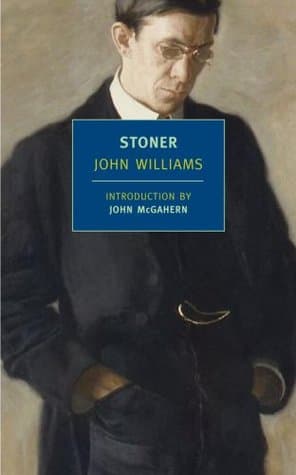
- Stoner
John Williams
4.3 (103k) average on GoodreadsLiterary FictionExplores a quiet, introspective life with a focus on internal struggles and a deep sense of place.
- The Old Man and the Sea
Ernest Hemingway
3.8 (831k) average on GoodreadsLiterary FictionShort, powerful novel about man's struggle against nature, with profound philosophical undertones.
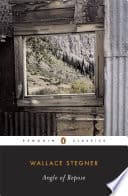
- Angle of Repose
Wallace Stegner
4.2 (54k) average on GoodreadsLiterary FictionBoth A River Runs Through It and Stegner's Angle of Repose are significant works of American historical fiction set in the American West, exploring themes of family, legacy, and the relationship between individuals and the land. However, Stegner's novel offers a much broader historical canvas, spanning multiple generations and delving deeply into the socio-political development of the West through the lens of a strong female protagonist. Maclean's novella, by contrast, is a more concentrated, intensely personal memoir, focusing on a specific period and a tight-knit family tragedy. While both evoke a strong sense of place, Stegner's scope is panoramic, whereas Maclean's is intimately focused, almost microscopic in its emotional intensity.
- To Kill a Mockingbird
Harper Lee
4.3 (4.5M) average on GoodreadsHistorical FictionIn the 1930s Jim Crow South, Harper Lee writes about racial injustice, moral growth, and the quiet courage of a lawyer father, Atticus Finch, as seen through his young daughter's eyes.
- The Great Gatsby
F. Scott Fitzgerald
3.9 (3.8M) average on GoodreadsHistorical FictionIn the opulent Roaring Twenties, a mysterious millionaire's lavish parties hide his desperate, tragic pursuit of a lost love, exposing the emptiness within the American Dream.
- Pride and Prejudice
Jane Austen
4.3 (3M) average on GoodreadsHistorical FictionIn a society focused on status and money, Elizabeth Bennet navigates love and pride, challenging Mr. Darcy and social expectations to find true affection.




Enjoyed the summary?
A summary gives you the shape of the book. The book itself has the detail, the examples and the voice.
Find A River Runs Through It on AmazonAs an Amazon Associate, BookBrief earns from qualifying purchases. How we're funded