
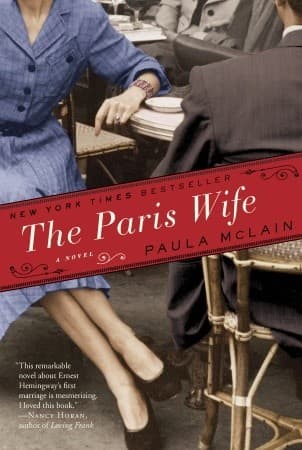
Synopsis
Covers the whole plot, including the ending.
- Difficulty
- Easy
- Pacing
- Moderate
- Mood
- Evocative, Melancholy, Romantic, Reflective
- Read it if
- You enjoy historical fiction centered on real literary figures and their complicated relationships, particularly the Jazz Age in Paris.
- Skip it if
- You prefer fast-paced plots with high stakes, or dislike narratives heavily focused on marital drama and infidelity.
The Paris Wife Plot Summary
Covers the whole plot, including the ending.
A Chance Encounter in Chicago
In Chicago, 1920, Hadley Richardson, a twenty-eight-year-old woman with a quiet life and a past marked by loss, believes her chance at love has passed. Her friend Kate Smith introduces her to Ernest Hemingway, a charismatic and driven young man, still recovering from war injuries. Despite their age difference and her initial reservations, Hadley is captivated by Ernest's passion for writing and his personality. Their courtship is swift and intense. Ernest proposes to Hadley, promising her a life of adventure and the chance to support his literary career, especially in Paris, a city he idealizes for its artistic freedom.
Newlyweds in Paris
After their wedding, Hadley and Ernest move to Paris in December 1921, settling into a small apartment in the Latin Quarter. They quickly join the bohemian expatriate community, befriending other aspiring artists and writers. Ernest begins working as a foreign correspondent for the Toronto Star, but his true passion remains fiction. Hadley dedicates herself to supporting his writing, managing their meager finances, and creating a stable home. They spend their days exploring the city, attending literary salons, and discussing ideas with figures like Gertrude Stein and Ezra Pound, all while navigating their new life and Ernest's demanding artistic temperament.
The Lost Generation's Embrace
Hadley and Ernest are welcomed into Gertrude Stein's literary circle. Stein mentors Ernest and becomes a friend to Hadley. They frequent Stein's salon, meeting other prominent figures of the 'Lost Generation' such as Ezra Pound, James Joyce, and eventually F. Scott and Zelda Fitzgerald. Hadley observes the dynamic personalities and intense discussions, often feeling pride in Ernest's growing reputation. This period offers intellectual stimulation, late-night conversations, and the freedom of Jazz Age Paris, which fuels Ernest's ambition and subtly tests their marriage.
A Trip to Spain and a Stolen Manuscript
Ernest's ambition drives him to dedicate himself entirely to his fiction. He plans a trip to Spain, hoping to focus on his writing away from Paris. Hadley, ever supportive, packs his entire collection of manuscripts, including early drafts of short stories and his first novel, to send to him. However, during her train journey to meet him in Lausanne, Switzerland, a valise containing all of Ernest's original works is stolen. The loss devastates Ernest, almost crippling his spirit. Hadley feels immense guilt, and though Ernest tries to reassure her, the incident leaves a deep scar, showing the preciousness of his work and the vulnerability of their shared dreams.
Poverty and Parenthood
Despite Ernest's growing connections and publications, the Hemingways often face financial hardship. They move to a smaller, colder apartment, and Hadley frequently pawns her jewelry to make ends meet. Amidst these struggles, Hadley discovers she is pregnant. The news brings a mix of joy and apprehension, as they realize the added responsibilities of parenthood. Ernest, while excited, becomes even more intensely focused on his writing, feeling pressure to provide for his family. Their life continues to be a blend of artistic pursuit, social engagement, and constant negotiation of their limited budget.
The Birth of Bumby
In October 1923, Hadley gives birth to their son, John Hadley Nicanor Hemingway, whom they nickname 'Bumby.' His arrival brings immense joy and a new dimension to their marriage. Hadley embraces motherhood, finding contentment in caring for Bumby, even as she continues to support Ernest's writing. Ernest, too, is moved by fatherhood, though his commitment to his craft remains paramount. The family briefly moves to Toronto for Ernest to work, but they soon realize Paris is where they belong, returning to the city that fuels Ernest's artistic vision, now with a child.
The Sun Also Rises Takes Shape
Ernest begins writing 'The Sun Also Rises,' drawing heavily on his experiences within their expatriate circle, particularly during a trip to Pamplona, Spain, for the bullfights with friends. Hadley witnesses firsthand how Ernest transforms their shared life, their friends' dramas, and the atmosphere of Paris and Spain into his fiction. She sees reflections of herself and their companions in his characters, a process that is both fascinating and, at times, unsettling. The novel becomes the central focus of Ernest's life, consuming his energy and attention, and Hadley continues to be his sounding board and emotional support.
Enter Pauline Pfeiffer
Pauline Pfeiffer, a wealthy and stylish fashion journalist for Vogue, enters the Hemingways' social circle and quickly becomes a close friend to both Hadley and Ernest. Pauline is sophisticated, intelligent, and financially independent, offering a different kind of companionship. She often joins them on trips, including skiing excursions and visits to the French Riviera. Hadley initially welcomes Pauline's presence, appreciating her vivacity and the way she can ease some of the financial burdens on the family. However, a subtle shift begins to occur between Ernest and Pauline, which Hadley, at first, chooses to ignore, attributing it to their shared interests and the open nature of their social group.
The Growing Deception
As 'The Sun Also Rises' finds success, Ernest's confidence and ambition soar. His relationship with Pauline Pfeiffer intensifies, becoming increasingly public and undeniable to Hadley and their friends. Pauline, despite her friendship with Hadley, makes herself indispensable to Ernest, traveling with him, typing his manuscripts, and offering him the financial security Hadley cannot. Hadley tries to maintain her composure and deny the obvious, but the emotional distance between her and Ernest grows. The betrayal is deeply painful, challenging her sense of self and the foundation of their marriage, which she had believed to be unbreakable.
A Painful Resolution
The situation becomes unbearable when Ernest suggests Hadley and Pauline both remain in his life. Hadley, devastated by the disrespect and betrayal, refuses. She confronts Ernest directly, asserting her dignity and demanding a clear resolution. Despite her enduring love for him, she acknowledges that their marriage cannot survive this deception. They agree to a separation, with Hadley setting a condition: if Ernest still wishes to be with Pauline after 100 days, she will grant him a divorce. This period of waiting is agonizing for Hadley, but ultimately solidifies her decision to move forward.
Divorce and Legacy
After the 100 days, Ernest confirms his desire to marry Pauline. Hadley grants him a divorce, receiving a significant portion of the royalties from 'The Sun Also Rises' and future works as part of the settlement, ensuring her financial stability. She leaves Paris with Bumby, returning to a quieter life, though forever changed by her experiences. The novel concludes with Hadley reflecting on her time with Ernest, the intense love they shared, the life they built in Paris, and the sadness of their unraveling. Despite the pain, she carries the memories of their early love, understanding their impact on each other's lives and Ernest's literary legacy.
The Paris Wife Characters
Hadley Richardson Hemingway
Protagonist
Ernest Hemingway's first wife and the novel's narrator.
Hadley is initially a quiet, somewhat insecure woman from St. Louis who has faced personal loss. She possesses an innate kindness, resilience, and a deep capacity for love and loyalty. Her primary drive is to create a stable, loving home and to support Ernest's artistic ambitions, often at the expense of her own desires. She is observant and introspective, navigating the intoxicating yet challenging world of Jazz Age Paris and the demands of her volatile husband.
Relationships: Ernest Hemingway (Husband, profound love, muse, source of both joy and deep pain.); Pauline Pfeiffer (Friend turned rival, the woman who ultimately breaks her marriage.); Gertrude Stein (Mentor and friend, a source of intellectual and emotional support.); John Hadley Nicanor Hemingway (Bumby) (Son, a source of unwavering love and purpose.)
Ernest Hemingway
Antagonist/Love Interest
A charismatic and ambitious writer, Hadley's first husband.
Ernest is a driven, passionate, and often egocentric young writer consumed by his ambition to become a great literary figure. He possesses immense charm, a love for adventure, and a fierce dedication to his craft. While capable of deep affection and vulnerability, he is also prone to insecurity, jealousy, and a self-serving nature that ultimately leads to betrayal. He thrives on intensity and is constantly seeking new experiences to fuel his writing.
Relationships: Hadley Richardson Hemingway (Wife, muse, early supporter, profound love that he ultimately sacrifices.); Pauline Pfeiffer (Mistress, later wife, offers financial and emotional support, and a different kind of intellectual companionship.); Gertrude Stein (Mentor, literary influence, later a source of professional rivalry.); F. Scott Fitzgerald (Friend and literary peer, a complex relationship marked by admiration and rivalry.)
Pauline Pfeiffer
Supporting
A wealthy fashion journalist who becomes Ernest's mistress and second wife.
Pauline is sophisticated, stylish, intelligent, and financially independent. She enters the Hemingways' lives as a friend but quickly develops a deep attraction to Ernest, actively pursuing him despite his marriage to Hadley. She is ambitious in her own right and offers Ernest the financial stability and social connections that Hadley cannot, making herself indispensable to his burgeoning career. While initially appearing supportive, her actions reveal a ruthless determination to secure Ernest for herself.
Relationships: Hadley Richardson Hemingway (Friend, then rival and the woman she betrays.); Ernest Hemingway (Lover, later wife, offers him a different kind of partnership and security.)
Gertrude Stein
Supporting
An influential American expatriate writer and a mentor to Ernest.
Gertrude Stein is a formidable and iconic figure of the Lost Generation, known for her experimental writing and her influential salon in Paris. She acts as a mentor to Ernest, offering him criticism and encouragement, and provides a social hub for the expatriate literary community. She is direct, opinionated, and a shrewd judge of talent, initially championing Ernest but later becoming critical of his personal life and literary direction. She also offers quiet support and friendship to Hadley.
Relationships: Ernest Hemingway (Mentor, literary influence, later a complicated relationship due to personal and professional differences.); Hadley Richardson Hemingway (Friend and confidante, offering perspective and support.)
F. Scott Fitzgerald
Supporting
A celebrated American novelist and friend of Ernest.
F. Scott Fitzgerald is depicted as a charming but often troubled literary giant, already famous when he meets Ernest. He is generous, though sometimes erratic, and both admires and envies Ernest's talent. His relationship with Ernest is complex, marked by both camaraderie and subtle competition, and he often provides a stark contrast to Ernest's more disciplined approach to writing. His own tumultuous marriage to Zelda serves as a parallel, albeit more dramatic, to the struggles within the Hemingway marriage.
Relationships: Ernest Hemingway (Friend and literary peer, a complex relationship of admiration and rivalry.); Zelda Fitzgerald (Wife, their tumultuous marriage serves as a backdrop to the Hemingways' own issues.)
Zelda Fitzgerald
Supporting
F. Scott Fitzgerald's spirited and often unstable wife.
Zelda is portrayed as a vibrant, impulsive, and often volatile socialite whose mental health is fragile. She is deeply in love with Scott but their relationship is fraught with jealousy, excess, and conflict. She represents the wilder, more decadent side of the Jazz Age, and her struggles often highlight the more grounded nature of Hadley, even as she is drawn to the excitement of the expat scene. She is both a captivating and tragic figure.
Relationships: F. Scott Fitzgerald (Husband, a passionate but deeply troubled marriage.)
John Hadley Nicanor Hemingway (Bumby)
Supporting
Hadley and Ernest's son.
Bumby is the only child of Hadley and Ernest. His birth brings immense joy and a new sense of purpose to Hadley, grounding her in her role as a mother. For Ernest, Bumby adds to the pressure to succeed as a writer and provider. He represents the innocent, stable core of the family that is ultimately shattered by Ernest's infidelity. His presence often brings out the softer side of Ernest, but cannot ultimately save the marriage.
Relationships: Hadley Richardson Hemingway (Son, her primary source of love and purpose after the divorce.); Ernest Hemingway (Son, a bond that exists despite the marital breakdown.)
Kate Smith
Mentioned
Hadley's friend who introduces her to Ernest.
Kate Smith is Hadley's friend from St. Louis who plays a pivotal role in introducing Hadley to Ernest Hemingway. She encourages Hadley to step out of her comfort zone and embrace new experiences. Though her role is brief, she is the catalyst for the entire story, setting Hadley on her path to Paris and a life-altering love affair.
Relationships: Hadley Richardson Hemingway (Friend, the person who connects Hadley and Ernest.)
The Paris Wife Themes
The Price of Artistic Ambition
The novel explores how Ernest Hemingway's relentless artistic ambition, while leading to literary greatness, comes at a significant personal cost, particularly to his marriage and Hadley's happiness. Ernest's dedication to his craft is portrayed as both admirable and destructive, as he prioritizes his writing above all else, including his wife's emotional well-being. This theme is evident in scenes where Hadley sacrifices her desires to support his work, the loss of his manuscripts, and ultimately, his decision to pursue Pauline, who he believes can better support his career.
“I loved him and he loved me, and that was that. But even then, I knew that his love for me was tangled up in his love for the words, for the stories he would tell, and that the words would always win.”
Betrayal and Loss
At its heart, the novel is a story of profound betrayal – not just Ernest's infidelity with Pauline, but also the betrayal of the trust and shared dreams between Hadley and Ernest. The loss extends beyond the marriage to the loss of an idealized love, a life in Paris, and a sense of self for Hadley. The theft of Ernest's manuscripts early in the story foreshadows this greater loss, symbolizing precious things that can be irrevocably taken away. The emotional toll of Ernest's actions on Hadley is central to the narrative, highlighting the devastating impact of infidelity on a once-strong bond.
“You can’t take back the words you say, and you can’t take back the love you give, even if it’s wasted.”
Identity and Self-Worth
Hadley's journey throughout the novel is tied to her search for identity and self-worth, often overshadowed by Ernest's personality and ambition. Initially, she finds purpose in supporting Ernest and creating a home, but as his success grows and his attention shifts, she struggles to maintain her sense of self. The betrayal forces her to confront who she is independently of Ernest. Her decision to divorce him, despite her love, is an act of reclaiming her identity and asserting her own value, moving beyond being merely 'The Paris Wife.'
“I wanted to be enough. I wanted to be everything he needed, but I wasn't. And I had to accept that.”
The Allure and Decadence of the Jazz Age
The atmosphere of Jazz Age Paris is a backdrop and a character in itself. The 'Lost Generation' lifestyle, with its emphasis on artistic freedom, heavy drinking, casual affairs, and intellectual pursuits, both fuels Ernest's creativity and contributes to the erosion of traditional marital values. The novel portrays the intoxicating appeal of this era, but also its dangers, as constant temptations and loose morals contribute to the unraveling of Hadley and Ernest's marriage. The glamour and intellectual stimulation are intertwined with recklessness and emotional irresponsibility.
“Paris was a grand, beautiful, dangerous thing. It was a city that promised everything and delivered on its promises, sometimes with a hidden cost.”
Plot Devices & Literary Techniques
First-Person Narration (Hadley's Voice)
The story is told entirely from Hadley Richardson's perspective.
This device allows the reader to experience the events, emotions, and internal struggles of the protagonist intimately. By filtering the entire narrative through Hadley's eyes, the author emphasizes her subjective experience of love, betrayal, and the challenges of being married to a literary giant. It creates a strong sense of empathy for Hadley and positions Ernest as a complex, sometimes elusive figure seen through the lens of her affection and eventual heartbreak, rather than an objective portrayal.
Foreshadowing (The Stolen Manuscripts)
The early loss of Ernest's work hints at future, greater losses.
The incident where Hadley accidentally loses Ernest's early manuscripts serves as a powerful piece of foreshadowing. It establishes the immense value and fragility of Ernest's work, and Hadley's central role in protecting it. More significantly, it subtly prefigures the later, far greater loss: the destruction of their marriage and the betrayal of their shared life, suggesting that even the most precious things can be irrevocably taken away, often with Hadley bearing the brunt of the emotional fallout.
Historical Context (The Lost Generation)
The cultural and social backdrop of Jazz Age Paris and its literary figures.
The novel is deeply embedded in the historical context of the 'Lost Generation' in 1920s Paris. This device is crucial for understanding the characters' motivations, the bohemian lifestyle, and the prevailing attitudes towards art, relationships, and morality. The presence of real historical figures like Gertrude Stein, Ezra Pound, and the Fitzgeralds grounds the fictionalized narrative in reality, adding depth and authenticity. It also highlights how the specific cultural environment contributed to both the flourishing of Ernest's talent and the challenges faced by his marriage.
Symbolism (Paris as a Character)
The city of Paris represents both opportunity and corruption.
Paris is not merely a setting but functions as a symbolic character in the novel. Initially, it represents hope, artistic freedom, and the promise of a new life for Hadley and Ernest. It is the crucible where Ernest's talent is forged and their love deepens. However, as the story progresses, Paris also comes to symbolize the temptations, excesses, and moral ambiguities of the Jazz Age, ultimately contributing to the unraveling of their marriage. Its beauty and allure are intertwined with its capacity for corruption and heartbreak.
The Paris Wife Quotes
“We were so young, and we were so in love. We were so happy.”
“You belong to me, Hadley. You always have.”
“Paris was a grand city, a place where people lived with a certain kind of hunger, an appetite for life that was both exhilarating and dangerous.”
“How could I have been so blind? How could I have given him everything, only to find myself with nothing?”
“We were all drinking too much, laughing too loud, trying to outrun something we couldn't name.”
“There was a certain kind of freedom in being poor in Paris, a lightness that came from having nothing to lose.”
“He wanted to be a great writer, and I wanted to be the woman who helped him become one.”
“The memory of it was a knife in my gut, twisting with every breath.”
“Maybe it was easier to break things than to try and mend them.”
“You can't live a full life until you've tasted everything, good and bad.”
“I loved him, I still did, but there was a part of me that was tired of being loved so fiercely, so selfishly.”
“The truth was, I hadn't lost him. I had given him away.”
“Sometimes, the hardest thing to do is to let go of what you thought was meant to be.”
“He was a hurricane, and I was the house he blew through.”
Quiz
10 questions on the plot and the characters. Each answer comes with a short explanation.
Question 1
Where do Hadley Richardson and Ernest Hemingway first meet?
- Paris, France
- Chicago, Illinois
- Key West, Florida
- Toronto, Canada
Show answer
B. Chicago, Illinois Hadley and Ernest meet in Chicago in 1920 before moving to Paris.
Question 2
Which famous literary couple is NOT explicitly mentioned as part of the 'Lost Generation' circle in Paris?
- F. Scott and Zelda Fitzgerald
- Gertrude Stein and Alice B. Toklas
- Virginia and Leonard Woolf
- Ernest Hemingway and Hadley Richardson
Show answer
C. Virginia and Leonard Woolf The book explicitly names Gertrude Stein, Ezra Pound, and the Fitzgeralds as part of their Paris circle. The Woolfs were prominent English modernists, but not part of the Parisian 'Lost Generation' described.
Question 3
What is the primary reason for the eventual 'ultimate crisis' of Ernest and Hadley's marriage?
- Financial difficulties and Ernest's inability to publish.
- Hadley's desire to return to America and leave the bohemian lifestyle.
- Ernest's affair with another woman.
- A disagreement over how to raise their child.
Show answer
C. Ernest's affair with another woman. The synopsis mentions 'a deception that will lead to the unraveling of everything they’ve fought so hard for,' which refers to Ernest's affair with Pauline Pfeiffer.
Question 4
Which of Ernest Hemingway's most famous novels is mentioned as being inspired by his life with Hadley and their friends in Paris?
- A Farewell to Arms
- The Old Man and the Sea
- For Whom the Bell Tolls
- The Sun Also Rises
Show answer
D. The Sun Also Rises The synopsis explicitly states that Ernest 'pours all the richness and intensity of his life with Hadley and their circle of friends into the novel that will become The Sun Also Rises.'
Question 5
How does Hadley's age compare to Ernest's when they first meet?
- She is significantly younger than him.
- She is roughly the same age as him.
- She is older than him.
- Her age is not mentioned in relation to his.
Show answer
C. She is older than him. The synopsis states Hadley is 'a quiet twenty-eight-year-old' when she meets Ernest, who was born in 1899, making him 21 in 1920. So, she is older.
Question 6
What challenge does Hadley face in Paris as Ernest's career begins to take off?
- She struggles to learn French and adapt to the local culture.
- She finds it difficult to manage their household finances.
- She strives to hold on to her sense of self as demands grow and her roles become challenging.
- She is pressured by Ernest to start her own writing career.
Show answer
C. She strives to hold on to her sense of self as demands grow and her roles become challenging. The synopsis states, 'Hadley, meanwhile, strives to hold on to her sense of self as the demands of life with Ernest grow costly and her roles as wife, friend, and muse become more challenging.'
Question 7
The 'Lost Generation' refers to a group of expatriate American writers and artists who lived in Paris during which historical period?
- The Roaring Twenties (Jazz Age)
- The Victorian Era
- The Great Depression
- The Belle Époque
Show answer
A. The Roaring Twenties (Jazz Age) The synopsis clearly refers to them as 'the fabled “Lost Generation”—that includes Gertrude Stein, Ezra Pound, and F. Scott and Zelda Fitzgerald' and mentions 'the hard-drinking and fast-living life of Jazz Age Paris.'
Question 8
What specific characteristic of Jazz Age Paris is highlighted as challenging for the Hemingways' traditional notions of family and monogamy?
- The high cost of living.
- The prevalence of artistic competition.
- The hard-drinking and fast-living lifestyle.
- The language barrier.
Show answer
C. The hard-drinking and fast-living lifestyle. The synopsis states, 'Though deeply in love, the Hemingways are ill prepared for the hard-drinking and fast-living life of Jazz Age Paris, which hardly values traditional notions of family and monogamy.'
Question 9
The author, Paula McLain, emphasizes a poignant detail about Hemingway's later life regarding Hadley. What is it?
- He dedicated all his future novels to her.
- He wrote that he would rather have died than fallen in love with anyone but Hadley.
- He left all his estate to her despite their divorce.
- He never spoke of her again after their separation.
Show answer
B. He wrote that he would rather have died than fallen in love with anyone but Hadley. The final sentence of the synopsis states, 'A heartbreaking portrayal of love and torn loyalty, The Paris Wife is all the more poignant because we know that, in the end, Hemingway wrote that he would rather have died than fallen in love with anyone but Hadley.'
Question 10
What is the central thematic conflict Hadley faces within her marriage to Ernest?
- Balancing her own artistic ambitions against his dominant personality.
- Maintaining her sense of self and traditional values amidst the bohemian, non-monogamous lifestyle of their circle.
- Struggling with Ernest's chronic health issues and their impact on his writing.
- Her inability to connect with the other famous personalities in their group.
Show answer
B. Maintaining her sense of self and traditional values amidst the bohemian, non-monogamous lifestyle of their circle. The synopsis highlights Hadley's struggle to 'hold on to her sense of self as the demands of life with Ernest grow costly and her roles as wife, friend, and muse become more challenging,' set against the backdrop of a Parisian society that 'hardly values traditional notions of family and monogamy.'
The Paris Wife FAQ
What is the central conflict in 'The Paris Wife'?
The central conflict revolves around Hadley Richardson's struggle to maintain her identity and marriage amidst Ernest Hemingway's rising literary ambition and the hedonistic lifestyle of Jazz Age Paris. Their love is constantly tested by financial precarity, the demands of Ernest's work, and the temptations of their social circle.
Who are the key historical figures, besides Ernest and Hadley, featured in the book?
The book prominently features members of the 'Lost Generation' including Gertrude Stein, who provides early mentorship to Ernest; Ezra Pound, a significant literary figure; and F. Scott and Zelda Fitzgerald, whose tumultuous relationship mirrors and contrasts with the Hemingways'. These figures contribute to the vibrant, yet challenging, social environment.
How does Hadley's personality evolve throughout her time in Paris with Ernest?
Hadley begins as a quiet, somewhat insecure woman who finds happiness and purpose in her marriage to Ernest. In Paris, she initially thrives on the intellectual stimulation and social life, but as Ernest's fame grows and his demands increase, she struggles with feelings of inadequacy, jealousy, and the erosion of her self-worth.
What role does poverty and financial struggle play in the early years of the Hemingways' marriage?
Poverty is a constant strain, especially in their early Parisian years. Hadley manages their meager funds diligently, often making sacrifices to support Ernest's writing. This financial pressure contributes to their stress and highlights Ernest's ambition to achieve success, which he believes will alleviate their struggles.
What is the 'ultimate crisis' of their marriage mentioned in the synopsis?
The ultimate crisis is Ernest's affair with Pauline Pfeiffer, a wealthy and stylish journalist who initially befriends Hadley. This betrayal, occurring while Hadley is pregnant with their second child (which she miscarries), ultimately shatters Hadley's trust and leads to the dissolution of their marriage.
How does the loss of the valise containing Ernest's early manuscripts impact their relationship?
The loss of the valise, containing nearly all of Ernest's early work, is a devastating blow that creates immense tension and guilt. Hadley blames herself, and while Ernest initially tries to reassure her, the incident underscores the fragility of his early career and the heavy responsibility Hadley feels to support his artistic endeavors.
What significance does the character of Pauline Pfeiffer hold beyond being the 'other woman'?
Pauline Pfeiffer represents the allure of a more sophisticated, financially secure, and glamorous life that Ernest increasingly desires. She embodies the material comforts and social connections that Hadley, with her simpler tastes and focus on family, cannot provide, thus highlighting Ernest's evolving priorities and his susceptibility to external influences.
How does the setting of Jazz Age Paris contribute to the unraveling of their marriage?
Jazz Age Paris, with its bohemian atmosphere, emphasis on artistic freedom, and lax social mores regarding monogamy, provides a fertile ground for temptation and infidelity. The constant parties, drinking, and presence of beautiful, uninhibited women challenge the traditional values Hadley holds, ultimately eroding the foundations of their relationship.
Are there subtle hints early in the book about Ernest's future infidelity or character flaws?
Yes, there are subtle hints. Ernest's intense focus on his work, sometimes to the exclusion of Hadley's feelings, and his growing need for external validation and admiration from other women, particularly when discussing his writing, foreshadow his later straying. His ambition often overrides his sensitivity.
How does Hadley's self-esteem fluctuate throughout the narrative?
Hadley's self-esteem is initially low, but it blossoms with Ernest's love and the excitement of Paris. However, as Ernest's fame grows and he becomes increasingly demanding and critical, her self-worth erodes. She feels inadequate compared to the glamorous women around him, leading to profound insecurity and self-doubt.
Analyze Ernest Hemingway's psychological motivations for his artistic ambition and eventual betrayal.
Ernest's artistic ambition is driven by a deep-seated need for recognition and to prove his worth, perhaps fueled by a desire to escape his modest upbringing. His betrayal stems from a combination of youthful impulsivity, the intoxicating effect of fame, and a desire for new experiences and validation, even at the cost of his marriage.
In what ways does Hadley enable Ernest's behavior, both positive and negative?
Hadley enables Ernest positively by providing unwavering support, financial management, and a stable home environment, allowing him to focus solely on his writing. Negatively, her passive nature and reluctance to challenge him directly sometimes allow his demanding and self-centered tendencies to grow unchecked, contributing to her own diminishing sense of self.
How does the book explore the psychological impact of being a 'muse' on a woman's identity?
The book illustrates how being a muse can be both validating and destructive. Hadley initially finds purpose and inspiration in supporting Ernest's genius, but as he draws from her experiences and emotions for his work, she begins to feel consumed and lose her own distinct identity, becoming merely a reflection of his creative needs.
Is Ernest portrayed as a villain, or a more complex, flawed character?
Ernest is portrayed as a complex, flawed character rather than a pure villain. While his actions cause immense pain, the book delves into his struggles, insecurities, and the pressures of his ambition. He is shown capable of great love and passion, but also of selfishness, impulsiveness, and a certain immaturity that ultimately leads to his downfall in the marriage.
To what extent is Hadley responsible for the breakdown of her marriage, if at all?
While Ernest's infidelity is the direct cause of the marriage's breakdown, Hadley bears some responsibility for her passive nature and reluctance to assert her needs. Her willingness to constantly sacrifice her own desires for Ernest's career, and her avoidance of direct confrontation, allowed certain unhealthy dynamics to fester, though this does not excuse his betrayal.
How does the novel's ending, with Hemingway's later regret, color the reader's perception of their story?
The inclusion of Hemingway's later regret that he 'would rather have died' than fallen in love with anyone but Hadley adds a poignant, tragic layer to their story. It emphasizes the profound and unique nature of their initial bond, making the dissolution of their marriage even more heartbreaking and underscoring the irreversible consequences of his choices.
What message does the novel convey about the sacrifices involved in pursuing artistic greatness?
The novel suggests that the pursuit of artistic greatness can demand immense personal sacrifices, not only from the artist but also from those closest to them. It highlights how ambition can consume relationships, leading to neglect, betrayal, and the painful realization that genius often comes at a steep human cost.
Could Hadley and Ernest's marriage have been saved if circumstances were different?
It's debatable. While external pressures like poverty and the Jazz Age culture played a role, fundamental incompatibilities and Ernest's evolving character, particularly his ambition and growing ego, were significant factors. Even without Pauline, it's plausible that Ernest's restless nature and desire for new experiences might have eventually strained the marriage to its breaking point.
About the author

Paula McLain is an American author known for her fiction, particularly her novel "The Paris Wife," which explores the life of Hadley Richardson, the first wife of Ernest Hemingway. McLain's work often delves into historical figures and their relationships, blending fact with imaginative storytelling.
Similar books
- Circe
Madeline Miller
4.3 (343k) average on GoodreadsFantasyA character-driven historical/mythological fiction focusing on a strong female voice navigating a world of powerful men.
- A Moveable Feast
Ernest Hemingway
4.0 (118k) average on GoodreadsLifestyleHemingway's own memoir offers a first-hand, albeit self-serving and often biased, account of the same period. While "The Paris Wife" attempts to correct Hemingway's narrative by giving Hadley a voice, "A Moveable Feast" provides essential context from the perspective of the man himself, showcasing his drive and ambition but also his capacity for cruelty. McLain's novel acts as a necessary counterpoint, filling in the emotional gaps and offering a more humanized view of the relationships.
- To Kill a Mockingbird
Harper Lee
4.3 (4.5M) average on GoodreadsHistorical FictionIn the 1930s Jim Crow South, Harper Lee writes about racial injustice, moral growth, and the quiet courage of a lawyer father, Atticus Finch, as seen through his young daughter's eyes.
- The Great Gatsby
F. Scott Fitzgerald
3.9 (3.8M) average on GoodreadsHistorical FictionIn the opulent Roaring Twenties, a mysterious millionaire's lavish parties hide his desperate, tragic pursuit of a lost love, exposing the emptiness within the American Dream.
- Pride and Prejudice
Jane Austen
4.3 (3M) average on GoodreadsHistorical FictionIn a society focused on status and money, Elizabeth Bennet navigates love and pride, challenging Mr. Darcy and social expectations to find true affection.
- Angels & Demons
Dan Brown
3.9 (2.7M) average on GoodreadsThrillerA Harvard symbologist races through Rome's ancient sites, deciphering cryptic clues to unmask the Illuminati and stop a vengeful plot to destroy the Vatican with a stolen antimatter weapon.




Enjoyed the summary?
A summary gives you the shape of the book. The book itself has the detail, the examples and the voice.
Find The Paris Wife on AmazonAs an Amazon Associate, BookBrief earns from qualifying purchases. How we're funded