
Core Idea
- Difficulty
- Easy
Key Takeaways from The Penguin Lessons
Unconventional Companionship
The unexpected solace found in interspecies bonds
The core of 'The Penguin Lessons' lies in its exploration of unconventional companionship. Tom Michell, a young Englishman in a foreign land, finds himself profoundly connected to a rescued Magellanic penguin. This bond transcends the typical human-pet dynamic, evolving into a relationship of mutual understanding and shared experience. The book highlights how profound connection can emerge from the most unexpected sources, challenging the reader to reconsider the boundaries of empathy and affection. Juan Salvador's presence offers Michell not just amusement, but also a silent anchor and a source of profound emotional support in an otherwise isolating environment. This theme underscores the idea that connection is not solely a human domain, and that other species can offer unique forms of fellowship and wisdom.
“He taught me that you don't need words to communicate, only presence and a shared understanding.”
In the book: Michell's detailed descriptions of Juan Salvador's personality; the penguin's integration into Michell's daily life, including school and social gatherings; the emotional weight Michell places on Juan Salvador's well-being.
Try this: Readers are encouraged to appreciate the diverse forms of companionship available in the world and to find meaning in unexpected relationships, fostering a broader sense of connection to nature and other living beings.
The Allure of the Exotic and Unfamiliar
Finding wonder and meaning in foreign lands and cultures
Michell's narrative is deeply imbued with the sense of adventure and discovery inherent in experiencing a new culture. Uruguay, with its unique customs, landscapes, and people, serves as a vibrant backdrop to the story. The initial culture shock and subsequent immersion into Uruguayan life are intricately woven with the tale of Juan Salvador. The 'exotic' nature of both the country and the penguin amplifies the sense of wonder and novelty that permeates the book. This theme explores how stepping outside one's comfort zone and embracing the unfamiliar can lead to profound personal growth and unexpected joy. The book suggests that true understanding comes from engaging with difference, rather than shying away from it, and that the unfamiliar often holds the greatest lessons.
“Uruguay, with its vast, untamed landscapes and peculiar charms, was as much a character in our story as any human.”
In the book: Descriptions of Uruguayan culture, food, and social interactions; Michell's initial struggles with the language and customs; the contrast between his English background and his new surroundings.
Try this: The reader is invited to embrace curiosity and openness towards new experiences and cultures, recognizing the transformative power of venturing beyond one's familiar world.
Responsibility and Caretaking
The burdens and rewards of nurturing a vulnerable life
A significant thematic thread in 'The Penguin Lessons' is the profound sense of responsibility Michell develops towards Juan Salvador. From the moment he rescues the oil-soaked penguin, Michell takes on the role of caretaker, a commitment that demands patience, sacrifice, and unwavering dedication. This responsibility extends beyond mere physical needs, encompassing the penguin's emotional well-being and social integration. The narrative explores the challenges and unexpected joys of nurturing a vulnerable creature, highlighting how acts of caretaking can fundamentally alter one's perspective and priorities. It delves into the idea that true compassion often involves inconvenient and demanding acts, but that these acts are ultimately deeply rewarding, fostering a sense of purpose and connection.
“Caring for him was not just a duty, but a privilege that reshaped my understanding of commitment.”
In the book: Michell's efforts to clean Juan Salvador, feed him, and protect him; the logistical challenges of keeping a penguin in a boarding school; the emotional investment Michell has in the penguin's happiness and health.
Try this: Readers are encouraged to reflect on their own responsibilities towards others, both human and animal, and to appreciate the transformative power of selfless care and commitment.
The Search for Belonging
Finding one's place in an unfamiliar world, both human and animal
Both Tom Michell and Juan Salvador are, in their own ways, outsiders. Michell is an Englishman in Uruguay, adapting to a new culture and a new job, while Juan Salvador is a penguin far from his natural habitat. This shared sense of displacement forms a powerful undercurrent in their relationship. The book explores how individuals, regardless of species, seek a sense of belonging and how this need can be met in unexpected ways. Their bond becomes a mutual haven, a space where both feel understood and accepted. This theme suggests that belonging is not always tied to geographical location or species, but rather to the quality of connection and the shared experience of finding a 'home' within another's presence.
“Perhaps we were both exiles, finding a strange sort of home in each other's company.”
In the book: Michell's initial feelings of isolation; Juan Salvador's separation from his colony; the way both adapt to their new environment and find comfort in each other's company; the acceptance of Juan Salvador by the school community.
Try this: The reader is prompted to consider the universal human (and animal) need for belonging and how it can be fulfilled through unique and unconventional relationships.
The Simplicity of Joy
Discovering profound happiness in small, everyday moments
Amidst the challenges of living abroad and caring for a wild animal, Michell consistently finds moments of pure, unadulterated joy in his interactions with Juan Salvador. The penguin's antics, his swimming prowess, and his affectionate gestures bring a lightness and humor to Michell's life. This theme emphasizes the importance of appreciating the simple pleasures and unexpected delights that life offers. It suggests that happiness is often not found in grand achievements or material possessions, but in the small, everyday moments of connection, wonder, and shared experience. The book encourages readers to cultivate a sense of childlike wonder and to find beauty and humor in the world around them, even in the most ordinary circumstances.
“He reminded me that life's greatest treasures are often found in the simplest of interactions, in laughter and shared silence.”
In the book: Descriptions of Juan Salvador's playful behavior; the joy Michell derives from watching him swim; the laughter shared by Michell and his students because of the penguin.
Try this: Readers are encouraged to slow down and find joy in the mundane, to appreciate the simple, often overlooked moments that contribute to a rich and fulfilling life.
The Wild Within Domesticity
The challenge and beauty of integrating nature into human life
Juan Salvador, despite becoming a beloved companion, remains fundamentally a wild animal. This inherent wildness is a constant, fascinating tension throughout the narrative. The book explores the complexities of bringing a piece of the untamed natural world into a domestic, human-centric environment. It highlights both the challenges of this integration – the mess, the unconventional needs – and its profound beauty. This theme delves into the idea that while humans often seek to control or tame nature, there is immense value in respecting its intrinsic wildness. Juan Salvador's presence serves as a constant reminder of the natural world's enduring power and mystery, even when seemingly domesticated, and the unique lessons it can impart.
“He was a wild creature, and though he lived with me, a part of him would always belong to the vast, open ocean.”
In the book: Juan Salvador's natural instincts, like swimming and hunting; the contrast between his wild origins and his life in a boarding school; Michell's awareness of the penguin's true nature.
Try this: Readers are prompted to consider the balance between human civilization and the natural world, fostering an appreciation for the wild and its intrinsic value, even when it intersects with human lives.
Quiz
10 questions on the main ideas. Each answer comes with a short explanation.
Question 1
Where does the book 'The Penguin Lessons' take place?
- Argentina
- Antarctica
- Australia
Show answer
A. Argentina The book takes place in Argentina.
Question 2
What is the main character's name in the book?
- Tom Hanks
- Tom Michell
- Tom Cruise
Show answer
B. Tom Michell The main character's name is Tom Michell.
Question 3
What animal does the main character rescue in the book?
- Kangaroo
- Penguin
- Lion
Show answer
B. Penguin The main character rescues a penguin.
Question 4
What is the name of the penguin in the book?
- Pablo
- Juan Salvador
- Diego
Show answer
B. Juan Salvador The penguin's name is Juan Salvador.
Question 5
What does the main character use to transport the penguin?
- A cage
- A suitcase
- His backpack
Show answer
C. His backpack The main character uses his backpack to transport the penguin.
Question 6
What does the main character do for a living in the book?
- Doctor
- Teacher
- Chef
Show answer
B. Teacher The main character is a teacher.
Question 7
What is the nationality of the main character in the book?
- American
- British
- Australian
Show answer
B. British The main character is British.
Question 8
What do penguins eat in the book?
- Fruits
- Vegetables
- Fish
Show answer
C. Fish The penguins eat fish.
Question 9
How long does the main character keep the penguin in his apartment?
- One week
- Several months
- One year
Show answer
B. Several months The main character keeps the penguin in his apartment for several months.
Question 10
What is the genre of the book 'The Penguin Lessons'?
- Mystery
- Memoir
- Romance
Show answer
B. Memoir The book is a memoir.
The Penguin Lessons FAQ
What is 'The Penguin Lessons' about?
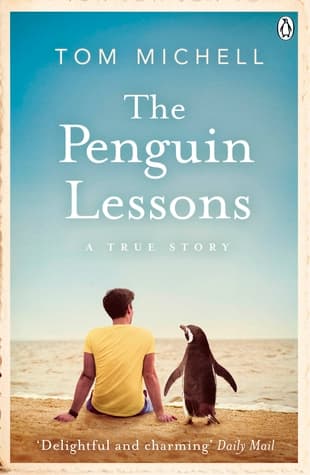
'The Penguin Lessons' is a memoir by Tom Michell that recounts his true story of rescuing a penguin on a remote island in Uruguay while working as a teacher in the 1970s, detailing the unique bond he formed with the bird and the life lessons he learned from their friendship.
Is 'The Penguin Lessons' a true story?
Yes, 'The Penguin Lessons' is a non-fiction memoir based on Tom Michell's real-life experiences in the 1970s, where he rescued and cared for a penguin in Uruguay, making it a heartwarming true account of human-animal connection.
What kind of penguin is in 'The Penguin Lessons'?
The penguin in the book is a Magellanic penguin, a species native to South America, which Tom Michell rescues from an oil spill on a beach in Uruguay, leading to their extraordinary friendship.
Does 'The Penguin Lessons' have any life lessons or themes?
Yes, the book explores themes of compassion, friendship, and the unexpected ways animals can teach humans about resilience, kindness, and the importance of caring for nature, all woven into Michell's personal journey.
How is 'The Penguin Lessons' different from other animal memoirs?
Unlike many animal memoirs that focus on domestic pets, 'The Penguin Lessons' stands out for its unique setting in 1970s Uruguay and its focus on a wild penguin, offering a blend of adventure, humor, and cross-cultural insights that highlight the bond between species.
Is 'The Penguin Lessons' suitable for children?
While the book is generally family-friendly with its uplifting story, it is written for adults and older readers due to its reflective tone and some mature themes, but it can be enjoyed by younger audiences with guidance.
What is the setting of 'The Penguin Lessons'?
The story is set primarily in Uruguay during the 1970s, with key scenes on a remote island and in local communities, providing a vivid backdrop of South American culture and landscapes that enriches the narrative.
Does 'The Penguin Lessons' include environmental messages?
Yes, the book subtly addresses environmental issues such as oil spills and wildlife conservation through Michell's rescue of the penguin, encouraging readers to reflect on human impact on nature and the importance of protecting animals.
How does 'The Penguin Lessons' compare to 'The Elephant Whisperer'?
Both books are non-fiction memoirs about human-animal bonds, but 'The Penguin Lessons' focuses on a single penguin in Uruguay with a personal, humorous tone, while 'The Elephant Whisperer' deals with elephants in Africa and broader conservation efforts.
Is 'The Penguin Lessons' a quick read?
At around 240 pages, 'The Penguin Lessons' is a relatively short and engaging read, with a straightforward narrative that makes it accessible for readers looking for a heartwarming, true story without a lengthy commitment.
Similar books
- H is for Hawk
Helen Macdonald
3.7 (59k) average on GoodreadsBiographyMacdonald's work offers a much deeper, more introspective, and meticulously researched exploration of grief, wildness, and human-animal bonds, contrasting with Michell's more observational and anecdotal approach. Macdonald grounds her narrative in extensive literary and psychological insights, which Michell's book largely bypasses.
- The Diary of a Young Girl
Anne Frank
4.2 (2.7M) average on GoodreadsBiographyDuring the Nazi occupation, a teenage girl's diary, written from a secret annex, shares observations on humanity, hope, and the wait for freedom.
- Eat, Pray, Love
Elizabeth Gilbert
3.6 (1.5M) average on GoodreadsLifestyleA heartbroken writer leaves her conventional life for a year-long global search for pleasure in Italy, spiritual devotion in India, and unexpected love and balance in Bali.
- Night
Elie Wiesel
4.3 (970k) average on GoodreadsBiographyIn the darkness of Auschwitz and Buchenwald, a teenage Elie Wiesel faces the extermination of his family, the loss of his faith, and the lasting scars of humanity's deepest cruelty.
- Steve Jobs
Walter Isaacson
4.1 (957k) average on GoodreadsBusinessSteve Jobs was a visionary who fused creativity and technology to revolutionize six industries and shape our digital world.
- The Glass Castle
Jeannette Walls
4.3 (903k) average on GoodreadsBiographyJeannette Walls's memoir describes her unusual childhood with brilliant, free-spirited parents whose poverty-stricken life shaped her independence and love despite family problems.






Enjoyed the summary?
A summary gives you the shape of the book. The book itself has the detail, the examples and the voice.
Find The Penguin Lessons on AmazonAs an Amazon Associate, BookBrief earns from qualifying purchases. How we're funded