
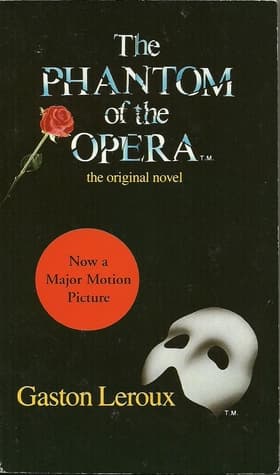
Synopsis
Covers the whole plot, including the ending.
- Difficulty
- Medium
- Pacing
- Moderate
- Mood
- Gothic, Suspenseful, Romantic, Tragic, Melancholy
- Read it if
- You enjoy classic Gothic romance, mysteries with a touch of the supernatural, and tragic love triangles set against a richly detailed historical backdrop.
- Skip it if
- You prefer fast-paced thrillers, lighthearted stories, or are sensitive to themes of obsession and dark psychological torment.
The Phantom of the Opera Plot Summary
Covers the whole plot, including the ending.
Mysterious Occurrences at the Paris Opéra
Monsieur Richard and Monsieur Moncharmin become managers of the Paris Opéra, replacing Monsieur Lefèvre. They immediately hear about the 'Opéra Ghost,' a mysterious being said to haunt the building and demand a private box (Box 5) and a salary. The managers first think these claims are jokes, but strange accidents and disappearances, including the stagehand Joseph Buquet found dead, increase staff superstitions. Carlotta, the lead singer, gets threatening letters, and the managers are pressured to meet the Ghost's demands to keep peace and stop more problems with performances.
Christine Daaé's Sudden Rise to Stardom
Christine Daaé, a young, Swedish chorus girl with a beautiful but unrefined voice, has practiced with a mysterious 'Angel of Music' she believes is her late father's spirit. When the Opéra Ghost causes Carlotta to get sick during a performance, Christine gets to take the lead in 'Faust.' Her performance is a big success, charming the audience and critics with her new vocal skill. Raoul de Chagny, a viscount and childhood friend, is among those captivated. He recognizes Christine and falls deeply in love with her.
Raoul and Christine's Reawakened Love
Raoul, charmed by Christine's performance, visits her dressing room to renew their childhood friendship and say how much he admires her. Christine is happy at first but becomes upset when Raoul mentions her 'Angel of Music.' She tells him not to speak of it and sends him away. Raoul then hears a male voice in her dressing room after she thinks he has left. Looking through the keyhole, Raoul sees no one but hears the mysterious voice talking to Christine, confirming his suspicion that her 'Angel' is a real, unseen person. This meeting leaves Raoul disturbed and suspicious.
The Phantom's Lair Beneath the Opéra
After her successful performance, Christine is led by the 'Angel of Music,' who is Erik, the deformed genius haunting the Opéra. He takes her through secret passages and by boat across an underground lake to his elaborate home under the opera house. There, Erik shows his true, monstrous face to Christine, horrifying her. He tells her he loves her and wants her to be his wife, showing his musical talent and how much he controls the Opéra. Christine is trapped, a prisoner in his dark world, drawn by his music but disgusted by his appearance and possessiveness.
Christine's Brief Escape and Erik's Fury
Erik, after days of keeping Christine captive and charming her with his music, lets her return to the surface world. He says she must never see Raoul again and remain loyal to him. Christine, shaken but free for now, struggles with her experience. She meets Raoul on the Opéra roof, telling him about the Phantom and his terrifying power. Erik, hidden and listening, is angered by their conversation and Christine's apparent betrayal. He promises revenge, increasing his threats against Christine, Raoul, and the entire Opéra company, demanding Christine's complete devotion.
The Masquerade Ball and Erik's Warning
During a large masquerade ball at the Opéra, Erik makes a frightening entrance, dressed as the Red Death. He publicly confronts Christine, calling her his bride and warning Raoul to stay away. This dramatic display increases fear of the Opéra Ghost among staff and guests. Raoul, seeing Erik's possessive actions and Christine's fear, becomes more determined to protect her, but also realizes the depth of Erik's obsession and their danger. The ball ends in chaos, with Erik disappearing as mysteriously as he arrived, leaving a strong feeling of dread.
The Managers' Failed Traps
The new managers, tired of the Ghost's demands and problems, decide to set a trap for him. They refuse to pay his salary and ignore his request for Box 5. During a performance where Carlotta is singing, the Ghost causes a series of frightening events: Carlotta makes a croaking sound during her song, the chandelier falls, and panic starts. The managers' attempts to catch him fail, as Erik seems to be everywhere and nowhere. These events only increase the fear and chaos in the Opéra, strengthening the belief in the Ghost's powers and his dangerous influence.
The Abduction and Raoul's Pursuit
Christine and Raoul secretly plan to run away after her last performance as Marguerite in 'Faust.' However, during the performance, Erik takes Christine from her dressing room, and she disappears into a secret passage. Raoul, desperate, is approached by a mysterious man known only as 'the Persian' (Daroga), who says he knows Erik's secrets and the passages under the Opéra. The Persian, who has a past connection to Erik, agrees to guide Raoul through the dangerous, booby-trapped catacombs to rescue Christine from Erik before it is too late.
Journey Through the Labyrinth
Guided by the Persian, Raoul goes into the dangerous underworld of the Opéra. They go through hidden passages, secret doors, and deadly traps, including a 'torture chamber' of mirrors and a 'scorpion and grasshopper' room, all designed by Erik to protect his home. The Persian, knowing Erik's talent for engineering and his cruel nature, warns Raoul at every turn. They barely escape several life-threatening situations, showing Erik's cleverness and his complete control over his underground domain, as they get closer to the Phantom's inner rooms and Christine.
The Phantom's Ultimatum and Christine's Choice
Raoul and the Persian eventually get trapped in Erik's torture chamber. There, they see Erik give Christine an ultimatum: she must agree to marry him, or he will cause an explosion that will destroy the entire Opéra and kill everyone inside, including Raoul and the Persian. Christine, facing this terrible choice, and seeing Raoul's suffering, makes the sacrifice. She kisses Erik's forehead, showing pity and some affection, which deeply affects the Phantom.
Erik's Final Act of Mercy and Death
Christine's kiss and act of kindness deeply affect Erik, who has never known true human kindness. Overwhelmed by this unexpected gentleness, Erik makes a selfless decision. He releases Christine and Raoul, letting them escape from his home and the coming explosion. He tells Christine that he will 'live no more than they.' The Persian later finds Erik's body in his home; he died of a broken heart. Erik leaves his ring for Christine, a symbol of his tragic love, and the Persian buries him in an unmarked grave, making his story a legend.
The Phantom of the Opera Characters
Erik (The Opéra Ghost/Phantom)
Antagonist/Tragic Figure
A deformed musical genius who haunts the Paris Opéra and falls obsessively in love with Christine.
Erik is the eponymous Phantom, a man of extraordinary musical and architectural genius, yet born with a hideously deformed face. This deformity has led him to be shunned by society, forcing him to live in the catacombs beneath the Paris Opéra. He is a master of disguise, ventriloquism, and engineering, using his skills to manipulate events, terrorize the staff, and enforce his will. His deepest desire is to be loved, and he fixates on Christine Daaé, believing her to be the only one who can see beyond his monstrous appearance to his soul. His actions are driven by a desperate, possessive love that often turns violent and manipulative.
Relationships: Christine Daaé (Obsessive, unrequited love; pupil-teacher); Raoul de Chagny (Rival for Christine's affection; enemy); The Persian (Daroga) (Former acquaintance/savior; confidant of Erik's past)
Christine Daaé
Protagonist
A talented, innocent chorus girl torn between her love for Raoul and her fascination/fear of the Phantom.
Christine is a young, Swedish soprano whose angelic voice captivates audiences. Orphaned, she believes her late father sent her an 'Angel of Music' to guide her, which turns out to be Erik. She is initially naive and somewhat impressionable, drawn to Erik's musical genius and the spiritual connection she believes they share. However, she is also deeply in love with Raoul de Chagny, her childhood sweetheart. Her journey involves navigating the terrifying demands of the Phantom while struggling to protect herself and Raoul. She embodies innocence, artistic talent, and ultimately, a profound capacity for pity.
Relationships: Erik (Pupil-teacher; object of his obsession; source of fear and pity); Raoul de Chagny (Childhood sweethearts; true love); Meg Giry (Close friend)
Raoul de Chagny
Supporting/Love Interest
A young, devoted viscount deeply in love with Christine and determined to save her from the Phantom.
Raoul is a handsome and wealthy young nobleman who has known Christine since childhood. He is deeply, almost fanatically, in love with her and becomes her primary protector against the Phantom. While initially somewhat naive about the true nature of the 'Angel of Music,' he quickly grows suspicious and is fiercely determined to uncover Erik's identity and rescue Christine. He represents conventional heroism, often acting with impulsivity and bravery, though sometimes lacking the deeper understanding of Erik's complex motivations that the Persian possesses.
Relationships: Christine Daaé (True love; betrothed); Erik (Rival; enemy); The Persian (Daroga) (Ally; guide)
The Persian (Daroga)
Supporting
A mysterious figure from Erik's past who understands his nature and helps Raoul.
The Persian, whose real name is Daroga, is a mysterious and knowledgeable figure who appears to have a deep understanding of Erik's past and the secret passages of the Opéra. He met Erik in Persia, where Erik served as an architect and torturer for the Shah. The Persian is a calm, wise, and courageous individual who guides Raoul through the dangerous labyrinth beneath the Opéra, often saving his life with his intimate knowledge of Erik's traps. He acts as a crucial informant and ally, providing context for Erik's character and the true danger he poses.
Relationships: Erik (Former acquaintance/savior; understands his nature); Raoul de Chagny (Ally; guide)
Madame Giry
Supporting
The concierge of Box 5 and one of the few who communicates directly with the Phantom.
Madame Giry is the stern, gaunt concierge of Box 5, the Opéra Ghost's private box. She is one of the few individuals who takes the Ghost's existence seriously and acts as his intermediary, delivering his letters and collecting his salary. She is fiercely loyal to the Ghost, perhaps out of fear or a strange respect for his power. She also has a daughter, Meg, who is a ballet dancer. Madame Giry's role is to provide a physical connection between the mysterious Phantom and the everyday workings of the Opéra, reinforcing his presence and demands.
Relationships: Erik (Servant/intermediary); Meg Giry (Mother)
Meg Giry
Supporting
A ballet dancer and Christine's closest friend.
Meg Giry is Madame Giry's daughter and a ballet dancer at the Opéra. She is Christine's closest friend and one of the first to notice Christine's sudden improvement in singing. She is a lively and somewhat gossipy character, often sharing rumors and superstitions about the Opéra Ghost. While she cares for Christine, she is also a source of information and speculation about the mysterious events unfolding, though she doesn't fully grasp the danger Christine is in. She provides a contrast to Christine's growing seriousness and fear.
Relationships: Christine Daaé (Close friend); Madame Giry (Daughter)
Carlotta
Supporting
The spoiled and untalented prima donna of the Opéra, targeted by the Phantom.
Carlotta is the Opéra's reigning prima donna, a Spanish singer who is portrayed as vain, temperamental, and lacking true artistic merit. She is frequently targeted by the Opéra Ghost, who orchestrates various 'accidents' and humiliations to force her off stage and make way for Christine. Her 'croaking' during a performance is a pivotal moment that allows Christine to shine. Carlotta serves as a foil to Christine's genuine talent and humility, highlighting the Phantom's preference for true artistry over superficial celebrity.
Relationships: Erik (Target of his pranks and threats); Christine Daaé (Professional rival)
Monsieur Richard and Monsieur Moncharmin
Supporting
The new, skeptical managers of the Paris Opéra.
Richard and Moncharmin are the new co-managers of the Opéra, replacing Monsieur Lefèvre. They are initially skeptical and dismissive of the Opéra Ghost, viewing the demands as pranks or superstitious nonsense. Their bumbling attempts to manage the Opéra and deal with the Ghost's demands often lead to further chaos and their own humiliation. They represent the rational, but ultimately ineffective, forces against the supernatural and unpredictable power of the Phantom. Their narrative is often presented in a somewhat comedic, bureaucratic light.
Relationships: Erik (Adversaries; victims of his pranks)
Joseph Buquet
Mentioned
A stagehand whose mysterious death fuels the legend of the Opéra Ghost.
Joseph Buquet is a stagehand at the Opéra whose gruesome death—found hanged in the cellars—is one of the early, terrifying incidents that establish the Opéra Ghost's deadly presence. His death is initially attributed to suicide, but the circumstances suggest foul play orchestrated by the Phantom. Buquet serves as an early casualty, solidifying the fear and superstition surrounding Erik and demonstrating the very real danger he poses to anyone who crosses him or ventures too deep into his domain.
The Phantom of the Opera Themes
Beauty vs. Ugliness (Physical and Spiritual)
This theme is central to the novel, exploring how physical appearance affects how society accepts people and how people see themselves. Erik's horrific deformity has caused him to live hidden, making him a monster to the world, despite his great artistic talent. Christine, beautiful and pure, likes his musical talent but is repulsed by his face. The contrast shows society's superficiality and questions what truly makes something 'monstrous' – Erik's face or the cruelty of a world that rejects him. Christine's final act of pity, seeing past his ugliness, offers a moment of spiritual beauty that goes beyond physical looks.
“He was not a demon, but a man, and he was the most unhappy man in the whole world!”
Obsessive Love and Possession
The novel explores the destructive side of obsessive love through Erik's infatuation with Christine. His love is not gentle or unselfish, but possessive and violent, driven by a desperate need for acceptance and a fear of being left alone. He sees Christine as something to own and control, using manipulation, threats, and abduction to force her into his world. This differs from Raoul's more traditional, though sometimes naive, romantic love. Erik's actions show how love, when twisted by obsession and insecurity, can become a terrifying force that harms both the loved one and the lover.
“I am mad, I am a monster, and I am in love with you, Christine!”
Art and Genius
Art, especially music, is both beautiful and a tool for manipulation in the novel. Erik is a music genius, composing operas and teaching Christine to sing with unmatched skill. His talent is clear, and through his music, he first connects with Christine, presenting himself as her 'Angel of Music.' However, this talent is twisted by his isolation and deformity, becoming a way to control and trap. The Opéra itself, a grand place of art, becomes a stage for his deceptions and a prison for Christine, showing how art can be both uplifting and corrupting.
“He was the Angel of Music! He had given her his soul, and she had given him her heart.”
The Supernatural vs. Reality
The story constantly blurs the lines between the supernatural and reality, fueling the mystery and fear. The Opéra Ghost is first seen as a spirit haunting the building, leading to widespread superstition among staff. However, as the story continues, it becomes clear that the 'ghost' is a man, Erik, who uses his talent for engineering, ventriloquism, and illusion to create the appearance of the supernatural. This interplay keeps characters and readers guessing, showing how fear and human cleverness can create an almost supernatural terror, rooting the gothic elements in a chilling reality.
“The Opéra Ghost, of course, existed!”
Isolation and Loneliness
Erik's character is defined by deep isolation and loneliness. His deformity has forced him to live hidden from the world, leading to deep emotional and psychological scars. He wants connection and love but cannot achieve it in a healthy way because of his appearance and his own twisted methods. His underground home beneath the Opéra is a physical sign of his isolation, a solitary kingdom built for his talent and his sadness. This theme explores the damaging effect of societal rejection and the desperate actions one might take to escape the pain of being completely alone.
“Poor, unhappy Erik! Shall we pity him? Shall we curse him? He asked only to be a man, but he was forced to be a monster.”
Plot Devices & Literary Techniques
The Opéra House as a Character
The Paris Opéra's labyrinthine structure and hidden passages serve as Erik's domain and a central stage for the drama.
The Paris Opéra is more than just a setting; it functions as a character itself. Its vast, intricate architecture, secret passages, subterranean lakes, and hidden rooms are integral to Erik's existence and his ability to manipulate events. The building's grandeur and mystery mirror the complex, hidden depths of Erik's character. Its labyrinthine nature allows Erik to move unseen, creating the illusion of a ghost and providing the perfect stage for his artistic genius and his terrifying traps. The Opéra is both a sanctuary for art and a prison for its inhabitants, especially Christine.
Unreliable Narration/Framing Device
The story is presented as a journalistic investigation, blurring the lines between fact and fiction.
The novel is framed as a journalistic investigation by the author, Gaston Leroux, who claims to have uncovered the truth behind the Opéra Ghost legend. He presents 'evidence' such as police reports, testimonies, and Erik's own confessions (found in the Persian's notes), creating a sense of realism and mystery. This device allows Leroux to withhold information, build suspense, and play with the reader's perception of what is real and what is fantastical. It enhances the gothic atmosphere by making the extraordinary events seem plausible, drawing the reader deeper into the enigma of the Phantom.
The Mask
A physical and symbolic representation of Erik's hidden identity and desire for normalcy.
Erik's mask is a crucial symbol and plot device. Physically, it conceals his horrific deformity, allowing him to interact (albeit limitedly) with the world above ground without causing widespread panic. Symbolically, it represents his hidden identity, his desire for normalcy, and the barrier between his true self and society. The moment Christine removes his mask is a pivotal point, revealing his monstrous face and sealing her fate. The mask is not just a disguise; it is a manifestation of his shame, his longing for acceptance, and the tragedy of his existence.
Music as a Hypnotic Force
Music is used by Erik to enchant, control, and communicate with Christine.
Music is a powerful plot device, serving as Erik's primary tool for connection and control. He uses his unparalleled musical genius to teach Christine, drawing her into his world and making her believe he is her 'Angel of Music.' His compositions and his voice have a hypnotic effect on her, representing both his artistic brilliance and his insidious manipulation. The music acts as a siren's call, luring Christine into his dark domain and illustrating the profound, almost supernatural, power of art to influence human emotions and actions.
The Phantom of the Opera Quotes
“You must be very careful, my dear. The Opera ghost is not a myth.”
“He is a monster, and I am his prisoner!”
“If I am the Phantom, it is because man's hatred has made me so.”
“Poor, unhappy Erik! Shall we pity him? Shall we hate him? He was a monster, but he loved.”
“I am not a man, I am the Opera Ghost!”
“His heart was full of a love that was never returned.”
“The world is so small, and I am so big.”
“There are times when I am so happy that I could almost die.”
“He was a living corpse.”
“No one ever saw him weep. He was too proud.”
“I tore off my mask so that I might feel a little more human.”
“Love is a madness, and it is a madness that I embrace.”
“She was singing, but it was not her usual song. It was a song of tears.”
“He wore a mask, a black mask, and was dressed in evening clothes.”
Quiz
10 questions on the plot and the characters. Each answer comes with a short explanation.
Question 1
What promise did Christine Daaé's father make to her before his death?
- That she would become the greatest singer in Paris.
- That a protective angel of music would guide her.
- That he would leave her a vast inheritance.
- That she would always live in the Paris Opera House.
Show answer
B. That a protective angel of music would guide her. Christine's father, a famous musician, promised her a protective angel of music to guide her before he died, a promise that heavily influences her early interactions with Erik.
Question 2
Who is Raoul in relation to Christine Daaé?
- Her music tutor.
- The new manager of the opera house.
- Her childhood friend.
- A rival singer.
Show answer
C. Her childhood friend. Raoul is Christine's childhood friend who visits his parents, patrons of the opera, and rekindles their acquaintance, leading to Erik's jealousy.
Question 3
What is Erik's physical characteristic that contributes to his 'ghostly' identity?
- He is exceptionally tall and gaunt.
- He has an unnaturally pale complexion.
- He is deformed.
- He has glowing red eyes.
Show answer
C. He is deformed. Erik is described as being deformed, which is a key reason he hides in the opera house and contributes to his monstrous persona.
Question 4
Why does Erik become violent after Christine's success on stage?
- He is angry that she is singing roles he didn't approve of.
- He fears she will leave the opera house for a better career.
- His terrible jealousy is ignited by Raoul's renewed interest in Christine.
- He wants to prevent her from becoming too famous.
Show answer
C. His terrible jealousy is ignited by Raoul's renewed interest in Christine. Erik's violence stems from his intense jealousy, particularly when Raoul, Christine's childhood friend, reappears and shows interest in her after her successful performance.
Question 5
Who is Carlotta in the story?
- Christine's understudy.
- A stage manager at the opera.
- The spoiled prima donna.
- Raoul's sister.
Show answer
C. The spoiled prima donna. Carlotta is the spoiled prima donna of the Paris Opera House, whose role is often threatened by Christine's rising talent and Erik's manipulations.
Question 6
What genre does 'The Phantom of the Opera' primarily fall under, as described in the text?
- Romantic Comedy.
- Science Fiction.
- Gothic horror literature.
- Historical Romance.
Show answer
C. Gothic horror literature. The description explicitly states that Leroux's work 'remains a remarkable piece of Gothic horror literature in and of itself'.
Question 7
How does Christine initially perceive the voice that teaches her to sing beautifully?
- As a rival singer.
- As her father's promised 'angel of music'.
- As a hallucination.
- As a new singing teacher hired by the opera.
Show answer
B. As her father's promised 'angel of music'. Due to her father's dying promise, Christine initially believes the voice she hears, which eventually teaches her to sing beautifully, is the protective angel of music he spoke of.
Question 8
Beyond the main love triangle, what other significant character is mentioned as being from Erik's past?
- The manager of the opera house.
- A mysterious Persian.
- Christine's old nanny.
- Raoul's older brother.
Show answer
B. A mysterious Persian. The summary mentions 'the mysterious Persian from Erik's past', indicating a deeper backstory for the Phantom that goes beyond his current activities at the opera.
Question 9
What is the primary theme explored through Erik's character and his actions towards Christine?
- The power of friendship and loyalty.
- The destructive nature of obsessive love and jealousy.
- The importance of artistic freedom.
- The struggle for social justice.
Show answer
B. The destructive nature of obsessive love and jealousy. Erik's 'terrible jealousy' and violent actions, driven by his love for Christine, clearly highlight the destructive nature of obsessive love.
Question 10
In what year was 'The Phantom of the Opera' first published as a serial?
- 1889
- 1909
- 1929
- 1949
Show answer
B. 1909 The book was 'First published in French as a serial in 1909', making this a key detail about its publication history.
The Phantom of the Opera FAQ
What is The Phantom of the Opera about?
The Phantom of the Opera is a Gothic romance and mystery centered on Christine Daaé, a young opera singer at the Paris Opéra House. She becomes the obsession of a mysterious, disfigured musical genius known as the 'Phantom' (Erik), who lives beneath the opera house. His possessive love leads to a dangerous rivalry with Christine's childhood sweetheart, Raoul, Vicomte de Chagny, resulting in kidnappings, murders, and a dramatic confrontation deep within the opera's catacombs.
Why should I read The Phantom of the Opera?
You should read The Phantom of the Opera for its rich blend of Gothic horror, tragic romance, and thrilling mystery, offering a deeper and darker narrative than most adaptations. Leroux's original novel delves into the Phantom's complex psychology, the historical intricacies of the Paris Opéra House, and provides a more nuanced exploration of the characters' motivations and the story's ambiguous ending.
What is the background/setting of The Phantom of the Opera?
The story is primarily set in the opulent and labyrinthine Paris Opéra House (Palais Garnier) during the late 19th century. Leroux meticulously details the opera's architecture, its hidden passages, cellars, and a subterranean lake, creating a vibrant, almost character-like backdrop that enhances the mystery and claustrophobia of Erik's domain.
What are the most memorable quotes?
Some memorable quotes include "He is not a ghost... he is the Phantom!" which sets the tone of dread, and Erik's poignant declaration, "If I am the Phantom, it is because man's hatred has made me so." These lines capture the essence of the opera's mystery and the Phantom's tragic nature.
What writing style does the author use?
Gaston Leroux employs a journalistic, investigative writing style, presenting the story as a 'true account' pieced together from interviews, police reports, and historical documents. This adds to the mystery and realism, blending elements of detective fiction with the dramatic flair of a Gothic novel, often using vivid descriptions and suspenseful pacing.
What minor details add significant meaning?
The detail of the Persian's presence, who acts as a secondary narrator and guide through Erik's lair, is crucial. He provides invaluable insights into Erik's past in Persia, his skills as an architect and torturer, and his true nature, which are often overlooked in adaptations, deepening the Phantom's backstory and motivations.
What are some subtle foreshadowing moments?
Early mentions of strange occurrences and 'accidents' within the opera house, dismissed by many as superstition, subtly foreshadow Erik's malevolent presence and his escalating acts of violence. The managers' initial dismissal of the Phantom's demands also foreshadows the chaos and tragedy that will ensue once his power is challenged.
What unexpected character connections exist?
The most unexpected connection is between Erik (the Phantom) and the Persian (Daroga), who knew Erik from his time in Mazanderan, Persia. The Persian had saved Erik from execution and understood his genius and madness better than anyone, making him the only character who truly comprehends Erik's capabilities and the dangers he poses.
What are unspoken character motivations?
Erik's deepest unspoken motivation is a desperate longing for acceptance and love, despite his monstrous appearance. His actions, though violent, stem from a profound loneliness and a twisted desire to be seen and cherished by Christine, rather than simply feared or reviled.
What psychological complexities do characters exhibit?
Erik exhibits extreme psychological complexity, alternating between a brilliant musical genius, a manipulative psychopath, and a deeply vulnerable, heartbroken individual. Christine struggles with a profound psychological conflict between her gratitude and artistic devotion to her 'Angel of Music' and her terror and revulsion at Erik's true nature, alongside her love for Raoul.
What are the major emotional turning points?
A major emotional turning point is when Christine unmasks Erik, revealing his horrific face. This act shatters his fragile hope of being loved and solidifies his descent into vengeful madness. Another is Christine's ultimate choice to return Erik's kiss, a moment of profound pity and compassion that ultimately breaks Erik's spirit and saves Raoul.
How do relationship dynamics evolve?
The relationship between Christine and Erik evolves from student-teacher to a terrifying captor-captive dynamic, tinged with a complex, unrequited love. Her relationship with Raoul transforms from innocent childhood affection to a desperate, protective romance as they face the existential threat posed by the Phantom, forcing them to mature and make difficult choices.
Which parts remain ambiguous or open-ended?
The ultimate fate of Erik remains somewhat ambiguous. While the Persian recounts Erik's death and burial, the exact circumstances of his final moments and the full extent of his remorse are left to the reader's interpretation, adding to the Phantom's legendary mystique rather than providing a definitive end.
What are controversial scenes or decisions?
Christine's decision to return Erik's kiss in the final confrontation is often seen as controversial. It's a moment of profound empathy and sacrifice, but some interpret it as a forced act under duress, while others see it as a deliberate choice that, paradoxically, liberates both her and Erik from his destructive obsession.
The Phantom of the Opera ending explained: how it ends & what it means
The novel ends with Erik capturing Christine and Raoul in his lair, threatening to destroy the opera house and everyone in it if Christine does not marry him. Christine, out of pity and a desire to save Raoul and the others, agrees to marry Erik and gives him a compassionate kiss. This act of kindness breaks Erik's heart and spirit, as he realizes he cannot truly possess her love. He releases Christine and Raoul, instructing the Persian to bury him in a place where he will never be found. Erik dies shortly after, his heart broken by the only true human connection he ever experienced, signifying the tragic end of his tormented existence and the power of compassion over hatred.
About the author
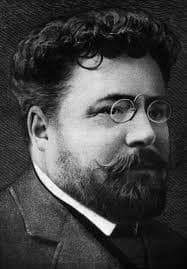
Gaston Leroux was a French author known for his contributions to the mystery and horror genres in the late 19th and early 20th centuries. He is best known for "The Phantom of the Opera," a tale of love and obsession set in the Paris Opera House, and "The Mystery of the Yellow Room," one of the first locked-room mysteries in literature.
Similar books
- Frankenstein: The 1818 Text
Mary Shelley
3.8 (1.2M) average on GoodreadsFantasyExplores themes of creation, monstrosity, societal rejection, and tragic consequences of ambition and isolation.
- Jane Eyre
Charlotte Brontë
4.1 (1.6M) average on GoodreadsHistorical FictionFeatures a strong female protagonist, a mysterious Byronic hero, and a blend of romance, suspense, and Gothic elements within a historical setting.
- The Invisible Man
H.G. Wells
3.6 (145k) average on GoodreadsFantasyBoth novels feature a brilliant, isolated outcast who becomes a menace to society due to their condition. However, Wells' Griffin is driven by scientific ambition and a lack of empathy, whereas Leroux's Erik is driven by a profound artistic sensibility, a longing for love, and the pain of his physical deformity. The Phantom's tragedy is more rooted in emotional and aesthetic rejection than scientific hubris.
- Harry Potter and the Sorcerer's Stone
J.K. Rowling
4.5 (7M) average on GoodreadsFantasyRescued from a miserable life under the stairs, an orphaned boy discovers he's a wizard destined for a magical school, where he uncovers a dangerous secret tied to the dark wizard who murdered his parents.
- The Hunger Games
Suzanne Collins
4.3 (6.4M) average on GoodreadsFantasyIn a future where children fight to the death on live television, Katniss Everdeen volunteers for the arena, turning a death sentence into a fight for survival and a spark of rebellion.
- 1984
George Orwell
4.2 (3.1M) average on GoodreadsPoliticsIn a future where surveillance and thought control are absolute, a man's search for truth clashes with the Party, showing that hope can be a form of rebellion.






Enjoyed the summary?
A summary gives you the shape of the book. The book itself has the detail, the examples and the voice.
Find The Phantom of the Opera on AmazonAs an Amazon Associate, BookBrief earns from qualifying purchases. How we're funded