

Synopsis
Covers the whole plot, including the ending.
- Difficulty
- Hard
- Pacing
- Moderate
- Mood
- Philosophical, Mystical, Allegorical, Contemplative, Spiritual
- Read it if
- You enjoy allegorical fantasy that deeply integrates Christian theology, Platonism, and philosophical concepts into its narrative, exploring the nature of reality and spiritual surrender.
- Skip it if
- You prefer fast-paced, action-oriented fantasy, explicit world-building, or straightforward narratives without complex philosophical undertones.
The Place of the Lion Plot Summary
Covers the whole plot, including the ending.
The First Manifestation and the Scholar's Curiosity
The story begins with Anthony Durrant, a young scholar, driving through the countryside. Thinking about Platonic archetypes, he sees a bright golden light and a magnificent, ethereal Lion appear on the road, causing his car to swerve. This event leaves him shaken and curious. Meanwhile, his fiancée, Damaris Tighe, a driven academic, focuses on her thesis, dismissing anything not provable. The Lion's appearance is the first sign that the archetypes, or 'Images,' are coming into the physical world. Anthony, feeling a sense of wonder and a new understanding that something extraordinary is happening, begins to investigate, setting up the spiritual crisis.
The Gathering of the Archetypes
After the Lion appears, other archetypes begin to show up. A serpentine Image, representing wisdom, appears to the intellectual Damaris, who struggles to understand it within her rational framework. A majestic Eagle, representing power, appears to the ambitious business magnate, Mr. Foster. The Image of the Dragon, symbolizing chaos and destruction, is seen by the cruel journalist, Quentin Sabot. Each character's encounter with an Image is shaped by their nature and spiritual state, drawing them into the growing supernatural events. Anthony, increasingly aware of the profound shift in reality, tries to understand these appearances, feeling a deep connection to the unfolding spiritual drama.
Foster's Ambition and the Eagle's Power
Mr. Foster, a man driven by a desire for control and worldly success, sees the Eagle as a source of immense power he can use. He tries to control and manipulate the archetypal Eagle, believing its power can be bent to his will to further his business and influence. However, the Eagle, a pure Image of divine authority, cannot be controlled by human will. Instead, Foster's attempt backfires. The Eagle's overwhelming presence and power begin to dissolve his physical form, turning him into a shimmering, indistinct being as he is absorbed into the essence of the archetype he tried to master. His ambition proves to be his downfall, unable to withstand the purity of the spiritual force.
Damaris's Rationality and the Serpent's Embrace
Damaris Tighe, a brilliant but strictly rational academic, meets the Serpent, the Image of wisdom and intellect. Her first reaction is intellectual curiosity, trying to categorize and explain it through her academic frameworks. However, the Serpent, a living archetype, defies her logic. As it begins to absorb her, she experiences a terrifying dissolution of her individual consciousness, her rational world crumbling. She resists, clinging to her intellect, but ultimately finds herself drawn into the Serpent's primal wisdom, losing her identity. Her inability to surrender her intellect and embrace the spiritual truth of the Image leads to her absorption, showing the limits of pure rationality in the face of the divine.
Sabot's Malice and the Dragon's Fury
Quentin Sabot, a malicious journalist, is drawn to the Image of the Dragon, which embodies chaos and destruction. His cruelty and desire to inflict pain resonate with the Dragon's nature. Sabot, instead of resisting, enjoys the Dragon's destructive energy, letting it amplify his worst impulses. The Dragon's presence begins to consume him, turning him into a monstrous, draconic being, a physical manifestation of his own wickedness. He becomes a creature of malice, lashing out with destructive force, causing terror and devastation. His willing embrace of evil leads to his complete dehumanization and transformation into a destructive supernatural force.
The Schoolgirls and the Unicorn
Amidst the chaos and dissolution, two young schoolgirls, Chloe Burnett and Dora Wilmot, encounter the Image of the Unicorn. The Unicorn, a symbol of purity, innocence, and spiritual grace, appears to them. Unlike the adults who struggle or succumb to the archetypes, the girls, with their simpler, open faith, are not destroyed but embraced and protected by the Unicorn. Its presence shields them from the destructive forces unleashed by the other Images. Their encounter shows the theme of innocence and the ability of pure belief to connect with divine grace, offering a contrast to the complex and often flawed reactions of the adult characters.
Anthony's Struggle and the Lion's Call
Anthony Durrant, having been the first to see the Lion, feels a growing connection to its spiritual power. He struggles to understand the events, his scholarly mind seeking order and meaning in the chaos. He is torn between fear and a deep, almost mystical attraction to the archetypes. He understands that these are not illusions but fundamental truths appearing in the world. The Lion, representing divine power, creativity, and ultimate reality, calls to him, urging him towards a deeper spiritual understanding and a surrender to the divine will. Anthony's journey becomes one of intellectual and spiritual awakening, moving beyond observation to active engagement with the supernatural.
Berringer's Knowledge and the Platonic Vision
Anthony seeks out Berringer, an older, reclusive scholar known for his philosophical insights, especially into Platonic forms. Berringer, who has long studied archetypes and the spiritual realm, gives Anthony important context and understanding. He explains that the Images are not just symbols but the Platonic forms themselves, pure ideas breaking into the physical world. He clarifies that those who try to control or intellectualize these pure forms are consumed by them, while those who surrender to their true nature, especially the Lion as the ultimate Image of divine love and power, can find salvation. Berringer's wisdom guides Anthony, helping him interpret the terrifying events through a spiritual lens.
The Dissolution and the Call to Surrender
As more Images appear and the lines between the physical and spiritual blur, the world itself begins to dissolve. Buildings shimmer, landscapes shift, and reality unravels. The archetypes, pure and powerful, cannot be contained by the material world. Anthony sees various individuals absorbed into their corresponding Images, understanding that resistance is useless and leads to destruction. He realizes that the only path to survival and spiritual integration is not to fight or control but to surrender to the divine will embodied by the Lion. This realization marks a turning point in his spiritual journey, moving him towards accepting a reality beyond human understanding.
The Lion's Embrace and the Restoration
In the climax, Anthony, having seen others dissolve and internalized Berringer's wisdom, chooses to surrender himself to the Lion, the ultimate Image of divine love and power. He does not seek to understand or control but simply to be absorbed into its pure essence. This act of spiritual surrender is not destruction but profound integration. As he embraces the Lion, the chaos begins to subside. The world, though changed, is restored to a new kind of order, imbued with a deeper spiritual reality. Anthony emerges from the experience transformed, having found peace and a deep connection to the divine, his journey ending in spiritual illumination.
The Place of the Lion Characters
Anthony Durrant
Protagonist
A scholar who witnesses the first manifestation and embarks on a spiritual journey.
Anthony is a young, intellectually curious scholar, initially grounded in academic pursuits. He possesses an innate sensitivity to the mystical, which is awakened by his encounter with the Lion. He is observant, thoughtful, and, unlike many others, open to the possibility of realities beyond the purely rational. His initial fear gives way to a profound sense of wonder and a drive to understand the supernatural events unfolding around him. He represents the potential for humanity to embrace spiritual truth.
Relationships: Damaris Tighe (Fiancée, their intellectual differences highlight his growing spiritual awareness.); Berringer (Mentor, provides philosophical guidance and understanding of the archetypes.)
Damaris Tighe
Supporting
Anthony's fiancée, a brilliant but rigidly rational academic.
Damaris is an ambitious and highly intelligent academic, utterly devoted to empirical knowledge and rational thought. She is dismissive of anything that cannot be scientifically proven or logically explained. Her intellect is her defining characteristic, but also her greatest limitation when confronted with the supernatural. She struggles to reconcile the manifestations with her worldview, leading to her tragic absorption by the Serpent, the Image of wisdom, which she attempts to intellectualize rather than embrace.
Relationships: Anthony Durrant (Fiancée, their intellectual and spiritual paths diverge.); The Serpent (The archetype that absorbs her due to her intellectual resistance.)
Mr. Foster
Antagonist/Supporting
A powerful and ambitious businessman consumed by the desire for control.
Mr. Foster is a wealthy and influential industrialist, driven by an insatiable hunger for power and control. He views the world through a lens of acquisition and manipulation, believing that everything, even the supernatural, can be bent to his will. When he encounters the Eagle, the Image of dominion, he sees it as a tool to further his worldly ambitions. His hubris and inability to recognize the sacred nature of the archetypes lead to his undoing, as he is absorbed by the very power he sought to master.
Relationships: The Eagle (The archetype he attempts to control, leading to his absorption.)
Quentin Sabot
Antagonist/Supporting
A malicious and petty journalist who embodies cruelty and destruction.
Quentin Sabot is a journalist characterized by his cynicism, malice, and a deep-seated desire to cause pain and disruption. He thrives on gossip and negativity, finding satisfaction in tearing others down. When the Dragon, the Image of primal chaos and destruction, manifests, Sabot is drawn to its destructive power. Unlike others who resist or are consumed, he willingly embraces the Dragon's essence, allowing it to amplify his wickedness and transform him into a monstrous, destructive entity. He represents humanity's capacity for evil.
Relationships: The Dragon (The archetype he aligns with and is transformed by.)
Berringer
Supporting
An elderly scholar who provides philosophical and spiritual guidance.
Berringer is a reclusive but deeply knowledgeable scholar, well-versed in Platonic philosophy and mystical traditions. He possesses a profound understanding of the nature of archetypes and the spiritual realm. He acts as a mentor and guide to Anthony, explaining the metaphysical implications of the unfolding events and the true nature of the Images. His calm wisdom and spiritual insight are crucial in helping Anthony navigate the chaos and understand the path to surrender and ultimate truth.
Relationships: Anthony Durrant (Mentor, provides crucial philosophical and spiritual guidance.)
Chloe Burnett
Supporting
An innocent schoolgirl who encounters the Unicorn.
Chloe is a young schoolgirl, representing innocence and purity. She, along with Dora Wilmot, encounters the Unicorn, the Image of grace and spiritual innocence. Her simple, uncorrupted faith allows her to connect with the Unicorn in a way that protects her from the destructive forces of the other archetypes. She embodies the idea that spiritual truth can be accessed through purity of heart, rather than intellectual striving or worldly ambition.
Relationships: Dora Wilmot (Friend, they experience the Unicorn together.); The Unicorn (The archetype that embraces and protects her.)
Dora Wilmot
Supporting
An innocent schoolgirl who encounters the Unicorn.
Dora is another young schoolgirl, a companion to Chloe Burnett, who shares in the encounter with the Unicorn. Like Chloe, her innocence and lack of worldly corruption enable her to respond to the divine archetype with openness and trust. She represents the pure, receptive spirit that is unharmed by the powerful manifestations that destroy others. Her experience reinforces the theme that spiritual grace is accessible to those with an unblemished heart.
Relationships: Chloe Burnett (Friend, they experience the Unicorn together.); The Unicorn (The archetype that embraces and protects her.)
The Lion
Mentioned
The primary archetype, representing divine power and ultimate reality.
The Lion is the first and most significant of the archetypes to appear, embodying ultimate divine power, creativity, and the very essence of reality. It is a pure Platonic form, a manifestation of God's love and creative force. Its presence initiates the unfolding spiritual crisis and acts as a beacon for Anthony's journey. It is not a character in the traditional sense, but a divine entity that demands surrender and offers spiritual integration to those who embrace it.
Relationships: Anthony Durrant (The divine entity Anthony ultimately surrenders to.)
The Place of the Lion Themes
The Nature of Reality and Divine Manifestation
The novel explores the idea that behind the everyday physical world is a deeper, spiritual reality that can appear and interact with human consciousness. The sudden appearance of the archetypes—the Lion, Serpent, Eagle, Dragon, and Unicorn—breaks conventional understanding of reality, forcing characters to face a world where Platonic forms are physically present. This challenges their beliefs and shows the limits of purely materialist or rationalist views. The dissolution of individuals and landscapes into their archetypal essences demonstrates the overwhelming power of this spiritual reality.
“The Forms are here,” Berringer said. “They always are. But now they are not merely ideas. They are themselves. And the world breaks.”
Surrender vs. Control
A main theme is the different human responses to divine power: the useless attempt to control or intellectualize, versus the freeing act of surrender. Characters like Mr. Foster and Damaris Tighe try to control or rationally dissect the archetypes, leading to their destruction or dissolution. Foster seeks to use the Eagle for worldly power, while Damaris tries to understand the Serpent with her intellect. In contrast, Anthony Durrant, guided by Berringer, learns that true salvation and integration come from surrendering to the divine will, especially to the Lion. This theme shows that spiritual truth cannot be mastered, only embraced.
“You cannot command them. You can only be commanded. Or be consumed.”
The Limitations of Rationality and Worldly Ambition
The novel criticizes the limits of a purely rational or materialistic approach to life. Damaris Tighe's intellect proves insufficient and destructive when faced with the Serpent, as she cannot intellectualize a spiritual truth. Mr. Foster's ambition and desire for control lead to his demise when he tries to control the Eagle. These characters, representing extremes of human intellect and ambition, show that such qualities, when not tempered by spiritual understanding or humility, are insufficient and even dangerous when faced with the divine. The book suggests that there are truths beyond logic or material gain.
“The mind of man, left to itself, cannot comprehend the Forms.”
Innocence and Spiritual Receptivity
The innocence of the schoolgirls, Chloe and Dora, and their meeting with the Unicorn, highlights that purity of heart and simple faith can be more open to divine grace than complex intellect or ambition. While adults struggle or are destroyed, the girls are embraced and protected by the Unicorn, a symbol of purity. This suggests that an uncorrupted, open spirit is better attuned to spiritual realities. Their experience contrasts with the more tragic fates of the adult characters, showing the value of childlike wonder and pure belief in connecting with the sacred.
“The pure in heart… they shall see God.”
The Problem of Evil and Redemption
The character of Quentin Sabot and his connection with the Dragon explores human evil and its destructive results. Sabot's malice and desire for chaos perfectly match the Dragon's destructive power, leading to his monstrous transformation. This shows how human wickedness can embrace destructive spiritual forces. While the book focuses more on the consequences of evil than redemption for Sabot, Anthony's journey offers a path to redemption through spiritual surrender, contrasting the two extreme responses to the divine.
“He saw the Dragon, and in its horror, he found his own joy.”
Plot Devices & Literary Techniques
The Archetypes (or Images)
Platonic forms that manifest physically, driving the plot and testing characters.
The archetypes (Lion, Serpent, Eagle, Dragon, Unicorn) are the central plot device. They are presented as Platonic Forms, pure ideas that break through into the physical world. Their manifestation drives the entire narrative, forcing characters to confront a new reality. Each archetype embodies a specific quality (divine power, wisdom, dominion, chaos, purity), and characters' reactions to them reveal their true spiritual nature. They act as catalysts for transformation, absorption, or destruction, making them both a narrative engine and a thematic core.
The Dissolution of Reality
The gradual breakdown of the physical world as the archetypes manifest.
As more archetypes appear, the fabric of the physical world begins to unravel. Buildings shimmer, landscapes shift, and human forms lose their solidity. This 'dissolution' is a powerful visual and thematic device, emphasizing the overwhelming power of the spiritual realm over the material. It creates a sense of escalating tension and urgency, forcing characters to acknowledge the profound shift in their reality. It signifies that the world cannot contain these pure forms and that a new order is emerging, challenging the very perception of existence.
Philosophical Dialogue and Exposition
Conversations, particularly with Berringer, that explain the metaphysical concepts.
While the plot unfolds through supernatural events, much of the intellectual and spiritual understanding is conveyed through philosophical dialogue, primarily between Anthony and Berringer. Berringer acts as a guide, explaining the nature of the archetypes, Platonic forms, and the concept of surrender. These conversations serve to illuminate the complex theological and philosophical underpinnings of the story, transforming what might otherwise be mere fantasy into a profound exploration of spiritual truth. This device allows Williams to articulate his ideas directly within the narrative.
Character-Archetype Alignment
Each character's fate is determined by their alignment with a specific archetype.
A key plot device is the direct correlation between a character's inherent nature and the archetype they encounter and are ultimately absorbed by (or protected by). Foster's ambition aligns with the Eagle, Damaris's intellect with the Serpent, Sabot's malice with the Dragon, and the girls' innocence with the Unicorn. Anthony's journey is to align with the ultimate archetype, the Lion. This device provides a clear moral and spiritual framework, demonstrating how internal states directly influence external, supernatural interactions and ultimate destinies within the narrative.
The Place of the Lion Quotes
“The mind of man, being an image of the Mind of God, can find no rest in any created thing, but must ever be seeking for that which is uncreated.”
“The world is full of things which are themselves, and yet are also symbols of something else.”
“All things, as they are in themselves, are perfect ideas in the Mind of God.”
“There are things which are true, and there are things which are not true, and it is important to know the difference.”
“The lion is the symbol of all power, and all beauty, and all terror.”
“The world is not a machine, but a living organism, full of spiritual forces.”
“To know a thing truly is to know it in its divine aspect.”
“Fear is the shadow of power, and where there is great power, there is great fear.”
“The universe is a dance of identities, each seeking its own perfect expression.”
“Every man carries within him the potential for both heaven and hell.”
“The great archetypes are not merely ideas; they are living, active presences.”
“There is a glory in all things, if only we have eyes to see it.”
“To yield to the divine is not to lose oneself, but to find one's true self.”
“The true work of man is to co-operate with the divine creation.”
“The world is charged with the grandeur of God, and it is our task to recognize it.”
Quiz
10 questions on the plot and the characters. Each answer comes with a short explanation.
Question 1
Which of the following creatures is NOT one of the Platonic Forms that manifest in the material world near the estate of Deborah?
- The Lion
- The Serpent
- The Unicorn
- The Eagle
Show answer
C. The Unicorn The Unicorn is not one of the primal Forms that manifest. The Lion, Serpent, Eagle, Dragon, and others are central to the story's unfolding events.
Question 2
What is Anthony Durrant's primary profession at the beginning of the novel?
- Philosopher and academic
- Poet and aspiring writer
- Clergyman
- Historian
Show answer
B. Poet and aspiring writer Anthony Durrant is introduced as a poet, struggling with his craft and his relationship with Damaris.
Question 3
What is the initial effect on the people who encounter the manifested Platonic Forms?
- They gain immense spiritual power.
- They are physically transformed into animals.
- They are drawn into the essence of the Form, often leading to their dissolution or transformation.
- They become immune to physical harm.
Show answer
C. They are drawn into the essence of the Form, often leading to their dissolution or transformation. Those who encounter the Forms are often overwhelmed, their individual identities being dissolved or reshaped according to the essence of the Form they encounter, as seen with Damaris and the Serpent, or the scholars and the Eagle.
Question 4
Which character is most associated with the concept of 'substitution' or bearing the burden of others, even before the climax?
- Damaris Tighe
- Quentin Sabot
- Berringer
- Anthony Durrant
Show answer
D. Anthony Durrant Anthony Durrant, through his love for Damaris and his innate capacity for spiritual understanding, begins to embody the principle of substitution, taking on the suffering or spiritual tasks of others, a key theme in Williams's work.
Question 5
What is the primary motivation behind Berringer's actions regarding the Forms?
- To exploit their power for personal gain.
- To study and classify them scientifically.
- To control and master them for the benefit of humanity.
- To destroy them and restore normalcy.
Show answer
C. To control and master them for the benefit of humanity. Berringer, a powerful but misguided occultist, believes he can control and direct the Forms, attempting to bend their power to his will, rather than submit to their divine order.
Question 6
The 'Place of the Lion' itself is eventually revealed to be what?
- A specific geographical location in England.
- A state of spiritual being or consciousness where the Forms originate.
- A hidden ancient temple.
- The collective unconscious of humanity.
Show answer
B. A state of spiritual being or consciousness where the Forms originate. The 'Place of the Lion' is not a physical place but a spiritual reality, the source from which the Platonic Forms, including the Lion, emerge and into which they eventually retract or are integrated.
Question 7
What happens to Damaris Tighe after her encounter with the Serpent?
- She gains the ability to speak with animals.
- She is physically transformed into a serpent.
- Her identity and self are dissolved, becoming one with the essence of the Serpent.
- She becomes a powerful sorceress.
Show answer
C. Her identity and self are dissolved, becoming one with the essence of the Serpent. Damaris, obsessed with knowledge and self-assertion, is consumed by the Serpent, becoming one with its essence of coiling and self-contained wisdom, losing her individual human identity.
Question 8
How does the character of Quentin Sabot react to the manifesting Forms, particularly the Dragon?
- He attempts to fight them with physical force.
- He tries to understand them through rational, academic study.
- He immediately submits to their power and becomes their servant.
- He flees in terror and avoids all further contact.
Show answer
B. He tries to understand them through rational, academic study. Quentin Sabot, the scholar, attempts to approach the Forms, particularly the Dragon, with an academic and intellectual understanding, trying to 'classify' and 'catalogue' them, rather than experiencing them spiritually.
Question 9
The climax of the novel involves the Forms being drawn back into a unified whole. This process is orchestrated or guided primarily by whom?
- Berringer, through his occult rituals.
- Anthony Durrant, through his act of selfless love and acceptance.
- The collective will of the remaining human characters.
- The inherent nature of the Forms themselves, independent of human intervention.
Show answer
B. Anthony Durrant, through his act of selfless love and acceptance. Anthony Durrant, by embracing the principle of substitution and offering himself in selfless love, becomes the conduit through which the scattered Forms are drawn back into their divine unity, representing a mystical 'Christ-like' act.
Question 10
What is the ultimate fate of Berringer after his attempts to control the Forms?
- He successfully masters one of the Forms and gains immense power.
- He is destroyed and dissolved by the overwhelming power of the Forms he tried to command.
- He repents and joins Anthony in restoring order.
- He becomes a guardian of the 'Place of the Lion'.
Show answer
B. He is destroyed and dissolved by the overwhelming power of the Forms he tried to command. Berringer's attempt to dominate the Forms through his will leads to his destruction; his identity is overwhelmed and dispersed by the very powers he sought to control, highlighting the danger of hubris in the face of the divine.
The Place of the Lion FAQ
What is the central premise of 'The Place of the Lion'?
The novel explores the disruption of the ordinary world when archetypal Forms, or Platonic Ideas, begin to manifest physically in a small English village. These powerful, ancient spiritual entities, representing concepts like the Lion (Primal Power), the Eagle (Intellect), and the Serpent (Wisdom), emerge from their transcendent realm, causing both wonder and terror among the characters who encounter them.
Who are the main protagonists and what are their initial roles?
Damaris Tighe, a scholar of Plato, is initially dismissive of the spiritual until she witnesses the Forms. Anthony Durrant, a poet, is drawn into the mystery by his love for Damaris and his own intuitive understanding. Quentin Sabot, a young man with a spiritual gift, becomes a key figure in mediating with the Forms, while his sister, Stella, represents a more grounded, practical perspective.
How do the manifesting archetypes affect the physical world and the characters?
The archetypes cause significant physical and spiritual upheaval. The Lion's roar can shatter objects and minds, the Serpent's presence brings a terrifying wisdom, and the Eagle's flight can elevate or destroy. Characters react with fear, awe, or a desperate attempt to control these forces, often leading to their undoing or spiritual transformation.
What is the significance of the 'Place of the Lion' itself?
The 'Place of the Lion' is not just a physical location but a spiritual nexus where the veil between the immanent and transcendent thins, allowing the archetypal Forms to enter the world. It represents a point of divine irruption and a testing ground for human spiritual understanding and response to the numinous.
What is the ultimate goal or resolution for the characters in relation to the Forms?
The ultimate goal for the characters is not to defeat or banish the Forms, but to understand, accept, and properly align themselves with their divine order. Those who achieve this, like Anthony and Quentin, find spiritual peace and a deeper connection to reality, while those who resist or try to exploit them, like Berringer, face destruction or profound spiritual imbalance.
What is the role of the Pleroma in the novel, and how does it relate to the Forms?
The Pleroma is the totality of the divine archetypes, the 'fullness' from which the individual Forms emerge. It is the transcendent realm where these Ideas exist in perfect unity and harmony. The Pleroma is the source and ultimate destination of the Forms, representing the complete divine reality that characters glimpse or interact with.
How does the character of Berringer, the archaeologist, misinterpret the Forms?
Berringer, driven by ego and a desire for power, attempts to control and exploit the Forms for his own aggrandizement. He sees them as ancient, powerful artifacts to be manipulated rather than as living, divine entities requiring reverence. His scientific rationalism and lack of spiritual humility lead to his tragic demise, as he is consumed by the very forces he sought to master.
What is the significance of the 'co-inherence' concept in the novel?
Co-inherence, a key concept in Williams's theology, refers to the mutual indwelling and interpenetration of all things in the divine order, particularly in the mystical body of Christ. In the novel, it is subtly shown through the interconnectedness of characters' fates and the way the Forms, while distinct, are ultimately aspects of a greater unity, hinting at a reality where all things are bound together.
How does the character of Quentin Sabot embody a unique connection to the spiritual realm?
Quentin Sabot possesses a natural, almost childlike spiritual sensitivity that allows him to perceive and even communicate with the Forms directly, without the intellectual struggle of Damaris or the poetic intuition of Anthony. He acts as a spiritual conduit and interpreter, his innocence and openness making him uniquely suited to mediate between the human and archetypal worlds.
How does fear manifest in characters like Mrs. Phare and Stella Sabot, and what does it reveal about their psychology?
Mrs. Phare's fear manifests as a desperate clinging to conventionality and a refusal to acknowledge the supernatural, leading to her mental breakdown. Stella's fear is more practical and protective, focused on her brother Quentin's safety. Their reactions highlight how individuals cope with overwhelming, inexplicable events, with some retreating into denial and others seeking to protect their loved ones.
Analyze Damaris Tighe's transformation from a purely intellectual Platonist to someone with spiritual understanding.
Damaris initially approaches the Forms through an intellectual, academic lens, trying to categorize them with her philosophical knowledge. Her encounter with the living archetypes forces her beyond mere theory into a direct, terrifying, and ultimately transforming experience. She learns that true understanding of the divine requires more than intellect; it demands a surrender of ego and an openness to direct spiritual apprehension, moving from 'knowledge about' to 'knowledge of.'
How does Anthony Durrant's poetic nature prepare him for encountering the Forms?
Anthony's poetic sensibility, with its emphasis on intuition, symbolism, and the deeper meanings of language and experience, makes him more receptive to the archetypal reality than purely rational characters. He possesses an inherent understanding of beauty, power, and the transcendent, allowing him to perceive the Forms not just as threats but as manifestations of a profound, divine order, guiding him towards spiritual alignment.
What psychological impact do the violent manifestations of the Forms have on the community?
The violent manifestations of the Forms, like the Lion's destructive roar or the Serpent's chilling presence, induce widespread panic, fear, and mental instability in the community. People are forced to confront the limits of their rational understanding and the fragility of their ordered world, leading to psychological breakdown for some and a profound re-evaluation of reality for others.
Is the ending of the novel optimistic or pessimistic regarding humanity's capacity for spiritual growth?
The ending is cautiously optimistic. While some characters are destroyed or overwhelmed, others, like Anthony, Damaris, and Quentin, achieve significant spiritual growth and find peace through alignment with the divine order. It suggests that while the path is fraught with peril and not everyone can traverse it, humanity does possess the capacity for profound spiritual transformation and communion with the sacred.
How does 'The Place of the Lion' engage with Platonic philosophy, and does it affirm or subvert it?
The novel directly engages with Platonic philosophy by presenting the Forms (Ideas) as real, living entities entering the world, rather than mere abstractions. It both affirms Plato's concept of transcendent archetypes as the true reality behind appearances, but also subverts a purely intellectual understanding of them, emphasizing that direct, spiritual encounter and proper reverence are necessary for true understanding, not just philosophical contemplation.
What is Charles Williams's theological message about the relationship between the natural and supernatural?
Williams posits that the natural and supernatural are not strictly separate but intimately interconnected, with the supernatural being the deeper, truer reality underlying the natural world. His message is that humanity's spiritual task is to recognize and align with this deeper reality, finding salvation and peace not by escaping the world, but by perceiving and responding to the divine within it, embracing the 'sacrament of the present moment.'
Could the Forms be interpreted as psychological archetypes rather than purely spiritual entities?
While Williams intended the Forms as objective spiritual realities rooted in Christian Platonism, they can also be interpreted as psychological archetypes in a Jungian sense. They represent universal patterns of human experience and consciousness (power, wisdom, intellect) that emerge from the collective unconscious, influencing individual and collective behavior when activated. This dual interpretation enriches the novel's depth.
What is the significance of the shift from individual Forms to the unified Pleroma at the novel's climax?
The shift to the unified Pleroma signifies the ultimate spiritual truth that all distinct divine attributes (the individual Forms) are ultimately aspects of a single, indivisible divine whole. It represents the culmination of spiritual understanding, where characters move beyond perceiving fragmented aspects of the divine to glimpsing the complete, harmonious unity of God, leading to profound peace for those who can withstand its glory.
About the author
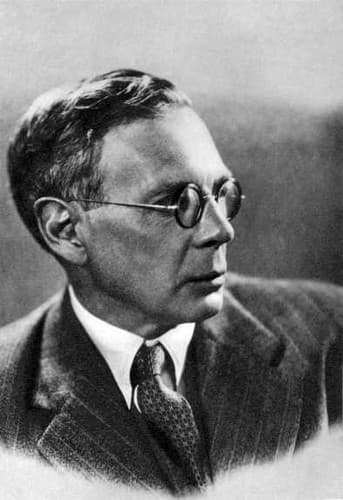
Charles Williams was a British poet, novelist, and theologian, often associated with the Inklings literary group. His most notable works, "The Place of the Lion" and "Descent into Hell," explore profound theological and mystical themes within a compelling fictional narrative. Williams's writing is characterized by its intricate symbolism and exploration of spiritual warfare and divine love.
Similar books
- Out of the Silent Planet
C.S. Lewis
3.9 (75k) average on GoodreadsFantasyExplores theological themes through a fantastic journey, with allegorical characters and a focus on spiritual awakening.
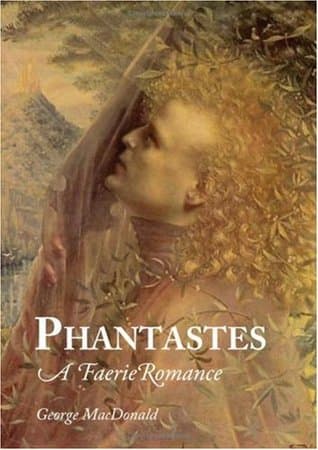
- Phantastes
George MacDonald
3.9 (8k) average on GoodreadsFantasyA deeply symbolic and allegorical fantasy journey that explores spiritual truths through dreamlike imagery and philosophical reflection.
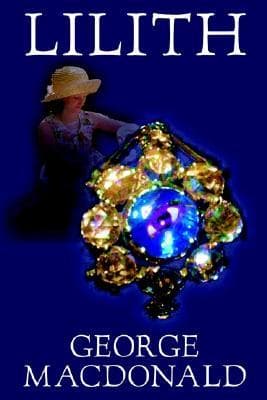
- Lilith
George MacDonald
Another allegorical fantasy by MacDonald, delving into complex spiritual and philosophical concepts through a symbolic narrative.
- Harry Potter and the Sorcerer's Stone
J.K. Rowling
4.5 (7M) average on GoodreadsFantasyRescued from a miserable life under the stairs, an orphaned boy discovers he's a wizard destined for a magical school, where he uncovers a dangerous secret tied to the dark wizard who murdered his parents.
- The Hunger Games
Suzanne Collins
4.3 (6.4M) average on GoodreadsFantasyIn a future where children fight to the death on live television, Katniss Everdeen volunteers for the arena, turning a death sentence into a fight for survival and a spark of rebellion.
- 1984
George Orwell
4.2 (3.1M) average on GoodreadsPoliticsIn a future where surveillance and thought control are absolute, a man's search for truth clashes with the Party, showing that hope can be a form of rebellion.




Enjoyed the summary?
A summary gives you the shape of the book. The book itself has the detail, the examples and the voice.
Find The Place of the Lion on AmazonAs an Amazon Associate, BookBrief earns from qualifying purchases. How we're funded