
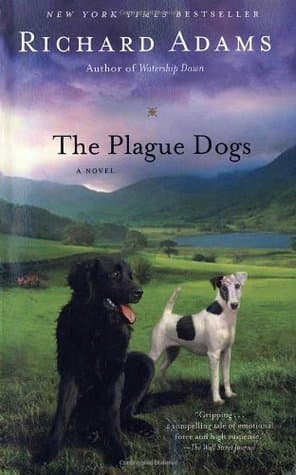
Synopsis
Covers the whole plot, including the ending.
- Difficulty
- Medium
- Pacing
- Variable
- Mood
- Melancholy, Suspenseful, Thought-provoking, Desperate
- Read it if
- You love animal perspectives, survival stories, and a powerful critique of animal cruelty, with a touch of melancholy and adventure.
- Skip it if
- You prefer lighthearted stories, are sensitive to animal suffering, or dislike ambiguous endings.
The Plague Dogs Plot Summary
Covers the whole plot, including the ending.
Escape from Animal Research, Scientific and Experimental Research (ASR)
The story begins at ASR, an animal research facility in the Lake District, where dogs are subjected to painful experiments. Rowf, a large Labrador-mix, is repeatedly drowned and resuscitated in a tank, enduring trauma. Snitter, a smaller terrier-mix, has undergone brain surgery, leaving him with a distorted perception of reality and vivid hallucinations. One night, a human error leaves their cage door open, and the two dogs escape. They navigate the terrifying corridors, eventually making their way outside the fence into the harsh, rainy Cumbrian fells, unprepared for life in the wild.
Struggle for Survival and Meeting the Tod
After their escape, Snitter and Rowf quickly realize the brutal reality of the wilderness. They are starving, disoriented, and hunted by the ASR staff. Their initial attempts to find food are clumsy. Rowf, driven by instinct, tries to hunt small animals, while Snitter, disoriented from his surgery, struggles to adapt. They meet a fox, 'the Tod.' Initially wary, the Tod recognizes the dogs' desperation and lack of hunting skills. He teaches them how to scavenge, hunt small game, and avoid human detection, becoming a guide and protector in their new, dangerous world.
The Sheep Attack and Public Outcry
Despite the Tod's guidance, the dogs' hunger becomes unbearable as winter approaches. Driven by desperation and Rowf's instincts to hunt larger prey, they attack a flock of sheep on a nearby farm. While they only kill a few, the sight of the mauled animals incites outrage among local farmers and the press. The incident is sensationalized, with newspapers labeling Snitter and Rowf as 'man-eating monsters.' This incident transforms their escape from a local concern into widespread public panic, leading to demands for their capture and extermination.
The Great Dog Hunt Begins
The media frenzy and public fear escalate, prompting a massive hunt for the 'plague dogs.' Local farmers and gamekeepers, armed with shotguns, begin scouring the fells. Soon, the military is called in, deploying soldiers, helicopters, and trained tracker dogs. Snitter and Rowf, guided by the Tod, are forced to constantly move, hiding in caves, crevices, and dense undergrowth. The Tod helps them evade their pursuers, but the relentless pressure and the constant sound of human voices and vehicles take a toll on the dogs' physical and mental state, pushing them to their limits.
The Plague Scare
Adding to the panic, a former ASR scientist, Dr. Boycott, leaks information to the press, suggesting that the escaped dogs might carry a virulent strain of bubonic plague, which had been part of an unrelated experiment at the facility. This unconfirmed rumor, despite being unsubstantiated, throws the region into terror. The hunt is no longer just about dangerous animals; it becomes a public health crisis. The military presence intensifies, with orders to shoot the dogs on sight and incinerate their bodies to prevent any potential spread of disease, making their chances of survival almost non-existent.
Close Calls and the Tod's Sacrifice
The hunt becomes brutal. Snitter and Rowf endure close calls, narrowly escaping gunfire, traps, and military patrols. They witness the deaths of other animals caught in the crossfire and experience the terror of being pursued. During one intense chase, the Tod diverts a hunter away from the dogs. He is shot and mortally wounded. The dogs are devastated by the loss of their friend and mentor, who had been their only reliable guide and source of comfort. His death leaves them more vulnerable and despairing.
Despair and the Vision of the Sea
After the Tod's death, Snitter and Rowf are at their lowest point. They are starving, exhausted, and alone, with no clear direction. Snitter's fragmented memories, often mixed with his hallucinations, begin to coalesce around a vague image: the sea. He recalls a time before ASR, a time of warmth and safety associated with the vast expanse of water. Though Rowf doesn't understand, Snitter's insistent focus on reaching the sea becomes their new purpose. It's a goal born of desperation and a glimmer of hope for a final escape or a peaceful end.
The Journey to the Coast
Driven by Snitter's vivid, though fragmented, memories of the sea, the dogs begin their journey westward. They cross difficult terrain, navigate rivers, and continue to evade hunters and soldiers. Their physical condition deteriorates, but the faint hope of reaching the sea fuels their resolve. Along the way, they encounter human obstacles, from isolated farms to small villages, each encounter dangerous. Rowf, despite his skepticism about Snitter's 'sea-dream,' remains loyal, protecting his smaller companion and following his lead, even as their strength wanes.
The Final Pursuit and the Estuary
After weeks of travel, Snitter and Rowf finally glimpse the vast, grey Irish Sea. Their relief is short-lived, however, as the military, having tracked them to the coast, closes in. They find themselves trapped on a narrow spit of land at the mouth of an estuary, with the sea on one side and armed soldiers on the other. Helicopters circle overhead, and boats patrol the water. The situation is hopeless. The dogs, exhausted and resigned, prepare for their end, with the sound of the waves and the approaching hunters filling the air.
The White Boat
Cornered and facing gunfire, Snitter and Rowf wade into the cold water of the estuary, choosing to face the sea rather than their pursuers. As the soldiers prepare to deliver the final shots, a strange, ethereal white boat appears through the mist. The boat, almost ghost-like, approaches the struggling dogs. Snitter, recalling his childhood memories, believes it to be a boat that will take them to safety, a 'white boat' from his past. With their last reserves of strength, the two dogs swim towards it, their fate uncertain, but with a renewed sense of hope.
Principal Figures
Snitter
Protagonist
A small terrier-mix with a brain injury, haunted by hallucinations and seeking escape.
Snitter is a small, gentle terrier who has undergone experimental brain surgery at ASR. This procedure has left him with a fragmented perception of reality, causing him to experience vivid, often terrifying, hallucinations which he calls 'the men in white coats' or 'the black dogs.' Despite his mental fragility, Snitter possesses a deep capacity for empathy and a longing for a peaceful existence. His memories of a life before ASR, particularly of the sea, become a guiding light for him and Rowf. He often struggles with understanding the harsh realities of the wild, relying heavily on Rowf and the Tod for survival.
Relationships: Rowf (deep bond of companionship and mutual reliance); The Tod (mentored and protected by the fox)
Rowf
Protagonist
A large Labrador-mix, physically powerful but traumatized, fiercely loyal to Snitter.
Rowf is a large, powerful black Labrador-mix who endured repeated drowning experiments at ASR, leaving him with profound psychological scars and a deep-seated fear of water. He is fiercely protective of Snitter, acting as his guardian and provider in the wilderness. Rowf is driven by instinct and a strong sense of survival, often taking the lead in hunting and evasion. Despite his physical prowess, he struggles with the emotional burden of their situation and often finds Snitter's 'madness' confusing, yet he never abandons his friend. He represents the raw, animalistic will to survive.
Relationships: Snitter (deep bond of companionship and mutual reliance); The Tod (reluctant alliance and learning from the fox)
The Tod (The Fox)
Supporting
A cunning and experienced fox who becomes the dogs' mentor and guide.
The Tod is a wise, cynical, and highly intelligent fox who encounters Snitter and Rowf shortly after their escape. He is a master of survival in the Cumbrian fells, possessing an intimate knowledge of the land, its dangers, and its resources. Initially wary of the two large dogs, he eventually takes pity on their helplessness and becomes their invaluable mentor, teaching them how to hunt, scavenge, and evade humans. He is pragmatic and unsentimental, but his actions demonstrate a deep, if unspoken, loyalty to the dogs. His language is colorful and rich, reflecting his long experience in the wild.
Relationships: Snitter (mentored and guided); Rowf (mentored and guided)
Dr. Boycott
Supporting
A disgruntled former ASR scientist who leaks information about the plague.
Dr. Boycott is a scientist who previously worked at ASR but was dismissed. He is portrayed as somewhat bitter and opportunistic. It is he who, in an act of revenge or misguided conscience, leaks the unconfirmed, and largely false, information to the press about the possibility of the escaped dogs carrying the bubonic plague. His actions escalate the public panic and the intensity of the hunt, transforming it from a local incident into a national crisis. He is a catalyst for the dogs' increased danger, though his motivations are complex and not fully explored.
Relationships: ASR (Animal Research, Scientific and Experimental Research) (former employee, disgruntled)
Mr. Ephraim
Supporting
A local farmer whose sheep are attacked by the dogs, fueling public outrage.
Mr. Ephraim is one of the local farmers in the Lake District whose sheep are attacked and killed by Snitter and Rowf out of desperation for food. His discovery of the mauled sheep is a pivotal moment in the story, sparking the initial public outrage and the widespread demand for the dogs' capture and destruction. He represents the understandable fear and anger of the rural community whose livelihoods are threatened by the 'wild' dogs. His reaction is typical of the human response to the perceived threat from the escaped animals.
The Farmer (with the shotgun)
Mentioned
A recurring figure representing the persistent human threat to the dogs.
This character is not named but represents the collective threat of the local hunters and farmers. He is frequently seen or heard pursuing the dogs with a shotgun, embodying the relentless human pursuit. He is a symbol of the dogs' constant danger, often appearing at critical moments to intensify the chase. His presence underscores the theme of humanity's destructive nature towards perceived threats.
The Colonel
Supporting
The military officer in charge of the official hunt for the dogs.
The Colonel is the military commander tasked with organizing and leading the large-scale hunt for Snitter and Rowf. He represents the methodical, organized, and increasingly ruthless approach of the authorities. He is pragmatic and focused on containing the perceived threat, particularly after the 'plague scare' emerges. He oversees the deployment of helicopters, soldiers, and advanced tracking techniques, embodying the overwhelming force brought against the two animals. He is a figure of military authority and efficiency, detached from the emotional plight of the dogs.
Relationships: Soldiers (commander)
The ASR Scientists (White Coats)
Antagonist
The unseen, cruel figures from Snitter's past, representing scientific indifference.
These characters are primarily seen through Snitter's traumatized memories and hallucinations, where they appear as 'the men in white coats.' They represent the impersonal, cruel, and ethically questionable scientific establishment that subjected the dogs to horrific experiments. They are the source of the dogs' physical and psychological suffering, embodying human indifference to animal pain. Their actions at ASR are the initial cause of the dogs' escape and subsequent plight, making them the ultimate antagonists, even if they are not actively pursuing the dogs in the wild.
Relationships: Snitter (experimenter and torturer); Rowf (experimenter and torturer)
Themes & Insights
Animal Cruelty and Ethics of Science
The novel critiques the ethics of animal experimentation, showing the suffering inflicted upon Snitter and Rowf at ASR. Adams highlights the arbitrary and brutal nature of the experiments, questioning their scientific validity and the moral cost. Snitter's brain damage and Rowf's water torture are examples of inhumane treatment, prompting readers to reflect on humanity's responsibility towards other species. The narrative argues against the idea that animal lives are expendable for human scientific gain, portraying the animals as sentient beings capable of suffering and complex emotions.
“For the animals, it was a world of pain and fear, of meaningless routines and pointless suffering.”
Survival and the Wilderness
A central theme is the struggle for survival in the Cumbrian wilderness. Snitter and Rowf, accustomed to captivity, are unprepared for the realities of nature. The novel details their learning curve, from the desperate search for food to evading predators. The Tod's role as a mentor illustrates the knowledge and instinct required to thrive in such an environment. This theme explores the resilience of living beings when faced with threats and the contrast between domesticated existence and the wild's unforgiving demands.
“They were out, and free, but freedom had its own terrors.”
Humanity's Fear and Misunderstanding of Nature
The novel exposes humanity's tendency to fear and demonize what it doesn't understand, especially animals. The sensationalized media reports and the public's immediate labeling of Snitter and Rowf as 'man-eating monsters' show this. The 'plague scare,' an unfounded rumor, amplifies this fear, leading to an over-the-top military response. This theme critiques how misinformation and panic can override reason, turning perceived threats into crises, and highlighting the disconnect between human perception and the actual motivations of animals.
“Man is a creature who can't stand the truth about himself, and so he invents monsters.”
Loyalty and Companionship
Despite their different personalities, the bond between Snitter and Rowf is the emotional core of the novel. Rowf's protection of Snitter, and Snitter's reliance on Rowf, show the loyalty that develops between them. This companionship is their primary source of strength and comfort in the face of adversity. Their alliance with the Tod, a different species, highlights the power of shared struggle to forge unexpected bonds, proving that loyalty can transcend species and hardship, offering solace.
“They were two dogs, and they had each other.”
The Search for Home and Belonging
Both dogs, having been taken from any 'home' by ASR, are driven by a desire for safety and belonging. Snitter's fragmented memories of the sea and his childhood become a quest for a lost paradise. Their escape is not just from pain, but towards a place where they can simply exist without fear. The Tod, a creature of the wild, helps them find a temporary sense of belonging in the fells. Ultimately, their journey to the sea represents a desperate search for a final resting place or a return to a primal, safe state.
“He wanted to go home. He didn't know where home was, but he wanted to go there.”
Plot Devices & Literary Techniques
Anthropomorphism
Granting animals human-like thoughts and complex dialogue.
Adams uses anthropomorphism extensively, allowing the reader direct access to the thoughts, fears, and internal monologues of Snitter and Rowf. This device is crucial for building empathy and understanding their perspectives. The animals communicate with each other and with the Tod in complex ways, articulating philosophical reflections, tactical plans, and emotional states. While their actions remain canine, their inner lives are portrayed with human-like depth, making their suffering and struggle relatable and powerful, and serving as the primary vehicle for the novel's critique of human behavior.
Snitter's Hallucinations/Fragmented Perception
A narrative lens that distorts reality and reveals psychological trauma.
Snitter's brain injury causes him to experience vivid hallucinations and a distorted perception of reality ('the men in white coats,' 'the black dogs'). This device serves multiple functions: it highlights the psychological damage inflicted by ASR, creates moments of intense disorientation and fear for the reader, and sometimes offers symbolic insights. His fragmented memories, particularly those of the sea, also act as a guiding, almost mystical, force for their journey, blurring the line between madness and intuitive hope, and offering a unique, unreliable narrator perspective on their ordeal.
The 'Plague Scare' as a MacGuffin
A plot element that drives the story forward without being intrinsically important itself.
The rumor of the dogs carrying bubonic plague functions as a MacGuffin. While it dramatically escalates the scale and intensity of the hunt, the actual presence of the plague is never confirmed and is largely irrelevant to the dogs' internal journey or their suffering. Its purpose is to create extreme external conflict, justify the military's involvement, and highlight human fear and irrationality, rather than being a literal threat that the dogs must overcome. It serves as a powerful catalyst for the plot, transforming a local animal escape into a national crisis.
The Tod as a Mentor Figure
A wise, experienced character who guides the protagonists.
The Tod embodies the classic mentor archetype. He is a seasoned survivor of the wild, possessing invaluable knowledge and skills that Snitter and Rowf desperately lack. He teaches them how to hunt, find shelter, and evade humans. His pragmatic wisdom and understanding of the natural world are essential for their early survival. His eventual sacrifice is a pivotal moment, forcing the dogs to rely entirely on themselves and Snitter's internal compass, marking their transition from guided pupils to self-reliant survivors, albeit with immense loss.
Symbolism of the White Boat and the Sea
Representations of hope, escape, and the unknown afterlife.
The sea, for Snitter, symbolizes a lost home, peace, and ultimate freedom, a place of safety before the trauma of ASR. It becomes their ultimate, almost mythical, destination. The 'white boat' that appears at the novel's climax is highly symbolic. It can be interpreted as a literal rescue, a hallucination, a symbol of death's embrace, or a spiritual transition to an afterlife. Its ambiguity allows for multiple interpretations, representing a final, profound escape from suffering and the promise of peace, whatever form that may take, for the two battered souls.
The Plague Dogs Quotes
“They'll hunt him, of course. All the men in the world will hunt him. But he'll get away. He's too clever for them. He'll get away.”
“The world was a place of hunger and pursuit, of fear and flight, a place where, if you were to survive, you must be forever on the alert, forever ready to run.”
“They were not to know, of course, that the human race, in its wisdom, had decided to call their flight 'the escape of the plague dogs'.”
“It's all right for you, you're a dog. You don't know what it's like to be a man.”
“To be alone in the world, without a friend, without a home, without a master, was to be nothing.”
“The wind was cold and carried the smell of the sea, and the sea was a great, dark, unknown thing.”
“They're just two poor dogs, trying to get away from a lot of cruel men.”
“There was no such thing as 'safe'. Not in this world. Not for them.”
“He knew, with the absolute certainty of a dog, that if he stayed, he would die.”
“The more you think about it, the more you realise what a terrible place the world is.”
“They were just a couple of strays, and the world had no room for strays.”
“The human race was a mystery, full of strange and unpredictable actions.”
“Freedom, he thought, was a terrible thing when you had nowhere to go.”
“He was a dog, and dogs did not give up. Not until they were dead.”
Quiz
10 questions on the plot and the characters. Each answer comes with a short explanation.
Question 1
What is the name of the research facility from which Snitter and Rowf escape?
- Animal Behavior Institute
- Animal Research (AR) Centre
- Government Testing Grounds
- Fellburn Laboratory
Show answer
B. Animal Research (AR) Centre Snitter and Rowf escape from the Animal Research (AR) Centre, a government facility where they were subjected to cruel experiments.
Question 2
Who is 'the Tod' in the story?
- A human hunter pursuing the dogs
- A wise old badger who helps them
- A fox who aids Snitter and Rowf
- The name of a local farmer's dog
Show answer
C. A fox who aids Snitter and Rowf The Tod is a fox who befriends Snitter and Rowf, providing them with guidance and assistance in surviving the wilderness.
Question 3
What initial action by the starving dogs leads to them being labeled 'ferocious man-eating monsters'?
- They attacked a group of hikers
- They broke into a village shop for food
- They attacked and killed some sheep
- They bit a farmer trying to catch them
Show answer
C. They attacked and killed some sheep The dogs' desperate attack on sheep for food is misinterpreted by humans, leading to their vilification as dangerous man-eaters.
Question 4
What is Snitter's particular mental affliction resulting from his time at the research facility?
- He suffers from extreme aggression towards humans.
- He experiences vivid hallucinations and distorted perceptions of reality.
- He has lost his sense of smell, making hunting difficult.
- He is unable to communicate with other animals.
Show answer
B. He experiences vivid hallucinations and distorted perceptions of reality. Snitter often struggles with distinguishing reality from the effects of the brain experiments performed on him, leading to episodes of confusion and altered perception.
Question 5
Why does the fear of the dogs intensify into a 'great dog hunt' beyond their initial classification as dangerous?
- They were believed to be carrying rabies.
- There was a concern they could spread bubonic plague.
- They were thought to be part of a larger wild dog pack.
- They had destroyed valuable agricultural equipment.
Show answer
B. There was a concern they could spread bubonic plague. The hunt escalates significantly when the authorities fear the escaped dogs might be carriers of the bubonic plague, adding a public health crisis to the perceived threat.
Question 6
What is Rowf's primary role or characteristic in the duo?
- He is the more intellectual and strategic planner.
- He is the more cautious and cynical of the two.
- He is the stronger, more grounded, and protective figure.
- He is the one who maintains hope and optimism.
Show answer
C. He is the stronger, more grounded, and protective figure. Rowf, a large black labrador, typically serves as the strong, protective, and more pragmatic member of the pair, often looking out for the more vulnerable Snitter.
Question 7
What is a recurring theme explored through the dogs' experiences with humans?
- The innate goodness of humanity.
- The inevitable triumph of technology over nature.
- The dangers of unchecked scientific experimentation and human cruelty.
- The importance of domesticating wild animals.
Show answer
C. The dangers of unchecked scientific experimentation and human cruelty. The book heavily critiques the ethics of animal research and the often-cruel, misunderstanding, and destructive nature of humans towards animals, highlighting the theme of human cruelty and scientific hubris.
Question 8
What is the ultimate fate of Snitter and Rowf at the end of the book?
- They are captured and returned to the AR Centre.
- They are adopted by a kind farmer and live peacefully.
- They escape to a remote island, safe from humans.
- They swim out to sea, implying either freedom or drowning, leaving their ultimate fate ambiguous.
Show answer
D. They swim out to sea, implying either freedom or drowning, leaving their ultimate fate ambiguous. In a poignant and ambiguous ending, Snitter and Rowf swim out into the Irish Sea, seeking a mythical island of freedom, leaving their survival open to interpretation but suggesting a final escape from human persecution.
Question 9
How does the narrative perspective contribute to the book's themes?
- It primarily focuses on the human hunters' motivations, justifying their actions.
- It shifts between human and animal viewpoints, but primarily emphasizes the dogs' subjective experiences and fears.
- It maintains a strictly objective, third-person omniscient view, devoid of emotional bias.
- It is told entirely from the perspective of the Tod, the fox, offering an outsider's view.
Show answer
B. It shifts between human and animal viewpoints, but primarily emphasizes the dogs' subjective experiences and fears. While there are occasional human perspectives, the narrative predominantly immerses the reader in the internal thoughts, fears, and perceptions of Snitter and Rowf, fostering empathy for their plight and highlighting the miscommunication and cruelty from the human world.
Question 10
Which of the following literary devices is most prominently used to convey Snitter's internal struggles?
- Extensive use of third-person limited narration, focusing solely on his external actions.
- Frequent flashbacks to his puppyhood, explaining his origins.
- Stream of consciousness and vivid, often disorienting, internal monologue.
- Dialogue with other animals, where he explicitly states his psychological issues.
Show answer
C. Stream of consciousness and vivid, often disorienting, internal monologue. Adams frequently employs Snitter's stream of consciousness, allowing the reader direct access to his fragmented thoughts, memories of experiments, and distorted perceptions, which effectively conveys his psychological damage.
The Plague Dogs FAQ
What is "The Plague Dogs" about?
"The Plague Dogs" by Richard Adams tells the story of two dogs, Rowf and Snitter, who escape a cruel government animal research facility in the Lake District of England. They struggle for survival in the wilderness, hunted by humans who believe them to be rabid and potential carriers of a deadly plague after they kill sheep out of starvation.
Why should I read "The Plague Dogs"?
You should read "The Plague Dogs" for its powerful exploration of animal cruelty, the will to survive against overwhelming odds, and the profound bond between its canine protagonists. It's a deeply emotional and thought-provoking adventure that critiques human ignorance and fear, presented with Adams's signature detailed naturalism and compelling narrative.
What is the background/setting of "The Plague Dogs"?
The story is primarily set in the rugged and beautiful Lake District of England, a region known for its mountains, lakes, and fells. The initial setting is the grim, secretive Animal Research, Scientific and Experimental (ARSE) facility, starkly contrasting with the wild, untamed landscapes the dogs navigate after their escape.
What are the most memorable quotes?
One memorable quote is Snitter's recurring thought, "What's a man?" reflecting his confusion about human behavior. Another is from the Tod, emphasizing their survival: "Live, you dogs, live!" These quotes encapsulate the dogs' struggle to comprehend their tormentors and their fierce will to endure.
What writing style does the author use?
Richard Adams employs a lyrical, descriptive, and often anthropomorphic writing style, delving deeply into the sensory experiences and thought processes of the dogs. He combines vivid naturalistic detail with a compelling narrative, often shifting perspectives between the animals and the humans pursuing them, creating a rich and immersive reading experience.
What minor details add significant meaning?
Snitter's recurring, fragmented memories of his previous owner and a red ball, though seemingly small, are crucial. They hint at a past life of affection and provide glimpses into his fragile mental state, contrasting sharply with the trauma of the laboratory and his current wild existence.
What are some subtle foreshadowing moments?
The early descriptions of the ARSE facility's extreme secrecy and the casual disregard for animal welfare subtly foreshadow the public's later panic and the government's disproportionate response to the 'plague dogs.' The initial, almost accidental killing of a sheep by Rowf also foreshadows the escalating conflict and misinterpretation of their actions.
What unexpected character connections exist?
The most unexpected connection is the unlikely alliance between Rowf, a strong but emotionally scarred Labrador, and Snitter, a smaller, more mentally fragile terrier, with the wily, independent fox known as the Tod. This interspecies bond, built on mutual need and survival, is central to their journey, transcending typical predator-prey dynamics.
What are unspoken character motivations?
Rowf's unspoken motivation is a deep-seated desire for a safe, stable 'master' figure, stemming from his laboratory conditioning and the loss of his initial home. Snitter, on the other hand, is driven by a desperate search for meaning and a return to a perceived 'normal' life, often questioning their existence and purpose beyond mere survival.
What psychological complexities do characters exhibit?
Snitter exhibits severe PTSD and dissociative tendencies, frequently reliving his traumatic brain experiments and struggling with reality. Rowf displays a complex mix of loyalty, fear, and a suppressed rage from his own painful experiences at ARSE, leading to periods of aggression and profound protectiveness towards Snitter.
What are the major emotional turning points?
A major turning point is when Snitter attacks the fox for food, showcasing the desperation starvation brings, straining their bond. Another is the dogs' first successful hunt for a sheep, which, while providing sustenance, irrevocably labels them as dangerous and seals their fate as hunted animals.
How do relationship dynamics evolve?
Initially, Rowf is the dominant, more physically capable protector, while Snitter is the frailer, more imaginative one. Their relationship evolves into a deep, co-dependent brotherhood where Snitter's mental acuity often guides them, and Rowf's strength provides security. The Tod joins this dynamic as a pragmatic, cynical mentor figure, offering crucial survival skills.
Which parts remain ambiguous or open-ended?
The ultimate fate of the dogs, particularly whether they truly make it to the 'island' that Snitter dreams of, remains ambiguous. The novel leaves it up to the reader to interpret whether their final swim is to freedom or to a peaceful death, emphasizing hope over definitive closure.
What are controversial scenes or decisions?
The graphic descriptions of animal experimentation at the ARSE facility are highly controversial, designed to shock and provoke a strong emotional response regarding animal cruelty. The government's decision to escalate the hunt into a full-scale military operation, based on unsubstantiated fear of plague, is also a controversial portrayal of human overreaction.
"The Plague Dogs" ending explained: how it ends & what it means
The book ends with Rowf and Snitter, exhausted and near death, swimming out into the sea towards a distant 'island' that Snitter believes they must reach, guided by an almost mystical vision. The meaning is open to interpretation: it could symbolize their peaceful escape to a spiritual freedom beyond human reach, or a final, dignified surrender to the elements, finding solace in each other's company even in death, escaping the cruelty of the human world.
About the author
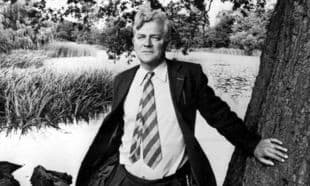
Richard George Adams was an English novelist and writer of the books Watership Down, Maia, Shardik and The Plague Dogs. He studied modern history at university before serving in the British Army during World War II. Afterwards, he completed his studies, and then joined the British Civil Service. In 1974, two years after Watership Down was published, Adams became a full-time author.
Similar books
- Watership Down
Richard Adams
4.1 (434k) average on GoodreadsFantasyShares a similar narrative style, animal perspective, and themes of survival against human encroachment.
- The Art of Racing in the Rain
Garth Stein
4.2 (452k) average on GoodreadsFictionOffers a deep, philosophical insight into the world from a dog's perspective, though with a different tone.
- Harry Potter and the Sorcerer's Stone
J.K. Rowling
4.5 (7M) average on GoodreadsFantasyRescued from a miserable life under the stairs, an orphaned boy discovers he's a wizard destined for a magical school, where he uncovers a dangerous secret tied to the dark wizard who murdered his parents.
- The Hunger Games
Suzanne Collins
4.3 (6.4M) average on GoodreadsFantasyIn a future where children fight to the death on live television, Katniss Everdeen volunteers for the arena, turning a death sentence into a fight for survival and a spark of rebellion.
- 1984
George Orwell
4.2 (3.1M) average on GoodreadsPoliticsIn a future where surveillance and thought control are absolute, a man's search for truth clashes with the Party, showing that hope can be a form of rebellion.
- Divergent
Veronica Roth
4.2 (2.9M) average on GoodreadsFantasyIn a society divided by virtues, a sixteen-year-old's difference from the norm starts a rebellion that threatens her world.





Enjoyed the summary?
A summary gives you the shape of the book. The book itself has the detail, the examples and the voice.
Find The Plague Dogs on AmazonAs an Amazon Associate, BookBrief earns from qualifying purchases. How we're funded