
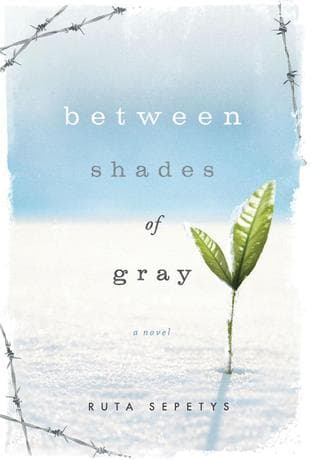
Synopsis
Covers the whole plot, including the ending.
- Difficulty
- Medium
- Pacing
- Moderate
- Mood
- Somber, Hopeful, Resilient, Heartbreaking, Reflective
- Read it if
- You are looking for a powerful and moving historical fiction story about survival, resilience, and the human spirit during a lesser-known historical tragedy. Ideal for those who appreciate character-driven narratives and emotional depth.
- Skip it if
- You prefer lighthearted reads or struggle with stories depicting intense suffering, starvation, and the brutality of war/labor camps.
Between Shades of Gray Plot Summary
Covers the whole plot, including the ending.
The Night of the Knock
On June 14, 1941, fifteen-year-old Lina Vilkas is preparing for art school when Soviet NKVD officers burst into her family's home in Kaunas, Lithuania. They accuse her father, Kostas, of being a nationalist and force Lina, her mother Elena, and her ten-year-old brother Jonas to pack minimal belongings within twenty minutes. Lina's father, a university professor, is separated from them immediately, sent to a different prison camp. The family is then herded onto trucks with other Lithuanians, including a demanding old woman called Mrs. Rimas and a young man named Andrius, and transported to crowded, inhumane train cars for an unknown destination. This marks the abrupt end of their normal lives.
Journey on the Stolypin Car
The train journey is horrific. Hundreds of people are crammed into cattle cars, without proper food, water, or sanitation. Lina, Elena, and Jonas witness death and suffering daily. Elena, ever resourceful, trades her wedding ring for bread, showing her fierce determination to keep her children alive. Lina begins to secretly draw, using any available scrap of paper, documenting the atrocities and suffering around her, hoping these messages might somehow reach her father. During this time, Lina develops a connection with Andrius, who is with his mother in their car, both navigating the terror and uncertainty of their shared fate.
The Altai Collective Farm
After weeks on the train, the group arrives at the Altai collective farm in Siberia. They are immediately put to work, forced to dig for beets and perform other labor from dawn till dusk, under the watchful eyes of cruel NKVD officers like Commander Kretzsky. Their rations are meager, and living conditions are squalid. Elena, a former teacher, tries to maintain dignity and hope, teaching the children and sharing what little food they have. Lina continues her secret drawings, sometimes leaving them for others to find, acting as a silent chronicler of their plight.
Elena's Sacrifices
Elena's strength and selflessness help the group. She barters her remaining possessions, including her elegant dresses and shoes, with the guards for extra food and medicine, especially for Jonas who falls ill. She also advocates for others, even confronting the officers to secure better conditions or prevent injustices. Her actions, though often putting her at great risk, provide temporary relief and hope. Lina witnesses her mother's courage and the depth of her love, which inspires her own resilience and commitment to documenting their story.
Messages in Art
Lina's art is her form of resistance. She draws portraits of her fellow prisoners, maps of their journey, and depictions of their suffering, often embedding subtle messages or clues about their location. She leaves these drawings in places where they might be found, hoping they will circulate and eventually reach her father. This secret activity is dangerous, as discovery would mean severe punishment or death. Her art is not just a personal outlet but a desperate attempt to communicate and preserve the truth of their experiences.
A New, Colder Destination
Just when they begin to adapt to the harsh conditions of the Altai farm, a new order arrives: the deportees are to be moved again, this time even further north, to the Arctic Circle. The new journey is even more brutal than the first, with many dying from cold, starvation, and disease. Lina, Elena, and Jonas, along with Andrius and Mrs. Rimas, survive the trip, arriving at a remote, desolate camp in Trofimovsk, near the Laptev Sea. The extreme cold and lack of resources make survival an even greater challenge.
The Arctic Circle and Starvation
In Trofimovsk, the conditions are catastrophic. They are housed in dilapidated shacks, with little to no food, and the temperatures are lethally low. They are forced to fish in the frozen sea, but the catch is insufficient. People die almost daily from scurvy, starvation, and exposure. Jonas becomes gravely ill with scurvy, and Elena desperately tries to find ways to get him citrus, even offering herself to Commander Kretzsky in exchange for medical supplies, a sacrifice Lina overhears and is devastated by. Elena's efforts are ultimately unsuccessful.
Elena's Last Stand
Elena's health gets worse quickly due to starvation and the brutal conditions. Despite her own weakening state, she continues to protect Lina and Jonas, sharing her last bits of food and offering words of encouragement. She also secretly helps a sick child by giving him her own meager rations. She finally succumbs to her illness, dying in Lina's arms in the frozen shack. Her death is a great loss for Lina and Jonas, but her legacy of love, courage, and self-sacrifice continues to inspire Lina to fight for survival and to tell their story.
Survival and the Promise
After Elena's death, Lina and Jonas are left to fend for themselves. The remaining prisoners, including Andrius (who was left behind at the Altai farm and later sent to a different camp, but Lina receives a message from him), form a stronger bond, helping each other survive. Lina remembers her mother's final wish: to live and to tell their story. She continues to draw, now with an even greater sense of purpose, to honor her mother and all those who died. Jonas, though still frail, begins to regain some strength, and they find comfort in their shared grief and determination.
Hope and Release
Years pass in the Arctic camp, with more deaths and continued hardship. Eventually, in 1953, after Stalin's death, the remaining survivors of the Trofimovsk camp are finally released from forced labor, though their return to Lithuania is complicated and not immediate. Lina and Jonas, now older and forever changed by their ordeal, are among the few who survive. Lina has kept all her drawings, a record of their suffering and resilience. The book ends with Lina, years later, burying her drawings with her mother's remains, ensuring their story will not be forgotten. She reflects on the enduring power of hope and the human spirit.
Between Shades of Gray Characters
Lina Vilkas
Protagonist
A fifteen-year-old artist deported to Siberia, determined to document her experiences.
Lina is a spirited and artistic fifteen-year-old Lithuanian girl with a passion for drawing. Her world is shattered when she and her family are deported by the Soviets. She uses her art as a form of resistance and communication, meticulously documenting the atrocities around her, often embedding messages in her drawings, hoping they will reach her father. Lina is initially naive but matures rapidly, becoming resilient and courageous. Her love for her family and her commitment to truth drive her actions throughout the horrific ordeal. She develops a strong bond with Andrius, finding solace and connection amidst the despair.
Relationships: Elena Vilkas (Daughter, deeply loved and protected); Jonas Vilkas (Older sister, protector and caretaker); Kostas Vilkas (Daughter, longs for reunion and communicates through art); Andrius Arvydas (Love interest, fellow deportee, source of comfort and hope)
Elena Vilkas
Supporting
Lina's mother, a resilient and selfless woman who sacrifices everything for her children.
Elena is Lina and Jonas's mother, a former teacher, and the emotional anchor of the family. She possesses immense strength, dignity, and resourcefulness. Despite the horrific conditions, she consistently prioritizes her children's survival and well-being, making incredible sacrifices, including bartering her valuables and even offering herself to a guard for medicine. She tries to maintain a sense of normalcy and hope, teaching the children and sharing what little they have. Her profound love and selflessness inspire Lina and are a source of comfort for the entire group of deportees until her tragic death from starvation and illness.
Relationships: Lina Vilkas (Mother, fiercely protective and loving); Jonas Vilkas (Mother, fiercely protective and loving); Kostas Vilkas (Wife, devoted and longs for reunion)
Jonas Vilkas
Supporting
Lina's ten-year-old brother, who struggles with illness and the trauma of deportation.
Jonas is Lina's younger brother, just ten years old at the time of their deportation. He is initially a typical playful child but quickly loses his innocence as he faces the brutal realities of the camps. He suffers greatly from starvation and illness, particularly scurvy, which nearly claims his life multiple times. His vulnerability highlights the profound suffering inflicted upon children during the deportations. He relies heavily on Lina and Elena for protection and comfort, and his survival becomes a primary motivation for Lina.
Relationships: Lina Vilkas (Younger brother, protected and cared for); Elena Vilkas (Son, deeply loved and protected)
Andrius Arvydas
Supporting
A cynical but ultimately compassionate young man who develops a bond with Lina.
Andrius is a seventeen-year-old Lithuanian boy deported with his mother. He initially appears cynical and hardened by their circumstances, often making sarcastic remarks. However, beneath his tough exterior, he is caring and protective, especially towards Lina. He shares his rations, offers comfort, and becomes a source of emotional support and even romance for Lina. He is forced to make terrible compromises to protect his mother, which weighs heavily on him. His relationship with Lina provides a glimmer of hope and humanity amidst the despair.
Relationships: Lina Vilkas (Love interest, fellow deportee, source of comfort and shared experience); Andrius's Mother (Son, protective)
Kostas Vilkas
Supporting
Lina's father, a university professor separated from his family and sent to a different camp.
Kostas is Lina's father and Elena's husband, a university professor. He is separated from his family on the night of their deportation and sent to a different, even harsher prison camp. His absence is a constant source of grief and motivation for Lina, who desperately tries to communicate with him through her drawings. Although he is not physically present for most of the narrative, his memory and the hope of reuniting with him drive many of Lina's actions and Elena's sacrifices. He represents the countless families torn apart by the Soviet regime.
Relationships: Lina Vilkas (Father, deeply loved and missed); Jonas Vilkas (Father, deeply loved and missed); Elena Vilkas (Husband, devoted and longed for)
Mrs. Rimas
Supporting
An elderly, often complaining, woman who becomes part of Lina's group.
Mrs. Rimas is an elderly, often cantankerous woman who is deported alongside Lina's family. She frequently complains and expresses despair, but beneath her negativity, she is a survivor. She offers a stark contrast to Elena's unwavering optimism, yet she also forms a bond with the group, sharing their hardships and occasionally offering small acts of kindness or support. She represents one of the many ordinary people caught in the extraordinary cruelty of the deportations.
Relationships: Lina Vilkas (Fellow deportee, often exasperated by, but also a companion to); Elena Vilkas (Fellow deportee, often helped by)
Commander Kretzsky
Antagonist
A young, conflicted NKVD officer assigned to the camps.
Commander Kretzsky is a young Soviet NKVD officer in charge of the deportees at various camps. He is initially portrayed as cruel and indifferent, enforcing the brutal rules of the Soviet regime. However, he shows glimpses of internal conflict and humanity, particularly in his interactions with Elena and Lina. He is revealed to have a Ukrainian mother and seems to harbor some sympathy, though he struggles to act on it due to his duty and fear of his superiors. His character explores the complexities of complicity and the human cost of totalitarianism.
Relationships: Lina Vilkas (Oppressor, but with a subtle, conflicted connection); Elena Vilkas (Oppressor, but she attempts to appeal to his humanity)
Janina
Supporting
A young girl with a doll, symbolizing the lost innocence of the children.
Janina is a young girl, perhaps around Jonas's age, who is deported with her family. She carries a doll, which she treats as a real person, a coping mechanism for the trauma she endures. Her character highlights the psychological impact of the deportations on children and their desperate attempts to cling to fragments of their former lives and innocence. Her quiet suffering and her attachment to her doll make her a poignant figure in the narrative.
Relationships: Lina Vilkas (Fellow deportee, Lina observes her and feels sympathy for her); Jonas Vilkas (Fellow child deportee)
Dr. Samodurov
Supporting
A kind and compassionate doctor among the deportees.
Dr. Samodurov is a doctor who is also among the deported Lithuanians. Despite having very limited supplies and facing the same brutal conditions as everyone else, he tirelessly tries to help the sick and dying. He represents the compassion and resilience of the human spirit in the face of unimaginable suffering. His efforts, though often futile against the overwhelming odds, provide a small measure of comfort and care to the desperate prisoners.
Relationships: Lina Vilkas (Fellow deportee, provides medical aid when possible); Elena Vilkas (Fellow deportee, works with her for the good of others)
Between Shades of Gray Themes
Identity and Self-Discovery
Identity is central, as Lina is stripped of her comfortable life and forced to redefine herself not just as an artist, but as a survivor and chronicler. Her art is her identity and her form of resistance. The extreme conditions force her to confront her inner strength and values, shaping her from a naive girl into a resilient young woman with a strong sense of purpose. This is clear in her commitment to documenting their experiences, ensuring that their lost identities and stories are not forgotten.
“I looked up at my mother. Her eyes were filled with a hope I didn't feel. I was fifteen. I was a painter. I was a Lithuanian. I was a prisoner.”
The Power of Art and Storytelling
Art is a strong motif throughout the novel. It is Lina's primary means of coping, resistance, and communication. Her drawings are not merely sketches but secret messages, historical records, and a way to preserve the humanity of the victims. They represent the human need to create, to bear witness, and to ensure that stories of injustice are told and remembered. Drawing, even under threat of death, shows how art gives voice to the voiceless and preserves truth.
“I drew pictures of the train, the officers, the people, the hunger. I drew pictures of the lies, the fear, the desperation. I drew pictures of the truth.”
Resilience and the Human Spirit
Despite suffering, starvation, and loss, the characters, particularly Lina and Elena, show great resilience. They find ways to survive, to help each other, and to maintain their dignity and hope. Elena's selflessness and Lina's determination to live and tell their story show the strong nature of the human spirit. Even in the bleakest circumstances, small acts of kindness, love, and defiance emerge, showing humanity's ability to endure and resist oppression.
“Have courage, my dear. We're going to survive this. We're going to survive this, and we're going to tell the world what happened.”
Love and Family Bonds
The deep love within the Vilkas family and the bonds formed among the deportees are important for survival. Elena's fierce maternal love drives her every action and sacrifice. Lina's love for her brother, Jonas, compels her to protect him. The connections forged with others, like Andrius, provide emotional sustenance and a reason to live. These relationships show how love, even in the face of extreme adversity, can provide strength, comfort, and a lifeline, proving that human connection is essential for enduring trauma.
“The Kolyma. It was a place where people went to die. But my mother had taught me that there was always hope, even in the darkest of places.”
The Brutality of Totalitarianism
The novel shows the dehumanizing effects and systematic cruelty of the Soviet regime under Stalin. It exposes the arbitrary arrests, forced deportations, slave labor, and widespread starvation used as tools of political oppression. The NKVD officers embody this brutality, enforcing policies that strip people of their rights, dignity, and lives. The narrative is a powerful historical account of the genocide and ethnic cleansing committed against the Baltic peoples, showing the devastating human cost of totalitarian power.
“They took us because they wanted our land, our resources, our freedom. They wanted to erase us.”
Plot Devices & Literary Techniques
First-Person Perspective (Lina's POV)
Narrative told through the eyes of the young protagonist, Lina.
The story is primarily told from Lina's perspective, immersing the reader directly into her thoughts, fears, and observations. This first-person narration allows for an intimate understanding of the emotional and psychological impact of the deportation on a young girl. It emphasizes her personal journey of survival and her development as an artist and chronicler, making her struggles and small triumphs deeply personal and resonant. Her unique perspective, filtered through an artist's eye, shapes how the brutal landscape and human suffering are depicted.
Art as a Symbol and Plot Device
Lina's drawings serve as a means of communication, resistance, and historical record.
Lina's art is not just a hobby but a crucial plot device. Her drawings act as clandestine messages, a form of defiance against a regime that seeks to erase identity and history. They are a means of documenting the atrocities, providing visual evidence of the suffering and the locations of the camps. Symbolically, her art represents the enduring power of creativity and truth in the face of oppression, and her commitment to it drives her actions and provides a tangible link to her past and her father.
Flashbacks
Interspersed memories of Lina's life before the deportation.
Throughout the narrative, Lina experiences vivid flashbacks to her life before the deportation – memories of her comfortable home, her loving family, and her artistic aspirations. These serve as a stark contrast to her current horrific reality, highlighting the immense loss and the trauma she has endured. The flashbacks not only provide context for Lina's character and her former life but also underscore the profound disruption and pain caused by the Soviet invasion, emphasizing what was stolen from her and her people.
The Handkerchief
A recurring symbol of shared humanity and hope.
Elena's embroidered handkerchief, initially a symbol of her refined life, becomes a powerful symbol of humanity and resilience. She uses it to clean and comfort her children, and later, it is passed among the prisoners, becoming a shared item of comfort and a reminder of their common plight and dignity. It represents the small acts of kindness and the enduring spirit that persist even in the most dehumanizing conditions, a tangible link to their past and a quiet act of resistance against the filth and despair of the camps.
The Calendar
A means of tracking time and maintaining hope amidst endless despair.
The creation of a makeshift calendar by the prisoners, marking off each day, serves as a crucial plot device and a symbol of their enduring hope. In a reality where days bleed into weeks and months with no end in sight, the calendar provides a sense of structure, marking the passage of time and reminding them that the ordeal is not eternal. It is an act of defiance against the regime's attempt to strip them of their past and future, providing a collective focal point for their shared desire for freedom.
Between Shades of Gray Quotes
“Have you ever wondered what a human life is worth? That morning, my brother's was worth a pocket watch.”
“They took me in my nightgown. Thinking back, the words 'they took me' sound like something a mother would say about a child. They took me.”
“We'd been trying to touch the sky from the bottom of the ocean.”
“I will never forget that smell. It smelled like death.”
“Sometimes there is such beauty in awkwardness.”
“If you are reading this, you are the resistance.”
“We were like matchsticks in a gale.”
“I want to be brave. I want to love. I want to matter.”
“The NKVD took everything from us, but they could not take our stories.”
“We were stripped of our names, our homes, our dignity. But they could not strip us of our humanity.”
“In the end, it was the small acts of kindness that kept us alive.”
“Love is a bullet. It can kill you or save you.”
“We were not shades of gray. We were vibrant colors, muted by force.”
“The stars were the only thing they couldn't take from us.”
Quiz
10 questions on the plot and the characters. Each answer comes with a short explanation.
Question 1
What is Lina's primary method of documenting her experiences and trying to communicate with her father?
- Writing secret letters in Lithuanian
- Creating hidden drawings and sketches
- Whispering messages to other prisoners
- Carving symbols into trees at the camp
Show answer
B. Creating hidden drawings and sketches Lina uses her artistic talent to draw and sketch events, people, and maps, hoping these visual records will reach her father's prison camp to show they are alive. This is a central element of her resistance and coping mechanism throughout the story.
Question 2
Where are Lina and her family forcibly transported to by the Soviet officers?
- A gulag in Kazakhstan
- A work camp in Siberia, north of the Arctic Circle
- A prison in Moscow
- A refugee camp in Poland
Show answer
B. A work camp in Siberia, north of the Arctic Circle After being taken from Lithuania, Lina, her mother, and brother are transported north across the Arctic Circle to a brutal work camp in Siberia, where they are forced to labor under harsh conditions.
Question 3
What year does the Soviet invasion and deportation of Lina's family begin?
- 1939
- 1941
- 1943
- 1945
Show answer
B. 1941 The story begins in 1941 when Soviet officers invade Lithuania, part of Stalin's mass deportations of Baltic people during World War II. This historical context is crucial to the novel's setting.
Question 4
Why is Lina separated from her father at the beginning of the story?
- He is killed during the Soviet raid on their home
- He is taken to a different prison camp while Lina, her mother, and brother are deported
- He escapes and goes into hiding, leaving the family behind
- He voluntarily joins the Soviet army to protect his family
Show answer
B. He is taken to a different prison camp while Lina, her mother, and brother are deported Lina's father is arrested separately and sent to a prison camp, while Lina, her mother Elena, and brother Jonas are deported to Siberia. This separation drives Lina's hope and her efforts to communicate through her art.
Question 5
What is the primary type of forced labor Lina and the others perform at the Siberian camp?
- Mining for coal
- Digging for beets
- Cutting down trees
- Building railways
Show answer
B. Digging for beets Under Stalin's orders, the prisoners are forced to dig for beets in the frozen ground, a grueling and often futile task that symbolizes their brutal treatment and struggle for survival.
Question 6
Which character provides Lina with emotional support and develops a romantic connection with her during their ordeal?
- Andrius Arvydas
- Jonas Vilkas
- Nikolai Kretzsky
- Kostas Vilkas
Show answer
A. Andrius Arvydas Andrius Arvydas is a fellow deportee who becomes a close friend and love interest for Lina. Their relationship highlights themes of love and hope amidst the horrors of the camps.
Question 7
How does Lina's mother, Elena, demonstrate strength and resilience in the camps?
- By leading escape attempts
- By secretly teaching children in the camp
- By sacrificing her own food and comfort to protect her children and others
- By negotiating with the guards for better conditions
Show answer
C. By sacrificing her own food and comfort to protect her children and others Elena consistently puts her children and fellow prisoners first, often giving up her own rations and enduring hardships to keep them alive, embodying maternal love and self-sacrifice.
Question 8
What is the total distance Lina's journey spans, as mentioned in the book's description?
- 3,000 miles
- 6,500 miles
- 8,000 miles
- 10,000 miles
Show answer
B. 6,500 miles Lina's harrowing journey from Lithuania to Siberia and through various camps covers approximately 6,500 miles, emphasizing the vast scale of the deportations and her endurance over years.
Question 9
Which theme is most prominently explored through Lina's artwork and the characters' actions in the face of oppression?
- The inevitability of death in war
- The power of hope, love, and resilience to sustain humanity
- The importance of political rebellion
- The corruption of absolute power
Show answer
B. The power of hope, love, and resilience to sustain humanity Despite the brutal conditions, the novel emphasizes how hope, love (familial and romantic), and inner strength help characters like Lina survive and retain their humanity, as seen in her art and relationships.
Question 10
What historical event is 'Between Shades of Gray' based on, which is often overlooked in mainstream history?
- The Holocaust in Nazi Germany
- The Soviet deportation and persecution of Baltic people under Stalin
- The Armenian Genocide
- The Korean War
Show answer
B. The Soviet deportation and persecution of Baltic people under Stalin The book sheds light on Stalin's mass deportations of Lithuanians and other Baltic peoples to Siberian labor camps during and after World War II, a lesser-known atrocity of the 20th century.
Between Shades of Gray FAQ
What is 'Between Shades of Gray' about?
The novel follows 15-year-old Lina Vilkas, a Lithuanian girl deported by Soviet forces in 1941. Separated from her father, she endures a brutal journey to Siberian labor camps with her mother and brother, surviving through her art and hope while documenting atrocities to potentially reach her imprisoned father.
Why should I read 'Between Shades of Gray'?
It offers a gripping, lesser-known perspective on Stalin's oppression of Baltic states during WWII, blending historical education with emotional depth. Lina's resilience through art and love makes it both harrowing and inspiring, highlighting human strength in extreme adversity.
What is the background/setting of 'Between Shades of Gray'?
Set from 1941 onward, it begins in Lithuania under Soviet occupation, then moves through a 6,500-mile deportation route across the Arctic Circle to Siberian labor camps like Trofimovsk. The harsh, freezing environments underscore the prisoners' struggle for survival.
What are the most memorable quotes?
Key quotes include 'Have you ever wondered what a human life is worth? That morning, my brother's was worth a pocket watch' and 'They took me in my nightgown.' These lines capture the sudden brutality of deportation and the devaluation of life under the regime.
What writing style does the author use?
Ruta Sepetys employs a first-person, present-tense narrative from Lina's perspective, creating immediacy and emotional intimacy. The prose is stark and lyrical, balancing vivid descriptions of suffering with moments of beauty through Lina's artistic observations.
What minor details add significant meaning?
Lina's hidden drawings on scraps of paper or beet sacks symbolize resistance and memory preservation. The recurring motif of the 'amber pendant' from her father represents hope and connection, while small acts like sharing bread highlight humanity amid cruelty.
What are some subtle foreshadowing moments?
Early scenes of Soviet officers confiscating valuables hint at the systemic dehumanization to come. Lina's initial sketches of her family foreshadow her later use of art as a lifeline, and mentions of her father's 'dangerous' books subtly indicate his political dissent.
What unexpected character connections exist?
Andrius, a fellow deportee, reveals his mother is coerced into relationships with guards for survival, linking his family's plight to the camp's corruption. The bald man, Kretzsky, shows unexpected compassion later, complicating the portrayal of Soviets.
What are unspoken character motivations?
Lina's mother, Elena, hides her own fear to protect her children, driven by maternal love. Andrius initially acts aloof to mask his vulnerability, while Lina's relentless drawing stems from a deep need to maintain identity and communicate with her father.
What psychological complexities do characters exhibit?
Lina grapples with anger and hope, using art to process trauma. The NKVD officer, Kretzsky, displays internal conflict between duty and empathy, and prisoners like Jonas show how innocence is forcibly stripped away in the camps.
What are the major emotional turning points?
Key moments include the family's violent separation from their father, Lina's first drawing in the train car, the death of a fellow deportee from illness, and the eventual reunion with Andrius years later, which symbolizes enduring love and recovery.
How do relationship dynamics evolve?
Lina and Andrius grow from wary acquaintances to romantic partners bonded by shared suffering. Elena's relationship with her children deepens through sacrifice, while interactions with guards shift from pure hostility to occasional, uneasy moments of understanding.
Which parts remain ambiguous or open-ended?
The fate of Lina's father is left uncertain, mirroring historical unknowns. The novel's epilogue, set in 1995, implies but doesn't confirm Lina and Andrius's lasting relationship, leaving readers to ponder the long-term impacts of their trauma.
What are controversial scenes or decisions?
Elena's choice to trade her wedding ring for medicine sparks debate on morality versus survival. Scenes of graphic violence, like the beating of prisoners, and the portrayal of Soviet brutality have stirred discussions on historical accuracy and narrative intensity.
'Between Shades of Gray' ending explained: how it ends & what it means
The story concludes with Lina surviving and eventually being freed, reuniting with Andrius in Siberia years later. The ending emphasizes hope and resilience, suggesting that love and memory can endure even through genocide, while honoring the real victims of Stalin's deportations.
About the author

Ruta Sepetys is an author known for her historical fiction that often explores themes of identity and resilience. Her notable works include "Between Shades of Gray," which delves into the experiences of Lithuanian deportees during World War II, "Salt to the Sea," centered on the tragedy of the Wilhelm Gustloff sinking, and "The Fountains of Silence," which examines post-war Spain.
Similar books
- The Book Thief
Markus Zusak
4.4 (1.8M) average on GoodreadsHistorical FictionExplores the resilience of a young protagonist during wartime and the power of art/words amidst tragedy.
- Salt to the Sea
Ruta Sepetys
4.3 (123k) average on GoodreadsHistorical FictionAnother historical fiction by the same author, focusing on forgotten tragedies of WWII with multiple perspectives.
- To Kill a Mockingbird
Harper Lee
4.3 (4.5M) average on GoodreadsHistorical FictionIn the 1930s Jim Crow South, Harper Lee writes about racial injustice, moral growth, and the quiet courage of a lawyer father, Atticus Finch, as seen through his young daughter's eyes.
- The Great Gatsby
F. Scott Fitzgerald
3.9 (3.8M) average on GoodreadsHistorical FictionIn the opulent Roaring Twenties, a mysterious millionaire's lavish parties hide his desperate, tragic pursuit of a lost love, exposing the emptiness within the American Dream.
- Pride and Prejudice
Jane Austen
4.3 (3M) average on GoodreadsHistorical FictionIn a society focused on status and money, Elizabeth Bennet navigates love and pride, challenging Mr. Darcy and social expectations to find true affection.
- Angels & Demons
Dan Brown
3.9 (2.7M) average on GoodreadsThrillerA Harvard symbologist races through Rome's ancient sites, deciphering cryptic clues to unmask the Illuminati and stop a vengeful plot to destroy the Vatican with a stolen antimatter weapon.





Enjoyed the summary?
A summary gives you the shape of the book. The book itself has the detail, the examples and the voice.
Find Between Shades of Gray on AmazonAs an Amazon Associate, BookBrief earns from qualifying purchases. How we're funded