
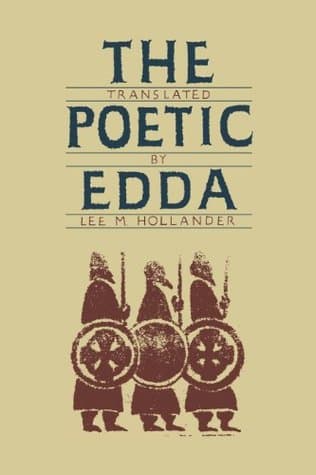
Core Idea
- Difficulty
- Hard
- Read it if
- You are interested in primary source material for Norse mythology, ancient Germanic spirituality, epic poetry, or the foundational myths that influenced works like Tolkien's legendarium.
- Skip it if
- You prefer modern, accessible retellings of myths over challenging, archaic poetic forms, or are looking for a straightforward narrative without extensive scholarly annotation.
Key Takeaways from The Poetic Edda
Cosmic Cycles of Creation and Destruction
The Edda reveals a cyclical worldview where the universe is born from chaos and destined for fiery renewal.
The Poetic Edda describes a cyclical universe, unlike linear Abrahamic stories. The universe starts with the void of Ginnungagap, where fire and ice meet to form Ymir, the first giant. His sacrificed body becomes the cosmos. This creation is not a single, perfect event, but part of a process that includes the coming Ragnarök—the end of the gods, a huge battle, and world-ending fire. Ragnarök, however, is not a final end, but a cleansing fire that allows a new world to emerge. This cyclical nature gives the Norse worldview a sense of fatalism, but also the promise of renewal. Even the gods must follow destiny.
“From Ymir's flesh the earth was formed, from his blood the sea, mountains from his bones, trees from his hair, and from his skull the sky.”
In the book: The 'Voluspa' (Prophecy of the Seeress) vividly details the creation myth from Ymir's body and the subsequent events leading to and following Ragnarok, including the rebirth of the world and new gods.
Try this: Embrace the impermanence of existence and the inevitability of change. Recognize that destruction can be a precursor to new beginnings, fostering resilience and a long-term perspective on personal and societal challenges.
Related ideas: ragnarok, yggdrasil, ginnungagap
The Weight of Wyrd: Inescapable Destiny
Norse mythology emphasizes an inescapable destiny, 'Wyrd,' which even gods cannot fully circumvent.
Wyrd, often called 'fate' or 'destiny,' is a strong concept in the Edda. It is not a divine command but a complex web of past actions and their results that shape the future. Even powerful gods like Odin are bound by Wyrd and know their end at Ragnarök. This understanding leads to a stoic acceptance of one's situation, stressing courage and honor when facing an unavoidable end. While choices can affect the path, the final outcome is mostly set. This view means valor in the face of certain doom is most important, and seeking glory (fame after death) becomes a kind of immortality.
“It is said that the Norns shape the lives of all men, and none can escape the doom they have decreed.”
In the book: The Norns, powerful female beings, are depicted as weaving the web of Wyrd at the base of Yggdrasil. Odin's relentless pursuit of knowledge, including Mimir's head and the Volva's prophecy, is often an attempt to understand, not necessarily change, his Wyrd.
Try this: Focus on living honorably and courageously within the confines of what you can control. Accept that some outcomes are beyond your influence, and find peace in performing your duties with integrity, regardless of the ultimate result.
Related ideas: wyrd, norns, fatalism
Odin: The Seeker of Wisdom and Sacrifice
Odin embodies the relentless pursuit of knowledge, even at great personal cost and sacrifice.
Odin, the Allfather, is a complex figure, not a kind god. He is a god of war, poetry, magic, and, most importantly, wisdom. He always seeks knowledge, making big sacrifices: he gives an eye to drink from Mimir's well for cosmic insight; he hangs himself from Yggdrasil for nine days, pierced by his own spear, to learn the secrets of the runes. These acts show a main idea: true wisdom is not given freely but earned through pain and self-denial. Odin's character teaches that deep understanding often means going into uncomfortable or dangerous places, driven by strong curiosity and a willingness to pay the highest price for knowledge.
“I know all, Odin, where you hid your eye, in the clear spring of Mimir.”
In the book: The 'Havamal' provides extensive insights into Odin's wisdom, proverbs, and his self-sacrifice on the gallows-tree to learn the runes. The 'Voluspa' mentions his sacrifice of an eye for Mimir's wisdom.
Try this: Prioritize lifelong learning and be willing to step outside your comfort zone to gain deeper understanding. Recognize that genuine wisdom often comes with effort, discomfort, and a willingness to challenge your existing beliefs.
Related ideas: odin, runes, mimir
The Fragility of the Divine Order
Despite their power, the gods in the Edda are fallible, mortal, and constantly battling chaos.
Unlike all-powerful gods in some other mythologies, the Aesir and Vanir in the Edda are not perfect. They are strong, but they make mistakes, lie, and fight among themselves. They constantly struggle against chaos, mainly the giants (Jotnar), knowing their rule is temporary and will end at Ragnarök. This weakness makes them relatable and their struggles more moving. Their battles are not just physical but also moral and political, showing themes of responsibility, betrayal, and the constant effort to keep order against a chaotic universe. The gods' imperfections reflect human struggles, showing the ongoing, often losing, fight against inevitable decay.
“The gods gathered, and the goddess, and counciled together, and fashioned a home for themselves, and built a forge, and made all things well, until three mighty women came from Jotunheim.”
In the book: Loki's constant trickery and eventual betrayal, Balder's unpreventable death, and the gods' ultimate demise at Ragnarok all underscore their limitations and vulnerability.
Try this: Acknowledge that even the most powerful structures and individuals are subject to entropy and imperfection. Focus on maintaining vigilance, adapting to challenges, and building resilient systems, knowing that perfection is an elusive goal.
Related ideas: aesir, jotnar, loki
Honor, Glory, and the Afterlife
The Edda emphasizes the importance of a good name and valor in life as the pathway to an honorable afterlife.
For the Norse, a warrior's death in battle and the glory gained in life were most important. Valhalla, Odin's hall, is for those who die bravely, feasting and preparing for Ragnarök. Hel, the realm of the dead, is for those who die of sickness or old age, a less glorious fate. This difference shows a cultural value system that prioritizes courage, loyalty, and fame. The idea that one's 'good name' (reputation) lives longer than the body encourages heroic deeds and good behavior. It is not about eternal paradise, but about being remembered and contributing to collective memory, giving a form of immortality through legacy.
“Cattle die, kinsmen die, oneself dies the same; but a good name never dies for him who has it.”
In the book: The descriptions of Valhalla and Hel in various poems, along with the numerous heroic lays detailing the deeds and deaths of legendary figures like Sigurd, reinforce the importance of honor and glory.
Try this: Cultivate a strong personal code of ethics and strive to live a life of integrity and purpose. Understand that your actions and reputation create a lasting legacy, influencing how you are remembered and the impact you have on others.
Related ideas: valhalla, hel, honor
The Power of Words and Runes
Language, poetry, and runic knowledge are presented as potent forces capable of shaping reality.
The Poetic Edda itself shows the power of words, keeping centuries of oral tradition alive. Beyond talking, language, especially in poetic and runic forms, has magic. Odin's sacrifice for the runes and his identity as a god of poetry (through the mead of poetry) show the belief that words are not just symbols but active forces that can affect events, heal, harm, and reveal hidden truths. Skaldic poetry, with its complex kennings and meter, was a respected art form, seen as a way for divine inspiration and to make heroes immortal. This respect for language suggests a culture where good speaking and word mastery were not just intellectual pursuits but key tools for living in the world and interacting with the divine.
“Runes you will find, and readable staves, very strong staves, very stout staves, that the mighty speaker colored, and the great gods made.”
In the book: Odin's acquisition of the runes and his subsequent use of them for magic and wisdom in the 'Havamal'. The very structure and poetic devices of the Edda itself demonstrate the sophisticated use of language.
Try this: Cultivate precision and mindfulness in your communication. Understand the power of your words to build or destroy, and learn to use language effectively to express ideas, persuade, and connect with others.
Related ideas: runes, skaldic-poetry, kennings
The Interconnectedness of All Realms
The cosmos is a multi-layered structure, with distinct realms linked by Yggdrasil, the World Tree.
The Norse cosmos is not one unified space but a system of nine distinct realms, all connected by Yggdrasil, the World Tree. From Asgard, home of the gods, to Midgard, the human realm, to Jotunheim, the land of giants, and the shadowy depths of Niflheim and Hel, each realm has its own inhabitants and traits. Yggdrasil is the central axis, a cosmic link through which these worlds interact and affect each other. This cosmology shows a holistic view of existence, where events in one realm can have effects across others, highlighting the delicate balance and connection of all things, from gods to mortals to monsters.
“An ash I know, Yggdrasil its name, a tall tree, sprinkled with white mud. From it come the dews that fall in the dales; it stands ever green over Urd's well.”
In the book: The constant travel of gods between realms (e.g., Odin to Jotunheim, Thor to Jotunheim), and the vivid descriptions of various realms and their inhabitants throughout the Edda, all connected by Yggdrasil.
Try this: Recognize the interconnectedness of different aspects of your life and the world around you. Understand that actions in one area can impact others, fostering a holistic approach to problem-solving and well-being.
Related ideas: yggdrasil, nine-realms, asgard
The Role of Women: Seers, Goddesses, and Shield-Maidens
Women in the Edda hold significant power and agency, from prophetic seers to powerful goddesses and fierce warriors.
While male figures often get more attention in modern stories, women in The Poetic Edda are important and powerful. Goddesses like Freyja, Frigg, and Idunn have a lot of influence, representing love, fertility, wisdom, and eternal youth. More notably, figures like the Volva (seeress) in the 'Voluspa' have deep prophetic abilities, guiding or challenging even Odin. Heroic poems feature shield-maidens and Valkyries, women who choose to be warriors, showing courage and fighting skill equal to men. This portrayal challenges simple views of Norse society, showing a culture that valued female agency, intelligence, and strength in many forms, not just domestic roles.
“She saw farther and farther, the wise Volva, and knew all about the past and future.”
In the book: The entire 'Voluspa' is a prophecy delivered by a female seeress. The Valkyries are Odin's choosers of the slain. Figures like Gudrun and Brynhild in the heroic lays demonstrate immense will and influence.
Try this: Appreciate and empower the diverse strengths and contributions of women in all aspects of life. Challenge gender stereotypes and recognize the historical and ongoing impact of female leadership, wisdom, and courage.
Related ideas: volva, freyja, valkyries
The Enduring Power of Myth and Storytelling
The Edda is a testament to how myths encode cultural values, history, and existential questions across generations.
The existence and preservation of The Poetic Edda show the human need for storytelling. These myths, passed down orally for centuries before being written, were not just entertainment but a store of cultural memory, ethical guides, and explanations for what was not understood. They gave a way to understand the world, death, and the divine. The Edda's lasting appeal is its ability to connect to universal themes: creation, destruction, heroism, betrayal, love, and loss. It shows how rich stories can go beyond their original setting, continuing to connect with new audiences and offering insights into humanity's questions about purpose, destiny, and life.
“I remember the giants of old, those who nurtured me long ago.”
In the book: The fact that these poems were collected and valued centuries after their likely oral composition, and continue to be studied and translated today, speaks to their enduring power.
Try this: Engage with diverse mythologies and stories from across cultures to gain a broader perspective on human experience. Recognize the power of narrative to shape beliefs, transmit values, and foster empathy and understanding.
Related ideas: mythology, oral-tradition, cultural-heritage
The Poetic Edda Quotes
“I remember the ninth world, the nine woods, the mighty tree, of old, before the world was made.”
“Grave it is to be a wanderer, but better is it than to be at home, for the heart grows old that does not wander.”
“A man should not let his spear-hand be idle, nor his tongue be silent, for a man without a weapon is as a sheep without a shepherd.”
“The cow Audhumla licked the salty ice-blocks, and on the first day after the ice was licked, there appeared in the evening a man's hair, on the second day a man's head, and on the third day the whole man was there. He was named Buri.”
“Better a live dog than a dead lion.”
“Then came three, wise and mighty, from the company of the Æsir, to the world, and found on the land two, Ask and Embla, without fate, without breath, without spirit, without blood, without color, without speech.”
“Cattle die, kinsmen die, oneself dies the same; but one thing I know that never dies: the fame of each man dead.”
“I saw a hall standing, fairer than the sun, thatched with gold, in Gimlé, where the righteous host shall dwell.”
“The tree of life, Yggdrasil, stands ever green, and its branches stretch over all the worlds.”
“Never go a step without your weapons, for you never know when you may need a spear by night, or a sword by day.”
“The sun darkens, the earth sinks in the sea, the bright stars fall from heaven; smoke and fire rage, the high heat licks heaven itself.”
“A guest must depart, nor linger too long, for a welcome guest becomes tiresome if he sits too long in the house.”
“I know that I hung on a wind-rocked tree nine whole nights, wounded with a spear, and given to Othin, myself to myself.”
“The wolf Fenrir howls, the chains are broken, and the serpent Jörmungandr thrashes in the sea.”
Quiz
10 questions on the main ideas. Each answer comes with a short explanation.
Question 1
Which god is associated with wisdom, war, death, poetry, and magic, often depicted with one eye?
- Thor
- Frey
- Odin
- Tyr
Show answer
C. Odin Odin is consistently portrayed in the Poetic Edda as the Allfather, a god of many domains including wisdom (gained from Mimir's well), war, and poetry.
Question 2
What is the name of the great tree that connects the nine worlds in Norse cosmology, frequently mentioned in poems like 'Völuspá'?
- Gjallarhorn
- Yggdrasil
- Bifröst
- Ginnungagap
Show answer
B. Yggdrasil Yggdrasil, the World Tree, is a central element in Norse cosmology as described in the Poetic Edda, connecting all realms.
Question 3
Which of the following describes the ultimate fate of the gods and the world, a prophecy detailed in 'Völuspá'?
- Valhalla
- Ragnarök
- Helheim
- Asgard
Show answer
B. Ragnarök Ragnarök is the prophesied end of the world and the gods, a major theme and event detailed in 'Völuspá' within the Poetic Edda.
Question 4
In 'Hávamál', what is one of the key pieces of advice given regarding hospitality and travel?
- Always bring a lavish gift when visiting
- Never travel without a weapon
- Decline all invitations to feasts
- Trust strangers implicitly
Show answer
B. Never travel without a weapon 'Hávamál' emphasizes practical wisdom for life, including caution and preparedness, advising travelers to be armed as a matter of prudence.
Question 5
What distinct poetic device, characterized by compound metaphorical expressions (e.g., 'whaleroad' for sea), is frequently employed throughout the Poetic Edda?
- Alliteration
- Kenning
- End rhyme
- Caesura
Show answer
B. Kenning Kennings are a hallmark of Old Norse skaldic and eddic poetry, serving as rich metaphorical circumlocutions.
Question 6
The collection known as The Poetic Edda was rediscovered in Iceland in which century?
- 14th century
- 15th century
- 16th century
- 17th century
Show answer
D. 17th century According to the introduction, the Poetic Edda was rediscovered in Iceland in the seventeenth century by Danish scholars.
Question 7
Which heroic poem within the Poetic Edda details the tragic story of Sigurd, the dragon-slayer, and the cursed ring Andvaranaut?
- Völuspá
- Hávamál
- Reginsmál and Fáfnismál (part of the Völsunga Cycle)
- Skírnismál
Show answer
C. Reginsmál and Fáfnismál (part of the Völsunga Cycle) The heroic lays within the Poetic Edda, particularly 'Reginsmál' and 'Fáfnismál,' recount the deeds of Sigurd, including his slaying of the dragon Fafnir and the acquisition of the cursed treasure.
Question 8
What is the primary narrative function of the 'Völuspá' (Prophecy of the Seeress) in the Poetic Edda?
- To detail the everyday life of ancient Norse farmers
- To provide a comprehensive mythological history from creation to Ragnarök
- To serve as a guide for runic magic and divination
- To recount the adventures of the trickster god Loki
Show answer
B. To provide a comprehensive mythological history from creation to Ragnarök 'Völuspá' is perhaps the most significant poem in the Edda, offering a sweeping overview of Norse cosmology, creation, and ultimate destruction, as revealed by a seeress to Odin.
Question 9
The 'Lokasenna' (Loki's Quarrel) portrays Loki engaging in a flyting contest with the gods. What does this poem primarily reveal about the ethical views and social dynamics of the Norse gods?
- The gods' unwavering unity and mutual respect
- The importance of strict adherence to law and order
- Their flaws, moral ambiguities, and the potential for internal strife
- Loki's ultimate triumph and dominance over the other gods
Show answer
C. Their flaws, moral ambiguities, and the potential for internal strife 'Lokasenna' highlights the gods' imperfections, their past misdeeds, and internal conflicts, demonstrating that even divine figures are not immune to moral failings and petty squabbles, reflecting complex ethical views.
Question 10
While the Poetic Edda is a repository of Norse mythology, it also embodies 'ethical views' and 'cultural life.' Which poem best exemplifies practical wisdom and advice for human conduct and social interaction?
- Thrymskvitha (Lay of Thrym)
- Grímnismál (Sayings of Grímnir)
- Hávamál (Sayings of the High One)
- Vafthrúdnismál (Sayings of Vafthrúdnir)
Show answer
C. Hávamál (Sayings of the High One) 'Hávamál' is renowned for its extensive collection of gnomic wisdom, offering practical advice on topics ranging from hospitality and friendship to prudence and the pursuit of knowledge, directly reflecting the ethical and cultural values.
The Poetic Edda FAQ
What is The Poetic Edda?
The Poetic Edda is a collection of Old Norse poems that serve as a primary source for Norse mythology and heroic legends. It comprises a treasure trove of mythic and spiritual verse, offering deep insights into the ethical views and cultural life of the North during late heathen and early Christian times.
Who wrote The Poetic Edda?
The Poetic Edda was not written by a single author but is a collection of traditional poems compiled by an unidentified Icelander, likely during the twelfth or thirteenth century. It was later rediscovered in Iceland by Danish scholars in the seventeenth century.
Does The Poetic Edda contain historical facts?
While primarily a collection of myths and heroic lore, The Poetic Edda is considered a valuable source of historical information regarding the cultural life, beliefs, and societal norms of the Norse people during the periods it reflects. Its value as poetry and historical insight was recognized upon its rediscovery.
What is the difference between The Poetic Edda and The Prose Edda?
The Poetic Edda is a collection of ancient Norse poems, while The Prose Edda is a textbook of Norse mythology written by Snorri Sturluson in the 13th century, which often retells and explains the myths found in the poetic version. Both are crucial sources, but one is poetic verse and the other is narrative prose.
What kind of stories are found in The Poetic Edda?
The Poetic Edda contains a wide range of stories, including tales of the Norse gods (like Odin, Thor, and Loki), creation myths, Ragnarök (the end of the world), and heroic sagas involving figures like Sigurd the dragon-slayer. These narratives explore themes of strife, death, honor, and fate.
Is The Poetic Edda suitable for beginners to Norse mythology?
While a foundational text, the poetic structure and ancient language can be challenging for beginners. This particular translation, however, aims to reproduce the verse patterns, rhythm, and mood of the original, making it more accessible while retaining its dignity. It's an excellent resource for those serious about delving into the primary sources.
How does this translation differ from other versions of The Poetic Edda?
This meticulous translation specifically succeeds in reproducing the verse patterns, rhythm, mood, and dignity of the original Old Norse. Scandinavian Studies has lauded it as a revision that 'may well grace anyone's bookshelf,' highlighting its exceptional quality and fidelity to the source material.
What role does spirituality play in The Poetic Edda?
Spirituality is central to The Poetic Edda, as it details the myths, beliefs, and cosmology of the Norse people, including their pantheon of gods, their understanding of the cosmos, and their views on destiny and the afterlife. It provides a profound look into their spiritual world.
Can The Poetic Edda be used for academic study?
Absolutely. The Poetic Edda is a cornerstone text for academic study in fields such as Norse studies, medieval literature, mythology, and religious history. This particular translation's scholarly rigor and faithfulness to the original make it highly valuable for academic research and teaching.
About the author

The author of "The Poetic Edda" and "The Death of King Arthur" remains unknown. Their works primarily explore themes of mythology and legend, contributing to the literary canon of fiction. "The Poetic Edda" is a collection of Old Norse poems, while "The Death of King Arthur" delves into the Arthurian legends.
Similar books
- The Diary of a Young Girl
Anne Frank
4.2 (2.7M) average on GoodreadsBiographyDuring the Nazi occupation, a teenage girl's diary, written from a secret annex, shares observations on humanity, hope, and the wait for freedom.
- Night
Elie Wiesel
4.3 (970k) average on GoodreadsBiographyIn the darkness of Auschwitz and Buchenwald, a teenage Elie Wiesel faces the extermination of his family, the loss of his faith, and the lasting scars of humanity's deepest cruelty.
- Steve Jobs
Walter Isaacson
4.1 (957k) average on GoodreadsBusinessSteve Jobs was a visionary who fused creativity and technology to revolutionize six industries and shape our digital world.
- Unbroken: A World War II Story of Survival, Resilience and Redemption
Laura Hillenbrand
4.4 (767k) average on GoodreadsBiographyLouis Zamperini's incredible World War II odyssey transforms him from a rebellious youth and Olympic runner into a survivor of a plane crash, shark-infested waters, and brutal Japanese POW camps, only to find redemption through forgiveness.
- The Immortal Life of Henrietta Lacks
Rebecca Skloot
4.1 (587k) average on GoodreadsBiographyA poor Southern tobacco farmer's unwitting contribution of 'immortal' cells starts a journey through scientific breakthroughs, medical ethics, and her family's decades-long fight for recognition and understanding.
- Angela's Ashes
Frank McCourt
4.1 (540k) average on GoodreadsBiographyIn Depression-era Limerick, young Frank McCourt navigates an impoverished Irish Catholic childhood, sustained by his father's captivating stories and his own spirit, turning hardship into a tale of resilience, humor, and ultimate forgiveness.





Enjoyed the summary?
A summary gives you the shape of the book. The book itself has the detail, the examples and the voice.
Find The Poetic Edda on AmazonAs an Amazon Associate, BookBrief earns from qualifying purchases. How we're funded