
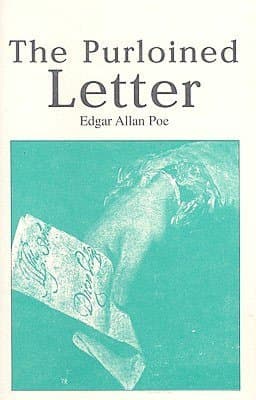
Synopsis
Covers the whole plot, including the ending.
- Difficulty
- Medium
- Pacing
- Moderate
- Mood
- Intellectual, Analytical, Suspenseful, Atmospheric
- Read it if
- You enjoy classic 'armchair detective' mysteries focused on brilliant deduction and psychological insight.
- Skip it if
- You prefer action-packed thrillers or mysteries with complex plot twists and a large cast of characters.
The Purloined Letter Plot Summary
Covers the whole plot, including the ending.
The Prefect's Predicament
The story begins in C. Auguste Dupin's private library in Paris, where he, the unnamed Narrator, and Monsieur G., the Prefect of Police, are talking. G. has a puzzling case: a politically important letter was stolen from the royal boudoir. Minister D. is the thief, and the theft happened right in front of the victim. Despite many thorough searches of D.'s home, the police have not found the letter. G. describes the careful, systematic searches, stressing their completeness and how impossible it seems for the letter to still be hidden. He offers a large reward for its return, admitting his failure and inability to use his usual methods for this unusual situation, as the letter's absence threatens a powerful person.
The Prefect's Futile Search
Monsieur G. explains the police's search methods. They divided Minister D.'s house into sections, carefully checking every possible hiding spot: furniture, books, floorboards, walls, and even the building itself. They used magnifying glasses, poked with needles, and used chemical tests for secret compartments. Every item was inspected, every seam and crack explored. D. himself was watched constantly, but the letter never appeared. G. believes the letter is still in the house because D. needs it close by to use his power. However, the police's 'scientific' and systematic approach found nothing, leaving him confused and desperate for a solution beyond his normal policing.
Dupin's Initial Disinterest and Subsequent Inquiry
During G.'s detailed story of the police's exhaustive search, Dupin seems mostly uninterested, smoking his pipe and watching the Prefect without emotion. He offers no immediate ideas, which frustrates G. However, as G. finishes, emphasizing how impossible the situation is, Dupin casually asks G. to describe the letter exactly. G. gives a clear description of its appearance, including the royal seal. Dupin then advises G. to go back to D.'s home and search again, even more thoroughly. G., doubtful but desperate, agrees and leaves, promising to tell Dupin about any progress, though he expects nothing different.
G.'s Second Failure and Dupin's Offer
A month later, Monsieur G. returns to Dupin's library, looking even more dejected. He reports that his second, more intense search of D.'s property, done with more officers, was just as fruitless. The letter is still missing. G. repeats his belief that the letter must be in the house, but he cannot imagine where. Dupin listens patiently, then casually asks G. if the reward for the letter has increased. G. confirms it has, now a significant amount, and says he will pay it to anyone who can help. Dupin then calmly states that he believes he can get the letter for the Prefect.
The Letter's Revelation
Monsieur G. does not believe Dupin, thinking he is joking. Dupin, however, is serious. He tells G. to write a check for the reward. When G. hesitates, still disbelieving, Dupin assures him he is not joking. Once the check is written, Dupin calmly takes the stolen letter from his desk drawer and hands it to the astonished Prefect. G. is speechless, unable to understand how Dupin, without police resources, succeeded where they failed. He quickly checks the letter's authenticity and leaves in shock and relief, leaving Dupin and the Narrator alone.
Dupin's Explanation: The Fallacy of Police Methods
Dupin begins to explain his method to the Narrator, pointing out the police's basic mistake. He argues that G. and his officers, while good at their job, lack the flexibility and imagination needed for unusual cases. They assume D., being a poet and mathematician, would hide the letter in a complex, secret place, because he is intelligent. However, Dupin believes D.'s intelligence would lead him to do the opposite: hide it in plain sight, knowing the police would miss the obvious while looking for the complex. Dupin stresses that G.'s mistake comes from judging D.'s intellect by his own, and by the limits of standard police procedure.
The Schoolboy's Game Analogy
To further explain intellectual empathy, Dupin describes a game schoolboys play. One boy hides a marble, and others guess its location. The best guesser is not the one who thinks of the most obscure spots, but the one who best predicts the hider's thoughts. Dupin explains that this ability to 'identify' with an opponent's intellect, to understand how they might think differently, is vital. He compares it to mirroring someone's expression to gain insight into their thoughts. The Prefect, he argues, could not do this with Minister D. because his thinking was too rigid.
Dupin's Visit to Minister D.'s Apartment
Dupin describes his actions. After G.'s first report, he visited Minister D.'s apartment, pretending he had forgotten his snuff-box on a fictional previous visit. This allowed him to observe D.'s apartment without suspicion. He wore green glasses to hide his true focus, which was scanning the room for anything that seemed out of place in its very 'ordinariness.' He was not looking for hidden compartments but for something *not* hidden, something obvious that the police, given their ideas about how stolen items should be concealed, would overlook.
The Letter Found in Plain Sight
During his visit, Dupin saw a flimsy, dirty card-rack on the mantelpiece. Inside it, he noticed a crumpled, dirty-looking letter. This letter, unlike the one G. described, was torn, re-sealed with a common black seal, and addressed in a feminine hand. Its trivial appearance immediately seemed suspicious to Dupin because it was so ordinary. He recognized D.'s cleverness: the letter had been turned inside out, re-folded, re-sealed, and re-addressed to appear worthless and insignificant, placed where it would be seen but not recognized by anyone looking for something carefully hidden. Its very obviousness was its best disguise.
The Exchange and D.'s Downfall
Dupin left D.'s apartment, leaving his snuff-box, knowing he would have a reason to return. The next morning, he went back. While D. was distracted by a planned disturbance outside from a street musician, Dupin swapped the disguised letter for a copy he had made. The replica was the same weight and appearance but contained a note from Dupin, mentioning D.'s past offense against Dupin in Vienna. Dupin ensured D. would only discover the deception later, after the police had the real letter, thus getting subtle revenge on his old enemy, who would now face ruin without understanding how he was outsmarted.
Principal Figures
C. Auguste Dupin
Protagonist
The brilliant amateur detective known for his analytical prowess and psychological insight.
Dupin is a recluse living in Paris, characterized by his keen intellect, unconventional reasoning, and profound understanding of human psychology. He possesses an extraordinary capacity for 'ratiocination,' or logical deduction, which allows him to see beyond the obvious and anticipate the thought processes of others. Unlike the police, he relies on a blend of logic, imagination, and empathy. He is not driven by monetary gain but by the intellectual challenge of solving intricate puzzles and demonstrating the superiority of his methods over conventional ones. His calm, almost detached demeanor belies a sharp and observant mind.
Relationships: The Narrator (Confidant and chronicler of Dupin's exploits.); Monsieur G. (Professional acquaintance; object of Dupin's intellectual critique.); Minister D. (Intellectual rival and past antagonist, against whom Dupin seeks a subtle revenge.)
The Narrator
Supporting
Dupin's unnamed companion and chronicler, serving as the reader's proxy.
The Narrator is an unnamed friend and housemate of Dupin, who records the detective's cases and methods. He is intelligent enough to follow Dupin's complex reasoning but lacks Dupin's intuitive genius, thus serving as an ideal foil. His role is primarily to listen, ask clarifying questions, and express the reader's astonishment at Dupin's deductions. He admires Dupin deeply and provides the first-person perspective through which the story unfolds, allowing Dupin's brilliance to be showcased effectively without the need for an omniscient narrator.
Relationships: C. Auguste Dupin (Close friend and intellectual admirer.); Monsieur G. (Acquaintance through Dupin.)
Monsieur G.
Supporting
The Prefect of the Parisian police, representing conventional, systematic law enforcement.
Monsieur G. is the Prefect of Police in Paris, a competent and diligent officer within the confines of established police procedures. He is thorough, systematic, and relies heavily on physical evidence and meticulous searches. However, he lacks imagination and the ability to think beyond conventional methods. His intellect is practical and quantitative, making him unable to anticipate the reasoning of a more subtle and complex mind like Minister D.'s. He is frustrated by cases that defy his standard operating procedures and readily admits defeat when faced with an unconventional problem, though he is initially skeptical of any solution not derived from his own methods.
Relationships: C. Auguste Dupin (Professional acquaintance; recipient of Dupin's intellectual assistance and critique.); Minister D. (Adversary whose cunning eludes G.'s conventional policing.)
Minister D.
Antagonist
The cunning, intelligent government official and thief, Dupin's intellectual foil.
Minister D. is the antagonist of the story, a highly intelligent and audacious government official, described as both a poet and a mathematician. He is cunning, resourceful, and possesses an intellect that allows him to anticipate the conventional thinking of the police. He stole the compromising letter and uses his unique blend of logical and creative thinking to hide it in plain sight, exploiting the police's inability to look beyond the obvious. He is driven by a desire for power and control, using the purloined letter for blackmail. D. has a past rivalry with Dupin, adding a layer of personal motivation to Dupin's resolution of the case.
Relationships: C. Auguste Dupin (Intellectual rival and past antagonist.); Monsieur G. (The police prefect whom D. successfully outmaneuvers through cunning.)
The Royal Victim
Mentioned
The unnamed member of the royal family whose letter is stolen.
An unnamed royal personage from whom Minister D. purloins the compromising letter. This character is never directly seen but is central to the plot as the victim whose reputation and power are threatened by the letter's exposure. Her distress and the political implications of the letter's theft are the primary motivators for Monsieur G.'s desperate search and the substantial reward offered for its return. Her vulnerability underscores the high stakes of the mystery.
Relationships: Minister D. (Victim of theft and potential blackmail.); Monsieur G. (The authority figure tasked with recovering the letter for her.)
Themes & Insights
The Limitations of Conventional Intellect
This theme is central, showing how rigid thinking fails when facing unusual problems. Monsieur G., representing the police, shows this limitation. His methods are thorough and logical within their framework, but they fail to find the letter because he cannot imagine a hiding place that is not complex or secret. Dupin criticizes G.'s inability to understand Minister D.'s intellect and his reliance on 'scientific' procedures without imagination. The story suggests that true genius involves adapting one's perspective and understanding the opponent's mind, rather than just following standard rules.
“'There is a species of ingenuity, however, which is altogether distinct from the ingenuity of the Prefect. The latter, for example, has a peculiar capacity for minute investigation, when the objects are within his sphere of action. His ratiocination is good, but he is unable to adapt it to new conditions.”
The Power of Psychological Insight and Empathy
Dupin's success depends on his ability to understand Minister D.'s mind, figuring out how someone with D.'s mix of mathematical and poetic intelligence would hide something. He does not just look for physical clues; he analyzes D.'s character and predicts his actions. This psychological empathy allows Dupin to deduce that D. would hide the letter in plain sight, using the police's expectation of secrecy. The schoolboy's game analogy clearly illustrates this: success comes from understanding the opponent's thought process, not from complexity. Dupin's method shows that understanding human nature is as important, if not more so, than physical evidence in solving crimes.
“'When I wish to find out how wise, or how stupid, or how good, or how wicked is any one, or what are his thoughts at the moment, I fashion the expression of my face, as accurately as possible, in accordance with the expression of his, and then wait to see what thoughts or sentiments arise in my mind or heart, as if to match or correspond with the expression.”
Appearance vs. Reality
The story relies heavily on how appearances can deceive. The stolen letter, initially described with a royal seal, is disguised to look like a trivial, dirty document. This change is so effective that the police, looking for something that *looks* important and hidden, do not see it. Minister D. understands that the best way to hide something is not to put it away, but to make it seem like something else entirely, something so ordinary it goes unnoticed. Dupin, however, sees through this disguise, recognizing the oddness of the 'worthless' letter in D.'s sophisticated apartment.
“'The officer, in fact, has been denied success through the very perfection of his search. He has failed to find the letter because he has not looked for it in the right place, and the right place is where it is most obvious.”
The Superiority of Ratiocination
Poe uses "The Purloined Letter" to promote Dupin's method of 'ratiocination' – a mix of logic, intuition, and psychological insight – over the police's more mechanical methods. Dupin's success is not just about solving the crime; it is about showing the intellectual superiority of his approach. The story contrasts the police's 'scientific' but unimaginative thoroughness with Dupin's ability to 'read' the situation and the criminal's mind. His method suggests that true intelligence in problem-solving involves a flexible mind that can go beyond conventional wisdom and accept counter-intuitive solutions.
“'I am not now to be understood as hinting that the Prefect is a fool. I mean only to say that he is a good officer, and nothing more. He is a man of method and of system, but he is not a man of genius.”
Plot Devices & Literary Techniques
The 'Hidden in Plain Sight' Trope
The central conceit where the object of the search is openly displayed but unrecognized.
This is the primary plot device, as Minister D. conceals the letter by placing it in an obvious, seemingly insignificant location, disguised to appear trivial. The police, expecting an elaborate secret hiding place, overlook it entirely. This device highlights the limitations of conventional thinking and the power of misdirection, making the solution counter-intuitive and surprising. It forces the reader and the characters to question their assumptions about where a valuable object would be hidden.
The Unreliable Narrator (as a Limited Perspective)
The story is told through the eyes of a friend who lacks Dupin's genius, creating dramatic tension.
While not strictly 'unreliable' in the sense of deception, the Narrator's limited intellectual capacity compared to Dupin serves as a crucial device. He acts as the reader's proxy, sharing their confusion and astonishment, thereby amplifying Dupin's brilliance. The Narrator's inability to immediately grasp Dupin's reasoning creates suspense and allows Dupin's explanations to unfold gradually, revealing the detective's genius in a more impactful way than an omniscient perspective might.
The Foil Character
Monsieur G. serves as a contrast to Dupin, highlighting the detective's superior intellect.
Monsieur G., the Prefect of Police, functions as a foil to Dupin. His systematic, thorough, but ultimately unimaginative approach to detection stands in stark contrast to Dupin's intuitive, psychological, and ratiocinative methods. G.'s repeated failures, despite his best efforts, serve to underscore Dupin's extraordinary genius and the limitations of purely conventional policing, making Dupin's eventual triumph all the more impressive.
The Personal Grudge/Revenge
Dupin's subtle act of retribution against Minister D. adds a layer of motivation.
Dupin's decision to leave a note for Minister D. in the swapped letter, referencing D.'s past 'evil turn' in Vienna, introduces a personal motive beyond simply solving the case. This subtle act of intellectual revenge adds depth to Dupin's character, showing that his brilliance is not purely altruistic. It also provides a satisfying, albeit understated, comeuppance for the cunning antagonist, demonstrating Dupin's mastery even in the final act of the retrieval.
The Purloined Letter Quotes
“We have solved it, but in a manner which will be of service and interest to you.”
“The more I reflected upon the subject, the more satisfied I became of the utter impossibility of the minister's concealing the letter upon his person.”
“There are cases in which the student of physics is apt to fail at the first glance of a problem.”
“The best chess-player in Christendom may be little more than a good chess-player after all.”
“The Minister D—, I soon found, had a well-earned reputation for acumen.”
“It is by no means an axiom in physics, that the larger the object, the more readily it is seen.”
“I had been long satisfied that the cleverness of the Minister was of a kind very different from that of the Prefect.”
“It is true, that I am not altogether a fool.”
“I had a keen eye, and a good glass, but I saw nothing.”
“The solution of the mystery, in fact, was in its very obviousness.”
“There is a game of puzzles, which is played upon a map. A child will often find a given word when the most acute adult cannot.”
“The police are defeated by the very intensity of their own research.”
“I knew that the Minister D—, like myself, was a poet.”
“In a word, I have been going on a wrong scent altogether.”
Quiz
10 questions on the plot and the characters. Each answer comes with a short explanation.
Question 1
Quel est le nom du détective qui aide le préfet de police G... à retrouver la lettre volée ?
- Sherlock Holmes
- Auguste Dupin
- Hercule Poirot
- Phileas Fogg
Show answer
B. Auguste Dupin Le texte mentionne explicitement Auguste Dupin comme le détective sollicité par le préfet G...
Question 2
Pourquoi la lettre volée est-elle si importante pour la personne qui l'a dérobée ?
- Elle contient des secrets militaires
- Elle permet d'exercer des pressions sur un membre de la famille royale
- C'est un héritage familial de grande valeur
- Elle révèle l'emplacement d'un trésor caché
Show answer
B. Elle permet d'exercer des pressions sur un membre de la famille royale Le texte indique que le possesseur de la lettre est en mesure d'exercer des pressions sur le membre de la famille royale à qui il l'a dérobée.
Question 3
Qui est le voleur de la lettre, identifié par le préfet G... ?
- Un ministre du roi
- Un simple citoyen
- D...
- Un agent double
Show answer
C. D... Le texte mentionne que le voleur, D..., est connu du policier.
Question 4
Quelle est la principale erreur du préfet G... dans sa méthode de recherche de la lettre ?
- Il n'a pas interrogé suffisamment de témoins
- Il a supposé que la lettre était cachée dans un endroit secret
- Il a fouillé le mauvais domicile
- Il a négligé les preuves matérielles
Show answer
B. Il a supposé que la lettre était cachée dans un endroit secret Le texte explique que G... a en vain cherché la lettre en la supposant cachée, sondant tous les espaces pouvant abriter une lettre dissimulée.
Question 5
Comment Dupin parvient-il à trouver la lettre, contrairement au préfet ?
- Il a utilisé des techniques de déduction plus avancées
- Il a reçu un tuyau anonyme
- Il a fait chanter le voleur
- Il a découvert un passage secret
Show answer
A. Il a utilisé des techniques de déduction plus avancées Dupin a réussi parce qu'il a su raisonner autrement que le policier, dont les déductions, pour justes qu'elles fussent, n'ont pas suffi à résoudre l'affaire.
Question 6
Où la lettre était-elle finalement placée par le criminel ?
- Dans un coffre-fort caché
- Dans une double paroi de l'armoire
- En évidence dans le bureau du coupable
- Dans un livre évidé
Show answer
C. En évidence dans le bureau du coupable Le texte révèle que la lettre était « en évidence dans le bureau du coupable ».
Question 7
Quelle était l'apparence de la lettre telle que Dupin l'a trouvée ?
- Elle était neuve et parfaitement conservée
- Elle était froissée, maquillée d'un autre sceau et d'une autre écriture
- Elle était déchirée en plusieurs morceaux
- Elle était scellée et signée du membre de la famille royale
Show answer
B. Elle était froissée, maquillée d'un autre sceau et d'une autre écriture La lettre avait été froissée, maquillée d'un autre sceau et d'une autre écriture après avoir été pliée à l'envers.
Question 8
Quel principe Dupin applique-t-il pour résoudre l'énigme, que le préfet G... n'a pas compris ?
- L'importance de la force brute dans les fouilles
- Le fait que l'évidence peut être le meilleur camouflage
- La nécessité d'interroger tous les voisins du suspect
- L'utilisation de la psychologie inverse
Show answer
B. Le fait que l'évidence peut être le meilleur camouflage Dupin comprend que si G... a échoué, c'est que la lettre volée a volontairement été mise en évidence par le criminel, semblant sans valeur et ordinaire.
Question 9
Quel est le rôle du narrateur dans cette nouvelle ?
- Il est le complice du voleur
- Il est le préfet de police G...
- Il écoute l'explication de Dupin après la résolution de l'affaire
- Il participe activement aux fouilles chez le voleur
Show answer
C. Il écoute l'explication de Dupin après la résolution de l'affaire Dupin explique au narrateur comment certains principes simples lui ont permis de retrouver la lettre, ce qui indique que le narrateur est un auditeur des explications.
Question 10
Comment la nouvelle 'La Lettre volée' se compare-t-elle à 'Double assassinat dans la rue Morgue' selon le texte ?
- Elle met en scène un détective différent
- Elle se concentre sur l'horreur plutôt que la logique
- Elle met également en scène Dupin et ses facultés d'analyse
- Elle est une suite directe de l'autre nouvelle
Show answer
C. Elle met également en scène Dupin et ses facultés d'analyse Le texte indique : 'Comme dans Double assassinat dans la rue Morgue, La Lettre volée met en scène Dupin et ses célèbres facultés d'analyse.'
The Purloined Letter FAQ
What is the central mystery in 'The Purloined Letter'?
The central mystery revolves around a compromising letter stolen from the royal boudoir by Minister D—. Despite knowing the thief and extensively searching his premises, the Prefect of Police, G—, cannot recover the letter, which holds immense blackmail power over a royal personage.
Who are the main characters involved in solving the mystery?
The main characters are C. Auguste Dupin, the brilliant amateur detective; the unnamed Narrator, Dupin's companion; and G—, the Prefect of Police, who brings the seemingly unsolvable case to Dupin.
What makes Minister D— such a formidable antagonist?
Minister D— is formidable because he possesses not only cunning but also a keen intellect that mirrors Dupin's own. He anticipates the police's conventional search methods, using psychological insight to hide the letter in plain sight, demonstrating a superior understanding of human nature compared to the Prefect.
How does Dupin ultimately recover the letter?
Dupin recovers the letter by visiting Minister D—'s apartment under a pretext, observing the room, and identifying the letter disguised and prominently displayed in a card-rack. He then orchestrates a distraction to swap the real letter for a facsimile, ensuring its recovery without confrontation.
What is the significance of the letter's appearance when Dupin finds it?
The letter's significance lies in its deliberate disfigurement: it's crumpled, soiled, re-sealed with a different stamp, and re-addressed in a different hand. This transformation makes it appear worthless and prevents the police, who expect a meticulously hidden object, from recognizing its true identity.
How does Dupin use the concept of 'hiding in plain sight'?
Dupin understands that Minister D—'s intellectual nature would lead him to exploit the police's conventional thinking. By disguising the letter as something trivial and leaving it openly displayed, D— effectively hides it from those who are programmed to look for complex concealment, a strategy Dupin expertly deciphers.
What role does the 'game of odd and even' play in Dupin's explanation?
The 'game of odd and even' illustrates Dupin's theory of identifying with one's opponent and mirroring their intellect. He explains that a clever player can win by observing their opponent's level of intelligence and adjusting their strategy accordingly, a principle he applies to outmaneuver Minister D—.
What is the implied motive behind Minister D—'s theft of the letter?
The implied motive is political leverage and blackmail. The letter contains sensitive information that, if revealed, would cause irreparable damage to a powerful royal personage. Minister D— intends to use this secret to manipulate and exert influence.
How does Dupin's method differ from that of the Prefect G—?
Dupin's method relies on psychological insight and empathy with the criminal's mind, assuming D—'s brilliance. In contrast, Prefect G— applies rigorous, systematic, but ultimately unimaginative police procedures, searching for physical hiding places rather than considering the intellectual strategy of the thief.
What does the story suggest about the nature of intelligence?
The story suggests that intelligence is multifaceted, distinguishing between the Prefect's methodical, 'rule-based' intelligence and Dupin's more intuitive, imaginative, and empathetic genius. It highlights that true insight often requires understanding human psychology beyond mere logic.
How does Minister D—'s character reflect a 'poetic' intelligence, as Dupin suggests?
Dupin characterizes D—'s intelligence as both a mathematician's and a poet's. This suggests D— possesses not only logical rigor but also a creative, intuitive understanding of human nature and perception, enabling him to conceive of the 'plain sight' hiding strategy.
What psychological flaw does the Prefect G— exhibit in his investigation?
Prefect G— exhibits a psychological flaw of 'bounded rationality' and a lack of imagination. He assumes D— would hide the letter in a complex, secret manner, failing to consider that a truly intelligent criminal might exploit the very obviousness of the hiding place.
Is Dupin's success solely due to his superior intellect, or is there more to it?
While Dupin's intellect is crucial, his success also stems from his ability to 'become' his adversary, understanding Minister D—'s unique blend of mathematical and poetic genius. He applies empathy and psychological profiling, not just raw logic, to solve the case.
What philosophical implications does the story raise regarding truth and perception?
The story suggests that truth can be obscured not by elaborate concealment, but by its very obviousness, challenging conventional perceptions. It implies that people often overlook what is right in front of them when their minds are conditioned to expect complexity and hidden depths.
How does 'The Purloined Letter' critique traditional methods of policing?
The story critiques traditional policing, represented by Prefect G—, as being too rigid, systematic, and lacking in psychological insight. It argues that a purely methodical approach can fail when confronted with a criminal who understands and exploits those very methods.
What is the significance of Dupin leaving a note for Minister D— within the swapped letter?
Dupin leaves a note, 'Un dessein si funeste, S'il n'est digne d'Atrée, est digne de Thyeste' (A design so nefarious, if not worthy of Atreus, is worthy of Thyestes), to taunt D—. It reveals Dupin's identity as the one who outwitted him, signifying his personal triumph and intellectual superiority over his rival.
Could Minister D— have anticipated Dupin's move, given his own intelligence?
While D— is highly intelligent, he likely underestimated Dupin, perhaps viewing him as just another extension of the police's predictable methods. His overconfidence in his 'hiding in plain sight' strategy, or a simple miscalculation, left him vulnerable to Dupin's unique approach.
About the author
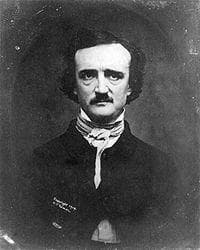
Edgar Allan Poe was an American writer, poet, editor, and literary critic who is best known for his poetry and short stories, particularly his tales of mystery and the macabre. He is widely regarded as a central figure of Romanticism in the United States, and of American literature. He was one of the country's earliest practitioners of the short story, and is considered the inventor of the detective fiction genre, as well as a significant contributor to the emerging genre of science fiction. He is the first well-known American writer to earn a living through writing alone, resulting in a financially difficult life and career.
Similar books
- A Study in Scarlet
Arthur Conan Doyle
4.2 (324k) average on GoodreadsHistorical FictionFeatures a brilliant, eccentric detective (Sherlock Holmes) solving a seemingly impossible crime through logic and observation.
- The Murders in the Rue Morgue
Edgar Allan Poe
3.9 (26k) average on GoodreadsMysteryAnother C. Auguste Dupin story, showcasing his unique analytical abilities in solving a locked-room mystery.
- The Moonstone
Wilkie Collins
3.9 (79k) average on GoodreadsHistorical FictionThe Moonstone is a full-length novel with a multi-perspective narrative, building suspense through interlocking testimonies and a broader exploration of social dynamics and character psychology. "The Purloined Letter" is a short story focused on a singular intellectual puzzle and brilliant deduction, without the narrative complexity or ensemble cast of Collins' work.
- Angels & Demons
Dan Brown
3.9 (2.7M) average on GoodreadsThrillerA Harvard symbologist races through Rome's ancient sites, deciphering cryptic clues to unmask the Illuminati and stop a vengeful plot to destroy the Vatican with a stolen antimatter weapon.
- Gone Girl
Gillian Flynn
4.1 (2.3M) average on GoodreadsThrillerA wife's sudden disappearance on her fifth anniversary reveals a web of lies and psychological warfare, exposing the secrets within a seemingly perfect marriage.
- The Girl on the Train
Paula Hawkins
3.9 (2.1M) average on GoodreadsThrillerA woman’s fascination with a seemingly perfect couple she watches from her daily train commute leads her into a dark investigation when she witnesses something that shatters their idyllic image.





Enjoyed the summary?
A summary gives you the shape of the book. The book itself has the detail, the examples and the voice.
Find The Purloined Letter on AmazonAs an Amazon Associate, BookBrief earns from qualifying purchases. How we're funded