
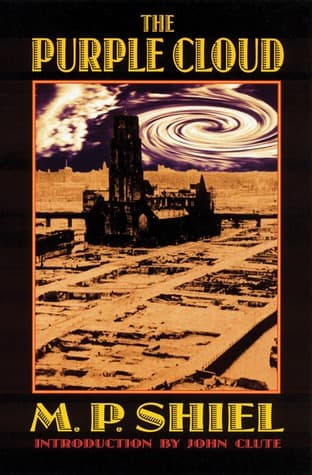
Synopsis
Covers the whole plot, including the ending.
- Difficulty
- Medium
- Pacing
- Moderate
- Mood
- Apocalyptic, Melancholy, Philosophical, Eerie, Grandiose
- Read it if
- You enjoy classic 'last man' narratives, philosophical science fiction, and explorations of human solitude and madness.
- Skip it if
- You prefer fast-paced action, character-driven stories with extensive dialogue, or are sensitive to themes of extreme isolation and despair.
The Purple Cloud Plot Summary
Covers the whole plot, including the ending.
The Quest for the North Pole
The story begins with Adam Jeffson, a young Englishman, preparing for a dangerous expedition to the North Pole. He wants to be the first to reach the Pole. Adam joins a well-equipped ship, the 'Purple Cloud,' with an experienced crew. Before leaving, Adam has a final meeting with his beloved, the beautiful but sickly Clara, who makes him promise to return. The journey is dangerous, with treacherous ice and harsh Arctic conditions. Adam's ambition is clear, but a sense of foreboding hints at the extraordinary events to come.
The Purple Cloud Descends
Adam Jeffson and his crew reach the North Pole, a triumph quickly overshadowed by a terrifying event. A strange, luminous purple cloud appears, expanding and descending upon Earth. The crew, at first confused, soon dies. Adam, by some miracle, is spared, perhaps due to his position or immunity. He watches in horror as the world below is consumed by the toxic vapor, realizing he is seeing the end of all life on Earth. The 'Purple Cloud' becomes a symbol of the disaster.
The Sole Survivor
After the purple cloud disappears, Adam Jeffson descends from the Pole to a silent world. He finds the ship's crew dead, and as he travels south, he sees no living thing, hears no human sound. The cities are empty, filled with the preserved bodies of their inhabitants. He slowly realizes he is the sole survivor, which brings him deep grief and overwhelming loneliness. He questions why he survived, the enormity of his isolation weighing on his mind.
A King in a Silent World
Adam Jeffson accepts his unique, though tragic, position and explores the deserted cities of Europe. He enters palaces, museums, and grand houses, taking whatever he wants. He wears royal robes, adorns himself with jewels, and enjoys the finest foods and wines, living a life of luxury without consequence. He becomes a king in a silent world, a solitary ruler over an empire of the dead. This period marks his initial descent into madness, as he tries to fill the void of human company with possessions and fantasies.
The Burning of London
The newness of his solitary kingdom eventually fades, replaced by boredom and growing madness. Wanting a grand spectacle, or perhaps to rid the world of its silent reminders of humanity, Adam Jeffson decides to burn London. He carefully sets fire to different parts of the city, watching in a terrifying dream as landmarks and homes burn. This act is a key moment, showing his complete break from normal human morality and his embrace of destructive freedom.
The Search for a Companion
Despite his destructive acts, Adam still longs for companionship. He travels the world, across continents and oceans, looking for another human. He uses ships, trains, and cars, always hoping he might not be entirely alone. His journey takes him through countless deserted cities and landscapes, each one showing his isolation. This quest, though often fruitless, shows his lasting need for connection.
The Vision of Clara
Throughout his solitary travels, Adam Jeffson often sees visions and memories of his beloved Clara. Her image comforts and torments him, reminding him of the love he lost and the world that was. He also begins to think about the deeper meaning of his survival. He remembers a prophecy given to him before his expedition, suggesting he was meant for a unique, perhaps terrible, fate. These mystical elements hint at a cosmic plan behind the purple cloud and Adam's unique existence.
The Discovery of Eve
After years of wandering, Adam Jeffson makes a miraculous discovery in a remote part of the world. He finds a young woman, seemingly untouched by the purple cloud, alive and well. He names her Eve, recognizing the biblical importance of their meeting as the last man and woman. Her appearance brings Adam hope and purpose, but also new complexities and challenges, as he deals with their shared, yet different, experiences.
The Conflict with Eve
Adam's initial joy at finding Eve is soon complicated by their different views and personalities. Eve, having grown up alone, is wild, untamed, and has a primal innocence that clashes with Adam's jaded and often controlling worldview. Adam, still haunted by his past and madness, struggles to balance his desire for companionship with his ingrained habits of solitary dominance. Their interactions are tense, suspicious, and a power struggle, as both try to assert their will and define their new, fragile world.
The Revelation of Destiny
As Adam and Eve's relationship grows, Adam starts to understand the true nature of his survival and the purple cloud. He remembers the prophecies and signs he encountered, realizing his immunity was not accidental but part of a grand, divine plan. He understands that he and Eve are not just survivors, but the chosen parents of a new humanity, tasked with repopulating Earth. This brings a deep sense of responsibility and purpose, changing his view from a cursed survivor to an instrument of cosmic will.
A New Beginning
With his understanding of their destiny firm, Adam Jeffson sheds his past madness and accepts his role as the new Adam. He and Eve, despite their initial conflicts, begin to form a bond based on their shared future. They represent humanity's rebirth, meant to start anew on a clean Earth. The story ends with hope and solemnity, as the last man and woman stand at the start of a new era, ready to fulfill their cosmic purpose and repopulate the world, leaving the old world's ashes behind.
The Purple Cloud Characters
Adam Jeffson
Protagonist
The last man on Earth, chosen to repopulate the world.
Adam Jeffson is a complex and deeply flawed character, driven by an initial thirst for glory and later by an overwhelming sense of isolation and madness. He is intelligent and resourceful, capable of surviving in the most extreme conditions, but also prone to fits of despair, megalomania, and destructive impulses. His journey transforms him from an ambitious explorer into a solitary monarch, then a mad wanderer, and finally, a figure of biblical significance. He grapples with the weight of being the sole survivor, struggling to maintain his sanity and humanity.
Relationships: Clara (His beloved, whose memory haunts him.); Eve (The last woman, his destined companion and co-progenitor of new humanity.)
Clara
Supporting/Mentioned
Adam's beloved, who dies in the purple cloud.
Clara is Adam Jeffson's fiancée, a beautiful but sickly woman whose memory deeply affects Adam throughout his solitary journey. She represents the lost world and the humanity Adam once knew. Her gentle nature and the promise she extracts from Adam before his departure serve as a poignant reminder of his past and the profound loss he experiences. Her spectral presence and Adam's visions of her highlight his lingering humanity and his struggle with grief, even amidst his madness.
Relationships: Adam Jeffson (His fiancée and the object of his enduring love and grief.)
Eve
Supporting
The last woman on Earth, found by Adam.
Eve is the wild, untamed young woman Adam discovers years after the purple cloud event. She is a stark contrast to Adam, representing primal innocence and a humanity untouched by the cataclysm. Having grown up in complete isolation, she is fierce, independent, and lacks the social conditioning of the old world. Her presence challenges Adam's dominance and forces him to confront his own madness and the implications of their shared destiny. She is the literal and symbolic mother of the new human race.
Relationships: Adam Jeffson (His destined companion, with whom he is to repopulate the Earth. Their relationship is initially fraught with conflict but evolves into partnership.)
The Crew of the 'Purple Cloud'
Mentioned
Adam's fellow explorers who perish at the North Pole.
The crew consists of experienced sailors and explorers who accompany Adam Jeffson on his expedition to the North Pole. They are depicted as capable and dedicated, but ultimately serve as early victims of the purple cloud. Their swift and silent demise underscores the suddenness and totality of the apocalypse, leaving Adam as the sole witness to humanity's end. They represent the collective humanity that perishes, highlighting Adam's unique and terrifying survival.
Relationships: Adam Jeffson (His fellow expedition members who die around him.)
The Ancient Prophet/Mystic
Mentioned
A mysterious figure who foretells Adam's unique destiny.
This enigmatic character appears briefly before Adam's expedition, delivering cryptic prophecies about his future and the extraordinary events awaiting him. The prophet's words are vague but hint at Adam's survival and a grand, preordained purpose. His inclusion introduces the mystical and cosmological dimension of the story, suggesting that the purple cloud and Adam's survival are not random accidents but part of a larger divine or cosmic plan. His prophecy serves as a recurring motif that Adam later recalls and interprets.
Relationships: Adam Jeffson (Delivers a prophecy to him about his destiny.)
The Purple Cloud Themes
Isolation and Madness
Adam Jeffson's deep isolation is the main psychological theme. After the purple cloud, he is completely alone, which leads to a slow descent into madness. This appears in his grandiose behavior, like crowning himself king and burning London (plot_summary section 5), as he tries to cope with humanity's absence. His thoughts and actions show the psychological cost of absolute solitude, highlighting the human need for connection and the fragility of sanity without it.
“What then, my God, shall I do?”
The End and Rebirth of Humanity
The novel explores the end of one human era and the possibility of a new beginning. The purple cloud represents a complete reset, clearing the way for a fresh start. Adam's survival, first seen as a curse, is eventually shown as a divine appointment to be the 'New Adam' (plot_summary section 10). His meeting with Eve confirms this theme, as they become the literal parents of a new human race, symbolizing hope and renewal after devastation. This theme looks at the cyclical nature of existence and life's resilience.
“I am the last man. I am the first man.”
Divine Plan vs. Random Chance
A key tension is between Adam's initial belief in random survival and his growing realization that his existence is part of a grand, perhaps divine, cosmic plan. The prophecies from the mystic (characters section 5) and Adam's later insights (plot_summary section 10) suggest the purple cloud was not an accident but a purposeful event. This theme explores predestination and a higher power guiding human destiny, rather than just chaotic events, giving Adam's suffering and survival a deep, terrifying meaning.
“I was not saved by chance, but by a design.”
The Nature of Power and Responsibility
As the sole survivor, Adam Jeffson gains absolute power over the world's resources. This theme examines how he uses this power, at first indulging in luxury and destructive acts like burning London (plot_summary section 5). His journey forces him to face the responsibilities that come with such power, especially after finding Eve and understanding his role in repopulating Earth. The story asks if humanity, even with a fresh start, can overcome its destructive tendencies or if the cycle of power will repeat.
“I am king of the world! And there is none to dispute me!”
Plot Devices & Literary Techniques
The Purple Cloud
The cataclysmic event that wipes out humanity.
The purple cloud is the central plot device, serving as the catalyst for the entire narrative. It is a mysterious, lethal vapor that sweeps across the Earth, killing all living creatures except for Adam Jeffson. Its enigmatic nature – its origin, composition, and why it spared Adam – drives much of the story's suspense and philosophical inquiry. Beyond its function as a destructive force, it also symbolizes a divine or cosmic cleansing, paving the way for a new beginning for humanity.
The Last Man Trope
Adam Jeffson as the sole survivor of a global catastrophe.
This classic science fiction trope forms the foundational premise of 'The Purple Cloud'. Adam Jeffson's status as the 'last man' immediately establishes a unique set of dramatic conflicts: profound isolation, the struggle for sanity, the burden of being the sole witness to humanity's end, and the potential for a new beginning. This device allows the author to explore themes of human nature, civilization, and the psychological impact of ultimate solitude without the complexities of societal interaction.
Prophecy and Foreshadowing
Mystical hints at Adam's destiny.
The novel employs prophecy and foreshadowing, particularly through the encounter with the ancient mystic before Adam's expedition. These cryptic pronouncements hint at Adam's unique fate and the extraordinary events to come, lending a sense of predetermination to the narrative. This device elevates the story beyond a simple survival tale, suggesting a cosmic design behind the apocalypse and Adam's survival, and guiding the reader towards a deeper, more spiritual interpretation of events.
The Wilderness of Civilization
Deserted cities as a new kind of wilderness.
Instead of a traditional natural wilderness, the novel presents abandoned cities and structures as a 'wilderness' for Adam to navigate. These deserted urban landscapes, filled with the preserved remnants of human life, serve as a constant, haunting reminder of what was lost. This device amplifies Adam's isolation and provides a unique setting for his psychological journey, where the ruins of civilization become both a resource for survival and a monument to his profound loneliness.
The Purple Cloud Quotes
“And the world was a great house left empty, and its master gone.”
“For I was alone, and the last of all men, and the world was mine.”
“The wind sang a song of nothingness, and the stars looked down on a world that had forgotten to breathe.”
“But the silence was the worst, the silence of a million voices stilled.”
“I was a king without a kingdom, a god without worshippers, a man without a kind.”
“And I saw that the earth was beautiful even in its desolation, a vast and silent monument to what had been.”
“There was no one to hear me, no one to see me, no one to judge me. I was free.”
“The purple cloud had been the breath of God, sweeping clean the corruption of man.”
“All knowledge was mine, all treasures, all power. But what was power without a rival, treasure without an heir, knowledge without a listener?”
“For I was the last man, and the first, and the only.”
“And the cities were tombs, vast and splendid, where the winds whispered the names of the dead.”
“I had become a part of the earth, and the earth a part of me.”
“The world was a canvas, and I the only painter.”
“Love, too, was a phantom, a memory, a cruel jest in the empty chambers of my heart.”
Quiz
10 questions on the plot and the characters. Each answer comes with a short explanation.
Question 1
What is the primary cause of the global catastrophe that leaves Adam Jeffson as the sole survivor?
- A massive earthquake followed by tsunamis
- A deadly purple vapor
- An alien invasion
- A nuclear war
Show answer
B. A deadly purple vapor The book explicitly states that a 'deadly purple vapor' sweeps over the world, annihilating all living creatures except Adam Jeffson.
Question 2
What is Adam Jeffson's initial profession or role before the catastrophe?
- A scientist on a research expedition
- A sailor on an Arctic exploration
- A soldier stationed abroad
- A doctor treating a remote community
Show answer
B. A sailor on an Arctic exploration Adam Jeffson is part of an Arctic exploration when the purple cloud strikes, which is why he is in a unique position to survive.
Question 3
As Adam descends into madness, what significant realization does he come to regarding his survival?
- He believes he is hallucinating the entire event.
- He discovers other isolated survivors on different continents.
- He realizes his survival was not an accident but part of a cosmological plan.
- He deduces that the purple cloud was a man-made weapon.
Show answer
C. He realizes his survival was not an accident but part of a cosmological plan. The book description states he 'becomes increasingly aware that his survival was no accident and that his destiny—and the fate of the human race—are part of a profound, cosmological plan.'
Question 4
What literary archetype is Adam Jeffson compared to in the book's description?
- Don Quixote
- Frankenstein's Monster
- Robinson Crusoe
- Prometheus
Show answer
C. Robinson Crusoe The description refers to him as 'an apocalyptic Robinson Crusoe putting together the semblance of a normal life.'
Question 5
What is one of the primary psychological challenges Adam faces as the sole survivor?
- Overcoming extreme boredom due to lack of activity.
- Maintaining his sanity in complete isolation.
- Dealing with the constant threat of mutated animals.
- Finding enough food and water to survive.
Show answer
B. Maintaining his sanity in complete isolation. The text explicitly mentions him 'descending into madness over the years,' highlighting the psychological toll of his isolation.
Question 6
How does Adam Jeffson typically travel across the 'silent and devastated planet'?
- He primarily walks on foot, avoiding vehicles.
- He commandeers various forms of transport, including ships and trains.
- He builds a hot air balloon for long-distance travel.
- He domesticates horses and travels by horseback.
Show answer
B. He commandeers various forms of transport, including ships and trains. Adam Jeffson, being the last man on Earth, has access to all available transportation and frequently uses ships to cross oceans and explore different continents, as well as land vehicles.
Question 7
What specific act does Adam perform repeatedly in various cities as a symbol of his new dominion and despair?
- He attempts to rebuild major infrastructure like power grids.
- He collects and preserves works of art and literature.
- He crowns himself king in different royal palaces.
- He buries the dead he encounters to show respect.
Show answer
C. He crowns himself king in different royal palaces. Adam Jeffson's descent into madness is marked by his repeated act of crowning himself in various palaces around the world, symbolizing his absolute, yet ultimately meaningless, dominion over a dead planet.
Question 8
What is the ultimate fate of human civilization's physical structures and technology in the book?
- They are rapidly decaying and becoming overgrown by nature.
- They remain perfectly preserved as if time has stopped.
- They are mysteriously reactivated by an unknown force.
- They are systematically destroyed by Adam in his madness.
Show answer
A. They are rapidly decaying and becoming overgrown by nature. A significant aspect of the novel is the depiction of human structures and technology slowly succumbing to nature and decay in the absence of human maintenance, emphasizing the transient nature of civilization.
Question 9
What is the profound, cosmological plan that Adam Jeffson eventually believes his survival is a part of?
- He is meant to be the progenitor of a new, alien-human hybrid race.
- He is destined to be the last man, and his death will signal the end of all life.
- He is the chosen one to restart humanity with a new, superior species.
- He is merely an observer, chosen to record the end of the world.
Show answer
C. He is the chosen one to restart humanity with a new, superior species. As his madness deepens, Adam comes to believe he is part of a divine plan to purify the Earth, and he is destined to be the patriarch of a new humanity, eventually 'creating' a new Eve.
Question 10
What is a central philosophical question explored by 'The Purple Cloud' regarding humanity's place in the universe?
- The ethics of technological advancement.
- The inherent value of human civilization without human presence.
- The practicalities of rebuilding society from scratch.
- The dangers of unchecked scientific experimentation.
Show answer
B. The inherent value of human civilization without human presence. The novel, through Adam's solitary journey, intensely examines what humanity's creations and existence mean when there are no humans left to appreciate or maintain them, questioning the inherent value of civilization.
The Purple Cloud FAQ
What is the central premise of 'The Purple Cloud'?
The novel follows Adam Jeffson, the sole survivor of a mysterious purple vapor that sweeps across the Earth, annihilating all other life. He embarks on a solitary journey across a desolate world, grappling with his isolation and the remnants of civilization.
Who is Adam Jeffson and what is his initial goal in the story?
Adam Jeffson is a participant in an Arctic expedition who survives the global catastrophe. Initially, his goal is to comprehend the unprecedented event, confirm his status as the last man, and secure resources for his continued survival in a world devoid of humanity.
How does Adam Jeffson discover he is the last human?
After the purple cloud dissipates, Adam travels extensively, first by ship and then by land, through various continents. His meticulous search of cities, towns, and remote areas, finding only the silent, unmoving dead, confirms the complete eradication of humankind.
What significant event occurs during Adam's Arctic expedition that sets the stage for his survival?
Adam Jeffson is part of an expedition aiming to reach the North Pole. It is during this perilous journey, specifically while he is isolated in a remote, high-altitude location, that the deadly purple vapor sweeps over the Earth, sparing him due to his unique circumstances.
What is the nature of the 'purple cloud' and its effect on life?
The purple cloud is a highly lethal, mysterious vapor that causes instant death to all living organisms it touches. Its origin is never explicitly stated, but its global reach and efficacy suggest a cosmic or unprecedented natural phenomenon, leaving only Adam Jeffson alive.
What is the significance of the 'Seven Lamps' in Adam's later life?
The 'Seven Lamps' refer to the seven women Adam Jeffson encounters and subsequently buries throughout his journey. These encounters, particularly with the last woman, are pivotal in his descent into madness and his understanding of his unique, divinely ordained role.
How does Adam Jeffson's 'madness' manifest, and is it purely psychological?
Adam's madness manifests as extreme egomania, delusions of grandeur, and a belief in his own divine selection as the new Adam. While psychological, the narrative suggests it's intertwined with a deeper, cosmological plan, making his 'madness' a key part of his unique destiny.
What role does the 'last woman' play in Adam's psychological transformation?
The 'last woman' represents Adam's final chance at companionship and perhaps the continuation of humanity. However, his egomania and possessiveness lead him to kill her, sealing his fate as the true 'last man' and amplifying his sense of solitary, almost divine, purpose.
How does Adam's survival connect to a 'profound, cosmological plan'?
Adam comes to believe his survival was not accidental but a deliberate act of God, making him the chosen one to witness the end of an era and potentially begin a new one. This conviction elevates his personal experience to a grand, cosmic narrative, suggesting humanity's cycle of creation and destruction.
What is the symbolic significance of Adam Jeffson renaming himself 'Adam'?
By renaming himself 'Adam', Jeffson symbolically positions himself as the first man of a new world, a solitary progenitor. This act reflects his growing delusion of being a divine instrument and the sole inheritor of a desolate Earth, mirroring the biblical Adam.
How does the novel explore themes of isolation and sanity?
The novel meticulously details Adam's descent into madness as a direct consequence of his extreme isolation. His sanity erodes, replaced by grandiose delusions and a distorted perception of reality, highlighting the human need for social connection and the fragility of the mind in its absence.
What does Adam do with the vast wealth and resources he finds in the abandoned world?
Adam initially collects valuables, but as his madness progresses, he uses them for increasingly bizarre and symbolic acts. He constructs monuments, adorns himself, and even destroys wealth in grand gestures, reflecting his distorted sense of purpose and ownership over the entire world.
Is there any suggestion of other survivors besides Adam Jeffson?
Throughout his extensive travels, Adam finds no other living humans, only the perfectly preserved bodies of the dead. The narrative reinforces his absolute solitude, making his status as the sole survivor a foundational element of his psychological journey and the story's cosmic implications.
How does Adam's relationship with the natural world change after humanity's extinction?
Adam initially views nature as a source of survival, but as he becomes the last man, he sees himself as its undisputed master. He treats the Earth as his personal domain, reflecting his egomania and the profound shift in the balance between humanity and the environment.
What is the ultimate fate of Adam Jeffson at the end of the novel?
Adam Jeffson is left alone, an aged, mad, yet strangely contented figure, still believing himself to be part of a divine plan. His fate is one of perpetual, solitary existence, burdened by his self-proclaimed destiny as the last and perhaps only true 'man' left on Earth.
How does the novel critique or comment on human civilization?
By showing civilization's complete and sudden collapse, the novel implicitly critiques its fragility and humanity's transient nature. Adam's interactions with the remnants of society highlight the superficiality of material wealth and the ultimate insignificance of human endeavors when life itself is extinguished.
Are there any parallels between Adam Jeffson and biblical figures?
Beyond his self-assigned name, Adam Jeffson parallels the biblical Adam as the first man of a new, desolate world. His actions, particularly his 'killing' of the potential Eve figure (the last woman), further cement this parallel, but with a twisted, apocalyptic outcome.
What is the significance of the book's archaic language and style?
The archaic language and highly descriptive, often florid, style contribute to the novel's epic and almost mythic tone. It elevates Adam's journey from a mere survival story to a profound, philosophical meditation on humanity's place in the cosmos and the nature of existence.
About the author

Matthew Phipps Shiel was a British author known for his contributions to fiction in the early 20th century. He is best recognized for his novel "The Purple Cloud," which explores themes of isolation and existential dread. Shiel's work often blends elements of science fiction and fantasy.
Similar books
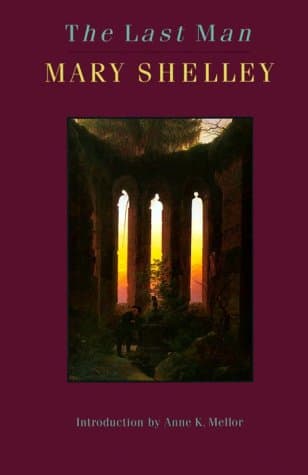
- The Last Man
Mary Shelley
3.4 (4k) average on GoodreadsScience FictionExplores a similar 'last man' theme with a focus on human extinction and the survivor's psychological journey.
- Earth Abides
George R. Stewart
4.0 (24k) average on GoodreadsFantasyFeatures a lone survivor navigating a post-apocalyptic world and attempting to rebuild society.
- I Am Legend
Richard Matheson
4.1 (96k) average on GoodreadsFantasyA classic 'last man' story focusing on the protagonist's isolation, struggle for survival, and changing perceptions of humanity.
- The War of the Worlds
H.G. Wells
3.8 (245k) average on GoodreadsFantasyWells's novel focuses on an external, societal threat and humanity's collective struggle against it, providing a broader social commentary. Shiel's The Purple Cloud, in contrast, delves into the intensely personal psychological collapse of a single individual after a global catastrophe, making it a more introspective and philosophical apocalypse.
- The Scarlet Plague
Jack London
3.6 (5k) average on GoodreadsScience FictionLondon's The Scarlet Plague also explores a post-apocalyptic world and the 'last man' trope, but it offers a more direct and less psychologically complex account of societal regression and the return to barbarism. Shiel's novel, while also touching on these themes, is far more concerned with the protagonist's internal torment, megalomania, and the philosophical implications of absolute solitude, rather than merely the mechanics of societal breakdown.
- Harry Potter and the Sorcerer's Stone
J.K. Rowling
4.5 (7M) average on GoodreadsFantasyRescued from a miserable life under the stairs, an orphaned boy discovers he's a wizard destined for a magical school, where he uncovers a dangerous secret tied to the dark wizard who murdered his parents.





Enjoyed the summary?
A summary gives you the shape of the book. The book itself has the detail, the examples and the voice.
Find The Purple Cloud on AmazonAs an Amazon Associate, BookBrief earns from qualifying purchases. How we're funded