
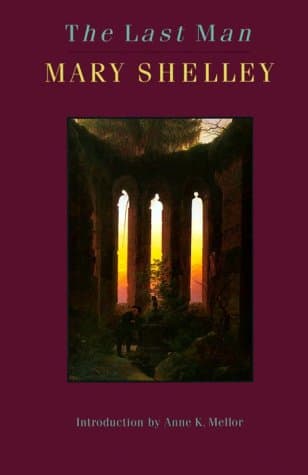
Synopsis
Covers the whole plot, including the ending.
- Difficulty
- Medium
- Pacing
- Slow
- Mood
- Melancholic, Apocalyptic, Philosophical, Somber
- Read it if
- You enjoy classic gothic literature with a dystopian, apocalyptic theme, are interested in early science fiction, or appreciate philosophical reflections on human existence and society's collapse.
- Skip it if
- You prefer fast-paced action, optimistic narratives, or find prolonged descriptions of despair and loss too bleak.
The Last Man Plot Summary
Covers the whole plot, including the ending.
The Editor's Discovery and Lionel's Early Life
The story begins with an 'Editor' who, in 2090, finds old writings and ruins near Naples. These writings, supposedly by the Cumaean Sibyl, predict humanity's end and are 'translated' to create the story. The plot itself starts with Lionel Verney, the narrator, describing his early life in England. Born into a once-noble family, Lionel and his sister Perdita are orphans, living in poverty and seen as outcasts. Lionel grows up wild and uneducated, often stealing, a sharp contrast to the refined English court.
Raymond's Arrival and the Formation of a New Circle
The English countryside changes with the arrival of Lord Raymond, a famous war hero who gave up royal ambitions for a simpler life. Raymond takes an interest in Lionel, offering him an education and a place in his home. Through Raymond, Lionel meets Adrian, the good and sad son of England's last King, and Adrian's graceful and smart sister, Idris. This new connection greatly alters Lionel's life, moving him from his rough existence to a world of learning and social interaction, though he struggles at first to fit in.
Love, Rivalry, and Marriages
Complicated feelings grow: Raymond loves Idris deeply, but she does not return his feelings, secretly loving Adrian. Adrian, however, has a strong platonic affection for Raymond and sees Raymond's intense love for Idris. To resolve this, Adrian sacrifices his own happiness, convincing Idris to marry Raymond. At the same time, Lionel falls in love with Idris, but seeing her love for Adrian and her coming marriage to Raymond, he steps aside. Instead, Lionel marries Idris's friend, Perdita (his own sister). So, Raymond marries Idris, and Lionel marries Perdita, strengthening the group's bonds. Adrian remains unmarried, his selflessness a key trait.
Raymond's Political Ascent and Downfall
Raymond, wanting glory, becomes Lord Protector of England. He starts well, but his desire for power leads him to a bad war against the Ottoman Empire to free Greece. Despite early wins, the fighting becomes long and bloody, costing England many lives. During this time, Raymond becomes more arrogant and less moral. He dies in battle in Greece, a victim of war and his own unfulfilled goals, leaving Idris a widow and their daughter Clara without a father.
The First Signs of the Plague
After Raymond's death, a new and more terrible threat appears from the East: a devastating plague. It is first reported as a local disease in Constantinople, but its hidden nature and fast spread soon become clear. News of its march across continents, emptying cities and regions, reaches England, causing widespread fear. The plague is a mysterious, incurable illness that kills quickly and randomly, affecting everyone. This begins the apocalyptic events that shape the rest of the story, overshadowing all human concerns.
The Plague's Arrival in England
The plague eventually reaches England, bringing great horror and societal collapse. London, once busy, becomes a ghost town, its streets full of the dead and dying. Panic takes over, leading to lawlessness and the breakdown of all institutions. During this time, Perdita, Lionel's wife, dies from the plague, leaving Lionel devastated. Her death is one of the first major losses for the group, showing the plague's unstoppable power and its indifference to personal ties. The remaining survivors, including Lionel, Adrian, Idris, and Clara, try to keep some order and hope amid the growing chaos.
The Search for a Safe Haven
As the plague continues its spread across England, the remaining characters, led by Adrian, decide to leave the ruined cities and seek safety in the countryside, hoping to avoid infection. They form a small group, trying to live off the land and avoid sick areas. But the plague cannot be escaped. During their hard journey, more of their group die from the disease. Idris, Adrian's sister and Raymond's widow, eventually gets the plague and dies, leaving Adrian and Lionel to care for her young daughter, Clara. The shrinking group and constant threat deepen their despair and loneliness.
Migration to Europe and Further Losses
Believing England is lost to the plague, Adrian, Lionel, and Clara, with a few others, decide to travel across the English Channel to mainland Europe, hoping to find a less affected area. They face huge problems, including storms, low supplies, and the constant mental burden of being among the last people. During their sea voyage, a strong storm hits their ship. Adrian, in a selfless act, tries to save Clara, but both drown in the rough water. Lionel is left as the only survivor, seeing the final, terrible loss of his loved ones.
Lionel Verney: The Last Man
Lionel Verney, now truly the 'Last Man,' lands in Italy, where he continues his lonely travels. He walks through empty cities like Rome and Venice, seeing only the decaying remains of human civilization and dead bodies. He fully realizes he is utterly alone, the last living human on Earth. He deals with great grief, despair, and a huge sense of isolation. His attempts to find anyone else are useless, confirming his unique and frightening status. He thinks about how short human life is and how pointless ambition is, finding comfort only in nature and the memory of those he lost.
The Final Journey and Reflection
Having accepted his fate as the last man, Lionel Verney decides to spend his remaining days recording the story of humanity's end, so their history is not completely lost. He sails from Italy to various empty regions, thinking about the beauty of the natural world that remains, untouched by human suffering. He makes a final trip to Rome, where he writes his story among the ruins, becoming the historian of a vanished species. The novel ends with Lionel sailing from Ostia in a small boat, with only his dog, planning to travel the world, a lonely wanderer and the final witness to an era's end, leaving his manuscript for any future intelligent life to find.
The Last Man Characters
Lionel Verney
Protagonist
The narrator and 'Last Man,' who chronicles humanity's demise.
Lionel Verney is initially presented as a wild, uneducated, and impoverished youth, living on the fringes of society. He is impetuous and prone to recklessness, but possesses an innate sense of loyalty and a deep capacity for love. Through his friendship with Adrian and the influence of Raymond and Idris, he gradually refines his character, becoming more reflective and philosophical. As the plague progresses, he transforms from a passionate young man into a stoic survivor, bearing witness to the extinction of his species. His journey is one of profound loss and an eventual acceptance of his solitary fate, making him the voice of humanity's end.
Relationships: Perdita (Sister and wife); Adrian (Best friend and brother-in-law); Idris (Sister-in-law and respected friend); Lord Raymond (Mentor and brother-in-law)
Adrian
Supporting
The virtuous son of the last King of England, a beacon of intellect and selflessness.
Adrian is portrayed as an idealized figure of virtue, intellect, and profound melancholy. He is the son of the last King of England, burdened by the weight of his lineage and a deep sensitivity to human suffering. Adrian is characterized by his unwavering benevolence, philosophical nature, and capacity for self-sacrifice, exemplified by his giving up Idris to Raymond. He acts as a moral compass and a source of hope for the dwindling human population, constantly striving to maintain order and compassion amidst chaos. His death by drowning, while attempting to save Clara, underscores his inherent goodness and tragic fate.
Relationships: Idris (Sister); Lionel Verney (Best friend and brother-in-law); Lord Raymond (Close friend and brother-in-law); Clara (Niece)
Lord Raymond
Supporting
A charismatic war hero who becomes Lord Protector, driven by ambition and passion.
Lord Raymond is a charismatic, ambitious, and initially heroic figure. A celebrated war hero, he possesses a commanding presence and a passionate nature. He takes Lionel under his wing, facilitating his education and entry into society. However, Raymond's character is also marked by a volatile temperament, intense pride, and an insatiable desire for glory, which ultimately leads him to become Lord Protector and embark on a disastrous war. His passionate love for Idris is a central motivation. He represents the flawed grandeur of human ambition, which ultimately proves futile in the face of larger forces.
Relationships: Idris (Wife); Lionel Verney (Mentor figure, then brother-in-law); Adrian (Close friend and brother-in-law); Clara (Daughter)
Idris
Supporting
Adrian's noble sister, a woman of grace, intellect, and quiet strength.
Idris is Adrian's sister, portrayed as a woman of profound grace, beauty, and intellect. She possesses a quiet strength and a deep capacity for love, though her affections are initially given to Adrian. She reluctantly marries Lord Raymond out of a sense of duty and compassion, enduring his volatile nature with dignity. Idris embodies feminine virtue and resilience. She is a devoted mother to Clara and a loyal friend. Her death from the plague is a significant loss, representing the indiscriminate nature of the disease and further diminishing the hopes of the survivors.
Relationships: Adrian (Brother); Lord Raymond (Husband); Lionel Verney (Sister-in-law and friend); Clara (Daughter)
Perdita
Supporting
Lionel's sister and wife, a tragic figure marked by her difficult upbringing.
Perdita is Lionel's younger sister, who shares his impoverished and outcast upbringing. She is initially portrayed as a proud and somewhat melancholic character, deeply affected by her family's disgrace. She falls in love with Raymond, but her affections are unrequited, leading to significant emotional pain. She eventually marries Lionel. Perdita embodies the fragility of human happiness and the lasting scars of early hardship. Her death from the plague is one of the first major blows to the core group, highlighting the plague's devastating impact on personal relationships and the family unit.
Relationships: Lionel Verney (Brother and husband); Lord Raymond (Object of unrequited love); Idris (Friend)
Clara
Supporting
Daughter of Raymond and Idris, a symbol of fading innocence and hope.
Clara is the young daughter of Lord Raymond and Idris. She represents the innocence and fragility of the next generation, a symbol of the future that is slowly being extinguished by the plague. Her presence provides a momentary spark of joy and a reason for the adults to strive for survival, yet she is also a constant reminder of their impending doom. Her tragic drowning alongside Adrian, who tries to save her, is one of the most poignant moments in the novel, signifying the complete obliteration of hope for humanity's continuation.
Relationships: Lord Raymond (Father); Idris (Mother); Adrian (Uncle (drowned trying to save her)); Lionel Verney (Uncle)
The Editor
Mentioned
The fictional discoverer and 'translator' of the Sibylline leaves.
The Editor is a framing device at the very beginning of the novel. This anonymous figure, purportedly living in the year 2090, discovers ancient Sibylline leaves in the ruins near Naples. The Editor then 'translates' these cryptic writings, claiming them to be the narrative of Lionel Verney, The Last Man. This literary construct serves to lend an air of authenticity and historical distance to the apocalyptic tale, positioning it as a rediscovered prophecy rather than a mere fictional invention, and setting the tone for the futuristic, yet ancient-feeling, narrative.
Ryland
Supporting
A pragmatic leader who attempts to organize survivors against the plague.
Ryland is a minor character who emerges as a leader among a group of plague survivors in England. He is a pragmatic and somewhat authoritarian figure who attempts to establish order and enforce strict quarantines and social rules to combat the spread of the disease. His efforts, though well-intentioned, ultimately prove futile against the overwhelming power of the plague. He represents the human desire for control and organization in the face of inevitable chaos, and his eventual failure underscores the futility of human institutions against such a devastating natural force.
The Last Man Themes
Isolation and Solitude
Loneliness is a main theme, ending with Lionel Verney as 'The Last Man.' The novel details the mental cost of losing people, from being an outcast in youth to the deep, existential loneliness of being the only survivor. Lionel's walks through empty cities like Rome and Venice show the emptiness left by humanity. His final boat journey represents a permanent state of being completely alone in a world made for company, showing the human need for connection and the heavy weight of its absence.
“I am alone in the world! The waves moan, and the winds sigh, and the animals weep, but I am alone!”
The Fragility of Human Civilization
Shelley shows how quickly human civilization, with all its progress, can fall apart when faced with a huge threat. The plague destroys social structures, laws, and morals, reducing humanity to a desperate fight for survival. Lord Raymond's ambition, political schemes, and human artistic achievements become meaningless. Cities become ruins, and the organized society dissolves into chaos, showing that human successes are temporary when facing nature's overwhelming power.
“The earth was no longer for man; the last trace of him was about to vanish.”
The Futility of Ambition and Power
Lord Raymond's story best shows this theme. His constant pursuit of glory, first as a war hero and then as Lord Protector, leads to a terrible war and his death, all before the plague makes such ambitions pointless. The novel suggests that human striving for power, wealth, or fame is ultimately meaningless in the larger scope of existence. Even Adrian's attempts to organize survivors, though good, are powerless against the plague. The focus shifts from human action to human weakness, showing how pointless earthly desires are when facing destruction.
“How vain are human projects! How weak the arm of man! A breath, a pestilence, has swept away a world.”
Grief and Loss
The story is full of grief and loss, as Lionel Verney sees the slow, painful extinction of everyone he loves and, eventually, all of humanity. Each death—Perdita, Idris, Raymond, Adrian, Clara—is a personal blow that deepens Lionel's despair. The total effect of these losses is not just sadness, but a burden on his existence. The novel explores the mental process of mourning on a global scale, where grief has no shared outlet and becomes a deeply solitary experience, forcing Lionel to face the meaning of life when all life around him has gone.
“I was alone. The last survivor of a perished race.”
Nature's Indifference and Endurance
In contrast to the dying human world, nature stays beautiful and completely uncaring about human suffering. As cities fall silent and human life stops, the sun still rises, rivers still flow, and plants keep growing. Lionel often sees nature's lasting beauty—the Italian sky, the Mediterranean Sea—which serves as a sad background to human tragedy. This theme highlights humanity's place in the natural order, suggesting that while human life is short, the earth itself continues, vast and indifferent, after its most dominant species is gone.
“The earth still bloomed, and the sun still shone; but the earth was a tomb, and the sun illuminated the dead.”
Plot Devices & Literary Techniques
Framing Device (Sibylline Leaves)
The narrative is presented as a translation of ancient prophetic leaves.
The novel opens with an 'Editor' in the year 2090 discovering ancient Sibylline leaves and claiming to have translated them into the story of Lionel Verney. This device serves several purposes: it provides a futuristic context for the apocalyptic narrative, lending it an air of prophecy and historical authenticity. It also creates a sense of detachment, allowing the reader to perceive the events as a recounted history rather than immediate fiction, thus amplifying the emotional impact of humanity's demise as a foretold and inevitable event. This frame also suggests the cyclical nature of prophecy and history.
First-Person Narration (Lionel Verney)
The entire story is told through the subjective lens of the protagonist.
The entire narrative is recounted by Lionel Verney, the 'Last Man,' in the first person. This subjective perspective allows for an intimate exploration of his psychological journey through profound loss and ultimate solitude. It forces the reader to experience the incremental devastation of the plague and the emotional impact of each character's death directly through his eyes and reflections. This device intensifies the feeling of isolation and despair, as the reader is confined to Lionel's mind, witnessing the world's end alongside him, making his grief and final solitude deeply personal and immediate.
The Plague
A relentless, incurable disease that serves as the primary antagonist.
The plague is not merely a plot catalyst but functions as the central antagonist of the novel. It is an abstract, inexorable force of nature, embodying ultimate destruction. Unlike a human antagonist, it cannot be reasoned with, fought, or defeated. Its slow, relentless advance across the globe, its indiscriminate nature, and its incurability highlight humanity's vulnerability and the futility of its scientific and social efforts. The plague strips away all pretense of human control, forcing characters to confront their mortality and the inherent fragility of their existence, ultimately leading to total annihilation.
Pastoral vs. Urban Settings
Contrasting environments highlight humanity's decline and nature's endurance.
Shelley frequently contrasts the idyllic, often pastoral settings of early England and the serene beauty of the natural world (e.g., the Thames, the Mediterranean) with the decaying, plague-ridden urban centers (e.g., London, Rome, Venice). Initially, the English countryside offers a refuge and a backdrop for the characters' personal lives and ambitions. As the plague spreads, these once-vibrant cities become desolate tombs, emphasizing the collapse of human civilization. Conversely, nature endures, indifferent and beautiful, providing a stark reminder of humanity's transience against the backdrop of an eternal, untouched world, underscoring the novel's themes of nature's power and human insignificance.
The Last Man Quotes
“The last man! Yes, I may well describe that solitary being, for I am he!”
“The wind of death has swept over the earth, and I alone am left to tell the tale.”
“Humanity, what art thou? A tree, a flower, a blade of grass, that decayeth and is no more.”
“We were not made to live alone, and the last of mankind is a monster.”
“The glory of the human race has departed, and its place is filled by the silence of the tomb.”
“Love, friendship, and the sweet ties of kindred, once the solace of my life, are now but names.”
“My mind, like a desolate mansion, echoes with the voices of the departed.”
“Is there no God in heaven to look down on this desolation and pity the last of his creatures?”
“The world was a tomb, and I was its solitary tenant.”
“I was a ruin amidst ruins, a living monument to universal death.”
“The spirit of man, unconquerable even in death, still seemed to hover over the scene.”
“Rome, thou art fallen! My own country, thou art fallen! The world itself is fallen!”
“To be alone, utterly alone, with the wide world as my sepulchre.”
“I am the only witness to the last of human kind.”
Quiz
10 questions on the plot and the characters. Each answer comes with a short explanation.
Question 1
What is the primary catastrophic event that leads to the near extinction of humanity in 'The Last Man'?
- A global nuclear war
- A devastating plague
- An asteroid impact
- Climate change leading to mass starvation
Show answer
B. A devastating plague The book explicitly states that a 'devastating plague' is responsible for wiping out humanity, leaving only one survivor.
Question 2
In what year does 'The Last Man' conclude, marking 'the last year of the world'?
- 1826
- 2000
- 2100
- 2050
Show answer
C. 2100 The provided text clearly states that 'The Last Man ends in 2100, 'the last year of the world.'
Question 3
Who is the author of 'The Last Man'?
- H.G. Wells
- Mary Wollstonecraft Shelley
- Bram Stoker
- Jane Austen
Show answer
B. Mary Wollstonecraft Shelley The book description explicitly names 'Mary Wollstonecraft Shelley' as the author.
Question 4
What was the initial reception of 'The Last Man' upon its original publication in 1826?
- It was an immediate bestseller and highly acclaimed.
- It was largely ignored but gained popularity posthumously.
- It was rejected and went out of print for an extended period.
- It received mixed reviews, neither strongly praised nor condemned.
Show answer
C. It was rejected and went out of print for an extended period. The text states the novel 'was rejected in its time and out of print from 1833 to 1963.'
Question 5
For how long was 'The Last Man' out of print after its initial publication?
- Approximately 20 years
- Approximately 50 years
- Approximately 130 years
- Approximately 80 years
Show answer
C. Approximately 130 years The book was out of print from 1833 to 1963, which is 130 years (1963 - 1833 = 130).
Question 6
What is the name of the author of the new introduction in the Bison Books edition mentioned?
- Mary Wollstonecraft Shelley
- Anne K. Mellor
- Victor Frankenstein
- Elizabeth Lavenza
Show answer
B. Anne K. Mellor The text specifies, 'This Bison Books edition offers a new introduction by Anne K. Mellor.'
Question 7
What contemporary issues does Anne K. Mellor suggest 'The Last Man' resonates with, according to her introduction?
- Economic recessions and political instability
- Space exploration and artificial intelligence
- AIDS and biological warfare
- Environmental pollution and climate change
Show answer
C. AIDS and biological warfare Anne K. Mellor is quoted as saying, 'In our era of AIDS and biological warfare, Shelley's apocalyptic vision... resonates with mythic power.'
Question 8
How do some modern critics rate 'The Last Man' compared to Shelley's more famous work, 'Frankenstein'?
- They consider 'Frankenstein' to be vastly superior in all aspects.
- They believe 'The Last Man' is a minor work and less significant.
- They rate 'The Last Man' more highly than 'Frankenstein'.
- They view both novels as equally flawed and outdated.
Show answer
C. They rate 'The Last Man' more highly than 'Frankenstein'. The text states, 'Some critics now rate The Last Man more highly than Frankenstein, by the same author.'
Question 9
The description highlights the novel's genre as 'Science Fiction'. What element in the synopsis most strongly supports this classification?
- The focus on a lone survivor's emotional journey.
- The historical context of its original publication in 1826.
- The futuristic setting of 2100 and a global plague wiping out humanity.
- Its initial rejection by critics and subsequent rediscovery.
Show answer
C. The futuristic setting of 2100 and a global plague wiping out humanity. Science fiction often involves speculative future events, technological or biological advancements (like a future plague), and their impact on society. The year 2100 and a global pandemic fit this description.
Question 10
The provided text describes 'The Last Man' as a 'novel of horror'. Which aspect of the summary best justifies this classification?
- The author, Mary Wollstonecraft Shelley, also wrote 'Frankenstein'.
- The apocalyptic vision of an incurable plague gradually destroying the entire human species.
- Its long period of being out of print.
- The fact that it was originally published in 1826.
Show answer
B. The apocalyptic vision of an incurable plague gradually destroying the entire human species. The 'apocalyptic vision of an incurable plague that gradually destroys the entire human species' inherently evokes dread, fear, and existential terror, which are core elements of the horror genre.
The Last Man FAQ
What is 'The Last Man' about?
'The Last Man' by Mary Shelley chronicles the devastating impact of a global plague that gradually eradicates humanity, leaving only one survivor, Lionel Verney. The story is presented as a posthumous manuscript discovered in the year 2073, detailing Verney's life from early 19th-century England through the 21st century as he witnesses the collapse of civilization and the agonizing loss of every loved one.
Why should I read 'The Last Man'?
Readers should engage with 'The Last Man' for its prescient exploration of apocalyptic themes, human resilience, and the profound psychological impact of isolation and loss. It offers a unique perspective on societal breakdown and survival, written by Mary Shelley, whose insights into human nature and suffering are as relevant today as they were in 1826.
What is the background/setting of 'The Last Man'?
The novel is set primarily in a futuristic 21st-century Europe, specifically commencing in England and later moving through various European cities like Paris and Rome, as the characters desperately seek refuge from the encroaching plague. The world depicted is one where advanced technology coexists with a society grappling with its own impending doom, culminating in the year 2100, the 'last year of the world.'
What are the most memorable quotes?
While specific widely-quoted lines are less prevalent than in 'Frankenstein,' the novel is rich with evocative passages on human fragility and the beauty of nature. Memorable sentiments often revolve around Lionel Verney's reflections on solitude, such as 'I am alone in the world. All are gone, and I am left.' and descriptions of the devastating silence that descends upon once-bustling cities.
What writing style does the author use?
Mary Shelley employs a Romantic and Gothic narrative style, characterized by rich, descriptive prose, emotional intensity, and philosophical introspection. The story is presented as a first-person memoir by Lionel Verney, giving it a deeply personal and melancholic tone, often dwelling on the beauty of nature juxtaposed with human suffering and the sublime horror of extinction.
What minor details add significant meaning?
The initial discovery of the ancient Sibylline leaves by Lionel Verney, upon which the story is supposedly found, adds a layer of mythic prophecy and a sense of predetermined doom to the narrative. Also, the repeated references to specific historical figures and political events of Shelley's own time, thinly veiled, subtly critique contemporary society and human folly, suggesting that even with progress, humanity remains vulnerable.
What are some subtle foreshadowing moments?
Early interactions between characters, particularly the rivalry between Adrian and Lord Raymond, subtly foreshadow the later conflicts and tragic losses that will plague their group, even before the plague becomes the dominant threat. The descriptions of the fleeting nature of happiness and the unpredictability of fate, even in moments of joy, also consistently hint at the inevitable catastrophe to come.
What unexpected character connections exist?
The complex and often strained relationship between Adrian, the son of the last King of England, and Lord Raymond, a charismatic but flawed commoner, forms an unexpected connection through their shared love for Idris, Lionel Verney's sister. This love triangle, despite its initial tension, ultimately binds them together in their fight against the plague, creating a poignant familial bond in the face of annihilation.
What are unspoken character motivations?
Lord Raymond's relentless pursuit of power and ambition, even as the plague spreads, suggests an unspoken fear of irrelevance or a desperate need to leave a mark before oblivion. Similarly, Adrian's quiet resilience and unwavering loyalty, despite his melancholic nature, seem driven by an unspoken desire to preserve human dignity and culture for as long as possible.
What psychological complexities do characters exhibit?
Lionel Verney exhibits profound psychological complexity, transitioning from a wild, uneducated youth to a reflective, deeply sorrowful philosopher haunted by survival guilt. Adrian struggles with a melancholic temperament and the burden of his royal lineage, while Lord Raymond grapples with his ambition and the moral compromises he makes, often leading to internal conflict and despair as the world collapses around them.
What are the major emotional turning points?
Major emotional turning points include the death of Idris, Lionel Verney's beloved sister and wife to Lord Raymond, which plunges him into deep despair. The subsequent loss of Adrian, his dearest friend, leaves Verney utterly alone and marks his final descent into profound isolation, transforming him into the titular 'Last Man' and forcing him to confront the absolute meaninglessness of individual existence without human connection.
How do relationship dynamics evolve?
Relationship dynamics evolve from initial rivalries and passionate loves to deep bonds of camaraderie and shared suffering. The early tension between Adrian and Lord Raymond over Idris eventually transforms into a fragile alliance as they face the plague. Lionel Verney's relationships with his family and friends deepen immeasurably through shared adversity, making their eventual losses all the more devastating and highlighting the preciousness of human connection.
Which parts remain ambiguous or open-ended?
The very beginning of the novel, the discovery of the Sibylline leaves and the framing device of the 'Last Man' translating them, leaves an element of ambiguity regarding the absolute truthfulness of the narrative, inviting readers to consider it as both a historical account and a symbolic prophecy. The ultimate fate of humanity beyond Lionel Verney is also left open-ended, as he simply continues his solitary journey, with no clear resolution or hope for future generations.
What are controversial scenes or decisions?
Lord Raymond's decision to abandon his duties and pursue a military campaign in Greece, even as the plague begins its devastating sweep through Europe, could be seen as a controversial and morally questionable choice. His ambition leads to the further dispersal of the disease and the loss of lives, highlighting a human failing even in the face of existential threat, rather than unity.
'The Last Man' ending explained: how it ends & what it means
The novel ends in the year 2100 with Lionel Verney as the sole survivor of the plague, having witnessed the death of every person he knew and loved, including his children, Idris, Adrian, and even a small group of survivors he led. He travels to Rome, finds it deserted, and decides to embark on a voyage, becoming a perpetual wanderer with his dog, Jupiter. The ending signifies the complete extinction of humanity, emphasizing profound solitude, the futility of ambition in the face of nature's power, and the enduring human spirit's capacity to simply 'be' even in absolute desolation.
About the author
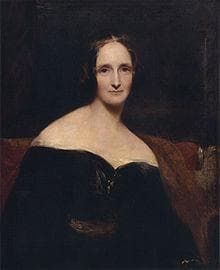
Mary Shelley was an English novelist best known for her groundbreaking work, Frankenstein, published in 1818. Often regarded as one of the earliest examples of science fiction, the novel explores themes of creation and responsibility. Shelley's writing reflects the Romantic era's fascination with nature, humanity, and the consequences of scientific advancement.
Similar books
- Frankenstein: The 1818 Text
Mary Shelley
3.8 (1.2M) average on GoodreadsFantasyExplores themes of creation, loss, and isolation with a gothic sensibility from the same author.
- The Road
Cormac McCarthy
4.0 (716k) average on GoodreadsScience FictionFeatures a post-apocalyptic world and a desolate journey with profound themes of survival and humanity.
- A Journal of the Plague Year
Daniel Defoe
3.6 (7k) average on GoodreadsMemoirOffers a historical account of a plague, focusing on societal impact and individual experience, albeit in a different era.
- The Hunger Games
Suzanne Collins
4.3 (6.4M) average on GoodreadsFantasyIn a future where children fight to the death on live television, Katniss Everdeen volunteers for the arena, turning a death sentence into a fight for survival and a spark of rebellion.
- 1984
George Orwell
4.2 (3.1M) average on GoodreadsPoliticsIn a future where surveillance and thought control are absolute, a man's search for truth clashes with the Party, showing that hope can be a form of rebellion.
- Divergent
Veronica Roth
4.2 (2.9M) average on GoodreadsFantasyIn a society divided by virtues, a sixteen-year-old's difference from the norm starts a rebellion that threatens her world.





Enjoyed the summary?
A summary gives you the shape of the book. The book itself has the detail, the examples and the voice.
Find The Last Man on AmazonAs an Amazon Associate, BookBrief earns from qualifying purchases. How we're funded