
Synopsis
Covers the whole plot, including the ending.
- Difficulty
- Easy
- Pacing
- Moderate
- Mood
- Bleak, Reflective, Cautionary, Primitive
- Read it if
- You enjoy post-apocalyptic stories, cautionary tales about societal collapse, or musings on the fragility of civilization.
- Skip it if
- You prefer fast-paced action, optimistic futures, or detailed character development over thematic exploration.
The Scarlet Plague Plot Summary
Covers the whole plot, including the ending.
The Last Remnant of a Lost World
The story begins with James Howard Smith, called Granser, a very old and weak man, with his three grandsons – Edwin, Hoo-Hoo, and Hare-Lip – walking through a wild, overgrown area near what was San Francisco. The grandsons are wild, uneducated, and barely understand the 'old time' before the Red Death. Granser, the last person to remember that civilization, tries to tell them about the wonders of a technologically advanced past, like houses, cities, and machines. They say his stories are 'lies' or 'dreams,' unable to imagine a world beyond their current hunter-gatherer life. Granser, feeling the weight of lost knowledge, is sad about their ignorance and humanity's decline.
A Glimpse of the Old Civilization
Granser starts to tell about his life before the plague, specifically the year 2012. He was an English literature professor at a university and describes a world with great wealth, scientific progress, and social classes. He explains how society was strictly divided, with 'the people of the abyss' – the working class – living in poverty, while a 'handful of great capitalists' controlled everything. He remembers the luxury and intellectual pursuits of his life, a sharp contrast to his grandsons' current squalor and illiteracy. This detailed past description shows how much was lost and how little his audience understands.
The First Signs of the Plague
Granser talks about the first news of a new disease, the 'Scarlet Plague,' appearing in New York. At first, people thought it was a small outbreak, but its fast spread and terrible symptoms soon became clear. The disease caused a red rash, then a coma, and death within hours, sometimes minutes. He describes the initial disbelief and casual attitude of people, which soon turned into widespread panic as more people died. Governments and doctors could do nothing, and the infection's speed was unheard of, stopping all attempts to control or cure it. The world was about to collapse, though few knew it yet.
Panic and Societal Collapse
The Scarlet Plague quickly overwhelms society. Granser vividly describes law and order breaking down, as police and government workers die from the disease. Streets fill with the dead and dying, and mobs of desperate people loot, riot, and commit terrible acts. He remembers seeing people drop dead in the streets, carriages full of bodies, and all public services stopping. Civilization's thin layer quickly disappears, showing the brutal instincts underneath. Granser, caught in the growing chaos, tries to understand the unprecedented breakdown around him, as his world falls apart.
Escape from San Francisco
Amid the rising panic, Granser, then James Howard Smith, sees San Francisco completely collapse. He sees a rich man, Mungerson, die instantly in his carriage, and his wife and children quickly follow. Desperate to survive, Granser joins a small group trying to escape the city in a car. This group includes a millionaire, a Senator, and other wealthy people. Their journey is dangerous; they find more dead bodies, abandoned cars, and the terrifying reality that the plague is everywhere. The car eventually breaks down, forcing them to leave it and walk, deeper into the wild.
The Plague's Aftermath and the Survivors
As the small group of survivors travels away from the city, the Scarlet Plague continues to kill. Granser tells how group members die one by one, often suddenly and horribly. He describes the fear, the desperation, and the growing realization that humanity is dying out. He sees a mother and child die, and the millionaire and Senator also become victims. In the end, only Granser and a few others remain, alone and trying to find food and shelter. The world has become a huge graveyard, and the survivors are left to deal with the great silence and emptiness of a world without most people.
The Rise of Primitive Communities
After the initial destruction, Granser describes how the few remaining survivors, spread across the land, started to form small, basic communities. He tells about meeting different groups: the Cholo, the Chinese, and the 'English-speaking' survivors, often defined by their past social status. He notes how quickly language and knowledge disappeared, as children born after the plague grew up without education or memories of the old world. These groups were often hostile, fighting for resources, and quickly dropped civilized manners, turning to tribalism and violence. Granser himself struggled to adapt to this new, brutal reality.
The Forging of a New Tribe
Granser describes how he eventually joined a group of survivors. Through a series of events, including fights with other new tribes, he found his mate, Vesta, and started a family. He details the harsh reality of this new life: hunting for food, living in simple shelters, and always watching out for other desperate humans. He remembers trying to teach his children and grandchildren about the 'old time,' but their minds, shaped by the wild, did not take it in. His current grandsons, Edwin, Hoo-Hoo, and Hare-Lip, are direct descendants of this new, primitive line, showing the complete loss of the former civilization.
The End of an Era
As the day ends, Granser finishes his story, his voice weak with tiredness and sadness. He looks at his grandsons, who are more interested in finding grubs and fighting than his tales of a lost world. He regrets the irreversible loss of knowledge, art, and science. He knows he is the last holder of that vast human achievement, and when he dies, it will be gone forever. The boys' lack of understanding and primitive behavior show humanity's complete regression. Granser sees that mankind's future, as shown by his grandsons, is one of ignorance and barbarity, far from the past's glories.
The Primitive Present
The story ends with Granser's grandsons, completely unaffected by his deep tale, returning to their basic instincts. Edwin, the most observant, asks about some details but ultimately thinks the 'old time' is not important to their current fight for survival. Hoo-Hoo and Hare-Lip are even more dismissive, focused only on immediate wants and the hunt. They find a small animal and kill it; their actions contrast sharply with Granser's memories of a civilized world. The final scene shows the sad irony: the last man who remembers civilization is surrounded by its savage inheritors, who do not want or cannot reclaim it, sealing humanity's regressed fate.
The Scarlet Plague Characters
James Howard Smith (Granser)
Protagonist
The last survivor of the pre-plague civilization, desperate to impart lost knowledge.
Granser is the central figure of the narrative, an old man in his late 80s, frail but mentally sharp, who lived through the Scarlet Plague. Before the plague, he was a professor of English literature at the University of California, a highly educated and refined individual. His driving force is a poignant desire to pass on the memory of the 'old time'—the advanced civilization that was—to his primitive grandsons. He is burdened by the knowledge of what was lost and despairs over humanity's regression. He represents the voice of the past, a living archive of human achievement and tragedy.
Relationships: Edwin (Grandson, somewhat curious); Hoo-Hoo (Grandson, dismissive and simple-minded); Hare-Lip (Grandson, even more primitive and aggressive); Vesta (His mate after the plague)
Edwin
Supporting
Granser's grandson, who shows a glimmer of curiosity about the past.
Edwin is Granser's eldest grandson, around eighteen years old, and the most intelligent and receptive of the three. While still primitive and largely dismissive of Granser's stories, he occasionally asks questions that indicate a nascent curiosity about the 'old time.' He is a hunter and warrior, adapted to the harsh post-plague world, but not entirely devoid of intellectual spark. He represents a slim, though ultimately dim, hope for the future of humanity's intellect, as he is the only one who engages even minimally with Granser's tales.
Relationships: James Howard Smith (Granser) (Grandfather, source of strange stories); Hoo-Hoo (Brother); Hare-Lip (Brother)
Hoo-Hoo
Supporting
Granser's grandson, largely uninterested in the past.
Hoo-Hoo is another of Granser's grandsons, characterized by his simple-mindedness and complete disinterest in anything beyond immediate physical needs. He views Granser's stories as 'lies' or 'dreams' and is more concerned with hunting, eating, and the practicalities of their primitive existence. He embodies the complete regression of humanity's intellectual capacity, having no grasp of abstract concepts or the vastness of the lost civilization. His responses to Granser's tales are often blunt and dismissive, highlighting the profound chasm between the old world and the new.
Relationships: James Howard Smith (Granser) (Grandfather, teller of strange tales); Edwin (Brother); Hare-Lip (Brother)
Hare-Lip
Supporting
Granser's most primitive grandson, embodying savagery and complete ignorance.
Hare-Lip is the youngest and most savage of Granser's grandsons. His name refers to a physical deformity, but also metaphorically reflects his brutish nature. He is the most animalistic, violent, and utterly unreceptive to Granser's stories. He is quick to anger and focused purely on instinctual survival, hunting, and fighting. Hare-Lip represents the extreme end of humanity's regression, a creature devoid of culture, empathy, or intellectual capacity, illustrating the bleak future Granser fears for mankind.
Relationships: James Howard Smith (Granser) (Grandfather, source of incomprehensible noise); Edwin (Brother); Hoo-Hoo (Brother)
Mungerson
Mentioned
A wealthy pre-plague millionaire who dies suddenly from the Scarlet Plague.
Mungerson is a wealthy millionaire from the 'old time' whom Granser witnesses dying in his carriage during the initial outbreak of the Scarlet Plague. His sudden, horrifying death, followed quickly by his wife and children, serves as a stark illustration of the plague's indiscriminate power and the rapid collapse of social hierarchy. His immense wealth and status offer no protection against the disease, emphasizing the ultimate futility of human constructs in the face of a biological catastrophe. He is a symbol of the old world's power rendered utterly meaningless.
Relationships: James Howard Smith (Granser) (Witness to his death)
Vesta
Supporting
Granser's mate after the plague, mother of his descendants.
Vesta is the woman Granser takes as his mate in the post-plague world. Although not directly present in the narrative's framing device, she is mentioned by Granser as the mother of his children, thus the grandmother of Edwin, Hoo-Hoo, and Hare-Lip. She represents the beginning of the new, primitive lineage that Granser now struggles to educate. Her existence underscores the necessity of procreation for humanity's survival, even as the quality of that survival has drastically diminished.
Relationships: James Howard Smith (Granser) (Mate)
The Senator
Mentioned
A political figure who joins Granser's escape group and succumbs to the plague.
The Senator is a member of the small group Granser joins to escape San Francisco. Like Mungerson, he represents the elite of the pre-plague society. His eventual death from the Scarlet Plague, despite his previous status, reinforces the theme of the plague as an equalizer, stripping away all social distinctions. His presence in the escape group highlights the initial desperate attempts of the powerful to save themselves, only to be consumed by the same fate as everyone else.
Relationships: James Howard Smith (Granser) (Fellow survivor for a time)
The Millionaire
Mentioned
A wealthy individual who joins Granser's escape group and dies from the plague.
Similar to the Senator, the Millionaire is another figure of extreme wealth from the 'old time' who attempts to escape the plague-ridden city with Granser. His demise further illustrates that money and power offered no immunity or protection against the Scarlet Plague. His character serves to underscore the complete and utter breakdown of the capitalist system and the social order it maintained, as even the wealthiest individuals are reduced to desperate survivors before succumbing to the disease.
Relationships: James Howard Smith (Granser) (Fellow survivor for a time)
The Cholo
Mentioned
A primitive tribe of survivors encountered by Granser.
The Cholo are one of the early, crude tribes of survivors that Granser encounters after the Scarlet Plague. They represent the immediate fragmentation of humanity into hostile, competing groups. Their existence highlights the rapid regression to tribalism and the struggle for resources in the post-apocalyptic world. Granser's descriptions of them emphasize their violence and lack of civilization, showcasing the immediate aftermath of the societal collapse.
Relationships: James Howard Smith (Granser) (Encountered as a rival tribe)
The Chinese
Mentioned
Another primitive tribe of survivors encountered by Granser.
The Chinese are another distinct group of survivors Granser encounters, highlighting the racial and cultural divisions that persisted even in the face of global catastrophe, albeit in a more primitive form. Their presence, like the Cholo, underscores the immediate breakdown of global society into isolated, often warring, factions. Granser's mention of them serves to illustrate the chaotic, tribal nature of humanity's initial attempts to reorganize after the plague.
Relationships: James Howard Smith (Granser) (Encountered as a rival tribe)
The Scarlet Plague Themes
The Fragility of Civilization
The novel shows how quickly and completely civilization can collapse during a major disaster. Granser's descriptions of San Francisco's fast descent into chaos—looting, murder, and services breaking down—show how fragile human society's order is. The quick return to tribalism, violence, and ignorance among survivors shows that civilization is not natural but a delicate structure needing complex social systems, which can disappear in days. The loss of art, science, and education further highlights this fragility.
“And the Scarlet Death, in a space of a few months, had accomplished a retrogression of ten thousand years.”
The Loss of Knowledge and Language
A main theme is the sad loss of human knowledge and language. Granser, an English professor, tries hard to explain 'old time' ideas to his grandsons, who cannot understand things like books, cities, or even abstract numbers. Their language is simpler, focused on immediate needs, and their understanding is limited by their primitive life. This intellectual decline is worse than the physical deaths, as it means the permanent loss of human achievement and future generations' inability to build on the past. The meaning of words like 'money' or 'government' is gone.
“It was impossible for them to understand. I could not make them understand.”
Social Class and Inequality
London criticizes the extreme social class divisions of the pre-plague world. Granser describes a society split between a rich elite and the poor 'people of the abyss.' The plague, however, kills people from all social levels without distinction, from millionaires to the working poor. While the rich might have led initial escape attempts, their wealth did not protect them. In the post-plague world, social differences are gone, replaced by a brutal survival system. This shows how unimportant man-made hierarchies are when faced with a natural disaster.
“There were two great divisions in society, the people of the abyss and the people of the sun.”
The Nature of Humanity
The novel looks at human nature, asking if civilization is just a thin cover over basic savagery. The fast descent into looting, violence, and tribalism when the plague started suggests that humans, without social rules, quickly go back to basic instincts. Granser's grandsons, completely without culture or education, show this raw, unrefined human nature. The book implies that without civilization's institutions, humanity tends towards ignorance, brutality, and a constant fight for survival, rather than aiming for higher goals.
“Man had been everything, was everything, but in a day he was nothing.”
Memory and History
Memory is an important theme, as Granser is the last living memory of a lost world. His desperate efforts to pass this memory to his grandsons show how important history is for understanding the present and shaping the future. However, his failure also shows how vulnerable unwritten history is and how easily collective memory can disappear. The grandsons' inability to grasp the past means they are cut off from history, doomed to repeat primitive cycles without past lessons. Granser's story becomes a sad song for a lost past and a warning for a future without memory.
“I was the only one left. I was the last man. I was the last memory of the old time.”
Plot Devices & Literary Techniques
Frame Story/Narrative Frame
An older character recounts past events to an audience within the story.
The entire novel is structured as a frame story. The present-day narrative shows Granser, the old man, telling the story of the Scarlet Plague and the lost civilization to his primitive grandsons. This device allows London to contrast the advanced past with the savage present directly. The grandsons' reactions (or lack thereof) to Granser's tales underscore the themes of lost knowledge and the fragility of civilization. The frame emphasizes Granser's isolation as the sole keeper of a forgotten history and amplifies the tragedy of humanity's regression.
Flashback
Granser's extended recollection of the pre-plague world and the plague's onset.
The bulk of the novel's plot is presented through an extended flashback, as Granser vividly recalls the events of 2012 and the subsequent collapse of civilization. This allows London to depict the 'old time' in detail, showing its complexities, technological marvels, and social inequalities, before plunging into the horrors of the Scarlet Plague. The flashback is not merely exposition; it is a desperate act of memory, an attempt by Granser to keep the past alive, even as his audience proves incapable of truly receiving it. It creates a stark contrast between memory and present reality.
The Scarlet Plague (Catalyst/Symbol)
The disease that triggers societal collapse and symbolizes humanity's vulnerability.
The Scarlet Plague functions as both the primary plot catalyst and a powerful symbol. As a catalyst, it is the event that completely reshapes the world, wiping out most of humanity and leading to the regression of the survivors. Symbolically, the plague represents humanity's ultimate vulnerability to forces beyond its control, despite its technological advancements. It is an indiscriminate force that strips away all social distinctions, exposing the raw, brutal core of human nature when civilization's veneer is removed. Its swiftness and lethality underscore the fragility of human existence and societal order.
Irony
The contrast between humanity's past achievements and its primitive present.
Irony pervades the narrative, primarily through the stark contrast between the sophisticated, technologically advanced civilization Granser describes and the crude, ignorant existence of his grandsons. The irony lies in the fact that humanity, having achieved so much, is reduced to a state comparable to its earliest ancestors, with the memory of its greatness dismissed as 'lies.' The very institutions (like universities, government, and finance) that once defined the 'old time' are utterly incomprehensible to the new generation, creating a tragic irony of lost progress and a cyclical return to barbarism.
The Scarlet Plague Quotes
“All knowledge was blotted out. We were in a new world, a primitive world, and we had to learn to live again.”
“It was the end of the world. Not the cosmic end, but the end of the world of man, the world of the machine, the world of the city.”
“Beauty and the joy of life, and love and the hope of tomorrow, were swallowed up in the Great Sickness.”
“The world was a charnel house, and the living were few and afraid.”
“We were not men. We were beasts, and we fought like beasts for food and for women.”
“And the cities, the beautiful cities, were a desolation, a jungle of brick and stone where the wild things roamed.”
“The Scarlet Death. It was swift. It was merciful. But it was absolute.”
“The few that were left were scattered, like seeds in the wind, and they knew not whither they went.”
“There was no law. There was no government. There was only the strong arm and the swift club.”
“The books were gone. The libraries were dust. The wisdom of the ages was lost.”
“And the children, they knew nothing of the old world, the world of the machine, the world of the printed page.”
“It was as if a great broom had swept clean the earth of all its accumulated rubbish, and left only the primal things.”
“I was a professor, a man of learning. Now I am a storyteller, a babbler to children.”
“The greatest minds, the noblest souls, the fairest women—all went down into the pit.”
“The greatest tragedy was not the death of men, but the death of memory, the death of all that made them men.”
Quiz
10 questions on the plot and the characters. Each answer comes with a short explanation.
Question 1
What is the name of the old man who tells the story of the past world?
- Edwin Howard
- James Howard Smith
- Thomas Smithson
- William Howard
Show answer
B. James Howard Smith The protagonist and narrator of the past events is explicitly named James Howard Smith in the book's description.
Question 2
How long has it been since the 'Red Death' wiped out mankind?
- 20 years
- 100 years
- 60 years
- 30 years
Show answer
C. 60 years The book description states, 'It has been 60 years since the great Red Death wiped out mankind.'
Question 3
What is the primary mode of transportation mentioned as being 'long since unused and overgrown' in the post-plague world?
- Motorways
- Railway tracks
- Canals
- Airports
Show answer
B. Railway tracks The description specifically mentions James Howard Smith 'walks along deserted railway tracks, long since unused and overgrown.'
Question 4
What has been lost to the descendants of the healthy survivors?
- Their ability to speak
- Their basic survival instincts
- Art, science, and all learning
- Their sense of community
Show answer
C. Art, science, and all learning The text states, 'Art, science, and all learning has been lost, and the young descendants of the healthy know nothing of the world that was.'
Question 5
How do the young descendants of the healthy survivors perceive the bygone age?
- Through detailed historical records
- As nothing but myths and make-believe
- With scientific curiosity and research
- As a golden age they wish to restore
Show answer
B. As nothing but myths and make-believe The description explicitly states they know 'nothing but myths and make-believe' about the past world.
Question 6
Who is the primary source of information about the past world and the plague for the young generation?
- Ancient books discovered in ruins
- The young, feral boy accompanying James Howard Smith
- James Howard Smith, the old man
- Oral traditions passed down by multiple elders
Show answer
C. James Howard Smith, the old man The text highlights, 'The old man is the only one who can convey the wonders of that bygone age, and the horrors of the plague.'
Question 7
What adjectives are used to describe the qualities of the remnants of mankind that are considered their 'only hopes'?
- Intelligence, compassion, and cooperation
- Innovation, adaptability, and resilience
- Ignorance, barbarity, and ruthlessness
- Curiosity, wisdom, and peacefulness
Show answer
C. Ignorance, barbarity, and ruthlessness The description concludes with, 'their ignorance, barbarity, and ruthlessness the only hopes they have?' This suggests a grim outlook on their future survival strategies.
Question 8
What does the phrase 'from all walks of life' imply about the initial survivors of the Red Death?
- They were all from the same social class.
- They represented a diverse group of people with different backgrounds and professions.
- They were all wanderers with no fixed homes.
- They were exclusively scientists and scholars.
Show answer
B. They represented a diverse group of people with different backgrounds and professions. The phrase 'from all walks of life' is an idiom meaning people from all social, economic, and professional backgrounds. This indicates a diverse group of initial survivors.
Question 9
The title 'The Scarlet Plague' and the mention of 'Red Death' suggest what primary characteristic of the plague?
- It caused its victims to turn red.
- It originated in a red-colored region.
- It was spread by red-colored insects.
- It was a metaphor for a political revolution.
Show answer
A. It caused its victims to turn red. The use of 'Scarlet' and 'Red Death' strongly implies a visual symptom of the disease, likely a crimson coloration of the victims, a common trope in plague literature (e.g., Poe's 'The Masque of the Red Death').
Question 10
What is the implied fate of 'art, science, and all learning' in the new savage world?
- They are slowly being rediscovered by the younger generation.
- They have been completely eradicated and replaced by primitive survival knowledge.
- They are secretly preserved by a hidden group of scholars.
- They exist only in the form of ancient ruins and artifacts, not understood.
Show answer
B. They have been completely eradicated and replaced by primitive survival knowledge. The text states 'Art, science, and all learning has been lost' and the young 'know nothing of the world that was—nothing but myths and make-believe.' This indicates a complete loss, not a preservation or rediscovery.
The Scarlet Plague FAQ
What is 'The Scarlet Plague' about?
'The Scarlet Plague' by Jack London is a post-apocalyptic novella set 60 years after a devastating pandemic, the Red Death, wiped out most of humanity. It follows James Howard Smith, one of the last survivors from the 'old world,' as he tries to impart the history of civilization and the plague to his primitive, uncomprehending grandsons in a savage, overgrown California.
Why should I read 'The Scarlet Plague'?
You should read 'The Scarlet Plague' for its vivid portrayal of societal collapse and the fragility of civilization, even predating many modern dystopian narratives. It offers a poignant reflection on memory, knowledge, and the human condition, exploring what remains when all the structures of society are stripped away, and how quickly humanity can revert to barbarism.
What is the background/setting of 'The Scarlet Plague'?
The story is set in a post-apocalyptic California, specifically the region around San Francisco Bay, 60 years after the Scarlet Plague. The landscape has reverted to wilderness, with cities in ruins and overgrown, and the few remaining humans live in tribal, nomadic groups. The setting emphasizes the stark contrast between the former technological marvels and the current primitive existence.
What are the most memorable quotes?
One memorable quote is, 'The world was a graveyard, and we were the worms.' This vividly captures the desolation and the survivors' grim reality. Another is, 'We were the last of the Mohicans, and the Mohicans were all dead.' This highlights the profound sense of loss and the end of an era for the few remaining educated individuals.
What writing style does the author use?
Jack London employs a stark, descriptive, and somewhat melancholic writing style, blending vivid natural imagery with a sense of profound loss and historical reflection. The narrative alternates between the present, where old James Howard Smith struggles to communicate, and his detailed flashbacks of the plague's onset and the subsequent societal collapse, often using a didactic tone for the 'history lessons.'
What minor details add significant meaning?
The specific details of the plague's rapid progression—victims dying within hours, turning scarlet—emphasize its overwhelming and unstoppable nature, highlighting human vulnerability. Also, the description of the survivors' immediate regression to looting and violence, even before the plague fully subsided, underscores the thin veneer of civilization.
What are some subtle foreshadowing moments?
The initial descriptions of the grandsons' wildness and inability to grasp abstract concepts subtly foreshadow the complete loss of knowledge and the cyclical nature of human development. Old Smith's repeated frustration with their ignorance hints at the inevitable failure of his attempts to preserve history, suggesting that the future generations are doomed to repeat past mistakes.
What unexpected character connections exist?
While not a connection in the traditional sense, the unexpected connection is between James Howard Smith, a former professor, and the primitive 'chiefs' like Chauffeur and Heinz, who were once servants. Their sudden rise to power illustrates the complete inversion of the social hierarchy post-plague, where brute strength and immediate resourcefulness, rather than intellect, became the new markers of leadership.
What are unspoken character motivations?
Old James Howard Smith's unspoken motivation is a desperate, almost futile, desire to prevent the complete erasure of humanity's past and to give meaning to his own survival. He clings to the hope that by sharing his knowledge, he can somehow steer his descendants away from utter barbarity, even though they clearly don't comprehend him.
What psychological complexities do characters exhibit?
Old Smith exhibits the psychological complexity of survivor's guilt mixed with an overwhelming sense of responsibility and despair. He carries the burden of knowing what was lost, contrasting sharply with the simple, instinct-driven minds of his grandsons, who represent a humanity stripped of its higher faculties, driven by immediate needs and tribal loyalties.
What are the major emotional turning points?
A major emotional turning point is when Smith realizes the full extent of the plague's devastation and the collapse of society, leading him to accept his role as one of the last vestiges of the 'old world.' Another is his recurring frustration and eventual resignation regarding his grandsons' inability to understand his tales, highlighting the ultimate futility of his efforts to pass on knowledge.
How do relationship dynamics evolve?
The relationship dynamics evolve from the complex, class-based society pre-plague to a brutal, simplified hierarchy based on strength and immediate utility. Old Smith, once a respected professor, is now largely ignored or humored by his primitive grandsons, who hold the real power in their small tribe, illustrating a complete reversal of societal respect and authority.
Which parts remain ambiguous or open-ended?
The ultimate future of humanity remains ambiguous. While the novella clearly depicts a regression to barbarism, it leaves open whether this is a permanent state or if, over millennia, a new civilization might slowly re-emerge. The specific fate of Smith's tribe after his death is also left to the reader's imagination, as is the exact cause of the Red Death.
What are controversial scenes or decisions?
The rapid and complete societal collapse into looting, violence, and primitive behavior immediately after the plague's onset can be seen as controversial. London suggests humanity's veneer of civilization is incredibly thin, and that in times of crisis, people quickly revert to their most basic, often cruel, instincts, which some readers might find overly pessimistic or deterministic.
'The Scarlet Plague' ending explained: how it ends & what it means
The story ends with James Howard Smith concluding his tale, exhausted and despairing, as his grandsons remain largely unimpressed and uncomprehending, focusing instead on their primitive concerns. This ending signifies the tragic and irreversible loss of human knowledge and civilization. It means that the 'old world' is truly dead, and the future belongs to a new, barbaric humanity that has no memory or understanding of its past glories or mistakes, suggesting a bleak, cyclical view of human progress.
About the author
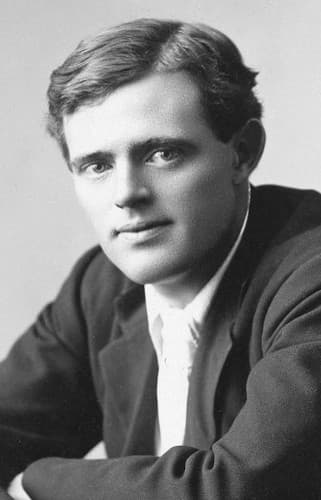
John Griffith Chaney, better known as Jack London, was an American novelist, journalist and activist. A pioneer of commercial fiction and American magazines, he was one of the first American authors to become an international celebrity and earn a large fortune from writing. He was also an innovator in the genre that would later become known as science fiction.
Similar books
- The Road
Cormac McCarthy
4.0 (716k) average on GoodreadsScience FictionExplores a desolate post-apocalyptic world and the struggle for survival with a focus on human relationships.
- Station Eleven
Emily St. John Mandel
4.0 (322k) average on GoodreadsLiterary FictionDepicts life after a global pandemic, contrasting the old world with the new, and the importance of art and memory.
- A Canticle for Leibowitz
Walter M. Miller Jr.
4.0 (93k) average on GoodreadsFantasyExamines the cyclical nature of civilization, knowledge, and barbarism in a post-apocalyptic setting.
- The War of the Worlds
H.G. Wells
3.8 (245k) average on GoodreadsFantasyWhile both depict societal collapse, Wells focuses on the immediate terror and technological superiority of an external threat (Martians). London, conversely, emphasizes the long-term, intergenerational consequences of a biological catastrophe, exploring the profound loss of human culture and knowledge rather than just immediate destruction.
- The Last Man
Mary Shelley
3.4 (4k) average on GoodreadsScience FictionBoth novels feature a global plague and the theme of humanity's near extinction. However, Shelley's work is far more melancholic and philosophical, focusing intensely on the individual's psychological journey and profound loneliness as the titular 'last man.' London maintains a more detached, almost anthropological perspective on the future of humanity and the re-emergence of primitive societies.
- The Hunger Games
Suzanne Collins
4.3 (6.4M) average on GoodreadsFantasyIn a future where children fight to the death on live television, Katniss Everdeen volunteers for the arena, turning a death sentence into a fight for survival and a spark of rebellion.




Enjoyed the summary?
A summary gives you the shape of the book. The book itself has the detail, the examples and the voice.
Find The Scarlet Plague on AmazonAs an Amazon Associate, BookBrief earns from qualifying purchases. How we're funded