
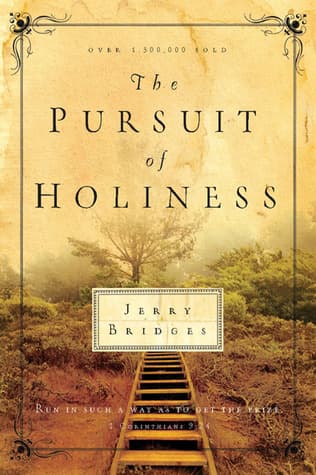
Core Idea
- Difficulty
- Medium
- Read it if
- You are a Christian seeking a practical, no-nonsense guide to understanding and actively pursuing personal holiness, tired of passive approaches to spiritual growth, or needing a robust theological and practical framework for combating sin in your daily life.
- Skip it if
- You are looking for a highly academic theological treatise, prefer a more narrative or anecdotal approach to spiritual growth, or are not interested in a systematic, effort-based approach to sanctification.
Key Takeaways from The Pursuit of Holiness
Holiness is a Command, Not a Suggestion
God's call to holiness is a non-negotiable imperative for believers.
Bridges states that holiness is not just for especially religious people, but a direct command from God, based on His character: 'Be holy, for I am holy.' This command, found in both the Old and New Testaments (Leviticus 11:44, 1 Peter 1:15-16), means that seeking holiness is a key part of living as a Christian. It is not about being perfect, but about a continuous, conscious effort to live according to God's moral standards. Not seeking holiness means ignoring a basic part of God's will for His people, which shows a misunderstanding of His nature and our calling.
“The pursuit of holiness is not an option. It is a command of God.”
In the book: Bridges repeatedly cites biblical passages like 1 Peter 1:15-16 and Leviticus 11:44-45, emphasizing the consistent divine command throughout scripture. He argues that the very nature of God as holy necessitates a corresponding holiness in those who bear His name.
Try this: Regularly meditate on biblical commands for holiness. Ask yourself daily: 'In what areas of my life can I better reflect God's holiness?' Identify one specific area to address each week, such as speech, thought life, or integrity in work.
Related ideas: divine-command, biblical-mandate, christian-ethics
Our Part: Diligent Effort
Holiness requires active, disciplined participation and effort from the believer.
Bridges challenges a passive approach to sanctification. He says that God gives the power, but we are responsible for the 'pursuit.' This means diligent effort, self-discipline, and a conscious choice to obey God's Word. It is not a situation where we do nothing and 'let go, let God,' but an active use of our will, mind, and body to resist sin and develop righteousness. God's grace fuels this effort, but it does not lessen our responsibility. Think of it like training for a sport: the coach gives the plan and motivation, but the athlete must do the hard work.
“The pursuit of holiness is a joint venture between God and the believer.”
In the book: He draws on passages like Philippians 2:12-13 ('work out your own salvation with fear and trembling, for it is God who works in you') to demonstrate the interplay between human effort and divine enablement. He emphasizes that 'working out' implies active participation.
Try this: Identify specific areas of sin you struggle with. Develop a practical plan to resist temptation (e.g., avoiding certain environments, accountability partners, memorizing scripture). Regularly engage in spiritual disciplines like prayer and Bible study, viewing them as active training for godliness.
Related ideas: sanctification, spiritual-discipline, self-control
God's Part: Empowering Grace
God provides the necessary power and grace for us to live a holy life.
While our effort is important, Bridges makes it clear that we cannot achieve holiness through willpower alone. God's grace, specifically the Holy Spirit living in us, enables us. The Spirit shows us our sin, empowers us to obey, and changes our desires. This means our efforts are not self-reliant but depend on the Spirit. We strive, knowing that it is God 'who works in you to will and to act according to his good purpose' (Philippians 2:13). This divine help removes the burden of impossible self-perfection and replaces it with the joy of Spirit-led change.
“We cannot live a holy life in our own strength. We must depend upon the power of the Holy Spirit.”
In the book: Bridges refers to the role of the Holy Spirit as our Helper and Enabler (John 14:26, Romans 8:13). He highlights that without the Spirit's power, our pursuit would be futile, emphasizing the divine sovereignty in our sanctification.
Try this: Before engaging in any spiritual effort or facing temptation, consciously pray for the Holy Spirit's empowerment. Acknowledge your dependence on Him. Regularly confess your inability to achieve holiness in your own strength and ask for His grace to transform you.
Related ideas: holy-spirit, divine-grace, spiritual-empowerment
Sin Is Always a Choice
Every act of sin is a volitional decision, not an uncontrollable impulse.
This is a difficult but basic truth: Bridges says that every sin we commit is ultimately a choice. While circumstances, temptations, and our fallen nature certainly affect us, they do not force us. We always can say 'no' to sin, empowered by the Holy Spirit. This view breaks down the excuses we often make for our failures ('I couldn't help it,' 'It just happened') and puts responsibility on us. Understanding sin as a choice is important for repentance and for actively resisting temptation, as it highlights our role in the fight for holiness.
“We are never forced to sin. We always choose to sin.”
In the book: He often refers to James 1:13-15, which explains that temptation originates from our own evil desires, and 'after desire has conceived, it gives birth to sin.' This shows that the process involves our internal agreement.
Try this: When you recognize temptation, pause and consciously acknowledge that you have a choice. Pray for strength to choose righteousness in that moment. After sinning, avoid blaming circumstances or others; instead, take full responsibility and confess it as your choice.
Related ideas: moral-responsibility, temptation, volition
Mortification of Sin: An Ongoing Battle
Holiness involves actively putting to death sinful desires and practices.
Bridges uses the biblical idea of 'mortification' (from Romans 8:13 and Colossians 3:5), which means actively 'putting to death' our sinful desires and practices. This is not a one-time event but a continuous, aggressive spiritual fight against the 'flesh.' It involves identifying specific sins, confessing them, and then actively taking steps to weaken those sinful desires and develop their righteous opposites. This requires watchfulness, self-denial, and a willingness to accept discomfort for the sake of godliness. It is a harsh but necessary process for spiritual growth, like pruning a plant for better fruit.
“The battle against sin is a lifelong battle, and it requires daily mortification.”
In the book: He heavily relies on Romans 8:13 ('if by the Spirit you put to death the misdeeds of the body, you will live') and Colossians 3:5 ('put to death, therefore, whatever belongs to your earthly nature'). He illustrates this with practical examples of resisting specific temptations.
Try this: Identify one 'besetting sin' you consistently struggle with. Develop a specific, measurable plan to 'mortify' it, involving prayer, accountability, and practical steps to avoid triggers. Regularly review your progress and adjust your strategy.
Related ideas: sin-management, spiritual-warfare, self-denial
The Role of the Word of God
Scripture is essential for understanding, pursuing, and sustaining holiness.
Bridges stresses the essential role of God's Word in seeking holiness. Scripture shows God's character, defines sin, describes righteous living, and provides principles for spiritual growth. Without regularly reading the Bible, our understanding of holiness becomes subjective, our efforts go in the wrong direction, and our spiritual discernment weakens. The Word acts as a mirror, showing us our true condition; a lamp, guiding our steps; and a sword, enabling us to fight sin. It is not just intellectual knowledge but a transforming power that renews our minds and shapes our actions.
“The Word of God is our ultimate guide for knowing what holiness is and how to pursue it.”
In the book: He frequently quotes verses like Psalm 119:9-11 ('How can a young man keep his way pure? By living according to your word.') and 2 Timothy 3:16-17, highlighting the Bible's sufficiency for teaching, rebuking, correcting, and training in righteousness.
Try this: Commit to daily, systematic Bible reading and meditation. Don't just read, but ask: 'What does this passage reveal about God's holiness? What does it teach me about sin or righteousness? How can I apply this today?' Memorize key verses related to holiness and temptation.
Related ideas: scripture-study, biblical-literacy, spiritual-guidance
Holiness is More Than Just Avoiding Sin
True holiness involves actively cultivating positive Christ-like virtues.
A common misunderstanding is that holiness is simply about not doing bad things. Bridges corrects this, saying that true holiness is a positive, active pursuit of righteousness and Christ's virtues. It is not enough to stop lying; we must also seek truthfulness. It is not enough to stop being angry; we must cultivate patience and love. This 'positive' side of holiness involves actively putting on the 'new self' (Ephesians 4:24), developing the fruit of the Spirit (Galatians 5:22-23), and imitating Christ in our thoughts, words, and actions. This makes seeking holiness a rich, fulfilling journey of character change.
“Holiness is not merely the absence of sin, but the presence of Christ-like character.”
In the book: He refers to passages that list virtues, such as Galatians 5:22-23 (the fruit of the Spirit) and Philippians 4:8 (whatever is true, noble, right, pure, lovely, admirable). He emphasizes that these are not merely suggestions but aspects of a holy life.
Try this: Beyond identifying sins to mortify, identify specific virtues you want to cultivate (e.g., patience, kindness, generosity). Pray for these virtues and actively look for opportunities to practice them in your daily interactions. Read biographies of godly individuals to inspire you.
Related ideas: christian-virtues, character-development, fruit-of-the-spirit
The Importance of Accountability
Having trusted spiritual companions is vital for encouragement and correction in holiness.
No one seeks holiness alone. Bridges highlights the important role of Christian community and accountability. Having trusted brothers and sisters in Christ who can encourage us, pray for us, challenge us, and lovingly confront our sin is very valuable. This shared journey gives perspective, reduces chances for self-deception, and offers needed support during struggles or discouragement. True accountability is not just reporting failures but actively inviting others into our spiritual lives to help us become more like Christ. It protects against spiritual complacency and helps us grow.
“We need the help of other believers to pursue holiness effectively.”
In the book: He cites passages like Hebrews 10:24-25 (not giving up meeting together, but encouraging one another) and Proverbs 27:17 ('As iron sharpens iron, so one person sharpens another') to underscore the communal aspect of spiritual growth.
Try this: Seek out one or two trusted believers with whom you can share your struggles and goals in holiness. Meet regularly to pray for each other, confess sin, and encourage one another. Be open to receiving loving correction.
Related ideas: christian-community, spiritual-accountability, fellowship
Don't Confuse Justification with Sanctification
Understanding the distinct roles of imputed righteousness and progressive holiness is crucial.
Bridges carefully distinguishes between justification and sanctification, an important theological point for avoiding despair and legalism. Justification is a one-time legal act where God declares us righteous based on Christ's perfect life and death—it is imputed righteousness. Sanctification, on the other hand, is the ongoing process of becoming actually holy in our character and conduct. We are justified by faith alone, but we are sanctified through faith and diligent effort, empowered by the Spirit. Mixing these two can lead to thinking our efforts add to our salvation (legalism) or becoming careless about sin because we are 'already saved' (antinomianism).
“Justification is God's work for us; sanctification is God's work in us.”
In the book: He explains how Romans 3-5 clearly delineates justification by faith, while Romans 6-8 focuses on the believer's struggle with sin and growth in holiness, illustrating the two distinct yet related aspects of salvation.
Try this: Regularly remind yourself of your justified standing in Christ – your acceptance is not based on your performance. Then, with that security, apply yourself with renewed vigor to the pursuit of sanctification, knowing your efforts are a response to grace, not a means to earn it. Avoid comparing your progress to others.
Related ideas: justification, sanctification, imputed-righteousness, progressive-holiness
The Goal: Glorifying God
The ultimate purpose of pursuing holiness is to bring glory to God.
Bridges ends by reminding us of the main reason for seeking holiness: to glorify God. When believers live lives that reflect God's character—lives of integrity, love, purity, and righteousness—they show His goodness and power in a fallen world. Our holiness is not for our own pride or comfort, but so that others might 'see your good deeds and glorify your Father in heaven' (Matthew 5:16). This higher purpose gives strong motivation, turning the often-difficult struggle against sin into a joyful act of worship and devotion.
“The pursuit of holiness is for the glory of God. Our holiness makes Him look good.”
In the book: He draws on passages like 1 Corinthians 10:31 ('whatever you do, do it all for the glory of God') and Matthew 5:16, showing that our transformed lives are meant to point others to the source of that transformation.
Try this: Before making significant decisions or engaging in daily tasks, ask yourself: 'How can this action or attitude bring glory to God?' Let this question be a guiding principle for your choices and efforts in pursuing holiness. Pray that your life would be a testament to His transforming grace.
Related ideas: god's-glory, worship, christian-witness
The Pursuit of Holiness Quotes
“Holiness is not a series of do's and don'ts, but conformity to the character of God and obedience to the will of God.”
“We must face the fact that we have a personal responsibility for our walk of holiness.”
“God has made provision for our holiness, but He has given us the responsibility of working out that holiness in our daily lives.”
“The pursuit of holiness is a joint venture between God and the Christian.”
“Sin is not only what we do but what we are.”
“We are not to love the world or anything in the world.”
“Our first step toward holiness is to recognize our sinfulness and our need for God's grace.”
“Holiness is not an option for the Christian; it is a necessity.”
“We must learn to say 'no' to sin and 'yes' to God.”
“The Holy Spirit is the one who enables us to live a holy life.”
“We are to be holy because God is holy.”
“Our progress in holiness is often slow and imperceptible, but we must persevere.”
“The Bible is our guidebook for holiness.”
“We cannot compartmentalize our lives into secular and sacred; all of life is to be lived under God's lordship.”
Quiz
10 questions on the main ideas. Each answer comes with a short explanation.
Question 1
According to Jerry Bridges in 'The Pursuit of Holiness,' what is the fundamental biblical command that motivates the Christian's pursuit of holiness?
- "Love your neighbor as yourself"
- "Be perfect, as your heavenly Father is perfect"
- "Be holy, for I am holy"
- "Seek first the kingdom of God"
Show answer
C. "Be holy, for I am holy" Bridges opens the book by emphasizing God's command from Leviticus 11:44 and 1 Peter 1:16: "Be holy, for I am holy." This command serves as the foundational motivation for the Christian's pursuit of holiness, reminding believers that holiness is not optional but a direct reflection of God's character.
Question 2
What key distinction does Bridges make regarding the roles of God and the believer in the pursuit of holiness?
- God does everything; believers just need faith
- Believers must achieve holiness through their own efforts alone
- God provides the power and desire, but believers must actively obey and discipline themselves
- Holiness is purely a mystical experience with no human responsibility
Show answer
C. God provides the power and desire, but believers must actively obey and discipline themselves A central theme in the book is clarifying the partnership in holiness: God works in believers through the Holy Spirit to provide the desire and power for holiness (Philippians 2:13), but believers must actively respond through obedience, self-discipline, and making right choices. Bridges warns against both passivity and self-reliance.
Question 3
Which of the following does Bridges identify as a common misconception that hinders holiness?
- Thinking holiness is only about avoiding major sins
- Believing holiness requires moving to a monastery
- Assuming holiness is achieved through charitable donations
- Viewing holiness as a natural result of aging
Show answer
A. Thinking holiness is only about avoiding major sins Bridges argues that many Christians limit holiness to abstaining from obvious, major sins while neglecting the 'little' sins of attitude, thought, and speech. He emphasizes that holiness encompasses all areas of life, including thoughts and motives, not just outward behavior.
Question 4
What practical tool does Bridges emphasize for cultivating holiness in daily life?
- Memorizing entire books of the Bible
- Regular fasting and solitude
- The disciplined practice of saying 'no' to sin and 'yes' to God
- Attending church services multiple times a week
Show answer
C. The disciplined practice of saying 'no' to sin and 'yes' to God Bridges stresses the importance of active, moment-by-moment obedience: consciously rejecting sinful thoughts and actions (saying 'no' to sin) and choosing godly alternatives (saying 'yes' to God). This discipline is rooted in dependence on the Holy Spirit but requires deliberate effort.
Question 5
According to Bridges, what is the relationship between holiness and God's grace?
- Grace eliminates the need for personal holiness
- Holiness is a way to earn God's grace
- Grace empowers holiness, but does not replace human responsibility
- Grace and holiness are unrelated concepts
Show answer
C. Grace empowers holiness, but does not replace human responsibility Bridges teaches that God's grace—His unmerited favor and enabling power—is essential for holiness, as it provides forgiveness for past sins and strength for obedience. However, grace is not a license for passivity; believers must actively pursue holiness in response to grace.
Question 6
In the context of holiness, what does Bridges say about the role of the mind?
- The mind is irrelevant; holiness is purely a matter of the heart
- Holiness begins with renewing the mind through Scripture to transform thoughts and desires
- The mind should be focused solely on theological doctrines
- Mental discipline is the only requirement for holiness
Show answer
B. Holiness begins with renewing the mind through Scripture to transform thoughts and desires Bridges highlights Romans 12:2, emphasizing that holiness requires the renewal of the mind. By saturating the mind with God's Word, believers can align their thoughts and desires with God's will, which then influences their actions and attitudes.
Question 7
What analogy does Bridges use to illustrate the progressive nature of holiness?
- A light switch that turns on instantly
- A seed that grows gradually into a tree
- A journey or pursuit that involves continuous effort and growth
- A trophy awarded for perfect behavior
Show answer
C. A journey or pursuit that involves continuous effort and growth Throughout the book, Bridges frames holiness as a 'pursuit'—a lifelong journey of growing in Christlikeness. It is not achieved instantly but through persistent effort, dependence on God, and gradual transformation, much like a runner striving toward a goal.
Question 8
How does Bridges address the issue of failure in the pursuit of holiness?
- Failure means you are not truly saved
- Failure should lead to guilt and self-punishment
- Failure is an opportunity to rely on God's forgiveness and renew the pursuit
- Failure is rare for committed Christians
Show answer
C. Failure is an opportunity to rely on God's forgiveness and renew the pursuit Bridges acknowledges that believers will stumble in their pursuit of holiness. He encourages them to not give up but to confess their sins, receive God's forgiveness (1 John 1:9), and continue striving with renewed dependence on the Holy Spirit, learning from mistakes.
Question 9
According to Bridges, what is a critical aspect of holiness that involves our relationships with others?
- Isolating oneself to avoid sin
- Practicing humility, forgiveness, and love as reflections of God's character
- Correcting others' sins publicly
- Forming exclusive holy communities
Show answer
B. Practicing humility, forgiveness, and love as reflections of God's character Bridges teaches that holiness is not just personal piety but extends to interpersonal dynamics. Believers must exhibit Christlike attitudes such as humility, forgiveness, and love in their relationships, as these virtues demonstrate God's holiness in practical, communal ways.
Question 10
What does Bridges identify as the ultimate motivation for pursuing holiness, beyond mere obedience to a command?
- To achieve personal peace and happiness
- To earn rewards in heaven
- To reflect and glorify God because of who He is and what He has done
- To gain social approval within the church
Show answer
C. To reflect and glorify God because of who He is and what He has done Bridges roots the pursuit of holiness in a deep, relational motivation: love for God. Holiness is about becoming more like Christ to glorify God, driven by gratitude for His grace and a desire to honor His holy nature, not just external compliance.
The Pursuit of Holiness FAQ
What is 'The Pursuit of Holiness' about?
The book explores the biblical command to be holy as God is holy, focusing on the Christian's responsibility in pursuing holiness. Jerry Bridges clarifies the balance between relying on God's grace and taking personal action in spiritual growth.
What is the main message of 'The Pursuit of Holiness'?
The main message is that holiness requires both divine grace and human effort. Bridges emphasizes that Christians must actively pursue holiness while depending on God's strength, rather than being passive or solely reliant on God.
How does 'The Pursuit of Holiness' differ from other Christian books on holiness?
Unlike some books that focus only on God's role, Bridges distinctively stresses the believer's personal responsibility in holiness. He provides practical guidance on daily actions and attitudes, making it a balanced and actionable approach.
Does 'The Pursuit of Holiness' work for new Christians?
Yes, it is suitable for new Christians as it clearly explains foundational concepts of holiness in an accessible way. Bridges' practical advice helps beginners understand how to integrate holiness into daily life.
What is the role of personal responsibility in holiness according to Bridges?
Bridges argues that personal responsibility involves actively resisting sin, cultivating godly habits, and making conscious choices aligned with biblical principles. It's about taking ownership of one's spiritual growth alongside God's help.
How does Bridges define holiness in the book?
Holiness is defined as being set apart for God's purposes, reflecting His character in thoughts, actions, and attitudes. It involves both moral purity and a dedicated relationship with God, pursued through daily discipline.
Does 'The Pursuit of Holiness' address common struggles in maintaining holiness?
Yes, Bridges discusses common struggles like temptation, inconsistency, and misunderstanding grace. He offers biblical insights and practical steps to overcome these challenges in the pursuit of holiness.
How different is 'The Pursuit of Holiness' from books by authors like John Piper?
While both emphasize God's glory, Bridges focuses more on the believer's active role and daily practices, whereas Piper often highlights God's sovereignty and joy. Bridges' approach is more step-by-step and responsibility-oriented.
What practical steps does Bridges recommend for pursuing holiness?
He recommends practices such as regular Bible study, prayer, accountability, and mindful avoidance of sin. Bridges emphasizes small, consistent actions that build holiness over time, rooted in dependence on God.
Is 'The Pursuit of Holiness' based on specific Bible verses?
Yes, it is grounded in verses like 1 Peter 1:16 ('Be holy, for I am holy') and others that command holiness. Bridges uses Scripture throughout to explain both God's expectations and the believer's role in fulfilling them.
Similar books
- The Practice of the Presence of God
Brother Lawrence
4.3 (38k) average on GoodreadsSpiritualityFocuses on cultivating a continuous awareness of God's presence in daily life, providing a different angle on practical spirituality.
- Eat, Pray, Love
Elizabeth Gilbert
3.6 (1.5M) average on GoodreadsLifestyleA heartbroken writer leaves her conventional life for a year-long global search for pleasure in Italy, spiritual devotion in India, and unexpected love and balance in Bali.
- Educated
Tara Westover
4.5 (796k) average on GoodreadsBiographyRaised in the Idaho mountains by fundamentalist survivalists, a young woman forges her own path to education, battling fierce family loyalty and personal demons to discover a world beyond her isolated upbringing.
- The Poisonwood Bible
Barbara Kingsolver
4.1 (659k) average on GoodreadsLiterary FictionA zealous missionary's rigid faith clashes with the Belgian Congo's wilderness and people, unraveling his family through the eyes of his five unforgettable women.
- Siddhartha
Hermann Hesse
4.0 (583k) average on GoodreadsHistorical FictionSiddhartha leaves a life of privilege and piety, embracing asceticism, wealth, and love to find enlightenment not in dogma, but in the whispers of a river and the unity of all existence.
- The Five People You Meet in Heaven
Mitch Albom
3.9 (578k) average on GoodreadsFantasyAn amusement park mechanic, Eddie, dies saving a child and awakens in an afterlife where five souls, some familiar, some strangers, reveal the meaning of his ordinary life.






Enjoyed the summary?
A summary gives you the shape of the book. The book itself has the detail, the examples and the voice.
Find The Pursuit of Holiness on AmazonAs an Amazon Associate, BookBrief earns from qualifying purchases. How we're funded