
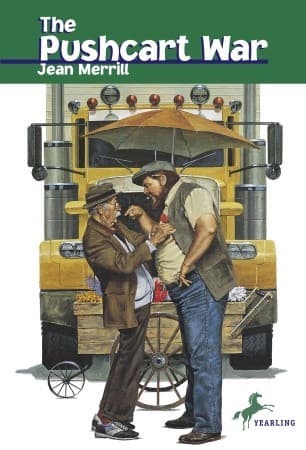
Synopsis
Covers the whole plot, including the ending.
- Difficulty
- Easy
- Pacing
- Moderate
- Mood
- Uplifting, Witty, Hopeful, Thought-provoking
- Read it if
- You enjoy stories about underdogs triumphing over powerful forces, historical fiction with a strong moral message, or tales of community and ingenuity.
- Skip it if
- You prefer fast-paced action over strategic, character-driven conflict, or are looking for a complex, morally ambiguous narrative.
The Pushcart War Plot Summary
Covers the whole plot, including the ending.
The Genesis of the Great Traffic Jam
In the spring of 1976, New York City has a lot of traffic, especially on its main avenues. This is mainly because large delivery trucks have grown a lot in size and number. These 'mammoth' trucks, from companies like Big Midget Movers, Tiger Trucking, and Atlas Moving Company, take over the streets. This makes it almost impossible for smaller vehicles and people to get around. People are frustrated, and they ask city officials to do something. The trucks, in turn, blame the small, slow pushcarts run by independent peddlers for making traffic worse. This sets up a conflict.
The Truck Owners' Secret Meeting and Declaration of War
The owners of the three biggest trucking companies—Big Midget, Tiger, and Atlas—meet secretly at the Hotel Commodore. Mr. W. Lee Preston, owner of Big Midget Movers, leads them. They decide the pushcarts are the main problem and must be removed. They make a plan to get rid of the pushcarts, saying it is needed for traffic flow. This secret agreement starts what will be called the Pushcart War, though the public and peddlers do not know at first that the attacks are organized.
Initial Acts of Aggression and the First Casualties
After their secret meeting, the trucking companies start their attacks. On May 15th, the first recorded event happens when a Tiger Trucking vehicle purposely hits Frank the Flower's pushcart, crushing it and its contents. Frank, an experienced peddler, is very upset. Authorities first say this and similar events across the city are just accidents. But the pushcart peddlers start to think it is organized. The incident with Frank the Flower's cart becomes a rallying point for their community, marking the start of their fight.
The Peddlers Organize and Formulate a Defense
Angry about Frank the Flower's cart being destroyed and the growing attacks, the pushcart peddlers meet in a restaurant basement. Morris the Florist, a respected and clear-speaking peddler, becomes an important leader. They talk about different ways to protest and defend themselves. The trucks are much bigger and stronger, so they know direct fighting will not work. Instead, they decide to use cleverness and guerrilla tactics. Maxie Hammerman, a skilled cart-builder, suggests using pea shooters to put tacks on truck tires, aiming to disable them without serious injury. This strategy becomes central to their fight.
The 'Pea-Shooter Campaign' Begins
The peddlers start Maxie Hammerman's plan. They use pea shooters and many thumbtacks to target the tires of large trucks. The campaign works well. Trucks all over the city get flat tires, causing delays and increasing repair costs for the trucking companies. The police are confused at first, unable to find proof of sabotage. The 'Pea-Shooter Campaign' causes problems for the trucking companies and makes the pushcart peddlers known to the public. Many citizens, tired of traffic, feel sympathy and support for them.
The Trucks Retaliate with 'Operation Broom'
The pea-shooter attacks anger the trucking companies. Mr. W. Lee Preston leads them in planning 'Operation Broom.' This plan involves putting large magnets and heavy brushes on their trucks to sweep the streets for tacks. They also drive more aggressively against the pushcarts. But the peddlers quickly adapt. They start using wooden tacks, which magnets do not affect, and develop new ways to avoid trucks. Operation Broom does not work well, frustrating the truck executives more and showing the peddlers' creativity.
The Public and Media Take Notice
As the conflict grows, authorities and the media cannot ignore it. Newspapers start reporting on the 'Pushcart War,' often favoring the peddlers. The public, already annoyed by traffic, begins to see the giant trucks as bullies and the pushcarts as underdogs fighting for their living and the public good. The Mayor, who did not want to get involved at first, faces more pressure to fix the situation. This change in public opinion helps the peddlers a lot in their struggle.
Joey Kafflis's Daring Stand
One of the most dramatic events happens when Joey Kafflis, a peddler, puts his cart in the path of a huge Atlas truck. The truck driver, following company orders, will not stop. Joey, with great courage, will not move. A tense standoff happens, drawing a large crowd and media attention. The truck driver has to back down, not wanting to risk a public crash and more bad press. This event shows the peddlers' strong resolve and is a big moral victory. It shows that even a small, determined person can stand up to a powerful force.
The Mayor's Intervention and the Peace Treaty
The growing chaos, public outcry, and economic impact of the war force Mayor Curley to get involved. He arranges a peace conference between the trucking executives and the pushcart peddlers. After tough talks, a treaty is signed. The terms include specific routes and times for trucks, limits on truck size, and protected areas for pushcarts. The trucking companies have to accept the pushcarts' right to operate, and the peddlers get official recognition and protection. This is a win for the smaller, independent businesses.
The Legacy of the Pushcart War
The Pushcart War officially ends, but its effects stay in New York City. The treaty reduces traffic congestion and makes sharing city streets fairer. The giant trucks are mostly restricted, and the pushcarts do well. They become a valued part of the city. The narrator documents the war, stressing its importance as a historical event. It shows how ordinary people, using cleverness, unity, and courage, can challenge powerful, established interests. The streets, once controlled by trucks, become more accessible and pleasant for everyone, showing the peddlers' unexpected win.
The Pushcart War Characters
Morris the Florist
Protagonist/Supporting
The articulate and strategic leader of the pushcart peddlers.
Morris is a respected and intelligent flower peddler who quickly emerges as a key leader and spokesperson for the pushcart community. He is not the strongest or the most aggressive, but his calm demeanor, strategic thinking, and ability to articulate the peddlers' grievances and plans make him invaluable. He organizes meetings, helps formulate the 'Pea-Shooter Campaign,' and represents the peddlers during negotiations with the city and trucking companies. His wisdom and leadership are central to the peddlers' success.
Relationships: Frank the Flower (Fellow flower peddler, whose cart's destruction galvanizes Morris); Maxie Hammerman (Fellow peddler and co-conspirator in developing tactics)
W. Lee Preston
Antagonist
The ruthless and influential owner of Big Midget Movers, instigator of the Pushcart War.
Mr. Preston is the primary antagonist of the story, a powerful and arrogant trucking executive. He represents the corporate greed and disregard for smaller businesses and public welfare. He orchestrates the secret meeting of trucking magnates and actively directs the campaign to eliminate pushcarts, believing they are an impediment to his company's profits and dominance. He consistently underestimates the peddlers and becomes increasingly frustrated by their resilience, ultimately being forced to concede defeat.
Relationships: General Anna (Fellow trucking executive, often agreeing with his plans); The Mayor (Opponent in negotiations, initially influenced by Preston's power)
Maxie Hammerman
Supporting
The innovative cart-builder and inventor of the 'Pea-Shooter Campaign'.
Maxie is a brilliant and resourceful pushcart builder and repairman. He is known for his mechanical ingenuity and practical solutions. When the peddlers are desperate for a way to fight back, it is Maxie who conceives the idea of using pea shooters to launch tacks into truck tires, a tactic that becomes the cornerstone of the peddlers' resistance. His invention is simple yet highly effective, turning the tide of the war and demonstrating the power of creative thinking over brute force.
Relationships: Morris the Florist (Fellow peddler and strategic partner); The Pushcart Peddlers (Inventor of their primary weapon)
Joey Kafflis
Supporting
A brave pushcart peddler whose defiant stand becomes a symbol of resistance.
Joey Kafflis is a young, courageous pushcart peddler who becomes a symbol of the peddlers' unwavering spirit. His most notable act is standing his ground against a massive Atlas truck that attempts to run him over, refusing to move his cart despite the imminent danger. This act of defiance captures public attention and media coverage, generating immense sympathy for the peddlers and portraying the trucks as ruthless bullies. His bravery is a turning point in the war, demonstrating that moral courage can challenge overwhelming physical power.
Relationships: The Pushcart Peddlers (Inspiring figure and fellow fighter)
Frank the Flower
Supporting
An elderly flower peddler whose cart is the first deliberately destroyed, sparking the war.
Frank is an old, respected flower peddler whose cart is the first to be deliberately targeted and destroyed by a Tiger Trucking vehicle. This incident, initially dismissed as an accident, is the catalyst that galvanizes the pushcart community and prompts them to organize. Though he is not a central figure in the strategy, his misfortune and the destruction of his livelihood serve as a powerful symbol of the trucks' aggression and the injustice faced by the peddlers, fueling their desire for revenge and justice.
Relationships: Morris the Florist (Fellow flower peddler, whose plight motivates Morris)
General Anna
Antagonist
Owner of Tiger Trucking, a key conspirator in the war against pushcarts.
General Anna is one of the three major trucking executives who conspire with W. Lee Preston to eliminate the pushcarts. She is depicted as a stern, unyielding woman, often endorsing Preston's aggressive tactics. Her company, Tiger Trucking, is responsible for the destruction of Frank the Flower's cart, an early act of aggression. She represents the collective power and ruthlessness of the large corporations, though she is often less vocal than Preston.
Relationships: W. Lee Preston (Business associate and co-conspirator); Big Moe (Fellow trucking executive)
Big Moe
Antagonist
Owner of Atlas Moving Company, another major trucking executive involved in the war.
Big Moe is the third of the powerful trucking executives, owner of Atlas Moving Company. He participates in the secret meeting and supports the plan to remove pushcarts. His company's truck is involved in the famous standoff with Joey Kafflis, highlighting the trucks' bullying tactics. Big Moe, like General Anna, is a less dominant figure than Preston but represents the united front of the trucking industry against the peddlers. He is driven by profit and the desire for unimpeded control of the streets.
Relationships: W. Lee Preston (Business associate and co-conspirator); General Anna (Fellow trucking executive)
The Mayor (Curley)
Supporting
The reluctant city official who eventually mediates the end of the Pushcart War.
Mayor Curley is the elected official of New York City, initially portrayed as somewhat indecisive and overwhelmed by the city's problems, particularly the traffic congestion. He tries to avoid taking a definitive stance in the early stages of the Pushcart War, fearing to alienate either the powerful trucking industry or the increasingly vocal public. However, as public opinion shifts and the war escalates, he is forced to intervene and ultimately brokers the peace treaty, demonstrating the power of public pressure on political leaders.
Relationships: W. Lee Preston (Powerful constituent who exerts pressure); Morris the Florist (Representative of the public's interest)
The Narrator (Professor Lyman)
Mentioned
The historian who compiled the account of the Pushcart War.
The entire book is presented as a historical account compiled by a fictional historian, Professor Lyman, who is writing about the 'real' Pushcart War of 1976. The narrator includes excerpts from various fictional sources like newspaper articles, interviews, and official documents, giving the story an authentic, journalistic feel. This framing device is crucial to the book's tone and message, emphasizing the importance of documenting history from all perspectives, especially that of the underdog. The narrator's voice is authoritative yet slightly whimsical.
The Pushcart War Themes
The Power of the Underdog
This is the main theme of 'The Pushcart War.' The seemingly weak pushcart peddlers, using only their wits and pea shooters, successfully challenge and defeat the powerful, rich trucking industry. This is clear in Maxie Hammerman's clever tack strategy, Joey Kafflis's defiant stand against a huge truck, and Morris the Florist's leadership. The book shows how creativity, unity, and determination can overcome force and money, proving that size and resources do not always guarantee victory.
“What had begun as a traffic problem had turned into a full-scale war, with the giants of the trucking industry arrayed against the little men of the pushcarts. And the little men were winning.”
Justice and Fairness
The Pushcart War looks at justice when a stronger group unfairly targets a weaker one. The trucking companies start the conflict out of greed and a desire for full control, destroying peddlers' livelihoods. The peddlers' fight is for fairness and their right to exist and do business. The public's eventual sympathy for the peddlers and the Mayor's involvement show society's need for justice. It demonstrates that unchecked power often leads to unfairness, which then causes resistance.
“It was simply a matter of who was going to own the streets. The giants, or the little men.”
Community and Collective Action
The peddlers win mainly because they unite as a community and act together. They come together after Frank the Flower's cart is destroyed, holding meetings, sharing ideas, and using a coordinated plan. Leaders like Morris the Florist and Maxie Hammerman emerge from group decisions. Their unity against a common enemy, their willingness to help each other, and their shared goal are key to their victory. This shows the strength that comes from being united.
“The peddlers were not rich. They had no powerful friends. But they had something more important: they had each other.”
The Role of Media and Public Opinion
The book shows how media coverage and changing public opinion are important to the war's outcome. At first, the trucking companies try to control the story. But as the war grows, news reports start to show the truth about the trucks' aggression and the peddlers' cleverness. The public, tired of traffic and feeling for the underdogs, sides with the pushcarts. This public pressure makes the Mayor get involved, showing how media attention can change public feelings and influence political choices, even against powerful interests.
“The people of New York City, who had been grumbling about traffic for years, suddenly found themselves with a cause.”
Ingenuity and Non-Violent Resistance
The peddlers' main weapon is not force, but cleverness and strategic non-violent resistance. Maxie Hammerman's pea-shooter and tack invention is a good example, causing problems without physical harm. Joey Kafflis's peaceful but firm stand also shows this theme. The peddlers always outwit the trucks and authorities, changing their tactics to counter every move their opponents make. This theme highlights that intelligence and creative problem-solving can be more effective than aggression in solving conflicts.
“The pushcart peddlers had shown the world that you don't need bombs and guns to fight a war. All you need is a good idea and a lot of courage.”
Plot Devices & Literary Techniques
Fictionalized Historical Account
The entire story is presented as a 'true' historical record of events from 1976.
The book employs the device of a fictionalized historical account, narrated by 'Professor Lyman,' who claims to have compiled the definitive history of the Pushcart War. This includes fabricated footnotes, newspaper clippings, interviews, and official documents. This device lends an air of authenticity and importance to the fantastical events, making the reader feel like they are learning about a genuine historical conflict. It also allows the author to comment on real-world issues like corporate greed and urban planning through a detached, academic lens, enhancing the satirical elements.
Anthropomorphism/Personification
Trucks are described with human-like characteristics and intentions, especially their 'aggression'.
While the trucks aren't literally sentient, they are often described in anthropomorphic terms, particularly when detailing their 'aggressive' behavior and their 'war' against the pushcarts. They are referred to as 'giants' and are given a collective will and intent to dominate the streets. This personification helps to clearly establish them as the antagonists, making their actions feel more deliberate and menacing, and heightens the David-and-Goliath dynamic with the small, vulnerable pushcarts. It simplifies the conflict into a battle of personalities rather than just machines.
Satire and Social Commentary
Uses humor and exaggeration to critique urban planning, corporate power, and individual rights.
The book uses satire to comment on various societal issues, particularly urban traffic congestion, the unchecked power of large corporations, and the struggle of independent businesses. The exaggerated scale of the trucks, the absurd lengths the trucking executives go to, and the ingenious, almost comical, tactics of the peddlers all serve to highlight these issues in a humorous yet thought-provoking way. The 'war' itself is a satirical take on real-world conflicts, advocating for the rights of the common person against powerful establishments and critiquing the prioritization of commercial interests over quality of life.
Underdog Narrative
A classic story structure where a weaker, less powerful group triumphs over a stronger adversary.
The Pushcart War is a quintessential underdog narrative. The pushcart peddlers are portrayed as small, financially disadvantaged, and lacking political influence, while the trucking companies are large, wealthy, and powerful. The entire plot revolves around the struggle of the 'little guys' against the 'giants.' This narrative structure creates inherent sympathy for the peddlers and makes their eventual triumph all the more satisfying and inspiring, reinforcing the theme that determination and unity can overcome superior resources.
The Pushcart War Quotes
“The trouble with trucks is that they are bigger than people.”
“A pushcart is a small business on wheels.”
“The first shot in the Pushcart War was fired by Maxie Hammerman, the pushcart king.”
“It is not easy to fight an enemy who is ten times your size.”
“The secret weapon of the pushcart peddlers was the common pin.”
“In war, the first casualty is the truth.”
“A traffic jam is a beautiful thing when it is your enemy who is jammed.”
“The Mayor was a man who liked to keep the peace, but peace is not always possible.”
“Sometimes the smallest people can make the biggest difference.”
“The pushcart peddlers had no army, but they had each other.”
“War is not just about fighting; it is about outsmarting your opponent.”
“The history books will call it the Pushcart War, but we called it survival.”
“Even a truck can be stopped by a little cooperation and a lot of pins.”
“In the end, it was not the size of the weapon but the size of the idea that won the war.”
Quiz
10 questions on the plot and the characters. Each answer comes with a short explanation.
Question 1
What weapon did the pushcart peddlers primarily use to fight back against the trucks?
- Slingshots with marbles
- Pea shooters with tacks
- Water balloons with paint
- Firecrackers to scare drivers
Show answer
B. Pea shooters with tacks The pushcart peddlers used pea shooters to blow tacks into truck tires, a clever and non-violent tactic that disabled the trucks without causing harm to people.
Question 2
Who did the truck owners blame for the traffic problems in New York City?
- The mayor and city officials
- The pushcart peddlers
- Construction companies
- Public transportation systems
Show answer
B. The pushcart peddlers The truck owners blamed the little wooden pushcarts for the traffic congestion, leading them to declare war on the peddlers.
Question 3
What was the outcome of the Pushcart War?
- The trucks won and banned pushcarts
- The pushcart peddlers prevailed and kept the streets
- A compromise was reached with new traffic laws
- The mayor sided with the trucks and fined the peddlers
Show answer
B. The pushcart peddlers prevailed and kept the streets Thanks to the ingenuity of the pushcart peddlers, they defeated the trucks, and the streets were returned to the people and pushcarts.
Question 4
Why did the pushcart peddlers have to rely on their own resources to fight the trucks?
- They had no money or support from the mayor
- They were afraid of getting arrested by the police
- They wanted to keep their methods secret
- They had advanced technology from allies
Show answer
A. They had no money or support from the mayor The peddlers lacked financial resources and political backing from the mayor, forcing them to use creativity and community effort to resist.
Question 5
How did the pushcart peddlers outwit the police during the conflict?
- By bribing officers with free goods
- By using disguises and decoys to avoid capture
- By organizing peaceful protests that confused authorities
- By employing clever tactics not specified in detail in the summary
Show answer
D. By employing clever tactics not specified in detail in the summary While the summary mentions they outwitted the police, it doesn't detail specific methods, highlighting their resourcefulness in overcoming obstacles.
Question 6
What range of neighborhoods saw pushcarts being smashed by the truck owners?
- From Brooklyn to Queens
- From Chinatown to Chelsea
- From Harlem to the Bronx
- From Midtown to Downtown
Show answer
B. From Chinatown to Chelsea The truck owners' attacks on pushcarts spanned from Chinatown to Chelsea, indicating widespread conflict across New York City.
Question 7
What is a key theme emphasized in 'The Pushcart War' according to its legacy?
- The importance of technological advancement in urban life
- That a committed group can prevail against a powerful force
- The inevitability of conflict between different social classes
- The role of government in regulating commerce
Show answer
B. That a committed group can prevail against a powerful force The book asserts that ordinary people, through determination and cleverness, can overcome powerful opponents, a theme noted as relevant across decades.
Question 8
In what year was 'The Pushcart War' first published?
- 1954
- 1964
- 1974
- 1984
Show answer
B. 1964 The book was first published in 1964, and its message has remained impactful for over fifty years.
Question 9
What recognition did 'The Pushcart War' receive from School Library Journal?
- It was named Book of the Year in 1964
- It was included on a list of One Hundred Books That Shaped the Twentieth Century
- It won the Newbery Medal for children's literature
- It was banned in some schools for its controversial themes
Show answer
B. It was included on a list of One Hundred Books That Shaped the Twentieth Century School Library Journal listed it among One Hundred Books That Shaped the Twentieth Century, highlighting its cultural and educational significance.
Question 10
How have the streets of New York City changed as a result of the Pushcart War, according to the book?
- They became more regulated with strict traffic laws
- They were returned to the people and pushcarts, reducing truck dominance
- They were paved over to accommodate more vehicles
- They were divided into separate lanes for pushcarts and trucks
Show answer
B. They were returned to the people and pushcarts, reducing truck dominance The pushcart peddlers' victory ensured that the streets belong to the people and pushcarts, reclaiming public space from the trucks.
The Pushcart War FAQ
What is 'The Pushcart War' about?
The book chronicles a fictional conflict in New York City where pushcart peddlers, led by figures like Morris the Florist and General Anna, wage a clever war against powerful trucking companies that are trying to eliminate them from the streets. Using pea shooters to blow tacks into truck tires and organizing strategic protests, the peddlers fight to reclaim their right to operate in the city.
Why should I read 'The Pushcart War'?
It's a timeless, humorous tale of underdogs triumphing through wit and unity, with themes of social justice and grassroots activism that remain relevant today. The book's clever satire, memorable characters like Maxie Hammerman and Frank the Flower, and its engaging pseudo-historical style make it both entertaining and thought-provoking for readers of all ages.
What is the background/setting of 'The Pushcart War'?
Set in a smoggy, congested New York City of the 1960s, the story unfolds in neighborhoods from Chinatown to Chelsea, where pushcart peddlers sell goods like flowers and hot dogs. The conflict arises when truck owners, blaming pushcarts for traffic jams, secretly declare war on them, leading to smashed carts and escalating tensions.
What are the most memorable quotes?
Notable quotes include General Anna's rallying cry, 'We will not be pushed off the streets!' and Maxie Hammerman's observation, 'A tack in a tire is worth a thousand words.' These lines capture the peddlers' defiance and the strategic simplicity of their resistance against the trucking giants.
What writing style does the author use?
Jean Merrill employs a pseudo-historical, documentary-like style, presenting the story as a factual account with footnotes, interviews, and 'official' reports. This approach adds humor and realism, making the absurd conflict feel like a genuine piece of history while engaging readers with its detailed, narrative-driven prose.
What minor details add significant meaning?
Details like the specific types of pushcarts (e.g., flower carts, hot dog carts) and the use of pea shooters loaded with tacks highlight the peddlers' resourcefulness and the everyday nature of their struggle. The inclusion of footnotes and 'historical' documents subtly critiques how power structures manipulate narratives, emphasizing the book's themes of truth and resistance.
What are some subtle foreshadowing moments?
Early scenes of truck drivers grumbling about pushcarts and minor traffic incidents foreshadow the full-scale war that erupts. The peddlers' initial discussions about organizing, led by Morris the Florist, hint at their eventual strategic alliance and the innovative tactics, like the pea shooter campaign, that will define their fight.
What unexpected character connections exist?
Characters like Maxie Hammerman, a pushcart repairman, and General Anna, a retired teacher turned leader, form unlikely alliances with peddlers from diverse backgrounds, such as Frank the Flower and other vendors. These connections across different neighborhoods and trades underscore the collective effort required to challenge the trucking companies.
What are unspoken character motivations?
Beyond survival, peddlers like Morris the Florist are driven by a deep-seated pride in their independence and a desire to preserve their way of life against corporate encroachment. Truck owners, while publicly blaming pushcarts for traffic, are secretly motivated by greed and a wish to monopolize city streets for profit.
What psychological complexities do characters exhibit?
General Anna displays strategic brilliance and maternal protectiveness, balancing leadership with empathy for the peddlers. Maxie Hammerman shows ingenuity and resilience, using his repair skills as a form of quiet rebellion. These traits highlight how ordinary people can exhibit extraordinary courage and cleverness under pressure.
What are the major emotional turning points?
Key moments include the initial destruction of pushcarts, which sparks outrage and unity among the peddlers, and the successful pea shooter attacks that boost morale. The climax occurs during the protest march where peddlers confront trucks head-on, leading to a public shift in support and eventual victory.
How do relationship dynamics evolve?
Initially fragmented, the peddlers bond through shared adversity, forming a cohesive movement led by figures like General Anna. Their relationship with the public evolves from indifference to solidarity, as citizens rally behind them, while tensions with truck owners escalate from quiet hostility to open conflict before resolving in a negotiated peace.
Which parts remain ambiguous or open-ended?
The exact long-term impact on New York City's traffic and the future of pushcarts post-war are left somewhat open, inviting readers to reflect on ongoing social issues. The motivations of some minor characters, like specific truck owners or city officials, are not fully explored, leaving room for interpretation about systemic corruption.
What are controversial scenes or decisions?
The peddlers' use of pea shooters to sabotage trucks could be seen as vandalism, raising questions about the ethics of their resistance. Some readers might debate whether the truck owners' initial aggression justifies such tactics, or if more peaceful means could have been pursued, highlighting themes of civil disobedience.
'The Pushcart War' ending explained: how it ends & what it means
The war ends with the peddlers victorious, as public pressure forces the city to implement regulations favoring pushcarts, and the streets become more accessible. This conclusion symbolizes the power of collective action and ingenuity over brute force, emphasizing that even small, organized groups can effect change against powerful opponents.
About the author
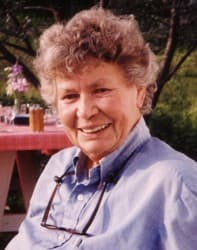
Jean Merrill was an American author known for her children's fiction. She wrote notable works such as The Pushcart War, which explores themes of conflict and community through a whimsical narrative, and The Toothpaste Millionaire, a story about entrepreneurship and creativity. Her books often blend humor with insightful commentary on social issues.
Similar books
- Mrs. Frisby and the Rats of NIMH
Robert C. O'Brien
4.1 (164k) average on GoodreadsFantasyFeatures resourceful animals using intelligence to overcome human obstacles, similar to the peddlers' ingenuity.
- Harry Potter and the Sorcerer's Stone
J.K. Rowling
4.5 (7M) average on GoodreadsFantasyRescued from a miserable life under the stairs, an orphaned boy discovers he's a wizard destined for a magical school, where he uncovers a dangerous secret tied to the dark wizard who murdered his parents.
- The Hobbit, or There and Back Again
J.R.R. Tolkien
4.3 (2.9M) average on GoodreadsFantasyA comfort-loving hobbit named Bilbo Baggins is whisked away by a mischievous wizard and a band of dwarves on an unexpected journey to reclaim stolen treasure from a fearsome dragon, discovering courage and a magical ring along the way.
- Harry Potter and the Goblet of Fire
J.K. Rowling
4.6 (2.6M) average on GoodreadsFantasyA bewildered Harry Potter, underage and thrust into a deadly Triwizard Tournament, must brave dragons, mermaids, and a resurgent dark magic to survive a year that will forever alter the wizarding world.
- Harry Potter and the Order of the Phoenix
J.K. Rowling
4.5 (2.5M) average on GoodreadsFantasyIn a year of oppressive secrets and the threat of Voldemort, Harry Potter and Dumbledore's Army secretly train for war, shown through Jim Kay and Neil Packer's dark illustrations.
- The Lightning Thief
Rick Riordan
4.3 (2M) average on GoodreadsFantasyThrust into a world of mythological monsters and divine treachery, an ordinary boy discovers he's the son of Poseidon and must embark on a perilous quest across modern America to prevent an Olympian war.






Enjoyed the summary?
A summary gives you the shape of the book. The book itself has the detail, the examples and the voice.
Find The Pushcart War on AmazonAs an Amazon Associate, BookBrief earns from qualifying purchases. How we're funded