

Synopsis
Covers the whole plot, including the ending.
- Difficulty
- Medium
- Pacing
- Variable
- Mood
- Gothic, Epic, Philosophical, Sensual, Dark, Melancholic
- Read it if
- You enjoy epic, gothic vampire sagas with deep lore, philosophical musings on good and evil, and a blend of ancient history and modern rock-and-roll decadence.
- Skip it if
- You prefer fast-paced, action-focused narratives without extensive world-building or internal monologues, or are not interested in a more 'romantic' and dramatic take on vampires.
The Queen of the Damned Plot Summary
Covers the whole plot, including the ending.
Lestat's Concert and the Awakening
Lestat de Lioncourt, now a famous rock star, gets ready for a huge concert in San Francisco. His music, a mix of rock and his vampire life, is popular worldwide. Without his knowing, his powerful music and the many vampires drawn to the concert wake Akasha, the first vampire queen, from her long sleep. She has been dormant for thousands of years, inside a statue. But Lestat's bold public vampirism and his music's raw power stir her. Elsewhere, several powerful vampires, including Marius, Jesse Reeves, and Pandora, have vivid, troubling dreams of twin red-haired girls and an old tragedy. This is a psychic event linked to Akasha waking up.
Akasha's Violent Rebirth
Akasha, fully awake, starts a brutal rampage across the world, killing most male vampires and taking their hearts. She believes men cause all conflict and suffering and that by removing them, she can create a matriarchal utopia. She also looks for Lestat, drawn to his boldness and strength. She appears to him, makes him her new consort, and begins to share her ancient powers and her twisted plan for humanity. Lestat is at first overwhelmed and charmed by her power and old wisdom, becoming a reluctant part of her plan to kill many.
The Summoning of the Ancients
Marius, one of the oldest and most knowledgeable vampires, sees the great danger Akasha poses. He starts gathering other ancient vampires, including Pandora, Maharet, Mekare, Khayman, and the twins' descendant, Jesse Reeves, who has been having the prophetic dreams. They meet in a remote place, sharing their experiences and knowledge about Akasha's origins and her new bloodlust. Marius tells his long history with Akasha and Enkil, her inert king, revealing the true source of their vampirism and the delicate balance that kept them dormant for so long. They put together the history of the First Brood and the twins.
The Tale of the Red-Haired Twins
At the gathering of ancient vampires, Maharet, one of the red-haired twins from the dreams, finally tells the full, terrible story of her and Mekare's past. She reveals they were powerful tribal witches in ancient Kemet (Egypt) when Akasha and Enkil were human rulers. Akasha, wanting to understand Maharet's magic, captured them. During a violent attack on Akasha and Enkil by spirits, a malicious spirit entered Akasha's body, turning her into the first vampire. Mekare, in revenge for the torture and murder of her sister, later ate Akasha's human brain, linking their fates and making Mekare the true channel of the original vampiric spirit, though Akasha keeps the power.
Akasha's Vision for Humanity
Akasha continues her destructive path, wiping out male populations and gathering a new, female-led court. She explains her radical idea to Lestat: to get rid of war, crime, and suffering by removing what she sees as the cause—men. She plans to create a new world order where women rule, and she and Lestat will be the divine parents of a new race. Lestat is increasingly horrified by her genocide, despite his initial interest. He struggles with his conscience, torn between his admiration for power and his growing disgust at her cruelty. Akasha's actions show a deep disconnect from human morality.
The Confrontation in the Desert
The gathered ancient vampires, including Marius, Maharet, Mekare, Khayman, Pandora, and Daniel Molloy, meet Akasha and Lestat in the desert. They confront Akasha, trying to reason with her and warn her of the results of her actions. They argue against her extreme ideas, pointing out the flaws in her plan and the destruction she is causing. However, Akasha remains unmoved, sure of her divine purpose. She ignores their pleas and shows her great power, further cementing her tyrannical control and revealing the depth of her madness and detachment from the world she claims to want to save.
Lestat's Defiance and Akasha's Fury
As Akasha continues her killing spree, Lestat's moral compass finally takes over. He openly defies her, refusing to take part in her genocidal plan any longer. This defiance enrages Akasha, who sees his rebellion as a deep betrayal. She uses her immense power on him, almost destroying him. His body is shattered, and he is left for dead. This act strengthens the other vampires' resolve that Akasha must be stopped, and Lestat, though badly hurt, becomes a symbol of resistance against her tyranny.
The Final Battle and Mekare's Revenge
The surviving ancient vampires, now joined by a recovering Lestat, prepare for a desperate final fight with Akasha. They know she must be stopped at any cost, even if it means their own destruction. The battle is fierce, with Akasha showing terrifying power. However, the combined strength and ancient knowledge of the others, especially Maharet and Mekare, are key. In a dramatic moment, Mekare, the silent twin who has carried the weight of their ancient trauma, finally gets her chance. She fulfills her ancient desire for revenge by eating Akasha's brain, thus transferring the core vampiric spirit to herself and ending Akasha's reign.
The Aftermath and the New Queen
With Akasha's destruction, the vampiric spirit passes to Mekare, making her the new Queen of the Damned. She falls into a deep, catatonic state, becoming the inert, living source of all vampiric life, much like Akasha and Enkil before her. The surviving vampires, including Lestat, Marius, Maharet, and Pandora, are left to deal with their shattered world. They gather around Mekare, understanding their new responsibility to protect her. The world is safe from Akasha's immediate threat, but Mekare's new role and the trauma of Akasha's reign leave a lasting mark on the ancient blood-drinkers, making them rethink their place in the world.
A New Beginning for the Survivors
After Akasha's defeat, the surviving vampires form a fragile, new community. They promise to protect Mekare, understanding that her existence is now vital for all of them. Lestat, deeply changed by his experience with Akasha, grapples with his own identity and purpose. He finds comfort and a sense of belonging among these ancient beings, recognizing the true power and responsibility of his vampiric nature. The novel ends with an uneasy peace, as the vampires, having faced the biggest threat to their existence, must now navigate a future where their old secrets have been revealed and their world changed forever. They are united, for now, by their shared ordeal and their new Queen.
Principal Figures
Lestat de Lioncourt
Protagonist
The audacious rock star vampire who inadvertently awakens Akasha.
Lestat is a flamboyant, rebellious, and deeply introspective vampire. He craves love and attention, which drives him to become a rock star and reveal his vampiric nature to the world. He is powerful, charismatic, and often arrogant, yet possesses a surprising moral compass that emerges when confronted with true evil. He grapples with the loneliness of his existence and a desire for meaning beyond mere survival. His journey in this book forces him to confront the consequences of his actions and the true horror of ancient power.
Relationships: Akasha (Captor/consort, then adversary); Marius (Mentor/friend); Louis de Pointe du Lac (Former companion, mentioned); Maharet (Ally/ancient elder)
Akasha
Antagonist
The ancient Queen of the Damned, mother of all vampires, awakened to purge humanity.
Akasha is the original vampire, awakened after millennia of slumber. She is immensely powerful, beautiful, and utterly ruthless. Her initial transformation was accidental, but her subsequent actions are driven by a warped ideology: to save humanity by eradicating all males, believing them to be the source of all evil. She is detached from modern morality, viewing herself as a divine force. Her motives are a twisted form of love for humanity, expressed through extreme violence and control, making her a terrifying and formidable antagonist.
Relationships: Enkil (Ancient consort, inert); Lestat de Lioncourt (Chosen consort); Mekare (Ancient victim/nemesis); Maharet (Ancient victim/nemesis)
Marius de Romanus
Supporting
An ancient Roman vampire, guardian of Akasha and Enkil for centuries.
Marius is one of the oldest and most knowledgeable vampires, a scholar and artist who has witnessed millennia of history. He was the long-time guardian of Akasha and Enkil, burdened by the secret of their origins and the immense power they held. He is wise, weary, and protective of the vampiric species, often acting as a mentor and guide to younger vampires like Lestat. He possesses vast resources and a deep understanding of ancient lore, making him crucial in understanding and confronting Akasha.
Relationships: Akasha (Guardian/former lover); Lestat de Lioncourt (Friend/mentor); Pandora (Former lover/companion)
Maharet
Supporting
One of the ancient red-haired twins, a powerful witch and vampire.
Maharet is an ancient vampire, one of the two red-haired twins from the prophetic dreams. She is immensely old, wise, and deeply connected to the earth and the origins of vampirism. She carries the burden of her ancient past, having witnessed the creation of Akasha and the suffering inflicted upon her sister, Mekare. She is a keeper of history and a powerful psychic, able to see into the past and connect with others through dreams. She is driven by a profound loyalty to her sister and a desire to see justice served.
Relationships: Mekare (Twin sister, deeply bonded); Jesse Reeves (Descendant); Akasha (Ancient adversary)
Mekare
Supporting
The other red-haired twin, silent and vengeful, who becomes the new Queen of the Damned.
Mekare is Maharet's twin sister, also an ancient witch and vampire. She was brutally tortured and had her tongue removed by Akasha in ancient times, leaving her silent and consumed by a centuries-old desire for revenge. She is the true conduit for the original vampiric spirit, having consumed Akasha's human brain. Though silent and seemingly catatonic for much of the story, her presence is a powerful, underlying force. Her eventual action is the culmination of millennia of suffering and vengeance.
Relationships: Maharet (Twin sister, deeply bonded); Akasha (Ancient tormentor/nemesis)
Jesse Reeves
Supporting
A human descendant of Maharet, drawn into the vampire world by the prophetic dreams.
Jesse Reeves is a young, intelligent woman who works for the Talamasca, a secret society that studies the supernatural. She is a descendant of Maharet and possesses psychic abilities, which draw her into the prophetic dreams of the red-haired twins. Her curiosity and ancestral connection lead her to seek out the truth about vampires, eventually bringing her into contact with Lestat and the ancient blood-drinkers. She represents the human connection to the ancient vampiric world and provides a mortal perspective on the unfolding events.
Relationships: Maharet (Ancestral relative); Lestat de Lioncourt (Object of fascination/eventual companion)
Pandora
Supporting
An ancient Roman vampire, Marius's former lover.
Pandora is a very old and powerful vampire, a former Roman noblewoman who was made by Marius. She is elegant, intelligent, and possesses a deep historical perspective. She has a complex relationship with Marius, marked by love, loss, and a shared ancient history. She is drawn into the conflict with Akasha by the prophetic dreams and her loyalty to Marius and the survival of their species. She is a voice of reason and strength among the ancient vampires.
Relationships: Marius (Former lover/companion)
Khayman
Supporting
Akasha's ancient human steward, turned into a vampire by her.
Khayman was Akasha's chief steward in ancient Kemet and was one of the first humans to be made a vampire by her. He carries immense guilt and suffering from his complicity in the ancient events and his long, silent existence. He is a tragic figure, deeply connected to Akasha's origins and the subsequent suffering. He is drawn to the gathering of ancients by the dreams, seeking an end to his torment and a resolution to Akasha's tyranny.
Relationships: Akasha (Creator/ancient ruler); Maharet (Ancient acquaintance)
Themes & Insights
The Nature of Evil and Redemption
The novel looks at the origins and forms of evil, especially through Akasha. Her 'evil' comes from a twisted wish for a perfect world, leading to genocide. The other vampires, despite being predators, struggle with morality, with Lestat's journey to redemption being important. His first interest in Akasha's power turns into horror and defiance, showing that even immortal beings can choose good over evil. The theme asks if true evil is natural or a result of extreme ideas, and if redemption is possible for those who have done terrible things, or if it means stopping more harm.
“Evil is a point of view. We are immortal. And what you consider evil, we consider survival.”
The Burden of Immortality and History
Immortality in 'The Queen of the Damned' is not a gift but a heavy burden. The ancient vampires, like Marius, Maharet, and Mekare, carry thousands of years of memories, trauma, and secrets. Their pasts haunt them, especially the events around Akasha's creation and the suffering of the red-haired twins. This huge weight of history shapes their actions and views, making them both wise and tired. The novel emphasizes that the past never truly ends for immortals; it always affects and often controls their present, showing the mental cost of endless life.
“To be a vampire is to be a slave to the past, to carry the memory of every breath you've taken, every life you've touched.”
Power, Control, and Free Will
The fight for power and control is central to the story, especially Akasha's attempt to completely control humanity and the vampire species. Her belief that she knows what is best for the world leads her to take away the free will of both mortals and vampires. The conflict happens when other vampires, particularly Lestat, assert their own free will against her tyrannical plan. This theme questions the ethics of having immense power, the dangers of perfect world ideas enforced through violence, and the natural human (and vampire) desire for independence. The final confrontation is a battle for the right to choose one's own future.
“I am the fulfillment and I shall from this moment be the cause.”
Connection and Isolation
Despite their immortality and power, many vampires feel deep loneliness and isolation. Lestat's rock star persona is a desperate attempt to connect with humanity, while Marius and Pandora struggle with their old, often solitary lives. The prophetic dreams are a strong force of connection, bringing different vampires together and making them face their shared origins. The formation of a new, though fragile, community at the novel's end highlights the vital need for connection, even among beings who often live outside human society. It suggests that true strength comes not from being alone but from shared experience and mutual support.
“We are the Children of the Millennia, and we are alone.”
Plot Devices & Literary Techniques
The Psychic Dreams
A shared dream sequence that links various vampires and mortals.
The psychic dreams are a crucial plot device that connects various characters across the globe, drawing them into the central conflict. These vivid, recurring dreams of the red-haired twins and their ancient suffering serve as a premonition of Akasha's awakening and a call to action for the ancient vampires. They provide exposition about the origins of vampirism and create a sense of urgency, compelling characters like Jesse Reeves, Marius, and Maharet to seek each other out and eventually confront Akasha. The dreams function as a supernatural communication network, building suspense and revealing key historical details gradually.
Lestat's Music
The rock star vampire's music acts as a catalyst for Akasha's awakening.
Lestat's rock music is more than just entertainment; it's a powerful narrative device. Its raw energy and his public embrace of his vampiric identity resonate across the supernatural world, acting as a catalyst that awakens Akasha. The music symbolizes Lestat's audacious spirit and his desire for connection, but also his unwitting role in unleashing ancient evil. It draws both devoted fans and vengeful vampires to his concert, setting the stage for the unfolding drama and demonstrating the far-reaching impact of his actions. It's a modern expression of ancient power, bridging the gap between the old world and the new.
The First Brood's History
The detailed backstory of Akasha, Enkil, and the red-haired twins.
The extensive historical narrative of the First Brood, particularly the story of Akasha, Enkil, Maharet, and Mekare, serves as a foundational plot device. Revealed primarily through Maharet's storytelling and Marius's recollections, this backstory provides the essential context for Akasha's motivations and the nature of vampirism itself. It explains the interconnectedness of all vampires, the source of their power, and the ancient grievance that drives Mekare's vengeance. This device grounds the fantastical elements in a rich, detailed mythology, making the conflict more meaningful and the characters' actions more understandable.
The Mother Spirit/Heart
The core of vampirism, residing within the Queen of the Damned.
The 'Mother Spirit' or 'Heart' of vampirism is a crucial conceptual plot device. It refers to the original spirit that entered Akasha, making her the first vampire and the source of all vampiric life. This spirit is transferable, and its destruction means the end of all vampires. Its existence explains why Akasha (and later Mekare) possesses such immense power and why her survival is intrinsically linked to the entire species. The concept creates high stakes for the final confrontation, as destroying Akasha risks destroying all vampires, forcing the ancients to find a way to transfer, rather than eradicate, the spirit.
The Queen of the Damned Quotes
“Oh, what a world it is, and how small a part of it I have seen!”
“And I knew then what I had to do. I had to go to her. I had to find her. I had to kill her.”
“We are the Children of Darkness, and we have our own laws, our own morality.”
“The greatest evil is not done in the shadows, but in the light, by those who believe themselves to be righteous.”
“To be a god is to be lonely, to be an observer, to be a judge without appeal.”
“There is no death for us, only change. But change can be a form of living death.”
“The music... it calls to us. It always has. It is the voice of the living, and we are its echoes.”
“Every legend has a grain of truth, a seed planted in the human heart that blossoms into myth.”
“Love, true love, is the most dangerous thing in the world. It makes you vulnerable. It makes you weak.”
“We are all merely footnotes in a much larger, darker history.”
“The past is a living thing. It breathes. It remembers. And sometimes, it demands to be heard.”
“To be truly free, one must first be truly lost.”
“There is no more beautiful sound than the human heart breaking, for it is then that it is most open to change.”
“Even a god can fall. Especially a god.”
“We are the guardians of what was, what is, and what will be. And we are tired.”
Quiz
10 questions on the plot and the characters. Each answer comes with a short explanation.
Question 1
What is the primary reason many vampires gather at Lestat's San Francisco concert?
- To celebrate Lestat's fame and power.
- To destroy Lestat for risking the secret prosperity of their kind.
- To join Lestat's new vampire rock band.
- To offer Lestat their loyalty and servitude.
Show answer
B. To destroy Lestat for risking the secret prosperity of their kind. The text states that many vampires view Lestat as a 'greedy fiend risking the secret prosperity of all his kind' and are 'determined to destroy him' at his concert.
Question 2
Who is Akasha?
- Lestat's new mortal lover.
- A powerful ancient vampire, the Queen of the Damned and mother of all vampires.
- One of the red-haired twins haunting the dreams of vampires and mortals.
- A human scholar studying ancient vampiric history.
Show answer
B. A powerful ancient vampire, the Queen of the Damned and mother of all vampires. The description explicitly identifies Akasha as 'Queen of the Damned, mother of all vampires,' who rises after a 6,000-year sleep.
Question 3
What common dream haunts the sleep of certain vampires and mortals around the world?
- A vision of Lestat performing on stage.
- A prophecy of a new age of peace between mortals and vampires.
- A vivid dream of twins with fiery red hair and piercing green eyes suffering a tragedy.
- Nightmares of being pursued by ancient Egyptian pharaohs.
Show answer
C. A vivid dream of twins with fiery red hair and piercing green eyes suffering a tragedy. The text describes the second narrative thread as 'The sleep of certain men and women...is haunted by a vivid, mysterious dream: of twins with fiery red hair and piercing green eyes who suffer an unspeakable tragedy.'
Question 4
What is Akasha's 'heinous plan' after she awakens?
- To destroy all existing vampires and return to a mortal life.
- To 'save' mankind by elevating herself and her chosen son/lover to the level of gods and making all myths real.
- To establish a new, secret society of vampires to rule the world from the shadows.
- To gather all blood drinkers and lead them in a war against humanity.
Show answer
B. To 'save' mankind by elevating herself and her chosen son/lover to the level of gods and making all myths real. Akasha's plan is described as 'a heinous plan to 'save' mankind from itself and make 'all myths of the world real' by elevating herself and her chosen son/lover to the level of the gods.'
Question 5
How far back in time does the narrative of the 'first brood' of blood drinkers take the reader?
- To the medieval period in Europe.
- To ancient Rome, during the peak of the empire.
- 6,000 years, to the beginnings of vampirism.
- To the turn of the 20th century, tracing modern vampirism.
Show answer
C. 6,000 years, to the beginnings of vampirism. The summary states, 'taking us back 6,000 years to its beginnings' when discussing the stories of the 'first brood' of blood drinkers.
Question 6
What sensation do mortals experience when succumbing to the creation of a vampire?
- A feeling of immense power and invincibility.
- A profound sense of peace and tranquility.
- The sensation of 'being emptied, of being devoured, of being nothing.'
- A sudden surge of adrenaline and heightened senses.
Show answer
C. The sensation of 'being emptied, of being devoured, of being nothing.' The text explicitly states: 'Vampires are created—mortals succumbing to the sensation of 'being enptied, of being devoured, of being nothing.'
Question 7
What is the ultimate decision that will be made in the astonishing climax of the story?
- The fate of Lestat's rock career.
- The fate of the living dead—and perhaps of the living, all the living.
- The exact location of Akasha's ancient tomb.
- Which vampire will become Akasha's new consort.
Show answer
B. The fate of the living dead—and perhaps of the living, all the living. The summary concludes by saying, 'And, finally, we are brought to a moment in the twentieth century when, in an astonishing climax, the fate of the living dead—and perhaps of the living, all the living—will be decided.'
Question 8
What is the significance of the phrase 'I am the fulfillment and I shall from this moment be the cause' as spoken by Akasha?
- It signifies her regret over past actions and a desire for redemption.
- It expresses her complete control and intention to dictate the future, becoming a divine force.
- It is a declaration of her intention to unite all vampires under Lestat's leadership.
- It's a poetic expression of her love for her chosen son/lover.
Show answer
B. It expresses her complete control and intention to dictate the future, becoming a divine force. This quote is part of Akasha's plan to elevate herself to godhood, asserting her role as the ultimate power and decision-maker in the world, becoming both the end goal and the origin of all future events.
Question 9
The narrative threads intertwine across a vast tapestry, taking the reader to various locations. Which of the following is NOT mentioned as a place where vampires have left their mark?
- Egypt
- South America
- Antarctica
- The Himalayas
Show answer
C. Antarctica The text lists 'Egypt to South America to the Himalayas to all the shrouded corners of the globe' but does not specifically mention Antarctica.
Question 10
What overarching theme is suggested by the intertwining of ancient vampiric history, modern rock stardom, and a global, mysterious dream?
- The inevitable clash between technology and tradition.
- The enduring and pervasive influence of ancient powers and myths on the modern world.
- The decline of vampirism in the face of human advancement.
- The solitary nature of immortality and the struggle for individual identity.
Show answer
B. The enduring and pervasive influence of ancient powers and myths on the modern world. The summary highlights how ancient stories and beings (Akasha, 'first brood') are unleashed on an 'unsuspecting world' and how Akasha plans to 'make 'all myths of the world real',' strongly suggesting the theme of ancient powers and myths impacting the modern era.
The Queen of the Damned FAQ
What prompts Akasha's awakening and her subsequent plan?
Akasha is awakened by Lestat's rock music, specifically the volume and public nature of his vampiric identity. Upon awakening, she is horrified by humanity's violence and degradation, conceiving a plan to establish a matriarchal world order by eliminating 90% of the male population and elevating herself and Lestat to god-like status.
Who are Maharet and Mekare, and what is their significance to Akasha?
Maharet and Mekare are ancient twin sisters, originally powerful witches from a pre-Egyptian culture, who become involved in the origin of vampires. Mekare is the one who ultimately consumes Akasha's brain and heart, becoming the vessel for the Mother Core and effectively replacing Akasha as the Queen of the Damned, while Maharet becomes her guardian.
Why do so many vampires gather at Lestat's San Francisco concert?
Many vampires gather at Lestat's concert for various reasons: some are drawn by his fame and the novelty of a public vampire, others are incensed by his open defiance of the 'Great Secret' and intend to destroy him, and a select few are subconsciously drawn by the awakening of Akasha and the impending confrontation.
What is the 'Mother Core' and how is it transferred?
The 'Mother Core' is the original source of vampiric power, residing within Akasha, making her the ultimate progenitor of all vampires. It is transferred when Mekare, after centuries of waiting, finally consumes Akasha's brain and heart, absorbing the essence and becoming the new vessel for the primal vampiric spirit.
How do the dreams of the red-haired twins connect various characters?
The vivid dreams of the red-haired twins, Maharet and Mekare, are telepathically projected by Maharet across the world to various powerful vampires and mortals. These dreams serve as a subconscious summons, drawing them together to confront Akasha and reveal the ancient history of their kind and the origin of the vampiric curse.
What is the true origin of vampirism as revealed in the book?
The true origin of vampirism dates back 6,000 years to ancient Egypt. Akasha, an evil queen, and her husband Enkil were attacked by spirits. When Akasha was mortally wounded, a malevolent spirit, Amel, fused with her heart, turning her into the first vampire. This event inadvertently linked all subsequent vampires to her life force.
What is the significance of the Talamasca in this novel?
The Talamasca, a secret society of scholars who study the supernatural, plays a crucial role through characters like Jesse Reeves. Jesse, a member of the Talamasca and a descendant of Maharet, is drawn into the unfolding events by her dreams and research, ultimately becoming a vampire and providing an informed mortal perspective on the ancient history.
How does Lestat's decision to become a rock star reflect his psychological needs?
Lestat's rock star persona is a profound expression of his deep-seated need for love, adoration, and connection, a craving that vampirism often isolates him from. It's also a rebellious act, a challenge to the secretive traditions of his kind, driven by a desire to confront and perhaps even transcend his immortal loneliness through public validation.
Analyze Akasha's motivation for her 'paradise' plan. Is it truly altruistic?
Akasha's motivation stems from a distorted sense of divine right and a desire to impose her will as a solution to humanity's problems. While she claims altruism, her plan to eliminate most men and establish a matriarchy is ultimately a narcissistic power fantasy, driven by her own ancient trauma and a desire for absolute control, not genuine compassion.
How do the ancient vampires, like Marius and Maharet, cope with eternal life and loss?
Ancient vampires like Marius and Maharet cope with eternal life through deep contemplation, scholarship, and often by forming intense, long-lasting bonds with a select few. They carry immense burdens of memory and loss, often withdrawing from the modern world or dedicating themselves to specific purposes, such as Marius guarding Akasha or Maharet observing humanity and protecting Mekare.
Explore the theme of identity in 'The Queen of the Damned,' particularly for Lestat.
Identity is a central theme, especially for Lestat, who grapples with his dual nature as a monstrous predator and a flamboyant public figure. He constantly seeks to define himself beyond the confines of traditional vampirism, using his music to forge a new identity that embraces both his dark power and his yearning for human connection and recognition.
Is Akasha a villain, or a tragic figure driven by ancient trauma?
Akasha is primarily presented as a villain due to her genocidal plan and narcissistic worldview. However, there's an element of tragedy in her origin story, being the first to suffer the vampiric curse and enduring millennia of imprisonment. Her actions, though monstrous, can be seen as a twisted response to her ancient trauma and isolation.
Does Lestat truly love Akasha, or is he merely captivated by her power and beauty?
Lestat's feelings for Akasha are complex; it's a mix of fascination, awe, and a perverse attraction to her immense power and ancient beauty. While he is deeply captivated and drawn to her, it's debatable if it's true love, as he ultimately rebels against her destructive ideology, suggesting his admiration doesn't extend to her moral compass.
The book explores different philosophies of vampirism. Which one ultimately prevails?
The book explores philosophies ranging from secretive predation to Lestat's public defiance and Akasha's tyrannical rule. Ultimately, the philosophy that prevails is a form of cautious integration and continued existence, represented by the surviving ancient vampires who choose to live among mortals while maintaining their secrecy, learning from the past, and adapting to the present, rather than attempting to dominate or destroy.
How does the ending, with Mekare becoming the new 'Queen of the Damned,' alter the power dynamics among vampires?
Mekare's ascension fundamentally alters the power dynamics by removing Akasha's tyrannical reign and replacing it with a more passive, albeit still powerful, influence. Mekare, in her catatonic state, becomes a symbolic rather than active leader, allowing the surviving ancients to govern themselves more autonomously while still being tied to her life force, fostering a more communal and less dictatorial existence.
What is the significance of the 'red tear' that falls from Mekare's eye at the end?
The 'red tear' signifies Mekare's profound sorrow and the immense burden she now carries as the vessel for the Mother Core. It represents the collective pain of all vampires, the suffering she endured, and her silent acknowledgment of the violence and loss inherent in their existence, hinting at a deep, empathetic connection to her progeny despite her catatonic state.
How does the novel challenge traditional notions of good and evil through its vampiric characters?
The novel blurs traditional lines of good and evil by presenting vampires as complex beings capable of both immense cruelty and profound love, artistry, and philosophy. Characters like Lestat, Marius, and Maharet embody this duality, forcing readers to question whether their 'evil' acts are inherent or a consequence of their condition, and if their desires for beauty and connection can redeem them.
About the author
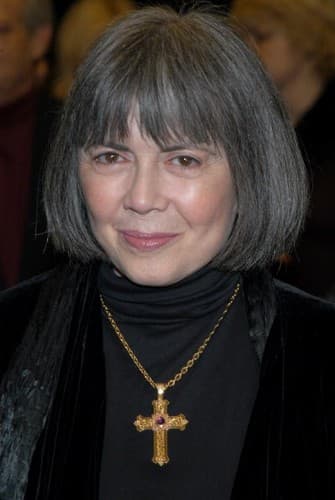
Anne Rice was an American author of gothic fiction, erotic literature, and Christian literature. She was best known for her series of novels The Vampire Chronicles. The first book became the subject of a film adaptation—Interview with the Vampire (1994).
Similar books
- Interview With The Vampire
Anne Rice
4.0 (485k) average on GoodreadsFantasyDirect predecessor, shares characters and establishes the core world.
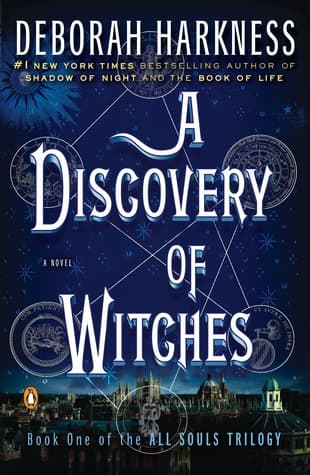
- A Discovery of Witches
Deborah Harkness
4.0 (369k) average on GoodreadsFantasyFeatures ancient supernatural beings, historical mysteries, and a blend of modern and historical settings.
- Harry Potter and the Sorcerer's Stone
J.K. Rowling
4.5 (7M) average on GoodreadsFantasyRescued from a miserable life under the stairs, an orphaned boy discovers he's a wizard destined for a magical school, where he uncovers a dangerous secret tied to the dark wizard who murdered his parents.
- The Hunger Games
Suzanne Collins
4.3 (6.4M) average on GoodreadsFantasyIn a future where children fight to the death on live television, Katniss Everdeen volunteers for the arena, turning a death sentence into a fight for survival and a spark of rebellion.
- 1984
George Orwell
4.2 (3.1M) average on GoodreadsPoliticsIn a future where surveillance and thought control are absolute, a man's search for truth clashes with the Party, showing that hope can be a form of rebellion.
- Divergent
Veronica Roth
4.2 (2.9M) average on GoodreadsFantasyIn a society divided by virtues, a sixteen-year-old's difference from the norm starts a rebellion that threatens her world.





Enjoyed the summary?
A summary gives you the shape of the book. The book itself has the detail, the examples and the voice.
Find The Queen of the Damned on AmazonAs an Amazon Associate, BookBrief earns from qualifying purchases. How we're funded