
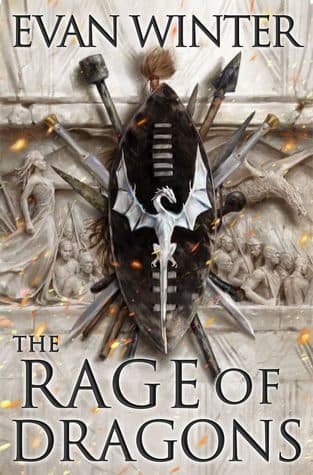
Synopsis
Covers the whole plot, including the ending.
- Difficulty
- Medium
- Pacing
- Fast
- Mood
- Gritty, Intense, Vengeful, Action-packed, Epic
- Read it if
- You love gritty, action-packed fantasy with an underdog protagonist driven by revenge, intense training montages, and a focus on military strategy and sword fighting.
- Skip it if
- You prefer low-stakes stories, less violence, or protagonists who achieve success without extreme suffering and sacrifice.
The Rage of Dragons Plot Summary
Covers the whole plot, including the ending.
Tau's Peaceful Plan Shattered
Tau, a Low-rank Omehi without the gift of magic, plans to injure himself during his Trials. This will allow him to leave the war early and live a quiet life with his betrothed, Zuri. He tells his father this plan, and his father eventually supports his wish for peace. However, their hopes are crushed when three elite high-rank warriors—Lord Boku, Lord Jax, and Lord Uru—brutally murder Tau's father and Zuri. Tau is the only survivor, filled with grief and a desire for revenge against those who took everything from him. This event changes Tau's path, forcing him to give up his dreams of peace for a relentless pursuit of vengeance.
The Path of Unthinkable Training
Fueled by his rage, Tau decides to become the greatest swordsman in Omehi history, even though he lacks magic. He begins a brutal and unusual training regimen, driven by the desire to kill the three High-ranks responsible for his family's deaths. He seeks out the most dangerous and skilled warriors, including the reclusive Instructor Hadiz, to push his limits. Tau endures many injuries and near-death experiences, using a forbidden healing technique called 'the transfer' to recover quickly and continue training. This relentless pursuit of skill makes him different from his peers. He sacrifices everything—comfort, health, and even sanity—to achieve his goal of vengeance, constantly pushing past what is thought possible for a warrior without magic.
Rising Through the Ranks
Tau's dedication and skill make him stand out during Omehi military training. Despite not having magic, he consistently performs better than his gifted peers, earning respect from some and animosity from others. His skill in combat trials, especially against gifted warriors like Jayden, is clear. He is eventually chosen for the elite Akemata, the Emperor's personal guard. This position puts him near the High-ranks he wants to kill. This promotion also brings him under the scrutiny of powerful figures like Queen Tsiora and the Emperor, who see his talent but are wary of his intense, solitary nature and unknown reasons. His rise is fast, but it comes at a great personal cost.
The Emperor's Favor and Political Intrigue
Tau's fighting ability catches the eye of Emperor Uduak, who takes a personal interest in the young warrior. Uduak assigns Tau to protect his daughter, Princess Zuri (not Tau's betrothed), and later tasks him with investigating the mysterious 'Whisperer' attacks that trouble the Omehi capital. Tau navigates the political landscape of the Omehi court, where alliances change often and betrayal is common. He learns that the Emperor's court has many internal power struggles, and his own position is uncertain despite the Emperor's favor. His closeness to power also brings him closer to his targets, Lords Boku, Jax, and Uru, who are important figures within the High-rank hierarchy. This forces him to play a dangerous game of patience and observation.
Confronting His Targets
As Tau gains status, he plans encounters with his targets. He first confronts Lord Uru in a training duel, showing his superior skill and humiliating the High-rank, though he cannot kill him openly. Later, he faces Lord Jax in a public challenge, again showing his sword mastery. These confrontations are not just about showing his power but also about sending a message and gathering information. He carefully plans each interaction, using his intelligence and fighting skill to gain an advantage. These encounters are dangerous, as the High-ranks are powerful and well-connected, and Tau must constantly be alert for their retaliation, all while keeping his true intentions hidden from most.
The Whisperer and the Threat to the Empire
Emperor Uduak tasks Tau with investigating the 'Whisperer,' a mysterious group responsible for assassinations and sabotage in the Omehi capital. His investigation leads him to uncover a conspiracy involving internal factions within the Omehi empire, possibly working with the N'Golo, the enemy across the sea. He learns that the Whisperer attacks are meant to destabilize the Omehi leadership and weaken their war efforts. This subplot connects with his personal quest, as he realizes that some of his targets might be linked to this larger threat. The investigation forces Tau to think beyond individual revenge and consider the broader impact for his people, even as his personal quest remains most important.
The First Vengeful Strike
After careful planning and observation, Tau finally gets his chance to strike. He corners Lord Uru in a secluded location, away from others. In a brutal and decisive duel, Tau unleashes his years of pent-up rage and skill, systematically breaking Uru's defenses and killing him. This act of vengeance is a significant achievement for Tau, proving that his extreme training was not in vain. However, it also marks him as a dangerous and unpredictable force, further cementing his reputation as a formidable warrior. The murder is disguised to avoid immediate suspicion, but the implications of a High-rank being killed by a Low-rank are immense, even if not immediately recognized.
The Truth of the Attack
Through his investigations and confrontations, Tau begins to understand the true reasons behind the attack on his family. He learns that his father was involved in a secret, forbidden relationship with Queen Tsiora, and they had a child. The attack was not random but an assassination ordered by Emperor Uduak to remove a potential threat to his lineage and the stability of the throne. Lords Boku, Jax, and Uru were simply carrying out the Emperor's orders. This revelation changes Tau's understanding of his revenge, shifting his ultimate target from the three High-ranks to the Emperor himself, the true planner of his family's tragedy. His personal quest now has a political dimension.
The Dragon's Rage
Tau's continued pursuit of vengeance and his growing influence in the Akemata lead to increased tensions within the Omehi court. He uncovers more about the 'Whisperer' and its connection to the N'Golo. His actions, particularly the killing of Lord Uru, create ripples that threaten to expose the Emperor's secrets. As the story progresses, the magical elements of the Omehi world, especially the dragon-calling abilities of the Omehi women, become more important. Tau's journey is not just about personal revenge but also about the destiny of the Omehi people in their ongoing war against the N'Golo. This suggests that his path might lead him to become a central figure in a much larger conflict, a living weapon shaped by tragedy.
A New Target Emerges
With the full truth revealed, Tau's focus shifts from the three High-ranks to Emperor Uduak. He realizes that killing Boku and Jax is only a step towards the true architect of his suffering. His training intensifies, now with the Emperor as his ultimate target. He begins to strategically position himself, manipulating events and alliances to create an opportunity to confront Uduak. The book ends with Tau fully committed to this new, more dangerous path, knowing that challenging the Emperor directly will have catastrophic consequences for himself and potentially the entire Omehi empire. He has transformed from a grieving boy into a cold, calculating weapon, ready to unleash his rage on the highest power in the land, even if it means sacrificing everything.
Principal Figures
Tau Solarin
Protagonist
A gift-less Low-rank warrior seeking vengeance for his murdered family.
Tau begins as a disillusioned Low-rank Omehi, planning to escape the endless war. After the brutal murder of his father and betrothed, Zuri, he transforms into a singular force of vengeance. Despite lacking the 'gifts' of his people (dragon-calling or demon-form), he dedicates himself to an unthinkable training regimen, pushing his body and mind to their absolute limits. He is resourceful, intelligent, and possesses an iron will, using forbidden healing techniques and strategic thinking to overcome his physical limitations. His journey is marked by extreme suffering and sacrifice, as he becomes the deadliest swordsman in the Omehi empire, driven by a cold, calculating rage.
Relationships: Zuri (betrothed) (Fiancée, murdered, driving force for revenge); Hadiz (Mentor and trainer); Jayden (Rival, then comrade and friend); Queen Tsiora (Secret mother, later a complex ally/target); Emperor Uduak (Ultimate target of revenge)
Zuri (betrothed)
Mentioned
Tau's murdered betrothed, whose death fuels his quest for revenge.
Zuri is Tau's childhood sweetheart and betrothed. She represents Tau's initial dreams of a peaceful life away from the war, a life that is brutally snatched away. Her murder, alongside Tau's father, is the catalyst for Tau's transformation and his relentless pursuit of vengeance. Though she appears only briefly in the prologue, her memory and the injustice of her death are constant motivators for Tau throughout the entire narrative. She symbolizes the innocence and happiness that Tau lost, and her absence underscores the profound tragedy that shapes his destiny.
Relationships: Tau Solarin (Betrothed, deep love and affection)
Hadiz
Supporting
A legendary, reclusive instructor who trains Tau in unconventional and brutal methods.
Hadiz is a reclusive and enigmatic figure, a legendary instructor known for his brutal and effective training methods. He is initially reluctant to train Tau, recognizing the extreme commitment required. However, he eventually takes Tau under his wing, pushing him beyond all conventional limits. Hadiz teaches Tau not just swordsmanship but also the mindset of a true warrior, including the use of 'the transfer' healing technique. He is a pragmatic and often cruel mentor, but his guidance is instrumental in forging Tau into the deadliest warrior. He represents the harsh realities of the Omehi warrior culture and the lengths to which one must go to survive and excel.
Relationships: Tau Solarin (Mentor and trainer)
Jayden
Supporting
A gifted High-rank warrior, initially Tau's rival, later a loyal comrade.
Jayden is a gifted High-rank warrior and one of Tau's initial rivals during the training trials. He possesses the 'demon-form' gift, making him physically superior to Tau. Despite their initial animosity and competitive nature, Jayden eventually comes to respect Tau's unparalleled skill and dedication. He becomes a loyal friend and comrade, often defending Tau against others' skepticism and prejudice. Jayden represents the potential for unity across the Omehi ranks and serves as a foil to Tau, highlighting the difference between natural talent and honed skill. His unwavering loyalty provides Tau with much-needed support in the treacherous Omehi court.
Relationships: Tau Solarin (Rival, then comrade and friend)
Queen Tsiora
Supporting
The powerful, dragon-calling queen of the Omehi, holding a secret connection to Tau.
Queen Tsiora is one of the rare Omehi women gifted with the ability to call dragons, making her immensely powerful and crucial to the Omehi war effort. She is a figure of authority and political influence within the Omehi court. It is revealed that she had a secret, forbidden affair with Tau's father, making her Tau's biological mother. This revelation deeply complicates Tau's quest for revenge and her own position. She is a shrewd and calculating leader, constantly navigating the political intrigues of the empire while bearing the weight of her secrets and responsibilities. Her character embodies the hidden costs and sacrifices within the Omehi hierarchy.
Relationships: Tau Solarin (Biological mother); Emperor Uduak (Husband, political rival); Lord Boku (Ally/confidante)
Emperor Uduak
Antagonist
The enigmatic and powerful ruler of the Omehi, the true orchestrator of Tau's tragedy.
Emperor Uduak is the ultimate ruler of the Omehi people, a figure of immense power and authority. He is initially portrayed as a benevolent, if strict, leader who recognizes Tau's talent. However, it is eventually revealed that he was the one who ordered the murder of Tau's father and betrothed to protect his lineage and the stability of his throne, due to his wife Tsiora's affair. Uduak is a calculating and ruthless leader, willing to commit atrocities to maintain power and ensure the Omehi's survival in their endless war. He represents the corrupting influence of power and the hidden cruelties within the Omehi's rigid social structure, becoming Tau's ultimate target.
Relationships: Queen Tsiora (Husband, political rival); Tau Solarin (Benefactor, then ultimate target of revenge)
Lord Boku
Antagonist
A High-rank warrior and one of the three responsible for Tau's family's murder.
Lord Boku is one of the three High-rank warriors directly involved in the murder of Tau's father and betrothed. He is a prominent figure within the Omehi military and court, loyal to Emperor Uduak. Boku represents the powerful and privileged elite of Omehi society, who operate with impunity. He is a formidable warrior in his own right, but his arrogance and sense of entitlement make him a target for Tau's calculated revenge. He is a key figure in the initial phase of Tau's quest, symbolizing the injustice that Tau seeks to rectify.
Relationships: Tau Solarin (Target of revenge); Emperor Uduak (Loyal subordinate); Queen Tsiora (Ally/confidante)
Lord Jax
Antagonist
Another High-rank warrior involved in the murder, targeted by Tau.
Lord Jax is another of the three High-rank warriors responsible for the attack on Tau's family. Like Boku and Uru, he is an elite member of the Omehi military, possessing significant power and status. Jax is characterized by his combat prowess and his position within the High-rank hierarchy. He serves as a direct antagonist for Tau, engaging him in public challenges and duels. His role is to represent another facet of the powerful elite that Tau must overcome to achieve his revenge, showcasing the formidable opposition Tau faces even as he grows in skill.
Relationships: Tau Solarin (Target of revenge); Emperor Uduak (Subordinate)
Lord Uru
Antagonist
The first High-rank warrior Tau eliminates in his quest for vengeance.
Lord Uru is one of the three High-rank warriors directly involved in the murder of Tau's father and betrothed. He is a powerful and arrogant figure who underestimates Tau due to his Low-rank status and lack of gifts. Uru becomes Tau's first successful target of revenge. Tau meticulously plans his confrontation and, in a brutal duel, systematically defeats and kills Uru. His death marks a pivotal moment in Tau's journey, proving his capabilities and escalating the stakes of his quest. Uru's demise serves as a warning to the other High-ranks and a testament to Tau's terrifying dedication.
Relationships: Tau Solarin (First target of revenge, killed by Tau); Emperor Uduak (Subordinate)
Obianuju
Supporting
A dragon-caller and ally who supports Tau in his journey.
Obianuju is a gifted dragon-caller and a high-ranking woman within Omehi society. She is perceptive and intelligent, recognizing Tau's extraordinary talent and potential early on. She becomes an ally and confidante to Tau, offering him advice and support, particularly as he navigates the complex politics of the Omehi court. Obianuju often serves as a voice of reason and a source of information, helping Tau understand the broader implications of his actions and the machinations of the powerful. Her presence highlights the importance of the dragon-callers in Omehi society and their unique perspective on the ongoing war.
Relationships: Tau Solarin (Ally and confidante)
Themes & Insights
Revenge and Justice
The main theme of the novel is Tau's relentless pursuit of revenge for the murder of his father and betrothed. This theme explores how grief and rage can transform a person, driving Tau to extreme training and sacrifice. It looks at the moral questions of vengeance, asking if it can ever truly bring peace or if it just continues a cycle of violence. Tau's journey forces him to confront what justice means in a brutal, war-torn society, where personal grievances often conflict with political needs. The revelation of the Emperor's involvement further complicates this, changing the target of justice.
“He would be a weapon. A weapon for himself. A weapon for Zuri. A weapon for his father. And he would cut down every single person who stood in his way.”
Sacrifice and Dedication
Tau's path is defined by extreme sacrifice and dedication. As a warrior without magic, he must push himself beyond human limits, enduring constant pain, injury, and social exclusion. He sacrifices his health, his dreams of a peaceful life, and possibly his sanity, all for the single goal of revenge. This theme shows the cost of greatness and the psychological burden of such unwavering commitment. It also explores the idea of 'earning' power through sheer effort, contrasting Tau's hard-won skill with the inherent advantages of the gifted. His use of 'the transfer' healing technique is a physical sign of his willingness to sacrifice his body for his goal.
“Pain was a price. And he was willing to pay it, again and again, until he had bought what he desired.”
Social Hierarchy and Class Struggle
Omehi society is strictly divided into High-ranks and Low-ranks, with the gifted holding great power and privilege. Tau, a Low-rank without magic, constantly faces prejudice, contempt, and systemic disadvantages. His struggle is not just against individual enemies but against an entire social structure that considers him inferior. This theme explores the injustices of a stratified society built on genetic luck and inherited status. Tau's rise challenges this hierarchy, showing that skill and determination can overcome birthright, but also highlighting the immense resistance and animosity he faces from those who benefit from the current order. His quest for revenge exposes the corruption and cruelty hidden beneath the surface of the Omehi elite.
“He was a Low-rank, a nothing, a piece of meat for the war machine. But he would be a piece of meat that cut back.”
Identity and Self-Forging
Tau's identity changes throughout the story. He starts as someone trying to escape a predefined warrior identity, then becomes a weapon of vengeance, and ultimately a figure who goes beyond the expectations of his rank and gifts. This theme explores how trauma and purpose can create a new self, removing old desires and replacing them with a single, unwavering drive. Tau actively 'shapes' himself, not just his body, but his entire being, into an instrument of his will. His journey shows that identity is not solely determined by birth or circumstance, but by the choices one makes and the sacrifices one endures.
“He was no longer just Tau. He was the rage. He was the blade. He was the vengeance.”
The Nature of War and Survival
The Omehi people have been in a continuous war for centuries, shaping every part of their society. This theme explores the realities of constant conflict, where individuals are born into a system made for war, and even the 'gifts' are tools of destruction. It explores the psychological toll of such a life, the normalization of violence, and the desperate measures people take to survive. The war against the N'Golo is the background for Tau's personal journey, but it also provides a broader context for the Omehi's harsh social structure and the difficult choices their leaders make, often at great human cost. The 'Whisperer' subplot reveals internal threats made worse by the external war.
“Two hundred years of war. Two hundred years of blood. It was all they knew. It was all they were.”
Plot Devices & Literary Techniques
The Transfer
A forbidden healing technique that accelerates recovery at a painful cost.
The Transfer is a unique and forbidden healing method that allows a warrior to rapidly recover from injuries by drawing on an external source of life force, typically a captured N'Golo. This device is crucial to Tau's training, as it enables him to push his body beyond conventional limits, suffering catastrophic injuries and healing them within days or hours, allowing for continuous, brutal practice. It symbolizes Tau's willingness to embrace dark, unconventional means to achieve his goals, highlighting his desperation and the extreme sacrifices he makes. It also raises ethical questions about the cost of power and survival in the Omehi world.
The 'Gifts' (Dragon-Calling and Demon-Form)
Innate magical abilities that define Omehi social hierarchy and military power.
The 'Gifts' are the inherent magical abilities possessed by a small percentage of the Omehi population: women who can call and control dragons, and men who can transform into powerful, enhanced 'demon-forms.' This device establishes the rigid social hierarchy of the Omehi, where the gifted hold immense power and status. Tau, being gift-less, must overcome this inherent disadvantage through sheer skill and dedication. The Gifts serve as both a source of Omehi strength in war and a societal barrier that Tau must dismantle through his actions, challenging the notion that power is solely determined by birthright.
The Unconventional Training Montage
A prolonged and brutal training sequence that transforms Tau into a master warrior.
This device refers to the extended and graphically detailed sequences depicting Tau's extreme training regimen under Hadiz and on his own. Unlike typical training montages, it emphasizes the prolonged suffering, repeated injuries, and the psychological toll of his dedication. It's not a quick jump-cut to mastery but a visceral, grinding process that underscores the sheer effort Tau puts in. This device effectively conveys the depth of Tau's commitment and the extraordinary nature of his skill, making his eventual victories against gifted opponents believable and hard-earned, rather than simply a matter of inherent talent.
The Whisperer
A mysterious threat that destabilizes the Omehi capital, revealing deeper conspiracies.
The Whisperer is an elusive entity or group responsible for a series of assassinations and acts of sabotage within the Omehi capital. This plot device serves multiple functions: it provides a mystery for Tau to investigate, draws him closer to the Emperor and the political intrigues of the court, and ultimately helps uncover a larger conspiracy involving internal factions and potentially the N'Golo. The Whisperer subplot adds layers of political complexity to Tau's personal quest for revenge, showing how individual actions can be intertwined with broader geopolitical conflicts and hidden power struggles within the empire.
The Rage of Dragons Quotes
“The world is a beast, and it bites.”
“I will not be a victim. I will be a weapon.”
“The only way to kill a dragon is to become one.”
“Fear is a tool. Use it.”
“We are all monsters in someone else's story.”
“Pain is a teacher. Learn from it.”
“The strong do as they will; the weak suffer as they must.”
“Every scar tells a story. Make yours worth telling.”
“Hope is a dangerous thing. It can get you killed.”
“In the end, we are all just stories. Make yours a good one.”
“The rage of dragons is nothing compared to the rage of men.”
“You don't get to choose your enemies. You only get to choose how you fight them.”
“Sometimes, the only way to win is to lose everything first.”
“The past is a ghost. It haunts us until we face it.”
Quiz
10 questions on the plot and the characters. Each answer comes with a short explanation.
Question 1
What is the primary reason Tau initially plans to get injured early in his military service?
- To prove his bravery to his family
- To escape the endless war and settle down with a family and land
- To become a dragon caller like the gifted women
- To gain respect from the gifted warriors
Show answer
B. To escape the endless war and settle down with a family and land At the beginning of the story, Tau is gift-less and knows he's destined to be fodder in the endless war. His original plan is to get injured intentionally so he can leave military service early and pursue a peaceful life with marriage, children, and land.
Question 2
What event triggers Tau's transformation from seeking escape to pursuing revenge?
- He discovers he has hidden magical abilities
- He fails his first combat test spectacularly
- Those closest to him are brutally murdered
- He is betrayed by his military commander
Show answer
C. Those closest to him are brutally murdered Tau's entire motivation changes when people he cares about are brutally murdered. This traumatic event transforms his grief into rage and sets him on a path of revenge, abandoning his original plan of escape.
Question 3
Among the Omehi people, what approximate percentage of men are born with the gift to transform into enhanced warriors?
- One in every fifty men
- One in every hundred men
- One in every five hundred men
- One in every thousand men
Show answer
B. One in every hundred men The book establishes that among the Omehi, approximately one in every hundred men is born with the gift to magically transform into bigger, stronger, faster killing machines called 'Lessers' who can become 'Greater' warriors.
Question 4
What does Tau dedicate himself to becoming after the murders that drive him to revenge?
- A dragon caller who can control the skies
- A military strategist to outsmart his enemies
- The greatest swordsman to ever live
- A political leader to change Omehi society
Show answer
C. The greatest swordsman to ever live Tau becomes obsessed with revenge and dedicates himself to becoming the greatest swordsman who ever lived, willing to die countless times in his pursuit to kill the three people who betrayed him.
Question 5
How does the Omehi society's structure primarily revolve around?
- Agricultural development and land management
- Trade and economic expansion
- War and military conflict
- Religious worship and spiritual enlightenment
Show answer
C. War and military conflict The Omehi people have been fighting an unwinnable war for nearly two centuries, and their entire society is built around warfare. Everyone is either gifted for combat or destined to be fodder in the endless conflict.
Question 6
What is the significance of the statement that Tau is willing to 'die a hundred thousand times' in his quest?
- It refers to literal resurrection magic he possesses
- It symbolizes his willingness to endure extreme suffering and repeated failures
- It indicates he will reincarnate until he succeeds
- It means he plans to sacrifice that many soldiers in his revenge
Show answer
B. It symbolizes his willingness to endure extreme suffering and repeated failures This hyperbolic statement represents Tau's absolute commitment to his revenge quest. As a gift-less fighter facing overwhelming odds, he's prepared to endure unimaginable suffering, training, and repeated failures to achieve his goal of becoming skilled enough to kill his enemies.
Question 7
What makes Tau's chosen path particularly 'unthinkable' within Omehi society?
- He plans to desert the military entirely
- He seeks to become elite without being born gifted
- He wants to marry outside his social class
- He attempts to learn dragon calling as a man
Show answer
B. He seeks to become elite without being born gifted In the rigid caste system of Omehi society, only the gifted (one in a hundred men who can transform, or one in two thousand women who can call dragons) can become elite warriors. Tau's path is unthinkable because he's attempting to achieve greatness as a gift-less commoner, defying the biological determinism of his society.
Question 8
What specific numerical ratio of Omehi women are born with the power to call down dragons?
- One in every five hundred women
- One in every one thousand women
- One in every two thousand women
- One in every ten thousand women
Show answer
C. One in every two thousand women The book specifies that dragon callers are extremely rare among the Omehi, with only one in every two thousand women born with this powerful gift. This scarcity makes them particularly valuable in their society's endless war.
Question 9
What fundamental contradiction does Tau's journey expose about Omehi society's belief system?
- That peace treaties could actually work if attempted
- That biological destiny can be overcome through extreme will and training
- That dragons are actually controllable by men too
- That the war has actually been winnable all along
Show answer
B. That biological destiny can be overcome through extreme will and training Omehi society operates on a strict biological determinism where only the 'gifted' can achieve martial excellence. Tau's quest challenges this core belief by demonstrating that a gift-less man, through sheer determination, brutal training, and willingness to suffer, might transcend his supposed biological limitations.
Question 10
How long have the Omehi people been fighting the war that shapes their entire society?
- About fifty years
- About one hundred years
- Almost two hundred years
- Over five hundred years
Show answer
C. Almost two hundred years The book establishes that the Omehi have been engaged in an endless, unwinnable conflict for 'almost two hundred years.' This prolonged warfare has fundamentally shaped every aspect of their culture, social structure, and individual destinies.
The Rage of Dragons FAQ
What is 'The Rage of Dragons' about?
The novel follows Tau, a young man from the Omehi people who are trapped in a centuries-long war. After his loved ones are murdered, Tau abandons his plan to escape military service and instead dedicates himself to becoming an unparalleled warrior, seeking revenge against three specific betrayers through relentless training and supernatural determination.
Why should I read 'The Rage of Dragons'?
It offers a gripping blend of intense action, deep character-driven revenge, and unique fantasy elements like dragon-summoning Gifted women and shape-shifting Enraged men. The story's exploration of obsession, societal oppression, and the cost of vengeance makes it both thrilling and thought-provoking.
What is the background/setting of 'The Rage of Dragons'?
Set in a war-torn society called the Omehi, who have been fighting for nearly 200 years against an enemy called the Hedeni. Their culture revolves entirely around warfare, with a rigid caste system where the Gifted (like dragon-callers) hold power, while the ungifted like Tau are expendable soldiers.
What are the most memorable quotes?
Key quotes include Tau's vow: 'I'll become the greatest swordsman to ever live, a man willing to die a hundred thousand times for the chance to kill the three who betrayed him,' and reflections on the Omehi's plight like 'Their society has been built around war and only war.'
What writing style does the author use?
Evan Winter employs a fast-paced, visceral prose style with vivid battle descriptions and deep internal monologues. The narrative is tightly focused on Tau's perspective, creating an immersive experience of his rage and transformation.
What minor details add significant meaning?
The rarity of Gifted individuals—one in 2,000 women can call dragons, one in 100 men can Enrage—highlights the societal inequality. Tau's initial plan to fake an injury shows how the system forces even the unwilling into combat, making his later commitment to mastery more striking.
What are some subtle foreshadowing moments?
Early mentions of Tau's desire for a peaceful life with marriage and land foreshadow how his revenge quest will destroy that dream. The brutality of the Omehi's endless war hints that Tau's path may perpetuate rather than escape the cycle of violence.
What unexpected character connections exist?
Tau's relationships with Gifted characters like the dragon-callers reveal the deep divides in Omehi society. His interactions with military trainers and fellow soldiers show how his obsession isolates him, even as he relies on others for his training.
What are unspoken character motivations?
Tau's revenge is driven not just by grief but by a deeper need to prove his worth in a society that deems him 'fodder.' Supporting characters often act out of survival instincts or loyalty to the rigid caste system, even when it harms them.
What psychological complexities do characters exhibit?
Tau grapples with trauma, shifting from avoidance to hyper-focused rage, which borders on self-destruction. Other characters, like the Gifted, display guilt or arrogance tied to their privileged roles, complicating their interactions with commoners like Tau.
What are the major emotional turning points?
The murder of Tau's loved ones triggers his descent into vengeance. Key moments include his decision to forgo injury and embrace combat training, and later realizations about the futility of war that challenge his single-minded focus.
How do relationship dynamics evolve?
Tau's relationships deteriorate as his obsession grows; he distances himself from potential allies and becomes more isolated. His dynamic with authority figures shifts from submission to defiance, reflecting his transformation into a relentless force.
Which parts remain ambiguous or open-ended?
The true nature of the Omehi's war with the Hedeni and whether Tau's revenge will bring closure or perpetuate violence are left ambiguous. The fates of secondary characters and the long-term impact of Tau's actions are also open to interpretation.
What are controversial scenes or decisions?
Tau's choice to pursue revenge at all costs, including self-harm and alienating others, sparks debate about whether his path is heroic or self-destructive. The Omehi's societal acceptance of expendable 'fodder' soldiers also raises ethical questions about sacrifice and oppression.
'The Rage of Dragons' ending explained: how it ends & what it means
Without spoiling specifics, the ending sees Tau advancing in his quest but facing new challenges that question the sustainability of his revenge. It suggests his journey is far from over, emphasizing themes of perseverance and the cyclical nature of conflict in the Omehi world.
Similar books
- Red Rising
Pierce Brown
4.3 (248k) average on GoodreadsFantasyFeatures a lower-class protagonist rising through a brutal, hierarchical society fueled by war and revenge, with intense action and political intrigue.
- The Poppy War
R.F. Kuang
4.0 (46k) average on GoodreadsFantasyFollows a young, underestimated protagonist who undergoes grueling training to become a powerful warrior in a war-torn setting, driven by ambition and dark forces.
- The Darkness That Comes Before
R. Scott Bakker
3.8 (18k) average on GoodreadsFantasyBakker's work offers a broader philosophical and theological scope within its grimdark setting, with more complex world-building and moral ambiguities. Winter's The Rage of Dragons is more action-focused and character-driven, making it more accessible but perhaps less intellectually expansive.
- The Blade Itself
Joe Abercrombie
4.2 (165k) average on GoodreadsFantasyAbercrombie excels in morally grey characters, cynical wit, and multi-perspective narratives. Winter's novel features a more straightforward, albeit intensely driven, protagonist and a more focused narrative arc, sacrificing some of Abercrombie's character diversity for a tighter, more propulsive story.
- Harry Potter and the Sorcerer's Stone
J.K. Rowling
4.5 (7M) average on GoodreadsFantasyRescued from a miserable life under the stairs, an orphaned boy discovers he's a wizard destined for a magical school, where he uncovers a dangerous secret tied to the dark wizard who murdered his parents.
- The Hunger Games
Suzanne Collins
4.3 (6.4M) average on GoodreadsFantasyIn a future where children fight to the death on live television, Katniss Everdeen volunteers for the arena, turning a death sentence into a fight for survival and a spark of rebellion.




Enjoyed the summary?
A summary gives you the shape of the book. The book itself has the detail, the examples and the voice.
Find The Rage of Dragons on AmazonAs an Amazon Associate, BookBrief earns from qualifying purchases. How we're funded