
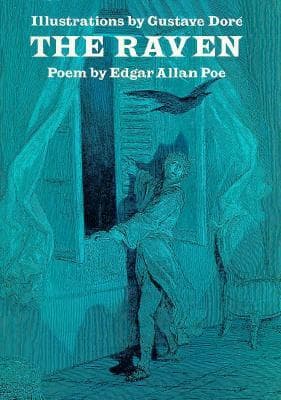
Synopsis
Covers the whole plot, including the ending.
- Difficulty
- Medium
- Pacing
- Slow
- Mood
- Melancholy, Atmospheric, Despairing, Gothic
- Read it if
- You appreciate classic poetry, gothic atmosphere, and profound explorations of grief and loss.
- Skip it if
- You prefer lighthearted stories or are sensitive to themes of intense despair and melancholy.
The Raven Plot Summary
Covers the whole plot, including the ending.
The Midnight Study
The narrator, a scholar reading "forgotten lore," is in his room late on a dreary December night. He is tired, almost asleep, trying to forget his deep sadness over the loss of his beloved Lenore. The flickering firelight casts shadows, adding to the sad mood. Suddenly, he hears a gentle tap at his door, which he first thinks is a visitor, a hopeful thought that briefly breaks through his grief.
A Visitor at the Door
Woken by the persistent tapping, the narrator tries to calm his heart. He murmurs an apology to the supposed visitor, saying he was nearly asleep. But when he opens the door, he finds only darkness. He looks out into the night, his spirit growing stronger as he stares into the blackness. In a moment of deep longing, he whispers "Lenore?" and an echo, seemingly from the emptiness, whispers back, "Lenore!" This moment increases his sense of loss and the haunting presence of his dead love.
Tapping at the Window
Back in his room, his spirit now restless, the narrator is disturbed again. This time, the tapping is louder and seems to come from his window. He tells himself it is just the wind and decides to check, hoping to find an explanation to quiet his agitated mind. He tells himself it's nothing more than the wind, trying to keep some control over his growing fear and grief. He throws open the shutter.
Entry of the Raven
As the narrator opens the shutter, a large raven, a creature from "saintly days of yore," flies into his room without hesitation. The bird, with its dark feathers and dignified manner, ignores the narrator. Instead, it lands grandly on a bust of Pallas Athena, which is above his door. This unexpected entrance briefly amuses the narrator, giving him a short break from his despair as he watches the bird's serious look.
The First Word
Despite his grief, the raven's appearance and serious face make the narrator smile for a moment. He asks the bird its name on the "Night's Plutonian shore," a poetic reference to the underworld. To his surprise, the raven answers with one clear word: "Nevermore." The narrator is shocked, having never heard a bird speak so clearly. He thinks the bird must have learned this word from some unhappy owner, whose troubles taught it this solitary, sad phrase.
A Glimmer of Hope
The narrator, curious and increasingly troubled by the raven's repeated word, pulls his chair directly in front of the bird. He starts to think about what the raven means by its grim reply, trying to understand the deeper meaning of "Nevermore." He sees the bird as a prophet, a messenger. His thoughts turn back to Lenore. He asks the raven about his future, specifically if he will ever find comfort for his sorrow, or if he will ever again hold his lost Lenore in "Aidenn" (Eden or paradise).
Despair Deepens
As the narrator continues to question the raven, his questions become more desperate. He asks if there is any hope of forgetting his sorrow, any "nepenthe" to ease his pain. The raven, with its steady voice, consistently replies, "Nevermore." Each time the word is repeated, it chips away at the narrator's fragile hope. He then directly asks if he will ever meet Lenore in the afterlife, a question that holds the last bit of his spiritual comfort. The bird's answer is, as always, a crushing "Nevermore."
The Prophet of Evil
Driven to madness by the raven's constant words, the narrator lashes out at the bird. He calls it a "fiend" and a "thing of evil," demanding that it return to the "Night's Plutonian shore" and leave him alone. He begs the bird to remove its shadow from his room and its beak from his heart, symbolizing the emotional pain it causes. He desperately wants the bird and its ominous message to leave, to free him from the crushing weight of its prophecy.
The Raven's Immobility
Despite the narrator's pleas, the raven stays still. It sits on the bust of Pallas, its gaze fixed on him. The bird's shadow, cast by the lamplight, becomes a permanent part of the floor, symbolizing the inescapable nature of his grief. The narrator then understands that the raven will never leave, that its presence is eternal, just as his sorrow for Lenore is eternal. The poem ends with the narrator stating that his soul, trapped beneath that shadow, shall be lifted "Nevermore."
The Raven Characters
The Narrator
Protagonist
A grief-stricken scholar haunted by the loss of his beloved Lenore.
The narrator is a scholar, immersed in "forgotten lore," whose life has been consumed by the profound grief over the death of his beloved Lenore. He is highly educated, sensitive, and prone to introspection and melancholic reflection. His mental state deteriorates throughout the poem, moving from weary sadness to a frantic, almost mad despair as he confronts the raven and its ominous message. His yearning for Lenore is the driving force behind his actions and his emotional torment.
Relationships: Lenore (Deceased beloved, source of his profound grief and obsession.)
Lenore
Mentioned
The narrator's deceased beloved, the catalyst for his immense sorrow.
Lenore is not a physical character in the poem but exists solely as the object of the narrator's intense love and overwhelming grief. She is described as a "rare and radiant maiden whom the angels name Lenore," idealized and almost ethereal in his memory. Her absence is the central tragedy of the narrator's life, and his inability to cope with her death fuels his descent into madness. She represents lost love, beauty, and the profound void left by death.
Relationships: The Narrator (Deceased beloved, the entire focus of his sorrow and longing.)
The Raven
Antagonist/Symbolic Figure
A mysterious, talking bird that delivers the relentless message of 'Nevermore.'
The Raven is a large, black bird that enters the narrator's chamber and perches on a bust of Pallas. It is described as having a 'saintly,' 'stately,' and 'grave and stern decorum.' Its sole utterance is the word 'Nevermore,' which it repeats in response to the narrator's increasingly desperate questions. The Raven acts as a catalyst for the narrator's psychological breakdown, embodying the inescapable nature of his grief and the finality of death. It is ambiguous whether the raven is a literal bird, a supernatural entity, or a figment of the narrator's tormented mind.
Relationships: The Narrator (Tormentor/Symbol of despair; the narrator projects his fears and grief onto it.)
Pallas Athena
Mentioned/Symbolic
The Greek goddess of wisdom, whose bust serves as the raven's perch.
Pallas Athena, the Greek goddess of wisdom, is represented by the bust upon which the raven perches. While not an active character, her presence is highly symbolic. The raven, a creature of seemingly irrational and relentless negativity, sitting atop the symbol of wisdom, suggests the triumph of irrational grief and despair over reason and intellect. It highlights the narrator's inability to find solace or logical comfort in his studies or wisdom, further emphasizing his psychological torment.
Relationships: The Raven (Her bust is the raven's perch, symbolizing the dominance of despair over wisdom.)
The Raven Themes
Grief and Loss
The main theme of 'The Raven' is the overwhelming power of grief. The narrator is consumed by sorrow over Lenore's death, which causes sleeplessness, despair, and an inability to find peace. The poem shows a descent into deep mourning, made worse by the raven's constant 'Nevermore.' This theme is clear from the start, where the narrator is described as 'weak and weary' from his 'sorrow for the lost Lenore,' and ends with his soul being 'lifted—nevermore' from the raven's shadow.
“For the rare and radiant maiden whom the angels name Lenore— / Nameless here for evermore.”
Madness and Despair
The poem carefully tracks the narrator's mental decline from sadness to madness. His initial weariness turns into a desperate hope, which the raven's words then systematically destroy. The narrator starts to project his own despair onto the bird, seeing it as a 'prophet' or 'fiend.' His increasingly frantic questions and demands, along with the raven's unchanging answer, drive him to a state where he loses all reason and accepts eternal suffering. The final image of his soul trapped beneath the raven's shadow powerfully shows this decline.
“Leave my loneliness unbroken! quit the bust above my door! / Take thy beak from out my heart, and take thy form from off my door!”
The Supernatural and the Irrational
Poe skillfully blurs the lines between reality and the supernatural, or the narrator's experience of it. The raven's ability to speak is supernatural, yet its origin is unclear – is it a real bird, a demonic being, or a part of the narrator's tormented mind? The entire encounter feels dreamlike and otherworldly, increasing the sense of irrational fear. The setting, 'bleak December' and the 'ghostly' embers, helps create an atmosphere where the natural world seems to bend to the narrator's inner turmoil, making the supernatural feel possible within his reality.
“On the pallid bust of Pallas just above my chamber door; / And his eyes have all the seeming of a demon's that is dreaming.”
Memory and Obsession
The narrator's memory of Lenore is both his greatest comfort and his biggest pain. He cannot move past her death, constantly thinking about her 'lost' presence. This obsession drives his questions to the raven, as he desperately seeks some assurance that he might reunite with her or forget his pain. The raven's 'Nevermore' reinforces the finality of her absence and the pointlessness of his hopes, trapping him in a cycle of obsessive remembrance and despair. His attempts to forget or find 'nepenthe' are always blocked by this internal and external reminder.
“Respite—respite and nepenthe from thy memories of Lenore!”
Plot Devices & Literary Techniques
Repetition
The consistent use of the word 'Nevermore' and other phrases.
The most prominent use of repetition is the raven's single word, 'Nevermore.' This repeated utterance serves to reinforce the narrator's despair and the finality of his loss. Each time the word is spoken, it chips away at his hope, driving him further into madness. Repetition also appears in the narrator's internal monologues and questions, emphasizing his obsessive focus on Lenore and his inability to escape his grief, creating a hypnotic and oppressive rhythm that mirrors his mental state.
Symbolism
Objects and characters represent abstract ideas.
The poem is rich with symbolism. The raven itself symbolizes death, despair, and the inescapable nature of grief. Its black color and association with the 'Night's Plutonian shore' link it to the underworld and foreboding. The bust of Pallas Athena, goddess of wisdom, represents reason, which is ultimately overwhelmed by the irrational despair embodied by the raven perched upon it. The 'lamplight gloating o'er' the raven's shadow symbolizes the lingering and pervasive nature of the narrator's sorrow, which he cannot escape.
Allusion
References to literature, mythology, and religion.
Poe uses numerous allusions to enrich the poem's themes. References to 'Plutonian shore' (the underworld, associated with Hades/Pluto) immediately establish a connection to death and the supernatural. The raven is described as from 'saintly days of yore,' giving it an ancient, perhaps prophetic, quality. The 'bust of Pallas' (Athena) alludes to classical wisdom, highlighting the contrast with the narrator's irrational despair. These allusions add layers of meaning and cultural resonance, deepening the poem's dark and melancholic atmosphere.
Internal Monologue
The narrator's thoughts and feelings are directly revealed.
The entire poem is essentially an extended internal monologue, allowing the reader direct access to the narrator's deteriorating mental state. We experience his weariness, his initial hope, his growing fear, and his eventual descent into despair through his own voice and interpretation of events. This device makes the psychological torment deeply personal and immediate, as we are privy to his rationalizations, his questions, and his ultimate resignation, making his madness feel intensely real and palpable.
The Raven Quotes
“Once upon a midnight dreary, while I pondered, weak and weary, Over many a quaint and curious volume of forgotten lore—While I nodded, nearly napping, suddenly there came a tapping, As of some one gently rapping, rapping at my chamber door.”
“Ah, distinctly I remember it was in the bleak December; And each separate dying ember wrought its ghost upon the floor.”
“Deep into that darkness peering, long I stood there wondering, fearing, Doubting, dreaming dreams no mortal ever dared to dream before.”
“Presently my soul grew stronger; hesitating then no longer, 'Sir,' said I, 'or Madam, truly your forgiveness I implore; But the fact is I was napping, and so gently you came rapping, And so faintly you came tapping, tapping at my chamber door, That I scarce was sure I heard you'—here I opened wide the door—Darkness there and nothing more.”
“Then, methought, the air grew denser, perfumed from an unseen censer Swung by Seraphim whose foot-falls tinkled on the tufted floor. 'Wretch,' I cried, 'thy God hath lent thee—by these angels he hath sent thee Respite—respite and nepenthe from thy memories of Lenore; Quaff, oh quaff this kind nepenthe and forget this lost Lenore!' Quoth the Raven 'Nevermore.'”
“On the cushion's velvet lining that the lamp-light gloated o'er, But whose velvet violet lining with the lamp-light gloating o'er, She shall press, ah, nevermore!”
“Startled at the stillness broken by reply so aptly spoken, 'Doubtless,' said I, 'what it utters is its only stock and store Caught from some unhappy master whom unmerciful disaster Followed fast and followed faster till his hopes he bore no more.'”
“Then, upon the velvet sinking, I betook myself to linking Fancy unto fancy, thinking what this ominous bird of yore—What this grim, ungainly, ghastly, gaunt, and ominous bird of yore Meant in croaking 'Nevermore.'”
“Prophet!' said I, 'thing of evil!—prophet still, if bird or devil!—Whether Tempter sent, or whether tempest tossed thee here ashore, Desolate yet all undaunted, on this desert land enchanted—On this home by Horror haunted—tell me truly, I implore—Is there—is there balm in Gilead?—tell me—tell me, I implore!' Quoth the Raven 'Nevermore.”
“Be that word our sign of parting, bird or fiend!' I shrieked, upstarting—'Get thee back into the tempest and the Night's Plutonian shore! Leave no black plume as a token of that lie thy soul hath spoken! Leave my loneliness unbroken!—quit the bust above my door! Take thy beak from out my heart, and take thy form from off my door!' Quoth the Raven 'Nevermore.”
“And the Raven, never flitting, still is sitting, still is sitting On the pallid bust of Pallas just above my chamber door; And his eyes have all the seeming of a demon's that is dreaming, And the lamp-light o'er him streaming throws his shadow on the floor; And my soul from out that shadow that lies floating on the floor Shall be lifted—nevermore!”
Quiz
10 questions on the plot and the characters. Each answer comes with a short explanation.
Question 1
What is the narrator initially doing when the Raven first arrives?
- Writing a letter to Lenore
- Reading ancient lore to forget Lenore
- Sleeping soundly in his chamber
- Pacing anxiously by the window
Show answer
B. Reading ancient lore to forget Lenore The narrator states, 'While I nodded, nearly napping, suddenly there came a tapping, / As of some one gently rapping, rapping at my chamber door. / 'Tis some visitor,' I muttered, 'tapping at my chamber door— / Only this and nothing more.' He was reading to escape his sorrow for Lenore.
Question 2
What is the Raven's only spoken word throughout the poem?
- Never
- Lenore
- Forever
- Nevermore
Show answer
D. Nevermore The Raven consistently utters the single word 'Nevermore' in response to the narrator's questions and laments.
Question 3
Where does the Raven perch after entering the narrator's chamber?
- On the bust of Pallas above the chamber door
- On the narrator's shoulder
- On the back of a chair by the fire
- On the mantelpiece above the fireplace
Show answer
A. On the bust of Pallas above the chamber door The poem describes the Raven perching 'upon a bust of Pallas just above my chamber door'.
Question 4
What emotion does the narrator primarily feel towards the Raven at the beginning of its visit, before its constant reply begins to torment him?
- Fear and terror
- Amusement and curiosity
- Anger and frustration
- Indifference and boredom
Show answer
B. Amusement and curiosity Initially, the narrator finds the Raven's solemn decorum and unbidden reply amusing, thinking it's a learned phrase from its former master. He even smiles at its entrance.
Question 5
What is the narrator's ultimate question to the Raven that solidifies his despair?
- Will I ever escape this sorrow?
- Is there balm in Gilead?
- Shall I clasp a sainted maiden whom the angels name Lenore— / Clasp a rare and radiant maiden whom the angels name Lenore?
- Will you leave me, as my hopes have flown before?
Show answer
C. Shall I clasp a sainted maiden whom the angels name Lenore— / Clasp a rare and radiant maiden whom the angels name Lenore? The narrator desperately asks if he will reunite with Lenore in 'Aidenn' (paradise), and the Raven's 'Nevermore' confirms his eternal separation and despair.
Question 6
What does the narrator imagine at one point, believing it to be a sign or a memory of Lenore?
- The scent of incense from a censer swung by seraphim
- The sound of Lenore's laughter from the hallway
- A faint whisper of her name on the wind
- A lock of her hair falling from his book
Show answer
A. The scent of incense from a censer swung by seraphim The narrator exclaims, 'Wretch,' I cried, 'thy God hath lent thee—by these angels he hath sent thee / Respite—respite and nepenthe from thy memories of Lenore! / Quaff, oh quaff this kind nepenthe and forget this lost Lenore!' He then asks if it's 'perfumed from an unseen censer / Swung by Seraphim whose foot-falls tinkled on the tufted floor.'
Question 7
What is the central theme explored by the interaction between the narrator and the Raven?
- The power of knowledge and ancient wisdom
- The inevitability of death and the struggle with grief and loss
- The beauty of nature and the solace it provides
- The dangers of solitude and isolation
Show answer
B. The inevitability of death and the struggle with grief and loss The entire poem is a descent into madness fueled by the narrator's overwhelming grief for his lost love, Lenore, and the Raven's relentless 'Nevermore' serves to crush any hope of relief or reunion, emphasizing the permanence of his loss.
Question 8
The narrator perceives the Raven's responses as increasingly malevolent and prophetic. What does he ultimately believe the Raven to be?
- A mere talking bird who learned a word
- A messenger from God sent to test him
- A fiend or demon sent from the 'Night's Plutonian shore'
- A reincarnation of Lenore's spirit
Show answer
C. A fiend or demon sent from the 'Night's Plutonian shore' As his despair deepens, the narrator cries out, 'Be that word our sign of parting, bird or fiend!' and later, 'Get thee back into the tempest and the Night's Plutonian shore!' indicating he believes the bird to be a supernatural, malevolent entity.
Question 9
What is the significance of the 'bust of Pallas' in the poem?
- It symbolizes the narrator's lost love, Lenore.
- It represents wisdom and reason, which the irrational Raven ultimately 'perches' upon and overshadows.
- It is a decorative element with no deeper symbolic meaning.
- It foreshadows a visit from a classical scholar.
Show answer
B. It represents wisdom and reason, which the irrational Raven ultimately 'perches' upon and overshadows. Pallas is another name for Athena, the Greek goddess of wisdom. The Raven, an irrational and ominous bird, perching on the bust of Pallas symbolizes how grief and despair conquer the narrator's reason and intellect.
Question 10
At the poem's conclusion, what is the final state of the Raven and the narrator?
- The Raven flies away, and the narrator finds peace.
- The Raven remains perched, and the narrator's soul is trapped in its shadow.
- The narrator successfully banishes the Raven from his chamber.
- The Raven transforms into an angelic figure, bringing comfort.
Show answer
B. The Raven remains perched, and the narrator's soul is trapped in its shadow. The poem ends with the lines: 'And the Raven, never flitting, still is sitting, still is sitting / On the pallid bust of Pallas just above my chamber door; / And his eyes have all the seeming of a demon's that is dreaming, / And the lamp-light o'er him streaming throws his shadow on the floor; / And my soul from out that shadow that lies floating on the floor / Shall be lifted—nevermore!' This signifies the narrator's eternal despair.
The Raven FAQ
What is the central premise of 'The Raven'?
The poem centers on a distraught scholar, Lenore, who is mourning the loss of his beloved Lenore. His grief is interrupted by the arrival of a raven at his chamber door late at night, leading to a profound psychological descent as he questions the bird and his own sanity.
Who is Lenore, and what is her significance to the narrator?
Lenore is the narrator's deceased love, a 'radiant maiden whom the angels name Lenore.' Her memory is the primary source of the narrator's profound sorrow and obsession, driving his internal monologue and his desperate search for solace or reunion.
What is the raven's role in the poem?
The raven serves as an almost supernatural catalyst for the narrator's despair. Its repetitive utterance of 'Nevermore' acts as a stark, unyielding response to all the narrator's questions about relief from sorrow or reunion with Lenore, deepening his torment.
Where does the poem take place?
The entirety of the poem is set within the narrator's private chamber, specifically described as a 'bleak December' night. This confined, melancholic setting enhances the sense of isolation and psychological entrapment experienced by the narrator.
What is the significance of the bust of Pallas?
The raven perches upon a bust of Pallas (Athena), the Greek goddess of wisdom. This detail is significant because the raven, a creature of darkness and ill omen, sits atop a symbol of reason and enlightenment, suggesting the triumph of irrational despair over intellectual solace for the narrator.
Are there any hidden religious allusions in the poem?
The narrator alludes to 'Nepenthe' and 'balm in Gilead,' substances associated with forgetting sorrow and healing in ancient and biblical contexts, respectively. These references highlight his desperate yearning for spiritual or psychological relief that the raven ultimately denies him.
What is the meaning behind the 'plutonian shore' the narrator mentions?
The 'Plutonian shore' refers to the underworld, ruled by Pluto in Roman mythology. The narrator questions if the raven is from this realm, implying he wonders if the bird is a demonic messenger or an omen from the land of the dead, further fueling his terror and despair.
How does the narrator's mental state evolve throughout the poem?
Initially, the narrator is merely sorrowful and curious, but as the poem progresses, his mental state deteriorates rapidly. He moves from mild annoyance to desperate questioning, then to profound anguish and, finally, to a state of irreversible despair and madness, trapped by his grief.
What psychological effect does the raven's 'Nevermore' have on the narrator?
The repetitive 'Nevermore' acts as a relentless psychological torment. It shatters any hope the narrator tries to construct, confirming his worst fears about never reuniting with Lenore and never finding solace, driving him deeper into a spiral of despair and obsession.
Is the raven a real bird or a figment of the narrator's imagination?
The poem deliberately leaves this ambiguous. While the narrator perceives it as real, its seemingly intelligent responses and the supernatural despair it induces suggest it might be a projection of his own grief-addled mind, blurring the line between reality and hallucination.
How does Poe use sound devices to enhance the poem's mood?
Poe masterfully employs alliteration, internal rhyme, and a consistent trochaic meter to create a hypnotic, mournful, and almost incantatory rhythm. This sonic quality enhances the poem's melancholic and eerie atmosphere, drawing the reader into the narrator's disturbed state.
Is the raven purely a symbol of death, or does it represent something more?
While certainly a symbol of death and ill omen, the raven also embodies the narrator's own inescapable grief and despair. It reflects his internal monologue, mirroring his darkest fears and the futility of seeking an end to his sorrow, rather than merely being an external force.
Does the narrator truly believe the raven is speaking to him, or is he aware of his own delusion?
Initially, the narrator seems to rationalize the bird's speech, but as his sanity wanes, he appears to genuinely believe the raven is an intelligent, possibly demonic entity. This shift highlights his descent into a state where his grief overrides rational thought and he attributes malevolent intent to the bird.
What is the ultimate message or moral of 'The Raven'?
The poem offers a bleak contemplation on the destructive power of unchecked grief and obsession. It suggests that profound loss can lead to an inescapable psychological torment, where hope is extinguished, and the individual is left in perpetual despair, haunted by their own mind.
Could the poem be interpreted as a commentary on the nature of memory and loss?
Yes, 'The Raven' profoundly explores how memory, particularly of a lost loved one, can become a tormenting force rather than a comforting one. The narrator's inability to forget Lenore, constantly reinforced by the raven, illustrates memory's power to trap an individual in an endless cycle of sorrow.
How does Gustave Doré's artwork complement Poe's poem?
Doré's illustrations, with their dreamlike, otherworldly style and melancholic tones, perfectly capture the bleak despair and gothic atmosphere of Poe's poem. His detailed engravings visually amplify the narrator's isolation, the raven's ominous presence, and the overarching sense of tragic loss, enhancing the emotional impact.
What is the significance of the setting being a 'bleak December' night?
The 'bleak December' setting contributes significantly to the poem's somber and desolate mood. Winter often symbolizes death, dormancy, and the end of cycles, reinforcing the themes of loss and the narrator's emotional barrenness at this particularly dark and cold time of year.
About the author
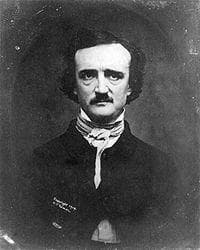
Edgar Allan Poe was an American writer, poet, editor, and literary critic who is best known for his poetry and short stories, particularly his tales of mystery and the macabre. He is widely regarded as a central figure of Romanticism in the United States, and of American literature. He was one of the country's earliest practitioners of the short story, and is considered the inventor of the detective fiction genre, as well as a significant contributor to the emerging genre of science fiction. He is the first well-known American writer to earn a living through writing alone, resulting in a financially difficult life and career.
Similar books
- Annabel Lee
Edgar Allan Poe
4.3 (8k) average on GoodreadsRomanceAnother iconic Poe poem exploring themes of lost love and enduring grief.
- Frankenstein: The 1818 Text
Mary Shelley
3.8 (1.2M) average on GoodreadsFantasyClassic gothic literature with a dark, atmospheric tone and exploration of human suffering.
- The Rime of the Ancient Mariner
Samuel Taylor Coleridge
4.0 (54k) average on GoodreadsFantasyBoth "The Raven" and "The Rime of the Ancient Mariner" feature a supernatural bird and a protagonist grappling with a profound sense of guilt and isolation. However, Coleridge's poem, while also atmospheric and gothic, focuses on themes of sin, penance, and redemption within a broader narrative arc, whereas Poe's "The Raven" is a more concentrated psychological study of despair, lacking any path to absolution. The Mariner's journey is external and epic; the Raven's narrator's is internal and suffocating.
- Harry Potter and the Sorcerer's Stone
J.K. Rowling
4.5 (7M) average on GoodreadsFantasyRescued from a miserable life under the stairs, an orphaned boy discovers he's a wizard destined for a magical school, where he uncovers a dangerous secret tied to the dark wizard who murdered his parents.
- The Hunger Games
Suzanne Collins
4.3 (6.4M) average on GoodreadsFantasyIn a future where children fight to the death on live television, Katniss Everdeen volunteers for the arena, turning a death sentence into a fight for survival and a spark of rebellion.
- 1984
George Orwell
4.2 (3.1M) average on GoodreadsPoliticsIn a future where surveillance and thought control are absolute, a man's search for truth clashes with the Party, showing that hope can be a form of rebellion.





Enjoyed the summary?
A summary gives you the shape of the book. The book itself has the detail, the examples and the voice.
Find The Raven on AmazonAs an Amazon Associate, BookBrief earns from qualifying purchases. How we're funded