
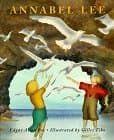
Synopsis
Covers the whole plot, including the ending.
- Difficulty
- Easy
- Pacing
- Slow
- Mood
- Melancholy, Romantic, Ethereal, Haunting
- Read it if
- You enjoy classic romantic poetry, particularly tales of lost love and enduring devotion, presented with evocative illustrations.
- Skip it if
- You prefer prose over poetry, or are looking for a story with a complex plot and character development beyond a singular emotional focus.
Annabel Lee Plot Summary
Covers the whole plot, including the ending.
A Love 'Many Years Ago'
The poem begins with the narrator remembering a time 'many and many a year ago' in a 'kingdom by the sea' where he fell in love with Annabel Lee. Their love, even when they were young, was very powerful and all-consuming, a bond beyond simple affection. The narrator stresses the pure and strong nature of their connection, showing it as a single, almost sacred union that defined their lives. He implies their souls were joined from the moment they met, forming a love that even angels envied.
Envy of the Seraphim
The narrator believes 'the seraphim of heaven' – the highest angels – became jealous. He thinks these divine beings, seeing the unmatched depth and beauty of his and Annabel Lee's love, grew envious. This envy, not a natural illness or accident, is presented as the direct cause of the tragedy that soon happened to them. The narrator's view shows his belief that their love was so perfect and extraordinary that it angered even heaven, making it truly unique and almost supernatural.
A Chilling Wind
One night, a 'wind blew out of a cloud, chilling my Annabel Lee.' This chilling wind, not a common sickness, is presented by the narrator as the direct cause of her death, further highlighting the supernatural and tragic nature of her end. He insists this was no ordinary illness, but an act by the envious angels. Her death leaves the narrator completely devastated, a deep loss that breaks his world and leaves him in unbearable grief.
Noble Kinsmen Intervene
After Annabel Lee's death, her 'highborn kinsmen came' and took her from the narrator. They buried her in a 'sepulchre there by the sea.' The narrator sees this as another separation, adding more pain. He implies her relatives, perhaps thinking he was not worthy or able to care for her even in death, removed her from his presence, increasing his feeling of loss and loneliness. This act marks the physical end of their shared life, but not the end of his devotion.
Love Stronger Than Death
Despite Annabel Lee's physical death and her kinsmen's actions, the narrator strongly states that their love cannot be overcome. He declares that 'the angels, not half so happy in heaven, went envying her and me' and that 'neither the angels in heaven above, nor the demons down under the sea, can ever dissever my soul from the soul of the beautiful Annabel Lee.' His belief shows the eternal nature of their bond, a spiritual connection that goes beyond earthly life and defies any force, divine or demonic, to break it.
The Moon and Stars
The narrator's deep grief turns into a lasting presence. He says that 'the moon never beams, without bringing me dreams of the beautiful Annabel Lee; And the stars never rise, but I feel the bright eyes of the beautiful Annabel Lee.' This imagery shows how he copes: by seeing Annabel Lee's spirit in the sky. For him, she is not truly gone but part of the universe, her essence reflected in the night sky. This allows him to keep a constant, though ethereal, connection with her.
Nightly Vigil by the Tomb
In a strong show of his lasting devotion and inability to let go, the narrator reveals his nightly habit. He spends his nights lying 'down by the side of my darling—my darling—my life and my bride, in her sepulchre there by the sea—in her tomb by the sounding sea.' This physical act of staying by her grave, even in the cold and dark, shows his firm commitment and refusal to accept her complete absence. It proves his deep attachment, blurring the lines between life and death in his constant watch.
Annabel Lee Characters
The Narrator
Protagonist
A grieving lover obsessed with his deceased beloved, Annabel Lee.
The narrator is a deeply passionate and possessive individual, consumed by his love for Annabel Lee. He is characterized by an almost pathological inability to accept her death, instead constructing an elaborate narrative involving jealous angels to explain her demise. His love is all-encompassing, defining his very existence. He views their bond as uniquely powerful and eternal, transcending physical separation and even death. His sanity appears fragile, as he finds comfort in an imagined, perpetual union with her.
Relationships: Annabel Lee (Fiancée/wife, soulmate, object of obsessive love)
Annabel Lee
Object of Affection
The beautiful, young maiden whose death drives the narrator's grief and obsession.
Annabel Lee is presented as the epitome of beauty and innocence, the sole focus of the narrator's world. Although she is deceased throughout the poem's present narrative, her presence is overwhelmingly powerful through the narrator's memories and projections. She is depicted as sharing an exceptionally pure and intense love with the narrator, a love so perfect it supposedly incited the envy of angels. Her physical absence fuels the narrator's enduring obsession, making her an eternal, almost mythical figure in his mind.
Relationships: The Narrator (Beloved, soulmate, object of obsessive love)
Seraphim
Antagonistic Force (Perceived)
Angels in heaven who the narrator believes were jealous of his love for Annabel Lee.
The seraphim are not characters in the traditional sense, but rather a supernatural force invoked by the narrator to explain Annabel Lee's death. They represent divine envy and malevolence in the narrator's distorted perception. He believes their jealousy of his and Annabel Lee's perfect love led them to orchestrate her demise. This belief highlights the narrator's psychological state, as he attributes a cosmic, supernatural cause to what might otherwise be considered a natural tragedy, reinforcing the idea of their love's extraordinary nature.
Relationships: The Narrator (Perceived antagonists, source of tragedy); Annabel Lee (Perceived cause of her death)
Highborn Kinsmen
Supporting/Minor Antagonistic
Annabel Lee's relatives who bury her by the sea.
The 'highborn kinsmen' are minor figures who appear only to take Annabel Lee's body away from the narrator after her death and inter her in a sepulchre by the sea. They represent a mundane, earthly intervention that further separates the narrator from his beloved, adding to his grief and sense of injustice. The narrator's description implies a sense of disdain for them, as they disrupt his immediate connection with Annabel Lee, even in death. Their actions are perceived as a practical, yet painful, barrier.
Relationships: Annabel Lee (Family, caretakers of her body); The Narrator (Perceived as separating him from Annabel Lee)
Annabel Lee Themes
Undying Love and Obsession
The main theme is about a love so deep it outlasts death, almost becoming an obsession. The narrator's devotion to Annabel Lee is not just lasting; it defines his whole life. He refuses to accept her physical absence, instead finding her presence in the moonbeams and stars, and spending every night by her tomb. This intense attachment, seen in his nightly watch by her 'sepulchre there by the sea,' shows a love that has become a consuming obsession, blurring the lines between healthy grief and psychological fixation.
“But we loved with a love that was more than love— I and my Annabel Lee—”
The Power of Memory and Imagination
Memory and imagination are the narrator's main ways of coping and keeping Annabel Lee present. He clearly remembers their past love, highlighting its unique strength. More importantly, he sees her spirit in nature – in the moon and stars – and dreams of her. This imaginative recreation allows him to keep a constant, though ethereal, connection, showing how the mind can preserve and even bring to life the departed when facing unbearable loss, as when 'the moon never beams, without bringing me dreams of the beautiful Annabel Lee.'
“And the stars never rise, but I feel the bright eyes of the beautiful Annabel Lee;”
Supernatural Explanation for Tragedy
Instead of accepting a natural reason for Annabel Lee's death, the narrator blames a harmful, supernatural force. He believes 'the seraphim of heaven' became jealous of their perfect love and sent a 'chilling wind' to kill her. This supernatural explanation lets him raise their love to a cosmic level, making it worthy of divine envy, and at the same time avoids the ordinary reality of illness or accident. It highlights his deep grief and perhaps his inability to accept such a perfect love with an ordinary, tragic end, as shown by his insistence on the angels 'envying her and me.'
“The angels, not half so happy in Heaven, Went envying her and me—”
Loss and Grief
At its heart, the poem explores deep loss and lasting grief. Annabel Lee's death puts the narrator in a state of inconsolable sadness, and the poem details his struggle to deal with this permanent separation. His nightly visits to her tomb and his constant mention of her name show the depth of his sorrow and his inability to move past the tragedy. The grief is not a temporary feeling but a permanent state, shaping his reality and driving his every thought, especially clear in his constant return to her 'sepulchre there by the sea.'
“I was a child and she was a child, In this kingdom by the sea: But we loved with a love that was more than love—”
Plot Devices & Literary Techniques
Repetition
The reiteration of key phrases and Annabel Lee's name.
Poe uses repetition extensively, particularly of Annabel Lee's name and phrases like 'kingdom by the sea' and 'chilling and killing.' This device creates a hypnotic, incantatory rhythm, mimicking the narrator's obsessive thoughts and his inability to escape the memory of his beloved. The repeated emphasis on 'Annabel Lee' reinforces her central importance and the narrator's fixation, while the rhythmic quality draws the reader deeper into his grief-stricken state, making the poem feel like a mournful chant.
Alliteration and Assonance
The use of repeated consonant and vowel sounds for musicality and emphasis.
Poe masterfully employs alliteration ('chilling and killing,' 'kingdom by the sea,' 'seraphim of heaven') and assonance ('many and many,' 'beams...dreams,' 'rise...eyes'). These sound devices contribute significantly to the poem's musicality and melancholic tone. They create a flowing, almost song-like quality that enhances the emotional impact and makes the lines memorable. The repetition of sounds also helps to emphasize key words and concepts, drawing attention to the narrator's deep sorrow and the supernatural elements of the story.
Symbolism (The Sea)
The sea as a symbol of both life and death, and the eternal.
The sea in 'Annabel Lee' is a powerful and multifaceted symbol. It is the setting of their initial idyllic love ('kingdom by the sea'), suggesting a boundless, eternal quality to their bond. However, it also becomes the location of her tomb ('sepulchre there by the sea'), linking it to death and sorrow. The 'sounding sea' at the end implies a constant, mournful presence, echoing the narrator's unending grief. It symbolizes the eternal nature of their love, the inescapable reality of her death, and the vast, overwhelming force of both life and loss.
Hyperbole
Exaggeration used to emphasize the extraordinary nature of their love and loss.
The narrator frequently uses hyperbole to convey the unparalleled intensity of his love for Annabel Lee and the cosmic significance of her death. Phrases like 'we loved with a love that was more than love' and the idea of 'seraphim of heaven' envying them are extreme exaggerations. This device elevates their relationship beyond ordinary human experience, making it seem almost mythological. It also underscores the narrator's profound emotional state, as he perceives his loss as an event of universal tragedy, not just personal sorrow.
Annabel Lee Quotes
“It was many and many a year ago, In a kingdom by the sea, That a maiden there lived whom you may know By the name of Annabel Lee;”
“And this maiden she lived with no other thought Than to love and be loved by me.”
“I was a child and she was a child, In this kingdom by the sea, But we loved with a love that was more than love— I and my Annabel Lee—”
“With a love that the winged seraphs of heaven Coveted her and me.”
“And this was the reason that, long ago, In this kingdom by the sea, A wind blew out of a cloud, chilling My beautiful Annabel Lee;”
“So that her highborn kinsmen came And bore her away from me, To shut her up in a sepulchre In this kingdom by the sea.”
“The angels, not half so happy in Heaven, Went envying her and me— Yes!—that was the reason (as all men know, In this kingdom by the sea) That the wind came out of the cloud by night, Chilling and killing my Annabel Lee.”
“But our love it was stronger by far than the love Of those who were older than we— Of many far wiser than we—”
“And neither the angels in Heaven above, Nor the demons down under the sea, Can ever dissever my soul from the soul Of the beautiful Annabel Lee;”
“For the moon never beams, without bringing me dreams Of the beautiful Annabel Lee;”
“And the stars never rise, but I feel the bright eyes Of the beautiful Annabel Lee;”
“And so, all the night-tide, I lie down by the side Of my darling—my darling—my life and my bride, In her sepulchre there by the sea— In her tomb by the sounding sea.”
Quiz
10 questions on the plot and the characters. Each answer comes with a short explanation.
Question 1
In Edgar Allan Poe's 'Annabel Lee', where does the narrator state that he and Annabel Lee lived?
- In a kingdom beside the sea
- In a village by the mountains
- In a city of grand design
- In a cottage by the forest
Show answer
A. In a kingdom beside the sea The poem explicitly states, 'It was many and many a year ago, / In a kingdom by the sea,' establishing the setting.
Question 2
According to the narrator, what was the sole thought shared by him and Annabel Lee?
- To build a grand future together
- To love and be loved by each other
- To explore the world's wonders
- To escape their humble origins
Show answer
B. To love and be loved by each other The narrator emphasizes their singular devotion, stating, 'We loved with a love that was more than love— / I and my Annabel Lee— / With a love that the winged seraphs of Heaven / Coveted her and me.'
Question 3
What celestial beings are mentioned as being jealous of the narrator and Annabel Lee's love?
- The stars above
- The angels in Heaven
- The spirits of the sea
- The moon and the sun
Show answer
B. The angels in Heaven Poe writes, 'The angels, not half so happy in Heaven, / Went envying her and me.'
Question 4
In the poem, what is explicitly stated as the cause of Annabel Lee's death?
- A fall from a cliff
- A fever brought by the sea
- A chill wind from a cloud
- A shipwreck at sea
Show answer
C. A chill wind from a cloud The poem states, 'And this was the reason that, long ago, / In this kingdom by the sea, / A wind blew out of a cloud, chilling / My beautiful Annabel Lee.'
Question 5
Who takes Annabel Lee away from the narrator after her death?
- Her family, for burial in the family plot
- Her highborn kinsmen, to a sepulchre
- The fishermen, to bury her at sea
- The angels, who carried her to Heaven
Show answer
B. Her highborn kinsmen, to a sepulchre The poem describes, 'Her highborn kinsmen came / And bore her away from me, / To shut her up in a sepulchre / In this kingdom by the sea.'
Question 6
What is the narrator's ultimate coping mechanism for his grief and loss of Annabel Lee?
- He moves to a different kingdom to forget her
- He writes poetry to immortalize her memory
- He lies down beside her in her sepulchre every night
- He seeks solace in the company of others
Show answer
C. He lies down beside her in her sepulchre every night The narrator concludes, 'And so, all the night-tide, I lie down by the side / Of my darling—my darling—my life and my bride, / In her sepulchre there by the sea— / In her tomb by the sounding sea.'
Question 7
How does the narrator assert that their souls are inseparable, despite Annabel Lee's death?
- Through dreams and visions that reunite them nightly
- He believes their love transcends death and is eternal
- He finds her likeness in the moonbeams and stars
- He communicates with her through spiritual mediums
Show answer
B. He believes their love transcends death and is eternal The narrator states, 'For the moon never beams, without bringing me dreams / Of the beautiful Annabel Lee; / And the stars never rise, but I feel the bright eyes / Of the beautiful Annabel Lee.' This shows a constant, perceived connection.
Question 8
Considering the artistic interpretation by Gilles Tibo, what specific historical period and location does he use as the setting for the poem?
- 1920s New York City
- 1930s Gaspé Peninsula, Quebec
- Victorian England countryside
- Early American colonial coast
Show answer
B. 1930s Gaspé Peninsula, Quebec The prompt explicitly states the artist Gilles Tibo sets the poem 'in the 1930s on the Gaspé Peninsula, Quebec.'
Question 9
The poem repeatedly emphasizes the 'sea.' What thematic significance does the sea hold in 'Annabel Lee'?
- It represents the vastness of their love and future together.
- It symbolizes both the beauty of their life and the destructive force that took Annabel Lee, and ultimately, the narrator's eternal resting place with her.
- It serves as a metaphor for the narrator's fluctuating emotions of grief and joy.
- It is merely a picturesque backdrop for their innocent romance.
Show answer
B. It symbolizes both the beauty of their life and the destructive force that took Annabel Lee, and ultimately, the narrator's eternal resting place with her. The sea is integral to their 'kingdom,' a 'wind blew out of a cloud, chilling' from the sea, and her sepulchre is 'by the sounding sea.' It encompasses their life, death, and the narrator's enduring connection.
Question 10
How does the narrator's persistent assertion that their love was stronger than that of 'older and wiser' people contribute to the poem's melancholic tone?
- It highlights his immaturity and inability to accept reality.
- It underscores his delusional state, making his grief seem more profound and isolated.
- It emphasizes the tragic irony that such a 'true' and intense love was ultimately powerless against death, deepening the sense of loss and injustice.
- It suggests that their love was so pure it was untouchable by earthly concerns, offering a glimmer of hope.
Show answer
C. It emphasizes the tragic irony that such a 'true' and intense love was ultimately powerless against death, deepening the sense of loss and injustice. The repeated insistence on the unparalleled nature of their love ('But our love it was stronger by far than the love / Of those who were older than we— / Of many far wiser than we—') makes Annabel Lee's death an even greater tragedy. It wasn't a weak love that failed, but a superior one that was cruelly snatched away, intensifying the melancholic injustice.
Annabel Lee FAQ
What is the central theme of 'Annabel Lee' in the context of Gilles Tibo's adaptation?
The central theme revolves around an undying, almost supernatural love between the narrator and Annabel Lee, which transcends even death. Tibo's 1930s Gaspé Peninsula setting emphasizes the isolation and rugged beauty that mirror the intensity and singularity of their bond, making their love feel timeless and fated against a dramatic backdrop.
Who are the main characters and what is their relationship?
The main characters are the unnamed narrator and Annabel Lee, his beloved. Their relationship is one of profound, exclusive, and passionate love, established 'many and many a year ago in a kingdom by the sea.' The narrator consistently portrays their love as pure, childlike, and envied by celestial beings.
What significant event drives the poem's narrative and Tibo's illustrations?
The most significant event is the tragic death of Annabel Lee, attributed by the narrator to envious angels. This loss plunges the narrator into deep grief but also solidifies his unwavering devotion, as he continues to believe their souls are intertwined, even visiting her tomb by the sea.
How does the Gaspé Peninsula setting in the 1930s influence the story's atmosphere?
The Gaspé Peninsula in the 1930s creates an atmosphere of isolated romanticism, economic hardship, and a strong connection to nature and the sea. Tibo's illustrations likely depict the rugged coastlines, fishing villages, and perhaps the simpler, more melancholic life of the era, amplifying the poem's themes of enduring love and loss against a stark, beautiful backdrop.
What role do the 'seraphs of heaven' play in the story?
The seraphs of heaven are depicted as envious celestial beings who, according to the narrator, were jealous of the intense love between him and Annabel Lee. This jealousy is presented as the direct cause of Annabel Lee's death, highlighting the narrator's belief that their love was so perfect it defied natural order and provoked divine intervention.
Are there any subtle visual cues in Tibo's art that suggest the narrator's state of mind?
Tibo's illustrations likely use color, light, and perspective to hint at the narrator's psychological state. Perhaps scenes with Annabel Lee are bathed in warm, ethereal light, while post-loss scenes are darker, colder, or feature distorted perspectives, subtly conveying his grief, obsession, and detachment from reality.
Does the 'kingdom by the sea' have a specific visual representation in Tibo's art?
While the poem keeps the 'kingdom by the sea' ambiguous, Tibo's adaptation likely grounds it in the visual reality of the Gaspé Peninsula. It might be represented as a quaint, isolated fishing village with a prominent lighthouse or a distinctive coastline, giving a concrete, yet still dreamlike, sense of place to their love story.
Are there recurring symbols or motifs in the illustrations that reinforce the themes?
Recurring symbols might include the omnipresent sea, representing both life and death, and the wind, which is explicitly mentioned as carrying Annabel Lee's 'chilling and killing' spirit. Lighthouses, fishing boats, and specific types of period clothing could also serve as motifs reinforcing the 1930s Gaspé setting and the isolation of their love.
How does the narrator's perception of Annabel Lee evolve after her death?
The narrator's perception of Annabel Lee transforms from a cherished lover to an almost ethereal, spiritual entity whose presence he feels constantly. He believes their souls are inseparable, seeing her in the stars and feeling her spirit in the waves, indicating a romantic idealization that transcends her physical absence and verges on obsession.
What psychological defense mechanisms does the narrator employ to cope with his loss?
The narrator primarily employs denial and idealization. He denies the finality of death by insisting their souls are still intertwined and that 'neither the angels in heaven above, nor the demons down under the sea, can ever dissever my soul from the soul of the beautiful Annabel Lee.' He also idealizes their love as perfect and envied, shifting blame for her death away from natural causes.
Is the narrator's love healthy or obsessive, and how does the adaptation portray this?
The narrator's love leans heavily towards obsessive, especially after Annabel Lee's death, given his nightly visits to her tomb and his unwavering belief in her omnipresent spirit. Tibo's adaptation might subtly portray this through the narrator's isolated posture, melancholic expressions, or the contrast between vibrant memories and stark reality, hinting at his psychological fixation.
How does the 1930s setting contribute to the psychological impact of the narrator's grief?
The 1930s setting, potentially marked by the Great Depression, could amplify the narrator's isolation and grief. In a time of hardship and limited psychological understanding, his intense, enduring mourning might appear less aberrant, or conversely, more pronounced due to the lack of social support or alternative coping mechanisms, making his fixation even more poignant.
Does the narrator's account of Annabel Lee's death seem reliable, or is there room for interpretation?
The narrator's account, attributing Annabel Lee's death to envious angels and a 'chilling wind,' is highly subjective and romanticized, making it unreliable from a factual standpoint. This allows for interpretation: was it a natural illness, and the 'angels' a metaphor for an inexplicable tragedy, or is the narrator's grief-stricken mind creating a grander narrative for an unbearable loss?
How does the poem's rhyme and rhythm contribute to its haunting quality, and how might Tibo's art reflect this?
The poem's consistent rhythm and internal rhymes create a lullaby-like, incantatory quality that is both beautiful and unsettling, enhancing its haunting nature. Tibo's art might reflect this through repetitive visual motifs, a flowing composition that mimics the poem's rhythm, or a dreamlike quality that mirrors the hypnotic effect of the verses.
Is there a sense of hope or eternal despair in the narrator's final state?
The narrator's final state presents a complex blend of both. While he is eternally bound by grief and the loss of Annabel Lee, his unwavering conviction that their souls are inseparable offers him a unique form of hope – the hope of an eternal, if unearthly, reunion. He finds solace in believing she is always with him, even if it means sleeping by her tomb.
What is the significance of the sea in 'Annabel Lee' and how is it portrayed in Tibo's work?
The sea is deeply significant, representing the 'kingdom' where their love blossomed, the path for the 'chilling wind' that killed Annabel Lee, and the constant presence by her tomb. In Tibo's work, the sea likely serves as a powerful, dynamic backdrop – sometimes calm and beautiful, other times turbulent and menacing – mirroring the narrator's emotional landscape.
Could the 'demons down under the sea' be a metaphor for something else in the narrative?
The 'demons down under the sea' could be interpreted metaphorically as the depths of the narrator's own despair, the societal pressures of grieving, or even the harsh realities of life and nature that ultimately took Annabel Lee. They represent any force, earthly or supernatural, that attempts to separate him from his beloved, which he defiantly resists.
About the author
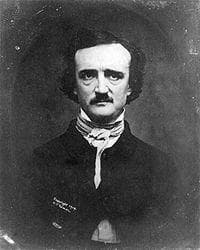
Edgar Allan Poe was an American writer, poet, editor, and literary critic who is best known for his poetry and short stories, particularly his tales of mystery and the macabre. He is widely regarded as a central figure of Romanticism in the United States, and of American literature. He was one of the country's earliest practitioners of the short story, and is considered the inventor of the detective fiction genre, as well as a significant contributor to the emerging genre of science fiction. He is the first well-known American writer to earn a living through writing alone, resulting in a financially difficult life and career.
Similar books
- The Raven
Edgar Allan Poe
4.0 (8k) average on GoodreadsFantasyShares Poe's signature dark romanticism, themes of lost love, and a strong sense of atmospheric grief.
- Sonnets from the Portuguese
Elizabeth Barrett Browning
4.1 (11k) average on GoodreadsRomanceBrowning's sonnets explore profound love with greater emphasis on reciprocity and the complexities of adult relationships, often with a more optimistic and less supernatural tone. They delve into intellectual and emotional nuances, offering a richer psychological landscape than Poe's singular focus on loss.
- The Hunger Games
Suzanne Collins
4.3 (6.4M) average on GoodreadsFantasyIn a future where children fight to the death on live television, Katniss Everdeen volunteers for the arena, turning a death sentence into a fight for survival and a spark of rebellion.
- The Great Gatsby
F. Scott Fitzgerald
3.9 (3.8M) average on GoodreadsHistorical FictionIn the opulent Roaring Twenties, a mysterious millionaire's lavish parties hide his desperate, tragic pursuit of a lost love, exposing the emptiness within the American Dream.
- The Fault in Our Stars
John Green
4.2 (3.6M) average on GoodreadsYoung AdultA girl with a terminal illness finds her story rewritten when a charming boy with a similar past enters her life at a cancer support group, leading to a star-crossed romance.
- Pride and Prejudice
Jane Austen
4.3 (3M) average on GoodreadsHistorical FictionIn a society focused on status and money, Elizabeth Bennet navigates love and pride, challenging Mr. Darcy and social expectations to find true affection.





Enjoyed the summary?
A summary gives you the shape of the book. The book itself has the detail, the examples and the voice.
Find Annabel Lee on AmazonAs an Amazon Associate, BookBrief earns from qualifying purchases. How we're funded