
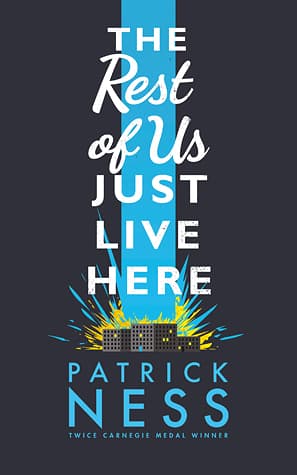
Synopsis
Covers the whole plot, including the ending.
- Difficulty
- Medium
- Pacing
- Variable
- Mood
- Humorous, Relatable, Anxious, Thought-provoking, Sweet
- Read it if
- You're tired of Chosen One narratives and want a story about the 'normal' people living in the background of an epic fantasy, or if you appreciate a raw and honest look at anxiety and mental health in a YA setting.
- Skip it if
- You prefer traditional high-stakes fantasy where the protagonist is always the hero, or if you dislike meta-commentary on genre tropes.
The Rest of Us Just Live Here Plot Summary
Covers the whole plot, including the ending.
The Start of Senior Year (and Another Apocalypse)
Mikey, a senior at Satchel High, cares about everyday things: graduating, asking out Henna, and managing his anxiety. His best friend, Jared, is the adopted son of the town's 'Indie Kid' leader, Finn, and has unusual healing powers. The story begins with the 'Immortal Kids'—the chosen ones who fight supernatural threats—battling a new problem: glowing blue lights that make people vanish or spontaneously combust. Mikey and his friends, including Henna and Mel, talk about the latest 'battle' at the local coffee shop, trying to ignore the constant chaos. Mikey's family life is also complex, with his older sister Meredith having an eating disorder and his younger sister, Jess, being unusually observant and quiet. The constant supernatural threat makes ordinary life feel uncertain, yet they try to live normally.
Jared's Growing Powers and Finn's Obsession
Jared's unique abilities, like healing and a strange connection to nature (especially mountain lions), become more noticeable. He heals Mikey's small injuries and seems to find comfort in the wild. Meanwhile, Finn, the Immortal Kids' leader and Jared's adoptive father, is consumed by the new 'blue light' threat. He thinks the lights are linked to an ancient power called the 'Soul Eater,' which they thought was beaten years ago. Finn's obsession isolates him, and he pushes Jared away, treating him more as a tool than a son. This creates tension between Jared and Finn, as Jared wants a normal life and resents his role in the supernatural battles.
Mikey's Anxiety and Henna's Kindness
Mikey's anxiety, which he calls 'The Voice,' often overwhelms him. He frequently has panic attacks, especially when faced with the supernatural or important social events. He likes Henna, a kind and artistic girl who understands him well. He tries to ask her out many times but is always interrupted by the Immortal Kids' latest crisis or his own fear. Henna, however, always shows him warmth and understanding, often calming him during his episodes. Their shared desire for a normal life and their quiet moments together show their growing connection amid the town's chaos.
The Prom Dilemma and Meredith's Struggle
As prom approaches, Mikey and his friends plan for a normal senior year event. Mikey finally asks Henna to prom, and she says yes. However, the blue light events get worse, causing more disappearances and disruptions. At the same time, Mikey's sister, Meredith, struggles with her eating disorder, made worse by the stress and instability of their lives. Her condition worsens, leading to hospital visits and growing family concern. Mikey feels helpless to help Meredith, which reflects his frustration with his inability to control the larger supernatural threats, making his wish for a normal prom feel increasingly distant and fragile.
The Soul Eater's Return and Jared's Revelation
Finn confirms his fears: the blue lights are the Soul Eater, a powerful entity that consumes souls and was supposedly defeated years ago. The Immortal Kids prepare for a final fight. Jared, increasingly troubled by Finn's methods and the Soul Eater's growing power, learns a shocking truth about himself. He is not just a healer; he is a 'Godslayer,' able to absorb and hold immense supernatural power, including the Soul Eater's. This explains his connection to nature, his healing abilities, and why the Immortal Kids adopted him—they knew he was special but misunderstood his true purpose.
The Prom Night Attack
Prom night arrives, and Mikey, Henna, Mel, and Jared go, determined to have a normal time. However, the Soul Eater attacks the high school, turning the dance into a battlefield. The Immortal Kids fight bravely but are overwhelmed. People start vanishing, and blue lights fill the hall. Jared, seeing the destruction and the danger to his friends, realizes he cannot stand by. He chooses to embrace his Godslayer nature, despite the huge personal cost, understanding that he alone can stop the Soul Eater. This act of self-sacrifice is a turning point for him.
Jared's Sacrifice and the Aftermath
Jared faces the Soul Eater, not to fight it, but to absorb it. He uses his Godslayer ability to pull the entity into himself, containing its destructive power. The process is painful and changes him, making him ethereal and permanently linked to the absorbed power. The Soul Eater is gone, but so is the Jared his friends knew. Afterward, the world is changed forever. The supernatural threats that bothered the town for generations disappear, along with the Immortal Kids who fought them. The 'Chosen Ones' are no longer needed, and the world becomes a more ordinary, but also more peaceful, place. Mikey and his friends deal with the loss of Jared and the new reality.
A New Ordinary
With the Soul Eater gone and Jared changed, the supernatural events that defined their town stop. The Immortal Kids, their purpose met, fade away, some leaving town, others trying to find new identities. Mikey, Henna, and Mel try to rebuild their lives. The lack of constant danger is both a relief and a strange emptiness. Mikey finds comfort in his relationship with Henna, and they begin to build a future together. Meredith's condition also starts to get better in the calmer environment, suggesting a link between her stress and the town's instability. The focus shifts to everyday challenges and the beauty of ordinary life.
Graduation and Moving On
Senior year ends, and Mikey, Henna, and Mel graduate. The ceremony is a reminder of all they have endured and overcome. Mikey has learned to manage his anxiety better, finding strength in Henna and in accepting that not everything needs to be a big battle. He and Henna plan to attend the same university, eager to start a life together defined by their choices, not by outside threats. While they will never forget Jared or the sacrifices made, they choose to look forward, embracing the quiet heroism of living a normal life. The ending highlights the value of the ordinary and the strength found in personal connections.
Principal Figures
Mikey Richter
Protagonist
Anxiety-prone senior who yearns for a normal life amidst supernatural chaos.
Mikey is the primary narrator, an ordinary high school senior who struggles with severe anxiety, personified as 'The Voice.' He is deeply empathetic, particularly towards his friends and family, and longs for a quiet, uneventful life. He feels overshadowed by the 'Immortal Kids' and the constant supernatural threats, often resenting the way these events disrupt his personal goals, like asking out Henna or simply graduating. His journey is about finding courage in the mundane and accepting that his 'ordinary' life has its own profound significance.
Relationships: Jared (Best friend, a constant source of support and grounding.); Henna (Love interest and girlfriend, his emotional anchor and confidante.); Mel (Close friend, part of his core social group.); Meredith Richter (Older sister, whom he deeply cares for despite her struggles.); Jess Richter (Younger sister, a quiet observer he feels protective of.)
Jared
Supporting/Deuteragonist
Mikey's best friend, an adopted 'Immortal Kid' with unique, powerful abilities.
Jared is Mikey's best friend and a central figure in the supernatural world, though he resents his role. Adopted by Finn, the leader of the Immortal Kids, Jared possesses extraordinary healing powers and an innate connection to nature, often surrounded by mountain lions. He longs for a normal life, much like Mikey, and struggles with the expectations placed upon him by the Immortal Kids. His true nature as a 'Godslayer' is revealed, making him capable of absorbing immense power. He is quiet, loyal, and deeply cares for his friends, willing to make the ultimate sacrifice for their safety.
Relationships: Mikey Richter (Best friend, confides in Mikey and relies on him for normalcy.); Finn (Adoptive father and leader of the Immortal Kids, a strained relationship due to Finn's obsession.); Mel (Close friend.); Henna (Close friend.)
Henna
Supporting/Love Interest
Mikey's kind, artistic love interest who provides comfort and stability.
Henna is Mikey's crush and eventually his girlfriend. She is a kind, perceptive, and artistic girl who understands Mikey's anxiety better than anyone. She provides him with emotional stability and quiet support, often being the one to calm him during his panic attacks. Like Mikey, she yearns for a normal life free from the constant supernatural disruptions. Her presence helps Mikey ground himself and see the beauty in everyday moments. She represents the hope for a future defined by personal connection rather than external chaos.
Relationships: Mikey Richter (Love interest and girlfriend, a deeply supportive and affectionate relationship.); Jared (Close friend.); Mel (Close friend.)
Mel
Supporting
One of Mikey's core friends, known for her pragmatism and dry wit.
Mel is a practical and somewhat cynical member of Mikey's friend group. She often provides a humorous, grounded perspective on the absurdities of their lives, frequently making sarcastic remarks about the 'Immortal Kids' and their latest battles. Despite her outward cynicism, she is fiercely loyal to her friends and deeply cares about their well-being. She represents the resilience of ordinary people in extraordinary circumstances, finding ways to cope and maintain a sense of normalcy through humor and friendship.
Relationships: Mikey Richter (Close friend.); Jared (Close friend.); Henna (Close friend.)
Meredith Richter
Supporting
Mikey's older sister, struggling with an eating disorder.
Meredith is Mikey's older sister, who is battling an eating disorder. Her struggles are a significant source of concern for Mikey and their family. Her condition is implicitly linked to the pervasive stress and instability caused by the supernatural events in their town, highlighting how even those not directly involved in the 'battles' are affected. She represents the quiet suffering that occurs in the background of grander narratives. Her gradual improvement after the supernatural threats cease underscores the novel's theme of the impact of environment on personal well-being.
Relationships: Mikey Richter (Younger brother, she is protective of him, and he deeply cares for her.); Jess Richter (Younger sister.); Mr. and Mrs. Richter (Parents.)
Jess Richter
Supporting
Mikey's quiet, perceptive younger sister.
Jess is Mikey's younger sister, a quiet and observant child. She often seems to possess an unusual understanding of the world around her, including the underlying anxieties and supernatural currents. Her withdrawn nature and occasional cryptic comments suggest a deeper sensitivity to the environment than her family fully realizes. She represents the innocence and vulnerability of those who grow up in a world constantly teetering on the edge of apocalypse, yet she also offers moments of unexpected insight.
Relationships: Mikey Richter (Older brother, she looks up to him.); Meredith Richter (Older sister.)
Finn
Supporting
Leader of the Immortal Kids and Jared's adoptive father, obsessed with fighting the supernatural.
Finn is the driven and often distant leader of the Immortal Kids, a group dedicated to fighting supernatural threats. He is Jared's adoptive father but prioritizes his role as a protector over his paternal duties, often treating Jared as a weapon rather than a son. His obsession with the 'Soul Eater' and his single-minded focus on battling evil make him a somewhat tragic figure, unable to see the value in ordinary life or personal relationships. He embodies the 'Chosen One' archetype that the novel critiques.
Relationships: Jared (Adoptive father, a strained and duty-bound relationship.); The Immortal Kids (Leader and mentor.)
The Immortal Kids
Mentioned
The group of 'Chosen Ones' who constantly fight supernatural threats.
The Immortal Kids are the perpetually young, attractive, and dramatic 'Chosen Ones' who are always battling the latest supernatural threat in Satchel High. They are a constant, disruptive force in the background of Mikey's life, often causing property damage and drawing attention away from ordinary concerns. They represent the typical YA fantasy protagonists, whose adventures inadvertently make normal life difficult for everyone else. Their actions, while heroic in their own narrative, are often viewed with annoyance and resignation by Mikey and his friends.
Relationships: Finn (Their leader.); Jared (Adopted into their group, but never fully belonging.)
Themes & Insights
The Value of the Ordinary
This is the main theme, contrasting the dramatic lives of the 'Chosen Ones' with the quiet heroism of everyday existence. Mikey and his friends constantly aim for normalcy—graduating, going to prom, having relationships—even as their world is literally ending. The novel suggests that finding joy and meaning in these ordinary experiences, and building strong personal connections, is as, or more, important than fighting big battles. The ending, where the supernatural threats vanish, lets Mikey and others truly embrace the beauty and importance of an ordinary life.
“Because sometimes there are problems bigger than this week’s end of the world, and sometimes you just have to find the extraordinary in your ordinary life.”
Anxiety and Mental Health
Mikey's severe anxiety, called 'The Voice,' is a major part of his character and the story. It shows the internal struggles people face, often unseen, even amid external chaos. His panic attacks and constant inner thoughts show how mental health issues can be as difficult as any outside threat. The novel normalizes anxiety and shows Mikey's journey to manage it, not cure it, finding strength in self-acceptance and the support of loved ones. Meredith's eating disorder further highlights the theme of mental health challenges.
“The Voice was always there, a tiny, insistent whisper that told him all the things he was doing wrong, all the ways he was going to mess up.”
Identity and Self-Acceptance
Both Mikey and Jared deal with their identities. Mikey struggles with being 'just' an ordinary person in a world of heroes, while Jared struggles with his destiny as a 'Godslayer' versus his desire for a normal life. The story explores how external expectations and extraordinary events can shape or change one's sense of self. Jared's final sacrifice is an act of self-acceptance, embracing his true nature for the greater good. Mikey's journey is about accepting his 'ordinary' identity as valuable and meaningful, separate from any heroic deeds.
“He wasn't the hero. He was the guy who just lived here. And that was okay. That was more than okay.”
Critique of Chosen One Narratives
The novel cleverly changes and critiques the common 'Chosen One' trope in YA fantasy. The 'Immortal Kids' represent these typical heroes, but they are shown as disruptive, self-absorbed, and often unaware of the real consequences of their battles. The story shifts focus to the 'rest of us' who deal with the damage and simply try to live their lives. It questions the romanticizing of constant conflict and highlights the untold stories of those on the edges of grand adventures, suggesting their experiences are just as valid and important.
“They were the main characters. We were just… the rest of us. The ones who had to deal with the aftermath.”
Plot Devices & Literary Techniques
The 'Voice' (Mikey's Anxiety)
Personification of Mikey's internal anxiety and self-doubt.
Mikey's anxiety manifests as an internal monologue he calls 'The Voice,' which constantly criticizes him, predicts disaster, and fuels his panic attacks. This personification allows the author to externalize Mikey's internal struggles, making his anxiety a tangible presence for the reader. It serves as an internal antagonist that Mikey must learn to manage, highlighting his journey of self-acceptance and resilience. The Voice underscores the theme of mental health and shows how deeply internal struggles can affect daily life, even more so than external supernatural threats.
The Immortal Kids as a Background Element
The 'Chosen Ones' are relegated to the periphery of the main narrative.
Instead of being the protagonists, the Immortal Kids and their epic battles are presented as a constant, often annoying, background element to Mikey's story. Their fights are described briefly, often with a sense of resignation or frustration from Mikey's perspective, highlighting the collateral damage and disruption they cause. This device effectively satirizes the typical 'Chosen One' narrative by shifting focus to the 'ordinary' people whose lives are affected, thereby emphasizing the theme of the value of the ordinary and critiquing the romanticization of constant conflict.
Jared's 'Godslayer' Nature
A unique supernatural ability that provides a definitive end to the ongoing threats.
Jared's true nature as a 'Godslayer,' capable of absorbing immense supernatural power, serves as a deus ex machina that resolves the overarching conflict of the Soul Eater and all subsequent supernatural threats. While it provides a convenient ending, it also carries a significant personal cost for Jared, preventing it from feeling entirely unearned. This device allows the narrative to definitively transition from a world of constant supernatural peril to one of ordinary peace, reinforcing the novel's central theme that the 'Chosen One' narrative can end, paving the way for the 'rest of us' to live.
The Blue Lights / Soul Eater
The primary supernatural threat that drives the climax of the story.
The blue lights represent the latest, most dangerous iteration of the supernatural threats plaguing the town, eventually revealed to be the ancient 'Soul Eater.' This device provides the immediate external conflict that pushes Jared to embrace his destiny and brings the 'Chosen One' narrative to its ultimate conclusion. Its destructive power and the mystery surrounding it build tension throughout the story, culminating in the prom night attack that forces the climax. It serves as the ultimate 'monster of the week' that finally breaks the cycle of endless supernatural battles.
The Rest of Us Just Live Here Quotes
“It's not that I don't want to be a hero. It's that I don't want to have to be a hero.”
“The world is full of people who are trying to be something they're not. And it's full of people who are trying to be something they are.”
“Sometimes the greatest power is just to live.”
“There's a difference between being important and being special.”
“You don't have to save the world to make a difference.”
“Love isn't about saving someone. It's about being there for them.”
“The world doesn't need another hero. It needs more people who are brave enough to just be themselves.”
“Everyone has their own apocalypse.”
“It's hard to have your own problems when the world is ending.”
“Sometimes, the only way to be strong is to let yourself be weak.”
“The greatest adventure is just getting through the day.”
“You can't choose what happens to you, but you can choose how you react.”
“Maybe being ordinary isn't so bad after all.”
Quiz
10 questions on the plot and the characters. Each answer comes with a short explanation.
Question 1
What is Mikey's primary goal for the summer before college, as mentioned early in the book?
- To defeat the current supernatural threat terrorizing the town.
- To finally ask Henna out and go to prom.
- To help his sister Meredith control her magical abilities.
- To get a scholarship to an Ivy League university.
Show answer
B. To finally ask Henna out and go to prom. Mikey's main concern is navigating his senior year, including asking Henna out and attending prom, while the 'Chosen Ones' deal with the supernatural.
Question 2
What unique ability or characteristic does Mikey's best friend, Jared, possess that sets him apart from others?
- He can control the weather.
- He is worshipped by mountain lions.
- He can see into the future.
- He has superhuman strength.
Show answer
B. He is worshipped by mountain lions. Jared is distinct because he is 'worshipped by mountain lions,' a quirky detail that highlights the blend of ordinary and extraordinary in their world.
Question 3
What is the primary theme explored in 'The Rest of Us Just Live Here' regarding the traditional YA fantasy narrative?
- The importance of destiny and embracing one's role as the Chosen One.
- The idea that 'ordinary' people have their own significant struggles and lives beyond the main hero's quest.
- The necessity of sacrificing personal desires for the greater good of the world.
- The dark consequences of magic and supernatural powers.
Show answer
B. The idea that 'ordinary' people have their own significant struggles and lives beyond the main hero's quest. The book explicitly aims to tell the story of the people who are NOT the Chosen Ones, focusing on their everyday lives and problems.
Question 4
What is unique about Mikey's anxiety, as described in the book?
- It manifests as a physical entity he can see and talk to.
- It only appears when supernatural events are occurring.
- It is a hereditary condition passed down through his family.
- He can control it with a special magical amulet.
Show answer
A. It manifests as a physical entity he can see and talk to. Mikey's anxiety is personified as a grey, sometimes purple, cat-like creature that he interacts with, making it a distinctive aspect of his character.
Question 5
What is the specific nature of the 'blue lights and death' supernatural threat mentioned in the book's description?
- Soul-eating ghosts.
- Vampires that glow blue.
- Indie Kids, who are a new race of supernatural beings that cause destruction.
- An alien invasion with blue spacecraft.
Show answer
C. Indie Kids, who are a new race of supernatural beings that cause destruction. The 'blue lights and death' refer to the Indie Kids, the current 'Chosen One' threat, who are a new, mysterious group causing chaos and destruction.
Question 6
What is the relationship between Mikey and his sister, Meredith, particularly concerning her mental health?
- Mikey is oblivious to Meredith's struggles, focusing only on himself.
- Mikey is a supportive and protective brother, constantly worried about her well-being and mental stability.
- Meredith resents Mikey because he is the 'Chosen One' of their family.
- They are estranged and rarely speak to each other.
Show answer
B. Mikey is a supportive and protective brother, constantly worried about her well-being and mental stability. Mikey is deeply concerned about Meredith's mental health and takes on a protective role, often feeling responsible for her and her fragile state.
Question 7
What significant event typically happens at the end of each 'Chosen One' narrative cycle in Mikey's town?
- A new hero emerges from a different town.
- The high school is partially or completely destroyed.
- The town holds a celebratory parade for the hero.
- All memory of the supernatural event is erased from the town's inhabitants.
Show answer
B. The high school is partially or completely destroyed. It's a running gag and a genuine problem that the high school gets destroyed 'again' at the end of each supernatural crisis, causing logistical issues for the 'rest of them'.
Question 8
How does the novel subvert the typical 'Chosen One' trope by focusing on Mikey's perspective?
- It reveals that Mikey is actually the true Chosen One all along.
- It highlights that the Chosen One's actions often have inconvenient or damaging consequences for the background characters, whose lives are disrupted.
- It shows that the Chosen One is ultimately incompetent and needs the 'ordinary' people to save them.
- It argues that supernatural threats are not real and are merely figments of imagination.
Show answer
B. It highlights that the Chosen One's actions often have inconvenient or damaging consequences for the background characters, whose lives are disrupted. The novel directly addresses how the grand adventures of Chosen Ones lead to destroyed property, displaced students, and general disruption for those just trying to live their lives.
Question 9
What is the significance of the 'indie kids' or 'chosen ones' having unique, often 'cool' or 'edgy' names like Finn, Jared (the Chosen One, not Mikey's friend), and Mel?
- It's a way for the author to make them seem more relatable to the target audience.
- It satirizes the convention in YA fantasy where main heroes often have distinctive, sometimes 'quirky' or 'epic' names that set them apart from more mundane characters.
- The names are actually derived from ancient prophecies that foretell their roles.
- It helps the reader to easily distinguish between the various supernatural factions.
Show answer
B. It satirizes the convention in YA fantasy where main heroes often have distinctive, sometimes 'quirky' or 'epic' names that set them apart from more mundane characters. The distinct, often 'cooler' names of the Chosen Ones, contrasted with Mikey and his friends' more common names, is a subtle satire of YA tropes.
Question 10
How does Mikey's relationship with Henna evolve throughout the story, reflecting his journey of finding 'extraordinary in the ordinary'?
- He gives up on Henna to pursue a relationship with one of the 'Chosen Ones'.
- Their relationship becomes a central focus, demonstrating that personal connections and everyday romance are just as vital as world-saving quests.
- Henna is revealed to be a secret agent for the supernatural threat, making their relationship impossible.
- Their relationship remains platonic, as Mikey prioritizes his friendships.
Show answer
B. Their relationship becomes a central focus, demonstrating that personal connections and everyday romance are just as vital as world-saving quests. Mikey and Henna's developing romance is a key part of his personal journey, showing that finding love and connection in his 'ordinary' life is a significant and fulfilling achievement.
The Rest of Us Just Live Here FAQ
What is the core premise of 'The Rest of Us Just Live Here'?
'The Rest of Us Just Live Here' flips the traditional YA fantasy narrative by focusing on the 'normal' kids who aren't the Chosen Ones. The story follows Mikey, who just wants to navigate senior year, prom, and his crush on Henna, while the extraordinary, world-saving events happen in the background to other characters he barely knows.
Who is Mikey and what are his main concerns throughout the book?
Mikey is the protagonist, an anxious and somewhat obsessive-compulsive high school senior. His main concerns revolve around everyday teenage milestones: graduating, attending prom, confessing his feelings to Henna, and dealing with his family dynamics, particularly his sister Meredith's mental health struggles, all while ignoring the constant supernatural threats.
Who are the 'Indie Kids' and what role do they play in the story?
The 'Indie Kids' are the designated Chosen Ones, the group of teenagers who battle the weekly supernatural threats like soul-eating ghosts or alien invasions. They are the focus of the background fantasy plot, often saving the town but also causing collateral damage, which the 'normal' kids like Mikey have to live with.
What is the significance of the 'blue lights' mentioned in the synopsis?
The 'blue lights' refer to the latest supernatural threat in the book, an alien invasion of sorts led by figures with glowing blue eyes. This specific event serves as the primary 'end-of-the-world' scenario running concurrently with Mikey's personal story, highlighting the contrast between his mundane concerns and the apocalyptic stakes.
How does Mikey's relationship with Henna develop?
Mikey's relationship with Henna is a central romantic arc. He has a long-standing crush on her, and much of his internal monologue revolves around his anxiety about asking her out. Their connection deepens through shared experiences and mutual support, culminating in them attending prom together and finally acknowledging their feelings.
What is the nature of Jared's unique ability or connection?
Jared, Mikey's best friend, possesses a bizarre and unexplained connection to animals, particularly mountain lions, who seem to worship him. This ability is a running gag and a subtle magical element that exists within Mikey's ordinary life, never fully explained but accepted as just another strange facet of their world.
What is the significance of the recurring 'end of the world' scenarios for the town?
The recurring 'end of the world' scenarios highlight the cyclical nature of supernatural events in the town, suggesting that these occurrences are not unique but rather a constant backdrop. This normalizes the bizarre for the protagonists, reinforcing the theme that life goes on for 'the rest of us' despite the chaos.
How does the book subtly critique traditional YA fantasy tropes?
The book subtly critiques traditional YA fantasy by relegating the Chosen One narrative to the background and showing its disruptive, often inconvenient, side effects. It questions the idea that only the 'special' people matter and emphasizes the resilience and importance of everyday life and personal struggles over grand, world-saving quests.
What is the underlying commentary on mental health, particularly through Mikey and Meredith?
The book offers a poignant commentary on mental health through Mikey's OCD and anxiety, and Meredith's severe depression and self-harm. It portrays these struggles with honesty and empathy, showing their impact on individuals and families, and emphasizing the importance of seeking help and offering support.
How does Mikey's anxiety manifest and how does he cope with it?
Mikey's anxiety manifests as obsessive thoughts, repetitive actions (like counting), and significant self-doubt. He copes by trying to maintain control over his immediate environment and relationships, often internalizing his worries. His journey involves learning to accept uncertainty and rely on the support of his friends and family.
What psychological impact do the constant supernatural threats have on the 'normal' characters?
The constant supernatural threats lead to a strange desensitization and normalization among the 'normal' characters. While it causes inconvenience and occasional fear, they develop coping mechanisms to simply live around the chaos, highlighting a psychological resilience and a focus on personal priorities amidst external turmoil.
How does the author use the juxtaposition of the mundane and the extraordinary to explore themes of identity?
The author uses this juxtaposition to explore how identity is shaped not just by grand events, but by everyday choices and relationships. Mikey grapples with feeling 'unspecial' in a world of heroes, ultimately finding his identity in his capacity for love, friendship, and resilience in the face of both personal and external challenges.
Is the book suggesting that 'ordinary' lives are more important than 'extraordinary' ones?
The book isn't necessarily suggesting one is more important than the other, but rather that 'ordinary' lives hold profound significance and merit their own stories. It argues that finding meaning and extraordinary moments within the mundane is just as valid and heroic as saving the world, offering a different perspective on what constitutes a meaningful existence.
How does the ending resolve Mikey's personal journey versus the larger fantasy plot?
The ending resolves Mikey's personal journey with him finding a degree of peace and happiness in his relationships and future plans, particularly with Henna. The larger fantasy plot, involving the blue lights, is resolved in the background by the Indie Kids, leaving Mikey's world secure but emphasizing that his personal victories were the true focus.
What is the symbolic meaning of the 'rest of us just live here' title?
The title symbolizes the experiences of those who are not central to epic narratives but are still profoundly affected by them. It's a statement about the majority of humanity who navigate their personal lives amidst larger, often chaotic, external forces, emphasizing their resilience and the quiet heroism of everyday existence.
Could the 'Indie Kids' and their adventures be interpreted as a metaphor for something else?
Yes, the 'Indie Kids' and their adventures can be interpreted as a metaphor for the overwhelming and often sensationalized aspects of modern life, like media events or political crises, that constantly demand attention but ultimately don't directly impact the daily routines and personal struggles of most people.
How does the book challenge the concept of heroism?
The book challenges the concept of heroism by redefining it. While the Indie Kids perform grand, world-saving feats, Mikey's heroism lies in his everyday courage: facing his anxiety, supporting his sister, pursuing love, and finding strength in his ordinary life. It suggests that heroism exists in many forms, not just the fantastical.
About the author

Patrick Ness is a British author known for his contributions to young adult fiction. His notable works include "A Monster Calls," "The Knife of Never Letting Go," "The Ask and the Answer," "Monsters of Men," "The Rest of Us Just Live Here," and "More Than This." Ness's writing often explores complex themes and emotional depth, earning him recognition in the literary community.
Similar books
- Fangirl
Rainbow Rowell
4.0 (575k) average on GoodreadsYoung AdultExplores a protagonist dealing with anxiety and navigating college life, with a focus on internal struggles over external fantasy elements.
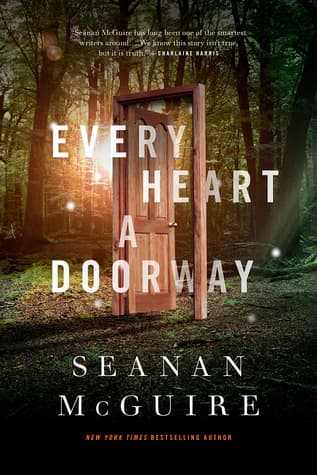
- Every Heart a Doorway
Seanan McGuire
3.8 (69k) average on GoodreadsFantasyFeatures characters who've returned from other worlds and struggle with fitting into 'normal' life, albeit with a darker, more fantastical twist.
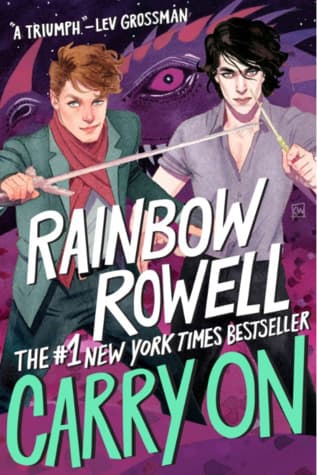
- Carry On
Rainbow Rowell
4.2 (205k) average on GoodreadsFantasyA meta-fantasy that plays with chosen one tropes and focuses on character relationships and internal conflicts alongside magical battles.
- The Fault in Our Stars
John Green
4.2 (3.6M) average on GoodreadsYoung AdultWhile both are emotionally resonant YA novels dealing with significant life challenges, The Fault in Our Stars focuses on illness, mortality, and first love in a realistic setting. Ness's novel uses fantasy elements and meta-commentary to explore anxiety and the desire for normalcy, providing a more satirical and introspective take on adolescent struggles compared to Green's direct, poignant narrative.
- The Perks of Being a Wallflower
Stephen Chbosky
4.2 (1.3M) average on GoodreadsPsychologyThrough letters, a shy high school freshman learns to navigate first love, trauma, and self-discovery, stepping off the sidelines and into life.
- Eleanor Oliphant Is Completely Fine
Gail Honeyman
4.3 (708k) average on GoodreadsLiterary FictionA lonely woman's structured life changes when an IT guy and an elderly man help her learn to open her heart.




Enjoyed the summary?
A summary gives you the shape of the book. The book itself has the detail, the examples and the voice.
Find The Rest of Us Just Live Here on AmazonAs an Amazon Associate, BookBrief earns from qualifying purchases. How we're funded