

Synopsis
Covers the whole plot, including the ending.
- Difficulty
- Easy
- Pacing
- Moderate
- Mood
- Romantic, Mysterious, Evocative, Emotional
- Read it if
- You enjoy sweeping dual-timeline narratives, intricate family mysteries, and epic romances set against rich historical backdrops.
- Skip it if
- You prefer fast-paced thrillers or dislike emotional historical fiction with a strong romantic element.
The Seven Sisters Plot Summary
Covers the whole plot, including the ending.
Unexpected News Shatters Maia's World
The story begins with Maia D’Apliese, the oldest of six adopted sisters, learning her adoptive father, Pa Salt, has died. Each of the sisters – Maia, Ally, Star, CeCe, Tiggy, and Electra – returns to their childhood home, 'Atlantis' castle on Lake Geneva. Pa Salt, a rich and private man, adopted each of them from different parts of the world as babies. They meet Georg Hoffman, Pa Salt's lawyer, who says their father was buried at sea, as he wished. Each sister gets a letter and a clue to her heritage. Maia feels a deep loss and curiosity about her past.
Maia's Quest Begins in Rio
Maia's clue is an armillary sphere with coordinates and a note about her birthplace in Rio de Janeiro. She does not want to go at first, wanting to stay in Switzerland with her boyfriend, Zaz, but she feels she must follow the clue. She travels to Rio and finds a crumbling mansion in the Lapa district. There, she meets Augusto Bonifacio, an old man who thinks she is his long-lost great-grandmother, Izabela. Augusto, with his nurse, Yara, gives Maia old letters and a diary, starting to uncover a complex family history connected to the Christ the Redeemer statue.
Izabela's Strict Upbringing in Belle Époque Rio
The story goes back to Rio de Janeiro in 1927, showing Izabela Bonifacio, a beautiful and lively young woman from a rich family. Her father, a traditional and ambitious man, has arranged her marriage to Gustavo Aires de Vasconcelos, a nobleman, to raise their family's social standing. Izabela, however, dreams of art, travel, and a life beyond her sheltered home. She is a talented artist, sketching the city around her, but her parents, especially her mother, who wants proper behavior, limit her goals.
Journey to Paris and a Fateful Encounter
Architect Heitor da Silva Costa, a family friend and the person behind the Christ the Redeemer statue, travels to Paris to hire a sculptor. Izabela, wanting to avoid her upcoming marriage and see the world, convinces her father to let her go with him and her family to Europe. In Paris, at the studio of Paul Landowski, the French sculptor chosen for the Christ the Redeemer project, Izabela's life changes. She meets Laurent Brouilly, a charming and ambitious young sculptor working as Landowski's assistant. They connect right away, starting a forbidden romance.
A Forbidden Love Blooms in Montparnasse
Despite her family watching her closely, Izabela and Laurent start a secret, passionate relationship. They meet in the cafes and art places of Montparnasse, very different from Izabela's life in Rio. Laurent shows Izabela a world of artistic freedom and ideas, making her want independence even more. Their love grows, and Izabela feels torn between her duty to her family and what her heart wants. She secretly poses for Laurent, becoming his inspiration, and they dream of a future together, despite the big social barriers between them.
Consequences and Return to Rio
The secret relationship between Izabela and Laurent is found out, causing a scandal that could ruin the Bonifacio family's name. Izabela's parents are angry and force her to return to Rio de Janeiro to marry Gustavo. Heartbroken and pregnant with Laurent's child, Izabela is desperate. She makes a plan with her maid, Beatriz, and her kind aunt, Tilde, to hide her pregnancy and arrange for the baby to be adopted. She hopes that one day, she can be with Laurent and their child again.
A Life of Sacrifice and Hidden Truths
Back in Rio, Izabela marries Gustavo, who, despite being from a noble family, is a gentle and sad man. She gives birth to her daughter, Cristina, in secret with the help of Beatriz and Tilde. The baby is then given to the family's gardener, Felicio, and his wife, who raise her as their own daughter, Maria. Izabela lives a life of quiet sadness, wanting Laurent and her lost child, while publicly acting like a devoted wife and mother to her later child with Gustavo, a son named João. She continues to secretly paint, finding comfort in her art.
Maia Uncovers the Full Truth
In the present, Maia learns more about the past. Augusto Bonifacio says he is Izabela's grandson (through João) and shares more letters and memories. Maia learns that Izabela later met Laurent again, but their love was only brief before tragedy happened again. The biggest discovery is when Maia finds out that Izabela's first daughter, Maria, was her own grandmother. This means Maia is directly related to Izabela and Laurent, making her a Bonifacio by blood. She also learns that Izabela never truly got over losing her first child and Laurent.
Reconciliation and New Beginnings
Maia feels the emotional weight of her family history but also finds a sense of belonging. She connects with Augusto and Yara, forming a bond with her new Brazilian family. She visits the Christ the Redeemer statue, now understanding its connection to her ancestors' story. Maia decides to stay in Rio for a while, accepting her heritage. She breaks up with Zaz, realizing their relationship was not what she wanted. Finding her past helps Maia start a new part of her life, personally and professionally, by taking a job translating a book in Paris, hinting at future adventures.
The Mystery of Pa Salt Lingers
As Maia finishes her trip in Rio, she thinks about Pa Salt's choice to send each sister to find her origins. She realizes that her father, in his own way, wanted them to find themselves and understand their places in the world. The mystery of his sudden death and burial at sea remains unsolved, leaving Maia with more questions than answers about the man who raised her. She understands that her journey is just the first step in a bigger story, as her sisters will go on similar searches to find their own pasts.
The Seven Sisters Characters
Maia D'Apliese
Protagonist
The eldest D'Apliese sister, translator, and first to uncover her heritage.
Maia is initially presented as reserved, intellectual, and somewhat insecure, often living in the shadow of her more outgoing sisters. She works as a translator and is hesitant to explore her past, preferring the comfort of her routine. Her journey to Rio de Janeiro forces her out of her shell, challenging her preconceived notions about herself and her family. She is deeply loyal to her sisters and carries a quiet strength that emerges as she uncovers her true lineage. Her discovery of Izabela's story resonates deeply with her own artistic sensibilities.
Relationships: Pa Salt (Adoptive father, deeply loved); Zaz (Boyfriend at the beginning of the story); Augusto Bonifacio (Great-grandson of Izabela, Maia's distant cousin); Izabela Bonifacio (Biological great-grandmother)
Pa Salt
Supporting/Catalyst
The enigmatic billionaire adoptive father who sets the sisters on their journeys.
Pa Salt is the mysterious, wealthy, and reclusive adoptive father of the six D'Apliese sisters. Though he dies at the beginning of the book, his presence and influence permeate the entire story. He is a man of secrets, having adopted each sister from a different part of the world and providing them with clues to their origins. His motivations are complex – he clearly loved his daughters but also kept much hidden from them. His sudden death and unusual burial fuel the central mystery of the series, hinting at a larger, untold story.
Relationships: Maia D'Apliese (Adoptive father); Ally D'Apliese (Adoptive father); Star D'Apliese (Adoptive father); CeCe D'Apliese (Adoptive father); Tiggy D'Apliese (Adoptive father); Electra D'Apliese (Adoptive father)
Izabela Bonifacio
Protagonist (historical timeline)
Maia's spirited and artistic great-grandmother from 1920s Rio and Paris.
Izabela is a vibrant and passionate young woman from a wealthy Rio de Janeiro family in the 1920s. She is an aspiring artist, yearning for freedom and self-expression, often sketching the world around her. Bound by the strict societal expectations of her time and her parents' ambition for an aristocratic marriage, she falls deeply in love with Laurent Brouilly. Her life is marked by sacrifice, heartbreak, and a quiet resilience as she navigates forbidden love, secret motherhood, and a life she didn't entirely choose. She is the anchor of Maia's historical narrative.
Relationships: Laurent Brouilly (Forbidden lover and father of her first child); Gustavo Aires de Vasconcelos (Husband); Tilde (Supportive aunt); Beatriz (Loyal maid and confidante); Maria (First daughter, given away (Maia's grandmother)); Joâo (Son with Gustavo)
Laurent Brouilly
Supporting (historical timeline)
The ambitious French sculptor who captures Izabela's heart in Paris.
Laurent is a talented and ambitious young French sculptor, an apprentice to Paul Landowski, when he meets Izabela in Paris. He is charismatic, passionate about his art, and deeply in love with Izabela. He represents the freedom and artistic life Izabela craves. Their affair is intense and heartfelt, but Laurent is ultimately unable to overcome the societal barriers that separate them, leading to a tragic separation and a life of longing. He is the biological great-grandfather of Maia.
Relationships: Izabela Bonifacio (Lover and mother of his child); Paul Landowski (Mentor/employer)
Augusto Bonifacio
Supporting (present timeline)
Elderly descendant of Izabela, who helps Maia uncover her past.
Augusto is an elderly, gentle man living in the crumbling Bonifacio mansion in Rio. He is Izabela's grandson (through her son Joâo) and holds the key to much of the family's past, including old letters and memories. He initially mistakes Maia for Izabela, highlighting the strong family resemblance. Augusto is kind and welcoming, eager to share his family's history with Maia, and provides crucial pieces of the puzzle that allow Maia to understand her heritage. He represents the living link to Izabela's story.
Relationships: Maia D'Apliese (Distant cousin (Maia's great-grand-nephew)); Izabela Bonifacio (Grandmother)
Yara
Supporting (present timeline)
Augusto's compassionate nurse and caretaker in Rio.
Yara is Augusto Bonifacio's kind and observant nurse. She is present when Maia first arrives at the mansion and quickly becomes a supportive figure, helping Maia navigate the cultural nuances of Rio and the complexities of Augusto's memories. Yara acts as a bridge between Maia and Augusto, often translating and clarifying details. She is a practical and empathetic character who facilitates Maia's discovery of her heritage.
Relationships: Augusto Bonifacio (Patient/caretaker); Maia D'Apliese (Supportive acquaintance)
Tilde
Supporting (historical timeline)
Izabela's progressive and supportive aunt in Rio.
Tilde is Izabela's aunt, a compassionate and forward-thinking woman in a conservative society. Unlike Izabela's parents, Tilde understands Izabela's artistic spirit and desire for independence. She becomes a crucial confidante and ally for Izabela, especially during her secret pregnancy. Tilde helps arrange for the birth and adoption of Izabela's first child, Maria, demonstrating immense bravery and loyalty. She represents a voice of reason and kindness amidst the rigid social structures of the time.
Relationships: Izabela Bonifacio (Supportive aunt)
Gustavo Aires de Vasconcelos
Supporting (historical timeline)
Izabela's arranged husband, a kind but melancholic nobleman.
Gustavo is the nobleman Izabela is arranged to marry. He is a kind, gentle, and somewhat melancholic man who genuinely cares for Izabela, even though their marriage is based on duty rather than love. He is oblivious to Izabela's past affair and secret child, providing her with a stable, albeit emotionally distant, life. His character highlights the societal pressures on women of the era and the sacrifices made for family honor. He is not a villain, but rather another victim of circumstance.
Relationships: Izabela Bonifacio (Husband)
Beatriz
Supporting (historical timeline)
Izabela's loyal maid and confidante in Rio.
Beatriz is Izabela's maid and a deeply loyal confidante. She is privy to Izabela's secret affair with Laurent and her subsequent pregnancy. Beatriz assists Tilde in concealing Izabela's condition and facilitating the birth and adoption of baby Maria. Her unwavering support and discretion are vital to Izabela's ability to navigate the scandalous situation. She represents the quiet strength and loyalty found in unexpected places.
Relationships: Izabela Bonifacio (Maid and confidante)
The Seven Sisters Themes
Identity and Self-Discovery
The main theme is Maia's journey to find her true origins, leading to a better understanding of herself. This is also seen in Izabela's fight for self-expression within social rules. Both women, from different times, try to define who they are beyond the roles given to them. Maia's search for her biological family helps her understand her place in the world and make decisions about her future, moving past her adoptive father's influence and her old relationship.
“I knew that a part of me would always be with Pa, but I also knew that it was time to find out who I was without him.”
Love and Sacrifice
The novel looks at different kinds of love – romantic, family, and parental – and what people give up for them. Izabela's passionate, forbidden love for Laurent leads to a big sacrifice: giving up her child and living with regret. Pa Salt's adoptive love for his daughters is also a sacrifice, as he raises them and then, after his death, guides them to their true heritage. Maia's own journey means giving up her comfortable, but unfulfilling, relationship with Zaz for a chance at real self-discovery and a deeper connection to her past.
“Love, I had learned, was a dangerous game. And I had lost.”
Duty Versus Desire
This theme is mainly shown through Izabela's story. She struggles between her duty to her family and society, which demands an arranged marriage and social conformity, and her personal desires for artistic freedom, love with Laurent, and a life of her own. Her struggle shows how limiting social expectations were in the 1920s. While less obvious, Maia also faces a milder version of this, feeling a duty to stay with Zaz or in her comfort zone, versus her desire to explore her past and create a new path.
“My heart longed for one life, but my duty dictated another.”
The Enduring Power of Art
Art is an important part of the novel and a way to express and connect. Izabela is a talented artist who finds comfort and a voice in her sketches and paintings, even when her life is restricted. Laurent is a sculptor, and his work on the Christ the Redeemer statue becomes a lasting symbol connected to Izabela's story. Maia, as a translator of literature, also connects with art deeply. Art crosses time, linking generations and giving a real link to the past, allowing characters to express what words cannot.
“My art was the only place where I could truly be myself.”
The Legacy of the Past
The novel shows how past events and choices affect the present. Izabela's hidden love affair and the secret adoption of her child directly lead to Maia's existence and her search for discovery. Pa Salt's mysterious clues make sure his daughters must face their family histories. The settings, like the old mansion in Rio and the Christ the Redeemer statue, remind us that the past always affects and shapes lives across generations.
“The past, I realized, was not a dead thing. It was alive, breathing, and stretching its long fingers into my present.”
Plot Devices & Literary Techniques
Dual Timeline Narrative
Alternating between present-day Maia and 1920s Izabela to reveal a connected story.
This device is central to the novel's structure, weaving together Maia's contemporary search for her origins with the historical narrative of her great-grandmother, Izabela. The past storyline is often presented through letters, diaries, and recounted memories, which Maia uncovers in the present. This allows for a gradual revelation of secrets, building suspense and drawing parallels between the challenges faced by women across generations. It enriches the plot by providing historical context and emotional depth to Maia's personal journey.
The Armillary Sphere
A symbolic clue left by Pa Salt, guiding Maia to her origins.
The armillary sphere is the physical clue Pa Salt leaves for Maia, inscribed with coordinates leading to Rio de Janeiro. It serves as a literal navigational tool for her journey and a symbolic representation of the interconnectedness of the universe and her own place within it. As an astronomical instrument, it hints at the vastness of the world and the intricate paths that lead to one's destiny, embodying the mystery and global reach of Pa Salt's adoptions.
Letters and Diaries
Primary means of revealing the historical plot and character motivations.
Izabela's diary and various letters are crucial plot devices that allow Maia (and the reader) direct access to the thoughts, feelings, and events of the past. These personal documents provide an intimate, first-person perspective on Izabela's struggles, her forbidden love, and her sacrifices. Without them, Maia's understanding of her heritage would be incomplete, and the emotional resonance of Izabela's story would be diminished. They serve as a powerful link between the past and present.
The Christ the Redeemer Statue
An iconic landmark intertwined with Izabela's story and a symbol of enduring love.
The Christ the Redeemer statue is more than just a setting; it becomes a powerful symbol within the narrative. Its construction serves as a backdrop to Izabela's life in Rio and her connection to Laurent, who works on its design. The statue, with its open arms, comes to represent enduring love, sacrifice, and a kind of silent witness to the generations of the Bonifacio family. For Maia, visiting it brings a profound sense of connection to her ancestors and the epic scale of their story.
Pa Salt's Mysterious Death
The inciting incident and an ongoing enigma that drives the entire series.
The sudden and unexplained death of Pa Salt, coupled with his unusual burial at sea, is the inciting incident that sets all the sisters' journeys in motion. It's a significant plot device because it provides the initial motivation for each sister to explore her past. The mystery surrounding his death is not resolved in this book and serves as an overarching enigma that connects all seven novels in the series, hinting at deeper secrets and a larger narrative beyond individual family histories.
The Seven Sisters Quotes
“We are all connected, Maia. The past is never truly gone; it lives on in us, in our choices, in our very souls.”
“Sometimes the greatest mysteries are not in the world around us, but within ourselves.”
“Love is not a cage, but a key that unlocks the deepest parts of our hearts.”
“The stars may guide us, but it is our own courage that lights the path.”
“In every ending, there is a beginning waiting to be discovered.”
“A name is not just a label; it is a story, a legacy, a piece of history.”
“The truth may be painful, but it is the only foundation upon which we can build our future.”
“We are like the seven sisters of the Pleiades: bound by blood, yet each shining with our own unique light.”
“To find where you are going, you must first understand where you have come from.”
“Fear is a shadow that disappears when you turn on the light of knowledge.”
“The heart has a memory all its own, one that time cannot erase.”
“In the tapestry of life, every thread, no matter how broken, has its purpose.”
“Sometimes the most ordinary moments hold the most extraordinary truths.”
“To be vulnerable is not a weakness, but the greatest strength of all.”
Quiz
10 questions on the plot and the characters. Each answer comes with a short explanation.
Question 1
Where is the sisters' childhood home 'Atlantis' located?
- On the coast of Brazil near Rio de Janeiro
- On the shores of Lake Geneva in Switzerland
- In the mountains of Austria
- On an island in the Mediterranean Sea
Show answer
B. On the shores of Lake Geneva in Switzerland The book opens with the sisters gathering at their childhood home 'Atlantis,' which is described as a secluded castle situated on the shores of Lake Geneva in Switzerland, setting the stage for their journey after their father's death.
Question 2
What major historical project is Heitor da Silva Costa working on in 1920s Rio de Janeiro?
- Designing the Copacabana Palace hotel
- Planning the construction of Christ the Redeemer statue
- Building a new opera house for the city
- Creating a monument to Brazilian independence
Show answer
B. Planning the construction of Christ the Redeemer statue In the historical storyline set during Rio's Belle Epoque of the 1920s, architect Heitor da Silva Costa is devising plans for the enormous statue Christ the Redeemer, which becomes a central element connecting past and present narratives.
Question 3
Why does Maia travel to Rio de Janeiro after her father's death?
- To attend a family wedding she had previously planned
- To follow a clue about her true heritage given by her father
- To sell property her father owned there
- To escape her grief and start a new life
Show answer
B. To follow a clue about her true heritage given by her father After their adoptive father's death, each sister receives a clue to her true heritage. Maia's clue leads her to a crumbling mansion in Rio de Janeiro, where she begins uncovering her family history.
Question 4
Where does Izabela meet the young sculptor Laurent Brouilly?
- At a society ball in Rio de Janeiro
- In the cafes of Montparnasse in Paris
- During a tour of European cathedrals
Show answer
B. In the cafes of Montparnasse in Paris Izabela convinces her father to let her travel to Europe before her arranged marriage. In Paris, she visits Paul Landowski's studio (where Christ the Redeemer is being designed) and meets Laurent Brouilly in the vibrant cafes of Montparnasse, sparking a life-changing romance.
Question 5
What is Izabela's father's primary ambition for her in 1920s Rio?
- For her to become a famous artist
- For her to marry into the aristocracy
- For her to take over the family business
- For her to travel the world as a diplomat
Show answer
B. For her to marry into the aristocracy Izabela Bonifacio's father has aspirations for his daughter to marry into the aristocracy, reflecting the social ambitions of Rio's Belle Epoque period and creating conflict with Izabela's own desires for passion and adventure.
Question 6
How many sisters are featured in 'The Seven Sisters'?
- Five sisters
- Six sisters
- Seven sisters
- Eight sisters
Show answer
B. Six sisters The book features Maia D'Apliese and her five sisters (totaling six), who gather after their father's death. The title 'The Seven Sisters' refers to the Pleiades star cluster and hints at the seven-book series where each sister's story is explored, though only six are initially present in this first book.
Question 7
What architectural element connects the 1920s storyline with Maia's modern investigation?
- A series of identical castles across Europe
- The design and construction of Christ the Redeemer
- Renovation projects on Lake Geneva mansions
- Underground tunnels beneath Rio de Janeiro
Show answer
B. The design and construction of Christ the Redeemer The Christ the Redeemer statue serves as a crucial link between timelines. Heitor da Silva Costa's work on the statue in the 1920s intersects with Izabela's story, while in the present, Maia's heritage investigation in Rio connects to this historical project and its creators.
Question 8
What significant change occurs in Izabela's life after meeting Laurent Brouilly?
- She abandons her family to become a sculptor's apprentice
- She realizes her life will never be the same again
- She immediately returns to Brazil to confront her father
- She decides to become an architect like Heitor
Show answer
B. She realizes her life will never be the same again The book explicitly states that after meeting ambitious young sculptor Laurent Brouilly in Paris, Izabela 'knows at once that her life will never be the same again,' foreshadowing the profound impact this romance will have on her predetermined path.
Question 9
What dual narrative structure does the book employ?
- Alternating between Maia's investigation and Izabela's 1920s story
- Telling each sister's story in consecutive chapters
- Flashbacks within a single chronological narrative
- Parallel stories set in different European capitals
Show answer
A. Alternating between Maia's investigation and Izabela's 1920s story The novel uses a dual timeline structure: Maia's present-day story of discovering her heritage after her father's death alternates with Izabela's historical narrative set eighty years earlier during Rio's 1920s Belle Epoque, gradually revealing how these stories connect.
Question 10
What broader series concept does 'The Seven Sisters' introduce?
- A mystery series about stolen artworks across decades
- A seven-novel series where each book explores one sister's heritage
- A trilogy about the same characters over three generations
- An anthology of unrelated historical fiction stories
Show answer
B. A seven-novel series where each book explores one sister's heritage As the first in a seven-novel series, 'The Seven Sisters' introduces the concept where each book focuses on one of the adopted sisters as she discovers her unique heritage, with Maia's Brazilian story beginning this sweeping, interconnected narrative.
The Seven Sisters FAQ
What is 'The Seven Sisters' about?
The novel follows Maia D’Apliese and her five adopted sisters who gather at their childhood home 'Atlantis' on Lake Geneva after their father's death. Each receives a clue to her true heritage, sending Maia to Rio de Janeiro to uncover her origins. The story alternates with a 1920s narrative about Izabela Bonifacio, a Brazilian woman who travels to Paris and falls in love with sculptor Laurent Brouilly during the creation of Christ the Redeemer statue.
Why should I read 'The Seven Sisters'?
This book combines historical mystery, romance, and family drama across dual timelines. Readers who enjoy unraveling genealogical puzzles, vivid historical settings (1920s Rio and Paris), and emotional journeys of self-discovery will find it compelling. The connection between Maia's modern search and Izabela's passionate story creates a satisfying narrative tapestry.
What is the background/setting of 'The Seven Sisters'?
The story unfolds in two primary settings: present-day Lake Geneva at the secluded castle 'Atlantis' and Rio de Janeiro, alternating with 1920s Rio during its Belle Epoque and Paris's artistic Montparnasse district. The historical timeline coincides with the actual construction of Christ the Redeemer statue, providing rich cultural context.
What are the most memorable quotes?
Key quotes include Pa Salt's enigmatic message to his daughters: 'You are each a shining star, but together you form a constellation that lights up the heavens.' Another significant line is Izabela's realization about Laurent: 'In that moment, I knew I had met the man who would change everything, and that my carefully planned future was already crumbling.'
What writing style does the author use?
Lucinda Riley employs a dual-narrative structure with alternating chapters between Maia's first-person present-day investigation and Izabela's third-person historical story. The prose is descriptive and atmospheric, particularly in evoking 1920s Parisian cafes and Rio's landscapes, while maintaining a pace that balances mystery development with emotional depth.
What minor details add significant meaning?
The naming of the sisters after the Pleiades star cluster (Maia, Alcyone, etc.) subtly reinforces their celestial connection long before the full adoption story is revealed. Izabela's collection of small sculpted butterflies in Paris symbolizes her transformation and fleeting freedom, mirroring Maia's journey of self-discovery decades later.
What are some subtle foreshadowing moments?
Early mentions of Pa Salt's mysterious travels and his collection of artifacts from around the world hint at the sisters' diverse origins before the Rio connection is revealed. In Izabela's story, her father's insistence on aristocratic marriage foreshadows the conflict between duty and passion that defines her arc.
What unexpected character connections exist?
The gradual revelation that Izabela's story is directly connected to Maia's biological heritage—possibly making Izabela an ancestor—creates a powerful link between the timelines. Additionally, minor characters like the architect Heitor da Silva Costa serve as bridges between the historical narrative and real-world monuments.
What are unspoken character motivations?
Maia's search for her origins is driven not just by curiosity but by a deep-seated insecurity about belonging, having always felt different from her sisters. Izabela's compliance with her father's marriage plans masks a fierce internal rebellion and longing for artistic expression, which manifests in her risk-taking with Laurent.
What psychological complexities do characters exhibit?
Izabela embodies the conflict between societal expectations and personal desire, her passion for Laurent clashing with her duty to family. Maia demonstrates how adoption can create both profound gratitude and identity confusion, particularly when faced with her father's secretive nature even after death.
What are the major emotional turning points?
Izabela's first meeting with Laurent in Paris marks a point of no return emotionally. Maia's discovery of specific documents in Rio that confirm her connection to Izabela's story provides cathartic clarity. The sisters' initial gathering at Atlantis, where they receive their clues, sets the stage for their collective and individual journeys.
How do relationship dynamics evolve?
Maia's relationship with her sisters shifts from a shared grief to a collaborative quest as they support each other's searches. Izabela and Laurent's romance evolves from artistic admiration to deep, forbidden love that challenges social boundaries. The father-daughter dynamics—both Pa Salt with his adopted daughters and Izabela with her traditional father—are central to understanding character choices.
Which parts remain ambiguous or open-ended?
Pa Salt's true identity and motivations for adopting six specific girls from around the world are only partially revealed, setting up mysteries for subsequent books. The exact nature of the connection between Izabela and Maia's lineage is hinted at but not fully confirmed, leaving room for interpretation and further discovery.
What are controversial scenes or decisions?
Izabela's decision to pursue a relationship with Laurent despite her engagement to another man raises questions about morality versus personal fulfillment. Some readers debate whether Pa Salt's secrecy about the sisters' origins was protective or manipulative, given the emotional turmoil it causes after his death.
'The Seven Sisters' ending explained: how it ends & what it means
The novel concludes with Maia gaining substantial insight into her biological heritage through Izabela's story, but many questions remain unanswered about Pa Salt's full intentions. The ending suggests that each sister's clue will lead to a similar journey of discovery across the series, emphasizing themes of identity, legacy, and the interconnectedness of past and present.
How does the Christ the Redeemer statue function symbolically?
The statue represents both artistic ambition and spiritual seeking, mirroring Izabela's search for meaning beyond societal constraints. For Maia, it becomes a tangible link to her possible heritage, symbolizing how monumental creations can connect generations across time.
About the author

Lucinda Riley was a British author known for her fiction, particularly the popular series "The Seven Sisters." This series, inspired by the mythology of the Seven Sisters star cluster, explores themes of family, love, and identity across different historical contexts. Riley's works have garnered a wide readership and have been translated into multiple languages.
Similar books
- The House of the Spirits
Isabel Allende
4.2 (190k) average on GoodreadsFantasyMulti-generational family saga with magical realism elements and historical context.
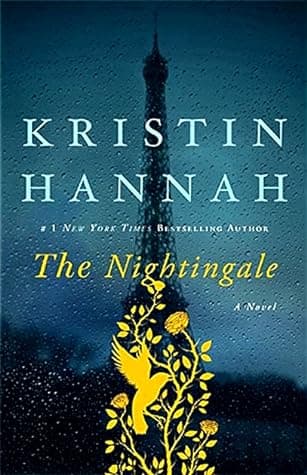
- The Nightingale
Kristin Hannah
4.6 (698k) average on GoodreadsHistorical FictionHistorical fiction with strong female characters and emotional depth.
- Outlander
Diana Gabaldon
4.2 (824k) average on GoodreadsFantasyEpic romance intertwined with historical events and a sense of destiny.
- The Secret Keeper
Kate Morton
4.2 (3k) average on GoodreadsRomanceWhile both books utilize dual timelines and family secrets, Morton's work often features more intricate plotting, deeper psychological exploration of characters, and a less overtly romantic focus. Riley's 'The Seven Sisters' leans more heavily into grand romance and global adventure, making it a more escapist read.
- To Kill a Mockingbird
Harper Lee
4.3 (4.5M) average on GoodreadsHistorical FictionIn the 1930s Jim Crow South, Harper Lee writes about racial injustice, moral growth, and the quiet courage of a lawyer father, Atticus Finch, as seen through his young daughter's eyes.
- The Great Gatsby
F. Scott Fitzgerald
3.9 (3.8M) average on GoodreadsHistorical FictionIn the opulent Roaring Twenties, a mysterious millionaire's lavish parties hide his desperate, tragic pursuit of a lost love, exposing the emptiness within the American Dream.





Enjoyed the summary?
A summary gives you the shape of the book. The book itself has the detail, the examples and the voice.
Find The Seven Sisters on AmazonAs an Amazon Associate, BookBrief earns from qualifying purchases. How we're funded