
Synopsis
Covers the whole plot, including the ending.
- Difficulty
- Hard
- Pacing
- Moderate
- Mood
- Bleak, Reflective, Despairing, Analytical
- Read it if
- You are interested in modernist poetry, classical allusions, or a profound commentary on post-war disillusionment and the loss of myth.
- Skip it if
- You prefer narrative-driven poetry, lighthearted themes, or find modernist free verse challenging.
The Shield of Achilles Plot Summary
Covers the whole plot, including the ending.
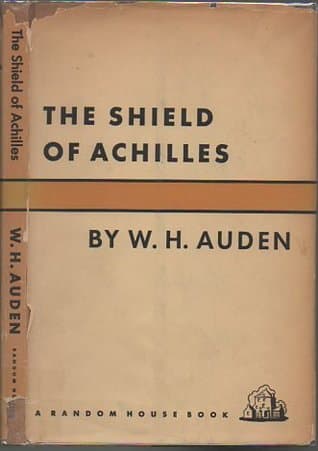
The Shield of Achilles
The poem opens with the goddess Thetis watching Hephaestos, the lame god, forge a new shield for her son, Achilles. She expects to see traditional heroic images: vineyards, dancing, sacrifices, sailing ships, and a city at peace, all showing a glorious, ordered world. However, as Hephaestos works, the shield shows a different, modern scene. Instead of pastoral beauty, she sees a 'stretch of nothing but barbed wire,' a 'ragged gap' and 'three pale figures were marching away,' a scene without natural beauty or heroic effort. This first stanza sets the poem's tone, comparing Thetis's classical expectations with the grim realities on the shield.
A Barren Landscape
Thetis looks at the first panel of the shield, where she expects scenes of the 'wine-dark sea' or 'athletic glory.' Instead, she sees a 'blank' and 'unsmelted ore' that becomes a 'barren' and 'weed-choked' landscape. This scene has a 'barbed wire' fence, a 'ragged gap,' and 'three pale figures' marching away into the distance. There are no 'vines nor olive trees,' no 'ships' nor 'sacrifices,' only emptiness and a bleak, military-industrial setting. This imagery sharply contrasts with the lively, life-affirming scenes in Homer's account of Achilles' shield, showing a major change in heroism and human experience.
The Uncared-for City
Thetis then looks for a 'city where the living gathered,' expecting a lively community with 'weddings and feasts' and 'justice in the market-place.' Instead, she finds a city where 'an artificial wilderness of wires and concrete' dominates. It is a place where 'thousands' of 'unemphatic' faces look 'to the sky,' not in prayer or celebration, but in passive observation. A 'loudspeaker's voice' dictates 'abstracted dogma,' controlling the people. There are no 'altars' or 'priests,' no 'sacrifices' or 'justice,' only a cold, impersonal order enforced by an unseen power. This picture criticizes modern totalitarian states and the dehumanization of the individual.
The Youth and the Scapegoat
Searching for 'ritual pieties' and 'sacrificial victims' as described in ancient myths, Thetis expects to see a 'bull for a gift' or 'girls with pitcher-laden heads.' Instead, the shield shows a 'weed-choked' landscape where a 'ragged urchin' is being tormented by a 'ring of onlookers.' These onlookers are 'bored and indifferent,' watching the boy's suffering without helping or showing empathy. The boy, 'naked in the scorching sun,' is 'mocked' and 'tormented,' his cries unheard and ignored. This scene reflects the casual cruelty and moral apathy in modern society, where suffering is often a spectacle rather than a call to action, and shows the loss of community responsibility.
The Absence of Divine Presence
Throughout her observation, Thetis is struck by the complete absence of divine presence or intervention on the shield. In Homer's epic, the gods often interact with mortals and influence events. On this new shield, however, there are no 'gods or heroes,' no 'nymphs' or 'satyrs,' no 'olympian games' or 'divine judgments.' The world shown is entirely human, driven by human actions and human suffering, without any higher power to guide, punish, or redeem. This absence points to a secularized world where humanity is left to itself, facing its own created horrors without mythological comfort or divine justice.
Achilles' Fate
The bleakness of the shield's images is not just a comment on the modern world but also reflects on Achilles' own fate. Thetis, who knows her son is destined for a short but glorious life, sees on the shield a world where glory itself is absent. The scenes of 'barbed wire' and 'unemphatic faces' and 'mocked' children offer no place for a traditional hero. The shield, meant to protect Achilles, shows a world where his heroic virtues might be meaningless or even destructive. It hints that the kind of heroism Achilles embodies is outdated in a world defined by anonymous suffering and systemic oppression, rather than individual combat and noble deeds.
The Loss of Meaning and Myth
A central theme is the loss of meaning and myth in the modern era. Thetis's memories of the classical world—'vineyards,' 'dancers,' 'sacrifices,' 'priests,' 'justice'—show a world with spiritual and cultural importance, where human actions had clear moral and cosmic meaning. The shield, however, shows a world stripped of these layers. It is a world of 'wires and concrete,' 'abstracted dogma,' and 'indifferent' crowds, where suffering is ordinary and heroism is irrelevant. This contrast highlights Auden's sadness for a lost sense of purpose and the decline of the grand stories that once gave human life meaning.
The Nature of Modern Warfare
The images of 'barbed wire' and 'marching figures' on the shield strongly suggest the landscape of modern warfare, especially the trench warfare of World War I and the concentration camps of World War II. Unlike the individual combat of ancient heroes, modern conflict has anonymous masses, technological barriers, and systematic dehumanization. The 'ragged gap' and 'three pale figures' suggest a landscape of escape or forced movement, without the individual heroism or personal glory linked to Achilles' era. This portrayal criticizes the industrialized nature of war, where individual power is lost within vast, destructive systems.
The Impassivity of the Crowd
A repeated idea is the impassivity of crowds watching suffering. In the city scene, 'thousands' of 'unemphatic faces' look 'to the sky,' passively receiving 'abstracted dogma.' More clearly, when the 'ragged urchin' is tormented, a 'ring of onlookers' is 'bored and indifferent,' their lack of empathy a chilling condemnation of modern society. This shows a moral paralysis where individuals are unwilling or unable to act against injustice or cruelty, preferring to remain detached. This collective apathy adds to the bleakness, suggesting a breakdown of community responsibility and human connection.
The Artist's Vision
Hephaestos, the divine smith, acts as the artist in the poem, his creation showing a truth that Thetis, representing the classical view, struggles to understand. While Thetis expects a shield reflecting heroic ideals and mythical beauty, Hephaestos creates a stark, unromanticized vision of a modern, post-war world. His art is not about glorifying the past but about confronting the harsh present. He is 'the lame god' who 'hammered on the shield,' methodically and dispassionately bringing to life a world defined by 'barbed wire,' 'concrete,' and 'abstracted dogma,' forcing Thetis and the reader to acknowledge a new, unsettling reality.
Conclusion: A World Without Hope
The poem ends with Thetis observing the finished shield, its grim images clear. She is left with deep despair, realizing that the world shown offers no place for her heroic son, Achilles, or the values he represents. The shield shows a world 'without a sign of hope,' where 'unemphatic faces' and 'abstracted dogma' have replaced 'athletic glory' and 'ritual pieties.' Thetis weeps, not just for Achilles' coming death, but for a world that has lost its way, a world where suffering is meaningless and heroism obsolete. The shield becomes a symbol of the modern condition, bleak and without traditional comfort.
Principal Figures
Thetis
Supporting
A sea-nymph and mother of Achilles, representing classical values and a lament for a lost world.
Thetis is a divine sea-nymph, mother of the great Greek hero Achilles. In the poem, she acts as the primary observer and emotional lens through which the shield's imagery is perceived. She embodies the classical world's expectations of heroism, beauty, and order, contrasting sharply with the bleak reality depicted on the shield. Her perspective is one of nostalgia for a past filled with myth, ritual, and clear moral frameworks. She anticipates scenes of glory and natural beauty, only to be confronted with the harsh, modern, and dehumanized landscapes forged by Hephaestos.
Relationships: Achilles (Mother-son; she is concerned for his fate and the world he must inhabit.); Hephaestos (Divine artisan-patron; she commissions the shield, but is alienated by his artistic vision.)
Achilles
Mentioned
The legendary Greek hero, whose shield is being forged, representing traditional heroism.
Achilles is the central figure for whom the shield is being made, though he does not appear directly in the poem. He represents the pinnacle of classical heroism: a warrior whose glory is tied to individual combat, noble deeds, and a clear moral code. The shield's grim imagery implicitly critiques the relevance of such heroism in a modern world characterized by anonymous suffering, systemic oppression, and impersonal warfare. His destiny for a short but glorious life stands in stark contrast to the bleak, inglorious world depicted by Hephaestos, making his heroic virtues seem out of place or even futile.
Relationships: Thetis (Son-mother; his fate is her primary concern.)
Hephaestos
Supporting
The divine smith, who forges the shield and acts as the artist figure depicting a grim modern reality.
Hephaestos is the 'lame god,' the divine artisan responsible for forging Achilles' new shield. He is presented as a dispassionate, almost mechanical creator, whose vision of the world is starkly realistic and modern. Unlike the traditional mythological depictions of his craft, Hephaestos's artistry in this poem reflects a world devoid of beauty, myth, and heroic glory. He is the instrument through which Auden critiques the modern condition, showing a landscape of 'barbed wire,' 'concrete,' and 'abstracted dogma.' His lack of emotional engagement contrasts with Thetis's anguish, emphasizing the objective, unromanticized nature of his creation.
Relationships: Thetis (Divine artisan-patron; he fulfills her commission but subverts her expectations.)
The Unemphatic Faces / Onlookers
Mentioned
Anonymous crowds representing modern society's indifference and passivity.
These are the anonymous figures who populate the shield's urban and rural landscapes. They are described as 'thousands' with 'unemphatic faces,' passively observing a 'loudspeaker's voice' in the city, or 'bored and indifferent' onlookers to a child's torment. They represent the dehumanized, apathetic masses of modern society, stripped of individual agency and moral engagement. Their collective indifference is a key critique of the poem, highlighting a breakdown of communal responsibility and empathy in the face of suffering. They are the antithesis of the active, engaged citizens depicted in classical heroic narratives.
Relationships: The Ragged Urchin (Tormentors/indifferent observers.)
The Ragged Urchin
Mentioned
A tormented child, symbolizing innocent suffering and vulnerability in a cruel world.
This young boy is depicted naked and tormented by a crowd of 'bored and indifferent' onlookers. He symbolizes innocent suffering and vulnerability in a world devoid of compassion or justice. His cries are unheard, and his torment unheeded, reflecting the casual cruelty and moral apathy that Auden critiques in modern society. The urchin's suffering is not a catalyst for heroic intervention but a spectacle for a detached populace, highlighting the absence of traditional heroic figures who would protect the weak. He is a victim of collective indifference and moral decay.
Relationships: The Onlookers (Victim of their indifference and casual cruelty.)
Themes & Insights
The Decline of Heroism and Myth
The poem contrasts the glorious, myth-filled world of classical Greece with the bleak, secularized reality of the 20th century. Thetis expects to see images of heroic deeds, divine intervention, and a world with spiritual meaning, but Hephaestos's shield shows a world where individual heroism is meaningless against systemic oppression and impersonal suffering. The absence of gods, rituals, and justice highlights a deep loss of grand stories and moral structures that once gave human life purpose. Achilles, the ultimate hero, is outdated by a world of 'barbed wire' and 'abstracted dogma.'
“A plain without a feature, bare and brown, / No blade of grass, no sign of neighborhood, / Nothing to eat and nowhere to sit down, / Yet, congregated on its blankness, stood / An unintelligible multitude.”
Modern Alienation and Dehumanization
A main theme is the alienation and dehumanization in modern society. The shield shows 'thousands' of 'unemphatic faces' in a city of 'wires and concrete,' passively receiving 'abstracted dogma.' Individuals become anonymous units, their identities lost in an oppressive, impersonal system. The torment of the 'ragged urchin' by 'bored and indifferent' onlookers further emphasizes a breakdown of human connection and empathy. This reflects Auden's post-World War II concern with totalitarianism, industrialization, and the loss of individual importance in mass society.
“A ragged urchin, naked in the scorching sun, / Stood in the middle of a ring of onlookers. / The circle of their faces was not pale, / But blank and unconcerned, as if they knew / The future of the boy, but did not care.”
The Nature of Modern Warfare and Suffering
The images of 'barbed wire,' 'ragged gaps,' and 'pale figures marching away' strongly suggest the impersonal and devastating nature of 20th-century warfare and its aftermath. Unlike the glorious individual combat of Achilles' time, modern conflict has technological barriers, mass movements, and widespread, anonymous suffering. The suffering on the shield—whether the tormented child or the oppressed city dwellers—is often ordinary, unheroic, and unhelped, showing a world where pain is common and empathy is rare. This contrasts with the classical idea of suffering as potentially redemptive or heroic.
“Barbed wire enclosed an artificial wilderness / And a ragged gap where three pale figures were marching away; / And behind them an open empty sky / That was not the sky of Greece, nor of the wine-dark sea / But a grey, unmeaning, modern sky.”
The Artist's Responsibility to Truth
Hephaestos, the divine smith, is the artist figure in the poem. His creation of the shield, which goes against Thetis's expectations, suggests that the true artist's role is not to glorify a romanticized past or provide comforting illusions, but to show the harsh realities of the present, however grim. Despite Thetis's desire for beauty and heroism, Hephaestos directly portrays a world of desolation, oppression, and indifference. This reflects Auden's own artistic goal, which often involved confronting the moral and political worries of his time rather than escaping into aestheticism.
“The thin-lipped armorer, / Hephaestos, hobbled away, / Thetis of the shining feet / Looked at the shield and wept at what she saw.”
The Loss of Moral Order and Justice
The poem contrasts Thetis's expectation of a city with 'justice in the market-place' and 'ritual pieties' with the grim reality on the shield, where 'no altars' stand, and a 'loudspeaker's voice' dictates 'abstracted dogma.' There is no divine judgment, no community responsibility, and no empathy for suffering. The torment of the 'ragged urchin' goes unpunished and unaddressed, while the city's inhabitants are controlled by an unseen, authoritarian force. This highlights a deep loss of moral order, where ethical frameworks have collapsed, and justice is absent, replaced by indifference and control.
“She looked for the women and the men in their houses, / For the young men with their dances and their songs, / For the altars where the priests performed their rites, / But the city was an artificial wilderness of wires and concrete.”
Plot Devices & Literary Techniques
Ekphrasis
A vivid description of a work of art, used to convey thematic meaning.
Ekphrasis is the central plot device, as the entire poem is a detailed description of the images forged onto Achilles' shield. Auden uses this device to directly reference and subvert Homer's original ekphrasis in the 'Iliad.' By having Thetis observe the creation of a shield that depicts a bleak, modern, post-World War II landscape instead of the vibrant, mythic scenes of Homer, Auden creates a powerful contrast between classical ideals and contemporary reality. The detailed descriptions of barbed wire, concrete cities, and indifferent crowds allow the poem to explore themes of dehumanization, the decline of heroism, and the loss of moral order through a visual medium.
Allusion and Intertextuality
Direct or indirect references to other literary works, especially Homer's 'Iliad'.
The poem is built upon a profound allusion to Homer's 'Iliad,' specifically Book 18, where Hephaestos forges a magnificent shield for Achilles, depicting a world full of life, myth, and human activity. Auden's poem directly references this classical text by having Thetis anticipate similar scenes. However, the actual imagery on the shield is a stark negation of Homer's vision, creating a powerful intertextual dialogue. This device allows Auden to comment on the vast historical and cultural chasm between the classical world and the modern era, highlighting what has been lost or corrupted over time.
Juxtaposition
The placement of contrasting elements side-by-side to highlight their differences.
Auden heavily employs juxtaposition throughout the poem. The most prominent example is the constant contrast between Thetis's classical expectations (vineyards, dances, sacrifices, justice, gods) and the grim, modern reality depicted on the shield (barbed wire, concrete, indifferent crowds, abstracted dogma, absence of gods). This device serves to underscore the radical shift in human experience and values between the ancient world and the 20th century. By placing these opposing images and ideas in direct opposition, Auden emphasizes the bleakness of the modern condition and the profound loss of meaning and beauty.
Irony
A contrast between expectation and reality, often with a critical or sardonic tone.
Irony is pervasive in 'The Shield of Achilles.' The central irony lies in a shield, traditionally a symbol of protection and heroic glory, being forged to depict a world devoid of both. Thetis expects a shield befitting a great hero, but receives one that portrays a world where heroism is meaningless and suffering is mundane. The imagery itself is ironic: a 'city where the living gathered' is an 'artificial wilderness,' and a scene meant to show 'ritual pieties' instead shows the torment of a child. This ironic subversion of expectations highlights Auden's critique of the modern world's moral and spiritual decay.
The Shield of Achilles Quotes
“A plain without a tree, a river without a name, and cattle driven by a man who might have been the last of men.”
“He looked over his shoulder for the historic crests of lions and eagles, but saw only a weed-choked field.”
“The mass and majesty of this world, all that carries weight and always weighs the same.”
“A world of ordinary streets, ordinary doors, and ordinary people leading ordinary lives.”
“That girls are raped, that two boys knife a third, were axioms to him, who’d never heard of any world where promises were kept, or one could weep because another wept.”
“The thin-lipped armorer, Hephaestos, hobbled away, the beautiful forge no longer burning.”
“A white flower on the white sheet, and no one there to see.”
“And the whole sky was a blank, and the whole earth was a blank.”
“All that a child's fancy could conceive, of heroes, gods, and monsters, was not there.”
“The unmentionable odour of death offends the living.”
“A world where every act was arbitrary, where there was no law or reason, no hope or fear.”
“And the voice of the announcer was a voice without a body.”
“No blade of grass, no sign of life, just endless, featureless grey.”
“Thetis of the shining feet, who knew Zeus's will, but could not change it.”
Quiz
10 questions on the plot and the characters. Each answer comes with a short explanation.
Question 1
What is the primary material used by the goddess Thetis to create the new shield for Achilles?
- Bronze
- Gold
- Adamant
- Nothing
Show answer
D. Nothing The poem describes the shield being made of 'nothing' and 'unsmelted ore', emphasizing its barrenness and the absence of traditional heroic imagery.
Question 2
Instead of the traditional pastoral scenes and heroic deeds, what does Thetis observe being depicted on the shield's first panel?
- A bustling city with markets and festivals
- A barren plain with a barbed wire fence and a crowd
- Gods feasting on Mount Olympus
- Achilles fighting Hector
Show answer
B. A barren plain with a barbed wire fence and a crowd The first panel shockingly shows a 'barren plain, a barbed wire fence, / And a crowd of ordinary decent folk' instead of the expected heroic imagery.
Question 3
Which of the following traditional symbols is explicitly ABSENT from the new shield's depiction, contrasting with Homer's description?
- The sun and moon
- The ocean
- Vines and olive trees
- Figures of men and women
Show answer
C. Vines and olive trees The poem notes the absence of 'vines and olive trees' and 'the white cities' Auden contrasts with the Homeric shield, highlighting a lack of natural beauty and civilization.
Question 4
What kind of sound is heard on the shield, replacing the 'dancing and solemn-singing of the girls' Thetis expects?
- The joyful music of flutes and lyres
- The wailing of mourners
- A 'senseless, suffering cry'
- The clang of swords
Show answer
C. A 'senseless, suffering cry' Instead of joyful sounds, Thetis hears 'a million eyes, a million boots in line, / Without expression, waiting for a sign' and later a 'senseless, suffering cry'.
Question 5
The poem explicitly contrasts Thetis's 'marvelling' at the traditional heroic world with her 'stare' at the modern world. What emotion does her 'stare' convey regarding the new shield?
- Pride
- Confusion
- Horror and disbelief
- Admiration
Show answer
C. Horror and disbelief Thetis stares 'aghast' and 'gazed in terror' at the desolate, dehumanized scenes depicted on the shield, reflecting horror at the modern world's brutality.
Question 6
The 'rough voice' that 'commanded them to kneel' and the 'three pale figures' on the shield symbolize what aspect of modern society?
- Religious conversion
- Authoritarian control and state-sanctioned violence
- Democratic elections
- Peaceful protest
Show answer
B. Authoritarian control and state-sanctioned violence The 'rough voice' and the forced kneeling of the 'three pale figures' evoke images of totalitarian regimes and the oppressive power of the state over individuals.
Question 7
What is the ultimate 'sign' that the 'million boots in line' are waiting for on the barren plain?
- A declaration of peace
- An order to commit violence or be sacrificed
- The arrival of a savior
- The end of their watch
Show answer
B. An order to commit violence or be sacrificed The 'sign' is implied to be an order for violence or sacrifice, leading to the 'senseless, suffering cry' and emphasizing the dehumanization and impending doom.
Question 8
The poem’s central theme revolves around the contrast between the heroic ideals of the ancient world and what specific characteristic of the modern world?
- Its technological advancements
- Its spiritual enlightenment
- Its dehumanization, moral vacuum, and collective suffering
- Its emphasis on individual freedom
Show answer
C. Its dehumanization, moral vacuum, and collective suffering Auden uses the shield to highlight the modern world's desolation, lack of meaning, state-sponsored violence, and the loss of individual heroic action.
Question 9
The phrase 'no metaphors involved' when describing the 'three pale figures' suggests what about the nature of their suffering?
- It is open to poetic interpretation
- It is a literal, unadorned reality, stripped of heroic or symbolic meaning
- It is a fictional event
- It is a metaphor for spiritual struggle
Show answer
B. It is a literal, unadorned reality, stripped of heroic or symbolic meaning The line 'no metaphors involved' emphasizes the stark, literal, and unheroic suffering depicted, rejecting any attempt to romanticize or find deeper meaning in their plight.
Question 10
How does Achilles react to the new shield and its depiction of the modern world, according to Thetis's observation?
- He is filled with renewed courage
- He is inspired to fight for justice
- He lets out a 'terrible cry' of grief and goes out to kill
- He calmly accepts his fate
Show answer
C. He lets out a 'terrible cry' of grief and goes out to kill The poem concludes with Achilles letting out 'a terrible cry' and going out 'to kill' after seeing the shield, suggesting his archaic heroic rage is tragically misdirected in this new, meaningless world.
The Shield of Achilles FAQ
What is the central theme of 'The Shield of Achilles'?
The poem contrasts the glorious, heroic world depicted on Achilles' shield in Homer's Iliad with a bleak, modern reality devoid of traditional heroism, beauty, or divine intervention. It explores the disillusionment and dehumanization of contemporary life, where suffering is mundane and unobserved.
Who are the main 'characters' described on the shield in Auden's poem, and what are they doing?
The poem describes 'iron-faced' figures engaged in monotonous, violent acts, a 'plain without a tree' where a 'ragged urchin' is shot, and a 'drab-looking' crowd watching a 'third someone' being led away. These figures are anonymous, representing the faceless victims and perpetrators of modern atrocities, lacking individual identity or heroic purpose.
How does Auden's depiction of the shield differ from Homer's description in the Iliad?
Homer's shield is a vibrant tapestry of cosmic order, daily life, festivals, and heroic battles, crafted by Hephaestus with divine artistry and purpose. Auden's shield, in stark contrast, shows a desolate, barren landscape filled with random, unheroic violence and a profound absence of beauty, gods, or meaningful human connection, highlighting a loss of classical ideals.
What role does Thetis play in the poem?
Thetis, Achilles' mother, is the observer and interpreter in the poem. She watches Hephaestus create the shield, but instead of seeing the glorious scenes she anticipated from myth, she witnesses the horrific, mundane reality of modern suffering. Her internal monologue guides the reader through the contrast between expectation and reality.
What does the 'unintelligible multitude' represent in the poem?
The 'unintelligible multitude' represents the masses of modern society, particularly those caught in the grip of totalitarian regimes or bureaucratic indifference. They are anonymous, passive, and their suffering or actions lack the clear moral or epic significance found in ancient narratives.
What is the significance of the 'dry grass and the dry thorn' mentioned on the shield?
These details emphasize the barrenness and desolation of the modern landscape depicted. They symbolize a world stripped of fertility, life, and beauty, contrasting sharply with the 'vines' and 'rich fields' that would typically adorn a classical shield, reinforcing the theme of spiritual and environmental decay.
How does the sound imagery, or lack thereof, contribute to the poem's message?
The poem emphasizes a profound lack of sound that signifies traditional life or celebration: 'No ploughman's children, no city's towers, no ships on the wine-dark sea.' Instead, there is the 'silence' of the 'empty spaces' and the 'sound of a human voice' that is 'harsh and dry,' underscoring the absence of communal joy, song, or meaningful communication in the desolate modern world.
What is the implied fate of the 'ragged urchin' mentioned in the poem?
The 'ragged urchin' is shot without ceremony or heroic context, a stark and brutal act that highlights the arbitrary and dehumanizing violence of the modern world. His death is not a sacrifice for a cause, but a meaningless end, emphasizing the loss of individual dignity and the casual nature of atrocity.
What is the function of the repeated phrase 'And Thetis of the shining feet'?
This repeated Homeric epithet serves as a poignant contrast to the grim reality Thetis witnesses. It highlights the clash between the idealized, poetic language of classical epic and the stark, unpoetic horror of modern existence, emphasizing her shock and disillusionment at the world Hephaestus is crafting.
How does the poem explore the psychology of the 'iron-faced' figures?
The 'iron-faced' figures represent individuals dehumanized by their roles, whether as soldiers or oppressors. Their 'iron faces' suggest a complete lack of emotion, empathy, or individual thought, indicative of a psychological state where moral agency has been suppressed, making them instruments of a larger, unfeeling system.
What psychological effect does the 'empty spaces' and 'plain without a tree' have on the depicted figures?
The barren, empty landscape reflects and reinforces the psychological emptiness of the figures within it. The lack of natural beauty or communal structures contributes to a sense of isolation and meaninglessness, fostering a state of anomie where individuals are stripped of purpose and connection, making them susceptible to brutal acts.
How does Thetis's emotional journey reflect a broader psychological shift?
Thetis's journey from anticipation of heroic glory to profound despair and 'helplessness' mirrors the psychological disillusionment experienced by many in the mid-20th century. Her shock at the mundane horror signifies a collective loss of faith in traditional narratives of heroism, progress, and divine order, replaced by a bleak acceptance of meaningless suffering.
What psychological insight does the 'third someone' being led away offer?
The 'third someone' being led away, observed by a 'drab-looking' crowd, illustrates the psychology of passive complicity and dehumanization. The crowd's lack of intervention and the anonymity of the victim suggest a society where individual suffering is normalized and met with indifference, reflecting a breakdown of communal empathy.
Is 'The Shield of Achilles' primarily a critique of war, or something broader?
While it certainly critiques modern warfare's dehumanizing aspects, the poem is broader, encompassing a critique of totalitarianism, bureaucratic indifference, and the general spiritual impoverishment of the modern world. It laments the loss of beauty, meaning, and individual significance in an age defined by mass atrocities and a lack of divine presence.
How does Auden use irony in the poem?
Auden uses profound irony by invoking the classical epic tradition and the glorious shield of Achilles only to subvert it completely. The expectation of heroism and beauty, set by Homeric epithets like 'shining feet,' is met with a shield depicting mundane, anonymous horror, creating a stark and tragic irony that highlights the modern world's moral decay.
What is the significance of the poem's strict formal structure (ottava rima) in contrast to its bleak content?
The use of ottava rima (eight-line stanzas with an ABABABCC rhyme scheme), a form traditionally associated with epic and heroic poetry, creates a powerful tension with the poem's grim, unheroic content. This formal control over chaotic subject matter can be interpreted as Auden imposing order on a disordered world, or as a deliberate irony emphasizing the chasm between classical ideals and modern reality.
Can the 'unintelligible multitude' be seen as a critique of mass media or propaganda?
Yes, the 'unintelligible multitude' can be interpreted as a critique of how mass media or propaganda can shape and control public perception, rendering individuals into an undifferentiated, unthinking mass. Their inability to comprehend or react meaningfully suggests a society where critical thought is suppressed and information is manipulated, leading to collective passivity.
Does the poem offer any hope or redemption?
The poem offers very little, if any, overt hope or redemption. Its tone is predominantly bleak and despairing, focusing on the irreversible loss of traditional values and the pervasive nature of modern suffering. Thetis's final 'shriek' and 'helplessness' underscore the poem's pessimistic outlook on humanity's capacity for meaning or divine intervention in the face of such overwhelming desolation.
About the author

W.H. Auden was a British-American poet and playwright active during the 20th century. He is known for his exploration of themes such as love, politics, and society, with notable works including "The Shield of Achilles," which reflects on the nature of war and human experience. Auden's contributions to literature have earned him significant recognition, including the Pulitzer Prize for Poetry.
Similar books
- The Waste Land
T.S. Eliot
4.1 (43k) average on GoodreadsFictionExplores post-WWI disillusionment and cultural decay through fragmented imagery and classical allusions.
- Harry Potter and the Sorcerer's Stone
J.K. Rowling
4.5 (7M) average on GoodreadsFantasyRescued from a miserable life under the stairs, an orphaned boy discovers he's a wizard destined for a magical school, where he uncovers a dangerous secret tied to the dark wizard who murdered his parents.
- The Hunger Games
Suzanne Collins
4.3 (6.4M) average on GoodreadsFantasyIn a future where children fight to the death on live television, Katniss Everdeen volunteers for the arena, turning a death sentence into a fight for survival and a spark of rebellion.
- Nineteen Eighty-Four
George Orwell
4.2 (5.5M) average on GoodreadsFictionWinston Smith dreams of truth and rebellion in a world where Big Brother watches all, but he confronts the terrifying power of a regime that controls not just actions, but thoughts.
- Pride & Prejudice
Jane Austen
4.3 (4.9M) average on GoodreadsElizabeth Bennet and Mr. Darcy navigate love and misunderstanding, learning that first impressions can be wrong.
- To Kill a Mockingbird
Harper Lee
4.3 (4.5M) average on GoodreadsHistorical FictionIn the 1930s Jim Crow South, Harper Lee writes about racial injustice, moral growth, and the quiet courage of a lawyer father, Atticus Finch, as seen through his young daughter's eyes.




Enjoyed the summary?
A summary gives you the shape of the book. The book itself has the detail, the examples and the voice.
Find The Shield of Achilles on AmazonAs an Amazon Associate, BookBrief earns from qualifying purchases. How we're funded