
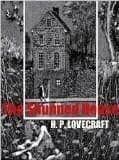
Synopsis
Covers the whole plot, including the ending.
- Difficulty
- Medium
- Pacing
- Slow
- Mood
- Atmospheric, Eerie, Macabre, Mysterious, Unsettling
- Read it if
- You enjoy classic cosmic horror, gothic atmosphere, and a slow-burn mystery culminating in a grotesque reveal.
- Skip it if
- You prefer modern horror with fast-paced action or are sensitive to descriptions of decay and unsettling biological horror.
The Shunned House Plot Summary
Covers the whole plot, including the ending.
The Narrator's Obsession
The unnamed narrator, a scholar and antiquarian, describes his and his Uncle Elihu Whipple's intense interest in an old house in Providence, Rhode Island, on a narrow street off Benefit Street. This house, long abandoned and decaying, has a sinister reputation for unexplained deaths and illnesses among its inhabitants. The narrator and Elihu, both descendants of the Philips family who were early owners, have spent years researching its history, studying old town records, diaries, and local legends. They are particularly interested in the consistent pattern of rapid physical and mental decay followed by death experienced by those who live within its walls, especially in the cellar. Their intellectual curiosity borders on obsession, driving them to uncover the house's true evil.
Historical Accounts of Horror
The narrator carefully documents the house's tragic history, starting with its earliest known occupants, the Jourdain family, who arrived from France in the mid-18th century. He recounts how members of this family, particularly the patriarch Etienne Jourdain and his son, suffered from mysterious wasting illnesses, mental decline, and grotesque physical changes before dying. Later families who lived in the house met similar fates, many dying from strange fevers, consumption, or sudden, unexplained deaths. The common factor is a pervasive horror from the house itself, often linked to the cellar, where strange, sickly vegetation grows. These historical accounts strengthen the narrator's belief that a tangible, malevolent entity lives within the structure.
The Cellar's Peculiarities
Driven by their research, the narrator and Uncle Elihu go into the Shunned House's cellar, which is consistently mentioned in historical accounts as the center of the house's evil. They find a peculiar, phosphorescent fungus or mold growing on the walls and floor, giving off a faint, sickly glow and a repulsive odor. The atmosphere in the cellar is profoundly oppressive, causing dread and physical discomfort. Elihu, in particular, feels a strong, almost psychic aversion to a specific spot in the cellar, near an old fireplace. They speculate that the entity might be a vampiric fungoid growth or a spectral presence, but they are sure that the cellar holds the key to understanding the house's curse. Their investigation is careful, yet filled with unspoken terror.
Elihu's Decline
After their intensive investigations into the Shunned House, especially the cellar, Uncle Elihu's health quickly declines. He develops a severe wasting illness, marked by extreme paleness, emaciation, and a deep mental lethargy, mirroring the symptoms of past victims of the house's curse. His once sharp mind dulls, and he becomes increasingly withdrawn and melancholic. The narrator, watching these changes with growing alarm, recognizes the dreadful pattern. Elihu's condition worsens despite medical help, confirming the narrator's darkest fears that the house's evil has claimed another victim, even one as scientifically minded and cautious as his uncle. The narrator feels a deep sense of helplessness as he watches his beloved uncle's rapid decline.
The Final Theory
In his final days, despite his failing health, Uncle Elihu's mind experiences a brief moment of clarity, allowing him to tell his terrifying theory to the narrator. He proposes that the house is not merely haunted by a ghost, but by a physical, though unseen, entity — a vampiric, protoplasmic being made of the accumulated life-force of all who have died within its walls. He believes this entity, rooted in the cellar, feeds on the living, causing their decay and death. Elihu suggests that the original source might be the malevolent spirit of the first French settler, Etienne Jourdain, transformed into something monstrous and enduring. This theory, delivered with chilling conviction, provides a horrifying explanation for the house's long history of terror.
Elihu's Death and the Narrator's Resolve
Uncle Elihu dies from his mysterious illness, a slow, agonizing death that leaves his body grotesquely emaciated and discolored. His death, so clearly linked to the Shunned House, strengthens the narrator's resolve. Grief-stricken but determined, the narrator decides that the entity within the house must be destroyed, not just avoided. He sees Elihu's death as a sacrifice that gave him the final piece of the puzzle and the motivation to act. The narrator, now convinced that a tangible, though unholy, foe exists, begins to plan a direct confrontation, preparing for a desperate and dangerous undertaking to rid the world of the house's ancient evil.
The Plan for Extermination
Using his knowledge of medical and scientific texts, especially those about anatomy and decomposition, the narrator devises a gruesome plan to fight the entity. He concludes that the entity, being a protoplasmic accumulation, must have a physical core, likely the remains of Etienne Jourdain, which anchors it. His plan involves a midnight excavation of the cellar, specifically the spot near the old fireplace that Elihu found so disturbing. He intends to drench the unearthed remains with powerful acids, believing this will dissolve the physical core and thus disperse the parasitic entity. He carefully gathers the necessary tools and chemicals, preparing for a confrontation unlike any other.
The Midnight Dig
Armed with shovels, pickaxes, and bottles of sulfuric acid, the narrator and a trusted physician, Dr. Chase, begin their perilous mission in the dead of night. They enter the Shunned House and go down into the oppressive cellar. As they dig at the designated spot, the air grows thick with an unbearable stench, and a strong sense of dread fills the space. The earth gives way easily, revealing not bone, but a horrifying, pulpy mass of putrescent matter — a monstrous, shapeless thing that seems to pulse with unholy life. The narrator describes it as a 'gelatinous, semitransparent' horror, a nightmarish mix of centuries of decay and malevolent energy. The psychological toll is immense, but they continue.
The Unearthing of the Horror
As the narrator and Dr. Chase continue to dig, they fully expose the unspeakable horror beneath the cellar floor. It is not a skeleton, but a vast, amorphous, and semi-liquid mass, radiating an unimaginable foulness and a faint, ghastly luminescence. This grotesque entity, described as a 'fungous, foetid, vampiric horror,' is clearly the source of the house's curse and the accumulated essence of all its victims, anchored by the original Jourdain remains. The sight is so utterly repulsive and terrifying that it nearly overwhelms both men. Its sheer size and repugnance confirm Elihu's theory, revealing a physical, yet utterly alien, form of evil that defies natural explanation.
The Extermination
With immense courage, the narrator and Dr. Chase proceed with their plan. They douse the monstrous, protoplasmic mass with sulfuric acid. The effect is immediate and horrific: the entity reacts with a sickening hiss and a cloud of noxious vapor, writhing and shrinking as the acid consumes its unholy flesh. The narrator describes a 'hideous, unhuman shriek' that seems to come from the dissolving mass, followed by a 'ghastly, aërial dissolution.' The stench becomes unbearable, and the sight is one of pure, unadulterated horror. They continue until the entire mass is reduced to an inert, putrid slime, leaving behind only the original, still-discernible skeleton of Etienne Jourdain, which they then bury properly.
The House Cleansed
After the gruesome extermination, the Shunned House changes profoundly. The oppressive atmosphere lifts, the foul odors disappear, and the general sense of dread that had clung to the structure for centuries vanishes. The narrator notes that the peculiar, sickly vegetation in the cellar withers and dies, and the house, though still physically decaying, no longer gives off its evil aura. The local legends gradually fade, and while the house remains abandoned due to its past reputation, it is no longer a source of active, supernatural terror. The narrator feels a deep sense of relief and vindication, knowing that Elihu's sacrifice and his own courage have finally brought peace to the accursed place.
The Buried Secret
Despite the magnitude of their discovery and the horrifying truth they uncovered, the narrator and Dr. Chase agree to keep their experience a complete secret. They understand that the public, steeped in superstition and conventional thought, would never comprehend or believe the true nature of the entity they destroyed. Revealing the truth would likely lead to ridicule, disbelief, or even accusations of madness. Instead, they allow the house to keep its reputation as merely 'shunned' due to vague, historical evils, rather than revealing the tangible, protoplasmic horror that once resided beneath its foundations. The narrator concludes by reflecting on the terrifying reality of the unknown that lies just beyond human perception.
The Shunned House Characters
The Narrator
Protagonist
An antiquarian and scholar obsessed with the Shunned House and its dark history.
The unnamed narrator is a highly intelligent, rational, and scholarly man with a deep interest in history, folklore, and the occult. He is a descendant of the Philips family, which ties him directly to the house's history. His curiosity is intense, bordering on obsession, driving him to meticulously research the house's grim past. Despite his scientific mindset, he is open to the idea of supernatural forces when confronted with overwhelming evidence. He is courageous and determined, willing to face unimaginable horror to protect humanity.
Relationships: Elihu Whipple (His uncle and intellectual partner in investigating the house, sharing a deep bond of kinship and shared fascination.); Dr. Chase (A trusted physician and friend who assists him in the final, perilous task.)
Elihu Whipple
Supporting
The narrator's erudite uncle, whose research and eventual demise spur the narrator to action.
Elihu Whipple is the narrator's elderly, highly educated, and equally obsessed uncle. He is a prominent scholar and a rationalist, initially seeking scientific explanations for the house's phenomena. His deep research into the house's history and his eventual exposure to its malevolence lead to his rapid physical and mental decline, mirroring the fates of previous occupants. Before his death, he formulates the chilling theory about the house's true nature, providing the narrator with the crucial insight needed to confront the entity. He serves as both a mentor and a tragic example.
Relationships: The Narrator (His nephew and intellectual confidante, sharing a profound bond and a common obsession with the Shunned House.)
Etienne Jourdain
Antagonist/Mentioned
The first French occupant of the Shunned House, whose malevolent spirit is believed to be the entity's core.
Etienne Jourdain was a French Huguenot who immigrated to Providence in the 18th century and was the first recorded occupant of the Shunned House. Historical accounts suggest he was a man of dark temperament, possibly involved in strange, unholy practices. His death was one of the first in the house, and Elihu Whipple's theory posits that his malevolent spirit, or at least his physical remains, became the nucleus for the protoplasmic entity that plagued the house for centuries. Though long dead, his enduring evil is the root cause of the horror.
Dr. Chase
Supporting
A trusted physician who assists the narrator in the final, terrifying confrontation with the entity.
Dr. Chase is a capable and courageous physician, a friend of the narrator, who is privy to the narrator's theories about the Shunned House. Despite the outlandish nature of the narrator's claims, Dr. Chase agrees to assist him in the perilous task of excavating and destroying the entity in the cellar. He demonstrates remarkable bravery and composure in the face of the unspeakable horror they uncover, providing practical assistance and moral support during the gruesome extermination. He represents the scientific community's potential for courage when faced with the truly unknown.
Relationships: The Narrator (A trusted friend and professional colleague who assists in a dangerous, secret mission.)
The Entity / The Horror
Antagonist
A shapeless, vampiric, protoplasmic being composed of accumulated evil and life-force.
The true antagonist of the story, this entity is not a traditional ghost but a physical, albeit unholy, manifestation. It is described as a vast, amorphous, semi-liquid mass, radiating foulness and a ghastly luminescence. It is believed to be a vampiric, protoplasmic accumulation of the life-force and essence of all who have died in the house, anchored by the malevolent remains of Etienne Jourdain. It preys on the living, causing their rapid decay and death. Its presence is the source of the house's oppressive atmosphere and its long history of horror, representing a cosmic evil beyond human understanding.
The Shunned House Themes
The Insidious Nature of Ancient Evil
The story explores how malevolence, once established, can persist and grow over centuries, slowly consuming everything around it. The Shunned House is not merely haunted but infected by a physical, protoplasmic evil rooted in the malevolent spirit of its first occupant, Etienne Jourdain. This evil silently preys on generations of inhabitants, appearing as wasting sicknesses and mental decay, showing its patient and pervasive power. The narrative highlights how such ancient evils can lie dormant yet actively destructive, gradually gaining strength from its victims, as seen in the long history of deaths and the ultimate discovery of the monstrous entity in the cellar.
“It was in the cellar that the details of the legend became most vivid, for there the air of death, dampness, and decay was strongest.”
The Limits of Rationality and Science
While the narrator and Uncle Elihu are scholars and rationalists, their scientific approach is eventually overwhelmed by the supernatural horror of the Shunned House. Their initial attempts to explain the phenomena through conventional means fail, forcing them to confront a reality that defies scientific understanding. Elihu's decline and his final, horrifying theory bridge the gap between their scientific mindset and the cosmic horror. Even the method of extermination, using acid, is a gruesome blend of scientific application against an unscientific, alien entity. The story suggests that some forces in the universe operate beyond human comprehension, challenging the very foundations of scientific thought.
“For Elihu Whipple, an old man of science and of the world, was being dragged from a placid and comfortable existence into a realm of horror.”
The Allure and Peril of Forbidden Knowledge
The narrator and Elihu are drawn to the Shunned House because of its dark reputation and unexplained phenomena. Their intellectual curiosity drives them to seek out forbidden knowledge, researching historical records, local legends, and directly investigating the house itself. This pursuit, however, comes at a terrible cost, as Elihu succumbs to the house's influence, mirroring the fates of those who came before. The story illustrates that some truths are too horrifying for human minds to fully grasp, and uncovering them can lead to madness or death. The narrator's ultimate success in destroying the entity is tempered by the profound horror he witnessed and the secret he must forever carry.
“My uncle and I had, through our joint researches, become the only living persons to whom the full horror of the Shunned House was known.”
The Corruption of Place
The house itself is a central character, a physical manifestation of corruption. It is not just a setting but an active agent of evil, a 'shunned' place that literally embodies the malevolence within its walls. The narrative emphasizes how the house's history of death and decay has seeped into its very fabric, from the sickly vegetation in the cellar to the oppressive atmosphere. It acts as a magnet and a prison for the monstrous entity, suggesting that places can become deeply imbued with the events that occur within them, creating a lasting stain of horror that affects all who enter. The cleansing of the house at the end is a literal purification of a corrupted space.
“The house was a focus of cosmic horror; it was a physical point of contact for forces which our biology and physics could not explain.”
Plot Devices & Literary Techniques
Unreliable Narrator (Subtle)
The narrator's intense obsession colors his perception of events, adding to the psychological horror.
While not overtly unreliable, the narrator's deep, lifelong obsession with the Shunned House and his kinship with its early victims subtly influences his interpretations. His scholarly detachment is often overshadowed by a palpable sense of dread and personal involvement, especially after Elihu's decline. This emotional investment means that while he presents facts meticulously, the reader is experiencing these facts through a highly traumatized and biased lens, amplifying the sense of horror and the potential for psychological breakdown. This device enhances the story's unsettling atmosphere by making the reader question the full extent of the horror, or the narrator's sanity.
Foreshadowing through Historical Accounts
Past tragedies of the house's occupants predict Elihu's eventual decline and the ultimate discovery.
The narrator meticulously details a long history of unexplained illnesses, madness, and deaths among the Shunned House's occupants, consistently linking them to the cellar. These historical accounts serve as powerful foreshadowing for Elihu Whipple's eventual decline, which mirrors the symptoms of past victims. This device builds suspense and dread, as the reader (and the narrator) recognizes the pattern, creating a sense of inevitability and deepening the horror when Elihu falls ill. It also subtly prepares the reader for the eventual horrifying discovery in the cellar by establishing a consistent, malevolent force at play for centuries.
Cosmic Horror
The entity's nature transcends human understanding, evoking profound existential dread.
The story employs cosmic horror by presenting an antagonist that is utterly alien and beyond human comprehension. The protoplasmic, vampiric entity is not a mere ghost but a monstrous, physical accumulation of malevolence, defying natural laws and scientific explanation. Its existence suggests a universe indifferent to humanity, filled with unholy forces that can corrupt and destroy. The horror stems not just from fear of death, but from the existential dread of confronting something so fundamentally 'other' that it shatters one's worldview, leaving the characters and reader with a chilling sense of insignificance in a vast, terrifying cosmos. The description of its unearthing and destruction emphasizes its non-human, ancient, and utterly repulsive nature.
Atmospheric Description
Detailed sensory descriptions create a pervasive sense of dread and decay.
Lovecraft masterfully uses rich, evocative language to build a pervasive atmosphere of decay, dampness, and dread. Descriptions of the house's physical state – its crumbling facade, oppressive cellar, and sickly vegetation – are infused with sensory details that appeal to sight, smell, and even touch. Words like 'foetid,' 'phosphorescent,' 'gelatinous,' and 'oppressive' are used repeatedly to immerse the reader in the house's malevolent aura. This detailed atmospheric description is crucial in establishing the house as a character in itself and in making the abstract horror feel tangible and immediate, enhancing the overall sense of unease and terror before the entity is even revealed.
The Shunned House Quotes
“There are some things that are not good to know, and not good to remember.”
“It is a fact that the house was never rented, and that all who tried to buy it were frustrated by the utter refusal of the owners to sell.”
“The very air of the place seemed to hold a morbid chill, and a faintly fetid odor, which we at first attributed to imagination.”
“What had been going on in that cellar? What monstrous presence or influence had been at work through the generations?”
“The house itself was a nightmare, and the things that had happened there were worse.”
“It was in the night, of course, that the thing came to its fullest and most hideous life.”
“The malefic influence had been growing for two centuries, and had reached its terrible climax.”
“We had thought to find a ghost, or a demon, or even a vampire; but we found something more horrible than all these.”
“The very stones of the cellar seemed to sweat a cold, slimy dampness, and the air was thick with the charnel stench of generations.”
“Science had failed to account for it, and only the wildest legendry seemed to offer a plausible explanation.”
“There was a reason for the shunning, and that reason was the house itself.”
“The thing was not a spirit, but a tangible, though protean, organism of frightful vitality.”
“It was a thing that battened on the life-force, and drew its sustenance from the accumulated horrors of the place.”
“And now, at last, we knew the unspeakable truth.”
Quiz
10 questions on the plot and the characters. Each answer comes with a short explanation.
Question 1
What is the primary reason the house on Benefit Street is shunned by the locals?
- It was built on an ancient Native American burial ground.
- Many people who lived there died or suffered from mysterious illnesses.
- It was the site of a notorious murder-suicide.
- Its previous owner was a known sorcerer.
Show answer
B. Many people who lived there died or suffered from mysterious illnesses. The house gained its ominous reputation because many of its inhabitants suffered mysterious illnesses, wasting away and eventually dying, leading the locals to believe it was cursed.
Question 2
Who is the narrator's great-great-uncle, who first became obsessed with the shunned house?
- Elihu Whipple
- Dr. Dwight
- Elkanah Bowen
- Dr. Elihu Whipple
Show answer
D. Dr. Elihu Whipple The narrator, Charles Dexter Ward (implied, though not explicitly named in 'The Shunned House' but known to be the narrator in Lovecraft's other works, and the 'Dr. Whipple' is the key identifier), refers to his great-great-uncle as Dr. Elihu Whipple, who was the first to seriously investigate the house.
Question 3
What unusual feature does the cellar of the shunned house possess that is crucial to the story?
- A hidden passage leading to the street.
- A natural spring that never dries.
- A peculiar patch of fungoid growth and a strange yellowish phosphorescence.
- An ancient, sealed well.
Show answer
C. A peculiar patch of fungoid growth and a strange yellowish phosphorescence. The cellar contains a moist, earthen floor with a patch of yellowish, fungoid growth that pulsates and glows, emitting a foul odor—this is where the entity primarily resides.
Question 4
What is the primary method the narrator and his uncle use to combat the entity in the cellar?
- They perform an exorcism ritual.
- They attempt to communicate with it using ancient texts.
- They expose it to sunlight through a newly installed skylight.
- They drain the cellar and apply vitriol (sulfuric acid) to the affected earth.
Show answer
D. They drain the cellar and apply vitriol (sulfuric acid) to the affected earth. After much deliberation and research, the narrator and his uncle decide to drain the cellar of its dampness and then douse the fungoid growth and the 'accursed soil' with powerful acids, specifically vitriol, to destroy the entity.
Question 5
What historical figure is believed to be the source of the evil in the shunned house?
- An ancient Egyptian priest.
- A French Huguenot named Etienne Roulet.
- A Salem witch trial victim.
- A Native American shaman.
Show answer
B. A French Huguenot named Etienne Roulet. Through their research, the narrator and his uncle discover that the house's curse originated with Etienne Roulet, a French Huguenot immigrant who was involved in vampirism and other dark practices.
Question 6
What is the ultimate fate of the entity in the cellar after the vitriol is applied?
- It escapes and possesses another house in Providence.
- It is completely destroyed, leaving only a skeletal residue.
- It retreats deeper into the earth, becoming dormant.
- It transforms into a harmless, glowing fungus.
Show answer
B. It is completely destroyed, leaving only a skeletal residue. After the vitriol is poured, the entity writhes and shrieks, eventually dissolving into a viscous, foul-smelling liquid, leaving behind a skeletal structure that is then buried.
Question 7
What sensory detail is most frequently associated with the presence of the malevolent entity in the house?
- A chilling coldness.
- A faint, distant whispering.
- A peculiar, charnel odor.
- Sudden, unexplained gusts of wind.
Show answer
C. A peculiar, charnel odor. The 'charnel odour' or 'odour of graves' is repeatedly mentioned as a key indicator of the entity's presence, particularly strong in the cellar.
Question 8
What specific historical document do the narrator and his uncle consult to understand the nature of the entity and its origins?
- The Malleus Maleficarum.
- Cotton Mather's Magnalia Christi Americana.
- The Necronomicon.
- The Witch-Cult in Western Europe by Margaret Murray.
Show answer
B. Cotton Mather's Magnalia Christi Americana. They specifically consult Cotton Mather's 'Magnalia Christi Americana' for accounts of early colonial supernatural occurrences and to trace the history of the Roulet family and their abominable practices.
Question 9
The entity in 'The Shunned House' is best described as a form of:
- A traditional ghost or spirit.
- A spectral vampiric being, a lingering life-force feeding on living energy.
- A demonic possession.
- An alien parasite.
Show answer
B. A spectral vampiric being, a lingering life-force feeding on living energy. The story strongly suggests a vampiric nature, where the entity is a lingering, malevolent life-force, specifically that of Etienne Roulet, which feeds on the vitality of those who live in the house, causing them to waste away.
Question 10
What specific physical manifestation of the entity is observed by the narrator and his uncle shortly before their final confrontation?
- A shadowy figure seen fleetingly in the windows.
- A colossal, amorphous, translucent jelly-like mass that fills the cellar.
- The ghostly apparitions of past victims.
- A swarm of grotesque insects emerging from the floorboards.
Show answer
B. A colossal, amorphous, translucent jelly-like mass that fills the cellar. During their vigil in the cellar, just before applying the vitriol, they witness the fungoid growth coalesce and expand into a vast, jelly-like, phosphorescent mass, filling the space and revealing the true horror of the entity.
The Shunned House FAQ
What is the core premise of 'The Shunned House'?
'The Shunned House' centers on the narrator and his uncle, Dr. Elihu Whipple, as they investigate a colonial-era house in Providence, Rhode Island, long associated with malevolent occurrences and a series of mysterious deaths. They believe a supernatural entity or a lingering curse is responsible for the house's sinister reputation, which has led to generations of its occupants suffering gruesome fates.
Who are the primary investigators in the story and what is their relationship?
The primary investigators are the unnamed narrator and his uncle, Dr. Elihu Whipple. Dr. Whipple is a respected antiquarian and scholar, deeply fascinated by the house's history, while the narrator acts as his eager assistant and chronicler, sharing his uncle's intellectual curiosity and growing dread.
What specific historical events are mentioned as contributing to the house's dark reputation?
The story details the demise of the Harris family, particularly the strange deaths of the original owners and their descendants over centuries. It highlights the peculiar illnesses and grotesque physical transformations that afflicted many residents, leading to a long-standing local belief that the house itself was cursed or possessed by an evil force.
What scientific or pseudo-scientific approach do the investigators initially take?
Initially, the narrator and Dr. Whipple meticulously research historical records, property deeds, and local folklore to understand the house's past. They approach the mystery with a blend of historical rigor and a burgeoning acceptance of the supernatural, documenting every strange incident and death associated with the property as if compiling a case study.
What is the ultimate discovery made in the cellar of the house?
In the cellar, after extensive digging, they discover a large, amorphous, fungoid organism that is vaguely humanoid in shape, glowing faintly and pulsating with malevolent life. This ancient, protoplasmic entity is revealed to be the source of the house's evil, feeding on the life force of its inhabitants and causing their gruesome deaths and transformations.
What is the significance of the French Huguenot refugee, Etienne Roulet, in the house's history?
Etienne Roulet is revealed to be the first victim and also the source of the malevolent entity. He was a practitioner of dark sorcery and voodoo, whose corrupt essence merged with the earth beneath the house after his death, slowly mutating into the parasitic fungoid monstrosity that plagued subsequent generations.
How does Lovecraft subtly hint at the non-human nature of the entity before its full reveal?
Lovecraft uses descriptions of the house's oppressive atmosphere, the 'cold spot' in the cellar, and the unique, unidentifiable stench to hint at something unnatural. The recurring physical transformations and 'decay' of the victims, rather than simple illness, also subtly foreshadow the fungoid, consuming nature of the entity.
Are there any connections to other Lovecraftian entities or mythos elements in this story?
While 'The Shunned House' predates the full development of the Cthulhu Mythos, the fungoid entity shares thematic similarities with later Lovecraftian horrors – ancient, alien, and possessing a corrupting influence. Its protoplasmic nature and ability to absorb life force echo concepts found in entities like Shub-Niggurath or even the amorphous shoggoths, though it is not explicitly named as part of the wider mythos.
What is the significance of the description of the entity as 'fungoid'?
Describing the entity as 'fungoid' emphasizes its parasitic, consuming, and non-animalistic nature, making it inherently more alien and horrifying. Fungi are often associated with decay, growth in darkness, and a slow, inexorable consumption, perfectly mirroring the entity's method of draining life and corrupting the house over centuries.
How does the setting of Providence, Rhode Island, contribute to the story's atmosphere?
Lovecraft's use of Providence, his hometown, imbues the story with a sense of authentic historical dread. The colonial architecture, narrow streets, and detailed historical references ground the supernatural horror in a tangible reality, making the monstrous events feel more immediate and terrifying because they occur in a familiar, albeit unsettling, urban landscape.
What psychological impact does the house have on its inhabitants and the investigators?
The house induces a profound sense of dread, paranoia, and physical discomfort in its inhabitants, leading to mental decline and physical decay. For the investigators, it instills a growing intellectual obsession coupled with increasing terror, pushing them to the brink of sanity as they confront the unimaginable truth lurking beneath the foundation.
How does Dr. Elihu Whipple's character evolve throughout the investigation?
Dr. Whipple begins as a rational, if eccentrically curious, scholar. As the investigation progresses, his scientific skepticism erodes, replaced by a grim acceptance of the supernatural. He becomes increasingly determined and even reckless, ultimately sacrificing his own well-being to confront and destroy the entity, demonstrating a profound shift from academic interest to heroic (or desperate) resolve.
What role does the narrator's perspective play in building suspense and horror?
The narrator's first-person perspective allows for an intimate portrayal of escalating dread and intellectual horror. His detailed observations, personal fears, and gradual understanding of the house's evil draw the reader into the experience, making the horror more immediate and visceral as we witness his own sanity being tested alongside his uncle's.
Is the ending of 'The Shunned House' truly a victory for humanity, or does it carry a lingering sense of cosmic dread?
While the entity is seemingly destroyed, the ending carries a lingering sense of cosmic dread. The sheer alienness and ancient malevolence of the creature, its ability to persist for centuries, and the horrific nature of its existence suggest that such terrors are not easily vanquished and may simply be dormant. The cost to Dr. Whipple also underscores the immense danger.
How does the story reflect Lovecraft's broader themes of cosmicism and humanity's insignificance?
The story reflects cosmicism through the discovery of an ancient, non-human entity whose existence transcends human understanding and history. The entity's indifference to human suffering and its primordial nature emphasize humanity's insignificance in the face of vast, alien forces. Even in its destruction, the horror lies in the realization of what lurks beneath the familiar world.
What is the symbolic meaning of the 'cold spot' in the cellar?
The 'cold spot' symbolizes the direct presence and influence of the malevolent entity. It represents a physical manifestation of the supernatural horror, a point where the mundane laws of physics are subtly warped. It also serves as a chilling sensory clue, guiding the investigators and building suspense before the full reveal of the horror.
Can the entity be seen as a metaphor for historical trauma or generational curses?
Yes, the entity can be interpreted as a metaphor for historical trauma or generational curses. Its origins in the dark practices of Etienne Roulet and its subsequent consumption of generations of the Harris family reflect how past evils can linger and inflict suffering on descendants, a persistent, unacknowledged horror beneath the surface of seemingly normal life.
How does the method of the entity's destruction (acid and electric current) fit with Lovecraft's style?
The use of scientific methods like acid and electric current to destroy a supernatural entity is characteristic of Lovecraft's blend of science fiction and horror. It grounds the fantastical in a semblance of scientific possibility, making the horror more tangible and the solution more desperate, yet intellectually conceived, rather than relying solely on magical means.
About the author
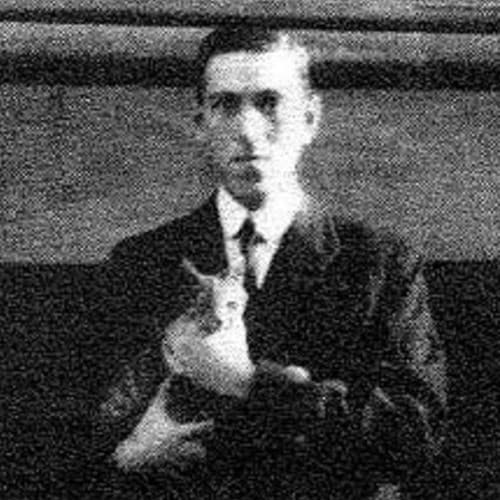
H.P. Lovecraft was an American writer known for his contributions to the genre of weird fiction and horror. His notable works include "The Call of Cthulhu," "The Case of Charles Dexter Ward," "The Shadow Over Innsmouth," "The Shunned House," "The Nameless City," and "Beyond The Wall Of Sleep," which explore themes of cosmic horror and the unknown. Lovecraft's influence on modern horror literature is significant, with many of his concepts and creatures becoming iconic in the genre.
Similar books
- The Haunting of Hill House
Shirley Jackson
3.8 (162k) average on GoodreadsThrillerExplores a house as a malevolent entity that affects its inhabitants psychologically.
- The Amityville Horror
Jay Anson
3.9 (107k) average on GoodreadsThrillerA non-fiction account of a house with a dark history and an oppressive, evil presence.
- Harry Potter and the Sorcerer's Stone
J.K. Rowling
4.5 (7M) average on GoodreadsFantasyRescued from a miserable life under the stairs, an orphaned boy discovers he's a wizard destined for a magical school, where he uncovers a dangerous secret tied to the dark wizard who murdered his parents.
- The Hunger Games
Suzanne Collins
4.3 (6.4M) average on GoodreadsFantasyIn a future where children fight to the death on live television, Katniss Everdeen volunteers for the arena, turning a death sentence into a fight for survival and a spark of rebellion.
- 1984
George Orwell
4.2 (3.1M) average on GoodreadsPoliticsIn a future where surveillance and thought control are absolute, a man's search for truth clashes with the Party, showing that hope can be a form of rebellion.
- Divergent
Veronica Roth
4.2 (2.9M) average on GoodreadsFantasyIn a society divided by virtues, a sixteen-year-old's difference from the norm starts a rebellion that threatens her world.





Enjoyed the summary?
A summary gives you the shape of the book. The book itself has the detail, the examples and the voice.
Find The Shunned House on AmazonAs an Amazon Associate, BookBrief earns from qualifying purchases. How we're funded