

Synopsis
Covers the whole plot, including the ending.
- Difficulty
- Medium
- Pacing
- Moderate
- Mood
- Intellectual, Expansive, Reflective, Adventurous
- Read it if
- You love sweeping historical sagas, intellectual journeys, and a deep dive into the lives of extraordinary women in science.
- Skip it if
- You prefer fast-paced thrillers or are not interested in detailed scientific and philosophical discussions.
The Signature of All Things Plot Summary
Covers the whole plot, including the ending.
The Rise of Henry Whittaker
The story begins with Henry Whittaker, born poor in England in 1762. He is resourceful and ambitious, running away from his parents' failing nursery business to work as a cabin boy on Captain Cook's third voyage. He visits new lands and learns about botany. He later gets involved in the South American quinine trade, a profitable but risky business, where he earns a large fortune growing cinchona trees in Peru. Henry becomes the wealthiest man in Philadelphia, building a large estate called White Acre. He marries Beatrix van Devender, a Dutch woman who is educated and practical. They have two daughters: Alma, born in 1800, and Prudence, adopted later.
Alma's Childhood and Intellectual Awakening
Alma Whittaker grows up at White Acre, surrounded by her father's botanical library and the gardens. She is an intelligent and curious child, with a strong desire for knowledge, especially in natural sciences. Her mother, Beatrix, gives her a thorough classical education, while her father, Henry, encourages her independent spirit and scientific questions. Alma becomes very interested in mosses, which she finds complex and overlooked. She spends her childhood carefully observing, collecting, and cataloging the plants around White Acre, preparing for her future as a botanist. Her younger, adopted sister, Prudence, is her opposite, gentle and religious.
The Arrival of George and Alma's Early Career
As Alma becomes an adult, her scientific work increases. She corresponds with leading botanists and starts to gain a reputation for her careful research. A young man named George Hawkes comes to White Acre, first hired by Henry to manage the business, but soon becomes Alma's assistant and friend. George shares Alma's interest in botany and helps her research mosses, assisting her with expeditions and observations. Their intellectual partnership grows, and Alma, now publishing botanical papers, earns more respect in the scientific community, though her gender still limits her public recognition.
Ambrose Pike's Entrance and Alma's Affection
When Alma is in her late forties, a mysterious and charming artist named Ambrose Pike arrives at White Acre, sent by Henry to paint orchids. Ambrose is a spiritual man, believing in the divine connection of all living things and the 'Signature of All Things'—the idea that God has marked plants with clues to their medicinal uses. His artistic and spiritual approach to nature contrasts sharply with Alma's scientific methods. Despite their differences, Alma is drawn to Ambrose, captivated by his beauty and unique perspective. She falls in love with him, a deep and unexpected experience for Alma, who is focused on academics.
A Marriage of Contrasts
Alma and Ambrose marry, surprising her family. Their marriage is unusual from the start, marked by Ambrose's spirituality, his dislike of physical intimacy, and his increasingly unpredictable behavior. Ambrose believes that human touch ruins the divine essence of plants and that his art is a spiritual act. He spends his time in a trance-like state, painting orchids, seemingly unaware of Alma's emotional needs. Alma, despite her scientific mind, tries to understand his spiritual world, but their differences create a growing distance between them, leaving Alma feeling alone and unfulfilled in her personal life.
Ambrose's Departure and Tahiti
Ambrose, increasingly absorbed by his spiritual visions and a desire to 'purify' himself, abruptly leaves White Acre and travels to Tahiti, believing it to be a place of pure, untouched nature. He leaves Alma a cryptic letter, hinting at his spiritual journey. Devastated and determined to understand why he left, Alma decides to follow him, a bold move for a woman of her time. She arranges her journey, leaving her botanical work temporarily, driven by a desperate need to understand Ambrose's reasons and perhaps reconnect with him.
Alma's Journey to Tahiti
Alma takes a long and difficult sea voyage to Tahiti. This challenging journey tests her strength and broadens her view of the world. When she arrives, she finds that Ambrose has joined a small, isolated community of native Tahitians and European missionaries. She finds him living a life of extreme self-denial, appearing more detached and spiritually absorbed than ever. Alma tries to talk to him, but he remains distant and resistant to her presence. During her time in Tahiti, Alma observes the unique plants and animals, continuing her scientific inquiries even amidst her personal distress. She learns about local customs and the deep connection the indigenous people have with their environment.
Ambrose's Demise and Alma's Return
In Tahiti, Alma sees Ambrose's physical and mental decline. His extreme self-denial and spiritual intensity lead to his death, a sad and solitary end. Before he dies, he leaves Alma a final, mysterious message, which she struggles to understand. Heartbroken but determined, Alma arranges his burial and begins her long journey back to Philadelphia. The experience in Tahiti, though painful, has changed her, expanding her understanding of human nature, spirituality, and the connections of life beyond pure science. She gains a deeper appreciation for mysteries that science alone cannot explain.
The Evolution of Ideas
Back at White Acre, Alma dedicates herself again to her botanical research, especially her study of mosses. She continues to publish her findings, gaining international recognition. Influenced by her observations in Tahiti and her thoughts on Ambrose's spiritual insights, Alma begins to form her own theories on the evolution of species, before Darwin's published work. She hypothesizes that organisms adapt and change over time in response to their environment, a new idea for her era. Her work becomes a significant, though quiet, contribution to the growing field of evolutionary biology, showing her intellectual courage and foresight.
The Meeting with Darwin and Legacy
In her later years, Alma travels to Europe, where she meets various scientists. She has an important meeting with Charles Darwin, who is developing his own theory of natural selection. While their approaches differ, they find common ground in their shared goal of understanding life's origins and adaptations. Alma presents her findings on 'the evolution of mosses,' which Darwin respects. Alma Whittaker lives a long and full life, continuing her research until her death. She leaves behind a large body of scientific work and a legacy as a pioneering female botanist whose curiosity and pursuit of knowledge helped shape the understanding of the natural world.
Principal Figures
Alma Whittaker
Protagonist
Brilliant botanist driven by a thirst for scientific knowledge
Born in 1800, Alma is the highly intelligent and unconventional daughter of Henry and Beatrix Whittaker. From a young age, she displays an insatiable curiosity for the natural world, particularly mosses. She is a meticulous observer, a rigorous scientist, and an independent thinker, challenging societal expectations for women of her era. Despite her intellectual prowess, she grapples with emotional isolation and a yearning for connection, especially after her marriage to Ambrose Pike. Her life's work culminates in her own groundbreaking theories on evolution, predating Darwin's published work, making her a significant, albeit unsung, scientific figure.
Relationships: Henry Whittaker (Father, intellectual mentor, business partner); Beatrix Whittaker (Mother, strict educator); Prudence Whittaker (Adopted sister, emotional foil); Ambrose Pike (Husband, spiritual counterpoint); George Hawkes (Assistant, loyal friend, unrequited admirer)
Henry Whittaker
Supporting
Self-made millionaire, quinine magnate, and Alma's formidable father
Born into poverty in England, Henry Whittaker is a man of immense ambition, resourcefulness, and a shrewd business mind. He escapes his humble origins to become a cabin boy on Captain Cook's voyages, then builds a vast fortune in the South American quinine trade, becoming the richest man in Philadelphia. He is pragmatic, forward-thinking, and possesses a deep, albeit unsentimental, understanding of the natural world's economic potential. He instills in Alma a thirst for knowledge and a strong work ethic, profoundly shaping her intellectual development, even as he remains emotionally distant.
Relationships: Beatrix Whittaker (Wife, intellectual equal); Alma Whittaker (Daughter, intellectual successor); Prudence Whittaker (Adopted daughter)
Beatrix Whittaker
Supporting
Alma's highly intelligent and disciplined Dutch mother
Beatrix is Henry Whittaker's Dutch wife, a woman of formidable intellect, strict discipline, and a vast knowledge of languages and classical studies. She provides Alma with a rigorous, European-style education, emphasizing logic and reason. While she respects Alma's intelligence, she is less emotionally demonstrative than Henry and often struggles to understand Alma's unconventional scientific pursuits. Her practical nature and adherence to social propriety provide a contrast to Alma's more exploratory and less conventional spirit, yet she is instrumental in shaping Alma's foundational knowledge.
Relationships: Henry Whittaker (Husband, intellectual equal); Alma Whittaker (Daughter, intellectual student); Prudence Whittaker (Adopted daughter)
Prudence Whittaker
Supporting
Alma's adopted sister, devout and compassionate
Prudence is Alma's adopted sister, taken in by the Whittakers after being orphaned. In stark contrast to Alma's scientific and rational mind, Prudence is deeply religious, gentle, and compassionate. She dedicates her life to charity and missionary work, embodying a spiritual and emotional intelligence that Alma often lacks. Prudence serves as a foil to Alma, highlighting the different paths women could take in the 19th century and representing the realm of faith and selfless service, often at odds with Alma's scientific ambition.
Relationships: Alma Whittaker (Adopted sister, emotional foil); Henry Whittaker (Adopted father); Beatrix Whittaker (Adopted mother)
Ambrose Pike
Supporting
Mysterious artist and Alma's spiritual husband
Ambrose Pike is a brilliant, enigmatic artist hired by Henry Whittaker to paint orchids. He is profoundly spiritual, believing in the 'Signature of All Things' and the divine essence of plants, which he strives to capture in his art. Ambrose is an ethereal, sensitive soul, deeply uncomfortable with physical touch and human intimacy, preferring the purity of nature. His spiritual worldview and erratic behavior challenge Alma's scientific rationalism, drawing her into a realm of mystery and the inexplicable. He ultimately seeks a spiritual purification that leads him to Tahiti and his eventual demise.
Relationships: Alma Whittaker (Husband, spiritual counterpoint)
George Hawkes
Supporting
Alma's loyal assistant and unrequited admirer
George Hawkes is initially hired by Henry Whittaker to manage his business but quickly becomes Alma's dedicated assistant and confidant. He shares Alma's passion for botany and supports her research into mosses with unwavering loyalty and meticulous attention to detail. George is a steady, reliable presence in Alma's life, offering practical assistance and emotional support. He harbors an unspoken, unrequited love for Alma, remaining devoted to her even as she marries Ambrose, embodying steadfast affection and quiet dedication.
Relationships: Alma Whittaker (Employer, scientific collaborator, object of unrequited love); Henry Whittaker (Employer)
Rittenhouse
Mentioned
The Whittaker family's loyal butler
Rittenhouse is the long-serving and highly dependable butler at White Acre. He is a quiet, observant figure who witnesses the unfolding lives of the Whittaker family, particularly Alma's growth from child to renowned botanist. His presence represents the stability and order within the grand household, and he provides a subtle, consistent backdrop to the more dramatic events of the family's lives.
Relationships: Whittaker Family (Loyal servant)
Captain Cook
Mentioned
Famed explorer, inspiring Henry Whittaker's early life
Captain James Cook is the renowned British explorer on whose third voyage Henry Whittaker serves as a cabin boy. Though not a direct character in the main narrative, Cook's expeditions and the spirit of scientific discovery they embodied profoundly influence Henry's early life and his subsequent global enterprises. He represents the age of exploration and the expansion of botanical knowledge, indirectly shaping the trajectory of the Whittaker family.
Relationships: Henry Whittaker (Employer, early life influence)
Charles Darwin
Mentioned
Renowned naturalist and Alma's contemporary
Charles Darwin is a significant figure in Alma's later life, representing the scientific zeitgeist of her time. Alma meets him in Europe, and they discuss their shared interest in the evolution of species. While Darwin is developing his theory of natural selection, Alma has independently arrived at similar conclusions through her study of mosses. Their interaction highlights the parallel scientific advancements occurring globally and validates Alma's own groundbreaking work, placing her in conversation with one of history's most influential scientists.
Relationships: Alma Whittaker (Scientific contemporary, intellectual peer)
Themes & Insights
Identity and Self-Discovery
Alma Whittaker's life is a search to understand herself and her place in the world, especially as an intelligent woman in a male-dominated scientific field. She deals with intellectual isolation, unusual desires, and a search for emotional satisfaction. Her journey to Tahiti to find Ambrose, and her return, are important in forming her understanding of both her scientific and spiritual self. This theme shows in her careful botanical work, which is about understanding not just mosses, but the fabric of existence and her connection to it.
“She was a woman of science, of facts, of reason. But she was also a woman who had loved a man who spoke to angels, and that had changed her forever.”
Science vs. Spirituality
This theme is clear in the different views of Alma Whittaker and Ambrose Pike. Alma represents empirical science, driven by observation, classification, and reason. Ambrose represents a deep, intuitive spirituality, believing in the 'Signature of All Things' and divine messages in nature. Their marriage represents this conflict, as Alma tries to combine her scientific understanding with Ambrose's mystical beliefs. The novel explores whether these two ways of knowing are separate or if they can integrate, especially as Alma's evolutionary theories hint at deeper, connected patterns.
“For Alma, the world was a machine, intricate and beautiful, but a machine nonetheless. For Ambrose, it was a living, breathing, sentient being, imbued with divine purpose.”
The Nature of Ambition and Legacy
The novel explores different kinds of ambition through its main characters. Henry Whittaker's ambition is material, building a fortune and a legacy through his quinine business. Alma's ambition is intellectual, driven by a strong desire for knowledge and to contribute to scientific understanding, even if it means challenging common ideas. The story examines what it means to leave a mark on the world, whether through wealth, scientific discovery, or spiritual insight. Alma's eventual recognition by figures like Darwin, though understated, confirms her unique legacy as a pioneering botanist.
“What she wanted was to understand the world. What she wanted was to leave her signature upon it, however small.”
The Role of Women in the 19th Century
Alma Whittaker's life shows the challenges and successes of an ambitious woman in the 19th century. Despite her intelligence, she faces societal limits, few opportunities, and expectations to fit traditional female roles. Her scientific achievements are often overlooked or credited to men. The novel shows her struggle for recognition and independence, contrasting her path with her more traditional sister, Prudence. Alma's ability to travel, publish scientific papers, and create new theories shows her strong will and the slow progress of women's intellectual freedom.
“A woman's mind, she had been told, was not suited for the rigors of science. But Alma's mind was a wild, untamed thing, and it would not be confined.”
Evolution and Adaptation
This idea is central to Alma's scientific work, especially her study of mosses. Through her careful observations, Alma independently develops theories about how species adapt and change over time in response to their environment, anticipating Darwin's work. Her journey to Tahiti and her observations of new plants and animals further solidify her understanding of biological adaptation. The theme also applies to the characters themselves, especially Alma, who adapts to societal expectations, personal loss, and new intellectual ideas throughout her long life, constantly changing her understanding of the world.
“The world was not fixed, she realized. It was always changing, always adapting, always becoming something new.”
Plot Devices & Literary Techniques
Epistolary Elements
Letters and scientific papers used to advance plot and character development
The novel incorporates various epistolary elements, such as Alma's extensive correspondence with other botanists, her published scientific papers, and the letters exchanged with Ambrose Pike. These elements are crucial for revealing Alma's intellectual prowess, the scientific discourse of the era, and the emotional complexities of her relationships. Ambrose's cryptic letter before his departure for Tahiti is a primary example, driving Alma's subsequent actions and journey. These textual insertions provide direct insight into the characters' inner lives and intellectual pursuits, enriching the narrative beyond the third-person perspective.
Foil Characters
Contrasting characters highlighting Alma's traits and struggles
The novel effectively uses foil characters to illuminate Alma's unique personality and intellectual journey. Prudence, Alma's adopted sister, is a devout and emotional woman who contrasts sharply with Alma's scientific and rational mind, highlighting the different paths available to women in the 19th century. Similarly, Ambrose Pike serves as a spiritual and artistic foil to Alma's scientific empiricism, creating the central tension between faith and reason. These foils emphasize Alma's distinctiveness and the challenges she faces in reconciling different ways of understanding the world.
Setting as Character
White Acre and Tahiti as environments shaping characters and themes
The settings in 'The Signature of All Things' function almost as characters themselves, profoundly influencing the plot and thematic development. White Acre, the sprawling Philadelphia estate with its vast gardens and botanical library, is Alma's intellectual crucible, nurturing her scientific curiosity and providing the resources for her research. Tahiti, in contrast, represents a wild, spiritual, and untamed environment that challenges Alma's rational worldview and becomes the site of Ambrose's spiritual quest and demise. These diverse settings underscore the novel's global scope and the interplay between human ambition and the natural world.
Symbolism of Mosses and Orchids
Plants representing scientific rigor and spiritual beauty
Mosses and orchids serve as powerful symbols throughout the novel. Alma's lifelong dedication to mosses symbolizes her rigorous scientific methodology, her appreciation for the overlooked and complex, and her eventual development of evolutionary theory from the ground up. Mosses represent the minute, the foundational, and the interconnectedness of life. Orchids, on the other hand, are associated with Ambrose Pike and symbolize exotic beauty, spiritual transcendence, and the elusive, mystical aspects of nature. The juxtaposition of these two plant types highlights the central tension between science and spirituality, reason and intuition, that Alma navigates.
The Signature of All Things Quotes
“The greatest gift of an education is that it opens the mind to the possibility of a better world.”
“There are two ways to be fooled. One is to believe what isn't true; the other is to refuse to believe what is true.”
“Every human life is a collection of accidents, and the one who makes the most of them is the one who triumphs.”
“The world, for all its immense and incomprehensible complexity, was ultimately a thing of order, a thing of reason, a thing of beauty.”
“To be alone is to be free, and to be free is to be alone.”
“Love is not a thing to be found. It is a thing to be made.”
“The universe was not a machine, but a living, breathing entity, full of secrets and wonders.”
“It is not the big events that shape us, but the small, persistent ones.”
“There is no such thing as a useless plant. Every single one has a purpose, a place.”
“The search for truth is a lonely business, but a necessary one.”
“Happiness is not a destination, but a way of traveling.”
“The world is full of signatures, if only we know how to read them.”
“To live a life of meaning, one must first learn to ask the right questions.”
“Even in the darkest moments, there is always a flicker of light, a promise of renewal.”
Quiz
10 questions on the plot and the characters. Each answer comes with a short explanation.
Question 1
What is the primary source of Henry Whittaker's initial immense fortune?
- Diamond mining in South Africa
- The South American quinine trade
- Shipping spices from the East Indies
- Real estate speculation in London
Show answer
B. The South American quinine trade Henry Whittaker, a poor-born Englishman, builds his vast wealth through his enterprise in the quinine trade in South America, eventually making him the richest man in Philadelphia.
Question 2
What is Alma Whittaker's primary field of scientific study?
- Astronomy
- Zoology
- Botany
- Geology
Show answer
C. Botany Alma Whittaker, inheriting her father's intellect, becomes a botanist of considerable gifts, dedicating her life to studying plants and the mysteries of evolution.
Question 3
What is the primary difference in worldview between Alma Whittaker and Ambrose Pike?
- Alma believes in strict social hierarchies, while Ambrose advocates for equality.
- Alma is a clear-minded scientist, while Ambrose is drawn to the spiritual and magical.
- Alma is an abolitionist, while Ambrose profits from slavery.
- Alma seeks adventure across the globe, while Ambrose prefers a sedentary life.
Show answer
B. Alma is a clear-minded scientist, while Ambrose is drawn to the spiritual and magical. The novel highlights the contrast between Alma, the rational scientist, and Ambrose, the utopian artist, who approaches the world through a spiritual and divine lens, despite their shared desire to understand life's mechanisms.
Question 4
Which historical period does Alma Whittaker primarily live through, witnessing significant societal shifts?
- The Renaissance to the Reformation
- The Age of Enlightenment to the Industrial Revolution
- The Victorian Era to the Belle Époque
- The Roaring Twenties to the Great Depression
Show answer
B. The Age of Enlightenment to the Industrial Revolution Alma is born in 1800, placing her life squarely from the Age of Enlightenment into the Industrial Revolution, a period marked by exploding new ideas in science, religion, and commerce.
Question 5
What specific artistic subject is Ambrose Pike known for painting?
- Portraits of prominent scientists
- Detailed landscapes of the Amazon
- Incomparable paintings of orchids
- Abstract representations of human emotion
Show answer
C. Incomparable paintings of orchids Ambrose Pike is described as a man who makes 'incomparable paintings of orchids,' which is how he initially draws Alma into his world.
Question 6
The novel's title, 'The Signature of All Things,' alludes to a historical concept. What does this concept generally refer to?
- The unique handwriting of every individual
- The idea that God embedded clues in nature to reveal its purpose and medicinal uses
- The legal documents required for international trade
- The scientific method of classifying species based on shared characteristics
Show answer
B. The idea that God embedded clues in nature to reveal its purpose and medicinal uses The 'Signature of All Things' is a reference to the historical belief (often associated with figures like Paracelsus) that God marked plants and other natural phenomena with 'signatures' or clues to indicate their medicinal properties or purpose.
Question 7
Which of the following locations is NOT mentioned as a place the story soars across?
- Peru
- Tahiti
- Cairo
- Amsterdam
Show answer
C. Cairo The synopsis explicitly mentions London, Peru, Philadelphia, Tahiti, and Amsterdam as locations, but Cairo is not listed.
Question 8
What central theme does the relationship between Alma and Ambrose most directly explore?
- The conflict between scientific rationalism and spiritual belief systems
- The challenges of maintaining a long-distance relationship across continents
- The economic disparities between old money and new money
- The societal pressure for women to marry rather than pursue careers
Show answer
A. The conflict between scientific rationalism and spiritual belief systems Their relationship is defined by Alma's scientific mind and Ambrose's spiritual leanings, highlighting the tension and shared quest for understanding between these two seemingly opposite approaches to the world.
Question 9
How does Alma's research into evolution challenge or align with the prevailing ideas of her time?
- Her work is entirely conventional, reinforcing existing botanical classifications.
- She independently develops a theory of natural selection years before Darwin.
- Her investigations into the 'mysteries of evolution' place her at the forefront of dangerous new ideas challenging old assumptions.
- She focuses exclusively on plant hybridization, avoiding controversial evolutionary theories.
Show answer
C. Her investigations into the 'mysteries of evolution' place her at the forefront of dangerous new ideas challenging old assumptions. The text states Alma's research takes her 'deeper into the mysteries of evolution,' and she lives in a time when 'all the old assumptions about science... were exploding into dangerous new ideas,' indicating her work is pioneering and potentially controversial.
Question 10
What does the description of Alma's journey from the Age of Enlightenment into the Industrial Revolution signify about the novel's scope?
- It suggests a focus purely on technological advancements and their impact on society.
- It highlights the personal struggles of an individual adapting to modern machinery.
- It indicates a broad exploration of the intellectual, social, and scientific transformations of a pivotal historical era.
- It implies a narrative that critiques the loss of traditional values in favor of progress.
Show answer
C. It indicates a broad exploration of the intellectual, social, and scientific transformations of a pivotal historical era. The passage states Alma 'bears witness to that extraordinary moment in human history when all the old assumptions about science, religion, commerce, and class were exploding into dangerous new ideas,' signifying the novel's broad historical and intellectual scope.
The Signature of All Things FAQ
What is 'The Signature of All Things' about?
'The Signature of All Things' is a sweeping historical novel following the life of Alma Whittaker, a brilliant botanist born in 1800 into immense wealth in Philadelphia. It chronicles her intellectual journey into the mysteries of evolution, her unusual marriage to the spiritual artist Ambrose Pike, and her lifelong quest to understand the natural world, spanning locations from London to Tahiti.
Why should I read 'The Signature of All Things'?
You should read this book for its rich historical detail, the captivating intellectual journey of its protagonist, Alma Whittaker, and its exploration of the tension between scientific inquiry and spiritual belief. Elizabeth Gilbert's exquisite prose and the novel's global scope offer a deeply immersive and thought-provoking experience, peopled with unforgettable characters.
What is the background/setting of 'The Signature of All Things'?
The novel is set primarily in the 18th and 19th centuries, beginning in London and Philadelphia, then expanding to Peru, Tahiti, and Amsterdam. It captures the spirit of the Age of Enlightenment transitioning into the Industrial Revolution, a period of immense scientific discovery, exploration, and changing societal norms, particularly in fields like botany and evolutionary theory.
What writing style does Elizabeth Gilbert use in 'The Signature of All Things'?
Elizabeth Gilbert employs a grand, expansive, and highly descriptive literary style, reminiscent of 19th-century novels. Her prose is elegant and precise, filled with meticulous historical and botanical detail, yet maintains a galloping pace. She uses a strong, omniscient narrative voice that is both wise and deeply engaging, drawing readers into Alma's intellectual and emotional world.
What minor details add significant meaning in 'The Signature of All Things'?
The recurring motif of moss, often overlooked yet foundational, becomes a central metaphor for Alma's own life and her groundbreaking work. Her intense focus on this humble plant, contrasted with Ambrose's fascination with exotic orchids, subtly highlights the differing approaches to understanding life – the meticulous study of the commonplace versus the pursuit of the sublime.
What are some subtle foreshadowing moments in 'The Signature of All Things'?
Henry Whittaker's early, ruthless exploits in the quinine trade, where he manipulates nature for profit, subtly foreshadow Alma's later, more ethical but equally driven scientific pursuits, hinting at the inherent human desire to master or understand the natural world. Also, Alma's early, almost clinical observations of human behavior and her own body hint at her later detachment in personal relationships.
What unexpected character connections exist in 'The Signature of All Things'?
An unexpected connection emerges through Prudence, Alma's adopted sister, who, despite her quiet demeanor, forms a deep, almost maternal bond with Alma's eccentric husband, Ambrose Pike, after Alma's departure. This bond reveals a shared vulnerability and spiritual inclination that Alma herself struggled to fully grasp or fulfill.
What are unspoken character motivations in 'The Signature of All Things'?
Henry Whittaker's relentless drive for wealth and knowledge, while outwardly pragmatic, is implicitly motivated by a deep-seated desire to overcome his impoverished origins and establish a lasting legacy. Alma's pursuit of scientific understanding, though framed as pure inquiry, also serves as a refuge from emotional intimacy and a means to exert control over a world she often finds perplexing.
What psychological complexities do characters exhibit in 'The Signature of All Things'?
Alma Whittaker, despite her brilliant intellect, struggles with profound social awkwardness and emotional isolation, often preferring the predictable logic of plants to the messiness of human relationships. Ambrose Pike, her husband, embodies a delicate complexity, oscillating between fervent spiritualism and a deep fragility, bordering on mental illness, as he grapples with the world's beauty and suffering.
What are the major emotional turning points in 'The Signature of All Things'?
A significant turning point is Alma's marriage to Ambrose Pike, which, instead of bringing her conventional happiness, plunges her into a period of profound emotional confusion and loneliness, pushing her further into her scientific work. Another is her later journey to Tahiti and the encounter with the indigenous culture, which broadens her perspective beyond Western scientific paradigms, offering a different kind of understanding of life and connection.
How do relationship dynamics evolve in 'The Signature of All Things'?
Alma's relationship with her father, Henry, evolves from one of profound admiration and intellectual kinship to a more detached, yet enduring, respect. Her marriage to Ambrose Pike transforms from an initial, hopeful intellectual and spiritual connection into a chasm of misunderstanding and unfulfilled desires, ultimately leading to a strange, almost platonic, co-existence of their ideas rather than their bodies.
Which parts of 'The Signature of All Things' remain ambiguous or open-ended?
The true nature of Ambrose Pike's 'visions' and his ultimate fate remain somewhat ambiguous, leaving readers to ponder whether he was a genuine spiritual seer, mentally unstable, or a combination of both. Also, the full extent of Alma's emotional reconciliation with her past and her own nature is subtly left to interpretation, despite her intellectual clarity.
What are controversial scenes or decisions in 'The Signature of All Things'?
Alma's decision to marry Ambrose Pike, despite her clear-headed scientific nature and his overt spiritualism, can be seen as controversial, as it leads to considerable personal suffering and an unconventional, unconsummated marriage. Her later, almost clinical, examination of his body post-mortem also presents a challenging moment, highlighting her scientific detachment in the face of profound personal loss.
'The Signature of All Things' ending explained: how it ends & what it means
The novel ends with an elderly Alma Whittaker, having lived a full life of scientific inquiry and global travel, reflecting on her legacy and the vastness of human knowledge. She completes her magnum opus on the 'Signature of All Things,' ultimately realizing that while science can explain mechanisms, there remains an unquantifiable 'signature' or essence to life. Her final reflections suggest a synthesis of her scientific and spiritual journeys, accepting the wonder of existence in its entirety.
About the author

Elizabeth Gilbert is an American author known for her works that explore themes of self-discovery and creativity. Her notable books include "Eat, Pray, Love," a memoir about her journey of personal growth, "City of Girls," a novel set in 1940s New York, and "Big Magic: Creative Living Beyond Fear," which offers insights into the creative process. Other significant works include "The Signature of All Things" and "The Last American Man."
Similar books
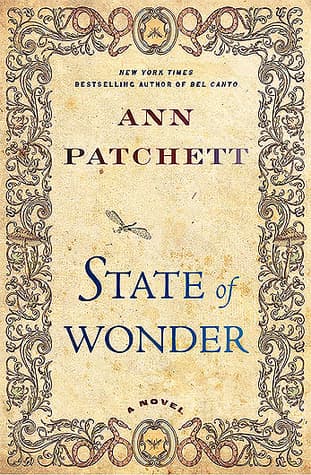
- State of Wonder
Ann Patchett
3.9 (164k) average on GoodreadsLiterary FictionExplores themes of botany, scientific discovery, and adventure in exotic locales.
- Cutting for Stone
Abraham Verghese
4.3 (337k) average on GoodreadsLiterary FictionA sprawling historical novel with a focus on medicine and complex family dynamics.
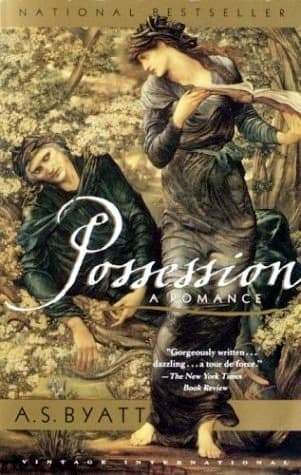
- Possession
A.S. Byatt
4.3 (13k) average on GoodreadsRomanceBoth are meticulously researched historical novels with academic protagonists. However, Byatt's Possession focuses on literary scholarship and romantic mystery, whereas Gilbert's work is deeply immersed in 19th-century scientific discovery, particularly botany, offering a different intellectual landscape.
- Year of Wonders
Geraldine Brooks
4.0 (138k) average on GoodreadsHistorical FictionBoth feature strong female protagonists facing historical challenges. Brooks' novel, set in the 17th century, focuses on community, faith, and survival during a plague. Gilbert's book, conversely, is a multi-generational saga centered on a woman's lifelong intellectual pursuit of scientific knowledge and her place in the burgeoning scientific community of the 19th century.
- The Old Man and the Sea
Ernest Hemingway
3.8 (831k) average on GoodreadsLiterary FictionA Cuban fisherman's long struggle with a giant marlin becomes a story of endurance and dignity, now retold for young adults with illustrations, phonetic guides, and writing prompts in Traditional Chinese.
- One Hundred Years of Solitude
Gabriel García Márquez
4.1 (753k) average on GoodreadsLiterary FictionThrough the multi-generational story of the Buendía family, a mythical town deals with the repeating patterns of time, love, and solitude, as the extraordinary mixes with the ordinary.




Enjoyed the summary?
A summary gives you the shape of the book. The book itself has the detail, the examples and the voice.
Find The Signature of All Things on AmazonAs an Amazon Associate, BookBrief earns from qualifying purchases. How we're funded