
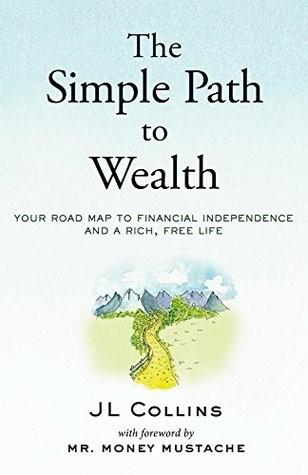
Core Idea
- Difficulty
- Easy
- Read it if
- you are overwhelmed by financial advice, want a clear and actionable roadmap to financial independence, or are a beginner looking to understand the basics of investing and wealth building.
- Skip it if
- you are already a sophisticated investor managing a complex portfolio, or are looking for advanced trading strategies and active stock picking advice.
Key Takeaways from The Simple Path to Wealth
Embrace Simplicity: The Power of Index Funds
Why trying to beat the market is a fool's errand, and how passive investing wins.
Collins' best advice is his strong support for low-cost, total stock market index funds, especially Vanguard's VTSAX. He shows that most actively managed funds do not beat their benchmarks over time, especially after fees. This saves money, but it also saves mental energy and helps people avoid the emotional traps of picking individual stocks. He believes that by owning a small part of every major company, you automatically benefit from the economy's growth. This lets you get market returns without the stress or cost of trying to guess which companies will succeed. This simple approach is central to his philosophy, making wealth building possible for anyone, regardless of their financial knowledge.
“Invest in a total stock market index fund. Then forget about it.”
In the book: Collins frequently cites studies demonstrating active managers' underperformance, often referencing figures like 80-90% failing to beat the S&P 500 over 10+ years. He also highlights the corrosive effect of fees, illustrating how even a 1% annual fee can dramatically reduce returns over decades.
Try this: Open an account with a low-cost brokerage (like Vanguard or Fidelity), set up automatic investments into a total stock market index fund (e.g., VTSAX or equivalent ETF like VTI), and resist the urge to tinker or chase hot stocks. Rebalance infrequently, if at all.
Related ideas: index-funds, passive-investing, total-market-fund, fees
F-You Money: The Ultimate Freedom
Building a financial cushion that grants you the power to walk away from anything.
Collins talks about 'F-You Money,' not as a way to spend a lot, but as a tool for personal freedom. It is the financial cushion that allows you to leave a bad job, a difficult relationship, or any situation that goes against your values or happiness. This is more than an emergency fund; it is a reserve that gives you choices and control over your life, free from money worries. He argues that this mental freedom is more valuable than material things, letting someone follow their interests, take calculated risks, or just live life on their own terms. This idea resonates because it changes how we view wealth accumulation, seeing it as a way to gain power.
“True freedom is having F-You Money.”
In the book: Collins shares anecdotes, particularly his own experiences, where having financial independence allowed him to make career choices or navigate life changes without being beholden to external pressures. He emphasizes that this money doesn't need to be enough to retire, just enough to provide a buffer for critical decisions.
Try this: Prioritize saving a significant portion of your income, building up a liquid reserve that can cover several months (or even years) of expenses. View every dollar saved not just as an investment, but as a brick in your wall of personal freedom.
Related ideas: financial-independence, emergency-fund, autonomy, freedom
The Stock Market Crash: Your Greatest Ally
Why market downturns are opportunities for the long-term investor, not reasons to panic.
This idea is one of Collins' most unusual yet effective points. Unlike most financial advice that causes fear during market declines, Collins teaches readers to see crashes as opportunities. For long-term investors who contribute regularly, a market crash means shares of good companies (through an index fund) are cheaper. He explains that by continuing to invest during these times, you buy more shares for the same money, which will grow significantly when the market recovers. This changes the emotional response from panic to excitement, turning a perceived threat into a way to build wealth faster. This mindset is important for handling the stock market's inevitable ups and downs.
“Crashes are not to be feared. They are to be embraced. They are buying opportunities.”
In the book: Collins frequently references historical market data, showing how markets always recover from crashes and go on to reach new highs. He illustrates how investors who continued to buy during the dot-com bust or the 2008 financial crisis ultimately saw phenomenal returns.
Try this: Develop a 'set it and forget it' automated investment plan. When the market drops, resist the urge to sell; instead, consider increasing your contributions if possible. Remind yourself that you're buying assets 'on sale.'
Related ideas: market-crash, bear-market, buying-opportunity, dollar-cost-averaging
Avoid Debt, Especially High-Interest Consumer Debt
The fastest way to derail your wealth-building journey is to carry unnecessary debt.
Collins is clear: debt, especially high-interest consumer debt like credit card balances, prevents wealth building. He calls it a 'mortgage on your future' and a 'chain around your neck,' actively working against your financial progress. Interest payments on such debt cancel out any potential investment gains and trap people in a cycle. He recommends paying off all non-mortgage debt as quickly as possible, even before investing seriously, because the guaranteed return from eliminating high-interest debt is much higher than most market returns. This advice, though it seems basic, is often overlooked and is a key first step on the simple path to wealth.
“Debt is a mortgage on your future.”
In the book: He uses simple math to illustrate how a 15-20% credit card interest rate makes it impossible to save or invest effectively, comparing it to trying to fill a bucket with a hole in the bottom. He advises against all consumer debt, including car loans, seeing them as unnecessary drains.
Try this: Prioritize paying off all high-interest debt immediately. Consider using the 'debt snowball' or 'debt avalanche' method. Once debt-free, make a commitment to avoid future consumer debt and pay off credit cards in full every month.
Related ideas: debt-elimination, consumer-debt, credit-card-debt, financial-freedom
The Magic of Compounding: Your Greatest Financial Friend
Understanding how time and consistent investment make your money grow exponentially.
Collins emphasizes the strong effect of compound interest, calling it the most powerful force in finance. He explains that money invested early not only earns returns, but those returns then earn their own returns, leading to rapid growth over time. This idea supports his advice to start investing as early as possible and to be consistent. He shows how even small, regular contributions can become large sums over decades, far exceeding the total amount personally invested. This insight helps motivate young investors and shows why patience and consistency are more important than trying to time the market or pick individual stocks.
“Compound interest is the eighth wonder of the world.”
In the book: Collins provides compelling charts and examples comparing someone who starts investing early versus someone who starts later, even if the later investor contributes more annually. These examples clearly show the dramatic difference that a few extra years of compounding can make.
Try this: Start investing as early as you possibly can, even if it's a small amount. Automate your investments to ensure consistency. Resist the urge to withdraw funds prematurely, allowing your money the maximum time to compound.
Related ideas: compound-interest, time-value-of-money, early-investing, exponential-growth
Your House is Not an Investment (Primarily)
While a home provides shelter, it's not the wealth-building engine many believe.
Collins questions the common belief that a primary home is always a great investment. While he acknowledges the non-financial benefits of owning a home (stability, community, personalization), he argues that, purely financially, it is often overrated as an investment. He points out the significant ongoing costs—property taxes, insurance, maintenance, interest—that often reduce much of the appreciation. Also, it is an asset that is not easy to sell and does not create income, and its value often grows slower than a diversified stock market index fund. This does not mean you should not buy a house, but rather to manage expectations and recognize that its main value is as a place to live, not necessarily your best way to create wealth.
“Your house is a place to live, not an investment.”
In the book: He details the 'hidden costs' of homeownership and compares the average appreciation of real estate to the historical returns of the stock market, often showing that stocks provide a superior long-term return after accounting for all housing expenses.
Try this: If buying a home, do so for lifestyle reasons and within your means. Don't overextend yourself financially based on an expectation of rapid appreciation. Continue to prioritize investing in low-cost index funds for your primary wealth-building strategy.
Related ideas: homeownership, real-estate, asset-allocation, illiquid-assets
The Importance of a High Savings Rate
Accelerate your journey to financial independence by living below your means.
While smart investing is important, Collins highlights that the biggest factor an individual controls in their early wealth-building journey is their savings rate. He argues that earning more money helps less if your spending also increases. Instead, saving a large part of your income directly leads to a shorter working career and faster financial independence. This focus on saving is not about going without, but about being intentional and valuing future freedom over immediate pleasure. He explains that every dollar saved works for you, and a higher savings rate means you create more 'worker dollars,' speeding up the compounding effect. This is the book's best insight for those just starting out.
“The more you save, the faster you get there.”
In the book: Collins provides tables and calculations demonstrating how different savings rates drastically alter the time it takes to reach financial independence, often showing that a 50%+ savings rate can cut decades off the typical working career.
Try this: Track your spending to identify areas for reduction. Automate savings to a high percentage of your income (e.g., 15-50%+). Prioritize experiences over material possessions to avoid lifestyle creep.
Related ideas: savings-rate, financial-independence, frugality, lifestyle-inflation
Ignore the Noise: Media, Gurus, and Hot Tips
Most financial media and 'experts' are distractions that hinder true wealth building.
Collins advises against consuming most financial news, listening to market forecasters, or following 'hot stock tips.' He sees the financial media as mainly an entertainment industry driven by sensationalism and the need for constant content, rather than providing useful, wealth-building advice. He argues that this constant flow of information encourages too much trading, panic selling, and chasing trends—all actions that hurt the simple, long-term investing strategy he supports. While some reputable financial news can be useful, his main message is sound: ignore the noise and stick to your plan. The goal is to be consistently boring, not excitedly speculative.
“The financial media is mostly entertainment, not education.”
In the book: He cites the constant parade of 'experts' making contradictory predictions, none of whom consistently beat the market. He also highlights the high fees and poor performance of actively managed funds often touted by these same media outlets.
Try this: Unsubscribe from financial news alerts. Avoid financial talk shows and forums. Focus your limited time on understanding the core principles of index investing and staying the course, rather than reacting to daily market fluctuations.
Related ideas: financial-media, market-timing, speculation, long-term-investing
The Stock Series: A Blueprint for Life Stages
A progressive guide to investing, from accumulating wealth to drawing it down in retirement.
The book is a collection of Collins' 'Stock Series' blog posts, written as letters to his daughter. This structure provides a clear, step-by-step guide for different stages of an investor's life. It begins with basic ideas for beginners (like avoiding debt and understanding index funds), moves through the accumulation phase (saving aggressively, accepting crashes), and then addresses the retirement phase (the 4% rule, asset allocation). This full yet easy-to-understand approach makes investing seem manageable and offers a practical plan that changes as the reader's financial journey progresses. This ongoing guidance is very helpful for anyone seeking a lifelong financial strategy.
“This is what I learned about money and investing, and it's what I taught my daughter.”
In the book: The entire book's organization, moving from 'Phase 1: Your Life and Money' to 'Phase 4: The 4% Rule and Other Considerations,' serves as evidence of this structured approach.
Try this: Read the book (or the original blog series) sequentially. As you progress through different life stages, revisit relevant sections to ensure your strategy aligns with Collins' recommendations for accumulation, asset allocation, and withdrawal.
Related ideas: life-stages, retirement-planning, 4-percent-rule, asset-allocation
Invest in Yourself First: Your Greatest Asset
While often unstated, the book implies that increasing your income potential is foundational.
Though not directly named in the book's advice, Collins' emphasis on a high savings rate implies the importance of earning more. The ability to save a significant portion of your income is directly related to how much you earn. Therefore, while he focuses on what to do with your money, the underlying idea is that you are actively working to increase your 'money machine'—your career and skills. This suggests that investing in education, skill development, and career advancement is a basic step that allows for the aggressive saving and investing strategy he promotes. This subtle but important point shows that financial freedom is not just about managing money, but also about earning it effectively.
“Your greatest asset is your earning power.”
In the book: While not directly stated, his constant push for a high savings rate (e.g., 50%+) inherently requires a substantial income for most people, especially early in their careers. This necessitates a focus on career growth or skill development to achieve such rates.
Try this: Continuously learn and develop new skills relevant to your career or desired field. Network, seek out opportunities for advancement, and negotiate for higher salaries. View your career as a primary engine for generating the capital you need to invest.
Related ideas: human-capital, income-potential, skill-development, career-growth
The Simple Path to Wealth Quotes
“It's not about timing the market. It's about time in the market.”
“The best investment strategy is to buy a broad-based, low-cost index fund and hold it forever.”
“Don't try to be a hero. Don't try to pick stocks. Don't try to time the market.”
“The most important thing you can do is to save money. The more you save, the more you can invest.”
“Financial independence is about having enough money so that you don't have to work anymore.”
“The market will go up and down. That's normal. Don't panic.”
“Your greatest asset is your ability to earn.”
“The only thing you can control is how much you save and how much you invest.”
“The goal is not to get rich quick, but to get rich slow.”
“Pay yourself first. That means setting aside money for savings and investments before you pay any bills.”
“Compound interest is the eighth wonder of the world. He who understands it, earns it; he who doesn't, pays it.”
“The best way to get out of debt is to stop accumulating it.”
“Live below your means. It's not about deprivation; it's about prioritizing.”
“Simplicity is the ultimate sophistication.”
Quiz
10 questions on the main ideas. Each answer comes with a short explanation.
Question 1
Who is the author of 'The Simple Path to Wealth'?
- Warren Buffett
- J. L. Collins
- Ramit Sethi
- Dave Ramsey
Show answer
B. J. L. Collins The book is authored by J. L. Collins.
Question 2
What is a primary theme of 'The Simple Path to Wealth'?
- Day trading strategies
- Real estate flipping
- Long-term investing in low-cost index funds
- Starting and selling small businesses
Show answer
C. Long-term investing in low-cost index funds The book advocates for a straightforward, long-term approach to investing, primarily through low-cost index funds.
Question 3
To whom did J. L. Collins originally write many of his money management insights?
- His financial advisor
- His colleagues at work
- His teenage daughter
- A group of investors
Show answer
C. His teenage daughter Many of the insights in the book were originally shared in a series of letters to his teenage daughter.
Question 4
The book emphasizes the importance of minimizing which of the following in investing?
- Risk
- Taxes
- Fees and expenses
- Active trading
Show answer
C. Fees and expenses Collins strongly advocates for keeping investment fees and expenses as low as possible, as they eat into returns over time.
Question 5
What investment vehicle does Collins frequently recommend for achieving the 'simple path'?
- Individual stocks
- Bonds
- Mutual funds
- Low-cost index funds (like VTSAX)
Show answer
D. Low-cost index funds (like VTSAX) Low-cost, broad-market index funds are a cornerstone of Collins's recommended investment strategy.
Question 6
According to the book's philosophy, what is a key characteristic of successful long-term investors?
- They constantly monitor market news.
- They try to time the market.
- They are patient and disciplined.
- They actively trade to capture short-term gains.
Show answer
C. They are patient and disciplined. The book stresses that patience, discipline, and a long-term perspective are more important than market timing or active trading.
Question 7
What does Collins suggest is the primary goal of accumulating wealth?
- To impress others
- To achieve financial independence and freedom
- To buy luxury goods
- To speculate on risky investments
Show answer
B. To achieve financial independence and freedom The ultimate aim of wealth accumulation, as presented in the book, is to gain financial independence and the freedom it provides.
Question 8
What does 'VTSAX' represent in the context of 'The Simple Path to Wealth'?
- A specific stock ticker for a technology company
- A type of bond issued by the government
- A Vanguard Total Stock Market Index Fund
- A cryptocurrency
Show answer
C. A Vanguard Total Stock Market Index Fund VTSAX is a common example of a low-cost, broad-market index fund that J. L. Collins often cites as an ideal investment.
Question 9
Collins's approach to wealth building is often described as 'FI/RE'. What does 'FI' stand for in this context?
- Fast Income
- Financial Independence
- Frugal Investments
- Future Income
Show answer
B. Financial Independence FI/RE stands for Financial Independence, Retire Early. 'FI' specifically refers to achieving financial independence.
Question 10
Which of the following best characterizes Collins's view on active stock picking?
- It is essential for outperforming the market.
- It is a complex strategy that often leads to underperformance for most individuals.
- It is the only way to achieve significant wealth.
- It is a hobby for those with extra time and money.
Show answer
B. It is a complex strategy that often leads to underperformance for most individuals. Collins argues that most individuals will not consistently beat the market through active stock picking and that a simpler, index-based approach is more effective and less stressful.
The Simple Path to Wealth FAQ
What is The Simple Path to Wealth about?
The Simple Path to Wealth by J. L. Collins is a guide to achieving financial independence through simple investing strategies. It draws from the author's personal experiences and advice shared with his daughter, focusing on long-term wealth building.
Who is J. L. Collins?
J. L. Collins is the author of The Simple Path to Wealth, known for his popular financial blog and his clear, accessible approach to personal finance. He previously had a successful career in the stock market.
What are the main investment recommendations in The Simple Path to Wealth?
The book primarily advocates for investing in low-cost, broad-market index funds, particularly those that track the total stock market. Collins emphasizes a 'buy and hold' strategy with minimal trading.
Is The Simple Path to Wealth suitable for beginners?
Yes, the book is highly recommended for beginners due to its straightforward language and actionable advice. It demystifies investing and provides a clear roadmap for getting started.
What is the 'F-You Money' concept?
'F-You Money' refers to having enough financial resources to have the freedom to make life choices without being dictated by financial necessity. It's about achieving financial independence.
Does the book discuss active trading vs. passive investing?
Yes, The Simple Path to Wealth strongly advocates for passive investing through index funds over active trading. It highlights the difficulties and often poor results of trying to time the market.
What role does saving play in the book?
Saving is presented as a crucial first step. Collins emphasizes the importance of saving a significant portion of one's income to fuel investment growth and accelerate the path to financial independence.
How does The Simple Path to Wealth compare to other investing books?
It stands out for its simplicity and focus on a single, effective strategy. Unlike many books that offer complex methods, Collins' approach is easy to understand and implement for most people.
What is the 'Stock Series' mentioned in the book?
The 'Stock Series' refers to a foundational part of Collins' advice, explaining the basics of stock market investing and why investing in broad-market index funds is a reliable long-term strategy.
Can I use the advice from The Simple Path to Wealth in other countries?
While the core principles of saving and investing in low-cost index funds are universal, specific fund availability and tax implications may vary by country. It's essential to research local options.
Similar books
- The Diary of a Young Girl
Anne Frank
4.2 (2.7M) average on GoodreadsBiographyDuring the Nazi occupation, a teenage girl's diary, written from a secret annex, shares observations on humanity, hope, and the wait for freedom.
- Twisted 1. Twisted love
Ana Huang
3.7 (1.7M) average on GoodreadsA quiet billionaire with a difficult past finds his guarded heart opening to the woman he must protect, but their growing passion uncovers dangerous secrets and a shared, traumatic history.
- Eat, Pray, Love
Elizabeth Gilbert
3.6 (1.5M) average on GoodreadsLifestyleA heartbroken writer leaves her conventional life for a year-long global search for pleasure in Italy, spiritual devotion in India, and unexpected love and balance in Bali.
- Night
Elie Wiesel
4.3 (970k) average on GoodreadsBiographyIn the darkness of Auschwitz and Buchenwald, a teenage Elie Wiesel faces the extermination of his family, the loss of his faith, and the lasting scars of humanity's deepest cruelty.
- Steve Jobs
Walter Isaacson
4.1 (957k) average on GoodreadsBusinessSteve Jobs was a visionary who fused creativity and technology to revolutionize six industries and shape our digital world.
- The Glass Castle
Jeannette Walls
4.3 (903k) average on GoodreadsBiographyJeannette Walls's memoir describes her unusual childhood with brilliant, free-spirited parents whose poverty-stricken life shaped her independence and love despite family problems.




Enjoyed the summary?
A summary gives you the shape of the book. The book itself has the detail, the examples and the voice.
Find The Simple Path to Wealth on AmazonAs an Amazon Associate, BookBrief earns from qualifying purchases. How we're funded