
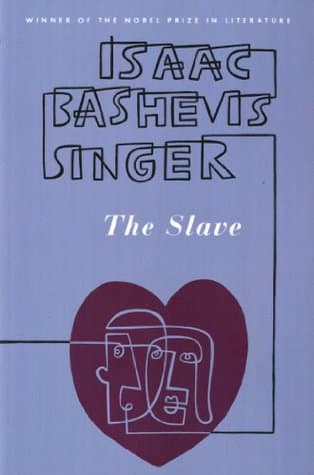
Synopsis
Covers the whole plot, including the ending.
- Difficulty
- Medium
- Pacing
- Moderate
- Mood
- Melancholy, Spiritual, Intense, Reflective, Tragic
- Read it if
- You are interested in deeply spiritual historical fiction, exploring themes of forbidden love, faith, suffering, and redemption amidst historical persecution.
- Skip it if
- You prefer fast-paced plots or lighthearted narratives, or are uncomfortable with tragic endings and intense religious introspection.
The Slave Plot Summary
Covers the whole plot, including the ending.
Enslavement and the Mountain Village
Jacob, a young Jewish man from Josefov, is enslaved by Polish peasants in the village of Pisk after the Chmielnicki massacres. He herds cattle for a crude master, enduring hardship and isolation. Jacob holds onto his faith, studying the Torah from memory. Villagers often mock and mistreat him as an outsider. His only companions are animals and his own thoughts, and he struggles to keep his sanity and hope.
Wanda's Appearance and Forbidden Love
During his enslavement, Jacob meets Wanda, his master's daughter. She is a kind young woman, an outcast because of a limp and an underdeveloped arm. Wanda is drawn to Jacob's intelligence and dignity. She secretly brings him food and offers kindness, a contrast to the brutality he faces. Despite religious and social barriers, Jacob and Wanda develop a deep, forbidden love, finding comfort and understanding in each other.
Ransom and a Promise
After four years, Jacob is ransomed by his former community, specifically by Gedaliah. Before leaving Pisk, Jacob secretly meets Wanda. They confirm their love, and Jacob, despite the risks and religious prohibitions, promises to return for her. He knows marrying a Gentile is a sin, but his love for Wanda is so strong he feels he cannot live without her. The separation is painful, and Jacob carries the weight of his promise and the coming transgression.
Return to Civilization and Spiritual Turmoil
Jacob returns to the Jewish town of Frampol, welcomed as a survivor and scholar. He tries to rejoin Jewish society, but his mind is on Wanda. He feels a spiritual crisis, torn between his faith and his forbidden love. He struggles with guilt and fear of divine punishment, yet cannot abandon Wanda. He cannot marry a Jewish woman, even when suitable matches appear, because his heart is with Wanda.
The Escape with Wanda
Driven by an urge, Jacob secretly returns to Pisk and finds Wanda. They plan their escape. Wanda, disguised as a mute Jewish woman named Sarah, travels with Jacob to a distant Jewish community. They face dangers like bandits and suspicious villagers. Jacob worries constantly about their safety and the secret of Wanda's identity, which, if found out, would shame him and endanger Wanda.
Life in the Jewish Village of Kreshev
Jacob and Wanda (now Sarah) settle in the Jewish village of Kreshev. Jacob becomes a respected teacher and scribe, known for his piety. Wanda, maintaining her disguise as a mute, is accepted, though her foreign look and silence bring curiosity and some suspicion. They live in constant fear of discovery, and the deception burdens Jacob, who feels he lives a lie before God and his community. Despite the stress, their love deepens.
Wanda's Pregnancy and Death
Wanda becomes pregnant, bringing both joy and renewed worry to Jacob. The pregnancy is hard, and during a harsh winter, Wanda falls ill. She goes into premature labor and dies during childbirth. In her last moments, she tries to speak and reveal her identity to Jacob, but her words are unclear, and she dies without her secret being fully known. Her death is a devastating blow to Jacob, who feels great loss, guilt, and the irony of her silent passing.
The Community's Suspicions and Jacob's Grief
After Wanda's death, community suspicions about 'Sarah' grow. Her unusual burial, without traditional Jewish rites, fuels gossip. Jacob is consumed by grief, isolating himself and struggling with his faith. Some, especially community leaders, accuse him of marrying a Gentile, but without proof, the accusations remain. Jacob mourns Wanda in secret, burdened by his unconfessed sin and loneliness.
Raising the Child and Jacob's Redemption
Jacob dedicates himself to raising his son, Benjamin, who is sickly. He sees Benjamin as a sign of his love for Wanda and a way for his own spiritual redemption. Jacob continues his scholarly work, becoming more respected in Kreshev. He finds comfort in his studies and in caring for his son, believing his suffering and devotion will atone for his wrongs. He teaches Benjamin about the Torah and Jewish tradition, securing his son's place in the community.
The Return to Pisk and a Final Revelation
Decades later, Jacob, now an old man, returns to Pisk, the village of his enslavement. He finds the graves of Wanda's family and, to his surprise, a tombstone with Wanda's name next to them. This confirms her identity to the Polish villagers who knew her. Jacob, now free from secrecy, openly acknowledges his love for Wanda, sharing their story with the villagers. This gives him peace and closure, finally honoring Wanda publicly.
Jacob's Death and Legacy
After his discovery in Pisk, Jacob stays in the village for a short time, finding acceptance among the peasants. He dies peacefully and is buried next to Wanda, fulfilling a silent wish to be reunited. His life, marked by suffering, forbidden love, and faith, becomes a legend. His story, bridging two worlds, speaks of the power of love and the complex nature of faith and human connection in a time of division and prejudice. His son, Benjamin, continues his scholarly legacy.
The Slave Characters
Jacob
Protagonist
A devout Jewish scholar enslaved by Polish peasants, who falls in love with his master's daughter.
Jacob is a young, intelligent, and deeply pious Jewish man from Josefov. He possesses an exceptional memory for Torah and Talmud, which becomes his mental refuge during his enslavement. Despite immense physical suffering and spiritual isolation, he maintains his faith. He is driven by a profound love for Wanda, which challenges his religious convictions and leads him to make a choice that defines the rest of his life. He is introspective, guilt-ridden, yet ultimately resilient and devoted.
Relationships: Wanda (Profound, forbidden love; wife; mother of his child.); Benjamin (Son, object of his devotion and legacy.); Gedaliah (Ransomer and connection to the Jewish community.)
Wanda (Sarah)
Love Interest/Supporting
A compassionate Polish peasant woman with a physical deformity, who falls in love with Jacob.
Wanda is the daughter of Jacob's Polish master. She is an outcast in her own village due to a physical deformity (a limp and a withered arm), which makes her empathetic and sensitive. She is intelligent, intuitive, and possesses a quiet strength. She is drawn to Jacob's gentle nature and intellect, and their love transcends religious and social barriers. She sacrifices her identity and family to be with Jacob, enduring a life of silence and secrecy in a foreign community.
Relationships: Jacob (Profound, forbidden love; husband; father of her child.)
Benjamin
Supporting
Jacob and Wanda's son, a sickly child who becomes Jacob's spiritual legacy.
Benjamin is the son of Jacob and Wanda, born after Wanda's death. He is a frail and sickly child, representing the physical manifestation of Jacob's forbidden love and suffering. He is deeply loved by Jacob and becomes the central focus of Jacob's later life. Benjamin is raised as a Jew, educated in the Torah, and embodies the hope for the continuation of Jacob's intellectual and spiritual lineage, despite his mother's secret identity. He is a symbol of Jacob's partial redemption.
Relationships: Jacob (Father; primary caregiver and educator.); Wanda (Mother (never knew her, but represented by her memory).)
Gedaliah
Supporting
A member of Jacob's former Jewish community who helps ransom him.
Gedaliah is a respected member of Jacob's original Jewish community in Josefov. He is instrumental in arranging Jacob's ransom from his Polish captors. He represents the established Jewish community and its efforts to care for its own, even in times of great hardship. While not a major character, his actions are crucial in freeing Jacob and allowing the plot to advance.
Relationships: Jacob (Acquaintance; rescuer.)
Kreshev Rabbi
Supporting
The spiritual leader of the Jewish village where Jacob and Wanda settle.
The Rabbi of Kreshev is the spiritual authority in the village where Jacob and Wanda (as Sarah) reside. He is a figure of piety and learning, embodying the strictures and traditions of Jewish law. He initially welcomes Jacob as a scholar but later becomes suspicious of 'Sarah' due to her silence and unusual background. He represents the community's watchful eye and the religious laws that Jacob is secretly violating, creating a constant threat of exposure.
Relationships: Jacob (Spiritual leader; potential accuser.)
Wanda's Father (Jacob's Master)
Mentioned
Jacob's crude and superstitious Polish master.
Wanda's father is a Polish peasant farmer, Jacob's enslaver in Pisk. He is depicted as rough, superstitious, and often cruel, representative of the harsh conditions Jacob endures. He has little understanding or empathy for Jacob's Jewishness or intellect. His character serves to highlight Jacob's suffering and Wanda's contrasting kindness. He is largely a background figure, but his initial act of enslavement sets the entire story in motion.
Relationships: Jacob (Master/slave relationship.); Wanda (Father/daughter relationship.)
The Slave Themes
Forbidden Love vs. Religious Law
The main theme explores the conflict between Jacob's love for Wanda, a Gentile woman, and the laws of his Jewish faith. Jacob is tormented by the sin he believes he commits, yet his love for Wanda is so strong he cannot leave her. This tension runs through their lives, from their secret meetings to their deceptive life in Kreshev. The novel asks if love can go beyond religious and social expectations, and at what cost to one's soul and community. Jacob's internal struggle is a battle between his heart and his spiritual beliefs.
“He knew that what he was doing was a sin and that he would have to pay for it in this world and the next, but he could not help himself. Wanda was his life, his very breath.”
Suffering and Redemption
The novel shows suffering as a common part of human life, especially for Jewish people after the Chmielnicki massacres. Jacob endures physical enslavement, isolation, and the burden of his secret. His suffering is not just punishment; it leads to a deeper understanding of himself and his faith. Through his devotion to Wanda and later to his son Benjamin, and his acceptance of his fate, Jacob finds a form of redemption, not necessarily in his community's eyes, but within his own soul. His eventual public acknowledgment of Wanda's identity in Pisk is a final act of spiritual freedom.
“Jacob knew that his suffering was a punishment, but also a test. He would not break.”
Identity and Belonging
Identity is explored through both Jacob and Wanda. Jacob, a scholar, loses his identity as a free Jew and becomes a slave. He then tries to balance his Jewish identity with his love for Wanda. Wanda must shed her Polish identity to become 'Sarah,' a mute Jewess, living a life of silence and deception. Both characters are outsiders looking for a place to belong, whether in a community or with each other. The novel highlights how fragile and fluid identity is, especially when faced with love, persecution, and the need to survive. Their son, Benjamin, also has a complex identity, being of mixed heritage but raised in one tradition.
“She was Sarah now, a Jewish woman, mute and alone in a strange land. But in her heart, she was still Wanda, Jacob's Wanda.”
Faith and Doubt
Jacob's deep faith in God and the Torah is central to his character, but his experiences constantly challenge it. His love for Wanda brings him deep doubt, questioning God's mercy and his own piety. He grapples with sin and atonement, wondering if his love can be forgiven. The novel does not offer easy answers but explores the complexities of keeping faith during personal and historical tragedy. Jacob's faith eventually changes, becoming more personal and less rigid, including his love for Wanda as part of his spiritual journey.
“How could God demand such a sacrifice? How could love be a sin?”
Plot Devices & Literary Techniques
The Mute Disguise
Wanda's pretense of being mute to conceal her Polish identity.
Wanda's disguise as a mute Jewish woman, 'Sarah,' is a crucial plot device. It allows her to live undetected within the Jewish community of Kreshev, circumventing the immediate suspicion that her Gentile origins would provoke. However, it also creates immense tension and isolation for her, as she cannot speak her true thoughts or reveal her past. This device heightens the sense of secrecy and danger for Jacob and Wanda, as a single spoken word could expose their entire deception and bring ruin upon them both. It also symbolizes Wanda's profound sacrifice and her inability to fully integrate.
The Chmielnicki Massacres
The historical backdrop of violent persecution that initiates Jacob's suffering.
The Chmielnicki massacres of the 17th century serve as the foundational historical context and a powerful plot device. They are not merely background but the catalyst for Jacob's enslavement, the destruction of his community, and the pervasive suffering and fear that permeate the entire narrative. This historical event establishes the brutal reality of the era, the precariousness of Jewish life, and the deep-seated prejudice that makes Jacob and Wanda's relationship so forbidden and dangerous. It underscores the themes of persecution, survival, and the enduring trauma of historical violence.
The Tombstone Revelation
The discovery of Wanda's true tombstone in Pisk decades later.
The discovery of Wanda's tombstone bearing her true name in Pisk, decades after her death, is a powerful and climactic plot device. It provides Jacob with a final, public validation of Wanda's identity and his love for her, bringing closure to his long-held secret and grief. This revelation allows Jacob to finally speak openly about his past and his beloved, liberating him from the burden of his deception. It serves as a moment of reconciliation, both for Jacob with his past and with the memory of Wanda, and symbolically, between their two worlds.
Jacob's Memory and Scholarship
Jacob's ability to recall vast portions of religious texts from memory.
Jacob's exceptional memory for the Torah and Talmud is a significant character trait that functions as a plot device. During his enslavement, it is his only source of spiritual sustenance and mental preservation. Later, it allows him to become a respected melamed and scribe in Kreshev, providing him with a livelihood and a place within the community, despite his secret. His scholarship also highlights his deep piety, which is constantly at odds with his forbidden love, intensifying his internal conflict and making his choices more profound.
The Slave Quotes
“The world is a beast of many heads, and each head has its own hunger.”
“Where there is no freedom, there is no God.”
“Silence is also a language, and it can speak volumes.”
“A man without a past is like a tree without roots.”
“Love is a fire that burns even in the snow.”
“God's ways are not our ways, and His thoughts are not our thoughts.”
“Every man carries his own hell within him.”
“The truth is a seed that sprouts even in the hardest ground.”
“Fear makes us do things we would never imagine.”
“To forget is to die a second death.”
“Hope is a small candle that never goes out, even in the darkest night.”
“There is no greater prison than the one we build for ourselves.”
“The greatest miracles are often the ones we don't even notice.”
“A man can lose everything but his soul.”
Quiz
10 questions on the plot and the characters. Each answer comes with a short explanation.
Question 1
Which historical event forms the backdrop for the beginning of Jacob's enslavement?
- The Thirty Years' War
- The Chmielnicki massacres
- The Deluge (Swedish invasion of Poland)
- The Khmelnytsky Uprising
Show answer
B. The Chmielnicki massacres The novel explicitly states that Jacob's enslavement occurs four years after the Chmielnicki massacres, which devastated Jewish communities in Poland.
Question 2
What is the name of the Gentile woman Jacob falls in love with and eventually marries?
- Sarah
- Leah
- Wanda
- Esther
Show answer
C. Wanda Jacob falls in love with Wanda, his master's daughter, while he is a slave.
Question 3
What is Jacob's profession while he is enslaved in the Polish village?
- Farmer
- Carpenter
- Cowherd
- Blacksmith
Show answer
C. Cowherd The summary states that Jacob is a 'slave and cowherd in a Polish village,' indicating his role tending cattle.
Question 4
What primary internal conflict does Jacob face after taking Wanda as his wife?
- Fear of being recaptured by his former master
- Guilt and consciousness of sin for marrying a Gentile
- Difficulty in adapting to life in a new community
- Struggling to provide financially for his new family
Show answer
B. Guilt and consciousness of sin for marrying a Gentile The summary highlights Jacob being 'racked by his consciousness of sin in taking a Gentile wife,' which is a central internal struggle for him.
Question 5
How do Jacob and Wanda attempt to conceal her identity in the Jewish community?
- They pretend she is a mute and cannot speak.
- They claim she is a Jewish woman who lost her memory.
- They present her as a deaf-mute woman named Sarah, who is Jewish.
- They keep her hidden in their home and rarely let her out.
Show answer
C. They present her as a deaf-mute woman named Sarah, who is Jewish. To conceal Wanda's Gentile identity, Jacob presents her as a deaf-mute Jewish woman named Sarah, to explain her inability to speak Yiddish or Hebrew.
Question 6
What is the primary reason Jacob initially cannot live without Wanda, even after being ransomed?
- He owes her money and feels obligated to stay.
- He is deeply in love with her and feels a profound connection.
- She threatened to expose his past if he left her.
- He needs her help to navigate the unfamiliar Polish landscape.
Show answer
B. He is deeply in love with her and feels a profound connection. The summary states, 'Even after he is ransomed, he finds he can't live without her,' indicating his deep love and attachment as the driving force.
Question 7
Which of the following best describes the overall tone and atmosphere of the novel, particularly concerning Jacob and Wanda's relationship?
- Lighthearted and romantic
- Triumphant and celebratory
- Somber, tragic, and fraught with peril
- Adventure-filled and optimistic
Show answer
C. Somber, tragic, and fraught with peril The description 'Racked by his consciousness of sin' and 'violence of the era threatens to destroy the ill-fated couple' strongly conveys a somber and tragic tone.
Question 8
What is the ultimate fate of Wanda (Sarah) during the couple's time in the Jewish community?
- She is discovered to be Gentile and forced to leave the community.
- She tragically dies in childbirth, leaving Jacob with their son.
- She converts to Judaism and is fully accepted by the community.
- She runs away, unable to bear the deception any longer.
Show answer
B. She tragically dies in childbirth, leaving Jacob with their son. Wanda, under the name Sarah, dies in childbirth in the Jewish community, a pivotal and tragic event in the novel.
Question 9
What significant event occurs many years after Wanda's death, bringing a sense of closure or resolution to Jacob's life?
- He remarries a Jewish woman and has many more children.
- He discovers a hidden treasure that makes him wealthy.
- He returns to his original village and finds peace.
- He is buried next to Wanda after his own death, revealing her true identity.
Show answer
D. He is buried next to Wanda after his own death, revealing her true identity. At the end of the novel, many years later, Jacob dies and is buried next to Wanda (Sarah). The grave diggers discover that 'Sarah' was a Gentile, bringing a posthumous revelation and a form of tragic resolution.
Question 10
Beyond the immediate dangers, what deeper philosophical or religious theme is explored through Jacob's struggles and his love for Wanda?
- The conflict between individual desire and communal religious law.
- The inevitability of suffering in human existence.
- The corrupting influence of power and wealth.
- The ultimate triumph of good over evil.
Show answer
A. The conflict between individual desire and communal religious law. Jacob's love for Wanda, a Gentile, directly clashes with the strictures of Jewish law and community expectations, highlighting the tension between personal will and religious/communal obligation.
The Slave FAQ
What is the central conflict Jacob faces at the beginning of the novel?
Jacob, a Jewish scholar enslaved in a remote Polish village, struggles with his physical bondage and the spiritual desolation of being cut off from Jewish life and learning. His primary conflict is the desire to maintain his faith and intellectual identity amidst the harsh realities of servitude and the threat of assimilation.
How does Jacob's relationship with Wanda complicate his return to Jewish society?
Jacob's love for Wanda, a Gentile woman, creates an insurmountable barrier to rejoining a traditional Jewish community, as intermarriage is strictly forbidden. When they escape together, he must conceal her identity as Sarah, a deaf-mute, to protect her and allow them to live among Jews, creating a constant source of anxiety and deception.
What role do the Chmielnicki massacres play in the background of Jacob's story?
The Chmielnicki massacres, occurring four years prior to the novel's opening, serve as the devastating historical backdrop that explains Jacob's enslavement and the broader trauma of the Jewish community. They underscore the precariousness of Jewish life in Poland and the profound losses Jacob has experienced, including his family and community.
Describe the challenges Jacob and Wanda face in the Jewish village of Pilitz.
In Pilitz, Jacob and Wanda (as Sarah) face immense hardship due to poverty, the suspicion of the community, and the constant fear of exposure. Wanda's inability to speak and her perceived strangeness make her an outcast, while Jacob struggles to support them and maintain their secret, leading to isolation and emotional strain.
What ultimate tragedy befalls Wanda, and how does it impact Jacob?
Wanda dies during childbirth, a profound tragedy that leaves Jacob devastated and alone with their infant son. Her death, coupled with the revelation of her true identity by the community, shatters his carefully constructed life and forces him to confront his grief and the consequences of his choices.
What is the significance of the stone Jacob places on Wanda's grave?
The stone Jacob places on Wanda's grave, years after her death, symbolizes his enduring love, his commitment to her memory, and his eventual acceptance of their complex relationship. It represents a silent testament to their bond, a form of remembrance outside conventional Jewish mourning rituals for a Gentile.
How does the recurring motif of mountains and isolation contribute to the novel's themes?
The mountains, particularly in the initial village where Jacob is enslaved, symbolize isolation, primitivism, and a separation from civilization and Jewish learning. This geographical remoteness mirrors Jacob's spiritual exile and the couple's later attempts to find a secluded haven, highlighting their marginalization and the harshness of their existence.
What is the implied fate or future of Jacob and Wanda's son, Benjamin?
Benjamin, raised by a foster family and later becoming a respected rabbi, represents a form of redemption and continuity for Jacob. His life suggests that despite the unconventional and tragic circumstances of his parents, he successfully integrated into Jewish society and upheld the traditions Jacob so deeply cherished, bridging the gap between his parents' worlds.
How does Jacob's inner struggle with sin manifest throughout the narrative?
Jacob's consciousness of sin, particularly concerning his relationship with Wanda and the deception involved, is a constant torment, leading to guilt and self-reproach. He believes their hardships are divine punishment, yet his profound love for Wanda often overrides his fear of damnation, creating a powerful internal conflict between his faith and his human desires.
Analyze Wanda's psychological transformation from a Polish peasant to 'Sarah'.
Wanda undergoes a profound psychological transformation, shedding her identity to become 'Sarah,' a deaf-mute Jewish woman. This forced identity causes immense internal suffering, isolating her further and stripping her of her voice, both literally and figuratively. Her quiet resilience and deep devotion to Jacob are her primary coping mechanisms in this new, alien existence.
How does Jacob's intellectual background influence his emotional responses and decision-making?
Jacob's background as a scholar means he approaches situations with a strong intellectual and ethical framework, often overthinking and analyzing his choices through the lens of Jewish law and morality. This intellectualism fuels his guilt and internal debates, but also gives him a deep well of spiritual strength and a commitment to justice, even when it conflicts with societal norms.
Discuss the psychological impact of constant fear and concealment on Jacob and Wanda's relationship.
The constant fear of exposure and the need for concealment create an intense, isolating bond between Jacob and Wanda, but also immense psychological strain. While it deepens their reliance on each other, it also prevents them from fully integrating into society and living authentically, leading to anxiety, suspicion, and a pervasive sense of being outsiders.
To what extent is 'The Slave' a critique of rigid religious dogma versus human love?
'The Slave' explores the tension between strict religious law and the powerful, often transgressive, force of human love. While Jacob is tormented by his violation of Jewish law, the novel ultimately seems to suggest the profound value and even sanctity of his love for Wanda, hinting at a higher moral order that accommodates human connection, even at great personal cost.
Does the novel ultimately offer a message of redemption or tragedy for Jacob?
The novel offers a complex blend of both redemption and tragedy for Jacob. While his life with Wanda is undeniably tragic and fraught with suffering, his enduring love, his son's success, and his eventual return to his ancestral land to be buried near Wanda's marker suggest a form of spiritual redemption and peace. He finds meaning in his experiences, even the painful ones.
How does Singer use the historical setting to comment on broader themes of exile and belonging?
Singer uses the post-Chmielnicki era to emphasize the theme of exile, not just geographical but spiritual and communal, for Jacob and other displaced Jews. Jacob's struggle to belong, first as a slave, then with a Gentile wife, highlights the universal human need for community and identity, even as he defies conventional paths to achieve it.
What is the significance of the final scene where Jacob returns to Wanda's grave?
The final scene signifies Jacob's full circle journey and his ultimate acceptance of his life and love. By returning to the remote mountain and finding Wanda's grave, he acknowledges their shared history and his profound connection to her, affirming that his love for her was an integral, sacred part of his identity, regardless of societal judgment.
How does the novel portray the concept of fate versus free will in Jacob's life?
The novel presents a nuanced view of fate versus free will. Jacob often interprets events as divinely ordained punishment, suggesting a strong belief in fate. However, his choice to love Wanda and escape with her, despite immense risks, demonstrates his exercise of free will, suggesting that even within a fated existence, individuals can make profound, life-altering decisions.
About the author
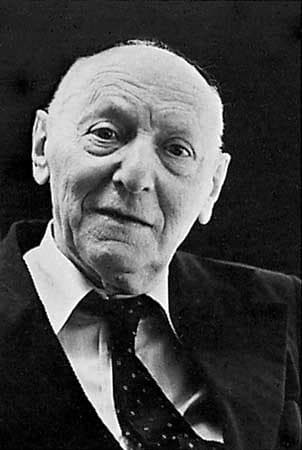
Isaac Bashevis Singer was a Polish-born Jewish-American novelist, short-story writer, memoirist, essayist, and translator. Some of his works were adapted for the theater. He wrote and published first in Yiddish and later translated his own works into English with the help of editors and collaborators. He was awarded the Nobel Prize for Literature in 1978. A leading figure in the Yiddish literary movement, he was awarded two U.S. National Book Awards, one in Children's Literature for his memoir A Day of Pleasure: Stories of a Boy Growing Up in Warsaw (1970) and one in Fiction for his collection A Crown of Feathers and Other Stories (1974).
Similar books
- The Chosen
Chaim Potok
3.9 (253) average on GoodreadsFantasyFocuses on Jewish identity, faith, and the clash of traditions, with deep character introspection.
- To Kill a Mockingbird
Harper Lee
4.3 (4.5M) average on GoodreadsHistorical FictionIn the 1930s Jim Crow South, Harper Lee writes about racial injustice, moral growth, and the quiet courage of a lawyer father, Atticus Finch, as seen through his young daughter's eyes.
- The Great Gatsby
F. Scott Fitzgerald
3.9 (3.8M) average on GoodreadsHistorical FictionIn the opulent Roaring Twenties, a mysterious millionaire's lavish parties hide his desperate, tragic pursuit of a lost love, exposing the emptiness within the American Dream.
- Pride and Prejudice
Jane Austen
4.3 (3M) average on GoodreadsHistorical FictionIn a society focused on status and money, Elizabeth Bennet navigates love and pride, challenging Mr. Darcy and social expectations to find true affection.
- Angels & Demons
Dan Brown
3.9 (2.7M) average on GoodreadsThrillerA Harvard symbologist races through Rome's ancient sites, deciphering cryptic clues to unmask the Illuminati and stop a vengeful plot to destroy the Vatican with a stolen antimatter weapon.
- The Kite Runner
Khaled Hosseini
4.3 (2.4M) average on GoodreadsHistorical FictionIn pre-Taliban Afghanistan, a wealthy boy's betrayal of his servant's son during a kite-running tournament starts a lifelong journey for amends as his country collapses.





Enjoyed the summary?
A summary gives you the shape of the book. The book itself has the detail, the examples and the voice.
Find The Slave on AmazonAs an Amazon Associate, BookBrief earns from qualifying purchases. How we're funded