
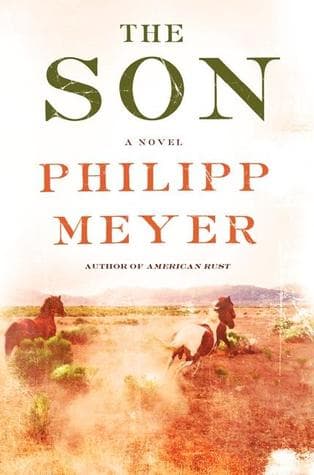
Synopsis
Covers the whole plot, including the ending.
- Difficulty
- Medium
- Pacing
- Moderate
- Mood
- Epic, Gritty, Historical, Dark, Sprawling
- Read it if
- You enjoy sweeping, multi-generational sagas about American history, the Wild West, and the complex legacies of power and violence.
- Skip it if
- You prefer lighthearted stories or are sensitive to graphic depictions of violence, historical brutality, and morally ambiguous characters.
The Son Plot Summary
Covers the whole plot, including the ending.
The Comanche Raid
In the spring of 1849, thirteen-year-old Eli McCullough's life is shattered when Comanche warriors attack his family's homestead in the Republic of Texas. His mother and sister are killed, and he is taken captive. Eli sees horrific acts, including the scalping of his family, before being dragged away. His father and older brother, Caleb, are hunting at the time. Eli is forced to march with the Comanche, enduring harsh conditions and violence, marking the beginning of his transformation and assimilation into a new, brutal life.
Life Among the Comanche
Eli, renamed 'Tiehteti' (Pathetic White Boy) by his captors, initially resists. But driven by a need for survival, he begins to adapt to the Comanche way of life. He learns their language, hunting techniques, and warrior traditions. Under the guidance of the warrior Charges the Enemy and eventually adopted by the chief, Kicking Wolf, Eli transforms from a terrified boy into a Comanche warrior. He participates in raids against other tribes and white settlers, internalizing their culture and blurring his original identity. He experiences loyalty and belonging within the tribe, even as he grapples with the memory of his former life.
Peter McCullough's Burden
Decades later, Eli's son, Peter McCullough, tells his own story, a stark contrast to his father's pragmatism. Peter is a sensitive, moral man deeply troubled by the violent methods his father uses to expand their ranching empire. He witnesses Eli's ruthless dealings, including the killing of Mexican ranchers and the displacement of indigenous people, all for land and power. Peter’s conscience weighs heavily on him, leading to internal conflict and a growing distance from his domineering father. He feels the weight of the blood spilled for the McCullough fortune, struggling to reconcile his values with the family's legacy.
The Mexican Border Conflict
The early 20th century brings increased tensions along the Texas-Mexico border, with raids and skirmishes becoming common. Peter and his family become involved in a violent conflict with a Mexican family, the Garcias, over land and cattle. Peter's wife, Maria, a Mexican woman, becomes a target of prejudice and violence. The escalating feuds end in a horrific event where Peter's own actions, though meant to protect his family, lead to the deaths of innocent people and further alienate him from Eli. Overwhelmed by guilt and unable to live with the consequences of his family's ambition, Peter eventually flees to Mexico, abandoning his life and family.
Eli's Return to White Society
As the 19th century progresses, disease, starvation, and pressure from American expansion decimate the Comanche tribe. Eli, now a warrior, sees the tragic decline of his adopted people. Eventually, he is forced to leave the dwindling tribe, unable to survive in a world where their way of life is no longer sustainable. He tries to reintegrate into white society, a challenging and often alienating process. He finds himself a man caught between two worlds, neither fully white nor fully Comanche, struggling to navigate the customs of the 'civilized' world he once knew.
Building an Empire
Eli McCullough, using his survival instincts and the lessons learned from the Comanche, begins a relentless quest to acquire land and build his fortune. He uses cunning, intimidation, and violence when necessary, becoming a formidable and feared figure in South Texas. He establishes a vast ranching empire, and later, recognizing the potential, moves into the burgeoning oil industry. His ambition is boundless, and he sacrifices personal relationships and moral considerations for power and wealth, laying the foundation for the McCullough dynasty through sheer force of will and an understanding of the land's value.
Jeanne Anne's Inheritance
In the late 20th and early 21st centuries, Eli's great-granddaughter, Jeanne Anne 'J.A.' McCullough, takes control of the vast, but aging, McCullough oil and ranching empire. A shrewd and determined businesswoman, J.A. faces modern challenges, including environmental regulations, fluctuating oil prices, and corporate rivals. She embodies Eli's pragmatism and ambition, often making difficult and morally ambiguous decisions to preserve the family legacy. J.A. is aware of the sacrifices and violence that built her fortune, and she must constantly fight to maintain her power in a male-dominated world, mirroring the struggles of her ancestors in a new context.
The Weight of History
J.A. McCullough, as the inheritor of the McCullough empire, constantly confronts the violent and morally questionable history of her family. Through her memories and interactions, the story reveals the lasting impact of Eli's ruthless land grabs and Peter's tragic flight. She understands that the family's immense wealth is built on blood and exploitation, and this knowledge shapes her decisions and worldview. J.A. represents the culmination of generations of McCullough ambition, but also the burden of their legacy, struggling to reconcile the past with the present while ensuring the family's future.
Eli's Later Life and Legacy
In his advanced years, Eli McCullough looks back on a life defined by survival, violence, and the pursuit of power. He carries the marks of his time with the Comanche and the brutality required to forge his empire. Though wealthy and powerful, he remains an isolated figure, haunted by memories and the consequences of his actions. His reflections offer insights into the motivations behind his ruthlessness and the impact of his early captivity. Eli's legacy, both celebrated and reviled, continues to shape the lives of his descendants and the landscape of Texas.
Peter's Exile and Death
After fleeing to Mexico, Peter McCullough lives a life of quiet anonymity, forever haunted by the violence and moral compromises of his family. He finds a semblance of peace but is never truly free from the psychological scars of his past. His exile represents a rejection of the McCullough way of life, an attempt to escape the cycle of brutality that defined his father. Peter's story highlights the personal cost of the family's ambition and is a tragic counterpoint to Eli's accumulation of wealth and power, underscoring the enduring burden of their history.
The Son Characters
Eli McCullough
Protagonist
The patriarch of the McCullough family, captured by Comanche as a boy.
Eli McCullough is a complex and formidable character, whose life is shaped by extreme violence and the drive for survival. Captured by Comanche at age thirteen, he adapts to their brutal way of life, becoming a skilled warrior. This experience imbues him with a profound understanding of the land, a ruthless pragmatism, and a deep-seated suspicion of outsiders. Upon his return to white society, he channels these traits into building a vast ranching and oil empire in Texas, often through morally ambiguous and violent means. He is driven by a desire for control and security, born from the trauma of his youth.
Relationships: Peter McCullough (Father-son; strained by Eli's ambition and Peter's moral compass); Jeanne Anne McCullough (Great-grandfather-great-granddaughter; she embodies his ambition and legacy); Kicking Wolf (Adoptive father; mentor within the Comanche tribe); Charges the Enemy (Mentor; taught Eli Comanche warrior skills)
Peter McCullough
Protagonist/Supporting
Eli's sensitive and morally conflicted son, burdened by his family's violence.
Peter McCullough is Eli's second son, a man of conscience and sensitivity who stands in stark contrast to his ruthless father. He is deeply troubled by the violence and exploitation inherent in the McCullough family's rise to power, particularly their treatment of Mexican families and land acquisition methods. Peter struggles with a profound sense of guilt and moral compromise, leading to an increasing estrangement from Eli. He longs for a life free from the bloodshed and ambition that defines his family, ultimately choosing exile over complicity. His narrative highlights the human cost of empire-building.
Relationships: Eli McCullough (Son-father; strained and ultimately broken due to moral differences); Maria Garcia (Wife; their marriage is a source of both love and tragedy due to racial tensions); Jeanne Anne McCullough (Grandfather-granddaughter; his story is a cautionary tale for her)
Jeanne Anne 'J.A.' McCullough
Protagonist
Eli's great-granddaughter, a powerful and pragmatic oil and ranching magnate.
Jeanne Anne 'J.A.' McCullough is the modern-day inheritor and CEO of the vast McCullough empire. She is a sharp, determined, and pragmatic businesswoman, embodying many of Eli's ruthless qualities in a contemporary setting. J.A. navigates the complexities of the oil industry, environmental regulations, and corporate rivalries, always striving to protect and expand her family's legacy. She is acutely aware of the violent history that built her fortune and carries the burden of that knowledge, often making hard, morally ambiguous decisions. J.A. represents the culmination of generations of McCullough ambition, adapted for the 20th and 21st centuries.
Relationships: Eli McCullough (Great-granddaughter-great-grandfather; she is his direct spiritual and business heir); Peter McCullough (Granddaughter-grandfather; his moral struggles inform her understanding of the family's past)
Kicking Wolf
Supporting
Comanche chief who adopts Eli and guides him in tribal ways.
Kicking Wolf is the powerful and respected chief of the Comanche band that captures Eli. He serves as a surrogate father figure to Eli, teaching him the ways of the Comanche warrior, their language, culture, and the harsh realities of their existence. While initially a captor, Kicking Wolf eventually adopts Eli, showing him a form of belonging and protection within the tribe. He embodies the strength, resilience, and traditions of the Comanche people, and his influence profoundly shapes Eli's character and worldview, imbuing him with the survival instincts that define his later life.
Relationships: Eli McCullough (Adoptive father-son; mentor and protector)
Maria Garcia
Supporting
Peter McCullough's Mexican wife, a victim of border tensions.
Maria Garcia is Peter McCullough's wife, a Mexican woman who brings warmth and a different cultural perspective to the McCullough family. Her presence highlights the racial and cultural tensions along the Texas-Mexico border, as she and her family become targets in the escalating conflicts over land and resources. Maria is a loving wife and mother, but she ultimately becomes a tragic figure, caught between the McCullough family's violent ambitions and the prejudice of the time. Her fate deeply impacts Peter, contributing to his moral crisis and eventual exile.
Relationships: Peter McCullough (Wife-husband; their love is a source of solace and tragedy)
Charges the Enemy
Supporting
Comanche warrior who initially trains Eli in their customs.
Charges the Enemy is a pragmatic and experienced Comanche warrior who takes Eli under his wing after his capture. He teaches Eli essential survival skills, hunting techniques, and the warrior ethos of the tribe. While initially harsh, Charges the Enemy's instruction is crucial for Eli's adaptation and survival within the Comanche community. He represents the practical, brutal reality of Comanche life and helps Eli understand the world from their perspective, laying the groundwork for Eli's transformation into a formidable figure.
Relationships: Eli McCullough (Mentor-mentee; instructor in Comanche ways)
Caleb McCullough
Supporting/Mentioned
Eli's older brother, also captured by Comanche but with a different fate.
Caleb McCullough is Eli's older brother, who is also captured by the Comanche during the raid on their homestead. Unlike Eli, Caleb struggles to adapt to Comanche life and eventually meets a tragic end, unable to reconcile himself with his captivity. His fate serves as a stark contrast to Eli's resilience and capacity for assimilation, highlighting Eli's unique survival instincts and the profound personal differences in how individuals respond to extreme trauma and cultural displacement.
Relationships: Eli McCullough (Brother-brother; their divergent paths highlight themes of adaptation and survival)
The Son Themes
The Brutality of Survival and Adaptation
The novel explores the extreme measures individuals take to survive in harsh, unforgiving environments. Eli's transformation from a terrified boy to a Comanche warrior and then to an empire-building patriarch shows this theme. His ability to shed his former identity and embrace new, often violent, ways of life is central. The theme also appears in the McCullough family's ongoing fight for land and power, demonstrating how survival instincts can drive relentless ambition. Peter's inability to adapt to this brutality highlights its cost.
“There was no such thing as good or bad, only living or dying. And if you lived, you lived. If you died, you died.”
The Legacy of Violence and Trauma
The novel traces how violence and trauma pass down through generations, shaping the McCullough family's destiny. Eli's early captivity and the murder of his family instill in him a ruthlessness that informs his land acquisition and business practices. This violence burdens his son Peter with guilt and moral conflict, leading to his exile. J.A., in the present day, inherits not just wealth but also the violent history of her ancestors, forcing her to confront the ethical implications of her family's foundation. The land itself is saturated with the blood of previous conflicts, constantly reminding the characters of the price of their power.
“The land remembers. The land remembers everything.”
Identity and Belonging
Eli's struggle with identity is central to the story. Captured by the Comanche, he sheds his white identity and embraces the warrior culture, only to be forced back into white society later. He exists in a space, neither fully white nor fully Indian, constantly grappling with where he belongs. This theme extends to Peter, who feels alienated by his family's violent identity, and even to J.A., who must forge her own identity as a powerful woman in a male-dominated industry while carrying the weight of her family's past. The search for a true home, both physical and cultural, is a pervasive undercurrent.
“He was a ghost in both worlds, a man with two names and no home.”
The Price of Progress and Manifest Destiny
The novel examines the expansion of the American West, particularly in Texas, and the human and environmental costs associated with 'progress.' The story exposes the displacement of indigenous peoples, the acquisition of land, and the exploitation of natural resources (cattle, then oil). Eli's empire-building embodies the drive of Manifest Destiny, but the novel depicts the violence, prejudice, and moral compromises required to achieve it. Peter's storyline highlights the ethical dilemmas and tragic consequences of this expansion, questioning whether the 'progress' was worth the human suffering.
“They called it progress, but it was just a new kind of killing.”
Plot Devices & Literary Techniques
Multiple Perspectives and Timelines
The story is told through the alternating viewpoints of three generations of McCulloughs.
The novel employs a non-linear narrative structure, shifting between the first-person accounts of Eli McCullough (19th century) and his son Peter McCullough (early 20th century), and the third-person perspective of his great-granddaughter Jeanne Anne McCullough (late 20th/early 21st century). This allows the reader to witness the evolution of the McCullough family, the enduring impact of historical events, and the generational consequences of their actions. It provides a panoramic view of Texas history and illustrates how the past continuously informs the present, creating a rich tapestry of cause and effect across time.
Bildungsroman (Coming-of-Age Story)
Eli's early life among the Comanche functions as a brutal coming-of-age narrative.
Eli McCullough's initial chapters, detailing his capture by the Comanche and his subsequent assimilation, serve as a harsh bildungsroman. He is forced to mature rapidly, learning to survive, hunt, and fight in an unforgiving environment. This period is crucial for shaping his worldview, instilling in him the ruthlessness and pragmatism that define his later life as an empire builder. It's not a romanticized coming-of-age but a brutal education in the realities of power, violence, and cultural adaptation, fundamentally altering his identity and setting the course for his future.
Oral History/Testimony
Eli's and Peter's first-person narratives lend an intimate, confessional quality to their stories.
The use of first-person narration for Eli and Peter provides an intimate and subjective lens into their experiences, motivations, and moral struggles. Eli's voice is pragmatic and direct, reflecting his survivor's mentality, while Peter's is more introspective and burdened by guilt. This device allows for deep character exploration and direct insight into their psychological states, making their accounts feel like personal testimonies. It grounds the epic scope of the novel in individual human experience, allowing the reader to connect directly with their triumphs and tragedies.
Symbolism of the Land
The Texas landscape symbolizes both opportunity and the brutal cost of its conquest.
The vast and unforgiving Texas landscape is more than just a setting; it is a character and a powerful symbol. It represents both the boundless opportunity for wealth and the brutal, often bloody, price of its conquest. The land remembers the violence inflicted upon it—the Comanche raids, the battles with Mexicans, the oil extraction. It embodies the McCullough family's ambition and their connection to it, both as a source of power and a witness to their moral compromises. The land dictates survival, shapes identity, and serves as a constant reminder of the past.
The Son Quotes
“The land was not given to us by our fathers, but loaned to us by our children.”
“A man's life is a series of choices, some small, some great, but all leading to who he becomes.”
“You can't outrun what's in your blood.”
“Violence begets violence, and the cycle never truly breaks, only shifts.”
“The past isn't dead. It isn't even past.”
“Survival is a brutal art, and the land teaches it best.”
“There are some things a man can't forgive himself for, no matter how long he lives.”
“Money is a weapon, and the rich know how to wield it better than any rifle.”
“Every man has his breaking point, and sometimes it's the quiet ones who break the hardest.”
“The wind carries the stories, if you just listen.”
“You learn more from your enemies than you ever will from your friends.”
“Progress often means destruction for someone else.”
“The weight of a name can be heavier than any physical burden.”
“In the end, all you have is your word and your land.”
Quiz
10 questions on the plot and the characters. Each answer comes with a short explanation.
Question 1
What event marks the beginning of Eli McCullough's transformative journey in the spring of 1849?
- He establishes the first McCullough ranch in Texas.
- He is captured by a band of Comanche after they murder his mother and sister.
- He enlists in the Texas Rangers to fight against Native American tribes.
- He discovers a large oil deposit on his family's land.
Show answer
B. He is captured by a band of Comanche after they murder his mother and sister. Eli McCullough's story begins when he is thirteen and taken captive by Comanche after witnessing the brutal murder of his mother and sister.
Question 2
Which of the following best describes Eli McCullough's adaptation to Comanche life?
- He resists their culture and constantly attempts to escape.
- He quickly learns their ways and language, becoming an adopted son to the chief.
- He is kept isolated and never fully integrated into the tribe.
- He secretly plots against the Comanche while pretending to adapt.
Show answer
B. He quickly learns their ways and language, becoming an adopted son to the chief. Eli quickly adapts to Comanche life, learning their ways and language, answering to a new name, and becoming the chief's adopted son.
Question 3
Beyond Eli, which two other McCullough family members are highlighted as central to the narrative?
- His wife, Maria, and his brother, Thomas.
- His son, Peter, and his great-granddaughter, JA.
- His mother, Eleanor, and his sister, Martha.
- His grandson, John, and his daughter, Sarah.
Show answer
B. His son, Peter, and his great-granddaughter, JA. The narrative intertwines Eli's story with those of his son, Peter, and his great-granddaughter, JA.
Question 4
What is the primary theme explored through the McCullough family's rise to power?
- The importance of family loyalty and traditional values.
- The bloody price of power and the legacy of violence in the American West.
- The triumph of justice and moral rectitude in the face of adversity.
- The peaceful coexistence between settlers and Native American tribes.
Show answer
B. The bloody price of power and the legacy of violence in the American West. The novel is described as an 'unflinching portrait of the bloody price of power' and maps 'the legacy of violence in the American West'.
Question 5
How does Eli's ruthlessness and pragmatism affect subsequent generations of McCulloughs?
- It inspires them to pursue lives of charity and public service.
- It leads them to reject ambition and embrace a simpler way of life.
- Love, honor, and children are sacrificed in the name of ambition, leading to immense wealth.
- It causes them to abandon their Texas roots and move to other states.
Show answer
C. Love, honor, and children are sacrificed in the name of ambition, leading to immense wealth. The text states that 'Love, honor, children are sacrificed in the name of ambition, as the family becomes one of the richest powers in Texas' due to Eli's influence.
Question 6
What major historical and economic developments are interwoven into the McCullough family saga?
- The California Gold Rush, the Civil Rights Movement, and the rise of Silicon Valley.
- The Comanche raids of the 1800s, border raids of the early 1900s, and the oil booms of the 20th century.
- The American Revolution, the Industrial Revolution, and the Great Depression.
- The Louisiana Purchase, the War of 1812, and the invention of the automobile.
Show answer
B. The Comanche raids of the 1800s, border raids of the early 1900s, and the oil booms of the 20th century. The saga follows the family from 'the Comanche raids of the 1800s to the border raids of the early 1900s to the oil booms of the 20th century'.
Question 7
What is the primary internal conflict Eli faces after being with the Comanche and before fully establishing himself?
- Struggling to remember his original family and language.
- Deciding whether to join the military or pursue ranching.
- Feeling neither white nor Indian, civilized nor fully wild, and not belonging to either world.
- Choosing between several romantic interests.
Show answer
C. Feeling neither white nor Indian, civilized nor fully wild, and not belonging to either world. After the Comanche tribe is decimated, Eli 'finds himself alone. Neither white nor Indian, civilized or fully wild, he must carve a place for himself in a world in which he does not fully belong'.
Question 8
How does the author characterize Peter McCullough, Eli's son, in relation to his father?
- He is a ruthless businessman who surpasses his father's ambition.
- He fully embraces his father's values and continues his legacy without question.
- He bears the emotional cost of his father's drive for power.
- He rebels against his father by becoming an advocate for Native American rights.
Show answer
C. He bears the emotional cost of his father's drive for power. Peter is described as 'a man who bears the emotional cost of his father's drive for power'.
Question 9
What specific challenge does JA, Eli's great-granddaughter, face in her own time?
- She struggles to maintain the family's ranching empire in a changing economy.
- She must fight hardened rivals to succeed in a man's world.
- She attempts to uncover the truth about her great-grandfather's past with the Comanche.
- She leads a movement to restore traditional Comanche lands.
Show answer
B. She must fight hardened rivals to succeed in a man's world. JA is characterized as 'a woman who must fight hardened rivals to succeed in a man's world'.
Question 10
Despite their immense wealth and privilege, what consequence do the McCulloughs ultimately face?
- They lose all their land due to poor financial decisions.
- They are forced to relocate from Texas to another state.
- Like all empires, they must eventually face the consequences of their choices.
- They are forced to return stolen lands to Native American tribes.
Show answer
C. Like all empires, they must eventually face the consequences of their choices. The text explicitly states, 'Yet, like all empires, the McCoulloughs must eventually face the consequences of their choices.'
The Son FAQ
What is the central premise of 'The Son'?
'The Son' is an epic multigenerational saga that chronicles the rise of the McCullough family in Texas, from the mid-19th century Comanche raids to the 20th-century oil booms. It explores the legacy of violence, power, and land through the lives of Eli McCullough, his son Peter, and great-granddaughter JA.
Who is Eli McCullough and what is his origin story?
Eli McCullough is the first male child born in the Republic of Texas. At thirteen, he is captured by Comanche after they murder his mother and sister. He adapts to their way of life, becoming the chief's adopted son and fighting alongside them, which deeply complicates his identity and loyalties.
How does Eli's captivity with the Comanche shape his character and future actions?
Eli's time with the Comanche instills in him a deep understanding of survival, ruthlessness, and a pragmatic view of violence, as well as a profound sense of not belonging fully to either white or Comanche culture. These experiences forge his steely resolve and contribute to his drive for power and land acquisition.
Who are Peter McCullough and JA McCullough, and how do their stories connect to Eli's?
Peter McCullough is Eli's son, who struggles with the emotional and moral costs of his father's ambition and violent legacy. JA McCullough is Eli's great-granddaughter, who inherits the family's empire and must fight to maintain power in a male-dominated world, demonstrating the enduring impact of Eli's choices across generations.
What significant historical periods does the novel cover?
The novel spans from the 1840s, with Comanche raids and the early days of the Republic of Texas, through the early 1900s border conflicts, and into the 20th century, encompassing the Texas oil booms. It provides a panoramic view of Texas history through the McCullough family's experiences.
How does Eli's Comanche name, 'Tohyeh' (White Haired), reflect his dual identity?
Eli's Comanche name, 'Tohyeh,' signifies his white heritage while acknowledging his integration into the tribe, representing his liminal status between two worlds. It highlights how he is neither fully white nor fully Indian, a constant internal conflict that defines much of his life and motivations.
What is the significance of the McCullough family ranch, and how does it evolve?
The McCullough ranch represents the family's growing empire, symbolizing their relentless pursuit of land, wealth, and power. It starts as a simple homestead but expands dramatically through Eli's often brutal acquisition methods, eventually becoming the foundation for their oil dynasty.
How does the novel portray the decline of the Comanche way of life?
The novel vividly depicts the devastating impact of disease, starvation, and overwhelming numbers of armed Americans on the Comanche tribe. Eli witnesses firsthand the decimation of his adopted people, highlighting the tragic and inevitable end of their traditional existence.
Are there specific instances where Eli's Comanche upbringing directly influences his decisions in the 'white man's world'?
Yes, Eli frequently applies the brutal pragmatism and survival tactics learned from the Comanche to his business dealings and conflicts with other white settlers. His willingness to resort to violence and his strategic thinking in land disputes are direct reflections of his earlier life.
How does Peter McCullough's character serve as a contrast to Eli?
Peter is more introspective and morally conflicted than Eli, often grappling with the ethical implications of his father's actions and the family's wealth. He represents the emotional cost of Eli's ruthless ambition, showing a generation burdened by the violence that built their empire.
What psychological impact does the constant struggle for land and power have on the McCullough family members?
The relentless pursuit of power and land leads to emotional detachment, moral compromise, and a pervasive sense of isolation within the family. It fosters a cycle of violence and distrust, often sacrificing personal relationships and happiness for the sake of ambition.
How does JA McCullough embody the legacy of her ancestors while also breaking new ground?
JA embodies the McCullough legacy through her fierce determination and business acumen, fighting to maintain the family's empire against rivals. However, she breaks new ground as a powerful woman in a male-dominated industry, demonstrating a different kind of resilience than her male predecessors.
Is Eli McCullough a sympathetic character despite his ruthlessness?
Eli is a complex character whose ruthlessness is tempered by his traumatic upbringing and his efforts to survive in a brutal world. While his actions are often morally ambiguous, his resilience and adaptability in the face of immense hardship can evoke a degree of understanding, if not full sympathy.
How does 'The Son' explore the theme of identity, particularly through Eli's experiences?
The novel deeply explores identity through Eli's struggle to reconcile his white heritage with his Comanche upbringing. He is perpetually caught between two worlds, neither fully belonging to one, which creates a lifelong quest for self-definition in a rapidly changing frontier.
What is the novel's stance on the 'American Dream' in the context of the American West?
The novel suggests that the 'American Dream' in the West was often built on violence, dispossession, and moral compromise. The McCullough family's rise to power demonstrates that immense wealth and privilege came at a bloody price, challenging idealized notions of frontier success.
Does the novel offer any hope for breaking the cycle of violence and ambition within the McCullough family?
While the novel vividly depicts the enduring legacy of violence and ambition, the differing perspectives of Peter and JA suggest a potential for future generations to grapple with, and perhaps even challenge, this cycle. However, the deep-seated nature of their past makes a complete break difficult.
How does the author use the Texas landscape to reflect the characters' inner lives and struggles?
The unforgiving and vast Texas landscape mirrors the harsh realities and challenging nature of the characters' lives. Its beauty and brutality reflect the McCulloughs' own resilience, ambition, and the violent means they employ to claim and control the land.
What role does the theme of 'legacy' play throughout the generations of the McCullough family?
Legacy is a central theme, as Eli's choices, particularly his ruthlessness and ambition, profoundly shape the lives and personalities of Peter and JA. Each generation grapples with the inherited wealth, power, and the moral compromises made to achieve them, demonstrating the lasting weight of their family's past.
About the author

Philipp Meyer is an American fiction writer, and is the author of the novels American Rust and The Son, as well as short stories published in The New Yorker and other places. Meyer also created and produced the AMC television show based on his novel. Meyer won the 2009 Los Angeles Times Book Prize, was the recipient of a 2010 Guggenheim Fellowship and was a finalist for the 2014 Pulitzer Prize. He won the 2014 Lucien Barrière prize in France and the 2015 Prix Littérature-Monde Prize in France. In 2017 he was named a Chevalier (Knight) in France's Ordre des Arts et des Lettres.
Similar books
- Lonesome Dove
Larry McMurtry
4.5 (149k) average on GoodreadsHistorical FictionBoth are epic Western sagas with deep character development and a focus on the harsh realities of frontier life.
- Blood Meridian
Cormac McCarthy
4.2 (227k) average on GoodreadsFictionExplores the brutal violence and moral ambiguities of the American West with a raw, unflinching style.
- Harry Potter and the Sorcerer's Stone
J.K. Rowling
4.5 (7M) average on GoodreadsFantasyRescued from a miserable life under the stairs, an orphaned boy discovers he's a wizard destined for a magical school, where he uncovers a dangerous secret tied to the dark wizard who murdered his parents.
- The Hunger Games
Suzanne Collins
4.3 (6.4M) average on GoodreadsFantasyIn a future where children fight to the death on live television, Katniss Everdeen volunteers for the arena, turning a death sentence into a fight for survival and a spark of rebellion.
- 1984
George Orwell
4.2 (3.1M) average on GoodreadsPoliticsIn a future where surveillance and thought control are absolute, a man's search for truth clashes with the Party, showing that hope can be a form of rebellion.
- Divergent
Veronica Roth
4.2 (2.9M) average on GoodreadsFantasyIn a society divided by virtues, a sixteen-year-old's difference from the norm starts a rebellion that threatens her world.





Enjoyed the summary?
A summary gives you the shape of the book. The book itself has the detail, the examples and the voice.
Find The Son on AmazonAs an Amazon Associate, BookBrief earns from qualifying purchases. How we're funded