

Synopsis
Covers the whole plot, including the ending.
- Difficulty
- Medium
- Pacing
- Moderate
- Mood
- Mythical, Reflective, Melancholy, Poetic, Evocative
- Read it if
- You are interested in a classic American epic poem, Native American folklore and mythology, or a story about nature and cultural change told with lyrical, rhythmic language. Ideal for readers who appreciate allegorical tales and historical context.
- Skip it if
- You prefer modern prose, fast-paced action, or a strictly historically accurate account. Readers who dislike poetry or allegorical narratives might find it challenging.
The Song of Hiawatha Plot Summary
Covers the whole plot, including the ending.
The Peace Pipe and Hiawatha's Ancestry
The poem begins with Gitche Manito, the Master of Life, calling all Native American tribes to Lake Superior for a great council. He tells them to stop fighting, smoke the peace-pipe, and live in peace, promising a prophet to guide them. The story then moves to Hiawatha's birth and family. His mother, Wenonah, is the daughter of Nokomis, who fell from the moon. Wenonah is tricked by the West-Wind, Mudjekeewis, who later leaves her. Heartbroken, Wenonah gives birth to Hiawatha and dies of sadness, leaving Hiawatha to be raised by his grandmother, Nokomis, by Lake Superior.
Hiawatha's Childhood and Early Feats
Nokomis raises Hiawatha, teaching him about nature and its creatures. He learns the language of birds and animals, understanding their secrets and becoming their friend. He makes his first bow and arrows from an ash branch and deer sinew, with help from Iagoo, the great boaster. Hiawatha's first big achievement is hunting a mighty deer, which gets him his first deer-skin cloak. As he grows, Nokomis tells him about his mother, Wenonah, and how Mudjekeewis cruelly left her. Wanting revenge, Hiawatha goes to find his father, the West-Wind, to fight him.
The Quest for Vengeance and Mudjekeewis's Revelation
Hiawatha goes to the land of the West-Wind, where he meets his father, Mudjekeewis. A fierce battle happens, lasting for days, with the earth shaking from their hits. Neither can beat the other. Mudjekeewis eventually says he cannot be killed and that Hiawatha's fate is not to kill him but to be a prophet and helper to his people. Mudjekeewis tells Hiawatha to go back to his people and use his strength and wisdom for their good, promising him immortality if he succeeds. Hiawatha accepts his father's words, returns to Lake Superior, and his desire for personal revenge changes into a decision to serve his tribe.
Hiawatha's Fasting and the Gift of Mondamin
After returning, Hiawatha goes on a long fast to find out how he can best help his people. During his solitary time, he sees a young man, bright and dressed in green and yellow, who says he is Mondamin (Corn). Mondamin challenges Hiawatha to wrestle him daily during his fast. Hiawatha, weak from hunger but strong in his decision, wrestles Mondamin each day. On the last day, Mondamin tells Hiawatha to defeat and bury him, promising that from his grave will come a great gift for his people. Hiawatha follows these instructions, and from the buried Mondamin grows the first corn, feeding the Ojibway people.
Hiawatha's Friends and the Invention of Writing
Hiawatha gathers loyal friends around him. Among them are Chibiabos, a sweet singer and musician, and Kwasind, a very strong man. Hiawatha also brings the skill of picture-writing to his people, drawing symbols on birch bark to record their history, laws, and traditions. This new idea lets them communicate over distances and keep their knowledge for future generations, a big step in their cultural growth. He teaches them about the stars, the seasons, and the importance of community and working together, guiding them toward a more developed life and creating a sense of shared history and purpose.
Hiawatha's Wooing and Wedding Feast
Hiawatha decides to marry. Despite Nokomis's warnings against a foreign wife, he travels to the land of the Dacotahs to find Minnehaha, 'Laughing Water,' the daughter of a famous arrow-maker. He is taken by her beauty and grace. He asks her to marry him, and her father, knowing Hiawatha's fame and wisdom, agrees. Hiawatha brings Minnehaha back to his home, and a big wedding feast is held, with many tribes and Hiawatha's friends, including the loud Iagoo and the strong Kwasind. The feast celebrates unity and love, strengthening Hiawatha's connection to his people and showing hope for peace between tribes.
The Story of the Pearl-Feather and the Famine
Hiawatha confronts and defeats the magician, Pearl-Feather (Megissogwon), a sorcerer who causes disease. After a long fight, Hiawatha finds Pearl-Feather's weak spot—a single tuft of hair on his head—and hits it with his magic arrows, killing the sorcerer and bringing peace from his bad influence. Later, a harsh winter brings a terrible famine. Snow falls constantly, and game is hard to find. Many suffer and die, including Chibiabos, Hiawatha's friend, and Minnehaha, who dies from the cold and hunger, leaving Hiawatha sad. This time marks a great loss for Hiawatha and his community.
Hiawatha's Lament and the Arrival of the White Man
Hiawatha deeply mourns Minnehaha's death, spending seven days and nights in sorrow by her body, showing his love and grief. After the famine, Hiawatha sees visions of new people, pale-faced and bearded, arriving from the East in big canoes. He understands that their arrival means a big change for his people and the end of their traditional life. These visions make him feel both worried and like it's meant to be, preparing him for the coming change of his world and the problems his people will face.
The White Man's Arrival and Hiawatha's Farewell
As Hiawatha's visions predicted, the 'Black-Robe Chief' (a Christian missionary) and other Europeans arrive on the shores of Lake Superior. Hiawatha welcomes them, recognizing their knowledge and the new teachings they bring. He tells his people to listen to the missionaries and learn from them, even with the unspoken threat to their old beliefs. After giving his final wisdom and blessings to his people, Hiawatha steps into his canoe, the 'Birch-Bark Canoe,' and paddles west into the sunset, across Lake Superior. He leaves his people with a hopeful acceptance, sure that he has completed his destiny and prepared them for the future, even if it is one of great change.
The Song of Hiawatha Characters
Hiawatha
Protagonist
A wise and compassionate Ojibway hero, destined to guide his people.
Hiawatha is the central hero of the epic poem, endowed with semi-divine parentage (son of Mudjekeewis, the West-Wind, and Wenonah, daughter of Nokomis). Raised by his grandmother, he develops a deep connection to nature and a profound understanding of animals. He is driven by a desire to bring knowledge, peace, and prosperity to his people, the Ojibway. His character embodies strength, wisdom, empathy, and a progressive spirit, as seen in his introduction of corn, writing, and his eventual acceptance of the arriving Europeans. He faces personal trials, including the death of his mother, friends, and wife, Minnehaha, which temper his heroic nature with profound human sorrow.
Relationships: Nokomis (grandmother and guardian); Wenonah (mother); Mudjekeewis (father, the West-Wind); Minnehaha (wife); Chibiabos (best friend); Kwasind (strong friend); Iagoo (boastful friend and teacher)
Nokomis
Supporting
Hiawatha's wise and nurturing grandmother.
Nokomis is Hiawatha's maternal grandmother, who falls from the moon and raises him from infancy after his mother, Wenonah, dies of heartbreak. She serves as Hiawatha's primary caregiver and initial teacher, imparting knowledge of the natural world, tribal traditions, and the stories of their people. Nokomis is a figure of enduring wisdom, resilience, and unconditional love. She often offers advice and warnings to Hiawatha, though he sometimes disregards them, particularly regarding his choice of a bride. Her presence provides a stable and nurturing foundation for Hiawatha's development.
Relationships: Hiawatha (grandson, whom she raises); Wenonah (daughter)
Minnehaha
Supporting
Hiawatha's beloved wife, 'Laughing Water' of the Dacotahs.
Minnehaha, whose name means 'Laughing Water,' is a beautiful Dacotah maiden, daughter of an old arrow-maker. Hiawatha chooses her as his wife, crossing tribal lines to do so. She is depicted as graceful, gentle, and loving, bringing joy and companionship to Hiawatha's life and his wigwam. Her marriage to Hiawatha symbolizes a potential for peace and unity between warring tribes. Her tragic death during the great famine and harsh winter deeply affects Hiawatha, serving as a poignant reminder of the fragility of life and the harsh realities faced by the people.
Relationships: Hiawatha (wife); Dacotah Arrow-maker (father)
Mudjekeewis
Antagonist/Supporting
The West-Wind, Hiawatha's powerful but irresponsible father.
Mudjekeewis is Hiawatha's father, the powerful spirit of the West-Wind. He is a fickle and irresponsible deity who seduces Wenonah, Hiawatha's mother, and then abandons her, leading to her death. Hiawatha initially seeks him out for vengeance. Despite his flaws, Mudjekeewis reveals Hiawatha's true destiny to him, turning Hiawatha's focus from personal revenge to serving his people. He embodies the wild, untamed forces of nature and the complexities of divine parentage, being both a source of Hiawatha's power and his initial sorrow.
Relationships: Hiawatha (father); Wenonah (lover)
Chibiabos
Supporting
Hiawatha's dearest friend and a skilled musician.
Chibiabos is Hiawatha's closest and most beloved friend, known for his beautiful singing and musical talents. He represents the artistic and spiritual side of the Ojibway culture. His songs bring joy and comfort to the people, and his companionship is deeply valued by Hiawatha. His death during the great famine is one of the most heartbreaking losses for Hiawatha, underscoring the severity of the suffering endured by the tribe and Hiawatha's personal grief. Chibiabos embodies loyalty, friendship, and the ephemeral beauty of art.
Relationships: Hiawatha (best friend)
Kwasind
Supporting
Hiawatha's strong but lazy friend.
Kwasind is another of Hiawatha's friends, renowned for his extraordinary physical strength. Despite his immense power, he is often depicted as lazy and slow-witted, preferring to rest rather than exert himself. However, when roused to action, his strength is unmatched, proving invaluable in tasks like clearing river channels. His character adds a touch of humor and contrasts with Hiawatha's more active and intellectual nature. Kwasind's eventual demise, vulnerable only to the black mud of the river, highlights the unique weaknesses even the strongest possess.
Relationships: Hiawatha (friend)
Iagoo
Supporting
The great boaster and teller of tall tales.
Iagoo is a friend and companion of Hiawatha, characterized by his love for storytelling, often exaggerating his adventures and accomplishments. He is the one who teaches Hiawatha how to make his first bow and arrows. While sometimes ridiculed for his boasting, Iagoo also brings entertainment and a sense of wonder with his tales of travel and daring deeds. He represents the oral tradition of storytelling and the human tendency towards embellishment, adding a lively and often humorous element to the narrative.
Relationships: Hiawatha (friend and early mentor in hunting)
Gitche Manito
Mentioned
The Great Spirit, Master of Life.
Gitche Manito is the Great Spirit, the supreme creator deity in Ojibway mythology. He appears at the beginning of the poem, summoning all tribes to smoke the peace-pipe and cease their warring, promising them a prophet (Hiawatha) to guide them. He represents divine authority, universal peace, and the ultimate source of life and wisdom. His call for unity sets the stage for Hiawatha's mission and underscores the poem's theme of harmony among peoples.
Mondamin
Supporting
The spirit of Corn, a divine gift to Hiawatha's people.
Mondamin is the 'friend of man,' the spirit of Corn, who appears to Hiawatha during his sacred fast. He challenges Hiawatha to a wrestling match, and upon being defeated and buried, rises as the first corn plant. Mondamin's sacrifice provides the Ojibway people with a vital food source, symbolizing the bounty of nature and the importance of self-sacrifice for the greater good. He is a benevolent figure who embodies the interconnectedness of humanity with the earth and its life-giving forces.
Relationships: Hiawatha (spiritual guide and benefactor)
The Song of Hiawatha Themes
Harmony with Nature
The poem explores the respectful relationship between Native Americans and nature. Hiawatha, raised by Nokomis, learns the languages of birds and animals, understanding their secrets and living in balance with the environment. This is clear when Hiawatha fasts and gets the gift of Mondamin (corn), showing a spiritual link to the earth's bounty. The story always shows nature not as something to control, but as a living thing to understand, respect, and live with, giving food, wisdom, and spiritual guidance.
“For he heard a voice from the forest, / From the thickets and the meadows: / 'Be not idle, but be active!'”
Cultural Innovation and Progress
Hiawatha is a cultural hero who brings important improvements to his people. His introduction of Mondamin (corn) changes their food supply, moving them toward farming. He also invents picture-writing, a key step for recording history, laws, and knowledge, which helps keep their culture and communication alive. These new ideas, along with his teachings on community living and peace, show progress and adaptation in Native American societies, showing their ability to grow and develop beyond just survival, led by a visionary leader.
“And he taught them how to draw them, / How to write them on the birch-bark, / All the secrets of the forest.”
Loss and the Inevitable March of Change
Throughout the poem, Hiawatha faces personal losses, from his mother Wenonah to his friends Chibiabos and Kwasind, and most notably, his wife Minnehaha during the famine. These losses are not just personal sad events; they also show how fragile life is and the problems his people face. The theme ends with the arrival of the 'Black-Robe Chief' and the white man, representing a permanent change in the traditional way of life. Hiawatha's goodbye shows he accepts this unavoidable change, marking the end of an era and the start of a new, uncertain future for his people.
“From the wigwam of Minnehaha / Fell the Spirit of Life immortal, / Through the door-way of the sunset.”
Leadership and Responsibility
Hiawatha's journey is about accepting his destiny as a leader and taking responsibility for his people's well-being. At first, driven by personal revenge against his father, Mudjekeewis, Hiawatha changes into a selfless guide. He goes on long fasts and fights mythical beings not for personal fame, but to bring important resources like corn and skills like writing to his community. His leadership includes wisdom, compassion, and a forward-looking vision. This leads to him guiding his people to accept the new teachings of the arriving Europeans, showing a strong sense of duty and readiness for the future.
“For I am the friend of mankind, / And I come to you with blessings.”
Plot Devices & Literary Techniques
Oral Tradition / Epic Poetic Form
Mimics Native American storytelling traditions through rhythmic verse.
Longfellow employs a specific trochaic tetrameter without rhyme, which was intended to mimic the rhythm of Native American oral storytelling and chants. This structure gives the poem a distinctive, flowing, almost incantatory quality, making it feel like a sung legend. The repetitive phrases and parallelisms are characteristic of oral traditions, immersing the reader in a narrative style that evokes ancient campfire tales and mythic narratives, thereby honoring the source material's cultural context and reinforcing its legendary feel.
Mythological Archetypes
Uses universal character types and narrative patterns common in mythology.
The poem draws heavily on mythological archetypes. Hiawatha himself is an archetypal 'culture hero' or 'divine child,' born of mixed parentage and destined to bring civilization and knowledge to his people. Figures like the trickster (Iagoo, to a lesser extent), the wise elder (Nokomis), and the powerful, ambivalent father figure (Mudjekeewis) are all recognizable mythological archetypes. These archetypes resonate with universal human experiences and make the narrative accessible while grounding it in a rich tapestry of established mythic storytelling patterns.
Symbolism
Objects and events represent deeper cultural or thematic meanings.
The poem is rich in symbolism. The 'Peace-Pipe' symbolizes unity and an end to conflict, as urged by Gitche Manito. Mondamin (Corn) symbolizes sustenance, sacrifice, and the earth's bounty. The 'Birch-Bark Canoe' represents Hiawatha's journey and his eventual departure. The 'Black-Robe Chief' and the arriving Europeans symbolize the inevitable encroachment of a new culture and the end of an old era. These symbols imbue the narrative with layers of meaning, allowing the poem to explore complex themes beyond the literal events of the plot.
Journey Motif
Hiawatha's physical and spiritual travels drive the plot and character development.
The journey motif is central to Hiawatha's development and the plot's progression. His journey to seek vengeance on Mudjekeewis transforms into a quest for purpose. His journey to the Dacotah land to find Minnehaha signifies the bridging of tribal divides. His final journey westward into the sunset symbolizes his departure and the passing of an era. Each journey represents a phase of growth, learning, or transition, both for Hiawatha personally and for his people, marking significant shifts in the narrative and thematic landscape of the poem.
The Song of Hiawatha Quotes
“By the shores of Gitche Gumee, By the shining Big-Sea-Water, Stood the wigwam of Nokomis, Daughter of the Moon, Nokomis.”
“All the beasts of field and forest, All the birds of air and water, Knew him and confessed his kinship.”
“Very gracious, very lovely, Was the daughter of the sunshine, Pondering still the words of Hiawatha.”
“From the wigwam of Nokomis, All alone, and with his arrows, Went forth Hiawatha hunting.”
“From the land of the Dacotahs, From the mountains, prairies, rivers, Came the warriors, with their war-paint, Came the chiefs in all their war-gear.”
“Honour be to Mudjekeewis! You have slain the Bear and eaten! You have slain the Catamount and eaten!”
“Thus was Hiawatha taught, By Nokomis, old and wise one, How to know the birds and beasts, And the secrets of the forest.”
“As unto the bow the cord is, So unto the man is woman; Though she bends him, she obeys him, Though she draws him, yet she follows.”
“For his heart was hot within him, Like a living coal his spirit, When he thought of Waben, the magician, And the wrongs he did his people.”
“Sing, O Song of Hiawatha, Of the happy days hereafter, Of the glory and the triumph, Of the kingdom of the North-wind!”
“Thus departed Hiawatha, Hiawatha the Beloved, In the glory of the sunset, In the purple mists of evening.”
“And the forest, white with winter, Snow-bound and with snow inladen, Stood a silent, spectral army, Waiting for the spring to waken.”
“Then he said to Hiawatha: 'Farewell! We meet no longer! But my love I leave behind me, As a blessing on thy people.'”
“From the wigwam of the Arrow-maker, Came the Arrow-maker's daughter, Minnehaha, Laughing Water, Handsomest of all the women.”
Quiz
10 questions on the plot and the characters. Each answer comes with a short explanation.
Question 1
Which metrical foot did Longfellow primarily use in 'The Song of Hiawatha,' giving it a 'lilting' quality?
- Iambic pentameter
- Anapestic tetrameter
- Trochaic tetrameter
- Dactylic hexameter
Show answer
C. Trochaic tetrameter The book jacket specifically mentions 'lilting trochees' and quotes the line 'By the shore of Gitche Gumme,' which is a classic example of trochaic tetrameter.
Question 2
What was Longfellow's stated goal for 'The Song of Hiawatha' when he conceived of it in 1854?
- To create a fictional hero to inspire American patriotism.
- To provide a historical account of a specific Native American tribe's conflict.
- To weave together their beautiful traditions as a whole into a poem.
- To critique the government's policies towards Native Americans directly.
Show answer
C. To weave together their beautiful traditions as a whole into a poem. Longfellow's diary entry from 1854, quoted in the book jacket, states his plan was 'to weave together their beautiful traditions as whole.'
Question 3
What did the Boston Traveller's review reveal about the contemporary reception of 'The Song of Hiawatha'?
- Enthusiastic praise for its sympathetic portrayal of Native Americans.
- Disappointment that Longfellow did not choose a 'higher' theme than 'silly legends of the savage aborigines.'
- Concern that the poem was too long and difficult to read.
- A desire for more illustrations to accompany the text.
Show answer
B. Disappointment that Longfellow did not choose a 'higher' theme than 'silly legends of the savage aborigines.' The Boston Traveller's review, quoted directly, expresses regret that Longfellow chose 'silly legends of the savage aborigines' as his theme, indicating a biased and negative initial reception from some quarters.
Question 4
What is unique about the 'Hiawatha' character in the poem, according to the book jacket?
- He is a purely mythological figure invented by Longfellow.
- He is a real Indian who provides the focus for the narrative thread.
- He represents a specific historical chief from the 17th century.
- He is a symbolic representation of all Native American tribes.
Show answer
B. He is a real Indian who provides the focus for the narrative thread. The book jacket states that the poem presents 'the life-story of a real Indian, who provides the focus for the narrative thread.'
Question 5
What broader historical context is mentioned as being concurrent with the poem's aim to present a sympathetic portrait of Native Americans?
- The American Civil War.
- The California Gold Rush.
- Government policies and an expanding population initiating displacement and annihilation.
- The rise of industrialization in the Eastern United States.
Show answer
C. Government policies and an expanding population initiating displacement and annihilation. The book jacket highlights that Longfellow's sympathetic portrayal occurred 'when both government policies and an expanding, land-hungry population were just initiating their inexorable campaign of displacement and annihilation.'
Question 6
How did Frederic Remington contribute to a revival of 'The Song of Hiawatha'?
- He wrote a sequel to the poem in 1891.
- He provided over 400 newly commissioned pen and ink drawings in 1891.
- He adapted the poem into a popular stage play.
- He composed a musical score based on the poem's themes.
Show answer
B. He provided over 400 newly commissioned pen and ink drawings in 1891. The book jacket states the poem 'was revived again in 1891 when Remington, surely the most renowned artist of the West, provided over 400 newly commissioned pen and ink drawings.'
Question 7
What is the primary content of 'The Song of Hiawatha' as described by the book jacket?
- A strict historical biography of a single Native American leader.
- A composite of legends, folklore, myth, and characters presenting the life-story of a real Indian.
- A detailed anthropological study of various Native American customs.
- A cautionary tale about the dangers of westward expansion.
Show answer
B. A composite of legends, folklore, myth, and characters presenting the life-story of a real Indian. The book jacket describes the poem as 'a composite of legends, folklore, myth, and characters that presents, in short, lilting trochees... the life-story of a real Indian.'
Question 8
Beyond telling a specific story, what specific relationship did Longfellow aim to disclose through the poem?
- The relationship between different European colonial powers.
- The profound relationship between Native American tribes and the natural world.
- The historical alliance between various Native American nations.
- The economic relationship between Native Americans and early European settlers.
Show answer
B. The profound relationship between Native American tribes and the natural world. The book jacket states that Longfellow's aim was 'especially to disclose their profound relationship with the natural world.'
Question 9
What does the current edition of 'The Song of Hiawatha' offer, according to the book jacket?
- A modernized, abridged version of the poem with new interpretations.
- The full text, original Remington illustrations, and a glossary of Indian names.
- Only a selection of the most popular cantos with contemporary artwork.
- An annotated version focusing solely on the historical accuracy of the legends.
Show answer
B. The full text, original Remington illustrations, and a glossary of Indian names. The book jacket describes the current edition as 'the only unabridged version in print' and states it 'presents the full text and includes the original Remington illustrations as well as a glossary of the Indian names and their meanings.'
Question 10
How does the book jacket characterize the overall reception of 'The Song of Hiawatha' upon its initial release?
- Universally acclaimed as a masterpiece.
- Decidedly mixed, despite eventually entering the canon.
- Largely ignored by critics and the public.
- Praised for its historical accuracy but criticized for its poetic style.
Show answer
B. Decidedly mixed, despite eventually entering the canon. The book jacket explicitly states, 'The poem received a decidedly mixed reception. Our own Boston Traveller revealed its biases... Despite this, the poem entered into our canon of great narratives.'
The Song of Hiawatha FAQ
What is "The Song of Hiawatha" about?
"The Song of Hiawatha" is an epic poem by Henry Wadsworth Longfellow that weaves together various Native American legends, folklore, and myths to tell the life story of the fictional Ojibwe hero, Hiawatha. It chronicles his upbringing, his love for Minnehaha, his adventures, and his interactions with the natural world and other tribes, ultimately aiming to present a sympathetic portrait of Native American culture.
Why should I read "The Song of Hiawatha"?
You should read "The Song of Hiawatha" to experience a unique blend of Native American folklore and epic poetry, presented in a distinctive, lilting trochaic meter. It offers a sympathetic portrayal of indigenous cultures and their deep connection to nature, which was particularly significant at a time when government policies were initiating campaigns of displacement against Native Americans. The poem is also a classic of American literature, often accompanied by Remington's renowned illustrations.
What is the background/setting of "The Song of Hiawatha"?
The poem is set in the lands around Gitche Gumee (Lake Superior) and the Big-Sea-Water, drawing heavily from Ojibwe and other Native American traditions. Longfellow aimed to create a composite narrative reflecting the rich cultural tapestry of various indigenous tribes, focusing on their profound relationship with the natural world and their way of life before extensive European colonization.
What writing style does the author use?
Longfellow employs a distinctive, lilting trochaic meter, famously exemplified by lines like "By the shore of Gitche Gumee / By the shining Big-Sea-Water." This repetitive, rhythmic style gives the poem a song-like quality, making it memorable and evocative, and it was chosen to reflect the oral storytelling traditions of Native American cultures.
What minor details add significant meaning?
The inclusion of specific natural elements and animals, such as the deer, the beaver, and the wigwam, are not just descriptive but are deeply symbolic, representing the interconnectedness of Hiawatha's people with their environment. Each detail reflects a profound respect for nature and the traditional knowledge passed down through generations, underscoring the poem's central theme of harmony with the natural world.
What are some subtle foreshadowing moments?
Subtle foreshadowing appears in the recurring motifs of change and the arrival of new forces. While not overtly stated, the poem's context of being written during a time of increasing displacement of Native Americans implicitly foreshadows the eventual decline of the traditional way of life that Hiawatha represents, hinting at the challenges his people will face.
What unexpected character connections exist?
While the poem primarily focuses on Hiawatha's journey, the connections he forges with various figures, from the wise Nokomis to the beautiful Minnehaha, and even the spirits of nature, are central. His interactions with characters from different tribes and with mythical beings create a tapestry of interconnectedness that reflects the broader unity Longfellow sought to portray among Native American traditions.
What are unspoken character motivations?
Hiawatha's unspoken motivation is often to unify and protect his people, not just through direct action but by embodying their ideals and wisdom. His quest for knowledge and his willingness to learn from nature and his elders reflect a deeper desire to secure a harmonious future for his community, even in the face of external threats.
What psychological complexities do characters exhibit?
Hiawatha exhibits a complex blend of youthful idealism, deep reverence for tradition, and a growing understanding of leadership's burdens. His grief over Minnehaha's death reveals his profound emotional depth, while his ultimate decision to embrace the unknown future demonstrates resilience and a selfless dedication to his people's destiny, even if it means his own departure.
What are the major emotional turning points?
Key emotional turning points include Hiawatha's triumph over the evil Magician, his joyful marriage to Minnehaha, and the tragic death of Minnehaha during a famine. These events mark shifts from innocence and adventure to profound love, and ultimately, to deep sorrow and the acceptance of life's impermanence, shaping Hiawatha's character and his understanding of his role.
How do relationship dynamics evolve?
Hiawatha's relationship with Nokomis evolves from that of a child and his wise grandmother to a dynamic of mutual respect and shared wisdom. His romantic relationship with Minnehaha blossoms from courtship to a deep, enduring love that transcends life and death, symbolizing the strength of personal bonds within his community.
Which parts remain ambiguous or open-ended?
The ultimate fate of Hiawatha after he departs towards the sunset remains open-ended. While he promises to return, his journey into the unknown leaves his personal future ambiguous, allowing for interpretations of his departure as either a spiritual ascent, a symbolic passing of an era, or a promise of continued guidance.
What are controversial scenes or decisions?
The most controversial aspect of the poem for some readers and critics at the time was Longfellow's decision to base a major American epic on 'silly legends of the savage aborigines,' as noted by the Boston Traveller. This highlights the prevailing biases and ethnocentric views of the era, contrasting sharply with Longfellow's sympathetic and respectful portrayal of Native American culture.
"The Song of Hiawatha" ending explained: how it ends & what it means
The poem ends with Hiawatha, after having taught his people many skills and endured personal tragedy, seeing the arrival of the 'Black-Robe chief,' a missionary. He then bids farewell to his people, sailing westward into the sunset, promising to return. This ending symbolizes the passing of the traditional Native American way of life and the advent of European influence, suggesting a transition to a new era while also holding a glimmer of hope for Hiawatha's spiritual return or enduring legacy.
About the author
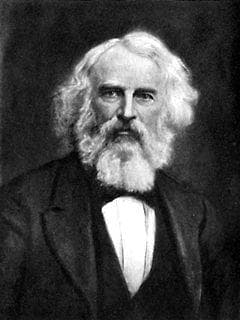
Henry Wadsworth Longfellow was an American poet and educator. His original works include the poems "Paul Revere's Ride", "The Song of Hiawatha", and "Evangeline". He was the first American to completely translate Dante Alighieri's Divine Comedy and was one of the fireside poets from New England.
Similar books
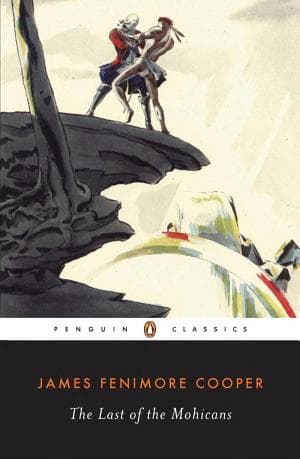
- The Last of the Mohicans
James Fenimore Cooper
3.7 (89k) average on GoodreadsHistorical FictionCooper's novel, while also a product of its era and prone to idealization, attempts a more direct engagement with the conflicts between European settlers and Native American tribes. It presents more individualized Native American characters, even if romanticized, whereas Hiawatha often functions as a singular, archetypal figure in Longfellow's poem. Cooper's work, though flawed, delves more into the complexities of inter-tribal and settler-indigenous relations than Longfellow's more mythic, less conflict-driven narrative.
- Love Medicine
Louise Erdrich
4.0 (22k) average on GoodreadsLiterary FictionErdrich's novel, written by an Ojibwe author, provides a stark contrast by offering authentic, multifaceted, and often challenging portrayals of contemporary Native American life, history, and spirituality. Unlike Longfellow's romanticized and external perspective, Erdrich's work is grounded in lived experience and cultural specifics, demonstrating the richness and resilience of indigenous communities from an internal viewpoint, highlighting the significant difference between appropriation and genuine representation.
- Harry Potter and the Sorcerer's Stone
J.K. Rowling
4.5 (7M) average on GoodreadsFantasyRescued from a miserable life under the stairs, an orphaned boy discovers he's a wizard destined for a magical school, where he uncovers a dangerous secret tied to the dark wizard who murdered his parents.
- The Hunger Games
Suzanne Collins
4.3 (6.4M) average on GoodreadsFantasyIn a future where children fight to the death on live television, Katniss Everdeen volunteers for the arena, turning a death sentence into a fight for survival and a spark of rebellion.
- 1984
George Orwell
4.2 (3.1M) average on GoodreadsPoliticsIn a future where surveillance and thought control are absolute, a man's search for truth clashes with the Party, showing that hope can be a form of rebellion.
- Divergent
Veronica Roth
4.2 (2.9M) average on GoodreadsFantasyIn a society divided by virtues, a sixteen-year-old's difference from the norm starts a rebellion that threatens her world.





Enjoyed the summary?
A summary gives you the shape of the book. The book itself has the detail, the examples and the voice.
Find The Song of Hiawatha on AmazonAs an Amazon Associate, BookBrief earns from qualifying purchases. How we're funded