

Core Idea
- Difficulty
- Medium
- Read it if
- You want to understand the historical roots of racial inequality, the psychological impact of oppression, and a foundational text in African American literature and civil rights thought.
- Skip it if
- You are looking for a light read or a purely historical account without philosophical depth and literary prose.
Key Takeaways from The Souls of Black Folk
The Veil of Double Consciousness
Experiencing the world through two lenses: American and Negro.
Du Bois introduces the concept of 'double consciousness' to describe the unique psychological burden of Black Americans. This is not just about being aware of one's race. It is about the constant inner conflict of seeing oneself as an American citizen striving for national ideals, and also as a 'Negro' viewed through the biased eyes of a white-led society. This dual view creates a deep sense of 'twoness' – an ongoing inner struggle between these two opposing ideas. It is a constant negotiation of identity, where one's self-perception is linked to external, often negative, societal views. This 'veil' separates Black people from white society and also distorts their self-perception, making true self-knowledge and integration difficult.
“It is a peculiar sensation, this double-consciousness, this sense of always looking at one's self through the eyes of others, of measuring one's soul by the tape of a world that looks on in amused contempt and pity.”
In the book: The entire opening chapter, 'Of Our Spiritual Strivings,' lays the groundwork for this concept, detailing the internal turmoil and the inability to merge one's 'double self' into a truer, unified identity.
Try this: To understand the lingering psychological impacts of systemic racism, recognize how marginalized groups often navigate societal expectations while maintaining their authentic identity, and advocate for spaces where individuals can express their full selves without judgment.
Related ideas: double-consciousness, racial-identity, psychological-burden
The Problem of the Color Line
The central issue of the 20th century, defining global and domestic conflicts.
Du Bois states that the 'color line' is the main challenge of the 20th century, not just for America but globally. This is not just about racial prejudice. It is about the systemic division, oppression, and economic exploitation based on race that exists in societies worldwide. He argues that this racial hierarchy supports international relations, colonial expansion, and domestic policy, shaping power structures and controlling access to resources and opportunities. His insight in identifying this as the defining conflict of the era was important, anticipating the decolonization movements and civil rights struggles that would mark the century. It shows how race is not a superficial trait but a deep organizing principle of societies.
“The problem of the Twentieth Century is the problem of the color-line, – the relation of the darker to the lighter races of men in Asia and Africa, in America and the islands of the sea.”
In the book: The famous opening lines of the book's preface and the subsequent essays, particularly 'Of the Dawn of Freedom,' where he connects the struggles of freedmen to broader global racial dynamics.
Try this: Analyze current global conflicts and domestic inequalities through the lens of racial hierarchy and historical power imbalances. Advocate for policies that dismantle systemic racism rather than just address individual prejudice.
Related ideas: color-line, systemic-racism, global-inequality
Critique of Booker T. Washington
Accommodation vs. agitation: two paths for Black liberation.
Du Bois offers a strong and controversial criticism of Booker T. Washington's 'Atlanta Compromise' philosophy. While acknowledging Washington's practical achievements, Du Bois argues that his focus on job training, economic independence, and a temporary halt to demands for civil and political rights was a dangerous surrender. Du Bois believed this strategy asked Black people to give up their dignity, accept a lower status, and delay the fight for basic rights, thus continuing oppression instead of ending it. He saw it as a path that would lead to being denied voting rights, the legal creation of a separate civil status for Black people, and the systematic removal of support for Black students' higher education. This criticism was a key moment, dividing Black leaders and setting the stage for more assertive protest movements.
“Mr. Washington's programme practically accepts the inferiority of the Negro races. And Mr. Washington's programme for the Negro, taken in its entirety, is a programme of submission.”
In the book: Chapter III, 'Of Mr. Booker T. Washington and Others,' is entirely dedicated to this critique, detailing the three concessions Washington made and their detrimental effects.
Try this: Evaluate leadership strategies within social justice movements: balancing pragmatic compromise with unwavering demands for fundamental rights. Understand the historical tension between gradualism and immediate, forceful advocacy.
Related ideas: booker-t-washington, atlanta-compromise, black-leadership-dispute
The Importance of Higher Education
Cultivating the 'Talented Tenth' to uplift the race.
Opposing Washington's focus on job training, Du Bois supports the important role of higher education and the development of a 'Talented Tenth' – a leadership group of educated Black individuals. He argues that real progress for the race depends not only on manual labor but on intellectual growth, critical thinking, and the ability to speak up for and fight for rights. This educated group would serve as guides, thinkers, and advocates, challenging white supremacy intellectually and inspiring the wider Black community. For Du Bois, a liberal arts education was not a luxury but a necessity for developing complete human beings capable of leadership and self-determination, essential for both individual success and collective improvement. This was a direct challenge to the idea that Black people were only suited for manual labor.
“The function of the Negro college, then, is to develop men. It is not to make men, but to take the material of Negro manhood and out of it to make that which shall be a splendid human being.”
In the book: Chapter VI, 'Of the Training of Black Men,' explicitly details his arguments for classical education and the role of colleges like Fisk and Atlanta University.
Try this: Advocate for equitable access to quality higher education for all, recognizing its role in fostering leadership and critical thinking within marginalized communities. Support institutions dedicated to the liberal arts and intellectual development.
Related ideas: talented-tenth, higher-education, black-intellectualism
The Enduring Legacy of Slavery
Freedom's dawn reveals new forms of oppression.
Du Bois carefully describes the struggles of Black Americans after Emancipation, showing that the end of slavery did not bring true freedom but a new period of systemic oppression. He details the broken promises of Reconstruction, the rise of Jim Crow laws, sharecropping that resembled forced labor, and the widespread violence and denial of rights that kept Black people in economic and political subjugation. He argues that the nation, especially the South, failed to address the root causes and aftermath of slavery, leading to a 'new form of slavery' where economic dependence replaced chattel bondage. This section clearly shows that legal freedom does not automatically mean liberation or equality.
“The Nation has not yet found peace from its sins; the freedman has not yet found in freedom his promised land.”
In the book: Chapters II, 'Of the Dawn of Freedom,' and IV, 'Of the Meaning of Progress,' vividly recount the failures of Reconstruction and the subsequent entrenchment of Jim Crow, using specific examples from the Freedmen's Bureau and economic exploitation.
Try this: Recognize that historical injustices have long-lasting, structural impacts that require ongoing intervention. Support policies that address reparations, economic justice, and dismantle contemporary forms of systemic oppression rooted in historical wrongs.
Related ideas: slavery-legacy, reconstruction-failure, jim-crow
The Power of Story and Song
Spirituals as the soul of a people, preserving history and hope.
Du Bois dedicates a strong chapter to the 'sorrow songs' – Negro spirituals – seeing them not just as folk music but as important historical documents, philosophical expressions, and the 'clear message of the slave to the world.' He argues that these songs capture the suffering, strength, faith, and hopes of an enslaved people, serving as a unique and valuable cultural contribution to America and humanity. They represent a collective memory, a form of resistance, and a source of spiritual support that sustained Black communities through great hardship. By analyzing their themes of sorrow, hope, and eventual freedom, Du Bois raises these songs to a central place in American cultural heritage, showing their complex emotional and intellectual depth.
“They are the articulate message of the slave to the world... The songs are at once the most beautiful expression of human experience born this side the seas, and the sole American music.”
In the book: Chapter XIV, 'Of the Sorrow Songs,' delves into the origins and meaning of spirituals like 'Swing Low, Sweet Chariot' and 'Go Down, Moses,' analyzing their lyrical content and emotional impact.
Try this: Appreciate and preserve the cultural expressions of marginalized communities as vital historical records and sources of resilience. Understand how art and music can be powerful tools for protest, healing, and identity formation.
Related ideas: sorrow-songs, negro-spirituals, cultural-preservation
The Tragic Cost of Segregation
Beyond legal separation, the spiritual and human toll.
Du Bois clearly shows the deep human cost of segregation. This extends beyond just legal separation to its damaging spiritual and psychological effects. He illustrates how the 'worlds within a world' – the white and Black communities – are not just physically separate but emotionally and intellectually alienated, leading to misunderstanding and resentment. This forced separation harms the growth of both races, denying white society the richness of Black culture and talent, and denying Black individuals full participation and recognition. He shows how segregation creates ignorance, perpetuates stereotypes, and prevents the development of a unified, empathetic society. This leads to unnecessary suffering and lost opportunities for collective progress. The tragedy is in the wasted potential and the constant conflict caused by this artificial divide.
“The worlds within a world, the white world and the black world... touch but at few points, and then but to jar.”
In the book: Throughout the essays, Du Bois provides vignettes and observations of daily life under segregation, such as the experiences in the Black Belt of Georgia, illustrating the economic and social isolation.
Try this: Actively seek to dismantle segregated spaces and mindsets, fostering genuine cross-cultural understanding and collaboration. Recognize that segregation harms all members of society, not just the marginalized.
Related ideas: segregation, social-alienation, human-cost-of-racism
The Quest for Self-Realization
Beyond freedom, the struggle for full human recognition.
At its heart, 'The Souls of Black Folk' is a deep look at the search for self-realization and dignity when facing systemic oppression. Du Bois argues that the ultimate goal is not just legal freedom or economic success, but for Black individuals to reach their full human potential – to be 'a man' in every sense – without the constant burden of racial prejudice. This involves resolving the 'twoness' of double consciousness and affirming one's identity as both a Black person and an American, without having to give up one for the other. It is a call for recognizing Black humanity, intelligence, and worth, demanding the right to define oneself rather than be defined by the dominant society. This search is a spiritual and existential fight for true freedom.
“He simply wishes to make it possible for a man to be both a Negro and an American, without being cursed by his birth and blood.”
In the book: The recurring theme throughout 'Of Our Spiritual Strivings' and 'Of the Meaning of Progress' emphasizes the yearning for self-expression and recognition beyond the confines of racial stereotypes.
Try this: Support initiatives that empower marginalized individuals to define their own identities and narratives. Challenge systems that limit self-expression and human flourishing based on race or other identity markers.
Related ideas: self-realization, human-dignity, identity-struggle
The Role of Empathy and Understanding
Bridging the racial divide through shared humanity.
While Du Bois strongly criticizes white supremacy, his work ultimately calls for recognizing shared humanity as the way to resolve the 'color line.' He believes that true progress requires both Black and white Americans to look past superficial racial differences and acknowledge their common traits. Through moving stories and analytical essays, he tries to make the 'souls' of Black folk visible and understandable to a white audience, hoping that understanding will create empathy and end prejudice. He implies that failing to see Black people as fully human leads to continued injustice, and that only through genuine empathetic engagement can a truly just and unified society be built. This is a call for a deep change in moral perspective.
“Only in the ultimate common humanity of all men can the problem of the color-line be solved.”
In the book: The entire structure of the book, presenting essays that blend sociological analysis, historical accounts, and deeply personal narratives, aims to foster understanding and empathy in the reader.
Try this: Engage in active listening and learning from diverse perspectives. Promote dialogue and educational initiatives that highlight shared human experiences and challenge prejudiced assumptions across racial and cultural lines.
Related ideas: empathy, shared-humanity, racial-reconciliation
The Weight of the Dead
History's inescapable influence on the present.
Du Bois understands that history is not a static past but a dynamic, living force that constantly shapes the present. He argues that the legacy of slavery, Reconstruction, and ongoing racial injustice are not isolated events but deeply embedded structures that influence current society, politics, and individual minds. The 'weight of the dead' refers to the lasting impact of past wrongs and the collective experiences of generations. This view challenges the idea that simply moving forward without confronting historical truths can lead to real progress. Instead, he insists on a thorough and honest examination of history as a necessary step for understanding present conditions and building a more just future. The past is not just remembered; it is actively lived and relived in the present realities of Black Americans.
“The world was thinking of itself as an entity, an organization, a something that was growing and developing, and that it had a past which was not dead but living.”
In the book: His detailed historical accounts of the Freedmen's Bureau, the Black Codes, and the lives of specific individuals like John Jones, all demonstrate how past policies and events directly shaped the current plight of Black communities.
Try this: Actively study and confront uncomfortable historical truths to understand contemporary social issues. Recognize how historical injustices continue to manifest in systemic inequalities and advocate for policies that address these deep-rooted legacies.
Related ideas: historical-legacy, present-past, collective-memory
The Souls of Black Folk Quotes
“The problem of the Twentieth Century is the problem of the color-line.”
“It is a peculiar sensation, this double-consciousness, this sense of always looking at one's self through the eyes of others, of measuring one's soul by the tape of a world that looks on in amused contempt and pity. One ever feels his two-ness,—an American, a Negro; two souls, two thoughts, two unreconciled strivings; two warring ideals in one dark body, whose dogged strength alone keeps it from being torn asunder.”
“The shadow of a mighty Negro problem fell upon the land. It came as a strange thing to most of the nation, and yet every thoughtful student of history knew that it was coming; knew that it must come.”
“To be a poor man is hard, but to be a poor race in a land of dollars is the very bottom of hardships.”
“The training of the schools we need; the training of the industrial school we need; the training for leadership we need; all these we need, but above all, we need the spirit of love and sympathy, the spirit of human brotherhood, the spirit of the Golden Rule.”
“The way for a people to gain their rights is not by voluntarily throwing them away and trusting to the haphazard of fortune, but by incessant agitation, by persistent demand, and by thorough organization.”
“The Negro race, like all races, is going to be saved by its exceptional men.”
“The history of the American Negro is the history of this strife,—this longing to attain self-conscious manhood, to merge his double self into a better and truer self.”
“Little of beauty has America given the world save the rude grandeur God himself stamped on her virgin bosom; the endless sweep of forests, the majesty of mountains, and the rugged rivers. But even this was not of her doing. She has been the world's pioneer in an industrial civilization, and she has boasted her triumph; but her triumph is for the few and the cost for the many.”
“Work, culture, liberty,—all these we need, not singly but together, not successively but simultaneously, for the comprehensive development of the Negro.”
“The child of slave parents, he had in him the something of the 'sorrow-song'—the deep, unutterable sadness of the world.”
“Daily the Negro is coming more and more to look upon law and justice, not as an instrument to protect him, but as a weapon to punish him.”
“Through it all, the spirituals have been the most original and beautiful expression of human emotion. They are the articulate creation of the Negro's soul.”
“Here, then, is the American problem: not to make men, but to make men free.”
“He simply wishes to make it possible for a man to be both a Negro and an American, without being cursed and spit upon by his fellows, without having the doors of Opportunity closed in his face.”
Quiz
10 questions on the main ideas. Each answer comes with a short explanation.
Question 1
Which specific concept did W.E.B. Du Bois introduce in 'The Souls of Black Folk' to describe the internal conflict experienced by African Americans living in a society that devalues their race?
- The Talented Tenth
- Double Consciousness
- The Veil
- The Color Line
Show answer
B. Double Consciousness Du Bois famously articulated the concept of 'double consciousness' in 'The Souls of Black Folk,' describing the peculiar sensation of always looking at oneself through the eyes of others, of measuring one's soul by the tape of a world that looks on in amused contempt and pity.
Question 2
What was Du Bois's primary criticism of Booker T. Washington's strategy of accommodation, as outlined in 'The Souls of Black Folk'?
- It focused too much on industrial education and not enough on agricultural training.
- It advocated for immediate social equality, which Du Bois believed was unrealistic.
- It implicitly accepted black inferiority and would perpetuate black oppression by surrendering political rights and higher education.
- It failed to recognize the economic contributions of black laborers.
Show answer
C. It implicitly accepted black inferiority and would perpetuate black oppression by surrendering political rights and higher education. Du Bois argued that Washington's strategy of accommodating white supremacy, by focusing solely on economic self-sufficiency and deferring demands for political rights and higher education, would ultimately perpetuate black oppression and disenfranchisement.
Question 3
In the chapter 'Of Our Spiritual Strivings,' Du Bois describes 'the Veil' as a metaphor for:
- The hidden strength and resilience of the African American community.
- The literal segregation laws that physically separated black and white communities.
- The psychological and social barrier that separates black and white people, preventing true understanding and full participation for African Americans.
- The protective barrier that African Americans built to shield themselves from white racism.
Show answer
C. The psychological and social barrier that separates black and white people, preventing true understanding and full participation for African Americans. The Veil, as presented by Du Bois, is a profound metaphor for the racial divide that obscures true understanding between races and prevents African Americans from seeing themselves, and being seen, fully and without prejudice.
Question 4
Which of the following best describes Du Bois's argument regarding the importance of higher education for African Americans, particularly for 'The Talented Tenth'?
- Higher education was unnecessary, as industrial training was sufficient for economic uplift.
- A select group of highly educated black leaders was essential to uplift the entire race through intellectual and cultural development.
- Higher education should be pursued only after achieving full political rights.
- All African Americans should receive a classical university education immediately.
Show answer
B. A select group of highly educated black leaders was essential to uplift the entire race through intellectual and cultural development. Du Bois strongly advocated for the higher education of a 'Talented Tenth' – a leadership class within the black community – believing that these educated individuals were crucial for the intellectual, cultural, and political advancement of the entire race.
Question 5
In 'The Souls of Black Folk,' Du Bois writes, 'The problem of the Twentieth Century is the problem of the color-line.' What specific aspect of this 'color-line' was he primarily referring to?
- The geographical division between the Northern and Southern states.
- The global division between colonial powers and colonized peoples.
- The racial segregation and discrimination that permeated all aspects of life for non-white people, particularly African Americans.
- The economic disparity between wealthy industrialists and the working class.
Show answer
C. The racial segregation and discrimination that permeated all aspects of life for non-white people, particularly African Americans. Du Bois's declaration about the 'color-line' refers to the pervasive racial segregation, discrimination, and prejudice that defined the experiences of people of color, especially African Americans, in the early 20th century, both domestically and internationally.
Question 6
Du Bois uses spirituals, or 'sorrow songs,' throughout the book. What is their primary function in the narrative and thematic development of 'The Souls of Black Folk'?
- To provide lighthearted musical interludes between serious essays.
- To demonstrate the musical talent of African Americans to a white audience.
- To serve as historical documents, cultural expressions, and profound insights into the suffering, hope, and spiritual resilience of African Americans.
- To illustrate the direct influence of European classical music on African American culture.
Show answer
C. To serve as historical documents, cultural expressions, and profound insights into the suffering, hope, and spiritual resilience of African Americans. The spirituals are integral to the book, serving not just as cultural artifacts but as deep expressions of the African American soul, conveying history, sorrow, resilience, and hope, often preceding each chapter to set the tone and theme.
Question 7
In 'Of the Meaning of Progress,' Du Bois recounts his experiences teaching in rural Tennessee. What specific observation did he make about the impact of education on the black children he taught?
- Education immediately led to economic prosperity for their families.
- While education offered hope and broadened horizons, it also highlighted the stark limitations and persistent poverty they faced.
- The children were uninterested in formal education, preferring agricultural work.
- Education allowed them to escape the South entirely and find success in the North.
Show answer
B. While education offered hope and broadened horizons, it also highlighted the stark limitations and persistent poverty they faced. Du Bois observed that while education brought light and new possibilities to his students, it also painfully exposed the deep-seated poverty and lack of opportunity that surrounded them, making their future uncertain despite their newfound knowledge.
Question 8
Du Bois argues that true freedom for African Americans requires not just economic advancement but also what specific combination of rights and opportunities?
- The right to own land, access to vocational training, and the right to bear arms.
- Political power (suffrage), civil rights (equality before the law), and the opportunity for higher education.
- Segregated but equal facilities, black-owned businesses, and community self-governance.
- Reparations for slavery, guaranteed employment, and international recognition.
Show answer
B. Political power (suffrage), civil rights (equality before the law), and the opportunity for higher education. Du Bois fundamentally disagreed with Washington's emphasis solely on economic self-sufficiency, asserting that true freedom necessitated political power (the ballot), civil equality (civic equality), and access to higher education.
Question 9
The chapter 'Of the Coming of John' tells the story of a young black man from Georgia who goes North for education. What is the tragic outcome of John's return home, and what does it symbolize for Du Bois?
- John returns to find his community has embraced white supremacy, symbolizing the futility of individual education in the face of systemic oppression.
- John is rejected by his own community for adopting Northern ways, symbolizing the internal divisions within the black community.
- John is unable to apply his education due to racial barriers and ultimately kills a white man in self-defense, symbolizing the destructive clash between educated black aspirations and entrenched white racism.
- John successfully reforms his community and becomes a respected leader, symbolizing the triumph of education over ignorance.
Show answer
C. John is unable to apply his education due to racial barriers and ultimately kills a white man in self-defense, symbolizing the destructive clash between educated black aspirations and entrenched white racism. The tragic story of John symbolizes the profound challenges faced by educated African Americans returning to the South. His inability to find a place for his talents and his violent confrontation highlight the destructive nature of the 'color-line' and the impossibility of individual success without broader societal change.
Question 10
In 'The Souls of Black Folk,' Du Bois challenges the prevailing narrative of 'Negro inferiority' by presenting what core argument about the inherent capabilities and potential of African Americans?
- African Americans are inherently superior in artistic and musical talents.
- African Americans possess the same inherent intellectual and moral capabilities as any other race, and their perceived 'inferiority' is a product of systemic oppression and lack of opportunity.
- African Americans are uniquely suited for agricultural and industrial labor.
- African Americans are naturally more resilient and adaptable than other races.
Show answer
B. African Americans possess the same inherent intellectual and moral capabilities as any other race, and their perceived 'inferiority' is a product of systemic oppression and lack of opportunity. A central argument throughout the book is that African Americans are not inherently inferior, but rather their potential and development have been stifled by the 'Veil' of racial prejudice, discrimination, and the denial of equal opportunities, especially in education and political participation.
The Souls of Black Folk FAQ
What is the main argument of W.E.B. Du Bois's 'The Souls of Black Folk'?
'The Souls of Black Folk' argues that African Americans are denied their inherent human rights and that accommodation to white supremacy, as advocated by Booker T. Washington, will only perpetuate their oppression. Du Bois asserts the necessity of aggressive protest and self-respect in the struggle for equality.
What is 'double consciousness' as introduced in 'The Souls of Black Folk'?
Double consciousness is a psychological concept describing the internal conflict experienced by subordinated groups in an oppressive society. Du Bois explains it as the sensation of 'always looking at oneself through the eyes of others,' leading to a fragmented sense of identity for African Americans.
How did 'The Souls of Black Folk' influence the Civil Rights Movement?
The book profoundly influenced the Civil Rights Movement by providing a powerful intellectual foundation for black protest and directly challenging the prevailing accommodationist strategies. Its emphasis on political rights, higher education, and cultural identity helped shape the agenda for future activism and leadership.
Does Du Bois's critique of Booker T. Washington still hold relevance today?
Du Bois's critique of Booker T. Washington, particularly regarding strategies for racial uplift, remains relevant in discussions about socio-economic empowerment versus political rights. It highlights enduring debates on how best to achieve equality and justice for marginalized communities.
What is the significance of the veils metaphor in the book?
The veil metaphor represents the racial barrier that separates black and white worlds, preventing true understanding and equality. It also signifies the limited perspective white society has of black life and the unique insight African Americans gain by living behind this barrier.
How is 'The Souls of Black Folk' different from Booker T. Washington's 'Up From Slavery'?
'The Souls of Black Folk' directly opposes the philosophy presented in 'Up From Slavery.' While Washington advocated for economic self-sufficiency and industrial education as a path to gradual acceptance, Du Bois argued for immediate political rights, higher education, and direct protest against racial injustice.
What role does education play in Du Bois's vision for black advancement?
Du Bois champions higher education for African Americans, particularly for a 'Talented Tenth' who would become leaders and intellectuals. He believed a liberal arts education was crucial for developing critical thought, cultural identity, and effective advocacy, contrasting with Washington's focus on vocational training.
Is 'The Souls of Black Folk' considered a work of history, sociology, or philosophy?
While 'The Souls of Black Folk' is a foundational work in African-American literature, it seamlessly blends elements of history, sociology, and philosophy. It offers historical analysis, sociological observations on race relations, and philosophical reflections on identity, justice, and humanity.
About the author

W.E.B. Du Bois was an American sociologist, historian, and civil rights activist known for his influential writings on race and society. His notable works include "The Souls of Black Folk," which explores the African American experience, and "John Brown," a historical account of the abolitionist. Du Bois was a key figure in the early 20th-century struggle for civil rights and co-founded the NAACP.
Similar books
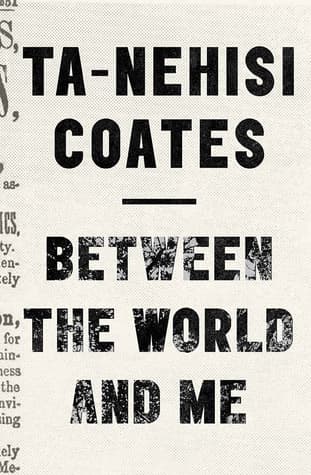
- Between the World and Me
Ta-Nehisi Coates
4.4 (235k) average on GoodreadsPoliticsA modern exploration of race in America, referencing Du Bois's concepts of the body and the 'Dream' in a contemporary context.
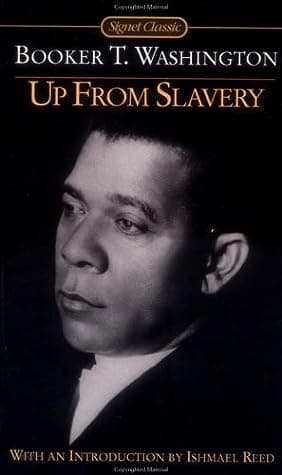
- Up from Slavery
Booker T. Washington
4.1 (26k) average on GoodreadsBiographyWashington's autobiography offers a stark contrast to Du Bois's philosophy. While Du Bois championed political rights and higher education for the 'Talented Tenth,' Washington advocated for economic self-sufficiency, industrial education, and a more gradualist approach to civil rights, believing that Black Americans should prove their worth to white society before demanding full equality. The Souls of Black Folk directly challenges Washington's 'Atlanta Compromise' as a dangerous capitulation, arguing it would perpetuate second-class citizenship. Du Bois sees Washington's approach as sacrificing the soul for material gain, while Washington views Du Bois's as impractical and divisive.
- 1984
George Orwell
4.2 (3.1M) average on GoodreadsPoliticsIn a future where surveillance and thought control are absolute, a man's search for truth clashes with the Party, showing that hope can be a form of rebellion.
- Animal Farm
George Orwell
4.0 (2.7M) average on GoodreadsPoliticsA farm animals' rebellion against humans turns into a pig-led dictatorship, showing how power corrupts and revolutionary ideals are betrayed.
- Freakonomics: A Rogue Economist Explores the Hidden Side of Everything
Steven D. Levitt
4.0 (709k) average on GoodreadsBusinessThis book uses economic principles to reveal the surprising incentives behind everything from drug dealing and real estate to cheating teachers and the decline of crime.
- I Am Malala: The Story of the Girl Who Stood Up for Education and Was Shot by the Taliban
Malala Yousafzai
4.1 (419k) average on GoodreadsPoliticsA teenage girl from a Taliban-controlled valley refuses to give up her books, becoming a global voice for education even after an assassination attempt.




Enjoyed the summary?
A summary gives you the shape of the book. The book itself has the detail, the examples and the voice.
Find The Souls of Black Folk on AmazonAs an Amazon Associate, BookBrief earns from qualifying purchases. How we're funded