

Synopsis
Covers the whole plot, including the ending.
- Difficulty
- Medium
- Pacing
- Slow
- Mood
- Introspective, Melancholy, Realistic, Thought-provoking
- Read it if
- You appreciate deep character studies, introspective male protagonists, and realistic portrayals of grief and everyday life.
- Skip it if
- You prefer fast-paced plots, clear-cut resolutions, or books with a strong focus on external action over internal thought.
The Sportswriter Plot Summary
Covers the whole plot, including the ending.
Easter Weekend Begins: Frank's Routine and Lingering Grief
The novel begins on Good Friday, 1984, in Haddam, New Jersey. Frank Bascombe, a former English teacher turned sportswriter, lives a seemingly ordinary life with his girlfriend, Vicki Arcent. Despite appearances, Frank is deeply affected by the recent past: his divorce from Anne and the death of their eldest son, Ralph, from Reye's Syndrome. His work for 'The New Jersey Monthly' offers a distraction but also highlights his detachment. He often thinks about his 'Existence Period' philosophy, a way to handle life's disappointments. His routine includes visiting his mother, which gives a brief, unsettling look into his past and his father's distant nature. The weekend starts with Frank feeling stuck and with an undercurrent of unresolved grief.
A Visit to the Divorced Wife and Uncomfortable Truths
Frank drives to his ex-wife Anne's house, supposedly to pick up their surviving child, Paul, for Easter weekend. The meeting is tense, filled with unspoken resentments and the heavy weight of Ralph's death. Anne, still hurt, expresses frustration with Frank's perceived emotional distance and his job, which she sees as an escape. She mentions her new relationship with Walter, a man Frank finds ordinary, further showing the distance in their current lives. Frank tries to connect with Paul, but the boy is quiet, a constant reminder of the family's broken state. This visit highlights the lasting damage to their family and Frank's inability to truly move on.
The Dinner Party and a Crisis of Identity
Frank and Vicki attend a dinner party at the home of his old friends, Herb and Sally Wallker. The evening quickly turns into a series of awkward interactions. Frank feels more and more out of place in the conversations. Herb, a successful lawyer, offers Frank a job, which Frank declines, holding onto his identity as a sportswriter despite his growing disappointment. During the party, Frank has a brief, uncomfortable encounter with an old acquaintance, Catherine, which shows his past romantic failures. The evening ends with Frank having a drunken emotional outburst, where he admits his deep unhappiness and emotional paralysis, surprising Vicki and his friends. This scene marks a turning point, showing the depth of his inner crisis.
Vicki's Departure and Frank's Isolation
After the bad dinner party, Vicki confronts Frank about his behavior and emotional unavailability. She expresses frustration with his inability to fully engage with life and his constant focus on the past. Despite Frank's attempts to apologize, Vicki decides she can no longer be with him. She packs her bags and leaves his house, leaving him alone. Her departure makes Frank feel even more isolated and lost, reinforcing his belief that he cannot maintain meaningful relationships. This event removes another layer of his superficial stability, forcing him to face his inner problems without a partner.
The Road Trip to Detroit and a Professional Obligation
With Vicki gone, Frank decides to continue with his sportswriting assignment: an interview with former football player Herb Nielson in Detroit. The long drive becomes a time for Frank to reflect on his life, his choices, and his journey. He stops at motels and diners, observing the temporary lives of others, finding a brief escape in the anonymity of the road. The journey is not just physical; it is an internal exploration of his past, his current worries, and his uncertain future. He thinks about sports, seeing it as a metaphor for life's struggles and triumphs, but also as a distraction from deeper truths.
The Interview with Herb Nielson and Shared Vulnerability
In Detroit, Frank meets Herb Nielson, a once-great football player whose career ended early due to injury. Nielson, now living a quiet, somewhat reduced life, shares his story of ambition, glory, and the realities of post-athletic existence. Frank, at first approaching the interview with his usual detached professionalism, finds himself surprisingly empathetic toward Nielson. He recognizes a shared sense of loss and the struggle to redefine oneself after a big life change. Nielson's openness allows Frank to briefly lower his own guard, creating a short, unexpected connection between them. This encounter subtly challenges Frank's cynical view, suggesting that shared experiences can form unexpected bonds.
A Chance Encounter and a Glimmer of Hope
After his interview, Frank meets a woman named Mary in a bar. Their conversation quickly deepens, and Frank is drawn to her directness and her own unspoken sadness. They spend the night together, and for a short time, Frank feels a genuine connection, an intimacy he has lacked since Vicki left. Mary, like Frank, seems to be dealing with her own losses and uncertainties. Their shared vulnerability creates a strong, though fleeting, bond. This encounter, though temporary, gives Frank a glimpse of possibility and a brief escape from his pervasive loneliness, reminding him of the potential for human connection.
The Return Home and a Renewed Perspective
Frank's return trip from Detroit is different from his journey there. The encounters and reflections of the past few days have subtly changed his perspective. He is still dealing with his losses and uncertainties, but there is a new sense of acceptance and a faint glimmer of hope. He thinks about his future, his career, and his relationships with slightly less cynicism. The vastness of the American landscape, which once mirrored his internal emptiness, now seems to offer a sense of continuity and possibility. He realizes that while he cannot escape his past, he can choose how he responds to it.
Reconciliation with Paul and a Father's Love
Upon returning to Haddam, Frank picks up Paul from Anne's house. The interaction is less strained than before. Frank makes a conscious effort to engage with Paul, to be present for him. They share a quiet moment, a small sign of reconciliation and lasting father-son love. Frank realizes the importance of his role as a father, especially after Ralph's death. This interaction, though brief, marks a step toward healing and a re-prioritization of what truly matters to Frank. It suggests that even amid his personal chaos, his love for his son remains a steady anchor.
A New Chapter: Embracing Uncertainty and the Future
The novel ends with Frank Bascombe having lost his girlfriend, his stable home life, and many of his old beliefs. However, instead of falling into despair, he experiences a subtle but deep change. He reflects on the Easter weekend, acknowledging the pain and the revelations it brought. He understands that while life remains uncertain and full of potential losses, he has an inherent resilience. He is not 'heroic' in the traditional sense, but he has survived, and in doing so, has found a way forward. He looks toward the future, not with grand optimism, but with a quiet determination to continue living, to observe, and to find meaning in the everyday.
The Sportswriter Characters
Frank Bascombe
Protagonist
A sportswriter grappling with profound grief, divorce, and an identity crisis.
Frank Bascombe is a 38-year-old former English teacher who became a sportswriter after the tragic death of his eldest son, Ralph, and his subsequent divorce from Anne. He is intelligent, introspective, and prone to philosophical musings, often using his 'Existence Period' theory to distance himself from emotional pain. Despite his witty observations and seemingly detached demeanor, Frank is deeply wounded, struggling with profound grief, loneliness, and a sense of aimlessness. He seeks meaning in the mundane and tries to make sense of the chaos of life.
Relationships: Vicki Arcent (Girlfriend, later ex-girlfriend; a source of companionship and superficial stability.); Anne Bascombe (Ex-wife; their relationship is strained by shared grief and unresolved resentments.); Ralph Bascombe (Deceased elder son; his death is the central trauma shaping Frank's life.); Paul Bascombe (Younger son; Frank's enduring connection and responsibility.); Herb and Sally Wallker (Long-time friends; represent a conventional life Frank feels alienated from.)
Vicki Arcent
Supporting
Frank's girlfriend, a pragmatic and emotionally direct woman.
Vicki is Frank's girlfriend at the beginning of the novel, a grounded and seemingly stable presence in his life. She works as a real estate agent and represents a more conventional, practical approach to life compared to Frank's introspective nature. She genuinely cares for Frank but struggles with his emotional detachment and his inability to fully commit or process his grief. She is direct and unafraid to confront Frank about his behavior, eventually reaching her breaking point.
Relationships: Frank Bascombe (Romantic partner; her departure highlights Frank's emotional barriers.)
Anne Bascombe
Supporting
Frank's ex-wife, deeply affected by their son's death and resentful of Frank's coping mechanisms.
Anne is Frank's ex-wife and the mother of Ralph and Paul. She is still profoundly grieving Ralph's death and carries a deep-seated resentment towards Frank, particularly his perceived emotional distance and his choice of career as a sportswriter, which she views as an escape. She is more outwardly emotional and direct in her pain than Frank, creating a stark contrast between their coping styles. Her new relationship with Walter highlights her attempt to move on, even as she remains tethered to her past with Frank.
Relationships: Frank Bascombe (Ex-husband; their relationship is defined by shared loss and mutual blame.); Ralph Bascombe (Deceased son; her grief is central to her character.); Paul Bascombe (Son; a source of shared responsibility with Frank.); Walter (New boyfriend; represents her attempt to rebuild her life.)
Ralph Bascombe
Mentioned
Frank and Anne's deceased eldest son, whose death is the central trauma of the novel.
Ralph is Frank and Anne's eldest son, who died tragically from Reye's Syndrome at a young age. Although he never appears in the present narrative, his death is the catalyst for nearly all the major events and character developments in the story. His absence is a pervasive presence, shaping Frank's worldview, his emotional detachment, his divorce, and his career change. He represents the profound and unanswerable question of loss and the fragility of life.
Relationships: Frank Bascombe (Father; his death profoundly alters Frank's life.); Anne Bascombe (Mother; her grief over his death is a defining characteristic.); Paul Bascombe (Brother; his absence impacts Paul's upbringing.)
Paul Bascombe
Supporting
Frank and Anne's surviving son, quiet and observant.
Paul is Frank and Anne's younger, surviving son. He is a quiet, observant child, often withdrawn, likely due to the trauma of his brother's death and his parents' subsequent divorce. He represents the innocent victim of adult suffering, navigating a fractured family life. Frank's interactions with Paul are often tender, revealing a deep paternal love and a desire to protect him from further pain. Paul is a tangible link to Frank's past and a significant motivation for his eventual shift towards hope.
Relationships: Frank Bascombe (Father; a crucial bond for Frank's emotional development.); Anne Bascombe (Mother; lives with Anne after the divorce.); Ralph Bascombe (Deceased brother; his absence impacts Paul's childhood.)
Herb Nielson
Supporting
A former football player interviewed by Frank, whose life mirrors Frank's own sense of loss.
Herb Nielson is a former professional football player whom Frank interviews in Detroit. Once a celebrated athlete, his career was cut short by injury, leaving him with a sense of lost glory and an uncertain future. He is introspective and articulate about his experiences, offering Frank a unique perspective on the nature of success, failure, and the struggle to redefine oneself after a significant life change. His story resonates with Frank, highlighting shared themes of ambition, loss, and the search for meaning.
Relationships: Frank Bascombe (Interview subject; their brief interaction fosters an unexpected understanding.)
Mary
Supporting
A mysterious woman Frank meets in Detroit, offering a fleeting moment of connection.
Mary is a woman Frank meets in a Detroit bar after his interview with Herb Nielson. She is enigmatic and carries her own unspoken sadness and experiences. Her directness and willingness to engage with Frank on a deeper level provide him with a brief but intense emotional and physical connection. She represents a momentary escape from his loneliness and a reminder of the possibility of intimacy, even with a stranger. Their encounter is fleeting but significant in helping Frank to feel less isolated.
Relationships: Frank Bascombe (Brief romantic/intimate connection; offers a temporary respite from his despair.)
Herb Wallker
Supporting
Frank's long-time friend, a successful lawyer who represents a more conventional path.
Herb Wallker is Frank's long-time friend and Sally's husband. He is a successful lawyer who embodies a more traditional, stable, and affluent lifestyle. He offers Frank a job at his law firm, indicating a desire to help his friend, but also highlighting the contrast between their chosen paths. Herb's presence at the dinner party serves to underscore Frank's feeling of alienation and his inability to conform to societal expectations of success and happiness.
Relationships: Frank Bascombe (Long-time friend; their relationship highlights their diverging paths.); Sally Wallker (Wife; they host the disastrous dinner party.)
The Sportswriter Themes
Grief and Loss
Grief and loss are central to 'The Sportswriter.' Frank Bascombe's life is defined by his son Ralph's death and his marriage's end. His career change, emotional distance, and philosophical thoughts are all ways to cope with deep, unaddressed sorrow. The novel shows how people deal with, or fail to deal with, immense tragedy, and how it shapes their identity and relationships. Ralph's absence is felt in every interaction, especially with Anne and Paul, showing how grief fractures a family. Frank's journey is about slowly acknowledging and accepting his loss, rather than escaping it.
“What I'm interested in is the 'Existence Period'--that time when you're just not doing much, living in a kind of limbo, not quite dead, not quite alive. It's the period after the big event, the divorce, the death, the job change, whatever it is. And you're just there, existing.”
Identity and Reinvention
Frank Bascombe's struggle with identity is a core theme. After losing his son and his marriage, he leaves his English teacher career to become a sportswriter, a job he sees as less emotionally demanding and more detached. This change is an attempt at reinvention, a way to escape his former self and the pain with it. However, he finds that changing jobs does not change who he is or ease his inner turmoil. The novel questions if true reinvention is possible, or if one's past always shapes the present. His meetings with Herb Nielson, a former athlete whose identity was tied to his sport, further explore this theme, highlighting the challenges of finding meaning after a big life change.
“I was an English teacher, but after Ralph died, I couldn't teach anymore. It all seemed too... close. Too personal. Sportswriting, that's different. It's about other people's lives, other people's struggles. It gives you a little distance.”
Emotional Detachment vs. Connection
Frank Bascombe often uses emotional detachment as a defense, a way to cope with life's overwhelming pain. He intellectualizes his experiences, creates theories like the 'Existence Period,' and often observes life rather than fully participating. This detachment, while giving a sense of control, ultimately isolates him, leading to his breakup with Vicki and the continuing distance with Anne. The novel explores the tension between wanting self-preservation through emotional distance and the basic human need for real connection. Frank's brief moments of intimacy, such as with Mary or his quiet reconciliation with Paul, show the deep relief and vulnerability that come with letting down his guard.
“I’m not a man given to grand pronouncements, nor am I one to wear my heart on my sleeve. My strategy has always been to observe, to analyze, to keep a certain distance. It’s safer that way.”
The Search for Meaning in the Mundane
Throughout the novel, Frank Bascombe tries to find meaning in the ordinary, often disappointing, parts of his life. His job, his daily routines, his observations of suburban life—all become canvases for his philosophical questions. He often elevates the mundane to a level of deep significance, searching for universal truths in small interactions, landscapes, and even sports statistics. This theme reflects a distinct American sensibility, where individual experience in seemingly unremarkable settings can hold deep personal and existential weight. Ultimately, Frank's journey suggests that meaning is not found in grand gestures or dramatic resolutions, but in the quiet endurance of existence itself and the acceptance of life's inherent ambiguity.
“Life is just a series of events, isn't it? And sometimes, in the most ordinary of them, you find something that just... clicks. A small, perfect piece of the puzzle.”
Plot Devices & Literary Techniques
First-Person Narration (Frank Bascombe's Voice)
The entire novel is filtered through Frank Bascombe's introspective, philosophical, and often detached perspective.
The use of first-person narration is crucial, as it provides direct access to Frank Bascombe's complex internal world. His voice is highly distinctive: witty, analytical, self-deprecating, and deeply philosophical. This device allows the reader to experience his grief, his intellectualizations, and his emotional detachment directly, fostering a deep, if sometimes uncomfortable, intimacy with the protagonist. It also means that the reader's understanding of other characters and events is entirely shaped by Frank's subjective lens, highlighting his isolation and his unique way of processing reality.
The Easter Weekend Setting
The novel's events unfold over a symbolic Easter weekend, representing themes of death, resurrection, and renewal.
Setting the novel during Easter weekend is a powerful symbolic choice. Easter, a time associated with death and resurrection, mirrors Frank's own journey. He begins the weekend in a state of profound emotional death and despair, having lost his son, his marriage, and his sense of purpose. By the end of the weekend, after a series of additional losses and confrontations, he experiences a subtle but significant 'resurrection' of spirit, a renewed capacity for acceptance and a glimmer of hope. The religious connotations underscore the existential nature of Frank's struggles and his search for meaning beyond the material.
The 'Existence Period' Philosophy
Frank's personal philosophical framework for understanding life's aftermath and coping with loss.
Frank's 'Existence Period' is a self-devised philosophical concept he uses to intellectualize his grief and detachment. It describes the period after a major traumatic event (like death or divorce) where one is 'just existing' rather than truly living. This device serves as a coping mechanism, allowing Frank to distance himself from raw emotion by framing his experience within a broader, seemingly objective framework. It highlights his intellectual approach to emotional problems and his struggle to reconcile his inner turmoil with his external observations of the world.
Sportswriting as Metaphor
Frank's profession as a sportswriter serves as a metaphor for his detached observation of life and his search for meaning.
Frank's job as a sportswriter is more than just a career; it's a profound metaphor for his approach to life. Sports, with their clear rules, defined winners and losers, and contained narratives, offer a sense of order and meaning that Frank struggles to find in his own chaotic life. Writing about other people's struggles and triumphs allows him to observe life from a distance, without having to fully engage his own emotions. It represents his desire for a structured, objective reality, even as he grapples with the messy, subjective nature of his personal experience.
The Sportswriter Quotes
“There is no such thing as a second act in American lives.”
“What you write is what you are, and you are what you write.”
“Happiness is a quality of your life, not a moment in it.”
“All you can do in life is be who you are. Some people will love you for it, some people will hate you for it. But all you can do is be who you are.”
“The past is a place you can always go back to, but you can’t stay there.”
“Life is just a series of things that happen.”
“Love, I’ve found, is a thing that keeps happening to you, whether you want it to or not.”
“Sometimes you have to give up on people. Not because you don’t care, but because they don’t.”
“The trick to not caring about what anyone thinks is to not care about what anyone thinks.”
“Being alone is not a condition, it’s a choice.”
“The world is full of people who are trying to find their way home, and don’t know where home is.”
“You can’t know what you want until you know what you don’t want.”
“All you have is your own life to live, and no one else is going to live it for you.”
“Memory is just a story we tell ourselves about the past.”
“The future is just the present, only later.”
Quiz
10 questions on the plot and the characters. Each answer comes with a short explanation.
Question 1
What is Frank Bascombe's profession at the beginning of the novel?
- English Teacher
- Sportswriter
- Real Estate Agent
- Journalist for a general newspaper
Show answer
B. Sportswriter Frank Bascombe works as a sportswriter, a career he has taken up after his preferred career ended.
Question 2
What significant personal tragedy has Frank Bascombe recently experienced involving his children?
- His younger son ran away from home.
- His daughter was seriously injured in an accident.
- His elder son died in a tragic accident.
- His children were taken away by his ex-wife.
Show answer
C. His elder son died in a tragic accident. One of Frank's major recent losses is the death of his elder son in a tragic accident.
Question 3
What is Frank Bascombe's age at the beginning of the novel?
- 32
- 45
- 38
- 50
Show answer
C. 38 The novel explicitly states that Frank Bascombe is thirty-eight years old.
Question 4
What holiday weekend does the story primarily take place over?
- Thanksgiving
- Christmas
- Easter
- Labor Day
Show answer
C. Easter The events of the novel unfold over an Easter weekend.
Question 5
How does Frank Bascombe initially feel about his situation, despite having a younger girlfriend and a job?
- Excited and optimistic
- Content and satisfied
- Pulled by inner despair and recent losses
- Indifferent and detached
Show answer
C. Pulled by inner despair and recent losses Despite aspects that might suggest optimism, Frank feels the pull of his inner despair and recent losses.
Question 6
What is the primary emotional state Frank Bascombe is grappling with at the novel's outset?
- Overwhelming joy
- Profound boredom
- Inner despair
- Burning ambition
Show answer
C. Inner despair The description highlights Frank's struggle with 'inner despair' at the beginning of the story.
Question 7
What is said to happen to 'all the remnants of his familiar life' during the Easter weekend?
- They are consolidated and strengthened.
- They are lost.
- They are completely reformed.
- They remain unchanged.
Show answer
B. They are lost. During the Easter weekend, Frank is described as losing 'all the remnants of his familiar life'.
Question 8
How does Frank Bascombe emerge at the end of the Easter weekend, according to the synopsis?
- Defeated and broken
- Unchanged and disillusioned
- Heroic with spirits soaring
- Angry and resentful
Show answer
C. Heroic with spirits soaring The synopsis states that Frank will 'emerge heroic with spirits soaring' by the end of the weekend.
Question 9
What is implied about Frank Bascombe's 'preferred career' before he became a sportswriter?
- It was very successful and he chose to leave it.
- It had recently ended, against his preference.
- It was a temporary job he never liked.
- He was still actively pursuing it alongside sportswriting.
Show answer
B. It had recently ended, against his preference. The text mentions that 'his preferred career has ended,' indicating it was a past profession he valued but no longer has.
Question 10
What does the synopsis suggest is the overarching theme of Frank Bascombe's journey during the novel?
- The pursuit of material wealth and success.
- The struggle with despair and the potential for personal renewal.
- The challenges of maintaining a younger romantic relationship.
- The importance of sports in a man's life.
Show answer
B. The struggle with despair and the potential for personal renewal. Frank's journey from 'inner despair' and losing 'all the remnants of his familiar life' to 'emerge heroic with spirits soaring' points to a theme of personal renewal through struggle.
The Sportswriter FAQ
What is the central conflict Frank Bascombe faces at the beginning of the novel?
Frank Bascombe, a 38-year-old sportswriter, is grappling with profound inner despair despite outwardly positive circumstances. He is haunted by the end of his preferred career as a novelist, the recent divorce from his wife X, and the tragic death of his elder son, Paul, which underpins much of his emotional turmoil.
Who is Vicki Arnett and what is her role in Frank's life?
Vicki Arnett is Frank's younger girlfriend, a flight attendant with whom he shares a casual but significant relationship. She represents a potential escape or a new beginning for Frank, though their dynamic also highlights his emotional detachment and his struggle to fully commit or connect after his past losses.
What significant event occurs early in the novel that sets Frank's weekend into motion?
Early in the novel, Frank has a bizarre encounter with a man named Walter, a former acquaintance, who pulls a gun on him in a bar. This unsettling incident, though quickly resolved, disrupts Frank's routine and forces him to confront the precariousness of his existence and the unexpected turns his life can take.
How does Frank's relationship with his ex-wife, X, impact his psychological state?
Frank's relationship with X is fraught with unresolved grief and guilt over their son Paul's death and the subsequent dissolution of their marriage. Their interactions, though infrequent, constantly remind Frank of his failures as a husband and father, contributing significantly to his pervasive sense of loss and inadequacy.
What specific 'remnants of his familiar life' does Frank lose over the Easter weekend?
Over the Easter weekend, Frank loses his job as a sportswriter due to an impulsive, poorly received column, and his relationship with Vicki Arnett ends. Furthermore, his brief, ill-fated attempt to reconnect with X also fails, effectively severing his ties to his immediate past and present circumstances.
What is the significance of the 'Annex' in Frank's memory?
The 'Annex' refers to the place where Frank's son Paul died from Reye's Syndrome, a detail that is revealed later in the narrative. This location is a deeply painful memory for Frank, representing the ultimate loss and the turning point after which his life began to unravel, fueling his ongoing guilt and grief.
How does Frank's former career as a novelist influence his perspective as a sportswriter?
Frank's past as a novelist gives him a more analytical and philosophical lens through which he views sports and life, often leading to introspective and sometimes cynical observations. He frequently feels that sportswriting is beneath his intellectual capabilities, yet it provides a necessary distraction from his deeper personal troubles.
What role does the character of Herb Wallner play in Frank's narrative?
Herb Wallner is a fellow sportswriter and Frank's colleague, who serves as a contrasting figure. Herb represents a more conventional, perhaps less introspective, approach to life and work, and his interactions with Frank highlight Frank's unique philosophical struggles and his alienation from typical male camaraderie.
How does Frank's encounter with the handicapped boy, Joey, affect him?
Frank's encounter with Joey, a boy with cerebral palsy, is a pivotal moment that forces him to confront his own self-pity and perceptions of suffering. Witnessing Joey's resilience and his mother's care provides Frank with a crucial perspective shift, moving him towards greater empathy and a re-evaluation of his own misfortunes.
In what ways does Frank's 'heroic' emergence manifest at the end of the novel?
Frank's 'heroic' emergence is not about grand gestures but about an internal shift. He accepts his losses, lets go of his past attachments, and embraces a future of uncertainty with a newfound sense of optimism and freedom. His decision to pursue a new path, free from his old life's constraints, signifies his personal triumph.
What is the significance of the Easter weekend setting for the novel?
The Easter weekend setting is symbolic, mirroring themes of death, resurrection, and new beginnings. For Frank, it represents a period of profound loss and purging, culminating in a spiritual rebirth where he sheds his old identity and embraces the possibility of a revitalized future, much like the Christian narrative of renewal.
How does Frank's relationship with his surviving son, Paul (the younger one, not the deceased), evolve?
The novel primarily focuses on Frank's internal struggles rather than his direct interaction with his younger son, Paul. However, the memory of his deceased son, also named Paul, casts a long shadow. Frank's journey towards acceptance at the end suggests a potential for a healthier, more present relationship with his living son in the future.
What is Frank's ultimate realization about happiness and despair by the novel's end?
Frank ultimately realizes that happiness isn't a permanent state but an ongoing choice, and despair is a self-imposed prison. He understands that while losses are real, dwelling on them prevents living. He chooses to embrace life's messiness and uncertainty, finding a form of peace in active engagement rather than passive suffering.
Does Frank truly achieve 'spirits soaring' or is it a temporary reprieve?
The 'spirits soaring' at the end suggests a genuine, if hard-won, shift in Frank's outlook. It's not necessarily a permanent end to all future struggles, but a profound and lasting change in his approach to life. He has shed the weight of his past and is ready to face the future with an open, optimistic, and unburdened heart.
How does Frank's narrative voice contribute to the novel's literary style?
Frank's narrative voice is characterized by its introspection, wit, and often self-deprecating humor, yet it carries a deep undercurrent of melancholy. His philosophical musings and detailed observations create a rich, literary style that allows readers to deeply engage with his internal world and intellectual struggles, making the novel distinctly literary fiction.
What is the significance of the recurring motif of 'houses' or 'homes' in Frank's thoughts?
Houses or homes frequently appear in Frank's thoughts as symbols of stability, belonging, and the life he once had but lost. His contemplation of buying a new house or the memories associated with his former home with X underscore his yearning for rootedness and his struggle to rebuild a sense of self and place after his life's upheavals.
How does Frank's relationship with his parents, particularly his father, inform his character?
Frank's relationship with his parents, especially his father, is hinted at through his reflections on their expectations and his own perceived failures. His father's pragmatic approach to life likely contrasts with Frank's more introspective and artistic inclinations, contributing to Frank's feelings of not quite fitting in or meeting conventional expectations.
Is Frank's transformation at the end believable, given his previous despair?
Frank's transformation is presented as believable because it's not a sudden cure but a culmination of intense self-reflection and a series of forced reckonings. By losing everything, he is stripped down to his core, allowing him to rebuild his perspective from a place of acceptance and self-awareness, making his newfound optimism feel earned.
About the author

Richard Ford is an American novelist and short story writer, best known for his novels featuring Frank Bascombe.
Similar books
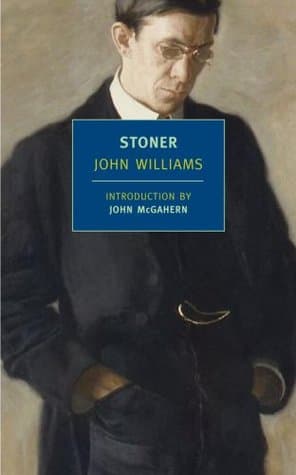
- Stoner
John Williams
4.3 (103k) average on GoodreadsLiterary FictionA quiet, profound character study of an ordinary man's life, marked by subtle tragedy and introspection.
- American Pastoral
Philip Roth
3.9 (65k) average on GoodreadsLiterary FictionExamines the unraveling of an American man's life and the search for meaning amidst personal and societal upheaval.
- Herzog
Saul Bellow
3.8 (19k) average on GoodreadsLiterary FictionBoth feature protagonists in intellectual and emotional crisis. However, Bellow's Herzog engages in overtly philosophical and grandiose epistolary ramblings, grappling with large intellectual concepts. Frank Bascombe, in contrast, deals with more quotidian anxieties and a profound, almost inarticulable, sense of personal loss, making his narrative more grounded in everyday sorrow rather than grand intellectual debate.
- The Old Man and the Sea
Ernest Hemingway
3.8 (831k) average on GoodreadsLiterary FictionA Cuban fisherman's long struggle with a giant marlin becomes a story of endurance and dignity, now retold for young adults with illustrations, phonetic guides, and writing prompts in Traditional Chinese.
- One Hundred Years of Solitude
Gabriel García Márquez
4.1 (753k) average on GoodreadsLiterary FictionThrough the multi-generational story of the Buendía family, a mythical town deals with the repeating patterns of time, love, and solitude, as the extraordinary mixes with the ordinary.
- The Goldfinch
Donna Tartt
3.9 (720k) average on GoodreadsLiterary FictionHaunted by a tragic explosion and clutching a stolen Dutch masterpiece, a young orphan navigates the opulent drawing rooms of New York and the gritty underbelly of the art world, desperately seeking connection and redemption amidst a life spiraling into crime and obsession.





Enjoyed the summary?
A summary gives you the shape of the book. The book itself has the detail, the examples and the voice.
Find The Sportswriter on AmazonAs an Amazon Associate, BookBrief earns from qualifying purchases. How we're funded