
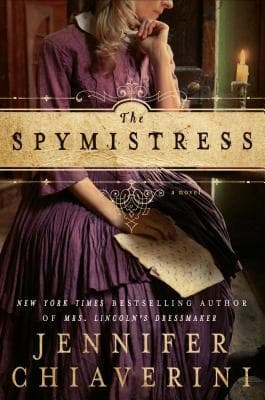
Synopsis
Covers the whole plot, including the ending.
- Difficulty
- Medium
- Pacing
- Moderate
- Mood
- Inspiring, Historical, Tense, Thought-provoking
- Read it if
- You enjoy meticulously researched historical fiction about extraordinary women, espionage, and the American Civil War.
- Skip it if
- You prefer fast-paced thrillers over detailed historical narratives or are sensitive to themes of slavery and war.
The Spymistress Plot Summary
Covers the whole plot, including the ending.
A Divided Loyalty
In April 1861, Richmond, Virginia, is caught up in secessionist excitement. Elizabeth Van Lew, a socialite from a wealthy slave-owning family, feels conflicted. Educated by Quakers in Philadelphia, Elizabeth has strong abolitionist and Unionist beliefs, unlike her Southern peers and even her family, including her mother, Eliza, and brother, John. When her state votes to secede, Elizabeth feels betrayed and morally compelled to support the Union. She begins to quietly help Union prisoners of war held in Richmond, starting with small acts of kindness that quickly become more significant acts of defiance against Confederate authority.
First Forays into Espionage
Elizabeth's initial charity for Union prisoners at Libby Prison develops into a strategic operation. She acts eccentric, even slightly mad, which allows her unusual freedom to visit the prison without much suspicion. While bringing food, clothing, and medicine, she contacts prisoners, especially Colonel Abel Streight, a high-ranking Union officer. She uses these visits to smuggle in supplies, gather intelligence about Confederate troop movements and defenses, and relay messages. Her trusted former slave, Mary Bowser, often goes with her, helping with these secret activities.
Building the Richmond Underground
Seeing the need for a more organized effort, Elizabeth builds a network of loyal Unionists in Richmond. This secret group, known as the Richmond Underground, includes people like bakers, grocers, and even clerks working in Confederate government offices. She uses her social connections and her perceived 'harmlessness' to get information from Confederate officers and officials at society events. Her main goal is to establish reliable communication with the Union command outside Richmond and to help key Union prisoners, especially those with valuable military knowledge, escape.
The Libby Prison Escape
One of Elizabeth's most daring operations involves a large-scale escape from Libby Prison. Working with Union prisoners, including Colonel Streight, and her network outside, she helps dig a tunnel from the prison to a nearby warehouse. Her agents provide tools, maps, and civilian clothes, while Elizabeth distracts guards and provides important intelligence about their routines. The escape of over one hundred Union officers in February 1864 shocks the Confederacy and boosts Union morale. The Confederates are puzzled by the operation's sophistication, unable to trace it back to the seemingly harmless Miss Van Lew.
The Cipher and the Cipher Key
To keep her communications secure, Elizabeth creates a cipher system. She uses books as cipher keys, with specific words or phrases indicating the encryption method. This allows her to send vital intelligence — troop movements, supply depots, fortifications — to Union General Benjamin Butler and later to General Ulysses S. Grant. Her messages, often hidden in objects like hollowed-out eggs or sewn into clothing, are important for Union military strategy. The risk of discovery is constant, and the penalty for espionage is death, but Elizabeth remains determined, driven by her conviction.
Mary Bowser's Infiltration
In a clever strategic move, Elizabeth arranges for Mary Bowser, a highly intelligent former slave she had sent North for education, to work in Confederate President Jefferson Davis's household. Posing as an illiterate servant, Mary accesses sensitive documents, including military dispatches and war plans, which she reads and memorizes. She then relays this information to Elizabeth, who transmits it to Union command. Mary's ability to appear unassuming while being so intelligent makes her a valuable asset to the spy ring, giving unprecedented access to the highest levels of the Confederacy.
The Unmasking of 'Crazy Bet'
As the war continues and Union victories increase, largely due to intelligence from Richmond, Confederate authorities suspect a spy ring is operating in their capital. While Elizabeth's 'Crazy Bet' persona offers some protection, her consistent visits to Libby Prison and her known Unionist sympathies draw more attention. She endures searches of her home, threats, and social ostracism. Her family, especially her brother John, worries about her safety and their reputation, urging her to stop her dangerous activities, but Elizabeth refuses.
Richmond Falls
In April 1865, as the Union army under General Grant approaches Richmond, the Confederate capital falls. Elizabeth Van Lew, who stayed in the city throughout the war, sees the Union occupation. She immediately contacts Union forces, giving them maps and information about Confederate defenses and hidden caches. General Ulysses S. Grant recognizes her contributions, personally visiting her home and publicly acknowledging her as a vital asset to the Union cause. Her years of dangerous work are finally validated, though secretly by the Union high command.
Post-War Recognition and Poverty
After the war, President Grant appoints Elizabeth Van Lew as Postmistress of Richmond, an important political position for a woman then. This gives her a salary and some official recognition. However, her wartime activities make her unpopular among her fellow Richmonders, who see her as a traitor. She faces social ostracism and financial difficulties as her family's wealth decreases and her property taxes rise. Despite her service, she struggles to maintain her home and dignity, often relying on the kindness of former Union soldiers and her resilience.
A Legacy Undiscovered
Elizabeth Van Lew lives her later years in Richmond, mostly isolated and poor. Her extraordinary wartime service remains largely unknown to the public. She keeps detailed records and journals, documenting her spy activities, hoping that one day her true contributions would be recognized. She dies in 1900, still widely disliked in the South and mostly forgotten by the North. Her grave has a monument from friends in Massachusetts, but the full scope of her achievements as a Union spymistress would not be widely acknowledged until well into the 20th century, long after her death.
Principal Figures
Elizabeth Van Lew
Protagonist
A fiercely intelligent and courageous Unionist spy operating in Confederate Richmond.
Elizabeth Van Lew is a complex and compelling figure, born into a wealthy Richmond slave-owning family but holding fervent abolitionist and Unionist convictions. Educated in the North, she possesses a keen intellect, an iron will, and an unwavering moral compass. She is resourceful, audacious, and a master of deception, adopting a persona of eccentricity to mask her dangerous espionage activities. Her deep empathy for the suffering of Union prisoners fuels her determination, even in the face of immense personal risk and social ostracism.
Relationships: Eliza Van Lew (Mother, initially supportive but increasingly worried and critical of Elizabeth's dangerous activities.); John Van Lew (Brother, protective but often exasperated and embarrassed by Elizabeth's Unionist stance and perceived madness.); Mary Bowser (Trusted former slave and invaluable spy, a deep bond of mutual respect and shared conviction.); General Ulysses S. Grant (Union commander who recognizes and values Elizabeth's intelligence, forming a respectful alliance.)
Mary Bowser
Supporting
An educated former slave and brilliant spy who infiltrates Jefferson Davis's household.
Mary Bowser is a sharp, intelligent, and courageous woman, a former slave of the Van Lew family whom Elizabeth sent North for education. She returns to Richmond to become one of Elizabeth's most valuable assets. Mary possesses an exceptional memory and the ability to convincingly play the role of an illiterate servant, allowing her to gather critical intelligence from the highest echelons of the Confederate government. Her loyalty to Elizabeth and the Union cause is unwavering, and she demonstrates incredible bravery in her dangerous mission.
Relationships: Elizabeth Van Lew (Her former mistress and a trusted ally; they share a profound bond of respect and purpose.)
Eliza Van Lew
Supporting
Elizabeth's mother, torn between love for her daughter and loyalty to Southern society.
Eliza Van Lew is Elizabeth's mother, a Southern gentlewoman who embodies the societal norms of Richmond aristocracy. While she loves her daughter deeply, she struggles to reconcile Elizabeth's abolitionist and Unionist views with her own ingrained Southern loyalties. She is often concerned with appearances and the family's reputation, initially tolerating Elizabeth's eccentricities but growing increasingly fearful for her daughter's safety and the consequences of her actions. Her character highlights the internal divisions within Southern families during the war.
Relationships: Elizabeth Van Lew (Mother-daughter relationship, marked by love, concern, and ideological conflict.)
John Van Lew
Supporting
Elizabeth's brother, who tries to protect his sister while navigating Confederate society.
John Van Lew is Elizabeth's brother, a more conventional Southern gentleman who tries to uphold the family's social standing in Richmond. He is deeply concerned about Elizabeth's increasingly open Unionist sympathies and her dangerous spy activities, which he fears will bring ruin and disgrace upon them all. He frequently tries to dissuade her, torn between his love for his sister and his desire to protect the family from Confederate wrath. He represents the internal conflict faced by many Southerners who were not fully committed to the Confederate cause but feared defying it.
Relationships: Elizabeth Van Lew (Brother-sister relationship, marked by affection, concern, and frequent arguments over her dangerous activities.)
Colonel Abel Streight
Supporting
A Union officer who becomes a key contact and escapee from Libby Prison.
Colonel Abel Streight is a prominent Union officer captured by Confederates and imprisoned in Libby Prison. He becomes one of Elizabeth's most important contacts within the prison walls. Intelligent and resourceful, he works closely with Elizabeth to gather intelligence and orchestrate the daring mass escape. His interactions with Elizabeth highlight her ability to gain trust and organize complex operations. His escape is a major success for Elizabeth's spy ring and a significant blow to Confederate morale.
Relationships: Elizabeth Van Lew (Key collaborator and recipient of her aid and intelligence during his imprisonment.)
General Ulysses S. Grant
Supporting
The Union General who recognizes and utilizes Elizabeth's intelligence.
General Ulysses S. Grant is the commanding general of the Union Army. While he does not have extensive direct interaction with Elizabeth during the war, he is the ultimate recipient of much of her intelligence and recognizes its immense value. His character represents the Union high command's reliance on and appreciation for Elizabeth's clandestine efforts. His post-war appointment of Elizabeth as Postmistress of Richmond signifies his personal acknowledgment of her extraordinary service.
Relationships: Elizabeth Van Lew (Commander who receives and benefits from her intelligence reports, later showing her deep appreciation.)
Jefferson Davis
Antagonist (indirect)
President of the Confederate States of America.
Jefferson Davis is the President of the Confederate States of America, residing in Richmond. He serves as an indirect antagonist, representing the very authority Elizabeth is working to undermine. His household becomes a target for Elizabeth's most audacious intelligence operation, through Mary Bowser's infiltration. Davis is portrayed as a leader committed to the Confederacy, unaware of the sophisticated espionage operating right under his nose, which ultimately contributes to the Union's success.
Relationships: Mary Bowser (Unknowing employer of a spy within his own home.)
General Benjamin Butler
Mentioned
Early Union contact for Elizabeth's intelligence.
General Benjamin Butler is one of Elizabeth's initial high-level contacts in the Union command, based in Fort Monroe. He is instrumental in establishing the early lines of communication and acknowledging the value of the intelligence Elizabeth provides. His role highlights the initial challenges Elizabeth faced in convincing Union authorities of her sincerity and effectiveness, and his trust in her was crucial for the expansion of her spy network.
Relationships: Elizabeth Van Lew (Early recipient of her intelligence and a key contact for her network.)
Themes & Insights
Defiance and Moral Conviction
The novel shows defiance driven by strong moral conviction. Elizabeth Van Lew, despite her privileged background in a slave-holding society, defies every societal expectation to uphold her abolitionist and Unionist beliefs. Her actions, from helping prisoners to orchestrating complex spy operations, come from her moral compass, even when it means facing ostracism, danger, and death. This theme is clear in her refusal to abandon her cause, even as her family asks her to stop, and in her commitment to what she believes is right, regardless of the personal cost.
“There was no turning back. She had chosen her side, and she would stand by it, come what may.”
The Power of the Unseen and Undervalued
This theme shows how seemingly unimportant or overlooked people and methods can have great power. Elizabeth's 'Crazy Bet' persona allows her to operate openly, underestimated by Confederate authorities who dismiss her as a harmless eccentric. Similarly, Mary Bowser, a Black woman assumed to be illiterate, uses her invisibility in a white, slave-owning society to access the highest levels of Confederate power. The novel shows how the unseen work of these individuals, often outside conventional power structures, greatly affects the war's outcome, proving that true strength can be found where it is least expected.
“They saw a madwoman, a spinster, a fool. They never saw the spy.”
Sacrifice and Legacy
The novel portrays the sacrifices made for a cause and the often-delayed recognition of those sacrifices. Elizabeth Van Lew sacrifices her social standing, her family's reputation, her personal wealth, and her safety for the Union. Her efforts are mostly uncelebrated during her lifetime, and she dies in relative obscurity and poverty, disliked by her community. The theme explores the idea that true heroism often goes unrewarded immediately, emphasizing that some individuals fight for a legacy that will only be appreciated by future generations, showing the lasting nature of their contributions.
“Some deeds were done not for glory in the present, but for justice in the future.”
The Nature of Espionage and Deception
The novel shows the demanding and dangerous world of espionage. It details how Elizabeth Van Lew and her network constantly use deception, cunning, and careful planning to gather intelligence and avoid detection. This includes adopting false personas ('Crazy Bet'), creating cipher systems, and using unexpected agents like Mary Bowser. The theme highlights the psychological toll of living a double life, the constant fear of exposure, and the moral compromises sometimes needed to achieve a greater good. It also reveals the ingenuity and resourcefulness essential for successful secret operations in wartime.
“Every smile, every polite word, was a carefully constructed lie designed to protect the truth.”
Plot Devices & Literary Techniques
The 'Crazy Bet' Persona
Elizabeth's feigned eccentricity to deflect suspicion.
Elizabeth deliberately cultivates a reputation for being an eccentric, slightly mad spinster, earning her the nickname 'Crazy Bet.' This persona serves as a crucial protective layer for her espionage activities. Her perceived oddity allows her unusual freedom to visit Libby Prison, speak openly about Union sympathies (which are dismissed as the ramblings of a madwoman), and conduct her clandestine operations without raising immediate suspicion from Confederate authorities. It is a masterful use of misdirection, turning a potential vulnerability into her greatest asset.
Cipher Systems and Hidden Messages
Intricate methods for secure communication.
The use of complex cipher systems, often based on specific books as keys, is a vital plot device. These ciphers allow Elizabeth to transmit highly sensitive military intelligence to Union command without the messages being compromised if intercepted. This device not only adds an element of intrigue and intellectual challenge to the narrative but also underscores the extreme risks involved in her work. The careful concealment of messages within everyday objects further emphasizes the meticulous and dangerous nature of her espionage.
Infiltration via Domestic Service
Utilizing enslaved or formerly enslaved individuals to gain access.
The strategic placement of Mary Bowser, a highly intelligent former slave, as a servant in Jefferson Davis's household is a powerful plot device. This highlights the unique vulnerability of Confederate society, which relied heavily on enslaved labor, creating an opportunity for infiltration. By posing as an illiterate servant, Mary gains unparalleled access to sensitive information, demonstrating how those on the lowest rung of society could become powerful agents of change. It underscores the irony and ultimate fragility of the Confederate power structure.
The Libby Prison as a Microcosm
The prison serves as a focal point for Union suffering and Elizabeth's defiance.
Libby Prison is more than just a setting; it acts as a microcosm of the war's brutality and a catalyst for Elizabeth's actions. The suffering of the Union prisoners within its walls galvanizes Elizabeth's resolve, transforming her from an observer into an active participant in the conflict. The prison's existence provides a tangible, immediate focus for her humanitarian aid and her intelligence-gathering efforts, making it a central stage for some of her most daring operations, including the famous escape.
The Spymistress Quotes
“There are some things a lady doesn’t discuss, even with her husband.”
“A woman’s mind can be as sharp as any man’s, and often more cunning.”
“The truth is a weapon, and like any weapon, it must be wielded with care.”
“Sometimes, the most dangerous secrets are the ones we keep from ourselves.”
“War changes everything. It changes people, it changes principles, it changes the very air we breathe.”
“A good spy is like a shadow: present, but never truly seen.”
“Loyalty is a fickle thing, often swayed by fear or ambition.”
“The greatest victories are often won not on the battlefield, but in the drawing rooms and parlors.”
“To be underestimated is often an advantage, especially for a woman.”
“Every secret comes with a price, and sometimes that price is paid in loneliness.”
“Hope is a powerful motivator, but it can also be a dangerous delusion.”
“The past is never truly gone; it merely waits for the right moment to reappear.”
“In times of great peril, ordinary people are capable of extraordinary things.”
“The heart, like a fortress, can be breached by unexpected means.”
Quiz
10 questions on the plot and the characters. Each answer comes with a short explanation.
Question 1
Which city, despite being her native state's capital, did Elizabeth Van Lew actively work against during the Civil War?
- Charleston, South Carolina
- Richmond, Virginia
- Atlanta, Georgia
- New Orleans, Louisiana
Show answer
B. Richmond, Virginia Elizabeth Van Lew was born in Richmond, Virginia, and her convictions led her to defy the Confederate regime in her native state's capital.
Question 2
What was Elizabeth Van Lew's primary motivation for defying the Confederacy, despite her aristocratic Virginian background?
- A desire for personal fame and recognition
- Financial incentives from the Union
- Her convictions, shaped in part by her education
- Revenge against a Confederate officer
Show answer
C. Her convictions, shaped in part by her education The text states that 'Van Lew’s convictions compelled her to defy the new Confederate regime,' highlighting her moral stance.
Question 3
From what infamous Confederate prison did Elizabeth Van Lew orchestrate escapes?
- Andersonville Prison
- Libby Prison
- Belle Isle Prison
- Salisbury Prison
Show answer
B. Libby Prison The synopsis explicitly mentions that she 'orchestrated escapes from the infamous Confederate Libby Prison.'
Question 4
How did Elizabeth Van Lew often disguise her espionage activities related to prison escapes?
- As a traveling merchant
- Under the guise of humanitarian aid
- By pretending to be a Union sympathizer
- Through secret military orders
Show answer
B. Under the guise of humanitarian aid She 'orchestrated escapes from the infamous Confederate Libby Prison under the guise of humanitarian aid,' using a cover to mask her true intentions.
Question 5
Which of the following best describes Elizabeth Van Lew's social background and education?
- Working-class Northerner educated by Jesuits
- Slave-holding aristocracy from Richmond, Virginia, educated by Northern Quakers
- Rural Southerner with no formal education
- Middle-class abolitionist from New England
Show answer
B. Slave-holding aristocracy from Richmond, Virginia, educated by Northern Quakers The text states she was 'Born to slave-holding aristocracy in Richmond, Virginia, and educated by Northern Quakers,' creating a paradox.
Question 6
What was the extent of Elizabeth Van Lew's spy ring's reach within the Confederacy?
- Limited to only military outposts outside of Richmond
- Primarily focused on coastal defenses
- Vast, reaching clerks in Confederate War/Navy Departments and even Jefferson Davis's home
- Only within the immediate vicinity of Libby Prison
Show answer
C. Vast, reaching clerks in Confederate War/Navy Departments and even Jefferson Davis's home Her 'spy ring’s reach was vast, from clerks in the Confederate War and Navy Departments to the very home of Confederate President Jefferson Davis.'
Question 7
What does the phrase 'paradox of her time' refer to in relation to Elizabeth Van Lew?
- Her ability to speak multiple languages fluently.
- Her being a slave-holding aristocrat from Virginia who defied the Confederacy due to her Quaker-influenced convictions.
- Her success as a woman in a male-dominated field of espionage.
- Her public display of loyalty to the Confederacy while secretly working for the Union.
Show answer
B. Her being a slave-holding aristocrat from Virginia who defied the Confederacy due to her Quaker-influenced convictions. The paradox stems from her background: 'Born to slave-holding aristocracy in Richmond, Virginia, and educated by Northern Quakers, Elizabeth Van Lew was a paradox of her time.' Her upbringing would typically align her with the Confederacy, but her education and convictions led her to oppose it.
Question 8
Despite her significant contributions, what is highlighted about the recognition of Elizabeth Van Lew's achievements?
- She was widely celebrated during her lifetime.
- Her achievements have never been widely known, despite posthumous induction into the Military Intelligence Hall of Fame.
- She received numerous medals and honors from the Union government.
- Her story was quickly forgotten after the war.
Show answer
B. Her achievements have never been widely known, despite posthumous induction into the Military Intelligence Hall of Fame. The text states, 'Although Van Lew was inducted posthumously into the Military Intelligence Hall of Fame, the astonishing scope of her achievements has never been widely known.'
Question 9
What specific risk did Elizabeth Van Lew's wartime actions pose to her?
- Loss of her family fortune due to Union confiscation.
- Damage to her reputation and threats to her life.
- Forced relocation to the Northern states.
- Excommunication from her Quaker community.
Show answer
B. Damage to her reputation and threats to her life. Her actions 'threatened not only her reputation, but also her life,' indicating the severe personal stakes involved.
Question 10
The book aims to give Elizabeth Van Lew her 'due.' What does this imply about her historical recognition?
- She was already well-known but the book adds new details.
- She has been historically underappreciated or overlooked for her significant contributions.
- The book seeks to correct false accusations made against her.
- Her story has been exaggerated in the past, and this book offers a more realistic account.
Show answer
B. She has been historically underappreciated or overlooked for her significant contributions. The final sentence, 'a great heroine of the Civil War finally gets her due,' combined with the previous statement that her achievements 'has never been widely known,' implies she has been historically underappreciated.
The Spymistress FAQ
What is the central conflict Elizabeth Van Lew faces at the outset of the Civil War?
Elizabeth Van Lew, born into a prominent slave-holding family in Richmond, Virginia, finds herself in a profound moral and political conflict when Virginia secedes from the Union. Despite her Southern upbringing, her abolitionist convictions, nurtured by her Quaker education, compel her to defy the Confederacy and pledge loyalty to the United States government.
How did Elizabeth Van Lew initially establish her network for gathering intelligence?
Van Lew began her intelligence work under the guise of humanitarian aid, visiting Union prisoners in Libby Prison to bring them food and supplies. This allowed her to gather information directly from the prisoners and establish contacts who could relay messages and details about Confederate troop movements and strategies.
What role did Mary Bowser play in Van Lew's spy ring?
Mary Bowser, a formerly enslaved woman educated by the Van Lews, played a crucial role by working as a servant in the Confederate White House for Jefferson Davis. Her photographic memory allowed her to recall details from sensitive documents and conversations, which she then secretly relayed to Elizabeth Van Lew, providing invaluable intelligence.
How did Van Lew maintain her cover and avoid suspicion in Confederate Richmond?
Elizabeth Van Lew cultivated an eccentric public persona, often feigning mental instability or 'Crazy Bet,' to deflect suspicion from her intelligence activities. This allowed her to move more freely, visit prisons, and communicate with contacts without drawing the intense scrutiny that a more conventional woman might have faced.
What was the ultimate fate of Elizabeth Van Lew after the Civil War?
After the war, Elizabeth Van Lew faced ostracization from her Richmond community, who viewed her as a traitor to the Confederacy. Despite her crucial wartime contributions, she was largely unacknowledged publicly during her lifetime, though she received some recognition and a postmaster position from President Grant.
How did Van Lew utilize 'invisible ink' or coded messages in her espionage?
Van Lew and her agents frequently used various methods of invisible ink, often made from milk or lemon juice, to write messages between the lines of seemingly innocuous letters. They also employed complex ciphers and coded phrases in their communications to disguise sensitive military intelligence from Confederate censors.
Were there specific artifacts or locations in Richmond that were central to Van Lew's operations?
Yes, Van Lew's own mansion on Church Hill in Richmond served as a primary hub for her spy ring, complete with hidden rooms and secret passages. Additionally, her frequent visits to Libby Prison and her network's infiltration of the Confederate War Department and Jefferson Davis's home were critical operational locations.
What was the significance of the 'Richmond Underground' in Van Lew's efforts?
The 'Richmond Underground' was a network Elizabeth Van Lew helped construct to facilitate the escape of Union prisoners from Libby Prison and other Confederate facilities. This involved safe houses, sympathetic contacts, and pre-arranged routes, demonstrating her meticulous planning and extensive reach.
How did Elizabeth's Quaker education influence her abolitionist stance despite her Southern aristocratic background?
Her Quaker education in Philadelphia instilled in Elizabeth strong principles of equality, pacifism, and social justice, which fundamentally clashed with the institution of slavery prevalent in her Southern home. These values cultivated a deep moral opposition to slavery and the Confederacy, overriding her familial and regional loyalties.
What psychological toll did maintaining her 'Crazy Bet' persona take on Elizabeth Van Lew?
Maintaining the 'Crazy Bet' persona likely exacted a significant psychological toll, requiring constant vigilance and a profound suppression of her true intellect and emotions. The isolation and the necessity of feigning mental instability to protect her life and mission must have been incredibly taxing, blurring the lines between performance and reality at times.
How did Elizabeth Van Lew deal with the constant threat of discovery and execution?
Elizabeth Van Lew dealt with the constant threat of discovery through a combination of meticulous planning, a carefully constructed public persona, and sheer unwavering courage. Her deep conviction in her cause provided the mental fortitude to endure the immense pressure and fear associated with high-stakes espionage in enemy territory.
What motivated Elizabeth Van Lew to risk everything for the Union, even her reputation and life?
Elizabeth Van Lew was primarily motivated by her strong abolitionist beliefs and her unwavering loyalty to the United States, which she saw as a moral imperative. Her deeply held convictions, forged by her Quaker education, compelled her to act against injustice, even at the cost of her social standing and personal safety.
To what extent did gender roles of the 19th century aid or hinder Van Lew's espionage efforts?
Gender roles both hindered and aided Van Lew. While women were generally underestimated and not suspected of espionage, which provided a useful cover, it also meant her contributions were often dismissed or overlooked. Her ability to move within social circles and engage in 'humanitarian' work without deep suspicion was a distinct advantage.
Why has Elizabeth Van Lew's story remained relatively obscure compared to other Civil War figures?
Elizabeth Van Lew's story remained obscure for several reasons: her need for secrecy during and after the war, the stigma of being a Union loyalist in the South, and the fact that intelligence work is often hidden by nature. Additionally, societal norms at the time may have downplayed the achievements of women in such roles.
How does Chiaverini's portrayal of Van Lew challenge or confirm traditional narratives of Southern women during the Civil War?
Chiaverini's portrayal of Van Lew directly challenges traditional narratives of Southern women, who are often depicted as staunch Confederates or passive observers. Van Lew's active, dangerous espionage for the Union demonstrates a radical departure, highlighting the moral complexities and diverse loyalties that existed even within the Southern aristocracy.
What is the lasting legacy of Elizabeth Van Lew's intelligence work, even if it was not widely known during her lifetime?
Elizabeth Van Lew's lasting legacy lies in her induction into the Military Intelligence Hall of Fame, recognizing her as one of the most effective Union spies. Her work provided critical intelligence that directly influenced Union military strategy, saved countless Union lives, and showcased the profound impact of civilian espionage on the war's outcome.
Could Van Lew's methods be considered controversial or morally ambiguous by some, despite her ultimate goals?
Yes, Van Lew's methods, involving deception, infiltration, and betrayal of her own community, could be considered morally ambiguous by some, particularly those loyal to the Confederacy. While her goals were aligned with abolition and Union victory, the means of espionage inherently involve actions that challenge conventional morality.
How did the relationship between Elizabeth Van Lew and Mary Bowser reflect or defy the racial norms of the era?
The relationship between Elizabeth Van Lew and Mary Bowser defied the racial norms of the era, as it was built on mutual respect and shared conviction rather than solely on master-servant dynamics. Van Lew's decision to educate Bowser and trust her with critical intelligence speaks to an unusual partnership that transcended the racial hierarchy of the time.
Similar books
- The Alice Network
Kate Quinn
4.3 (245k) average on GoodreadsHistorical FictionFeatures a strong female spy during wartime, historical setting, and themes of courage and resilience.
- To Kill a Mockingbird
Harper Lee
4.3 (4.5M) average on GoodreadsHistorical FictionIn the 1930s Jim Crow South, Harper Lee writes about racial injustice, moral growth, and the quiet courage of a lawyer father, Atticus Finch, as seen through his young daughter's eyes.
- The Great Gatsby
F. Scott Fitzgerald
3.9 (3.8M) average on GoodreadsHistorical FictionIn the opulent Roaring Twenties, a mysterious millionaire's lavish parties hide his desperate, tragic pursuit of a lost love, exposing the emptiness within the American Dream.
- Pride and Prejudice
Jane Austen
4.3 (3M) average on GoodreadsHistorical FictionIn a society focused on status and money, Elizabeth Bennet navigates love and pride, challenging Mr. Darcy and social expectations to find true affection.
- Angels & Demons
Dan Brown
3.9 (2.7M) average on GoodreadsThrillerA Harvard symbologist races through Rome's ancient sites, deciphering cryptic clues to unmask the Illuminati and stop a vengeful plot to destroy the Vatican with a stolen antimatter weapon.
- The Kite Runner
Khaled Hosseini
4.3 (2.4M) average on GoodreadsHistorical FictionIn pre-Taliban Afghanistan, a wealthy boy's betrayal of his servant's son during a kite-running tournament starts a lifelong journey for amends as his country collapses.





Enjoyed the summary?
A summary gives you the shape of the book. The book itself has the detail, the examples and the voice.
Find The Spymistress on AmazonAs an Amazon Associate, BookBrief earns from qualifying purchases. How we're funded