

Synopsis
Covers the whole plot, including the ending.
- Difficulty
- Medium
- Pacing
- Moderate
- Mood
- Reflective, Melancholy, Witty, Observational, Poignant
- Read it if
- You appreciate masterfully crafted short stories that delve into the complexities of human nature, particularly the lives of the American middle and upper-middle class in the mid-20th century. You enjoy elegant prose and a blend of realism with occasional surreal undertones.
- Skip it if
- You prefer fast-paced plot-driven narratives, optimistic themes, or contemporary settings. The focus on suburban angst and male ennui might not appeal to all readers.
The Stories of John Cheever Plot Summary
Covers the whole plot, including the ending.
The Enormous Radio
Jim and Irene Weston, an ordinary couple in a New York City apartment, buy a new radio. At first, it works normally. Soon, it starts making strange noises and then broadcasts the private conversations and sounds from their neighbors' apartments. Irene becomes fascinated by this, listening to the private lives of others, including the Loudons' fights and the Hatchers' routines. Jim, initially doubtful, also becomes unsettled by the radio's intrusive abilities, which seem to expose the hidden anxieties beneath the surface of respectability. The broadcasts become more personal, revealing infidelities and financial problems, forcing the Westons to confront uncomfortable truths about their own lives and those around them.
Goodbye, My Brother
The story is told by a man remembering a summer vacation with his family at their old home on a New England island. The family includes his two brothers, Lawrence and Chaddy, and his two sisters, Helen and Louise. Helen's critical presence dominates the vacation, as she constantly finds fault, especially with Lawrence, the eldest. Lawrence is sensitive and somewhat sad, often the target of Helen's sharp comments. The narrator observes the complex family dynamics, old resentments, and the fragile connections that hold them together. Despite the nice setting, the underlying tensions create a sense of unease, showing the often painful nature of family relationships, especially between siblings who have grown apart.
The Country Husband
Francis Weed, a suburban husband and father, barely survives a plane crash. This event deeply shakes him, making him see his comfortable life differently. Back in his routine, he finds himself drawn to Anne Murchison, the new babysitter, and fantasizes about her. He also sees his neighbor, Mrs. Wright, having an affair and tries to warn her husband, but is ignored. His attempts to tell his wife, Julia, about his new worries are met with indifference. Francis feels more and more alone from his family and community, struggling to balance his inner turmoil with the calm appearance of suburban life. His deep fear ends in a vivid dream, after which a psychiatrist advises him to chop wood, an act that briefly brings him back to reality, showing the superficiality and hidden desires in his suburban world.
The Swimmer
Neddy Merrill, a wealthy suburban man, decides on a hot summer afternoon to 'swim home' by going through his neighbors' pools in the fictional Bullet Park. He starts with high spirits, seeing his journey as an epic adventure across the 'Lucinda River,' named after his wife. As he goes from pool to pool, visiting friends, he meets increasingly clear signs of decline. People he knows greet him with confusion, some houses are empty, and the weather gets colder. Neddy's memory becomes unreliable, and he starts to realize that more time has passed than he thought. By the time he reaches his own house, it is dark, cold, and empty, locked up and neglected, suggesting a deep loss of his former life, wealth, and perhaps sanity, leaving him alone and confused by time and the decay of his world.
The Housebreaker of Shady Hill
Johnny Hake, a middle-aged resident of the rich Shady Hill suburb, faces financial trouble and deep dissatisfaction with his life. Despite his respectable appearance and family, he feels trapped. Driven by a vague desire for excitement and a need for money, he starts breaking into his neighbors' homes, beginning with small thefts. He tells himself he is not a true criminal. His burglaries become more frequent, and he develops a strange closeness with the homes he invades, learning their routines. The thrill of the theft offers a temporary escape from his suburban boredom, but the emptiness and guilt remain, showing the hidden despair and moral compromises that can exist beneath seemingly perfect lives.
The Wapshot Chronicle (excerpt)
This story introduces the Wapshot family of St. Botolphs, an old New England village. Leander Wapshot, the father, is an eccentric figure who writes a journal filled with sayings and observations. His two sons, Moses and Coverly, go on their own journeys to find love, success, and meaning in a world far from their father's traditional values. Moses pursues a career in finance and marries Melissa, while Coverly struggles with his identity and seeks an academic path. The story explores their attempts to navigate modern life, their relationships, and their connection to their eccentric family. It contrasts the charm of the old world of St. Botolphs with the confusing realities of the new, focusing on themes of tradition, modernity, freedom, and belonging.
The Brigadier and the Golf Widow
Charlie and his wife are involved in the social rituals of their suburban community. Charlie, a successful businessman, is having an affair with Mrs. Farquarson, while his wife is secretly involved with a brigadier. Their lives are a complex mix of social events, work pressures, and personal unhappiness. The story looks at the superficiality of their relationships and the emptiness of their pursuits. Charlie's affair, though thrilling at first, leaves him feeling hollow, reflecting the unfulfilling nature of his marriage and social interactions. The story reveals the moral compromises and emotional distance in their wealthy world, where appearances are kept up while true connection remains elusive, showing the widespread loneliness and the search for fleeting comfort in a society that values outward success over genuine experience.
The Jewels of the Cabots
The story centers on a woman from the wealthy Cabot family, who feels weighed down by her inherited privilege and the strict social expectations that come with it. She describes her life, marked by a sense of unfulfillment despite her material comforts. The 'jewels' symbolize not just her inheritance but also the stifling weight of her family's legacy. She observes others in her social circle, noting their similar struggles with boredom. Her attempts to find meaning are often stopped by the invisible chains of her class. The story explores the psychological cost of inherited wealth and the difficulty of creating an authentic identity when defined by social roles, revealing hidden unhappiness beneath a glamorous facade and the desire for a more real existence.
The World of Apples
Asa Bascomb, a once-famous but now aging author, lives alone in Italy. He becomes obsessed with apples, believing them to be pure and inspiring. He starts seeing apples everywhere and gives them deep spiritual meaning, eating them constantly and including them in his rituals. This obsession further isolates him from the few people he meets and seems to be a desperate attempt to find meaning in a world he sees as chaotic. His wife, who initially tries to understand, eventually leaves him, unable to cope with his fixation. The story is a sad exploration of artistic eccentricity, the search for spiritual comfort, and the isolation that can come with a unique vision, showing the line between genius and madness, and the longing for something beyond the ordinary.
The Geometry of Love
The main character has a recurring dream of a complex geometric figure, which he believes explains love and the universe. This dream affects his perceptions and relationships throughout his life. He goes through various romantic encounters and marriages, trying to apply his abstract understanding of love to the realities of human connection. Each relationship is seen through this geometric ideal, often leading to frustration. The story explores the way emotion is intellectualized, the human desire to find order in the chaos of love, and the difficulty of matching ideals with real life. Ultimately, he realizes that love is not a solvable problem but a complex force, leaving him to deal with the limits of his own intellectual framework.
The President of the Argentine
The story follows a man in the suburbs who gets caught in a strange political situation involving a visiting dignitary, the President of the Argentine. His life, usually ordinary, is suddenly disrupted by this foreign leader and the related social events. He observes the superficiality of the social elite and the absurdities of international diplomacy. The story blends satire and social commentary, showing the character's detachment and his struggle to understand the strange events around him. The story critiques the pretentiousness of suburban society and the performative nature of power, revealing how ordinary people can get caught up in extraordinary circumstances, often feeling confused and losing personal control.
The Fourth Alarm
The main character, a man with traditional values, attends an avant-garde play with his wife. The play, experimental and provocative, deeply disturbs him. He struggles to understand its meaning and is offended by its directness. His wife, however, seems more open to the experience, which creates a subtle tension between them. The story explores the clash between old and new art, the discomfort of facing challenging art, and the character's struggle to maintain his worldview in the face of cultural changes. It shows the anxieties of a man confronted with modernity and the erosion of his beliefs, making him question his own views on morality, art, and societal change.
Principal Figures
Irene Weston
Protagonist
A suburban wife whose life is upended by a mysterious radio.
Irene is initially a conventional suburban housewife, seemingly content with her domestic life alongside her husband, Jim. She possesses a latent curiosity and a capacity for anxiety, which is fully awakened by the arrival of the 'enormous radio.' Her obsession with the radio's broadcasts of her neighbors' private lives reveals a hidden voyeuristic streak and a growing disillusionment with the superficiality of her own existence and the world around her. She struggles to reconcile the polite facades with the messy realities she overhears.
Relationships: Jim Weston (Husband, initially dismissive of her concerns, later also unnerved.)
Francis Weed
Protagonist
A suburban father experiencing an existential crisis.
Francis is a seemingly successful, well-adjusted suburban husband and father living in Shady Hill. Beneath this facade, he is a man grappling with a profound sense of unease and alienation. A near-death experience makes him hyper-aware of life's fragility and the hidden anxieties of his community. He struggles to communicate his inner turmoil to his wife and feels increasingly disconnected from his conventional life, leading him to fantasize about the babysitter and observe the moral failings of his neighbors.
Relationships: Julia Weed (Wife, often dismissive or misunderstanding of his anxieties.); Anne Murchison (Babysitter, the object of his unacted fantasies.)
Neddy Merrill
Protagonist
A wealthy suburban man who embarks on a symbolic swim across his community.
Neddy is introduced as a fit, confident, and somewhat arrogant figure, embodying the privileged ease of his suburban world. He conceives of his 'swim home' as a heroic, almost mythical journey. As the story progresses, his memory, perception of time, and social standing deteriorate, revealing a man in denial about his own decline and the loss of his former life. He represents the tragic figure of someone clinging to a past that has irrevocably vanished, unable to comprehend the extent of his personal and social collapse.
Relationships: Lucinda Merrill (His wife, whose absence at the end signifies his complete loss.)
Johnny Hake
Protagonist
A financially struggling suburban man who becomes a housebreaker.
Johnny is a seemingly respectable family man in Shady Hill, but he harbors deep insecurities and a sense of financial inadequacy. His decision to become a housebreaker stems from a combination of financial pressure, a vague desire for excitement, and a profound dissatisfaction with his life. He rationalizes his actions, seeing himself as an observer rather than a criminal. His burglaries become a desperate, misguided attempt to reclaim agency and find meaning, exposing the hidden desperation beneath the polished surface of suburban life.
Relationships: His Wife (Unaware of his criminal activities, represents the conventional life he feels trapped by.)
Leander Wapshot
Supporting
The eccentric, nostalgic patriarch of the Wapshot family.
Leander is the elderly, idiosyncratic patriarch of the Wapshot family in St. Botolphs. He is deeply rooted in the past, writing a journal filled with homespun wisdom and observations about life, love, and the changing world. He represents a fading era of New England tradition and eccentricity. His advice to his sons, though often comical and antiquated, reflects a genuine desire for them to find happiness and purpose, even as he struggles to comprehend the modern world they inhabit.
Relationships: Moses Wapshot (Son, to whom he offers advice and guidance.); Coverly Wapshot (Son, to whom he offers advice and guidance.)
Helen (from 'Goodbye, My Brother')
Antagonist/Supporting
The critical and overbearing sister in a New England family.
Helen is the eldest sister in the Cheever family, characterized by her sharp tongue, judgmental nature, and relentless criticism, particularly directed at her brother Lawrence. She embodies a force of negativity and resentment, constantly highlighting the flaws of others and creating a tense atmosphere during family gatherings. Despite her unpleasant demeanor, she is a central figure in the family dynamic, representing the unresolved conflicts and emotional wounds that persist within close-knit relationships.
Relationships: Lawrence (Brother, her frequent target of criticism.); Narrator (Brother, who observes her behavior with a mix of resignation and analysis.)
Asa Bascomb
Protagonist
An aging author who develops an obsessive spiritual connection to apples.
Asa Bascomb is an aging, once-celebrated author who has retreated into a reclusive life in Italy. He is a highly sensitive and imaginative man, but his artistic sensibilities have led him to an increasingly eccentric and solitary existence. His fixation on apples as symbols of divine purity and a source of inspiration reveals his desperate search for meaning and beauty in a world he perceives as decaying. He represents the artist's struggle with relevance, the pursuit of transcendence, and the potential for isolation that comes with a unique, sometimes unsettling, vision.
Relationships: His Wife (Initially supportive, but ultimately leaves him due to his eccentricities.)
Charlie (from 'The Brigadier and the Golf Widow')
Protagonist
A suburban businessman navigating affairs and social pretense.
Charlie is a successful, middle-aged suburban businessman who embodies the superficiality and moral compromises of his affluent community. He engages in an affair, not out of deep passion, but seemingly as a distraction from the emptiness of his marriage and the pressures of his social life. He is adept at maintaining appearances but struggles with a pervasive sense of unfulfillment and loneliness. Charlie represents the man caught in the web of suburban expectations, seeking fleeting comfort and excitement while remaining emotionally detached.
Relationships: His Wife (Engaged in her own affair, their marriage is one of mutual neglect.); Mrs. Farquarson (His mistress, a temporary escape from his mundane life.)
Themes & Insights
The Decadence and Hypocrisy of Suburban Life
Cheever shows the wealthy American suburb, revealing the moral decay, hidden worries, and deep loneliness often found beneath its perfect lawns. Characters like Francis Weed ('The Country Husband') and Johnny Hake ('The Housebreaker of Shady Hill') feel an emptiness and resort to desperate acts—fantasy, theft, or infidelity—to escape their comfortable but suffocating lives. The 'enormous radio' literally broadcasts neighbors' secrets, while Neddy Merrill's journey in 'The Swimmer' shows a life built on superficiality falling apart. Cheever highlights the social pressure to maintain appearances, even as personal lives crumble.
“What is the matter with us, what is the matter with us, what is the matter with us?”
Loss and the Irreversible Passage of Time
A common theme is the sad awareness of loss—of youth, innocence, wealth, and a simpler past—and the ongoing passage of time. 'The Swimmer' explores this, as Neddy Merrill's journey home reveals years of personal decline and the disappearance of his former life. Stories often feature characters looking back with nostalgia ('Goodbye, My Brother,' 'The Wapshot Chronicle') or struggling to adapt to a changing world ('The World of Apples'). This theme creates a sense of sadness and the realization that what is lost cannot be regained, leaving characters to deal with a changed reality.
“He felt that he had been swimming too long, that he had been swimming too far.”
The Search for Meaning and Transcendence
Many of Cheever's characters, despite their material comfort, long for something deeper than their routines. This search often appears in unusual ways: Francis Weed's fantasies ('The Country Husband'), Johnny Hake's thrill-seeking ('The Housebreaker of Shady Hill'), or Asa Bascomb's obsession with apples ('The World of Apples'). They search for beauty, truth, or a connection to something larger, often finding only temporary satisfaction or more isolation. This theme highlights the human desire to escape the ordinary and find a deeper purpose, even if it leads to eccentricity or disappointment.
“He felt that the force of love in the world was like the force of gravity, and if you were not pulling your weight, it would pull you down.”
The Fragility of Identity and Social Constructs
Cheever often explores how easily one's identity and perceived reality can fall apart, showing how social roles are created. Characters often feel distant from their own lives or the expectations placed on them. Johnny Hake's change into a housebreaker, Neddy Merrill's loss of his entire life, or the woman burdened by her family name in 'The Jewels of the Cabots' all show how external events or inner disappointment can shatter a person's sense of self. The stories suggest that the identities we show the world are often fragile and can be easily removed, revealing a deeper, more vulnerable core.
“He was a man who had lost his way in life, and he knew it.”
Familial Dysfunction and Unspoken Resentments
Family relationships, especially between siblings and spouses, are often complex, filled with unspoken resentments and lasting tensions. 'Goodbye, My Brother' clearly shows the critical dynamic between siblings, highlighting the impossibility of truly escaping family bonds. Marriages are often superficial or strained, marked by infidelity, misunderstanding, or quiet despair, as seen in 'The Enormous Radio' and 'The Brigadier and the Golf Widow.' Cheever reveals that even within the closest units, individuals can feel deeply alone, struggling to share genuine feelings or resolve old problems, creating a widespread sense of emotional distance.
“We were a family that was not at peace with itself.”
Plot Devices & Literary Techniques
Magical Realism/Surreal Elements
Introduction of fantastical or impossible events into a realistic setting.
Cheever often injects a single, inexplicable surreal element into an otherwise realistic, mundane suburban setting. The most prominent example is the 'enormous radio' that broadcasts private conversations, but also Neddy Merrill's inexplicable journey through time in 'The Swimmer.' These elements serve not as escapism, but as catalysts to expose the hidden truths, anxieties, and moral decay of the characters and their environments, forcing them to confront uncomfortable realities that conventional realism might obscure. They heighten the psychological impact and symbolic weight of the stories, blurring the line between the ordinary and the absurd.
First-Person Narration (Confessional Tone)
Stories often told from the intimate perspective of a character revealing their inner thoughts and struggles.
Many of Cheever's stories are narrated in the first person, often by a male protagonist who reveals his deepest insecurities, desires, and moral failings in a confessional style. This allows for an intimate exploration of the characters' psychological states, their struggles with identity, and their often-hypocritical observations of others. This narrative voice creates a sense of immediacy and draws the reader into the protagonist's subjective experience, fostering empathy even for characters who engage in questionable behavior, such as Johnny Hake in 'The Housebreaker of Shady Hill' or the narrator of 'Goodbye, My Brother'.
Symbolism (Water, Houses, Seasons)
Use of recurring concrete objects and settings to represent abstract ideas.
Cheever masterfully employs symbolism to enrich his narratives. Water, particularly swimming pools and rain, often represents purification, escape, or the passage of time ('The Swimmer'). Houses, while appearing as symbols of domesticity and stability, frequently become sites of hidden dysfunction, moral compromise, or even imprisonment ('The Housebreaker of Shady Hill'). The changing seasons often mirror the emotional states or life cycles of the characters, from the vibrant summer of youth to the stark coldness of decline. These symbols add layers of meaning, allowing the stories to resonate beyond their literal plots and evoke deeper emotional and thematic truths.
Social Satire
Humorous or critical commentary on societal norms, particularly those of the upper-middle class.
Cheever often uses a subtle, often melancholic, form of social satire to critique the pretensions, materialism, and moral superficiality of the American upper-middle class. Through characters' dialogue, actions, and inner thoughts, he exposes the absurdity of social rituals, the emptiness of consumerism, and the hypocrisy inherent in maintaining appearances. The suburban setting is frequently the target, with its emphasis on status, conformity, and suppressed desires. This device provides both humor and a sharp critical edge, highlighting the disconnect between outward respectability and inner turmoil, as seen in 'The Brigadier and the Golf Widow' or 'The President of the Argentine'.
The Stories of John Cheever Quotes
“It is a time of day when you can see the sun setting and the moon rising, a time of day when you can see your whole life, if you have been lucky, spread out before you.”
“The only thing that makes life endurable is the knowledge that we are going to die.”
“What we want to change we oftentimes cherish.”
“The world is full of people who are dying to be heard.”
“The true business of life is to get out of bed, to wash, to dress, to eat food, to work, to love, to be loved, to sleep, to dream, to wake, to start again.”
“He seemed to have lost his way in the long, sad corridor of his own past.”
“The oldest and strongest emotion of mankind is fear, and the oldest and strongest kind of fear is fear of the unknown.”
“The light at the end of the tunnel is not an illusion. The tunnel is.”
“There are times when the world seems to have no center, no focus, no true north.”
“Happiness is a kind of courage.”
“The world is an old house, and we are its tenants, and we must learn to live with its eccentricities.”
“Love is a kind of remembering, a remembering of what we have always known.”
“He felt that he had been living in a dream, and that he had just woken up to find himself in a much more interesting, if perilous, reality.”
“The past is a country from which we are constantly trying to emigrate.”
“It was one of those perfect autumn mornings, when the air is like wine and the sky is a painter's dream.”
Quiz
10 questions on the plot and the characters. Each answer comes with a short explanation.
Question 1
In 'The Enormous Radio,' what unusual characteristic does the new radio acquire that deeply disturbs Jim and Irene Westcott?
- It only plays classical music.
- It broadcasts the private conversations and sounds from their neighbors' apartments.
- It can predict future events.
- It constantly repeats the same commercial.
Show answer
B. It broadcasts the private conversations and sounds from their neighbors' apartments. The radio in 'The Enormous Radio' begins to pick up the intimate, often unpleasant, sounds and conversations from other apartments in their building, revealing the hidden lives of their neighbors.
Question 2
Which recurring Cheever character, a suburban man often struggling with alcoholism and marital strife, appears in stories like 'The Swimmer'?
- Blakey
- Neddy Merrill
- Paul Hammer
- Lawrence Miller
Show answer
B. Neddy Merrill Neddy Merrill is the protagonist of 'The Swimmer,' who attempts to 'swim' home across his neighbors' pools, experiencing a profound descent into disillusionment.
Question 3
In 'The Swimmer,' what does Neddy Merrill intend to do by swimming across all the pools between his friend's house and his own?
- He is training for a swimming competition.
- He wants to create a 'river' named Lucinda after his wife.
- He is trying to escape an argument with his wife.
- He is on a scavenger hunt.
Show answer
B. He wants to create a 'river' named Lucinda after his wife. Neddy conceives of the idea to swim home via his neighbors' pools, calling this imagined waterway the 'Lucinda River' in honor of his wife.
Question 4
What common theme is explored in 'The Enormous Radio' as the radio reveals the true, often sordid, nature of the neighbors?
- The triumph of technology over nature.
- The facade of suburban respectability versus hidden moral decay.
- The importance of community and cooperation.
- The power of music to heal.
Show answer
B. The facade of suburban respectability versus hidden moral decay. 'The Enormous Radio' starkly exposes the gap between the polished exterior of suburban life and the often messy, unhappy realities within individual homes, a frequent theme in Cheever's work.
Question 5
In 'The Country Husband,' what significant event happens at the local train station that sets off Francis Weed's unsettling reflections and actions?
- He misses his train.
- He saves a young woman from a runaway train car.
- He witnesses a public argument between neighbors.
- He meets an old flame.
Show answer
B. He saves a young woman from a runaway train car. Francis Weed becomes a local hero after pulling a young woman named Anne Murchison from the path of a runaway train car, an event that profoundly affects his perception of life and his desires.
Question 6
What is the primary emotional state of the protagonists in many of Cheever's stories, particularly those set in the suburbs?
- Unwavering optimism and contentment.
- A pervasive sense of longing, disillusionment, and quiet desperation.
- Fierce ambition and professional success.
- Rebellious defiance against societal norms.
Show answer
B. A pervasive sense of longing, disillusionment, and quiet desperation. Cheever's characters often feel trapped by the expectations of suburban life, experiencing a deep sense of unfulfillment, nostalgia for a lost past, and a quiet despair beneath a polished surface.
Question 7
In 'The Housebreaker of Shady Hill,' what object does Johnny Hake steal from the Cranes' house that he later returns?
- A silver tea set.
- A wallet containing a significant amount of money.
- A valuable painting.
- A set of antique cufflinks.
Show answer
B. A wallet containing a significant amount of money. Johnny Hake, facing financial difficulties and a sense of inadequacy, steals a wallet with $90 from the Cranes' home, which he later returns, driven by guilt and a desire for redemption.
Question 8
What is the metaphorical significance of the pools in 'The Swimmer' as Neddy Merrill progresses on his journey?
- They represent the unchanging nature of community.
- They symbolize the passage of time and Neddy's loss of youth, wealth, and social standing.
- They are literal obstacles to be overcome in a physical challenge.
- They signify the purity and innocence of suburban life.
Show answer
B. They symbolize the passage of time and Neddy's loss of youth, wealth, and social standing. As Neddy moves from pool to pool, the water becomes colder, the people less welcoming, and he gradually realizes he has lost his job, his family, and his social standing, with each pool marking a stage in his decline.
Question 9
In 'The Fourth Alarm,' what is the protagonist's profession, and how does it clash with his wife's increasing involvement in a nudist colony?
- He is a lawyer; she believes in radical transparency.
- He is a firefighter; his job involves public service and uniforms, while her activities are private and involve nudity.
- He is a minister; she questions religious dogma.
- He is an advertising executive; she rejects consumerism.
Show answer
B. He is a firefighter; his job involves public service and uniforms, while her activities are private and involve nudity. The protagonist, Alfred Farquar, is a firefighter, a profession deeply associated with public duty, uniforms, and conventional heroism. His wife's embrace of nudism and a nudist colony starkly contrasts with his public, clothed existence, creating a significant point of marital tension.
Question 10
Cheever often uses the setting of the 'Wapshot' family, particularly the fictional town of St. Botolphs, to explore what broader theme?
- The challenges of urban poverty.
- The tension between tradition and modernity, and the fading of old New England values.
- The excitement of westward expansion.
- The glamour of international travel.
Show answer
B. The tension between tradition and modernity, and the fading of old New England values. St. Botolphs, the ancestral home of the Wapshot family, serves as a microcosm for the decline of traditional New England values and the struggle of its inhabitants to adapt to a changing, often more commercial and less moral, modern world.
The Stories of John Cheever FAQ
What is the overarching theme or common thread connecting many of the stories in 'The Stories of John Cheever'?
Many of Cheever's stories explore the anxieties, disillusions, and quiet desperation lurking beneath the veneer of post-war American suburban affluence. They frequently depict characters grappling with existential ennui, marital strife, alcoholism, and a longing for lost innocence or meaning in their seemingly comfortable lives.
Which social class and geographical setting are most frequently depicted in Cheever's collection?
Cheever predominantly focuses on the WASP (White Anglo-Saxon Protestant) upper-middle class, often residing in the affluent suburbs of New York City, particularly Westchester County. His stories vividly capture the specific social rituals, anxieties, and landscapes of this particular segment of American society during the mid-20th century.
Who are some recurring character types or archetypes found across various Cheever stories?
Common archetypes include the commuting businessman, often named Ned or something similarly common, struggling with alcohol and infidelity, and his long-suffering, often melancholic wife. There are also children who observe their parents' failings, and a general sense of neighbors peeking into each other's lives, often with a mix of judgment and yearning.
What role does alcohol often play in the lives of Cheever's characters?
Alcohol, particularly gin and martinis, is a pervasive element, often serving as both a social lubricant and a destructive coping mechanism. Characters frequently drink to escape their anxieties, numb their marital dissatisfaction, or simply to get through the day, leading to hangovers, arguments, and a deepening sense of despair.
How does 'The Swimmer' exemplify Cheever's style and themes?
'The Swimmer' perfectly encapsulates Cheever's exploration of suburban ennui, the passage of time, and the unraveling of a character's reality. Ned Merrill's journey across his neighbors' swimming pools begins as an act of whimsical freedom but transforms into a harrowing descent into memory, loss, and the stark realization of his own isolation and decline.
Are there any subtle recurring motifs or symbols that appear in multiple stories, beyond just alcohol?
Water, especially swimming pools and the ocean, frequently symbolizes purification, escape, or a return to a more primal state, often contrasting with the artificiality of suburban life. Trains, particularly commuter trains, represent the monotonous routine of the characters' lives and the physical separation from their homes and desires.
How do Cheever's descriptions of light and weather contribute to the emotional tone of his stories?
Cheever often uses changing light and weather—the golden hour before sunset, the bleakness of winter, or a sudden summer storm—to mirror the characters' internal states. A beautiful evening might mask underlying tension, while a dreary day can amplify feelings of despair, creating a powerful atmospheric connection to their psychology.
Is there a specific historical context that subtly influences the anxieties of Cheever's characters?
The Cold War era and its underlying anxieties, though rarely explicitly mentioned, subtly inform the characters' sense of unease and precariousness. The pursuit of the American Dream in the post-WWII boom often feels like a fragile illusion, with the threat of nuclear war or societal collapse lurking beneath the surface of their material comfort.
What is the significance of the names Cheever chooses for his characters, like Neddy Merrill or the Wapshot family?
Cheever often uses common, almost generic names like Neddy, or names that evoke a certain old-money East Coast sensibility like the Wapshot and Craddock families. These names contribute to a sense of archetypal representation, suggesting that these characters are not just individuals but embody broader societal types or experiences within their specific milieu.
How does Cheever explore the concept of identity, particularly male identity, in his characters?
Cheever frequently portrays male characters struggling with a crisis of identity, often defined by their careers, their suburban homes, and their roles as husbands and fathers. When these external markers begin to crumble due to infidelity, alcoholism, or existential doubt, they are left adrift, questioning who they are beyond these societal constructs.
What psychological mechanisms do characters like Neddy Merrill in 'The Swimmer' employ to avoid confronting their reality?
Neddy Merrill, for instance, engages in elaborate fantasies and acts of willful denial, initially convincing himself that his 'swim' is a grand adventure. He uses physical exertion and a focus on the immediate task to postpone confronting the accumulating evidence of his personal and financial ruin, until he can no longer escape it.
How do female characters, like Lucinda in 'The Country Husband,' grapple with their own psychological constraints?
Female characters often experience a profound sense of entrapment and unfulfillment within their domestic roles, leading to quiet desperation, fantasies of escape, or subtle acts of rebellion. Lucinda, after witnessing her husband's infatuation, finds solace in an unexpected, almost primal connection with the handyman, highlighting her own suppressed desires.
What role does memory and nostalgia play in the psychological landscape of Cheever's characters?
Memory and nostalgia are often bittersweet, serving as both a source of comfort and profound regret. Characters frequently idealize a past that seems simpler or more meaningful, using it as a yardstick against their disappointing present. This yearning for a lost golden age contributes to their melancholic and often depressed psychological states.
Is there a sense of redemption or hope offered to Cheever's characters, or are they largely trapped in their cycles?
Redemption is rare and often ambiguous in Cheever's world. While some characters experience moments of fleeting clarity or a brief respite from their despair, they often revert to their destructive patterns. The hope, if it exists, is usually found in small, personal moments of connection or a quiet acceptance of their flawed humanity, rather than grand transformations.
How does Cheever's use of irony contribute to the overall impact of his stories?
Cheever masterfully employs irony, often juxtaposing the characters' outward appearances of success and happiness with their inner turmoil and moral compromises. This creates a poignant and often darkly humorous effect, highlighting the hypocrisy and self-deception inherent in their lives and emphasizing the gap between aspiration and reality.
To what extent can Cheever's stories be read as a critique of the American Dream?
Cheever's work offers a profound critique of the mid-20th century American Dream, revealing its superficiality and the psychological costs of its pursuit. He shows how material wealth and suburban perfection often mask deep spiritual emptiness, marital dissatisfaction, and a pervasive sense of alienation, suggesting the dream itself can be a gilded cage.
Some critics argue Cheever romanticized the very world he critiqued. Is there evidence for this, or is his critique consistent?
While Cheever's prose often renders the suburban landscape with a certain poetic beauty and nostalgia, his critique remains consistent through the suffering of his characters. The beauty often serves to highlight the tragedy of lives unfulfilled within such picturesque settings. Any 'romanticization' is usually a reflection of the characters' own yearning rather than the author's endorsement of their circumstances.
How do the supernatural or fantastical elements, like the talking dog in 'The Enormous Radio,' function within Cheever's otherwise realistic narratives?
The occasional surreal or fantastical elements serve to externalize the characters' internal psychological states and anxieties, disrupting the mundane reality to reveal deeper truths. In 'The Enormous Radio,' the radio that broadcasts neighbors' private lives acts as a metaphor for the breakdown of privacy and the inescapable ugliness beneath the surface of polite society, enhancing the psychological realism rather than detracting from it.
About the author
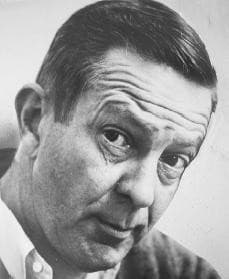
John William Cheever was an American short story writer and novelist. He is sometimes called "the Chekhov of the suburbs". His fiction is mostly set in the Upper East Side of Manhattan; the Westchester suburbs; old New England villages based on various South Shore towns around Quincy, Massachusetts, where he was born; and Italy, especially Rome. His short stories included "The Enormous Radio", "Goodbye, My Brother", "The Five-Forty-Eight", "The Country Husband", and "The Swimmer", and he also wrote five novels: The Wapshot Chronicle , The Wapshot Scandal, Bullet Park (1969), Falconer (1977) and a novella Oh What a Paradise It Seems (1982).
Similar books
- Pastoralia
George Saunders
4.1 (18k) average on GoodreadsLiterary FictionExplores the absurdities and struggles of modern American life with a blend of satire and pathos, though Cheever's tone is more traditional.
- Tenth of December
George Saunders
4.0 (62k) average on GoodreadsLiterary FictionA collection of short stories by a master of the form, offering diverse perspectives on contemporary American experiences, often with a dark humor.
- Dubliners
James Joyce
3.9 (123k) average on GoodreadsLiterary FictionA classic collection of short stories that exquisitely captures the stagnant lives and epiphanies of city dwellers, with a similar focus on character and atmosphere.
- The Old Man and the Sea
Ernest Hemingway
3.8 (831k) average on GoodreadsLiterary FictionA Cuban fisherman's long struggle with a giant marlin becomes a story of endurance and dignity, now retold for young adults with illustrations, phonetic guides, and writing prompts in Traditional Chinese.
- One Hundred Years of Solitude
Gabriel García Márquez
4.1 (753k) average on GoodreadsLiterary FictionThrough the multi-generational story of the Buendía family, a mythical town deals with the repeating patterns of time, love, and solitude, as the extraordinary mixes with the ordinary.
- The Goldfinch
Donna Tartt
3.9 (720k) average on GoodreadsLiterary FictionHaunted by a tragic explosion and clutching a stolen Dutch masterpiece, a young orphan navigates the opulent drawing rooms of New York and the gritty underbelly of the art world, desperately seeking connection and redemption amidst a life spiraling into crime and obsession.





Enjoyed the summary?
A summary gives you the shape of the book. The book itself has the detail, the examples and the voice.
Find The Stories of John Cheever on AmazonAs an Amazon Associate, BookBrief earns from qualifying purchases. How we're funded