
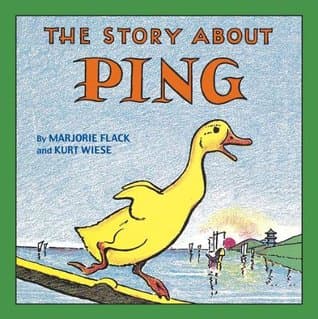
Synopsis
Covers the whole plot, including the ending.
- Difficulty
- Easy
- Pacing
- Moderate
- Mood
- Whimsical, Gentle, Adventurous, Nostalgic
- Read it if
- You want a classic, gentle adventure story about a little duck finding his way home.
- Skip it if
- You prefer modern children's books with complex plots or diverse themes beyond simple adventure.
The Story About Ping Plot Summary
Covers the whole plot, including the ending.
Life on the Yangtze River Boat
Ping is one of a hundred ducks belonging to a man who lives on a boat on the Yangtze River. Every morning, the man takes the ducks ashore to find food. At sunset, he calls them back to the boat, and they waddle aboard in a line. The last duck to board always gets a loud 'WHACK!' on its back with a stick, though it doesn't hurt. Ping, a small but curious duck, enjoys his life, but he always tries his best not to be the last duck in line to avoid the nightly spank. This routine sets up the main problem for Ping.
The Unlucky Evening
One evening, as the ducks are called back to the boat, Ping is busy finding a tasty snail. By the time he looks up, all the other ninety-nine ducks are already waddling onto the boat. Ping realizes with a fright that he will be the very last one. Fearing the dreaded 'WHACK!', Ping quickly makes a decision. Instead of hurrying to the boat, he hides among the reeds along the riverbank, hoping to escape the spanking. The man counts his ducks, but doesn't notice Ping is missing, and the boat sails away, leaving Ping alone.
Ping's First Night Alone
As the boat disappears around the bend, Ping finds himself completely alone on the Yangtze River. The sun sets, and darkness covers the riverbanks. For the first time, Ping feels the cold night air without the warmth of his family. He huddles among the reeds, feeling very small and a little scared. The sounds of the river at night are new and slightly frightening. He misses his family and the comfort of the boat, realizing what happened because of his decision to hide.
Meeting a Fisherman and His Boat
The next morning, Ping wakes up hungry. He swims along the river, looking for food. He soon finds a small fishing boat where a young boy is sitting. The boy sees Ping and, being friendly, offers him some rice cakes. Ping, happy with the unexpected treat, eagerly eats them. This is Ping's first good interaction with a human since being separated from his family. He watches the boy's simple life on the river, which is different from his own riverboat existence.
The Fishing Net Incident
Later that day, as Ping continues his journey down the river, he sees a large, flat-bottomed boat with many fishermen. They are casting a huge fishing net into the water. Not knowing the danger, Ping swims too close to the net as it is being pulled in. He suddenly finds himself tangled among the ropes and fish. Panicked, Ping struggles hard. With a great effort, he manages to wriggle free just before the net is fully pulled onto the boat, barely escaping capture. This is a moment of great danger for Ping, showing the risks of the river.
Encounter with a Crocodile
After his narrow escape from the fishing net, Ping continues swimming, shaken but determined. He then faces an even greater danger. As he drifts past a sandy bank, he sees a huge, green crocodile with a very long mouth lying in the sun. The crocodile slowly opens one eye and looks directly at Ping. Sensing great danger, Ping quickly dives under the water and swims away as fast as he can. This encounter highlights the wild and dangerous parts of the Yangtze River.
The Girl and the Water Buffalo
Further along his journey, Ping sees another common sight on the Yangtze River: a young girl riding on the back of a large water buffalo. The girl is playing a flute, and the water buffalo is slowly wading through the shallow parts of the river. Ping watches them with interest, fascinated by this peaceful scene. This moment gives a brief break from the dangers and loneliness Ping has experienced, showing everyday life and culture along the riverbanks.
A Familiar Sight on the River
As days turn into weeks, Ping continues his solitary journey down the Yangtze River. He grows a little bigger and wiser with each experience. One afternoon, as he swims around a bend, his heart gives a sudden flutter. In the distance, he spots a familiar shape: a large boat, just like the one he grew up on. His excitement builds as he realizes it might be his family's boat. He swims faster, hope surging through him, eager to confirm his suspicion and end his long separation.
Reunion with Family
Ping swims closer and closer to the boat. He can see the familiar man standing on deck, and then, to his great joy, he spots his ninety-nine brothers and sisters waddling around. It is indeed his family's boat! Overjoyed, Ping swims directly towards it, quacking loudly. The man sees him and smiles, happy to have his lost duck back. Ping quickly scrambles aboard, feeling a great sense of relief and belonging. His adventure has come full circle, bringing him back home.
The Spank and the Lesson
It is sunset, and the ducks are all boarding the boat, just as they did before Ping's adventure. Ping, having been the last to board and therefore separated from his family, is now, once again, the very last duck in line. He does not hide this time. Instead, he waddles up the gangplank, ready for the inevitable. The man gives him a loud 'WHACK!' on his back. This time, Ping doesn't mind. He understands that the spank is not a punishment, but a sign that he is home and safe with his family. He has learned his lesson about staying with his family.
The Story About Ping Characters
Ping
Protagonist
An adventurous and curious young duck who gets separated from his family.
Ping is a young duck characterized by his curiosity and a slight mischievous streak. He enjoys his life on the Yangtze River boat but has a strong aversion to being the last in line for the nightly 'WHACK!'. His adventurous spirit leads him to explore the world beyond his family's boat, but his initial fear of a minor punishment drives his separation. He is observant and learns quickly from his experiences, adapting to new dangers and situations.
Relationships: Kind-Eyed Man (Owner and caretaker); Ninety-nine brothers and sisters (Family, fellow ducks)
The Kind-Eyed Man
Supporting
Ping's owner and caretaker, who ensures the ducks' well-being.
The kind-eyed man is the owner of the hundred ducks, including Ping. He is portrayed as gentle and responsible, taking his ducks ashore daily for food and calling them back each evening. His 'WHACK!' is not malicious but a consistent ritual, symbolizing order and the consequences of dawdling. He cares for his ducks, even though he initially doesn't notice Ping's absence, and welcomes Ping back with a smile, showing his underlying affection.
Relationships: Ping (Owner and caretaker); Ninety-nine ducks (Owner and caretaker)
Ninety-nine brothers and sisters
Supporting
Ping's large duck family who live on the riverboat.
Ping's numerous siblings form his immediate family and community on the wise-eyed boat. They represent the comfort, safety, and routine that Ping temporarily abandons. Their presence highlights Ping's loneliness and longing when he is separated. They are part of the daily ritual of boarding the boat, serving as a reminder of the order Ping disrupts. They are not individually characterized but collectively symbolize home.
Relationships: Ping (Siblings, family); Kind-Eyed Man (Owned by the man)
The Boy on the Fishing Boat
Mentioned
A friendly boy who offers Ping food during his journey.
This young boy is a brief but kind presence in Ping's adventure. He lives on a small fishing boat and offers Ping some rice cakes, providing a moment of comfort and sustenance for the lost duck. He represents the kindness of strangers and the varied human life along the Yangtze River.
The Crocodile
Antagonist
A dangerous predator Ping encounters on the river.
The crocodile represents a significant natural danger in Ping's journey. It is a silent, menacing presence that highlights the perils of being alone in the wild. Its brief appearance serves to escalate the stakes of Ping's adventure and emphasize his vulnerability outside the safety of his family and boat.
The Story About Ping Themes
The Value of Home and Family
The main theme is about Ping's journey away from and back to his home and family. His initial fear of a small punishment leads him to leave the safety and comfort of his family on the boat. During his solo adventure, he faces loneliness, hunger, and danger, which makes him realize how much he misses his ninety-nine brothers and sisters and the man. His happy return and willing acceptance of the 'WHACK!' show his new appreciation for belonging and the security of home, even with its small problems, as seen when he willingly takes the spank at the end.
“And Ping was glad that he was home with his ninety-nine brothers and sisters. And his mother and his father and his aunts and his uncles and his cousins. And the kind-eyed man.”
Consequences of Disobedience/Dawdling
Ping's adventure starts because he decides to hide rather than face the small consequence of being the last duck. His wish to avoid a brief spanking leads to a much larger and more dangerous ordeal. The story gently teaches that avoiding small, regular responsibilities or consequences can lead to much bigger problems. His journey is a direct result of his dawdling and hiding, showing that sometimes a known, small discomfort is better than the unknown dangers of avoiding it.
“He knew that the last duck always got a WHACK! on the back. And he did not want to be the last duck.”
Adventure and Discovery
Despite the underlying lesson, the book also celebrates adventure and discovery. Ping's journey down the Yangtze River shows him a world of fishermen, water buffalo, rice cakes, and even crocodiles. These meetings broaden his understanding of the world beyond his familiar boat. While his separation starts with fear, his later experiences are full of wonder and new sights, showing the richness of the world and the learning that comes from stepping outside one's comfort zone, even by accident.
“Ping swam on and on, past fishing boats and other wise-eyed boats, past cormorants and water buffaloes.”
The Rhythm of Life on the Yangtze River
The story vividly brings to life the unique culture and environment of the Yangtze River. Through Ping's eyes, readers see daily life: the boats, the fishermen casting nets, the young boy offering rice cakes, and the girl riding a water buffalo. These details place the reader in a distant land and highlight the repeating nature of life along the river, from the ducks' daily routine to the river's continuous flow. The river itself is a character, shaping the lives of those who live on and by it.
“On the Yangtze River in China lived a beautiful wise-eyed boat. And on the beautiful wise-eyed boat lived a beautiful wise-eyed man. And on the beautiful wise-eyed boat lived a beautiful wise-eyed mother duck and a beautiful wise-eyed father duck and ninety-nine beautiful wise-eyed little ducks.”
Plot Devices & Literary Techniques
Personification
Giving human characteristics to inanimate objects and animals.
The book extensively uses personification, most notably with the 'wise-eyed boat' and the 'wise-eyed' ducks. This device makes the boat feel like a living, protective entity and allows readers to easily empathize with Ping's emotions and experiences. The ducks' ability to understand consequences (like the 'WHACK!') and Ping's internal monologues make the animal characters more relatable and central to the narrative, bridging the gap between human and animal perspectives.
Repetition
The repeated phrase 'WHACK!' and the description of the wise-eyed boat.
Repetition is used effectively to establish routine and emphasize key elements. The recurring 'WHACK!' sound reinforces the daily ritual and Ping's aversion to it, making his eventual acceptance of it more impactful. The repeated description of the 'wise-eyed boat' and 'wise-eyed' ducks creates a rhythmic, almost poetic quality, imprinting a sense of familiarity and belonging, and highlighting the warmth of Ping's home even when he is away from it.
Journey/Quest Narrative
Ping's physical and emotional travel away from and back to home.
The story follows a classic journey or quest structure. Ping's separation from his family initiates his 'quest' down the Yangtze River. During this journey, he encounters various challenges (fishing net, crocodile) and helpful figures (the boy), gaining experience and wisdom. His eventual return to his family marks the successful completion of his journey, not just physically but also emotionally, as he returns with a changed perspective and a deeper appreciation for what he left behind.
Symbolism
The 'WHACK!' symbolizes discipline and belonging, and the river symbolizes life's journey.
The 'WHACK!' initially symbolizes an undesirable punishment, but by the end of the story, it transforms into a symbol of belonging and the acceptance of rules within a family unit. It signifies that Ping is home and safe. The Yangtze River itself symbolizes life's journey, with its currents, dangers, and diverse life along its banks. Ping's travel along the river represents his personal growth and the experiences that shape him, leading him back to his origins with new understanding.
The Story About Ping Quotes
“Ping was a beautiful little duckling. He lived on the Yangtze River in China with his mother and his father and his two sisters and his three brothers and his eleven aunts and his seven uncles and his fifty-three cousins.”
“Every morning, from the time the sun came up until the time the sun went down, Ping and his mother and his father and his two sisters and his three brothers and his eleven aunts and his seven uncles and his fifty-three cousins paddled about the Yangtze River.”
“But one evening, as the sun went down, Ping was just a little bit late. All the other ducks had gone up the gangplank. Ping was the last.”
“And he knew what happened to the last duck. The master gave the last duck a spank on the back with a stick. Ping did not want to be spanked.”
“So, what did Ping do? He jumped over the side of the boat and hid under the big boat.”
“He waited and waited. All night he waited, with his head tucked under his wing, until the sun came up.”
“When the sun came up, Ping was very hungry. He swam and swam, looking for something to eat.”
“He saw a beautiful, big, yellow fish. Ping thought, 'I will catch that fish for my breakfast.' But the fish was too quick for Ping.”
“He saw some children playing in the water. One of the children saw Ping and called out, 'Look! A duck! Let's catch him!'”
“Ping swam as fast as he could. The children splashed and shouted after him, but Ping was too fast.”
“He saw a very old man in a small boat. The old man had a string of ducks tied to his boat. They were all very sad.”
“Ping paddled and paddled until he saw his own boat, with the gangplank down. And there, on the gangplank, was his mother and his father and his two sisters and his three brothers and his eleven aunts and his seven uncles and his fifty-three cousins.”
“Ping was so happy to see them all. He swam right up the gangplank, not caring a bit if he was the last duck.”
“And what do you think happened? The master gave Ping a spank on the back with a stick. But Ping didn't mind. He was home.”
Quiz
10 questions on the plot and the characters. Each answer comes with a short explanation.
Question 1
Where did Ping and his family live?
- In a small village by the river
- On a beautiful wise-eyed boat on the Yangtze River
- In a nest on the riverbank
- Inside a floating house
Show answer
B. On a beautiful wise-eyed boat on the Yangtze River The book states that Ping lived on a beautiful wise-eyed boat on the Yangtze River with his large family and kind master.
Question 2
What was the one thing Ping disliked about his life on the riverboat?
- Having to swim all day
- Being the last in line to board the boat at night
- His large family
- The long journeys on the river
Show answer
B. Being the last in line to board the boat at night Ping did not like to be the last in line to board the boat at night, because that duck would receive a loud spank.
Question 3
What happened to the duck who was last to board the boat at night?
- They got extra food
- They were left on the shore
- They received a loud spank
- They had to clean the boat
Show answer
C. They received a loud spank The text explicitly states that the unlucky duck who was last in line to board the boat got a loud spank.
Question 4
Why did Ping decide to set out on his own?
- He was bored with his family
- He wanted to explore the fascinating world of life on the Yangtze River
- He was looking for a new master
- He accidentally fell off the boat
Show answer
B. He wanted to explore the fascinating world of life on the Yangtze River When it seemed Ping would be the last in line, he decided to set out on his own to explore the fascinating world of life on the Yangtze River.
Question 5
What kind of animal is Ping?
- A goose
- A swan
- A duck
- A bird
Show answer
C. A duck The title of the story is 'The Story About Ping', and the description repeatedly refers to him as an 'adventurous duck' and a 'dawdling duck'.
Question 6
What river is central to Ping's story?
- The Nile River
- The Mississippi River
- The Amazon River
- The Yangtze River
Show answer
D. The Yangtze River The story explicitly states that Ping lived on a boat on the Yangtze River and explored life on the Yangtze River.
Question 7
What qualities make Ping an 'irrepressible hero'?
- His obedience and quiet nature
- His adventurous spirit and curiosity leading him to explore
- His ability to fly long distances
- His loyalty to staying with his family at all times
Show answer
B. His adventurous spirit and curiosity leading him to explore Ping is described as a 'spirited and irrepressible hero' due to his decision to set out on his own to explore the world, rather than face a spanking, demonstrating his adventurous and resilient nature.
Question 8
How does the book evoke a 'distant land and way of life'?
- By focusing on modern cities and technology
- Through its specific setting on the Yangtze River and details of riverboat life
- By describing mythical creatures
- By featuring characters from various continents
Show answer
B. Through its specific setting on the Yangtze River and details of riverboat life The book's setting on the Yangtze River and its depiction of life on a traditional riverboat, along with the cultural context implied, contribute to evoking a 'distant land and way of life'.
Question 9
What universal theme can children sympathize with through Ping's character?
- The importance of strict rules and punishment
- The desire for independence and exploration, and the consequences of minor disobedience
- The necessity of always staying with one's family
- The thrill of being the first to do something
Show answer
B. The desire for independence and exploration, and the consequences of minor disobedience The text states, 'Every child can sympathize with a dawdling duck who wants to avoid a spanking, and share his excitement and wonder as he sails down the river,' highlighting themes of minor disobedience, curiosity, and the desire for freedom.
Question 10
What is the primary motivation for Ping's adventure?
- To find a new family
- To escape a perceived punishment and satisfy his curiosity about the world
- To prove his bravery to his siblings
- To gather food for his family
Show answer
B. To escape a perceived punishment and satisfy his curiosity about the world Ping's primary motivation is to avoid the spanking for being last and, in doing so, he takes the opportunity to 'explore the fascinating world of life on the Yangtze River,' indicating both avoidance of punishment and a strong sense of curiosity.
The Story About Ping FAQ
What is the central conflict that drives Ping's initial adventure?
Ping's adventure begins because he doesn't want to be the last duck to board the wise-eyed boat at night. The last duck in line receives a loud spank on the back, and Ping, dawdling one evening, realizes he will be last, prompting him to hide and miss the boat.
Describe Ping's living situation before he embarks on his solo journey.
Ping lives on a beautiful wise-eyed boat on the Yangtze River with a very large family of ducks – his mother, father, two sisters, three brothers, eleven aunts, and seven uncles. They all belong to a kind master who cares for them.
What are some of the key sights and experiences Ping encounters during his time alone on the Yangtze River?
During his solo journey, Ping sees fishing boats with cormorants, a boy on a raft, and a family cooking dinner on their boat. He also experiences the vastness of the river and the challenge of finding food on his own.
How does Ping ultimately reunite with his family and the wise-eyed boat?
Ping is eventually captured by a boy and taken to another boat, likely to be cooked. However, the same boy who caught him later releases him back into the river, allowing Ping to swim back to his familiar wise-eyed boat and family.
What is the significance of the 'wise-eyed boat' in the story?
The wise-eyed boat represents home, safety, and family for Ping. Its painted eyes symbolize its watchful presence and connection to his established life, acting as a beacon that he yearns to return to after his adventure.
Are there any subtle indications of the Yangtze River's cultural context beyond the obvious setting?
Yes, the presence of fishing boats with cormorants, the traditional dress of the people, and the description of families living and cooking on their boats subtly evoke the specific cultural practices and daily life along the Yangtze River in China.
How does the sound of the 'spank' contribute to the narrative?
The 'spank' is not just a punishment; its loud sound emphasizes the public nature of the discipline and Ping's strong aversion to it. It acts as the primary catalyst for his decision to run away, highlighting his fear and desire to avoid humiliation.
What does Ping's initial decision to hide reveal about his character at the beginning of the story?
Ping's decision to hide rather than face the spank reveals his impulsiveness, his strong desire to avoid discomfort or perceived shame, and a youthful lack of foresight regarding the consequences of his actions.
How does Ping's journey reflect common childhood experiences of independence and fear?
Ping's journey mirrors a child's first taste of independence, where the initial excitement of freedom is often followed by a creeping sense of loneliness, fear of the unknown, and a longing for the security of home and family.
What psychological transformation does Ping undergo during his time away from the boat?
Ping transforms from a carefree, slightly irresponsible duck into one who appreciates the security of his home and family more deeply. He learns resilience and self-reliance, but ultimately values belonging over unfettered freedom, understanding the 'spank' as a minor cost for safety.
Is the 'spank' truly a harsh punishment, or does it serve a different narrative purpose?
While physically a 'spank,' its consistent application and the ducks' understanding of it suggest it's more of a ritualistic, gentle reminder of order and belonging, rather than severe punishment. Its primary purpose is to drive the plot by motivating Ping's escape.
Could Ping's adventure be interpreted as a metaphor for a child's first experience with the wider world?
Yes, Ping's journey can be seen as a metaphor for a child's initial explorations beyond the safety of home. He encounters new sights, faces minor dangers, and ultimately returns with a greater appreciation for his secure environment, much like a child learning about the world.
What is the implied message about family and belonging in 'The Story About Ping'?
The story strongly implies that while adventure and independence can be exciting, the comfort, safety, and love of family and home are ultimately more fulfilling and essential. Ping's return signifies the profound value of belonging.
How does the ending of the story, with Ping accepting the spank, resolve his internal conflict?
By willingly accepting the spank upon his return, Ping resolves his internal conflict. He demonstrates that he has learned the value of his place within his family and the boat's order, understanding that the small discomfort is a worthwhile trade-off for security and love.
Some readers might argue that Ping's family should have looked for him. How does the narrative address or sidestep this potential criticism?
The narrative sidesteps this by focusing entirely on Ping's perspective and journey, presenting the family's actions (or lack thereof) as an accepted part of their routine. The vastness of the Yangtze also makes a search impractical, emphasizing Ping's solitary challenge and eventual self-rescue.
What role does the boy who catches Ping play in the story's resolution?
The boy plays a crucial role by creating the climax of Ping's danger and then, unexpectedly, facilitating his return. By catching Ping, he heightens the tension, but by releasing him, he provides the necessary intervention for Ping to find his way back home.
How does the repetitive structure of the ducks boarding the boat contribute to the story's rhythm and theme?
The repetitive structure of the ducks boarding in line establishes a predictable, safe routine that Ping disrupts. This rhythm highlights the comfort of order, making Ping's deviation and subsequent return to that order feel like a significant, earned resolution.
What is the significance of Ping's name?
The name 'Ping' is simple, memorable, and evokes a gentle, perhaps slightly mischievous, quality. In Chinese, 'ping' can mean 'peace' or 'level,' which contrasts with his initial adventurous flight but aligns with his eventual return to a peaceful, balanced home life.
How does the author use sensory details to immerse the reader in the Yangtze River setting?
The author uses vivid sensory details like the 'wise-eyed boat,' the 'fishing boats with cormorants,' the description of families cooking and eating on their boats, and the vastness of the river to create a rich, immersive picture of life on the Yangtze.
About the author

Marjorie Flack was an American author and illustrator known for her children's books. One of her notable works is "The Story About Ping," which tells the tale of a young duck living on the Yangtze River. Flack's contributions to children's literature have made her a recognized figure in the genre.
Similar books
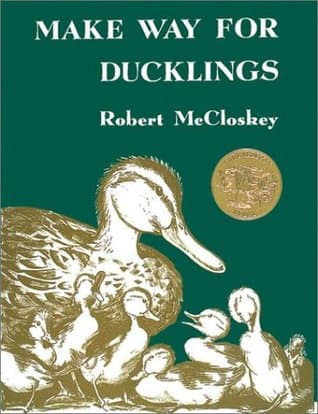
- Make Way for Ducklings
Robert McCloskey
4.2 (84k) average on GoodreadsChildren'sFeatures ducks in a gentle adventure, with beautiful illustrations and a classic feel.
- Mike Mulligan and His Steam Shovel
Virginia Lee Burton
4.2 (50k) average on GoodreadsFantasyWhile both books are classics from the same era and feature memorable characters, Mike Mulligan focuses on American industrialism, the dignity of labor, and the obsolescence of technology, set in a distinctly American landscape. Ping, in contrast, offers a glimpse into a specific non-Western culture and focuses on personal adventure and familial belonging rather than societal change or technological marvels.
- Harry Potter and the Sorcerer's Stone
J.K. Rowling
4.5 (7M) average on GoodreadsFantasyRescued from a miserable life under the stairs, an orphaned boy discovers he's a wizard destined for a magical school, where he uncovers a dangerous secret tied to the dark wizard who murdered his parents.
- The Hunger Games
Suzanne Collins
4.3 (6.4M) average on GoodreadsFantasyIn a future where children fight to the death on live television, Katniss Everdeen volunteers for the arena, turning a death sentence into a fight for survival and a spark of rebellion.
- 1984
George Orwell
4.2 (3.1M) average on GoodreadsPoliticsIn a future where surveillance and thought control are absolute, a man's search for truth clashes with the Party, showing that hope can be a form of rebellion.
- Divergent
Veronica Roth
4.2 (2.9M) average on GoodreadsFantasyIn a society divided by virtues, a sixteen-year-old's difference from the norm starts a rebellion that threatens her world.





Enjoyed the summary?
A summary gives you the shape of the book. The book itself has the detail, the examples and the voice.
Find The Story About Ping on AmazonAs an Amazon Associate, BookBrief earns from qualifying purchases. How we're funded