
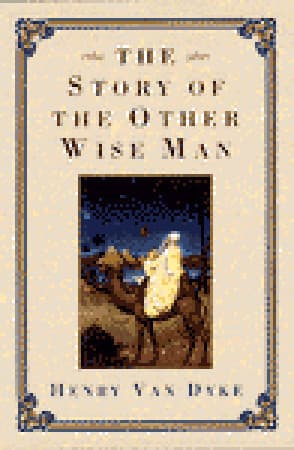
Synopsis
Covers the whole plot, including the ending.
- Difficulty
- Easy
- Pacing
- Slow
- Mood
- Reflective, Poignant, Hopeful, Spiritual
- Read it if
- You enjoy allegorical tales of faith, sacrifice, and the true meaning of devotion, or if you appreciate classic spiritual parables that offer a different perspective on a familiar story.
- Skip it if
- You prefer fast-paced narratives, strictly historical accounts without spiritual allegory, or stories with a definitive, action-driven plot.
The Story of the Other Wise Man Plot Summary
Covers the whole plot, including the ending.
Artaban's Vision and the Three Jewels
Artaban, a Persian scholar, studies the stars and old prophecies. He determines that the Messiah will soon be born. He sells all his belongings, turning his inheritance into three beautiful jewels: a sapphire, a ruby, and a pearl. These are meant as gifts for the new King. He plans to meet three other wise men—Caspar, Melchior, and Balthazar—at the old ziggurat of Borsippa to start their journey to Bethlehem. Artaban's loyal servant, Orod, helps him get ready for the hard trip, believing in his master's search. Artaban feels a strong spiritual calling. He is sure this pilgrimage will bring him closer to divine truth and his life's purpose.
The First Delay: A Dying Man in the Desert
As Artaban rides toward Borsippa, he finds a dying Hebrew man with desert fever. Torn between his urgent quest and his kind nature, Artaban chooses to stop and care for the stranger. He gives medicine and comfort, saving the man's life. This act of kindness makes him miss his meeting with the other wise men, who leave without him, saying they could not wait. To pay for the man's care and for the delay, Artaban has to sell his valuable sapphire. With sadness, he continues his journey alone, now without his first gift and unsure if he will ever find the King.
Arrival in Bethlehem and Herod's Cruelty
Artaban eventually reaches Bethlehem, but Joseph and Mary, with the infant Jesus, have already gone to Egypt. As he rests in a house where a mother and her child hide, King Herod's soldiers arrive to kill the innocent children. Artaban sees the terror and confronts the centurion. He bribes him with his beautiful ruby to spare the child and the house. The centurion, impressed by the jewel and Artaban's firm manner, agrees to leave. Artaban again feels he has failed, having missed the King and given up another valuable gift, but he has saved a life.
Years of Searching and Service
For the next thirty-three years, Artaban constantly searches for the King. He travels through Egypt, Arabia, Persia, and many other lands. He follows every rumor and prophecy, asking about a newborn King, a wise teacher, or a healer. During his long journey, he meets countless people suffering from poverty, sickness, and injustice. Each time, his kind heart makes him use his remaining money and his skills as a healer to help those in need. He becomes known as a kind and wise man, though his main search remains unfinished. His last jewel, the pearl, remains untouched, waiting for its intended recipient.
Imprisonment in Babylon
During his travels, Artaban is unjustly imprisoned in Babylon for several years. Even in his cell, his desire to serve remains strong. He shares his knowledge and comfort with other prisoners, easing their suffering and offering hope. His time in prison, though a harsh detour from his quest, strengthens his empathy and resolve. He continues to believe that one day he will find the King, never forgetting his original purpose, despite the many setbacks and personal sacrifices.
The Road to Jerusalem: Passover
After his release from prison, now an old man, Artaban hears news of a great prophet and healer in Judea. This person is called the 'King of the Jews' and will soon be crucified during the Passover festival in Jerusalem. A spark of hope returns to him; could this be the King he has sought for so long? With new determination, he goes to Jerusalem, carrying his last treasure, the great pearl. He plans to offer it as a ransom if the King is in trouble. His body is weak, but his spirit is firm, driven by his lifelong quest.
The Final Sacrifice: A Daughter's Freedom
As Artaban nears Golgotha, where the crucifixion is happening, he sees Roman soldiers leading a young woman to be sold into slavery to pay her father's debts. The woman, a Hebrew, asks for help. She recognizes Artaban from his reputation as a kind man. Seeing her distress and the unfairness of her situation, Artaban faces his final, most important choice. He gives his magnificent pearl, his last and most valuable treasure, to the Roman captain to buy the woman's freedom. With this act, he has no earthly possessions left.
The Earthquake and the King's Voice
Right after giving away the pearl, a large earthquake hits Jerusalem, throwing debris from the temple onto the streets. Artaban, already weak from age and tiredness, is hit by a falling tile. As he lies dying, a soft, comforting voice speaks to him, saying, 'Truly I tell you, just as you did it to one of the least of these my brothers, you did it to me.' Artaban, though he never physically met Jesus, finally understands that his lifelong acts of kindness and sacrifice were direct service to the King he sought.
Peace in Death
With a look of deep peace and understanding on his face, Artaban dies. He dies not sad for failing to give his gifts directly to the King, but with the calm knowledge that his entire life's journey, full of detours, sacrifices, and acts of kindness, was his true pilgrimage. His three jewels, though never given to the Christ child, had been offered in spirit through the suffering people he met. He found the King not in a manger or on a throne, but in the faces of the poor, the sick, and the oppressed.
Principal Figures
Artaban
Protagonist
A wise Magus who dedicates his life to finding the Messiah, only to discover Him through service.
Artaban is a priest of the Magi, deeply learned in ancient prophecies and astronomy. He is driven by an intense spiritual longing to find the newborn King of the Jews, for whom he prepares three precious jewels as gifts. Throughout his thirty-three-year quest, Artaban repeatedly sacrifices his material wealth and his immediate goal to help those in need, demonstrating profound compassion and selflessness. His journey is marked by delays and disappointments, yet he never loses faith in his ultimate purpose, continually seeking the King. He embodies the spirit of service and the idea that true worship lies in aiding humanity.
Relationships: Orod (loyal servant and companion); The dying Hebrew man (recipient of Artaban's first sacrifice); The mother and child in Bethlehem (recipients of Artaban's second sacrifice); The young woman to be sold into slavery (recipient of Artaban's final sacrifice)
Orod
Supporting
Artaban's faithful servant, initially skeptical but ultimately supportive of his master's quest.
Orod is Artaban's loyal and practical servant. While initially questioning the wisdom of Artaban selling all his possessions for a distant, uncertain quest, he remains steadfastly by his master's side during the initial preparations. He helps Artaban sell his house and prepare for the journey, demonstrating a deep personal devotion. Though he disappears from the narrative after the first delay, his presence underscores Artaban's initial commitment and the practical sacrifices he made.
Relationships: Artaban (master and servant)
The Three Magi (Caspar, Melchior, Balthazar)
Mentioned
Artaban's fellow travelers who proceed to Bethlehem without him.
These are the traditional 'three wise men' who successfully follow the star to Bethlehem and present their gifts to the infant Jesus. They are mentioned as Artaban's intended companions, with whom he arranges to meet at Borsippa. Their departure without Artaban after he is delayed by an act of mercy sets Artaban on his solitary, divergent path. They represent the conventional, successful journey to the King, contrasting with Artaban's unconventional, sacrificial one.
Relationships: Artaban (fellow Magi, intended travel companions)
The Dying Hebrew Man
Supporting
The first person Artaban helps, causing him to miss his rendezvous and sacrifice a jewel.
This nameless man is found by Artaban suffering from desert fever. Artaban's decision to stop and save his life leads to the sale of the sapphire and his separation from the other Magi. He represents the first test of Artaban's compassion and the beginning of his understanding that his spiritual quest might involve direct, immediate acts of charity rather than solely a grand pilgrimage.
Relationships: Artaban (recipient of aid)
The Centurion (Herod's Soldiers)
Supporting
Roman officer bribed by Artaban to spare a child during the massacre of the innocents.
The centurion leads King Herod's soldiers in Bethlehem to carry out the brutal decree of killing all male infants. He is a hardened soldier, but Artaban's offer of the ruby and his calm, authoritative demeanor sway him to spare the house where Artaban is staying, thus saving a mother and her child. His interaction with Artaban highlights the power of material sacrifice to achieve moral good in a corrupt world.
Relationships: Artaban (negotiator/recipient of bribe); The mother and child (threat to their lives)
The Mother and Child in Bethlehem
Supporting
Those whose lives are saved by Artaban's sacrifice of his ruby.
This nameless mother and her infant child are hiding in a house in Bethlehem when Herod's soldiers arrive. Their imminent danger prompts Artaban to use his ruby to bribe the centurion, saving their lives. They represent the innocent victims of political tyranny and serve as the direct beneficiaries of Artaban's second great act of compassion, reinforcing his evolving understanding of service.
Relationships: Artaban (savior)
The Young Woman to be Sold into Slavery
Supporting
The final person Artaban helps, prompting him to sacrifice his last jewel.
This Hebrew woman is encountered by Artaban in Jerusalem, being led away by Roman soldiers to be sold into slavery to pay her father's debt. Her desperate plea for help, combined with the injustice of her situation, moves Artaban to use his last remaining jewel, the great pearl, to buy her freedom. Her rescue is Artaban's final, climactic act of self-sacrifice, happening just moments before his death.
Relationships: Artaban (savior)
Jesus (The King)
Mentioned
The object of Artaban's lifelong search, whose voice ultimately reveals the true nature of Artaban's service.
Jesus is the Messiah, the 'King of the Jews,' whom Artaban seeks for over thirty years. Though Artaban never physically meets him or presents his gifts directly, Jesus's presence and teachings permeate Artaban's quest. In Artaban's dying moments, Jesus's voice confirms that every act of mercy and compassion Artaban performed for 'the least of these' was, in fact, done for Him, validating Artaban's entire life's journey.
Relationships: Artaban (the one sought by Artaban, who ultimately reveals the true meaning of his quest)
Themes & Insights
Selfless Service and Compassion
The main theme is that true devotion and worship are found not in grand gestures or material gifts to a god, but in selfless service and kindness toward other people. Artaban's journey shows this. He repeatedly gives up his personal goal and sacrifices his valuable gifts to help the sick, the innocent, and the oppressed. His final message from Jesus directly confirms that 'just as you did it to one of the least of these my brothers, you did it to Me,' solidifying this theme.
“Inasmuch as thou hast done it unto one of the least of these my brethren, thou hast done it unto Me.”
The Nature of True Worship
The story redefines true worship. Artaban starts with a common idea: giving precious gifts to a King. However, his journey shows that the deepest worship is a life lived by divine principles of love and mercy. Each time he sacrifices a jewel to save a life or lessen suffering, he is, in effect, offering a more meaningful gift to the spirit of the King he seeks, even if he does not realize it until he dies. His journey suggests that spiritual fulfillment comes from showing divine love, not just from rituals or offerings.
“The King has accepted thy gifts, Artaban, for every cup of water thou hast given to the thirsty, and every crust of bread to the hungry, and every garment to the naked, and every visit to the sick, and every ransom for the captive, has been given to Me.”
Sacrifice and Redemption
Artaban's journey involves many sacrifices, each leading to a form of redemption or deeper understanding. He sacrifices his inheritance, his meeting with the other Magi, and eventually his three precious jewels. These acts of giving, first seen as failures or hindrances to his main quest, are ultimately revealed as the very ways he achieves spiritual redemption and fulfills his purpose. The story implies that true redemption comes not from avoiding suffering or loss, but from embracing them through self-giving love.
“My King, I have waited for Thee, and I have sought Thee for thirty-three years, and I have not found Thee, and I have not presented my gifts.”
Faith and Perseverance
Despite many problems, missed chances, and over three decades passing, Artaban never gives up his search. His faith in the King's coming and his steady resolve to find Him drive his continuous search. Even when imprisoned or facing what seems like useless efforts, he continues. He shows a deep and lasting faith that goes beyond immediate results. His persistence is eventually rewarded, not in the way he first imagined, but in a deeper spiritual discovery.
“For thirty-three years I have sought the King. I have made my pilgrimage. I have kept the faith.”
Plot Devices & Literary Techniques
The Three Jewels (Sapphire, Ruby, Pearl)
Symbolic gifts representing Artaban's material sacrifices and spiritual offerings.
These three jewels are Artaban's initial, tangible gifts for the newborn King. They serve as a concrete representation of his wealth and his intention for traditional worship. As he sacrifices each jewel to help a suffering individual, they transform from literal gifts for a monarch into symbolic offerings of compassion and selflessness to humanity. Their repeated sacrifice underscores the story's central theme that true worship is found in acts of mercy, making them powerful symbols of Artaban's spiritual transformation and his redefined understanding of devotion.
The Journey/Pilgrimage
A literal and metaphorical journey of spiritual discovery.
Artaban's physical journey across lands and through decades is a direct metaphor for his spiritual pilgrimage. Each detour, delay, and encounter on his path is an opportunity for growth and a test of his faith and compassion. The physical arduousness of his travels reflects the spiritual difficulties and sacrifices he makes. The journey's end, not at a physical meeting with the King but in a spiritual revelation, highlights that the true destination was never a place, but a state of being and understanding achieved through a lifetime of selfless acts.
Dramatic Irony
The reader knows Artaban is serving Jesus, while Artaban remains unaware until his death.
Dramatic irony is a key device in the story. The reader, familiar with the Christian narrative, understands that Artaban's acts of mercy towards the 'least of these' are, in fact, direct service to Jesus, even as Artaban believes he is failing in his primary quest to find the King. This creates a poignant tension throughout the narrative, culminating in the powerful moment of revelation when Jesus's voice confirms to Artaban what the reader has long suspected, reinforcing the story's central message about the nature of true worship.
The Voice of Jesus
A direct, supernatural intervention that provides the ultimate resolution and thematic clarity.
The disembodied voice of Jesus at Artaban's deathbed serves as the ultimate plot device for resolution and thematic affirmation. It directly answers Artaban's lifelong question, validates his entire journey, and delivers the story's core message in a clear, unambiguous manner. This supernatural element provides a conclusive and emotionally powerful ending, solidifying the idea that Artaban's 'failures' were, in fact, his greatest successes in the eyes of the divine King he sought.
The Story of the Other Wise Man Quotes
“He knew that all was well, because he had done the best that he could, from day to day.”
“It is better to follow even the shadow of the best than to remain content with the worst.”
“”
“Not so, my Lord! For when saw I thee an hungered and fed thee? Or thirsty, and gave thee drink?”
“Verily I say unto thee, Inasmuch as thou hast done it unto one of the least of these my brethren, thou hast done it unto me.”
“The journey is the reward.”
“He had sought for the King and found him in the hearts of the poor and suffering.”
“One by one the jewels disappeared, but each one bought a life.”
“The star of hope still shone before him, and led him on.”
“For love is the light that guides the wise men.”
“He had given away the last of his treasures, but he had found the greatest treasure of all.”
“In the helpfulness of others, he saw the hand of God.”
“The years of his pilgrimage were not lost; they were fulfilled.”
“To seek is to find, if the heart is pure.”
Quiz
10 questions on the plot and the characters. Each answer comes with a short explanation.
Question 1
What is the name of the protagonist in 'The Story of the Other Wise Man'?
- Melchior
- Artaban
- Balthazar
- Gaspar
Show answer
B. Artaban Artaban is the central character, a priest of the Magi who sets out to find the newborn King but is delayed by helping others along his journey.
Question 2
Why does Artaban miss joining the three other Magi at the beginning of his journey?
- He gets lost in the desert
- His horse becomes lame
- He stops to help a dying man
- He decides the prophecy is false
Show answer
C. He stops to help a dying man Artaban pauses his journey to aid a dying man, which causes him to miss the caravan of the three other Magi, setting him on his solitary pilgrimage.
Question 3
What precious gifts does Artaban carry to present to the newborn King?
- Gold, frankincense, and myrrh
- A sapphire, a ruby, and a pearl
- Silver, spices, and silk
- A crown, a scepter, and a ring
Show answer
B. A sapphire, a ruby, and a pearl Artaban carries a sapphire, a ruby, and a pearl—precious jewels intended as gifts for the holy Prince, which he later uses to help others in need.
Question 4
In Bethlehem, what does Artaban use his first jewel (the sapphire) for?
- To bribe a Roman soldier
- To buy food and shelter
- To save a child from Herod's soldiers
- To pay for passage to Egypt
Show answer
C. To save a child from Herod's soldiers Artaban uses the sapphire to bribe a soldier and save a child during Herod's massacre of the innocents, sacrificing his gift for the King to protect an innocent life.
Question 5
How many years does Artaban spend searching for the King after missing him in Bethlehem?
- 10 years
- 23 years
- 33 years
- 40 years
Show answer
C. 33 years Artaban searches for 33 years, paralleling the lifespan of Jesus, as he follows rumors and signs while helping those in need along the way.
Question 6
In Egypt, what does Artaban use his second jewel (the ruby) for?
- To free a slave girl
- To buy information about the King's whereabouts
- To fund a temple donation
- To pay for healing medicine
Show answer
A. To free a slave girl Artaban gives the ruby to ransom a young girl being sold into slavery, again sacrificing his treasure for an act of compassion.
Question 7
What major theme does Artaban's journey primarily illustrate?
- The importance of wealth and status
- The value of scholarly knowledge
- Service to others as true worship
- The necessity of political power
Show answer
C. Service to others as true worship Artaban's repeated acts of kindness—helping the dying man, saving the child, freeing the slave—demonstrate that serving others is the highest form of devotion to God.
Question 8
Where does Artaban finally encounter Jesus at the end of his life?
- In the Garden of Gethsemane
- At the foot of the cross in Jerusalem
- On the road to Damascus
- In a vision while praying
Show answer
B. At the foot of the cross in Jerusalem An old and weary Artaban arrives in Jerusalem during the crucifixion, where he uses his last jewel (the pearl) to save a young woman and then hears Jesus acknowledge his lifelong service.
Question 9
What does Jesus tell Artaban in their final encounter?
- "You have found me at last"
- "Your gifts are accepted"
- "Inasmuch as you have done it unto the least of these, you have done it unto me"
- "Your journey is complete"
Show answer
C. "Inasmuch as you have done it unto the least of these, you have done it unto me" Jesus paraphrases Matthew 25:40, revealing that Artaban's acts of charity toward others were actually gifts to Christ himself, fulfilling his quest.
Question 10
According to the story's conclusion, what happens to Artaban immediately after his encounter with Jesus?
- He continues searching for the King
- He dies peacefully and is taken to heaven
- He becomes a disciple and preaches
- He returns home to Persia
Show answer
B. He dies peacefully and is taken to heaven Having finally found the King and received divine acknowledgment, Artaban's life mission is complete; he dies contentedly and his soul is received into eternal peace.
The Story of the Other Wise Man FAQ
What is 'The Story of the Other Wise Man' about?
The story follows Artaban, a priest of the Magi who misses joining the three biblical wise men because he stops to help a dying man. He spends 33 years searching for the Messiah, using his three precious gifts intended for the Christ child to help people in need instead, ultimately discovering that his acts of service were his true worship.
Why should I read 'The Story of the Other Wise Man'?
This spiritual fable offers a profound meditation on divine purpose found in unexpected places. Through Artaban's lifelong quest, it explores themes of sacrifice, service, and how true worship manifests through compassion rather than ritual, making it a timeless story about finding meaning in life's detours.
What is the background/setting of 'The Story of the Other Wise Man'?
The story begins in ancient Persia where Artaban studies the stars as a Magi priest, then spans 33 years across the Middle East during the time of Jesus' life. Key locations include Jerusalem, Egypt, and finally Golgotha during the crucifixion, creating a historical framework around biblical events.
What are the most memorable quotes from the book?
"Not so, my Lord! For when saw I thee an hungered and fed thee? Or thirsty, and gave thee drink? When saw I thee a stranger, and took thee in? Or naked, and clothed thee? When saw I thee sick or in prison, and came unto thee?" - Artaban's realization at the end. Also: "The other wise man's journey had not been in vain, for he had found the King."
What writing style does Henry Van Dyke use?
Van Dyke employs a lyrical, parable-like style with rich biblical allusions and spiritual symbolism. His prose is contemplative and elegant, blending historical fiction with moral allegory, creating a timeless quality that feels both ancient and immediately relevant.
What minor details add significant meaning to the story?
Artaban's three precious gifts—a sapphire, a ruby, and a pearl—each represent different aspects of his quest. The sapphire symbolizes hope and faith, the ruby represents love and sacrifice, and the pearl signifies wisdom and the kingdom of heaven, with each being given away at crucial moments.
What are some subtle foreshadowing moments?
When Artaban first stops to help the dying Hebrew at the beginning, this foreshadows his entire life's pattern of choosing human need over his personal quest. The repeated delays and 'misfortunes' throughout his journey subtly prepare readers for the revelation that these were actually divine appointments.
What unexpected character connections exist?
The dying Hebrew man Artaban helps at the beginning turns out to have been part of a community awaiting the Messiah. Later, people Artaban helps throughout his journey form an invisible network of lives touched by compassion, all connected to the larger story of Christ's ministry happening simultaneously.
What are Artaban's unspoken motivations?
Beneath his stated goal of worshiping the newborn king, Artaban is driven by a deep need for personal validation and spiritual certainty. His repeated sacrifices reveal an unconscious belief that suffering and service might earn him the divine encounter he seeks, rather than understanding grace as freely given.
What psychological complexities do characters exhibit?
Artaban demonstrates cognitive dissonance between his intellectual understanding of prophecy and his emotional responses to human suffering. His 33-year journey shows how hope can both sustain and torment, as he clings to his quest despite mounting evidence that he's 'missed' his chance, revealing the psychology of faithful perseverance.
What are the major emotional turning points?
Key emotional turns include: Artaban's initial decision to help the dying man (sacrifice), selling his sapphire to save a child (compassion overriding ritual), his despair in Jerusalem when he misses Jesus' ministry, and the climactic moment at Golgotha where he helps a slave girl and hears Christ's voice acknowledging his lifelong service.
How do Artaban's relationships with those he helps evolve?
Initially, Artaban views people he helps as obstacles to his spiritual goal. Gradually, these encounters become the substance of his spirituality itself. By the end, he recognizes these relationships as sacred connections, understanding that serving 'the least of these' was serving Christ all along.
Which parts of the story remain ambiguous or open-ended?
The story leaves ambiguous whether Artaban physically dies at the end or experiences a spiritual vision. Also open is how much divine orchestration versus human choice guided his path—whether his 'delays' were predestined or whether he created his own holy journey through spontaneous compassion.
What are controversial scenes or decisions in the book?
Some readers debate whether Artaban's repeated 'failure' to reach Jesus represents wasted opportunity or profound success. The theological implication that Christ accepts worship through service to others rather than direct adoration challenges traditional understandings of worship and salvation in some interpretations.
'The Story of the Other Wise Man' ending explained: how it ends & what it means
Artaban dies in Jerusalem during the crucifixion earthquake after using his last pearl to save a slave girl. As he dies, he hears Christ's voice saying his acts of kindness were done unto Him. The ending reveals that Artaban's lifelong 'failed' quest was actually successful—he found Christ through service, not arrival.
What is the significance of the 33-year timeframe?
The 33 years parallel Jesus' earthly life, symbolizing that Artaban was walking a parallel spiritual journey. Each year represents a different aspect of Christ's ministry that Artaban participates in through service, creating a symbolic harmony between his personal quest and the larger divine narrative.
How does the story reinterpret the biblical Magi narrative?
Van Dyke expands the traditional three wise men story by suggesting there might have been a fourth who followed a different path. This reimagining emphasizes that there are multiple ways to seek and serve the divine, and that 'arriving' at religious destinations matters less than how one travels the journey.
About the author
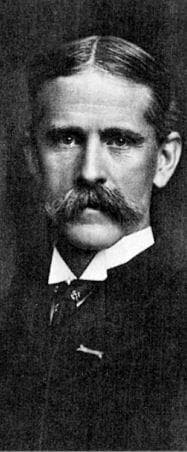
Henry Van Dyke was an American author and clergyman known for his works of fiction and poetry. He is best remembered for "The Story of the Other Wise Man," a narrative that explores themes of faith and redemption. His writings often reflect his deep spiritual beliefs and insights into human nature.
Similar books
- The Little Prince
Antoine De Saint Exupéry
Both are short, profound tales with deep philosophical and spiritual undertones, exploring themes of love, loss, and the essence of life.
- A Christmas Carol
Charles Dickens
4.1 (600k) average on GoodreadsFantasyBoth stories emphasize the transformative power of compassion, generosity, and selfless acts over material wealth and personal gain.
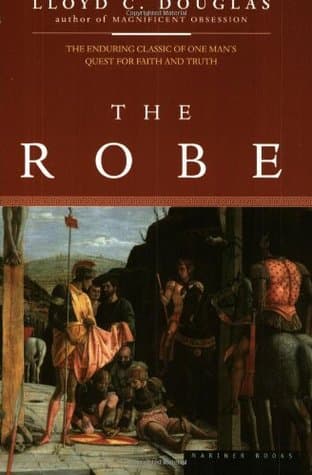
- The Robe
Lloyd C. Douglas
4.2 (23k) average on GoodreadsHistorical FictionDouglas's novel is a more conventional conversion narrative, detailing direct interaction with the early Christian movement and the immediate aftermath of the crucifixion. Van Dyke's focuses on the essence of faith through a life of service, independent of direct interaction with Christ until the very end, offering a broader interpretation of discipleship.
- To Kill a Mockingbird
Harper Lee
4.3 (4.5M) average on GoodreadsHistorical FictionIn the 1930s Jim Crow South, Harper Lee writes about racial injustice, moral growth, and the quiet courage of a lawyer father, Atticus Finch, as seen through his young daughter's eyes.
- The Great Gatsby
F. Scott Fitzgerald
3.9 (3.8M) average on GoodreadsHistorical FictionIn the opulent Roaring Twenties, a mysterious millionaire's lavish parties hide his desperate, tragic pursuit of a lost love, exposing the emptiness within the American Dream.
- Pride and Prejudice
Jane Austen
4.3 (3M) average on GoodreadsHistorical FictionIn a society focused on status and money, Elizabeth Bennet navigates love and pride, challenging Mr. Darcy and social expectations to find true affection.





Enjoyed the summary?
A summary gives you the shape of the book. The book itself has the detail, the examples and the voice.
Find The Story of the Other Wise Man on AmazonAs an Amazon Associate, BookBrief earns from qualifying purchases. How we're funded