

Synopsis
Covers the whole plot, including the ending.
- Difficulty
- Easy
- Pacing
- Slow
- Mood
- Atmospheric, Reflective, Gentle, Wistful, Humorous
- Read it if
- You enjoy contemplative, character-driven stories about intergenerational relationships and the beauty of nature.
- Skip it if
- You prefer fast-paced plots, dramatic conflict, or explicit emotional declarations.
The Summer Book Plot Summary
Covers the whole plot, including the ending.
The Tent
Six-year-old Sophia wakes up wanting to sleep in a tent she and her Grandmother set up. Grandmother, a practical elderly woman, at first resists, citing discomfort. However, Sophia's persistence, along with Grandmother's wish to indulge her, wins. They brave the damp night, sharing the small space and hearing the island's sounds. The next morning, Sophia feels triumphant and independent. Grandmother, though tired, acknowledges the simple joy and successful adventure, showing their unique bond and shared love for the island's wildness.
The Visitor
Sophia finds a dead shrew and is deeply affected. She brings it to Grandmother, who explains death directly, acknowledging its naturalness without softening the truth. Sophia tries to revive the shrew and later gives it a small, dignified burial with a tiny grave and flowers. This event leads to quiet talks between Sophia and Grandmother about life, death, and nature's cycle on the island. Grandmother does not shield Sophia from harsh realities but guides her to understand them.
Father's Visit
Sophia's Father, a more reserved man than Grandmother, visits for a short time. His presence subtly changes the dynamic between Sophia and Grandmother. Father meticulously repairs things around the cabin and tries to enforce order, contrasting with Sophia and Grandmother's more spontaneous life. He struggles to connect with Sophia as easily as Grandmother does, often observing from a distance. His quiet departure lets the intimate rhythm of Sophia and Grandmother's summer resume, highlighting the special world they created.
The Storm
A powerful storm hits the island, bringing strong winds and rain. Sophia and Grandmother experience nature's raw force from their safe cabin. Grandmother stays calm and practical, securing windows and checking the boat. Sophia is both frightened and excited by the spectacle. The storm causes damage, scattering belongings and uprooting trees, but also cleanses the island. Afterward, they work together to clean up, finding quiet satisfaction in restoring order. The storm reminds them of the island's wild nature and their small place within it, deepening their respect for its power.
Sophia's Island
Sophia explores a small, uninhabited islet nearby, claiming it as her own. She spends time there alone, observing nature, playing, and imagining her own world. Grandmother, aware of Sophia's wanderings, allows her this freedom, trusting Sophia's judgment and ability to navigate the island. Sophia returns with stories and discoveries, sharing her experiences with Grandmother, who listens with genuine interest. This independence builds Sophia's self-reliance and deepens her connection to nature, while also strengthening the trust between her and Grandmother.
The Secret Path
Sophia convinces Grandmother to search for a rumored secret path leading to a hidden part of the island. They set out together, exploring dense undergrowth and rocky terrain. Grandmother, despite her age, shows remarkable agility and enthusiasm, enjoying the challenge as much as Sophia. Their expedition is full of shared observations, small frustrations, and quiet camaraderie. While they do not explicitly 'find' a path in the traditional sense, the journey itself becomes the discovery, a shared adventure that reinforces their bond and mutual delight in exploring their island home.
The Ark
Grandmother constructs a small, intricate ark from a piece of driftwood, with tiny carved animals. Sophia watches her work, fascinated by the craftsmanship. The ark symbolizes their isolated world on the island, a miniature representation of life enduring against the vast sea. It also represents Grandmother's artistic spirit and her ability to create beauty from simple materials. The ark is later launched into the water, a fleeting journey that reflects the transient nature of their summer.
The Mosquitoes
A particularly bad season brings a relentless swarm of mosquitoes to the island, making outdoor life almost unbearable. Sophia and Grandmother devise strategies to cope, from staying indoors to using smoke and repellents. The mosquitoes become a shared adversary, a minor but persistent challenge they face together. Their reactions, from exasperation to humor, show their different coping mechanisms and shared resilience in the face of nature's annoyances. This episode highlights the small, everyday struggles and triumphs that define their summer.
The Garden
Grandmother tends her small, unruly garden, trying to grow flowers and vegetables in the harsh island soil. Sophia sometimes helps, but more often observes. The garden shows Grandmother's perseverance and her desire to nurture life even in challenging conditions. It provides a quiet, reflective space for her, and its successes and failures mirror the unpredictable nature of island life. The garden is a small pocket of control and beauty amidst the wildness, a gentle contrast to the island's starker elements.
The End of Summer
As days shorten and the air cools, the end of summer is clear. Sophia and Grandmother begin closing the cabin, packing belongings, and preparing to leave. There is a quiet sadness in these tasks, acknowledging the temporary nature of their island idyll. They reflect on their shared experiences and memories. The final scene shows their departure from the island, a bittersweet farewell, leaving the island to its winter slumber, but carrying the warmth of their summer bond with them.
Principal Figures
Sophia
Protagonist
A curious and spirited six-year-old girl.
Sophia is a vibrant and imaginative child, full of questions and an insatiable curiosity about the natural world. She is brave and independent for her age, often venturing out alone to explore the island. Sophia grapples with complex concepts like death and loneliness, reflecting a maturity beyond her years, yet she retains a child's directness and emotional honesty. Her relationship with her Grandmother is central to her development, as she learns to navigate the world through her Grandmother's unique perspective and guidance.
Relationships: Grandmother (deeply loving, guiding, and unconventional mentorship); Father (distant but loving, a more conventional parent figure)
Grandmother
Protagonist
An elderly artist with a pragmatic, unconventional worldview.
Grandmother is a sharp-witted and unsentimental woman, an artist who finds beauty and meaning in the stark reality of island life. She is fiercely independent and prefers directness, often offering Sophia blunt, yet deeply wise, insights into life and death. Despite her gruff exterior, she possesses immense tenderness and patience, particularly with Sophia. Her approach to parenting is unconventional, allowing Sophia significant freedom while subtly guiding her through observation and shared experience. She is deeply connected to the island, seeing it as an extension of herself.
Relationships: Sophia (deeply loving, guiding, and unconventional mentorship); Father (her son, a more conventional figure whom she loves but often gently challenges)
Father
Supporting
Sophia's father and Grandmother's son, a more conventional figure.
Father is a quieter, more reserved character compared to the vibrant Sophia and Grandmother. He visits the island periodically, bringing a touch of the mainland's order and practicality. He is loving but struggles to connect with Sophia and Grandmother on their unique wavelength, often observing them rather than fully participating in their island games and philosophies. He represents a bridge to the outside world, and his presence highlights the distinct, self-contained universe Sophia and Grandmother inhabit on the island. He is concerned for their well-being but respects their chosen way of life.
Relationships: Sophia (loving but somewhat distant father-daughter relationship); Grandmother (son-mother relationship, respectful but with differing perspectives)
The Island
Supporting
The setting, a character in itself, shaping the lives of its inhabitants.
The island is more than just a backdrop; it is a living, breathing entity that profoundly influences Sophia and Grandmother. With its rocky shores, windswept trees, unpredictable seas, and diverse flora and fauna, it provides both challenges and endless opportunities for discovery. It acts as a teacher, a playground, and a refuge. The island's harsh beauty and ever-changing moods mirror the complexities of life and the characters' inner worlds, forcing them to adapt and find resilience. It embodies themes of wildness, solitude, and the cycles of nature.
Relationships: Sophia (a source of wonder, adventure, and personal growth); Grandmother (a beloved home, a source of artistic inspiration, and a reflection of her own independent spirit)
Themes & Insights
The Cycle of Life and Death
The island's natural environment constantly presents the reality of life and death, explored with honesty. From Sophia's discovery of a dead shrew to seasonal changes, the book portrays death not as a tragic end but as a natural part of existence. Grandmother's practical explanations help Sophia understand these cycles without fear, encouraging acceptance. This theme is central to the characters' understanding of their place in the world, as seen when Sophia buries the shrew, acknowledging its passing while embracing the ongoing life around her.
“One must have a reason for dying. If you have no reason, you are not dead.”
Independence and Freedom
Both Sophia and Grandmother value their independence and the freedom island life offers. Sophia has significant autonomy to explore, learn, and make her own discoveries, building her self-reliance. Grandmother, in turn, maintains her unconventional lifestyle, free from societal expectations, and encourages Sophia's independent spirit. Their interactions often balance individual freedom with the need for connection, as seen in the tent scene where they both assert their desires but ultimately share the experience. The island itself symbolizes this freedom, offering boundless space for self-discovery.
“It's a good thing to be able to be alone, you know.”
The Power of Nature
Nature is a dominant force in the book, shaping daily life, emotions, and philosophical views. The island's weather, its plants and animals, and the vastness of the sea are ever-present. Nature is beautiful and harsh, providing sustenance and peace, but also challenges like storms and mosquitoes. The characters live closely with nature, respecting its power and adapting to its whims. The storm scene, for instance, highlights nature's raw force and the characters' resilience in facing it, showing their understanding that they are part of a larger, untamed world.
“The sea is always there, always the same, and yet it is always changing.”
Intergenerational Love and Understanding
The novel's core is the deep, unconventional love between Sophia and her Grandmother. Their relationship goes beyond typical generational gaps, built on mutual respect, honesty, and a shared appreciation for the island. Grandmother does not treat Sophia like a child but engages with her as an intelligent, developing individual, sharing her wisdom directly. Sophia, in turn, looks to her Grandmother for guidance and companionship, finding comfort in her unique blend of gruffness and tenderness. Their bond shows how different personalities can find deep connection through shared experience and genuine affection.
“They had a secret language, which consisted of looking at each other.”
Plot Devices & Literary Techniques
Setting as Character
The island functions as a dynamic, influential force.
The island is not merely a backdrop but an active participant in the narrative. Its untamed nature, unpredictable weather, and specific geography directly influence the characters' actions, dialogues, and internal reflections. It provides challenges (storms, mosquitoes), opportunities for discovery (new paths, hidden coves), and a constant source of philosophical contemplation (life, death, solitude). The island shapes Sophia's growth and Grandmother's enduring wisdom, making it an integral, almost sentient, entity within the story.
Episodic Structure
A series of interconnected vignettes rather than a linear plot.
The novel is composed of a series of loosely connected short stories or vignettes, each focusing on a specific incident, observation, or interaction between Sophia and Grandmother. This structure mirrors the natural, unhurried rhythm of summer days on an island, where events unfold organically rather than following a strict plot. Each episode contributes to the overall character development and thematic exploration, building a cumulative portrait of their relationship and life, without relying on a strong overarching conflict or dramatic arc. This allows for a focus on atmosphere and subtle emotional shifts.
Limited Omniscient Point of View
The narrator primarily follows Sophia and Grandmother's perspectives.
The story is told primarily from a limited omniscient point of view, often shifting between Sophia's and Grandmother's internal thoughts and observations. This allows the reader intimate access to their individual perceptions, fears, and joys, highlighting the contrast and convergence of their generational perspectives. The narrator occasionally offers broader, more reflective insights, but largely stays close to the characters' experiences, particularly Sophia's innocent yet profound understanding of the world, and Grandmother's wise yet unsentimental outlook, deepening the emotional connection to their shared island life.
The Summer Book Quotes
“All you really need is a place to stand and a place to grow, and a few good friends.”
“It’s funny about grandmas. They always say, 'You’re getting so big,' but they never seem to notice that they’re getting so old.”
“The sea is like a person, you know. It has its moods. Sometimes it’s calm and peaceful, and sometimes it’s wild and angry.”
“The world is full of things that can be done, if only you know how to do them.”
“Everything was exactly as it should be. The world was at peace, and so was she.”
“Sometimes I just want to sit and look at things and not think about anything.”
“You can’t just sit around waiting for things to happen. You have to make them happen.”
“The island was her whole world, and the whole world was the island.”
“It’s important to have a place where you can be completely yourself, without anyone else around.”
“The most beautiful things are often the most fragile.”
“There are times when you just have to accept things as they are, even if you don't understand them.”
“To be alone is to be free.”
“The summer was a long, slow breath, full of light and warmth.”
Quiz
10 questions on the plot and the characters. Each answer comes with a short explanation.
Question 1
What is the primary relationship between the two main characters, Sophia and her grandmother?
- They are mother and daughter.
- They are neighbors sharing an island.
- They are grandmother and granddaughter.
- They are two sisters.
Show answer
C. They are grandmother and granddaughter. The book centers on the relationship between Sophia, a young girl, and her elderly grandmother.
Question 2
What is the primary setting of 'The Summer Book'?
- A bustling city apartment in Helsinki.
- A remote cabin in the Finnish Lapland.
- A tiny island in the Gulf of Finland.
- A coastal village in Sweden.
Show answer
C. A tiny island in the Gulf of Finland. The entire story unfolds on a small, isolated island in the Gulf of Finland, where Sophia and her grandmother spend their summers.
Question 3
What kind of natural disaster do Sophia and her grandmother encounter and discuss early in the book?
- A severe earthquake.
- A massive forest fire.
- A great storm that changes the island's landscape.
- A prolonged drought.
Show answer
C. A great storm that changes the island's landscape. Early in the book, they discuss the aftermath of a great storm that significantly altered parts of their island, including moving a boathouse.
Question 4
What is one of the grandmother's unique ways of dealing with her loneliness or need for connection?
- She regularly hosts large parties with neighbors.
- She writes long letters to distant relatives.
- She occasionally invites a neighbor for a secretive, late-night drink.
- She spends hours talking to the island's animals.
Show answer
C. She occasionally invites a neighbor for a secretive, late-night drink. The grandmother has a specific ritual of occasionally inviting a nearby neighbor, Jansson (implied to be Tove's brother Lars), for a late-night drink and conversation, often without Sophia's knowledge.
Question 5
What activity do Sophia and her grandmother often engage in that highlights their connection to the island's nature?
- Building elaborate sandcastles on the beach.
- Collecting and identifying different types of moss and plants.
- Training wild birds to eat from their hands.
- Fishing for rare species in the deep sea.
Show answer
B. Collecting and identifying different types of moss and plants. They frequently explore the island, focusing on the minute details of nature, such as collecting and identifying various types of moss, which is a recurring motif.
Question 6
What is a central theme explored through the relationship between Sophia and her grandmother?
- The conflict between urban and rural lifestyles.
- The challenges of intergenerational understanding and the acceptance of different forms of independence.
- The importance of strict adherence to daily routines.
- The pursuit of material wealth in a simple setting.
Show answer
B. The challenges of intergenerational understanding and the acceptance of different forms of independence. The book deeply explores how two individuals from vastly different generations, with their own fears, whims, and desires for independence, learn to adjust to and love each other.
Question 7
What does Sophia often do when she feels particularly adventurous or rebellious?
- She tries to sail the boat out to sea by herself.
- She builds a secret hut in a hidden part of the island.
- She attempts to climb the tallest tree on the island.
- She tries to swim to the mainland.
Show answer
B. She builds a secret hut in a hidden part of the island. Sophia often seeks out her own spaces for independence and play, like building a 'secret' hut, which sometimes involves her grandmother's knowing complicity.
Question 8
The grandmother is described as an 'elderly artist.' How does her artistic nature manifest in her daily life on the island?
- She spends most of her days painting portraits of Sophia.
- She meticulously plans and executes elaborate garden designs.
- She often views and interprets the natural world with a unique, imaginative perspective, sometimes sharing stories or observations rooted in her artistic sensibility.
- She sculpts figures from the island's clay and driftwood.
Show answer
C. She often views and interprets the natural world with a unique, imaginative perspective, sometimes sharing stories or observations rooted in her artistic sensibility. While she doesn't explicitly paint, her artistic sensibility is evident in her keen observations of nature, her imaginative storytelling, and her unique way of perceiving the island and its changing moods.
Question 9
What specific item does Sophia lose and then find, leading to a discussion about impermanence and memory?
- Her favorite toy boat.
- A small, painted wooden animal.
- Her grandmother's old necklace.
- A collection of unique seashells.
Show answer
B. A small, painted wooden animal. Sophia loses and later finds a small, painted wooden animal, leading to a poignant conversation with her grandmother about how things change, get lost, and are sometimes found again, reflecting on memory and the passage of time.
Question 10
The book emphasizes the idea that the island itself is a character. How does the island primarily influence Sophia and her grandmother?
- It provides all their food and resources, making them self-sufficient.
- Its unpredictable weather and rugged landscape force them to constantly adapt and interact with its challenges, shaping their daily lives and relationship.
- It is merely a beautiful backdrop for their summer adventures.
- It offers a constant stream of new visitors and social interactions.
Show answer
B. Its unpredictable weather and rugged landscape force them to constantly adapt and interact with its challenges, shaping their daily lives and relationship. The island, with its changing weather, mossy rocks, and unpredictable seas, is a central force that dictates their activities, presents challenges, and deeply influences their moods and interactions, making it an integral part of their existence.
The Summer Book FAQ
What is the central premise of 'The Summer Book'?
The novel follows an elderly artist, Sophia's grandmother, and her six-year-old granddaughter, Sophia, as they spend a summer together on a small, remote island in the Gulf of Finland. It explores their evolving relationship, marked by shared adventures, quiet observations, and the unique challenges and joys of their intergenerational bond amidst nature.
Who are the main characters in 'The Summer Book'?
The two primary characters are Sophia, a curious and imaginative six-year-old girl, and her Grandmother, an eccentric, wise, and often brusque elderly artist. A third, less prominent character is Sophia's father, who occasionally visits but largely remains in the background, allowing the grandmother and granddaughter's relationship to take center stage.
Where does the story of 'The Summer Book' take place?
The entire story unfolds on a small, isolated island in the Gulf of Finland, described with vivid detail. This island, with its unpredictable weather, rocky shores, and unique flora and fauna, acts as a character itself, profoundly influencing the daily lives and interactions of Sophia and her Grandmother.
What is the overall tone and mood of 'The Summer Book'?
The book possesses a contemplative, understated, and often humorous tone, balancing the harsh realities of island life with moments of profound beauty and tenderness. It evokes a sense of timelessness and connection to nature, while also exploring the complexities of human relationships with a gentle, observant eye.
Is there a traditional plot or a strong narrative arc in 'The Summer Book'?
No, 'The Summer Book' is largely episodic, structured around observations, small adventures, and daily routines rather than a linear plot with a clear climax. Each chapter functions almost as a vignette, capturing a specific moment or interaction between Sophia and her Grandmother, contributing to a cumulative understanding of their relationship and island life.
What is the significance of the 'catastrophe' mentioned in the chapter 'The Great Catastrophe'?
The 'catastrophe' refers to the grandmother accidentally burning down their outhouse during a moment of forgetfulness. This event, while seemingly minor, highlights the practical challenges of island living and serves as a point of contention and then shared problem-solving between Sophia and her Grandmother, revealing their resilience and interdependence.
How does the author use the character of Sophia's father, despite his limited appearances?
Sophia's father serves as a quiet contrast to the vibrant dynamic between Sophia and her Grandmother. His occasional visits and more conventional worries about the mainland subtly underscore the unique, almost self-contained world the two women inhabit on the island, emphasizing their independence and distinct way of life.
Are there any recurring symbols or motifs in the book?
Yes, the unpredictable sea, the changing weather, and the small, resilient flora and fauna of the island are recurring motifs. These elements symbolize the untamed nature of life itself, mirroring the wildness of Sophia's imagination and the grandmother's independent spirit, and emphasizing the characters' intimate connection to their environment.
What is the implied backstory for Sophia's mother's absence?
While never explicitly stated, it is subtly implied that Sophia's mother has recently passed away. This loss is a quiet undercurrent throughout the book, explaining Sophia's presence on the island with her grandmother and adding a layer of poignant vulnerability to their shared summer experience, though it's never dwelled upon directly.
How does the Grandmother's age influence her relationship with Sophia?
The Grandmother's advanced age brings wisdom, patience, and a practical approach to life, but also a certain fragility and stubbornness. Her experiences allow her to meet Sophia's questions and fears with a unique blend of honesty and acceptance, fostering a relationship built on mutual respect for their individual eccentricities.
What psychological themes are explored through Sophia's character?
Sophia's character explores themes of childhood imagination, the development of independence, and the processing of grief. Her vivid internal world, her direct questioning of life and death, and her growing understanding of her grandmother's vulnerabilities showcase the complex psychological landscape of a child navigating a unique environment and profound personal experiences.
How do Sophia and her Grandmother cope with the isolation of island life?
They cope by embracing it, finding solace and stimulation in the natural world around them. Their strong bond, shared routines, and individual pursuits (Sophia's explorations, Grandmother's art and contemplation) prevent loneliness, transforming isolation into a rich opportunity for self-discovery and connection with each other and nature.
What is the psychological impact of nature on the characters?
Nature profoundly shapes their psychological states, offering both comfort and challenge. The island's wildness fosters resilience, independence, and a deep sense of belonging. The unpredictable weather and demanding environment encourage adaptability and a grounded perspective, reinforcing their inner strength and connection to the cycle of life.
Is 'The Summer Book' a children's book or an adult novel?
'The Summer Book' is unequivocally an adult novel, despite featuring a child protagonist and possessing a certain childlike wonder. Its profound exploration of life, death, intergenerational relationships, and philosophical musings on existence are intended for an adult audience, though its clarity and beauty appeal across ages.
How does the book challenge traditional notions of 'family' or 'parenting'?
The book challenges these notions by presenting a non-traditional family unit where a grandmother takes on a primary caregiving role, fostering independence and resilience rather than strict supervision. It emphasizes the importance of shared experience, mutual respect, and allowing a child space to explore and develop their own identity, rather than prescriptive parenting.
What is the book's message about aging and mortality?
The book offers a poignant yet unsentimental view of aging and mortality, especially through the Grandmother's character. It suggests that while the body may weaken, the spirit, curiosity, and capacity for connection can remain vibrant. It portrays death as a natural, integrated part of life's cycle, discussed with a quiet acceptance rather than fear.
How does Tove Jansson's own life experiences influence the novel?
Tove Jansson drew heavily from her own experiences of spending summers on islands in the Gulf of Finland with her mother and niece, Sophia. The setting, the characters' personalities (especially the artist grandmother), and the deep appreciation for nature are direct reflections of Jansson's own life, making the book deeply personal and authentic.
What philosophical questions does 'The Summer Book' raise?
The novel subtly raises questions about the meaning of life, the nature of happiness, the human relationship with the natural world, and the acceptance of impermanence. It explores how individuals find purpose and connection in simplicity, and how different generations perceive and interact with existence and its inevitable end.
Why is the ending of 'The Summer Book' considered particularly poignant?
The ending is poignant because it doesn't offer a dramatic resolution but rather a quiet continuation, hinting at the cyclical nature of life and summers. The grandmother, after a moment of reflection, simply prepares for the next season, leaving the reader with a sense of the enduring bond between her and Sophia, and the quiet acceptance of time's passage.
About the author
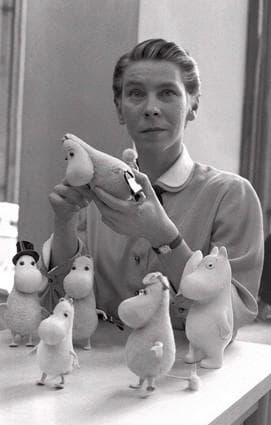
Tove Jansson was a Finnish author and illustrator, best known for her works featuring the Moomins, a family of whimsical creatures. Her notable books include "The Summer Book," which explores themes of nature and human connection, "Finn Family Moomintroll," a classic children's story, and "Fair Play," which reflects on creativity and companionship. Jansson's writing often blends fantasy with deep emotional insight.
Similar books
- Gilead (Oprah's Book Club)
Marilynne Robinson
3.9 (126k) average on GoodreadsFictionExplores profound reflections on life through an older narrator's perspective.
- A High Wind in Jamaica
Richard Hughes
3.8 (9k) average on GoodreadsChildren'sFeatures children with complex inner lives in unusual circumstances, with a focus on perception.
- Pilgrim at Tinker Creek
Annie Dillard
4.1 (22k) average on GoodreadsBiographyDetailed, observant prose about nature and the philosophical reflections it inspires.
- To the Lighthouse
Virginia Woolf
3.8 (133k) average on GoodreadsLiterary FictionBoth explore family dynamics during summer vacations and the passage of time. However, Woolf uses a stream-of-consciousness narrative and extensive internal monologues for psychological depth. Jansson's approach is more observational and external, relying on dialogue and action for character revelation, offering a quieter, more inferred psychological landscape.
- The Old Man and the Sea
Ernest Hemingway
3.8 (831k) average on GoodreadsLiterary FictionA Cuban fisherman's long struggle with a giant marlin becomes a story of endurance and dignity, now retold for young adults with illustrations, phonetic guides, and writing prompts in Traditional Chinese.
- One Hundred Years of Solitude
Gabriel García Márquez
4.1 (753k) average on GoodreadsLiterary FictionThrough the multi-generational story of the Buendía family, a mythical town deals with the repeating patterns of time, love, and solitude, as the extraordinary mixes with the ordinary.






Enjoyed the summary?
A summary gives you the shape of the book. The book itself has the detail, the examples and the voice.
Find The Summer Book on AmazonAs an Amazon Associate, BookBrief earns from qualifying purchases. How we're funded