

Synopsis
Covers the whole plot, including the ending.
- Difficulty
- Easy
- Pacing
- Moderate
- Mood
- Humorous, Reflective, Mysterious, Engaging
- Read it if
- You enjoy lighthearted mysteries with a touch of fantasy, character-driven stories about personal growth, or a unique take on the 'be careful what you wish for' trope.
- Skip it if
- You prefer complex world-building, dark fantasy, or stories without a clear moral lesson.
The Switch Plot Summary
Covers the whole plot, including the ending.
Tad's Unfulfilled Wish and a Mysterious Swap
Tad Spencer, an eleven-year-old living in a London home, is upset when his father, Julian Spencer, refuses to take him to the new 'Space World' theme park. Feeling ignored, Tad, in frustration, wishes he were someone else. The next morning, Tad wakes up in an unfamiliar, small bedroom, realizing his wish has come true. He is now Peter Jones, a boy from a working-class family in a different part of London. Peter's room is filled with football posters, a contrast to Tad's previous pampered life.
Adjusting to a New Identity: Peter Jones
As Peter Jones, Tad is in a busy household with a loving mother, a younger sister named Mary, and a father who drives a bus. He attends a new school, Northwood Secondary, where he is known as a talented footballer. Tad struggles to adapt to Peter's life. He finds the food unappetizing, the house cramped, and the school lessons hard. He misses his old life, his father's chef, and his comfortable surroundings. He also discovers Peter has a best friend, Terry, and a rival, Mark, and must quickly learn to play football to keep Peter's reputation, despite his own lack of athletic skill.
The First Clues and a Search for Answers
Tad tries to explain his problem to Peter's mother, but she thinks it's a dream. He realizes he needs to find a way back to his own life. He starts looking for clues and remembers his wish. He wonders about the boy now living his life as Tad Spencer. He tries to call his old home, but when he calls, he hears a voice he doesn't recognize as his own, confirming the swap is real and his body is now inhabited by someone else. He feels a growing need to fix the situation.
Meeting the 'New Tad Spencer'
Determined to find answers, Tad (as Peter) travels to his old house. He sees himself, or Peter Jones, living his life. The 'new Tad Spencer' seems to enjoy the luxuries, ordering the chef around and acting differently from the real Tad. Tad (as Peter) tries to talk to him, but the 'new Tad' is dismissive and doesn't believe him. This encounter confirms Tad's understanding that Peter Jones is now in his body, and the swap was a direct exchange. He feels frustrated and a strange sense of betrayal.
The Quest for the Wish-Granting Machine
Through events and shared experiences, Tad (as Peter) and Peter (as Tad) eventually talk and realize they both made the same wish: to be someone else. They recall seeing a glowing, wish-granting machine at a fair they both attended, though at different times and with different memories of it. They believe this machine is responsible for their problem. They agree to work together to find the machine and reverse the switch. They realize neither of them is truly happy in the other's life, despite how it seemed at first.
Following the Fair's Trail
The boys combine their memories and information about the fair. They remember details about its look, the people running it, and the specific tent where the machine was. They discover the fair travels and begin to track its movements through various towns. This involves using Peter's knowledge of local bus routes and Tad's ingenuity in finding information. Their journey has challenges, as they navigate their different personalities and life experiences while trying to remain unnoticed.
Encountering Mr. and Mrs. Smith
After some detective work, Tad and Peter find the fair. They find the tent with the machine and confront the couple who run it, Mr. and Mrs. Smith. The Smiths are the guardians of the wish-granting machine, which they call the 'Changer'. They explain that the machine grants wishes, but often with unexpected results, and that their role is to oversee its use. They are not mean but rather neutral, seeing themselves as helping fate.
The 'Changer' and the Test
Mr. and Mrs. Smith say the 'Changer' only works if the individuals truly want to switch back, not just for convenience, but because they've learned something. They explain that the machine has a mind of its own and will only reverse the switch if the wish is genuine. They challenge Tad and Peter to show they've learned from their experiences in each other's lives. This test makes the boys think about what they've gained and lost, and to say why their own lives, with all their problems, are where they belong.
A Shared Wish and the Reversal
After much thought and a talk, Tad and Peter stand before the 'Changer'. They both say they understand the value of their own lives and want to return to them, having learned to appreciate what they previously took for granted. They make a joint wish to switch back. The machine starts, glows brightly, and a moment later, the boys feel a familiar disorientation. They are back in their original bodies, in their original lives, just as they were before the switch.
Life After the Switch: Lessons Learned
Tad wakes up in his bedroom, back in his own body. He feels relief and appreciation for his comfortable life, his father, and even his chef. He is no longer bored or ungrateful. He talks to his father with a new understanding and says he wants to spend more time together, not just for material things. Similarly, Peter, back in his own body, appreciates his family and friends even more. Both boys have matured, gaining empathy and a deeper understanding of themselves and others, showing the 'Changer' helped them grow.
Principal Figures
Tad Spencer
Protagonist
A privileged, bored boy who wishes to be someone else.
Tad is an eleven-year-old boy living a life of luxury, complete with a chef, a driver, and a grand house. Despite his material wealth, he feels ignored by his busy, work-focused father, Julian Spencer. He is initially portrayed as somewhat spoiled and ungrateful, wishing for more excitement and attention. His wish to be 'someone else' stems from a deep-seated boredom and a desire for his father's affection. During his time as Peter Jones, he learns humility, empathy, and the value of simpler things and genuine connection.
Relationships: Julian Spencer (Father, initially distant but becomes closer); Peter Jones (The boy he switches lives with, later a reluctant ally); Mr. and Mrs. Smith (The enigmatic guardians of the wish machine)
Peter Jones
Protagonist
A working-class boy who swaps lives with Tad Spencer.
Peter is an eleven-year-old boy from a loving, working-class family. He is a talented footballer and has a close-knit group of friends, including his best friend, Terry. He initially wishes to be someone else out of a desire for more excitement and perhaps a touch of envy for a life of ease. When he switches lives with Tad, he experiences the superficiality of wealth and the pressure of a different social environment. He misses his family, his friends, and the genuine warmth of his own life.
Relationships: Tad Spencer (The boy he switches lives with, later a reluctant ally); Mary Jones (Younger sister); Mrs. Jones (Mother); Mr. Jones (Father); Terry (Best friend); Mr. and Mrs. Smith (The enigmatic guardians of the wish machine)
Julian Spencer
Supporting
Tad's wealthy but emotionally distant father.
Julian Spencer is Tad's father, a successful businessman who provides his son with every material comfort but often neglects his emotional needs due to his demanding work schedule. He is initially portrayed as somewhat oblivious to Tad's unhappiness, believing that material possessions are sufficient. His character serves as a catalyst for Tad's initial wish. By the end of the story, he shows a willingness to change and connect more deeply with Tad, prompted by Tad's newfound maturity.
Relationships: Tad Spencer (Son)
Mrs. Jones
Supporting
Peter's loving, practical, and busy mother.
Mrs. Jones is Peter's mother, a warm and caring woman who manages a busy household. She is practical, hardworking, and deeply devoted to her children. When Tad is living as Peter, she initially dismisses his claims of being someone else as a child's fantasy. She represents the stability and unconditional love that Peter takes for granted but later appreciates. Her character highlights the warmth and challenges of a working-class family life.
Relationships: Peter Jones (Son); Mr. Jones (Husband); Mary Jones (Daughter)
Mr. Jones
Supporting
Peter's hardworking bus driver father.
Mr. Jones is Peter's father, a bus driver who works hard to provide for his family. He is a down-to-earth and supportive parent. His presence in the story, though less prominent than Mrs. Jones', reinforces the grounded and loving environment of Peter's original home. He represents the stability and everyday reality that Peter initially wished to escape.
Relationships: Peter Jones (Son); Mrs. Jones (Wife); Mary Jones (Daughter)
Mary Jones
Supporting
Peter's younger, observant sister.
Mary is Peter's younger sister. She is observant and, at times, precocious. During Tad's time as Peter, she notices subtle changes in her 'brother's' behavior but doesn't fully comprehend the switch. She provides a touch of humor and sibling realism to Peter's family life, often teasing 'Peter' (Tad) about his strange habits.
Relationships: Peter Jones (Brother); Mrs. Jones (Mother); Mr. Jones (Father)
Terry
Supporting
Peter's loyal best friend.
Terry is Peter Jones's best friend. He is a loyal and energetic boy who shares Peter's passion for football. When Tad is living as Peter, Terry notices that 'Peter' is acting strangely and is surprisingly bad at football, but his loyalty prevents him from questioning it too deeply. Terry represents the genuine friendship and camaraderie that Peter values and that Tad initially lacks in his isolated life.
Relationships: Peter Jones (Best friend)
Mr. Smith
Supporting
One of the mysterious guardians of the wish-granting machine.
Mr. Smith is a peculiar and enigmatic character who, along with his wife, operates the traveling fair and guards the 'Changer' machine. He is calm, somewhat detached, and speaks in riddles, explaining the nature of wishes and their consequences. He is not malevolent but rather an overseer, ensuring that the machine's power is used, and understood, by those who encounter it.
Relationships: Mrs. Smith (Wife and co-guardian of the Changer)
Mrs. Smith
Supporting
The other mysterious guardian of the wish-granting machine.
Mrs. Smith is Mr. Smith's equally enigmatic wife and co-guardian of the 'Changer'. She is often the more direct of the two, though still speaking in a cryptic manner. She helps to explain the importance of genuine desire and understanding in reversing the switch. Her role is to challenge Tad and Peter to reflect on their experiences and truly want to return to their own lives.
Relationships: Mr. Smith (Husband and co-guardian of the Changer)
Themes & Insights
Identity and Self-Discovery
The main theme is Tad and Peter finding out who they are by living as someone else. Tad, a spoiled rich boy, learns humility and empathy when forced to live a working-class life. Peter, seeking excitement, realizes the value of his own loving family and friendships over superficial wealth. Their journey to switch back is a journey of self-discovery, as they learn to appreciate their own identities and lives. The wish-granting machine helps this personal growth.
“You wished to be someone else,' Mr. Smith said. 'And so you were. The Changer grants wishes, but it also teaches lessons.”
The Grass is Not Always Greener
This theme is central to the story, as both Tad and Peter initially think the other's life is better. Tad wishes for a more exciting life, while Peter wants luxury. However, once they switch, they quickly find the problems and challenges of the 'other side.' Tad struggles with Peter's cramped home, schoolwork, and lack of privacy, while Peter finds Tad's wealth isolating and his father emotionally distant. Both boys realize that their own lives, with all their problems, are more fulfilling and suited to them, showing that outward appearances can be misleading.
“I thought his life would be so amazing,' Peter admitted, 'but it was just… empty.”
Appreciation and Gratitude
A main outcome of the switch is the new appreciation both main characters develop for their original lives. Tad, who once took his luxuries for granted, learns to value his comfortable home and his father's presence. Peter, who felt his life was ordinary, returns with gratitude for his loving family, his close friends, and his home. The experience makes them see the good parts of their own situations that they had overlooked, leading to a more grateful outlook on life.
“I just want my own life back,' Tad whispered, 'with my own dad, even if he is busy. I miss it all.”
Family and Relationships
The novel explores different family dynamics and the importance of real connection. Tad's relationship with his wealthy but distant father contrasts with Peter's warm, close family. Through the switch, Tad learns the value of family love and attention, while Peter realizes that money cannot replace emotional bonds. Both boys return to their original families with a new understanding and a desire to strengthen these relationships, showing that happiness comes from human connection, not possessions.
“It's not about what you have, is it?' Tad said, looking at his own father. 'It's about who you have.”
Plot Devices & Literary Techniques
The 'Changer' Machine
A mysterious, wish-granting device that facilitates the body swap.
The 'Changer' is the central magical plot device. It is a peculiar, glowing machine found at a traveling fair, operated by the enigmatic Mr. and Mrs. Smith. It grants wishes, specifically the wish to 'be someone else,' but with the implicit intention of teaching a lesson. The machine's existence drives the entire plot, as its initial activation causes the switch, and its eventual re-activation is the only means of reversing it. It acts as a catalyst for the boys' personal growth and discovery, rather than a simple magical object.
Body Swap / Freaky Friday Trope
The primary narrative device where two characters switch bodies/lives.
This classic plot device is the fundamental premise of 'The Switch.' Tad Spencer and Peter Jones literally swap lives, inhabiting each other's bodies and families. This allows the author to explore themes of identity, social class, and empathy by forcing each protagonist to experience life from a completely different perspective. The humor and conflict arise from their struggles to adapt to unfamiliar routines, expectations, and social circles, while also trying to maintain the facade of being the other person.
Contrasting Social Classes
Using the distinct lives of Tad and Peter to highlight different societal experiences.
The novel deliberately sets up a stark contrast between Tad's affluent, isolated life and Peter's working-class, community-oriented existence. This device is crucial for illustrating the 'grass is not always greener' theme. Tad experiences the financial struggles and close-knit dynamics of a less privileged family, while Peter gets a taste of luxury but also its emotional emptiness. This contrast allows the characters, and the reader, to examine the advantages and disadvantages of different socioeconomic statuses and to challenge preconceived notions about wealth and happiness.
The Traveling Fair
A transient, magical setting that introduces the supernatural element.
The traveling fair serves as a mystical, ephemeral setting where the 'Changer' machine is initially encountered. Its transient nature reinforces the magical, almost dreamlike quality of the wish-granting event. The fair is not a permanent fixture, making the 'Changer' hard to find again and adding a layer of mystery and urgency to the boys' quest. It functions as a liminal space, a place where the ordinary rules of reality are suspended, allowing for the fantastic premise of the story to unfold.
The Switch Quotes
“He didn't know it then, but his life was about to change. Dramatically. Irreversibly.”
“The mirror didn't lie. But it didn't tell the whole truth either.”
“Being someone else wasn't just about a different face; it was about a different world.”
“The rules were simple. Break them, and everything would unravel.”
“He was a stranger in his own life, a ghost in his own skin.”
“Sometimes, the biggest secrets are hidden in plain sight.”
“Fear was a powerful motivator, but so was curiosity.”
“He had to pretend to be someone he wasn't, while trying to figure out who he really was.”
“The past wasn't just behind him; it was tangled up in his present.”
“Every choice had a ripple effect, spreading out into the unknown.”
“He learned that courage wasn't the absence of fear, but the ability to act despite it.”
“The truth was more complicated, and far more dangerous, than he could have imagined.”
“Sometimes, you have to lose yourself to find yourself.”
“The greatest magic wasn't in switching bodies, but in understanding what it meant to be human.”
Quiz
10 questions on the plot and the characters. Each answer comes with a short explanation.
Question 1
What was Tad Spencer's initial wish that set the plot in motion?
- To be rich and famous
- To go to a theme park
- To be someone else
- To have a different father
Show answer
C. To be someone else Tad wished he were someone else after his father denied him a trip to a theme park, which led to the magical switch.
Question 2
What is the name of the character Tad switches bodies with?
- Bob
- Fred
- Tom
- Sam
Show answer
B. Fred Tad switches bodies with a boy named Fred, who happens to be a completely different type of person.
Question 3
What is one significant difference Tad notices about Fred's life after the switch?
- Fred lives in a much grander house.
- Fred has much stricter parents.
- Fred's family is very poor.
- Fred has no friends at school.
Show answer
C. Fred's family is very poor. Tad quickly discovers that Fred's life is vastly different and much harder than his own, particularly noting the poverty of Fred's family.
Question 4
What is Tad's father's profession, which often takes him away from home?
- A doctor
- A lawyer
- A businessman
- A teacher
Show answer
C. A businessman Tad's father is a busy businessman, which is why he often denies Tad's requests and is frequently absent, contributing to Tad's dissatisfaction with his own life.
Question 5
What valuable lesson does Tad learn about his original life through experiencing Fred's life?
- That money can buy happiness.
- That his own life wasn't so bad after all.
- That he prefers a life of adventure.
- That it's better to be an only child.
Show answer
B. That his own life wasn't so bad after all. A major theme of the book is Tad's realization that his privileged life, which he took for granted, was actually quite good compared to the struggles Fred faced.
Question 6
How does Tad initially try to reverse the switch?
- By wishing on a star again.
- By confronting Fred directly.
- By going back to the place he made the wish.
- By seeking magical help from an old woman.
Show answer
C. By going back to the place he made the wish. Tad's first instinct is to return to the location where he made the wish, hoping to undo the magic by being in the same spot.
Question 7
What kind of relationship does Fred (in Tad's body) have with Tad's parents?
- He is very rebellious and disobedient.
- He tries to be the perfect son to impress them.
- He avoids them as much as possible.
- He reveals the switch to them immediately.
Show answer
B. He tries to be the perfect son to impress them. Fred, coming from a less privileged background, is initially delighted with Tad's life and tries hard to be a 'good' son, enjoying the luxuries and attention.
Question 8
What is the primary theme explored through Tad's journey in 'The Switch'?
- The importance of wealth and status.
- Be careful what you wish for.
- Never trust strangers.
- The power of true friendship.
Show answer
B. Be careful what you wish for. The central theme of the story is the classic 'be careful what you wish for,' as Tad's wish for a different life leads him to appreciate what he had.
Question 9
What significant event or realization ultimately pushes Tad and Fred to want to switch back?
- Fred gets into serious trouble at Tad's school.
- Tad discovers a dangerous secret about Fred's family.
- Both boys realize they are missing out on important aspects of their own lives and families.
- A magical entity intervenes and forces them to switch.
Show answer
C. Both boys realize they are missing out on important aspects of their own lives and families. As the story progresses, both boys, despite their initial reactions, begin to miss their true lives, families, and identities, leading them to seek a way to reverse the switch.
Question 10
What genre elements are prominently featured in 'The Switch'?
- Historical fiction and romance
- Fantasy, mystery, and social commentary
- Dystopian and adventure
- Horror and psychological thriller
Show answer
B. Fantasy, mystery, and social commentary The book combines the fantasy element of the body switch with a mystery of how to reverse it, and offers social commentary through the contrast of Tad's and Fred's lives.
The Switch FAQ
What is "The Switch" about?
"The Switch" by Anthony Horowitz is a young adult fantasy novel where Tad Spencer, a bored and privileged boy, wishes he were someone else after his father denies him a trip to a theme park. His wish unexpectedly comes true, and he wakes up in the body and life of Bob Snarby, a poor, mischievous boy living in a completely different part of London. The story follows Tad's struggle to adapt to his new, challenging reality and find a way back to his old life.
Why should I read "The Switch"?
You should read "The Switch" for its clever exploration of social class, identity, and empathy, all wrapped in an engaging mystery. It offers a unique 'body swap' premise that forces the protagonist, Tad, to confront the harsh realities of a life he previously dismissed, providing both humor and poignant moments of self-discovery. The book's fast pace and unexpected twists make it a compelling read for young adults and anyone who enjoys a good fantasy-mystery.
What is the background/setting of "The Switch"?
The story is primarily set in contemporary London, but it sharply contrasts two distinct environments: Tad Spencer's affluent, suburban home with its private school and comfortable lifestyle, and Bob Snarby's impoverished, inner-city neighborhood, characterized by tower blocks, street gangs, and a struggling comprehensive school. This dual setting is crucial as it highlights the vast socio-economic differences Tad experiences firsthand after the switch.
What are the most memorable quotes?
While "The Switch" isn't heavily quote-driven, memorable lines often highlight Tad's internal struggle, such as his initial thought, 'I wish I were someone else,' which triggers the entire plot. Another impactful theme is expressed through his realization that 'It wasn't just about money; it was about everything,' underscoring the profound difference in experiences between his old and new lives. The descriptions of Tad's shock at Bob's living conditions also provide vivid imagery.
What writing style does the author use?
Anthony Horowitz employs a direct, fast-paced, and accessible writing style, characteristic of his young adult novels. He uses vivid descriptions to paint contrasting pictures of Tad's and Bob's worlds, and often incorporates internal monologue to convey Tad's bewilderment and growing understanding. The narrative maintains a sense of mystery and urgency, driving the plot forward with clear, concise language and engaging dialogue.
What minor details add significant meaning?
One minor detail that adds significant meaning is Tad's original desire for a simple theme park trip, which seems trivial but sets off his life-altering wish. Another is the recurring mention of specific London landmarks and social issues, grounding the fantastical premise in a realistic, relatable context. The subtle differences in the boys' daily routines and the distinct challenges they face, like navigating public transport or dealing with school bullies, illuminate the vast chasm between their lives.
What are some subtle foreshadowing moments?
Subtle foreshadowing occurs early on with Tad's casual, almost flippant wish to be someone else, which is initially dismissed as childish petulance but soon becomes reality. The initial descriptions of Tad's boredom and dissatisfaction with his privileged life also hint at a deeper yearning for change, which the switch ultimately forces upon him. The brief, almost unnoticed interactions between Tad and Bob's families before the switch also subtly set the stage for their eventual connection.
What unexpected character connections exist?
The most significant unexpected connection is between Tad Spencer and Bob Snarby themselves, as they are revealed to be long-lost brothers, separated at birth. This twist completely recontextualizes their body swap, showing that their lives were intertwined from the very beginning. Furthermore, the mysterious figure who orchestrates the switch has a personal connection to their shared past, guiding them towards understanding their true heritage.
What are unspoken character motivations?
Tad Spencer's unspoken motivation, beyond his explicit wish, is a subconscious yearning for excitement and a deeper understanding of life beyond his sheltered existence. Bob Snarby, though less explored in his original body, seems driven by a desire for a better life and an escape from his difficult circumstances, which is subtly hinted at through his mischievous nature and dreams of something more. The mysterious individual behind the switch also has unspoken motivations related to correcting past injustices and bringing the brothers together.
What psychological complexities do characters exhibit?
Tad exhibits significant psychological complexity as he grapples with an identity crisis, struggling to reconcile his privileged past with Bob's challenging present. He experiences profound culture shock, fear, and eventually, empathy and resilience. His journey forces him to confront his own prejudices and develop a more nuanced understanding of poverty and social inequality, leading to significant personal growth and a re-evaluation of his values.
What are the major emotional turning points?
A major emotional turning point for Tad is his initial horror and despair upon realizing he is truly Bob Snarby, losing his identity. Another is his growing empathy and understanding for Bob's difficult life as he experiences hunger, bullying, and social injustice firsthand. The most significant emotional climax occurs when Tad (as Bob) finally uncovers the truth about his and Bob's shared parentage, leading to a profound shift in his understanding of himself and his family.
How do relationship dynamics evolve?
Relationship dynamics evolve dramatically, particularly for Tad. His relationship with his wealthy parents, initially one of entitlement and distance, transforms as he gains perspective on their values and his own privilege. His relationship with Bob's family, especially Bob's 'mum' and 'sister,' initially fraught with suspicion and fear, deepens into genuine affection and understanding as he experiences their love and struggles. The evolving dynamic between Tad and Bob, though mostly indirect, shifts from competitive antagonism to a bond of brotherhood.
Which parts remain ambiguous or open-ended?
While the core mystery of the switch and the boys' parentage is resolved, the long-term implications of their reunion and the full extent of their future relationship are left somewhat open-ended. The exact mechanics of how the switch was initiated and whether the mysterious orchestrator will intervene again also retain a slight ambiguity, leaving readers to ponder the broader magical or scientific forces at play. The fate of the 'original' Bob, now in Tad's body, is also left a little open to interpretation regarding his adjustment.
What are controversial scenes or decisions?
One potentially controversial aspect might be the initial portrayal of Tad Spencer as a highly privileged and somewhat unlikable character, which could be seen as a critique of class. Another could be the ethical implications of the 'switch' itself – whether the mysterious figure had the right to impose such a drastic, life-altering experience on two unsuspecting children, even for a seemingly 'good' outcome. The harsh realities of Bob's life, including moments of bullying and deprivation, while integral to the plot, might also be considered challenging for some younger readers.
"The Switch" ending explained: how it ends & what it means
The book ends with Tad (in Bob's body) and Bob (in Tad's body) discovering they are twin brothers, separated at birth. The mysterious 'switch' was orchestrated by a benevolent figure who knew their shared past and sought to reunite them and help Tad understand a different side of life. They ultimately switch back to their original bodies, but both are profoundly changed. The ending means that Tad has gained invaluable empathy, humility, and a deeper appreciation for his family and circumstances, while Bob has experienced a taste of a life he never knew. It signifies a reconciliation of identity and family, with both boys now having a broader perspective on the world and a newfound brotherhood.
About the author

Anthony Horowitz is a prolific British author known for his engaging mystery and thriller novels. He is the creator of the bestselling Sherlock Holmes novels, including 'The House of Silk' and 'Moriarty,' as well as the acclaimed 'Hawthorne and Horowitz' series, featuring 'The Word is Murder' and 'The Sentence is Death.' Horowitz also penned the Alex Rider series for young adults, which has sold over 19 million copies worldwide.
Similar books
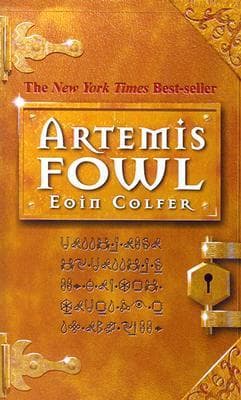
- Artemis Fowl
Eoin Colfer
3.9 (496k) average on GoodreadsFantasyThe Switch and Artemis Fowl both feature young protagonists in extraordinary circumstances. However, Artemis Fowl offers more intricate world-building, a complex magical society, and a morally ambiguous hero, whereas The Switch maintains a more straightforward good-versus-evil dynamic and focuses more on the immediate mystery of the body switch rather than extensive world lore.
- Coraline
Neil Gaiman
4.0 (23k) average on GoodreadsFantasyWhile both books involve young characters encountering fantastical, unsettling situations, Coraline delves into darker, more psychological horror and explores profound themes of identity, neglect, and desire within its fantasy framework. The Switch, in contrast, maintains a lighter, more adventure-oriented tone, prioritizing plot twists and immediate thrills over deeper existential inquiries, making it suitable for a slightly younger audience than Gaiman's often more unsettling work.
- Harry Potter and the Sorcerer's Stone
J.K. Rowling
4.5 (7M) average on GoodreadsFantasyRescued from a miserable life under the stairs, an orphaned boy discovers he's a wizard destined for a magical school, where he uncovers a dangerous secret tied to the dark wizard who murdered his parents.
- The Hunger Games
Suzanne Collins
4.3 (6.4M) average on GoodreadsFantasyIn a future where children fight to the death on live television, Katniss Everdeen volunteers for the arena, turning a death sentence into a fight for survival and a spark of rebellion.
- 1984
George Orwell
4.2 (3.1M) average on GoodreadsPoliticsIn a future where surveillance and thought control are absolute, a man's search for truth clashes with the Party, showing that hope can be a form of rebellion.
- Divergent
Veronica Roth
4.2 (2.9M) average on GoodreadsFantasyIn a society divided by virtues, a sixteen-year-old's difference from the norm starts a rebellion that threatens her world.





Enjoyed the summary?
A summary gives you the shape of the book. The book itself has the detail, the examples and the voice.
Find The Switch on AmazonAs an Amazon Associate, BookBrief earns from qualifying purchases. How we're funded