
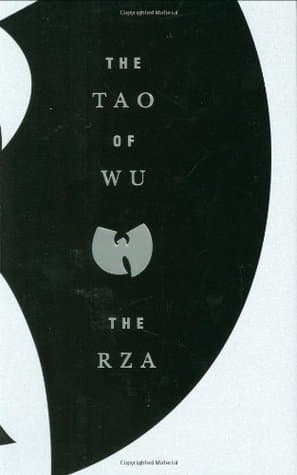
Core Idea
- Difficulty
- Medium
- Read it if
- You are a fan of Wu-Tang Clan and want to understand the philosophical underpinnings of their music and RZA's life, or if you're interested in a unique blend of street wisdom, Eastern philosophy, and creative process.
- Skip it if
- You are looking for a straightforward, chronological autobiography or if you have no interest in spirituality, philosophy, or hip-hop culture.
Key Takeaways from The Tao of Wu
The Five Chambers of the Heart
Inner peace and wisdom are cultivated through self-awareness and spiritual discipline.
The RZA describes the 'Five Chambers of the Heart' as a way to understand and improve oneself. These chambers represent different parts of growth: physical, mental, emotional, spiritual, and divine. Balancing and mastering these chambers leads to real wisdom and power, both inside and out. It is a continuous process of self-reflection, learning, and applying old wisdom to new problems, showing that true strength comes from within and is built through effort and understanding one's own complex nature.
“The Five Chambers of the Heart is a concept I developed to represent the inner journey of a man.”
In the book: The RZA's personal journey from a troubled youth to a spiritual leader in hip-hop, often referencing his studies of the Five Percent Nation, Eastern philosophy, and martial arts, all of which inform his 'chambers' concept.
Try this: Regularly meditate or journal to identify which 'chamber' of your heart needs attention. Focus on balancing your physical health, mental clarity, emotional stability, spiritual connection, and seeking a higher purpose. Engage in practices that nurture each aspect, such as exercise for the physical, reading for the mental, introspection for the emotional, and prayer/meditation for the spiritual.
Related ideas: five-percent-nation, spiritual-journey, self-mastery
Chess as a Blueprint for Life
Strategic thinking and foresight are essential for navigating life's complexities.
The RZA often uses chess as a strong symbol for life, stressing the importance of thinking ahead, foresight, and knowing the results of one's actions. Each piece on the board represents different parts or people in life. The game itself shows the constant back-and-forth of attack and defense, planning and adapting. He says that by learning to 'play chess' in life, one can predict problems, take calculated risks, and reach desired goals, whether in business, relationships, or personal growth. This way of thinking moves from reacting to acting, helping people shape their future instead of being controlled by events.
“Chess is like life. You gotta think three, four moves ahead.”
In the book: His early experiences playing chess in the streets and later incorporating chess analogies into Wu-Tang Clan's mythology and business strategies, demonstrating how strategic thought led to their success.
Try this: Before making significant decisions, visualize potential outcomes and counter-moves, much like a chess game. Consider the long-term implications of your choices and develop a 'game plan' that accounts for various scenarios. Practice observation and pattern recognition in your daily interactions to better predict human behavior and environmental shifts.
Related ideas: strategic-thinking, foresight, game-theory
The Power of the Name
Identity and self-definition are foundational to personal power and destiny.
The RZA discusses the deep meaning of names, especially within the Five Percent Nation, where names are chosen to show one's character, hopes, and understanding of the universe. He explains that a name is not just a label but a core feeling, a statement of self, and a guide for one's actions. By choosing or accepting a name that shows your best self, you connect your inner being with how you appear to the world, showing your potential. This idea encourages people to think deeply about who they are and who they want to be, using their identity as a strong tool for self-creation and influence.
“Your name is your blueprint. It’s what you stand for, what you represent.”
In the book: His own adoption of the name 'The RZA' (meaning 'Ruler, Zig-Zag-Zig, Allah'), and the specific meanings behind the names of other Wu-Tang Clan members, each reflecting their unique contributions and philosophies.
Try this: Reflect on your own name and its personal significance. If you feel disconnected, consider what qualities or aspirations you wish to embody and how you might symbolically 'rename' or redefine yourself to align with those values. Act in ways that consistently reinforce the identity you wish to project and embody.
Related ideas: identity, self-definition, five-percent-nation
From the Gutter to the Stars
Adversity and struggle are fertile ground for growth and spiritual awakening.
The RZA's life story shows how hardship can change someone. He explains that the tough reality of growing up poor and facing violence in the Staten Island projects were not just problems but important training grounds. These experiences made him develop resilience, resourcefulness, and a deep understanding of people. He believes that true wisdom is not found in comfort but in dealing with difficulty, learning from errors, and going beyond limits. This view redefines struggle not as a curse but as a necessary step for building character and achieving success.
“The gutter is where you learn the most important lessons. The stars are where you apply them.”
In the book: His detailed accounts of drug dealing, run-ins with the law, and the violence he witnessed and experienced in his youth, juxtaposed with his later spiritual awakening and success in music.
Try this: Instead of viewing challenges as setbacks, reframe them as opportunities for learning and growth. Identify the specific lessons embedded in your past and present struggles. Cultivate resilience by actively seeking solutions and maintaining a positive mindset even when faced with difficult circumstances.
Related ideas: resilience, adversity, personal-growth
The Alchemy of Creativity
Transforming raw experiences and diverse influences into unique artistic expression.
The RZA sees creativity, especially in hip-hop, as a modern form of alchemy. He mixes different elements – street stories, martial arts philosophy, Five Percent Nation teachings, soul samples, and comic book lore – to make something new and meaningful. This 'alchemy' is not just about making music but about combining life experiences, knowledge, and cultural influences into a clear and strong artistic vision. He shows that real innovation comes from being willing to try new things, to see connections where others do not, and to turn the ordinary into the extraordinary, proving that the 'ghetto' can be a source of genius.
“Hip-hop is alchemy. You take something from nothing and turn it into gold.”
In the book: His innovative production techniques for the Wu-Tang Clan, sampling obscure kung fu movie dialogues, 70s soul records, and layering them with gritty beats and complex lyrical themes to create a distinct sound.
Try this: Identify diverse influences and interests in your own life and actively seek to combine them in novel ways, whether in your work, hobbies, or problem-solving. Don't be afraid to break traditional boundaries and experiment with unconventional combinations of ideas and materials.
Related ideas: creativity, artistic-expression, innovation
The Teacher and the Student
Life is a continuous cycle of learning, teaching, and seeking knowledge.
The RZA stresses that learning and sharing knowledge is a cycle. He thinks that real wisdom comes from always being a student, even after becoming skilled. This means always looking for new information, thinking about experiences, and being open to different ideas. At the same time, he highlights the duty of a 'master' or 'teacher' to share their knowledge and guide others, creating a community of informed people. This idea promotes humility, constant improvement, and the understanding that learning is a lifelong journey without a clear end, where every interaction offers a chance to grow.
“You gotta be a student first, then a master, then a teacher. And then you become a student again.”
In the book: His mentorship of other Wu-Tang members, his role in educating fans through his lyrics and books, and his own continuous study of various spiritual and philosophical texts throughout his life.
Try this: Commit to lifelong learning by regularly reading, taking courses, or engaging in new experiences. Seek out mentors who can guide your journey, and in turn, identify opportunities to share your knowledge and experience with others, even informally. Embrace the idea that you can learn something from everyone.
Related ideas: lifelong-learning, mentorship, wisdom
The Power of the Collective
Synergy and unity amplify individual strengths for greater impact.
The RZA points out the great power of a united group. The Wu-Tang Clan's success was not just from individual talent but from their ability to work together, use each member's unique strengths, and follow a shared vision and philosophy. He shows how a strong group can overcome problems, reach goals far beyond what individuals could do, and leave a lasting mark. This idea applies beyond music to any effort needing teamwork, emphasizing the importance of loyalty, mutual respect, and a common goal in building something truly effective and lasting.
“Wu-Tang is forever. It’s a collective, a movement, not just a group.”
In the book: The formation and sustained success of the Wu-Tang Clan, their unique business model allowing for solo careers while maintaining group cohesion, and their impact on hip-hop culture.
Try this: Identify opportunities to collaborate with others who share your vision or complement your skills. Actively foster a sense of unity and shared purpose within your team or community. Prioritize collective goals over individual ego, understanding that the whole is greater than the sum of its parts.
Related ideas: collaboration, teamwork, collective-intelligence
The Balance of Light and Dark
Embracing duality is crucial for understanding reality and achieving wholeness.
The RZA often discusses duality, a common theme in many spiritual and philosophical traditions. He argues that life is a constant interaction of opposing forces – good and evil, creation and destruction, light and dark. True understanding and inner peace come not from ignoring one side but from recognizing and including both. This balance is not about being neutral but about seeing that each force is necessary in the universe and within oneself. Accepting this duality allows for a more detailed view of challenges and successes, encouraging acceptance and wisdom.
“You can't have light without dark. You can't have good without bad. That's the balance of the universe.”
In the book: His lyrics often explore themes of street violence alongside spiritual enlightenment, and his personal journey reflects a constant negotiation between the harsh realities of his environment and his pursuit of higher knowledge.
Try this: Recognize and accept the dualities in your own life and the world around you. Instead of fighting against negative emotions or challenging situations, try to understand their role and what they might be teaching you. Strive for balance in all aspects, rather than extreme adherence to one side.
Related ideas: duality, yin-yang, balance
The Architect of Your Destiny
You possess the power to consciously shape your future through intention and action.
A main idea of The Tao of Wu is that each person creates their own future. The RZA’s path from poverty to international fame proves this belief. He rejects the idea of being a victim of circumstances, instead supporting taking full responsibility for one's life choices and actively creating the future one wants. This involves setting clear goals, making specific plans, and consistently working towards them, even when facing problems. It is a call to empowerment, urging readers to recognize and use their natural creative power to design their lives.
“I realized I was the architect of my own destiny. Nobody else was gonna build it for me.”
In the book: His decision to move to Ohio to avoid jail, his meticulous planning of the Wu-Tang Clan's business structure, and his unwavering commitment to his artistic and spiritual vision despite numerous setbacks.
Try this: Clearly define your personal and professional goals. Develop a concrete plan with actionable steps to achieve them. Regularly review your progress and adjust your 'blueprint' as needed. Take ownership of your choices and outcomes, understanding that your actions directly influence your future.
Related ideas: self-determination, personal-agency, manifestation
Wu-Tang as a Spiritual Path
Art and culture can serve as vehicles for spiritual growth and philosophical inquiry.
Beyond being a groundbreaking hip-hop group, The RZA presents the Wu-Tang Clan as a spiritual and philosophical movement. He put teachings from the Five Percent Nation, martial arts, Eastern philosophy, and his own street wisdom into their music, images, and stories. This shows how art, especially hip-hop, can be more than just entertainment; it can be a strong way to share deep truths, encourage self-reflection, and guide people on their own spiritual paths. It confirms that wisdom can come from unexpected places and that creative expression can be a form of devotion and insight.
“Wu-Tang wasn't just music; it was a way of life, a philosophy, a spiritual path.”
In the book: The complex, layered lyrics of Wu-Tang songs, the intricate mythology built around the 'Clan,' and the deliberate use of aliases and symbolism that conveyed deeper spiritual meanings to their fans.
Try this: Seek out art, music, literature, or cultural movements that resonate with your personal values and spiritual curiosity. Engage with these forms not just for entertainment, but for deeper meaning and insight. Consider how your own creative expressions or daily activities can be infused with greater purpose and intention.
Related ideas: hip-hop-culture, spiritual-art, cultural-philosophy
The Tao of Wu Quotes
“Hip-hop is more than music. It’s a culture, it’s a lifestyle, it’s a way of thinking, a way of moving, a way of dressing.”
“The mind is a powerful tool. It can be your greatest friend or your deadliest enemy.”
“Wu-Tang is for the children. That means we give them knowledge, wisdom, and understanding.”
“Every man has a purpose. You just gotta find yours.”
“Fear is a mind killer. It's the little death that brings total obliteration.”
“The greatest weapon against stress is our ability to choose one thought over another.”
“You got to build your own universe, man. You got to create your own world.”
“Knowledge is infinite. The more you learn, the more you realize how much you don't know.”
“The Tao is the way. It's the path of least resistance. It's the flow.”
“Don't be afraid to fail. Failure is just another lesson learned.”
“Music is the universal language. It speaks to the soul.”
“Peace is not the absence of trouble, but the presence of God.”
“The journey of a thousand miles begins with a single step, but the journey of a million miles begins with a single thought.”
“Your environment shapes you, but you also shape your environment.”
Quiz
10 questions on the main ideas. Each answer comes with a short explanation.
Question 1
What core concept, derived from Eastern philosophy, does RZA frequently integrate into his understanding of life, music, and the universe, as discussed throughout 'The Tao of Wu'?
- The Four Noble Truths
- The Yin and Yang principle
- The Eightfold Path
- The concept of Karma
Show answer
B. The Yin and Yang principle RZA extensively uses the Yin and Yang principle to explain the dualities and balance in life, from his experiences in the streets to the creative process of the Wu-Tang Clan.
Question 2
According to RZA, what was a significant turning point in his early life that led him to deepen his study of martial arts, philosophy, and spirituality?
- Signing his first major record deal
- A near-fatal shooting incident
- The formation of the Wu-Tang Clan
- His first trip to Asia
Show answer
B. A near-fatal shooting incident RZA details how a near-fatal shooting experience served as a profound wake-up call, prompting him to seek deeper meaning and knowledge beyond the street life.
Question 3
What specific ancient game does RZA frequently reference as a metaphor for strategic thinking, life choices, and the understanding of cause and effect?
- Poker
- Chess
- Go
- Backgammon
Show answer
B. Chess Chess is a recurring motif in the book, used by RZA to illustrate strategic planning, foresight, and the consequences of every move, both in the game and in life.
Question 4
RZA discusses his early experiences with Five-Percent Nation teachings. What is one of the primary practical applications he took from this philosophy in his daily life and creative work?
- A focus on vegetarianism
- The importance of self-knowledge and understanding the universe
- Strict adherence to a specific dress code
- A rejection of all forms of organized religion
Show answer
B. The importance of self-knowledge and understanding the universe The Five-Percent Nation's emphasis on 'Knowledge of Self' and the idea that Black men are 'Gods' deeply influenced RZA's worldview, empowering him to seek knowledge and create his own reality.
Question 5
How does RZA describe the relationship between his violent past in the Staten Island projects and his later spiritual and philosophical pursuits?
- He views them as entirely separate and unrelated phases of his life.
- He sees his past struggles as essential catalysts that drove him to seek wisdom and transformation.
- He believes his past was an unfortunate detour that hindered his spiritual growth.
- He suggests the violence was a necessary evil for him to gain street credibility.
Show answer
B. He sees his past struggles as essential catalysts that drove him to seek wisdom and transformation. RZA consistently frames his difficult past as a crucible, where the pressures and dangers forced him to look inward and seek a higher path, embodying the 'no mud, no lotus' philosophy.
Question 6
In 'The Tao of Wu,' RZA frequently discusses the importance of a 'master' or mentor. Who does he identify as a key early mentor figure who introduced him to deeper spiritual and philosophical concepts beyond what he learned in the streets?
- His mother
- A Shaolin Kung Fu master he met in China
- An older, incarcerated intellectual he encountered
- Russell Simmons
Show answer
C. An older, incarcerated intellectual he encountered RZA speaks about an influential figure he met who, despite being incarcerated, shared profound knowledge and wisdom that greatly impacted RZA's intellectual and spiritual development.
Question 7
What is the primary metaphor RZA uses to explain the concept of 'flow' and creative synergy within the Wu-Tang Clan, emphasizing how individual members contribute to a greater whole?
- A well-oiled machine
- A complex ecosystem
- A martial arts battle, where each member plays a specific role
- A scientific experiment
Show answer
C. A martial arts battle, where each member plays a specific role RZA often frames the Wu-Tang Clan's dynamic in terms of martial arts, with each member having a distinct style and role that, when combined, forms an unstoppable force, much like a well-coordinated fighting team.
Question 8
RZA discusses the concept of 'breaking the cycle' in his life. What specific 'cycle' was he most determined to break, drawing on his spiritual insights?
- The cycle of poverty and violence he witnessed in his community
- The repetitive nature of mainstream hip-hop music
- His own tendency towards procrastination
- The cycle of failed relationships
Show answer
A. The cycle of poverty and violence he witnessed in his community A central theme is RZA's conscious effort to transcend the generational cycles of poverty, crime, and limited opportunity that characterized his upbringing, using knowledge and creativity as his tools.
Question 9
Beyond music, martial arts, and philosophy, RZA mentions another key discipline he studied that helped him develop mental acuity and strategic thinking. What was it?
- Astrology
- Numerology
- Alchemy
- Calligraphy
Show answer
B. Numerology RZA delves into numerology, explaining how understanding the significance of numbers and their patterns influenced his worldview and even the structure and symbolism within the Wu-Tang Clan's mythology.
Question 10
RZA reflects on the challenges of maintaining artistic integrity and spiritual principles amidst commercial success. What is one specific lesson he shares about navigating the music industry while staying true to his 'Tao'?
- Always prioritize financial gain over creative vision.
- Compromise artistic vision significantly to appeal to the widest audience.
- Use the platform of success to further disseminate knowledge and authentic expression.
- Completely withdraw from the commercial aspect of music once successful.
Show answer
C. Use the platform of success to further disseminate knowledge and authentic expression. RZA emphasizes using the influence and resources gained from commercial success not for self-indulgence, but as a means to continue his mission of sharing knowledge, wisdom, and authentic art, thus integrating his 'Tao' with his career.
The Tao of Wu FAQ
What is 'The Tao of Wu' about?
The Tao of Wu is a spiritual memoir and philosophical discourse by The RZA, chronicling his life journey from the Staten Island projects to international stardom. It shares the wisdom and lessons he gained from various experiences, blending street knowledge, spirituality, martial arts, and pop culture.
Does 'The Tao of Wu' reveal the secrets behind Wu-Tang Clan's mythology?
While 'The Wu-Tang Manual' offered a glimpse, 'The Tao of Wu' delves deeper into the complex wisdom and spirituality that formed the core of the Wu-Tang Clan's creative and commercial success. It explores the philosophical underpinnings of their art and mythology through The RZA's personal experiences.
What kind of spiritual lessons does The RZA share in the book?
The RZA shares lessons derived from major turning points in his life, both positive and negative, drawing wisdom from diverse sources like religion, martial arts, chess, and street experiences. His insights are often surprising, provocative, and reveal a profound, genuine wisdom.
How is 'The Tao of Wu' different from 'The Wu-Tang Manual'?
While 'The Wu-Tang Manual' provided an overview of the Wu-Tang mythology, 'The Tao of Wu' is a more personal and introspective journey. It focuses on The RZA's spiritual and philosophical development, using his life story to illustrate the wisdom that shaped his success.
Is 'The Tao of Wu' only for Wu-Tang Clan fans?
No, while Wu-Tang fans will appreciate the deeper insights, 'The Tao of Wu' is written to enlighten, entertain, and inspire anyone interested in personal growth, spirituality, and philosophy. It's described as a 'nonfiction Siddhartha for the hip-hop generation,' appealing to a broad audience.
Does 'The Tao of Wu' offer practical advice for life challenges?
Yes, the book is structured around dramatic turning points in The RZA's life, and he explicitly shares the lessons he took from each experience. These insights offer a unique perspective on navigating adversity, making difficult decisions, and finding purpose.
What is the 'Tao of Wu' concept?
The 'Tao of Wu' refers to The RZA's unique philosophy and spiritual path, a blend of Eastern wisdom, street smarts, and personal experiences that guided him through life's challenges. It represents a way of understanding the world and oneself, leading to both creative and personal fulfillment.
How does RZA incorporate martial arts into his philosophy?
The RZA is a devout student of knowledge in many forms, including martial arts. He integrates the discipline, philosophy, and strategic thinking found in martial arts into his broader worldview, using its principles to navigate life's battles and achieve success.
About the author

The RZA is an American musician, producer, and filmmaker, best known as a founding member of the hip-hop group Wu-Tang Clan. In his book, The Tao of Wu, he explores themes of philosophy, spirituality, and personal growth, drawing from his experiences in music and life. His work often reflects his interest in martial arts and Eastern philosophy.
Similar books
- The 48 Laws of Power
Robert Greene
4.2 (79k) average on GoodreadsBusinessBoth books distil complex life strategies and philosophies into actionable principles for success, albeit from different cultural lenses.
- Zen and the Art of Motorcycle Maintenance: An Inquiry Into Values
Robert M. Pirsig
3.8 (200k) average on GoodreadsPsychologyExplores philosophical concepts through a personal journey, blending narrative with deep reflection on quality, purpose, and self-discovery.
- The Diary of a Young Girl
Anne Frank
4.2 (2.7M) average on GoodreadsBiographyDuring the Nazi occupation, a teenage girl's diary, written from a secret annex, shares observations on humanity, hope, and the wait for freedom.
- Eat, Pray, Love
Elizabeth Gilbert
3.6 (1.5M) average on GoodreadsLifestyleA heartbroken writer leaves her conventional life for a year-long global search for pleasure in Italy, spiritual devotion in India, and unexpected love and balance in Bali.
- Night
Elie Wiesel
4.3 (970k) average on GoodreadsBiographyIn the darkness of Auschwitz and Buchenwald, a teenage Elie Wiesel faces the extermination of his family, the loss of his faith, and the lasting scars of humanity's deepest cruelty.
- Steve Jobs
Walter Isaacson
4.1 (957k) average on GoodreadsBusinessSteve Jobs was a visionary who fused creativity and technology to revolutionize six industries and shape our digital world.





Enjoyed the summary?
A summary gives you the shape of the book. The book itself has the detail, the examples and the voice.
Find The Tao of Wu on AmazonAs an Amazon Associate, BookBrief earns from qualifying purchases. How we're funded