

Synopsis
Covers the whole plot, including the ending.
- Difficulty
- Medium
- Pacing
- Variable
- Mood
- Dark, Critical, Intense, Realistic
- Read it if
- You enjoy complex, multi-perspective narratives exploring themes of authority, rebellion, and moral decay within a rigid institutional setting.
- Skip it if
- You prefer linear plots or are sensitive to depictions of violence, bullying, and systemic corruption.
The Time of the Hero Plot Summary
Covers the whole plot, including the ending.
The Stolen Exam and the Informer
The novel starts at the Leoncio Prado Military Academy in Lima, Peru, with a chemistry exam stolen by a group of cadets led by 'The Jaguar.' This rebellious act, meant to help the group, quickly becomes a problem when Lieutenant Gamboa, a strict officer, begins a thorough investigation. The cadets, especially 'The Slave' (Ricardo Arana), who is often blamed, fear the consequences. During the investigation, Cava, a member of the Circle, is identified as the thief and expelled. However, it is later revealed that Ricardo Arana, fearing the Circle's dangerous activities, told Lieutenant Gamboa about Cava. This betrayal starts a chain of tragic events.
The Death of The Slave
After Cava's expulsion, tensions grow at the Academy. During a field exercise, Ricardo Arana, 'The Slave,' is shot in the head. The official story is that he accidentally shot himself. But several cadets, including Alberto Fernández (The Poet) and The Jaguar, suspect murder. Alberto, who knew Ricardo and about his betrayal of Cava, believes the shooting was revenge. This event deeply affects Alberto, who struggles with the injustice and the Academy's attempt to hide the truth. Ricardo Arana's death exposes the brutal realities and moral decay within the military institution.
Alberto's Investigation and Blackmail
Disturbed by Ricardo's death and the cover-up, Alberto Fernández, 'The Poet,' decides to investigate. He gathers evidence and tells Lieutenant Gamboa his suspicions, pointing to The Jaguar as the likely killer. Alberto also writes a report detailing the corruption, hazing, and immorality at the Academy, including officers' involvement in illegal activities. He gives this report to Colonel Lopez, the Academy's director, hoping to expose the truth and get justice for Ricardo. However, Alberto is manipulated and blackmailed by the authorities, who threaten to expose his own scandalous writings (pornographic stories) if he does not retract his accusations.
The Jaguar's Past Revealed
Throughout the story, flashbacks show the Jaguar's background. His real name is not directly given in this identity. These parts describe his poor and violent childhood in the Callao district of Lima. He is shown as a tough, street-smart leader who forms a gang with friends, committing small crimes and fighting to survive. These experiences shape his cynical view and his distrust of authority. His decision to join the military academy is presented as a desperate way to escape his circumstances, but he brings his street mentality into the institution, forming the 'Circle' and challenging the established order. These flashbacks explain his behavior and actions at the Academy.
Alberto's Moral Compromise
Under great pressure and fearing the public exposure of his pornographic stories, Alberto Fernández is forced to withdraw his accusations about Ricardo Arana's death. He signs a statement confirming the official story of an accidental shooting, giving up his search for justice. This act is a major moral compromise for Alberto, showing the corrupting power of the institution and how hard it is to stand against it. He feels betrayed and disillusioned, realizing that individual truth is often sacrificed for institutional reputation and power. His idealism is crushed, and he becomes more cynical about life and society.
The Boa's Perspective and Affection for Malpapeada
Interspersed with the main story are diary entries from 'The Boa,' another member of the 'Circle.' These entries offer a unique, often crude and animalistic, view of life at the Academy. Boa expresses his desires, his observations of his peers, and his deep, though unusual, affection for a female dog named Malpapeada, who lives in the cadets' quarters. His entries show a character driven by instinct and a primitive understanding of loyalty and friendship. Boa's perspective contrasts with Alberto's intellect and The Jaguar's stoicism, giving a raw, unfiltered look into the cadets' world and the moral ambiguity within it. His entries often cover sexuality, dominance, and the struggle to survive.
Ricardo's Love for Teresa
Flashback sequences show Ricardo Arana's innocent love for Teresa, a girl from his neighborhood. Ricardo, often shy, finds comfort and hope in his feelings for her. He dreams of a future with her, imagining a life away from the harsh realities of the Academy. Teresa represents purity, kindness, and a connection to a world outside military discipline and violence. His wish to be worthy of her love drives some of his actions, including his attempts to distance himself from the 'Circle' and its dangerous activities. This innocent romance contrasts with the brutality and corruption he experiences at the Academy, making his death more tragic.
Alberto and Teresa's Relationship
After Ricardo Arana's death, Alberto Fernández is drawn to Teresa. He visits her, first to offer condolences and information about Ricardo, but their relationship gradually deepens. Alberto, more confident and articulate than Ricardo, begins to court Teresa. He uses his charm and intelligence to win her affection, often romanticizing his experiences and leaving out the darker truths of the Academy. This relationship is complex, tinged with guilt and Ricardo's memory. It shows Alberto's ability to adapt and move on, but also his capacity for self-deception and manipulation, reflecting the broader societal hypocrisy the novel explores.
The Jaguar's Confession and Redemption
Near the end of the novel, the Jaguar, after much internal struggle, confesses to Lieutenant Gamboa that he deliberately shot Ricardo Arana. He reveals he killed Ricardo in revenge for informing on Cava, seeing Ricardo's betrayal as breaking the 'Circle's' code. This confession, made years after the incident and after the Jaguar has left the Academy, marks a change for his character. It represents an acceptance of responsibility, even if late. His confession, however, receives no official action, further emphasizing the widespread corruption and the Academy's desire to protect its public image at all costs.
Lieutenant Gamboa's Transfer and Integrity
Lieutenant Gamboa, though a minor character, is one of the few truly honorable figures at the Academy. His pursuit of justice and refusal to compromise his principles make him an inconvenience to the corrupt military hierarchy. After the Jaguar's confession, Gamboa tries to expose the truth, but his efforts are blocked by his superiors. As a result of his integrity and inability to be manipulated, he is transferred to a remote, undesirable post in the Andes. This transfer shows how honesty is punished within the corrupt system, reinforcing the novel's critique of institutional decay.
The Cadets' Fates After the Academy
The novel ends by showing the adult lives of the main characters after they leave the Leoncio Prado Military Academy. Alberto Fernández, 'The Poet,' becomes a successful advertising executive, using his creative talents to craft persuasive, often misleading, commercial narratives. He marries Teresa, but their relationship is somewhat empty. The Jaguar, after his confession, seems to find peace and normalcy, working as a bank employee and marrying Paulina. Boa, after military service, returns to his working-class roots, keeping his rough and practical view of the world. Their adult lives reflect how their experiences at the Academy shaped them and their ability to navigate a corrupt society, some adapting more cynically than others.
The Time of the Hero Characters
Alberto Fernández ('The Poet')
Protagonist
An intelligent and artistic cadet who struggles with morality and integrity.
Alberto is initially portrayed as a sensitive, intelligent, and artistic cadet with a talent for writing. He is known as 'The Poet' for his ability to craft stories, both legitimate and illicit. He is observant and critical of the Academy's harsh realities, often serving as the narrative's conscience. However, he is also pragmatic, capable of adapting to circumstances, and susceptible to the corrupting influences around him. He struggles with his own moral compromises, particularly when his personal reputation is threatened. His internal monologues provide much of the novel's psychological depth and social commentary.
Relationships: Ricardo Arana (Friend and rival for Teresa's affection; initially a confidant, later a source of guilt.); The Jaguar (Rival and accuser; he suspects Jaguar of Ricardo's murder.); Teresa (Love interest and later wife; their relationship is complex and somewhat superficial.); Lieutenant Gamboa (Initial ally in seeking justice, later a figure of authority he must concede to.)
The Jaguar
Antagonist/Protagonist
A tough, charismatic, and enigmatic leader from the streets of Callao.
The Jaguar is the leader of 'The Circle,' a powerful and feared group of cadets. He is introduced as a strong, silent, and fiercely independent figure who refuses to be broken by the Academy's harsh discipline. His backstory reveals a brutal upbringing in the slums of Callao, where he learned to survive through cunning and violence. He embodies a raw, primitive sense of justice and loyalty to his group, and a deep distrust of authority. His actions, though often violent, stem from a complex moral code shaped by his past. He is a symbol of rebellion against the system.
Relationships: Ricardo Arana (Victim; Jaguar kills Ricardo for informing.); Alberto Fernández (Rival; Alberto suspects Jaguar of murder.); The Circle members (Leader and enforcer; commands loyalty and fear.); Lieutenant Gamboa (The officer he eventually confesses to, respecting Gamboa's integrity.)
Ricardo Arana ('The Slave')
Supporting/Victim
A timid and insecure cadet, often a scapegoat, who yearns for a normal life.
Ricardo, known as 'The Slave,' is a timid, insecure, and often bullied cadet. He is an easy target for hazing and manipulation by 'The Circle.' He dreams of a future with Teresa, which drives his desire to escape the Academy's harsh environment and its corrupting influences. His act of informing on Cava, though motivated by fear and a desire to stop the 'Circle's' illicit activities, ultimately leads to his tragic death. Ricardo represents the innocent victim of the system, caught between the brutality of his peers and the indifference of the institution.
Relationships: Alberto Fernández (Friend and confidant, sharing secrets about Teresa.); The Jaguar (His killer, motivated by revenge for betrayal.); Teresa (His innocent love interest, representing hope and an escape from his harsh reality.); Cava (The cadet he informs on, leading to Cava's expulsion.)
Lieutenant Gamboa
Supporting
A strict, honest, and incorruptible officer.
Lieutenant Gamboa is a minor but pivotal character, representing unwavering integrity and adherence to military discipline. He is a stern and principled officer who genuinely believes in the Academy's mission and strives to uphold its rules. He is relentless in his pursuit of truth and justice, even when it puts him at odds with his superiors. His incorruptibility makes him an anomaly in the morally compromised world of the Academy and the broader Peruvian society. His eventual transfer to a remote post underscores the novel's theme of how honesty is often punished within corrupt systems.
Relationships: Alberto Fernández (The officer Alberto initially confides in regarding Ricardo's death.); The Jaguar (The officer to whom Jaguar eventually confesses.); Colonel Lopez (His superior, who ultimately undermines his efforts to expose corruption.)
Teresa
Supporting
A working-class girl, the object of affection for both Ricardo and Alberto.
Teresa is a young woman from a modest background who becomes a focal point for the cadets' romantic aspirations. She is initially the innocent object of Ricardo Arana's affection, representing a pure and hopeful connection to the outside world. After Ricardo's death, she forms a relationship with Alberto Fernández, eventually marrying him. Teresa is portrayed as kind and somewhat passive, embodying a certain feminine ideal that contrasts with the masculine brutality of the Academy. Her character highlights the cadets' longing for normalcy and escape from their confined lives.
Relationships: Ricardo Arana (First love interest, representing innocence and an ideal future.); Alberto Fernández (Later husband, a more pragmatic and complex relationship.)
The Boa
Supporting
A crude and instinct-driven cadet, member of 'The Circle,' with a unique bond to a dog.
The Boa is a member of 'The Circle' and a close associate of The Jaguar. He is characterized by his crude language, his strong sexual urges, and his generally animalistic perspective on life. His diary entries offer a raw, unfiltered, and often humorous glimpse into the cadets' daily lives and their primitive desires. Despite his rough exterior, he displays a surprising loyalty to his friends and a deep, if unconventional, affection for a female dog named Malpapeada. Boa represents the more primal, less intellectual aspects of the cadets' world, driven by instinct and a desire for immediate gratification.
Relationships: The Jaguar (Loyal follower and friend within 'The Circle'.); Malpapeada (dog) (Deep and unconventional bond of affection.)
Colonel Lopez
Supporting
The Academy's director, concerned with reputation over truth.
Colonel Lopez is the director of the Leoncio Prado Military Academy. He represents the institutional authority and the pervasive corruption within the military hierarchy. His primary concern is the Academy's reputation and maintaining order, even if it means covering up uncomfortable truths. He manipulates situations and blackmails cadets like Alberto to ensure that any scandals are suppressed. He embodies the hypocrisy and moral decay that Vargas Llosa critiques, prioritizing self-preservation and institutional image over justice and integrity.
Relationships: Lieutenant Gamboa (Subordinate whose integrity he finds inconvenient.); Alberto Fernández (The cadet he blackmails to retract accusations.)
Cava
Mentioned
The cadet expelled for stealing the chemistry exam.
Cava is a member of 'The Circle' who is caught and expelled for stealing the chemistry exam. His expulsion, however, is a direct result of Ricardo Arana informing on him. While he is a minor character, his actions and subsequent expulsion are the catalyst for the tragic chain of events that follow, including Ricardo's death and The Jaguar's revenge. He represents the immediate consequence of the 'Circle's' rebellion.
Relationships: The Circle members (Fellow member, who he initially helps by stealing the exam.); Ricardo Arana (The cadet who informs on him.)
The Time of the Hero Themes
The Corrupting Nature of Power and Institutions
The novel shows how institutions, especially military ones, can create corruption, hypocrisy, and violence under the guise of discipline and honor. The Leoncio Prado Military Academy, a small version of Peruvian society, is full of hazing, theft, and cover-ups. Officers like Colonel Lopez prioritize the institution's reputation over truth, actively stopping investigations into Ricardo's death. This theme is clear when Alberto's attempts to expose the truth are met with blackmail, forcing him to retract his accusations and accept the official story. The transfer of the honest Lieutenant Gamboa highlights how integrity is often punished in such systems.
“They were learning to lie, to cheat, to kill, to be silent, to be cruel, to be cowardly, to be strong.”
The Loss of Innocence and Moral Compromise
The cadets, especially Alberto and Ricardo, enter the Academy with innocence and idealism, which the harsh environment systematically removes. Ricardo's naive hope for a future with Teresa is destroyed by his betrayal and murder. Alberto, initially seeking justice, is forced to compromise his integrity, leading him to a cynical adulthood where he uses his talents for commercial, rather than artistic, purposes. The shift from youthful idealism to adult disillusionment is a main focus, showing how people adapt, or fail to adapt, to a morally ambiguous world. The novel suggests that survival often requires some moral surrender.
“The Academy was a machine for making men, but it was also a machine for turning boys into cynics.”
Masculinity, Violence, and Hierarchy
The Academy explores different aspects of masculinity, often through violence and strict hierarchy. Constant hazing, the 'Circle's' dominance, and the cadets' struggles for power define their experience. The Jaguar represents a raw, street-hardened masculinity, while Ricardo is a more vulnerable figure, making him a target. The military environment reinforces a harmful masculinity where aggression, dominance, and emotional suppression are valued. The novel questions what it means to be a 'man' in such a society, suggesting that true strength is not always found in brutality, but often in integrity, which is rarely rewarded.
“Here, a man had to be tough, or he was nothing.”
Social Class and Identity
The novel subtly examines how social class shapes the cadets' identities and futures. While the Academy seemingly offers a way to move up socially, especially for those from poorer backgrounds like The Jaguar, class differences remain. The 'Dogs' (first-year cadets) are often from lower classes and face the worst hazing, reflecting societal inequalities. The Jaguar's background in the Callao slums deeply influences his worldview and his distrust of the elite. Even after leaving the Academy, characters are often defined by their social origins, showing how class structures continue to impact individual lives in Peruvian society.
“The Academy was a place where the poor learned to be rich, and the rich learned to be officers.”
Plot Devices & Literary Techniques
Multiple Narrators/Perspectives
The story is told through shifting viewpoints, including first-person, third-person, and diary entries.
Vargas Llosa employs a fragmented narrative structure, shifting between the third-person omniscient perspective (primarily following Alberto and the general Academy events), first-person internal monologues (often Alberto's thoughts), and the raw, unedited diary entries of 'The Boa.' This allows for a multi-faceted exploration of events, revealing the subjective truths and moral ambiguities of each character. The shifts create a sense of immediacy and psychological depth, forcing the reader to piece together the full picture and question the reliability of each account. This technique effectively mirrors the fragmented and often contradictory nature of truth within the corrupt institution.
Flashbacks and Non-Linear Chronology
The narrative frequently jumps between past and present, revealing characters' backstories and motivations.
The novel does not follow a linear timeline. It constantly moves back and forth between the present events at the Academy (the theft, Ricardo's death, the investigation) and extensive flashbacks detailing the characters' pasts – The Jaguar's violent upbringing, Ricardo's innocent love for Teresa, and Alberto's early life. This non-linear structure gradually unveils the characters' motivations and the forces that shaped them, providing crucial context for their actions. It also builds suspense and allows Vargas Llosa to explore the lasting impact of early experiences on adult behavior, emphasizing how the past informs the present.
The Leoncio Prado Military Academy as a Microcosm
The Academy functions as a symbolic representation of Peruvian society.
The Leoncio Prado Military Academy is not merely a setting but a powerful symbol. It acts as a microcosm of Peruvian society, reflecting its class divisions, corruption, hypocrisy, and machismo. The hazing and power struggles among cadets, the cover-ups by the officers, and the emphasis on appearances over truth all mirror broader societal flaws. By focusing on this enclosed, hierarchical world, Vargas Llosa critiques the larger political and social structures of Peru, suggesting that the moral decay within the institution is indicative of a deeper national malaise. The Academy's walls fail to protect its inhabitants from the outside world's problems; instead, they amplify them.
Symbolism of Animals
Cadets are often referred to by animalistic nicknames, highlighting their primal natures.
The use of animalistic nicknames ('The Jaguar,' 'The Boa,' 'The Slave' as a sacrificial lamb) and the presence of the dog Malpapeada serve as powerful symbols. These nicknames strip the cadets of their individual humanity, reducing them to primal instincts and roles within the pack. 'The Jaguar' embodies fierce, predatory power, while 'The Boa' represents base desires and a more primitive connection to the natural world. Malpapeada, the female dog, becomes an object of affection and even sexual interest, further blurring the lines between human and animal behavior within the confined, hyper-masculine environment of the Academy, underscoring the dehumanizing effects of the institution.
The Time of the Hero Quotes
“Life is elsewhere, he thought, but he didn't know where.”
“Nobody's born a hero. You become one, little by little, by doing things that scare you.”
“The worst thing about lying is that you end up believing your own lies.”
“Freedom is a very expensive word.”
“We are all prisoners of our own pasts, our own memories.”
“To be a man is to be alone, to be strong enough to be alone.”
“There are no good or bad people, only good or bad circumstances.”
“The world is full of people who want to be something they're not.”
“Fear is a powerful master.”
“Books are dangerous. They make you think.”
“In the end, everyone is alone. Even among friends.”
“The greatest battles are fought within ourselves.”
“Silence is also a form of lying.”
“The future is always uncertain, but that's what makes it exciting.”
“Reality is a messy business, full of contradictions.”
Quiz
10 questions on the plot and the characters. Each answer comes with a short explanation.
Question 1
What is the primary objective of the initial mission undertaken by the four cadets in the pitch-black lavatory?
- To steal pisco and cigarettes for a poker game.
- To steal a copy of the next day's chemistry examination from the captain's office.
- To mutilate the uniform of a disliked officer.
- To plant evidence against a rival group of cadets.
Show answer
B. To steal a copy of the next day's chemistry examination from the captain's office. The cadets' initial mission is to steal the chemistry exam, which sets off a chain of events in the story.
Question 2
Who is described as the leader of the cadets' rebellion and 'an aloof, tough boy who refuses to be initiated'?
- The Poet
- The Boa
- The Jaguar
- The Slave
Show answer
C. The Jaguar The Jaguar leads the rebellion, refusing to conform to the hazing and military discipline.
Question 3
In what year of their Academy enrollment does the novel open, marking a turning point from pranks to tragedy?
- First Year
- Second Year
- Third Year
- Fourth Year
Show answer
C. Third Year The novel opens in the cadets' Third Year, when their initial pranks escalate into tragedy.
Question 4
What is 'The Poet' character known for doing to earn money within the Academy?
- Running midnight poker games.
- Smuggling pisco and cigarettes.
- Writing and selling pornographic stories.
- Selling answers to examinations.
Show answer
C. Writing and selling pornographic stories. The Poet, described as the class brain, writes and sells pornographic stories.
Question 5
The discovery of the stolen final exam triggers what specific cycle of events?
- Increased hazing rituals and cadet punishments.
- A cycle of betrayal, murder, and revenge.
- An internal investigation leading to immediate expulsions.
- A public scandal involving the Academy and the city.
Show answer
B. A cycle of betrayal, murder, and revenge. The theft of the exam sets off a 'cycle of betrayal, murder, and revenge,' jeopardizing the military hierarchy.
Question 6
The novel is described as moving back and forth between several narrative elements. Which of the following is NOT mentioned as one of these shifts?
- From past to present.
- From inner thought to outer action.
- From the Academy to the city outside.
- From first-person to third-person narration.
Show answer
D. From first-person to third-person narration. The description mentions shifts from past to present, inner thought to outer action, and within the Academy to the city outside, but not a change in narrative perspective.
Question 7
What role does 'The Slave' character typically play within the group of rebellious cadets?
- He is the one who organizes the exam thefts.
- He is their 'built-in scapegoat'.
- He is responsible for smuggling contraband.
- He negotiates with the officers.
Show answer
B. He is their 'built-in scapegoat'. The Slave is explicitly referred to as the group's 'built-in scapegoat'.
Question 8
What larger societal issues does Vargas Llosa expose through the microcosm of the Leoncio Prado Military Academy?
- The positive impact of strict military discipline on youth.
- The benefits of a meritocratic system in military academies.
- The sordid world of the military elite, with its hypocrisy, moral decay, and power politics, and corruption throughout society.
- The challenges of integrating civilian life with military training.
Show answer
C. The sordid world of the military elite, with its hypocrisy, moral decay, and power politics, and corruption throughout society. The author uses the Academy to expose 'the sordid world of the military elite, with its hypocrisy, moral decay, and power politics, and the corruption throughout the society beyond the Academy walls.'
Question 9
The cadets' initial 'pranks' evolve into tragedy by the Third Year. What specific events exemplify these 'pranks' before the tragedy strikes?
- Organizing protests against the Academy's administration and officers.
- Smuggling in pisco and cigarettes, running midnight poker games, selling answers to examinations, stealing or mutilating uniforms.
- Directly confronting officers and refusing to obey orders.
- Attempting to escape the Academy grounds on multiple occasions.
Show answer
B. Smuggling in pisco and cigarettes, running midnight poker games, selling answers to examinations, stealing or mutilating uniforms. The description lists specific pranks: 'smuggling in pisco and cigarettes, running midnight poker games in the latrine, selling answers to examinations, stealing or mutilating uniforms.'
Question 10
How does the 'Jaguar' distinguish himself from other new cadets, earning his leadership role?
- By excelling academically and setting an example for his peers.
- By being 'an aloof, tough boy who refuses to be initiated and treated as one of the Dogs'.
- By being the wealthiest cadet and buying loyalty.
- By forming a secret alliance with a high-ranking officer.
Show answer
B. By being 'an aloof, tough boy who refuses to be initiated and treated as one of the Dogs'. The Jaguar's leadership stems from his refusal to be initiated and treated as one of the 'Dogs,' demonstrating his tough and aloof nature.
The Time of the Hero FAQ
What is the central conflict that drives the plot of "The Time of the Hero"?
The central conflict revolves around the cadets' struggle against the oppressive, brutal system of the Leoncio Prado Military Academy, particularly after the theft of a chemistry exam leads to a cycle of betrayal, murder, and revenge. This event escalates the already tense dynamic between the cadets and the military hierarchy, exposing widespread corruption.
Who are the primary members of the 'Circle' and what are their roles?
The 'Circle' is initially led by the Jaguar, a tough and rebellious cadet. Other key members include the Poet (Alberto Fernández), who writes and sells pornographic stories; the Boa, known for his sexual exploits; and the Slave (Ricardo Arana), who frequently becomes the group's scapegoat. These cadets attempt to subvert the Academy's rigid rules through various illicit activities.
How does the novel's non-linear narrative structure contribute to its themes?
The novel frequently shifts between past and present, inside and outside the Academy, and between different characters' perspectives. This fragmented structure allows Vargas Llosa to gradually reveal the characters' complex motivations and the pervasive corruption, while also building suspense around the unfolding tragedy and its origins.
What is the significance of the theft of the chemistry examination?
The theft of the chemistry examination is the pivotal event that ignites the novel's main tragic arc. It directly leads to Ricardo Arana's decision to report Cava, which subsequently results in Ricardo's murder and unravels the fragile social order within the Academy, exposing the deep-seated corruption and violence.
How does the character of Jaguar evolve throughout the novel?
Jaguar initially presents as an aloof, tough leader who defies the system and refuses initiation. However, as the story progresses and particularly after Ricardo's death, his past is revealed, showing his own experiences with violence and his eventual attempt at a more conventional life, hinting at a complex internal struggle and a desire for redemption.
What is the true identity of the 'Poet' and how does his alter ego function in the story?
The 'Poet' is Alberto Fernández, who secretly writes and sells pornographic stories to other cadets. This alter ego allows him to express his frustrations and desires, providing a creative outlet in an otherwise stifling environment, while also highlighting the hypocrisy and hidden lives of the cadets.
What role do the 'Dogs' play in the Academy's social structure?
The 'Dogs' refer to the new cadets, or 'first-years,' who are subjected to brutal hazing and initiation rituals by the older students. This system of abuse is deeply ingrained in the Academy's culture, designed to break down individuality and enforce conformity, but it also fuels resentment and rebellion.
How is the character of Alberto connected to the outside world of Lima?
Alberto's experiences outside the Academy, particularly with his family and his friend Marcela, provide a stark contrast to the Academy's harsh environment. His interactions with Marcela and his observations of civilian life highlight the pervasive corruption and moral decay that extend beyond the Academy walls into Peruvian society.
What is the significance of the Boa's narrative sections, often presented in stream-of-consciousness?
Boa's narrative sections offer a raw, unfiltered perspective, often focusing on his sexual exploits and his dog, Malpapeada. These sections reveal his animalistic tendencies and his detachment from moral concerns, providing a visceral insight into the cadets' desires and the dehumanizing effects of the Academy.
How does the novel explore the concept of toxic masculinity within the military academy setting?
The Academy is portrayed as a breeding ground for toxic masculinity, where violence, dominance, and emotional repression are glorified. Cadets are forced to conform to a hyper-masculine ideal through hazing and a rigid hierarchy, leading to a suppression of individual identity and a normalization of aggression, exemplified by characters like Jaguar and Boa.
What psychological impact does the constant hazing and discipline have on the cadets?
The constant hazing and brutal discipline at Leoncio Prado inflict significant psychological trauma on the cadets, fostering a climate of fear, paranoia, and resentment. This environment often leads to a breakdown of moral boundaries, encouraging betrayal and a struggle for survival, as seen in Ricardo's desperate act of reporting Cava.
How do the various characters cope with the oppressive environment of the Academy?
Cadets cope in diverse ways: Jaguar leads open rebellion, Alberto uses writing as an escape and a source of income, Boa immerses himself in physical and sexual acts, and Ricardo attempts to conform and seek help from authority. These varied coping mechanisms highlight the different psychological responses to extreme pressure and lack of agency.
Is Ricardo Arana's death a deliberate murder or an accidental outcome of the brutal system?
Ricardo Arana's death is strongly implied to be a deliberate murder orchestrated by the Jaguar, in retaliation for Ricardo reporting Cava to the authorities. While the official report claims it was an accident, the novel suggests it was a calculated act of revenge, demonstrating the cadets' internal code of justice and the Academy's failure to protect its students.
What is the novel's commentary on the nature of heroism, given its title?
The title, "The Time of the Hero," is ironic, as the novel critiques traditional notions of heroism. Instead of celebrating valor, it exposes the brutality, corruption, and moral compromises within the military system, suggesting that true heroism might lie in resisting such a system or in the quiet acts of survival and integrity amidst chaos.
Does the novel offer any hope for social or institutional reform in Peru?
The novel presents a bleak outlook on social and institutional reform. The pervasive corruption within the Academy mirrors the wider Peruvian society, suggesting a deep-seated systemic issue. Characters who try to uphold justice, like Lieutenant Gamboa, are often undermined or transferred, indicating the difficulty of challenging entrenched power structures.
How does the ending of the novel resolve or leave open the fates of the main characters?
The novel's ending offers varied fates: Jaguar, after a period of seeking redemption, eventually settles into a seemingly normal life but remains haunted. Alberto finds success as a writer, reflecting a form of escape and personal triumph. However, the systemic corruption and the unresolved questions surrounding Ricardo's death suggest that the cycle of violence and injustice continues, leaving a lingering sense of unease.
What is the significance of Lieutenant Gamboa's character?
Lieutenant Gamboa represents a rare figure of integrity and adherence to rules within the corrupt Academy. He genuinely seeks to uncover the truth about Ricardo's death and uphold discipline, but his efforts are ultimately thwarted by the higher-ranking officers who prioritize the Academy's reputation over justice, highlighting the deep institutional rot.
How does the novel critique the Peruvian military and its role in society?
The novel offers a scathing critique of the Peruvian military, portraying it as a microcosm of society's corruption, hypocrisy, and moral decay. It exposes the violence, classism, and abuse of power inherent in the institution, suggesting that it fails in its stated mission of training honorable citizens and instead perpetuates a cycle of brutality.
About the author
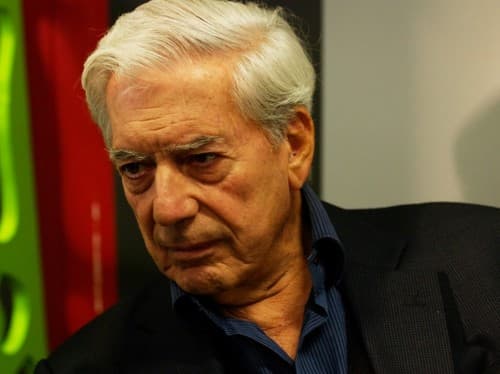
Jorge Mario Pedro Vargas Llosa, 1st Marquess of Vargas Llosa, more commonly known as Mario Vargas Llosa, is a Peruvian novelist, journalist, essayist and former politician, who also holds citizenship of Spain and the Dominican Republic. Vargas Llosa is one of Latin America's most significant novelists and essayists, and one of the leading writers of his generation. Some critics consider him to have had a larger international impact and worldwide audience than any other writer of the Latin American Boom. In 2010 he won the Nobel Prize in Literature, "for his cartography of structures of power and his trenchant images of the individual's resistance, revolt, and defeat." He also won the 1967 Rómulo Gallegos Prize, the 1986 Prince of Asturias Award, the 1994 Miguel de Cervantes Prize, the 1995 Jerusalem Prize, the 2012 Carlos Fuentes International Prize, and the 2018 Pablo Neruda Order of Artistic and Cultural Merit. In 2021, he was elected to the Académie française.
Similar books
- Lord of the Flies
William Golding
3.7 (2.3M) average on GoodreadsYoung AdultExplores the breakdown of order and morality among young men in an isolated, hierarchical environment.
- All Quiet on the Western Front
Erich Maria Remarque
4.0 (355k) average on GoodreadsHistorical FictionDepicts the brutalizing effects of institutional violence and the loss of innocence on young men.
- One Hundred Years of Solitude
Gabriel García Márquez
4.1 (753k) average on GoodreadsLiterary FictionFeatures a rich, intricate narrative structure and a deep exploration of societal and personal decay in a Latin American context.
- Nineteen Eighty-Four
George Orwell
4.2 (5.5M) average on GoodreadsFictionWinston Smith dreams of truth and rebellion in a world where Big Brother watches all, but he confronts the terrifying power of a regime that controls not just actions, but thoughts.
- The Frozen River
Ariel Lawhon
4.4 (600k) average on GoodreadsFictionIn 1789 Maine, a heroic midwife's diary helps her expose a murder and get justice in a town that wants to silence her.
- A Man Called Ove
Fredrik Backman
4.4 (569k) average on GoodreadsFictionA stubborn widower, who lives by strict rules, finds his quiet world changed by a lively new family next door, making him face his past and find happiness in human connection.






Enjoyed the summary?
A summary gives you the shape of the book. The book itself has the detail, the examples and the voice.
Find The Time of the Hero on AmazonAs an Amazon Associate, BookBrief earns from qualifying purchases. How we're funded