
Synopsis
Covers the whole plot, including the ending.
- Difficulty
- Medium
- Pacing
- Moderate
- Mood
- Intriguing, Suspenseful, Adventurous, Transformative
- Read it if
- You enjoy historical mysteries with a touch of adventure and political intrigue, featuring strong character development.
- Skip it if
- You prefer fast-paced, action-heavy fantasies or stories without significant political subplots.
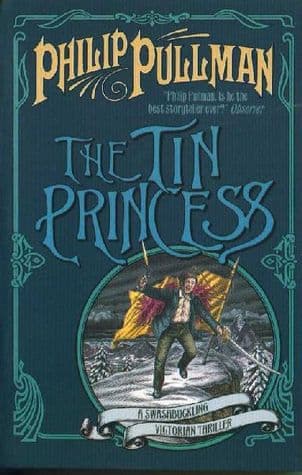
The Tin Princess Plot Summary
Covers the whole plot, including the ending.
Adelaide's Discovery and Royal Engagement
Jim Taylor, now a young man working for Sally Lockhart, finally finds Adelaide, the girl he knew as a child in Mrs. Holland's opium den. He finds her living with an elderly woman, Miss Bevan, in a respectable boarding house. Adelaide, now Adelaide Ashton, is engaged to Crown Prince Rudolf of Razkavia, a small, fictional European kingdom. Rudolf loves her and believes her to be a suitable bride, despite her unknown past. Jim is protective and suspicious, determined to ensure Adelaide's safety and happiness, fearing she might be used again. He cautiously accepts Rudolf's invitation to accompany them to Razkavia as a bodyguard, recognizing the potential dangers of her new royal status.
Arrival in Razkavia and Initial Tensions
Upon their arrival in Razkavia, Jim, Adelaide, and Prince Rudolf enter the rigid world of the Razkavian court. They are met by Rudolf’s father, King Otto, a stern king, and Rudolf’s younger brother, Prince Boris, a charming but seemingly lighthearted figure. Adelaide, despite her common background, tries to navigate the elaborate rules of royal life. Jim, always watchful, senses tension and hostility, especially from certain Razkavian nobles who resent Adelaide's origins and Rudolf's modern ideas. He observes strange events and veiled threats, confirming his belief that Adelaide is in danger.
The First Assassination Attempt and Jim's Role
During a royal procession through Razkavia, an assassination attempt is made on Crown Prince Rudolf. A bomb is thrown, causing chaos and injuring several people, though Rudolf is unharmed thanks to Jim's quick actions. This event raises the stakes and solidifies Jim's position as Rudolf's trusted bodyguard. It also highlights the political instability within Razkavia and the powerful groups opposed to Rudolf's reign and his choice of bride. Jim begins his investigation, trying to find out who is behind the attack, suspecting it is a planned conspiracy.
Adelaide's Struggle with Royal Life
Adelaide struggles with the change to royal life. She finds the court stifling, the expectations overwhelming, and the constant scrutiny isolating. Her attempts to connect with the Razkavian people are met with suspicion by the nobility, and her past is a constant source of gossip. She confides in Jim, expressing her doubts and her sense of being trapped. Despite Rudolf's affection, Adelaide feels like a symbol rather than a person, a 'tin princess' forced into a role. This internal conflict is made worse by the external threats, making her question the true cost of her new status.
The Unveiling of the Razkavian Constitution
Crown Prince Rudolf, who supports modernization, plans to introduce a new constitution that would limit the king's power and grant more rights to the people. This move meets strong opposition from the conservative nobility, led by figures like Count Karl von Richter, who see it as a threat to their traditional privileges. The unveiling of this constitution becomes a major point of disagreement, fueling the political tensions already present in Razkavian society. Jim recognizes that Rudolf's political goals are linked to the dangers facing him and Adelaide, as the conspiracy aims to prevent this shift in power.
The Second Attack and Boris's Involvement
Another, more direct attack is made on Rudolf, this time made to look like a hunting accident. Jim's investigations uncover evidence linking Prince Boris, Rudolf's seemingly cheerful younger brother, to the assassination attempts. Boris, despite his charm, is deeply involved in the conspiracy, driven by ambition and a desire to take the throne, supported by the conservative group. This betrayal shocks Rudolf and Adelaide, showing the treacherous nature of the Razkavian court. Jim realizes the conspiracy is more complex and personal than he first thought, reaching into the heart of the royal family.
The Royal Wedding and its Aftermath
Despite the growing dangers and revelations, Adelaide and Rudolf proceed with their royal wedding. The ceremony is grand, but the tension is clear. Shortly after the wedding, a final, devastating act of the conspiracy unfolds. Crown Prince Rudolf is murdered, a direct result of the political schemes and the plot to prevent his reforms. This tragic event leaves Adelaide a widowed queen, placed in a position of immense power and vulnerability. Jim is devastated by Rudolf's death but more determined than ever to protect Adelaide and uncover the full extent of the conspiracy.
Adelaide's Transformation and the Truth
Rudolf's death changes Adelaide. The 'tin princess' sheds her passivity and accepts her new role as Queen. She bravely confronts the conspirators and, with Jim's help, works to expose the true masterminds behind the plots. They discover that Count Karl von Richter, a powerful noble, was the main planner of the conspiracy, manipulating Boris and others to achieve his own political goals and maintain the old order. Adelaide, now empowered, uses her position to gather support for Rudolf's constitutional reforms, showing a strength and resolve no one expected.
The Confrontation and Resolution
Jim and Adelaide gather enough evidence to confront Count Karl von Richter and his co-conspirators. A tense confrontation follows, where Adelaide, as the new Queen, publicly accuses them of treason and regicide. With Jim's testimony and the gathered proof, the conspirators are exposed and their plans fail. Boris is arrested, and Richter's influence is shattered. The Razkavian people, seeing Adelaide's courage and commitment to Rudolf's vision, support her. Justice is served, and the immediate threat to the throne and the proposed reforms is removed.
Adelaide's Reign and Jim's Departure
With the conspirators defeated, Queen Adelaide begins her reign, committed to implementing Crown Prince Rudolf's constitution and leading Razkavia into a new era. She is a wise and capable ruler, earning the respect of her people. Jim, having fulfilled his promise to protect Adelaide and ensure her safety, decides to return to England. Their paths separate, but their friendship and shared experience remain. Jim leaves Razkavia knowing that Adelaide, once a vulnerable girl, has found her true strength and purpose as a queen, no longer a 'tin princess' but a sovereign in her own right.
The Tin Princess Characters
Adelaide (Adelaide Ashton, Queen Adelaide)
Protagonist
A former orphan and commoner who becomes the Crown Princess, then Queen, of Razkavia.
Adelaide is introduced as a timid young woman, haunted by her traumatic childhood in Mrs. Holland's opium den. Despite her gentle nature, she possesses an underlying resilience. She is initially overwhelmed by the expectations of royal life and struggles with her identity, feeling like a 'tin princess' – a manufactured, inauthentic figure. Her love for Rudolf is genuine, but his death forces her to confront her fears and embrace her inherent strength. She is driven by a desire for peace and justice, especially after experiencing the injustices of her past.
Relationships: Jim Taylor (Childhood friend and protector); Crown Prince Rudolf (Husband, source of love and political inspiration); Miss Bevan (Kind guardian and surrogate mother)
Jim Taylor
Protagonist
A resourceful and fiercely loyal young man, Adelaide's childhood friend and protector.
Jim is intelligent, observant, and possesses a strong moral compass. Having grown up in the harsh realities of Victorian London, he is street-smart and capable, working as an investigator for Sally Lockhart. His primary motivation in this story is to protect Adelaide, whom he feels responsible for after their shared past. He is deeply loyal and possesses an innate sense of justice, always seeking to uncover the truth. Jim's quiet determination and investigative skills make him invaluable in navigating the treacherous Razkavian court and exposing the conspiracy.
Relationships: Adelaide (Close childhood friend and subject of his protection); Crown Prince Rudolf (Employer and ally, whom he respects); Sally Lockhart (Business partner and mentor (mentioned))
Crown Prince Rudolf
Supporting
The idealistic and progressive heir to the Razkavian throne, Adelaide's fiancé and husband.
Rudolf is a kind, intelligent, and forward-thinking prince who genuinely loves Adelaide for who she is, despite her humble origins. He is a reformer, committed to introducing a new constitution that would modernize Razkavia and grant more rights to its people. His idealism and desire for progress make him a target for the conservative nobility. He is trusting and somewhat naive about the extent of the treachery within his own family and court, relying heavily on Jim to protect him and Adelaide. His vision for Razkavia is a central point of conflict.
Relationships: Adelaide (Fiancé/Husband, deeply in love); Jim Taylor (Trusted bodyguard and ally); Prince Boris (Younger brother, ultimately a betrayer); King Otto (Father, traditionalist monarch)
Prince Boris
Antagonist
Rudolf's charming but ambitious younger brother, a key conspirator.
Boris initially appears as a lighthearted, somewhat frivolous younger brother to Rudolf, but he harbors deep-seated ambition and resentment. He is easily swayed by powerful, conservative factions within the court, particularly Count von Richter, who manipulate his desire for the throne. Boris is deceptive and opportunistic, willing to betray his own brother to achieve power. He lacks Rudolf's moral compass and progressive ideals, representing the corrupting influence of unchecked ambition.
Relationships: Crown Prince Rudolf (Older brother, whom he betrays); Count Karl von Richter (Manipulator and co-conspirator)
Count Karl von Richter
Antagonist
A powerful and manipulative Razkavian noble, the true mastermind of the conspiracy.
Count von Richter is the quintessential aristocratic villain, driven by a desire to maintain the traditional power structure and prevent Rudolf's progressive reforms. He is cunning, ruthless, and highly influential within the Razkavian court. Richter orchestrates the various assassination attempts and political intrigues, using others, like Prince Boris, as his pawns. He views Adelaide as an unsuitable commoner and Rudolf's reforms as a threat to his own power and the established order. His cold intelligence and calculated cruelty make him a formidable adversary.
Relationships: Prince Boris (Manipulated accomplice); Adelaide (Political opponent and target); Crown Prince Rudolf (Primary target and political rival)
King Otto
Supporting
The traditionalist King of Razkavia and father of Rudolf and Boris.
King Otto is a stern, old-fashioned monarch who values tradition and stability above all else. He is wary of Rudolf's progressive ideas and initially disapproves of Adelaide's common background, seeing her as a potential destabilizing force. While not actively malicious, his conservative views and attachment to the old ways make him somewhat blind to the treachery within his own court. He is ultimately a figurehead, struggling to adapt to changing times and the machinations around him.
Relationships: Crown Prince Rudolf (Son, whose ideas he struggles to accept); Prince Boris (Son, whose true nature he fails to see); Adelaide (Daughter-in-law, whom he initially distrusts)
Miss Bevan
Supporting
Adelaide's kind and protective guardian in England.
Miss Bevan is a compassionate and respectable woman who provides Adelaide with a safe and loving home after her escape from Mrs. Holland. She represents a stable, nurturing influence in Adelaide's life, helping her recover from her traumatic past and prepare for a more conventional future. Her presence highlights Adelaide's journey from a life of destitution to one of respectability, even royalty. She is protective of Adelaide but recognizes the path her ward must take.
Relationships: Adelaide (Guardian and surrogate mother)
Mrs. Holland
Mentioned
The cruel crone who enslaved Adelaide in 'The Ruby in the Smoke'.
Mrs. Holland is not physically present in 'The Tin Princess' but her shadow looms large over Adelaide's past. She was a toothless, malevolent figure who ran an opium den and exploited young girls, including Adelaide. Her character represents the trauma and darkness from which Adelaide escaped, and her memory fuels Jim's determination to protect Adelaide from any further harm. Her past actions are the foundation of Adelaide's initial timidity and vulnerability.
Relationships: Adelaide (Former enslaver and source of trauma); Jim Taylor (Antagonist in his past, motivator for his protection of Adelaide)
The Tin Princess Themes
Identity and Transformation
The novel explores how individuals deal with their past and adapt to new roles. Adelaide, initially defined by her traumatic childhood, struggles to accept her identity as Crown Princess and then Queen. She feels like a 'tin princess,' a manufactured persona, but eventually finds her authentic voice and strength through hardship. Her journey shows the internal conflict between who she was and who she must become. Jim also changes from a street-wise orphan to a trusted royal protector, adapting his skills to a new, dangerous environment.
“She was the Tin Princess, and she had no choice but to play her part, no matter how much it might hurt.”
Political Intrigue and Corruption
The story is set in the treacherous world of Razkavian court politics, where ambition, tradition, and modern ideals clash. The conspiracy against Rudolf and Adelaide shows the corruption and how far powerful figures like Count von Richter will go to keep their status and prevent change. The novel exposes the hidden dangers beneath royal grandeur, where betrayal can come from within one's own family, as seen with Prince Boris. This theme shows the fragility of power and the constant threat of those who seek to take it.
“The palace was a gilded cage, and the bars were made of lies and ambition.”
Loyalty and Betrayal
Loyalty is a central force, especially for Jim Taylor, whose devotion to Adelaide guides his actions. His commitment to protecting her, from their shared past, contrasts with the widespread betrayal in the Razkavian court. Prince Boris's betrayal of his own brother, Rudolf, highlights the damaging nature of ambition and the impact of treachery within families. Conversely, Rudolf's loyalty to Adelaide and his modern vision inspires her to continue his legacy after his death.
“Jim would have faced a thousand dangers for Adelaide, because he was Jim, and that was what he did.”
Justice and Social Reform
The story champions justice, both personally for Adelaide and societally for Razkavia. Rudolf's desire to introduce a constitution and empower his people reflects a yearning for social reform and a fairer society. The conspiracy against him is an attempt to stop these modern ideals. Ultimately, Adelaide's change into a strong queen committed to implementing Rudolf's vision ensures that justice prevails, not just for the conspirators but also for Razkavia's future, moving it towards a more equitable system.
“He wanted to give the people a voice, a right, a future that wasn't just dictated by the whims of kings.”
Plot Devices & Literary Techniques
The 'Tin Princess' Metaphor
A symbolic representation of Adelaide's initial passivity and manufactured identity.
The 'Tin Princess' metaphor highlights Adelaide's initial feeling of being an inauthentic, ornamental figure, forced into a role she doesn't fully understand or embrace. It symbolizes her lack of agency and the external pressures defining her royal identity. As the story progresses, she sheds this 'tin' facade, revealing her true strength and becoming a genuine, powerful queen. This device effectively charts her character arc from a passive object to an active subject of her own destiny.
The Razkavian Constitution
A MacGuffin that drives the political conflict and conspiracy.
The proposed Razkavian Constitution acts as a MacGuffin, a plot device that drives the main conflict without necessarily being the central focus itself. Its existence and Rudolf's determination to enact it are the primary motivators for the conservative nobility's conspiracy and the assassination attempts. It represents the clash between tradition and progress, providing a concrete goal for Rudolf and a tangible threat for his enemies. The fight over its implementation fuels the entire political drama.
Hidden Identity/Past
Adelaide's concealed origins as a source of vulnerability and suspicion.
Adelaide's hidden past as an orphan from Mrs. Holland's opium den is a crucial plot device. It makes her vulnerable to blackmail and manipulation by the Razkavian court, who view her as an unsuitable commoner. This concealed identity creates an air of mystery and suspicion around her, fueling aristocratic disdain and providing a pretext for the conspirators to undermine her and Rudolf. Her ability to overcome this past and rise above it is integral to her character development and the story's resolution.
The Unseen Hand
The manipulation of seemingly disparate events by a central, hidden antagonist.
The 'unseen hand' device is employed through Count Karl von Richter. Initially, the assassination attempts and political unrest appear to be random or the work of multiple factions. However, Jim's investigation gradually uncovers that these events are orchestrated by a single, powerful individual working behind the scenes. This creates suspense and intrigue, as the characters must uncover the true mastermind rather than just reacting to individual threats. It highlights the insidious nature of political power and manipulation.
The Tin Princess Quotes
“There are people who can't stand the truth, and people who can't stand anything else.”
“It's a strange thing, but the more you know about something, the less you understand it.”
“Power is like a drug. Once you've had a taste, you never want to give it up.”
“Every secret has a price, and sometimes the price is higher than you can imagine.”
“The world isn't divided into good people and bad people. It's divided into people who are trying, and people who aren't.”
“Sometimes the most dangerous thing you can do is nothing at all.”
“You can't choose your family, but you can choose what kind of person you're going to be.”
“A lie can travel halfway around the world while the truth is still putting on its shoes.”
“Courage isn't the absence of fear, but rather the judgment that something else is more important than fear.”
“History is written by the victors, but the truth often whispers in the cracks.”
“The greatest prison people live in is the fear of what other people think.”
“It's easy to be brave when you have nothing to lose. It's much harder when everything is at stake.”
“To truly know someone, you have to see them when they think no one is watching.”
“Hope is a dangerous thing, but sometimes it's all we have left.”
Quiz
10 questions on the plot and the characters. Each answer comes with a short explanation.
Question 1
Who is Jim Taylor's friend and partner-in-adventure mentioned at the beginning of 'The Tin Princess'?
- Frederick Garland
- Sally Lockhart
- Webster Garland
- Mrs. Holland
Show answer
B. Sally Lockhart The book explicitly states that Sally Lockhart is Jim Taylor's friend and partner-in-adventure.
Question 2
Who was the 'toothless crone' who enslaved Adelaide in 'The Ruby in the Smoke'?
- Mrs. Snelgrove
- Mrs. Holland
- Mrs. Garland
- Mrs. Sally
Show answer
B. Mrs. Holland The synopsis clearly identifies Mrs. Holland as the crone who enslaved Adelaide in the previous book.
Question 3
What is the name of the country where Adelaide is about to become a princess?
- Ruritania
- Latvia
- Razkavia
- Moldavia
Show answer
C. Razkavia Adelaide is set to become the Crown Princess of Razkavia, a fictional Eastern European country.
Question 4
Why does Adelaide's future husband employ Jim Taylor?
- To help plan the royal wedding
- To investigate a historical artifact
- As a bodyguard for Adelaide
- To teach her Razkavian customs
Show answer
C. As a bodyguard for Adelaide Her future husband employs Jim as their bodyguard because 'Razkavia's quaint little streets are full of danger.'
Question 5
What is Adelaide's title going to be in Razkavia?
- Queen Consort
- Duchess of Razkavia
- Crown Princess
- Grand Duchess
Show answer
C. Crown Princess The text states she is 'Crown Princess of Razkavia, to be exact'.
Question 6
What is Jim Taylor's primary motivation for finding Adelaide?
- To gain royal favor and wealth
- To solve a long-standing personal mystery from 'The Ruby in the Smoke'
- To help Sally Lockhart on a new case
- To escape his past in London
Show answer
B. To solve a long-standing personal mystery from 'The Ruby in the Smoke' Jim has been searching for Adelaide for years, indicating a personal quest stemming from her past enslavement in 'The Ruby in the Smoke'.
Question 7
The synopsis mentions 'Razkavia's quaint little streets are full of danger.' What does this detail primarily foreshadow?
- A charming and peaceful setting for the royal wedding.
- The need for Jim Taylor's investigative skills beyond mere protection.
- A focus on historical architecture and urban planning.
- The benign challenges of adapting to a new culture.
Show answer
B. The need for Jim Taylor's investigative skills beyond mere protection. The mention of danger directly leads to Jim being hired as a bodyguard, implying that the plot will involve threats and potentially a mystery to be solved in the Razkavian setting.
Question 8
How does Adelaide's past as an enslaved girl contrast with her present situation as a future princess, and what thematic element does this highlight?
- It shows the unchanging nature of social class, as she was always destined for royalty.
- It emphasizes the theme of dramatic social mobility and the unpredictable nature of fate.
- It suggests that her past will have no bearing on her future, highlighting a clean break.
- It implies that her enslavement was a necessary step for her to appreciate royalty.
Show answer
B. It emphasizes the theme of dramatic social mobility and the unpredictable nature of fate. The drastic change from being enslaved by a crone to becoming a Crown Princess highlights a significant shift in social status and fortune, emphasizing themes of unexpected destiny and profound transformation.
Question 9
Given the description of 'The Tin Princess' as a 'Mystery' and 'Historical Fiction,' what kind of challenges can readers expect Jim Taylor to face in Razkavia?
- Purely personal moral dilemmas without external conflict.
- Solving an intricate conspiracy or political intrigue within a specific historical context.
- Overcoming fantastical creatures in a magical land.
- Navigating a simple love triangle at court.
Show answer
B. Solving an intricate conspiracy or political intrigue within a specific historical context. The genres of 'Mystery' and 'Historical Fiction' strongly suggest that Jim will encounter complex, era-specific problems, likely involving uncovering secrets, plots, or political machinations in the fictional historical setting of Razkavia.
Question 10
How does Jim Taylor's previous experience of 'solving a mystery' and 'searching for Adelaide for years' prepare him for his role as a bodyguard in Razkavia?
- It provides him with royal court etiquette, crucial for his new position.
- It demonstrates his persistence, investigative skills, and ability to navigate dangerous situations to protect others.
- It suggests he is more interested in finding lost treasures than protecting people.
- It shows he prefers working alone, which is unsuitable for a bodyguard role.
Show answer
B. It demonstrates his persistence, investigative skills, and ability to navigate dangerous situations to protect others. His history of solving mysteries and a long search for Adelaide indicates he possesses tenacity, the ability to uncover hidden truths, and experience in dangerous circumstances, all valuable traits for a bodyguard in a perilous environment.
The Tin Princess FAQ
What is the central mystery Jim Taylor undertakes at the beginning of 'The Tin Princess'?
Jim Taylor's primary objective is to locate Adelaide, a young girl he previously encountered under the cruel care of Mrs. Holland in 'The Ruby in the Smoke'. He successfully tracks her down, only to discover she is on the verge of marrying Prince Rudolf of Razkavia, a small European principality.
Who is Adelaide and what is her unexpected new social status?
Adelaide is a young woman who was previously enslaved and abused by Mrs. Holland. Through a twist of fate and lineage, she is revealed to be the rightful Crown Princess of Razkavia, destined to marry Prince Rudolf and ascend to the throne.
Why does Prince Rudolf employ Jim Taylor as a bodyguard?
Prince Rudolf is deeply concerned for Adelaide's safety, as Razkavia is rife with political intrigue and threats to the royal family. He recognizes Jim's street smarts and investigative skills, believing him to be the best person to protect his fiancée from the dangers lurking in the principality.
What kind of political climate does Jim find in Razkavia upon his arrival?
Razkavia is portrayed as a small, seemingly quaint nation, but beneath the surface, it is a hotbed of political instability and danger. There are factions vying for power, assassination attempts, and a general atmosphere of mistrust surrounding the royal succession.
How does Sally Lockhart's past involvement with Jim Taylor's cases influence his actions in Razkavia?
While Sally Lockhart isn't directly present in Razkavia, her past partnership and shared experiences with Jim have undoubtedly honed his investigative instincts and moral compass. He often reflects on their shared adventures, applying the lessons learned from working alongside her to the complex political landscape of Razkavia.
Are there any subtle references or callbacks to previous 'Sally Lockhart Mysteries' books within 'The Tin Princess'?
The most significant callback is Jim's long-standing search for Adelaide, a direct continuation of a loose end from 'The Ruby in the Smoke'. Additionally, Jim's general resourcefulness and ability to navigate dangerous situations are character traits developed through his prior adventures with Sally Lockhart, implicitly referencing their shared history.
What is the significance of the 'Tin Princess' title, beyond Adelaide's royal status?
The title 'The Tin Princess' alludes to Adelaide's vulnerability and the fragility of her newfound position. Despite her royal title, she is initially seen as a pawn, lacking true power or security, much like a toy princess made of tin – easily manipulated or broken in the harsh political reality of Razkavia.
How does Adelaide's traumatic past with Mrs. Holland affect her behavior and decisions as a princess?
Adelaide's traumatic past leaves her with deep emotional scars, manifesting as a blend of resilience and vulnerability. She struggles with trust, often appears guarded, and her experiences with abuse make her wary of authority, influencing her interactions with the Razkavian court and her initial reluctance to fully embrace her royal role.
What internal conflicts does Jim Taylor face while protecting Adelaide and navigating Razkavian politics?
Jim grapples with his personal feelings for Adelaide, his commitment to his duty as a bodyguard, and his moral compass in a world of political expediency. He also struggles with the complexities of court life and the deceit common among the Razkavian elite, often feeling out of his element despite his street smarts.
Discuss the psychological impact of sudden elevation to royalty on Adelaide, given her background.
Adelaide experiences significant psychological strain. The sudden shift from enslavement to royalty is disorienting, triggering feelings of inadequacy and imposter syndrome. She must reconcile her past identity with her public role, leading to internal conflict and a struggle to assert her true self amidst the pressures of court life.
How does the author use the setting of Razkavia to enhance the mystery and danger?
Pullman portrays Razkavia as a picturesque yet treacherous setting, using its 'quaint little streets' as a deceptive façade for political intrigue and hidden dangers. The unfamiliar culture and language further isolate Jim, making him more reliant on his instincts and amplifying the sense of mystery and threat.
What is the role of betrayal and loyalty in the Razkavian court, and how do characters navigate it?
Betrayal and loyalty are central themes, with various factions and individuals constantly shifting allegiances. Characters like Prince Rudolf and Jim must carefully discern who to trust, while Adelaide, due to her past, struggles to place her faith in anyone, highlighting the precarious nature of relationships in the court.
How does Jim Taylor's character evolve throughout his time in Razkavia?
Jim evolves from a street-smart but somewhat naive investigator into a more mature and world-weary individual. He gains a deeper understanding of political machinations, the complexities of love, and the sacrifices sometimes required. His experiences in Razkavia broaden his perspective beyond the London streets he knows.
What is the ultimate fate of Adelaide and Prince Rudolf at the end of the novel?
Despite numerous threats and political turmoil, Adelaide and Prince Rudolf ultimately marry, solidifying her position as Crown Princess. Their union symbolizes a fragile hope for Razkavia's future, though the challenges of their reign are implied to be ongoing.
In what ways does 'The Tin Princess' challenge traditional notions of fairy tales and royalty?
'The Tin Princess' subverts the idyllic fairy tale trope by presenting royalty not as a dream, but as a dangerous and politically charged reality. Adelaide's past and the pervasive threats in Razkavia strip away the glamour, showing the heavy burden and constant peril that come with a crown, especially for someone from her background.
Are there any characters in Razkavia who serve as foils or parallels to Jim or Adelaide?
Prince Rudolf serves as a foil to Jim, representing the established, noble world versus Jim's working-class origins. Similarly, other female members of the Razkavian court, particularly those with more conventional aristocratic backgrounds, highlight Adelaide's unique position and her struggle to fit into the royal mold.
How does the book address themes of class and social mobility through Jim and Adelaide's stories?
The book starkly contrasts Jim's working-class background and Adelaide's traumatic past with their involvement in the highest echelons of Razkavian society. It explores the challenges of upward mobility and how one's origins, while not defining, profoundly shape their experiences and perceptions within a rigid class structure.
What role does intelligence and quick thinking play for the protagonists in resolving the Razkavian crisis?
Intelligence and quick thinking are paramount for both Jim and Adelaide. Jim relies on his street smarts, observation skills, and deductive reasoning to uncover plots, while Adelaide, despite her vulnerability, demonstrates remarkable resilience and a growing capacity for strategic thought, allowing them to navigate the treacherous political landscape.
About the author

Sir Philip Nicholas Outram Pullman is an English writer. His books include the fantasy trilogy His Dark Materials and The Good Man Jesus and the Scoundrel Christ, a fictionalised biography of Jesus. In 2008, The Times named Pullman one of the "50 greatest British writers since 1945". In a 2004 BBC poll, he was named the eleventh most influential person in British culture. He was knighted in the 2019 New Year Honours for services to literature.
Similar books
- The Secret Garden
Frances Hodgson Burnett
4.1 (891k) average on GoodreadsFantasyFeatures a young protagonist from a difficult past finding new purpose and identity in a grand, new setting.
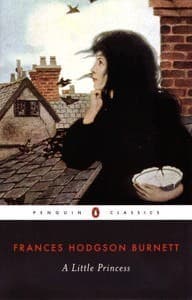
- A Little Princess
Frances Hodgson Burnett
4.2 (4k) average on GoodreadsFantasyExplores themes of resilience and social standing in a young female protagonist, though with different stakes.
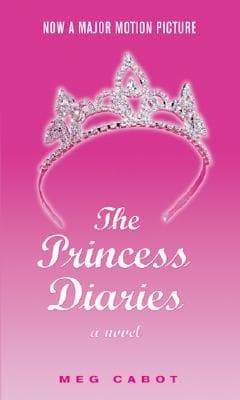
- The Princess Diaries
Meg Cabot
4.0 (624) average on GoodreadsYoung AdultPullman's work is significantly more sophisticated in its exploration of political intrigue, national identity, and personal transformation. Cabot's series, while charming and humorous, prioritizes comedic elements and adolescent angst over the weighty themes of governance and societal impact that Pullman tackles.
- Harry Potter and the Sorcerer's Stone
J.K. Rowling
4.5 (7M) average on GoodreadsFantasyRescued from a miserable life under the stairs, an orphaned boy discovers he's a wizard destined for a magical school, where he uncovers a dangerous secret tied to the dark wizard who murdered his parents.
- The Hunger Games
Suzanne Collins
4.3 (6.4M) average on GoodreadsFantasyIn a future where children fight to the death on live television, Katniss Everdeen volunteers for the arena, turning a death sentence into a fight for survival and a spark of rebellion.
- 1984
George Orwell
4.2 (3.1M) average on GoodreadsPoliticsIn a future where surveillance and thought control are absolute, a man's search for truth clashes with the Party, showing that hope can be a form of rebellion.




Enjoyed the summary?
A summary gives you the shape of the book. The book itself has the detail, the examples and the voice.
Find The Tin Princess on AmazonAs an Amazon Associate, BookBrief earns from qualifying purchases. How we're funded