
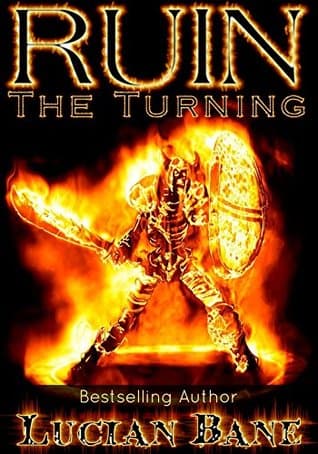
Synopsis
Covers the whole plot, including the ending.
- Difficulty
- Medium
- Pacing
- Fast
- Mood
- Intense, romantic, dark, conflicted, spiritual
The Turning Plot Summary
Covers the whole plot, including the ending.
The Nightmare Assignment
Ruin, an Angel of Judgment, awakens to a new, horrifying assignment from Heaven: he must judge and execute Isadore, the human woman he is molecularly bound to and deeply loves. This directive plunges him into immediate internal conflict, as his angelic duty clashes with his emotional connection to Isadore. He struggles to comprehend how the celestial powers he serves could demand such an act, especially given their unique bond. The weight of this command is immense, threatening to shatter the peace and burgeoning love he has found with Isadore, forcing him to confront the cruel paradox of his existence as both a divine executor and a lover.
Confronting the Elders
Driven by love and defiance, Ruin confronts the Elders of Heaven, challenging their decree and refusing to execute Isadore. He argues against the injustice of their command, highlighting Isadore's innocence and the sacred nature of their bond. His defiance is unprecedented for an Angel of Judgment, demonstrating his deep devotion. The Elders, however, are unyielding, emphasizing divine law and the necessity of obedience. This confrontation solidifies Ruin's commitment to protect Isadore, even if it means waging war against his creators and risking his angelic existence.
Isadore's Foreboding Premonitions
Unbeknownst to Ruin's direct confrontation, Isadore begins to experience a series of vivid and unsettling dreams, filled with dark omens and a sense of impending doom. These premonitions are not just abstract fears; they manifest as a tangible unease that she cannot shake, signaling a shift in their world. She feels an inexplicable pull towards danger, a premonition that something catastrophic is about to befall them, particularly targeting her. Her heightened intuition, possibly a side effect of her molecular bond with Ruin, makes her aware of the unseen forces gathering against them, foreshadowing the trials ahead.
The Truth Revealed
Unable to bear the secret any longer, Ruin reveals the truth of his assignment to Isadore: Heaven has ordered her execution. This confession shatters Isadore's world, transforming her fear into a concrete, terrifying reality. The revelation is a betrayal, not from Ruin, but from the divine order itself, leaving her feeling utterly vulnerable and condemned. Despite the shock, her reaction is not one of anger towards Ruin, but a deep sorrow and understanding of the impossible position he is in. This shared agony strengthens their bond, forging a deeper, more desperate alliance against the forces aligned against them.
A Desperate Plan
Facing the seemingly insurmountable task of defying Heaven, Ruin begins to formulate a desperate plan to protect Isadore. His strategy involves not just hiding her, but actively challenging the divine decree and finding a way to circumvent or even nullify the judgment against her. This requires navigating the political landscape of both Heaven and Hell, seeking allies where possible, and anticipating the moves of his celestial superiors. The plan is fraught with peril, demanding immense sacrifice and ingenuity, as Ruin prepares to wage a war that could cost him everything – his immortality, his powers, and even his existence.
Interference from Hell
As Ruin attempts to execute his plan, demonic forces from Hell begin to interfere, sensing an opportunity to exploit the chaos and weaken Heaven's authority. These interventions are not direct attacks on Isadore, but strategic maneuvers designed to disrupt Ruin's efforts, create diversions, and sow discord. They might offer false alliances, create illusions, or manipulate other supernatural beings to impede his progress. This adds another layer of complexity and danger to Ruin's mission, forcing him to fight on multiple fronts and contend with the cunning of Hell, which thrives on the breakdown of order and divine judgment.
The Angelic Council's Ultimatum
The Elders of Heaven, growing impatient with Ruin's insubordination, issue a final, severe ultimatum. They demand his immediate compliance with the execution order, threatening dire consequences if he continues to defy them. This warning is not merely a threat of punishment but a test of his loyalty and a reaffirmation of their absolute power. They remind him of his origins and purpose, attempting to break his resolve and force him back into the fold. This ultimatum places immense pressure on Ruin, forcing him to make an irreversible choice between his love for Isadore and his very nature as an Angel of Judgment.
Isadore's Sacrifice
Witnessing Ruin's growing despair and the escalating threats against him, Isadore begins to contemplate a devastating act of self-sacrifice. She believes that by willingly submitting to the judgment, she might save Ruin from the wrath of Heaven and preserve his existence. This consideration stems from her deep love for him and her inability to bear the thought of him being destroyed on her behalf. Her contemplation highlights the ultimate dilemma of their love: which life is more valuable, and what price are they willing to pay for each other's salvation?
A Hidden Prophecy
In his desperate search for a solution, Ruin uncovers an ancient, forgotten prophecy that speaks of a unique bond between an Angel of Judgment and a human, a bond that transcends celestial law and holds the key to a new cosmic order. This prophecy suggests that their molecular binding was not an accident but a fated event with far-reaching implications. The revelation gives Ruin new hope, suggesting that their love is not a defiance of fate but a fulfillment of it, offering a potential path to challenge the Elders' decree and redefine the nature of judgment and free will within the universe.
The Turning Point
Armed with the knowledge of the prophecy and driven by his unwavering love, Ruin undergoes a transformation. He activates a dormant power within himself, a capability previously unknown or suppressed, which fundamentally alters his angelic nature. This 'turning' is not merely an increase in strength but a redefinition of his essence, allowing him to operate outside the rigid confines of Heaven's laws. This new power enables him to challenge both celestial and infernal forces more effectively, positioning him as a unique entity capable of forging his own path and protecting Isadore against all odds, even if it means becoming something entirely new.
Confrontation with the Archangel
Ruin's defiance culminates in a direct confrontation with a powerful Archangel, a divine enforcer sent by the Elders to ensure the execution of their decree. This Archangel represents the full might and unwavering authority of Heaven, embodying the final judgment against Isadore and Ruin's rebellion. The battle is not just physical; it is a clash of ideologies, of love against duty, and free will against divine mandate. Ruin must utilize his newly awakened powers and all his cunning to overcome this formidable opponent, knowing that failure means not only Isadore's demise but his own eternal damnation and the eradication of their unique bond.
A New Covenant
Through his ultimate act of defiance and the activation of his transformed powers, Ruin, alongside Isadore, manages to circumvent or redefine the original judgment. They don't merely escape; they establish a new covenant, a new state of being that exists outside the conventional structures of Heaven and Hell. Their molecular bond, initially a source of conflict, becomes the foundation of this new existence, symbolizing a love that transcends cosmic law. They embark on a path where they are no longer bound by ancient decrees, creating their own destiny and discovering a dark freedom in a universe they have fundamentally altered through their love and defiance.
Principal Figures
Ruin
Protagonist
An Angel of Judgment who defies Heaven for love.
Ruin is an Angel of Judgment, initially created with no memory of his origins, whose sole purpose is to judge and execute. He is molecularly bound to Isadore, the first human he encountered, which ignites in him emotions and a capacity for love previously unknown to his angelic nature. He is powerful, stoic, and fiercely protective, but also deeply conflicted by his divine duties and his profound connection to Isadore. His internal struggle between obedience and love forms the core of his character, leading him to challenge the very foundations of his existence.
Relationships: Isadore (Molecularly bound lover and fated partner); Elders of Heaven (Creators and adversaries); Archangel (Divine enforcer and antagonist)
Isadore
Supporting
A human woman fated to be judged, who becomes Ruin's anchor and love.
Isadore is a human woman who becomes molecularly bound to Ruin, an Angel of Judgment. She possesses a strong intuition and a resilient spirit, quickly adapting to the extraordinary circumstances of her life with an angel. Initially an unwitting target, she develops a deep, unwavering love for Ruin, becoming his emotional anchor and the catalyst for his transformation. She is brave, empathetic, and willing to make sacrifices for the one she loves, even contemplating her own demise to save him from divine wrath. Her humanity grounds Ruin and gives meaning to his defiance.
Relationships: Ruin (Molecularly bound lover and fated partner)
Elders of Heaven
Antagonist
The unyielding celestial authorities who demand Isadore's execution.
The Elders of Heaven are the ancient, powerful, and unyielding celestial beings who govern the divine order. They represent absolute law, justice, and the established hierarchy of the universe. Their primary concern is the maintenance of cosmic balance and the adherence to divine decrees, even if it means demanding the execution of an innocent. They view Ruin's defiance as a profound insubordination and a threat to their authority, making them the primary antagonists in the story. They are impersonal and driven by principle rather than emotion, representing the rigid, uncompromising nature of divine law.
Relationships: Ruin (Subordinate and defiant Angel of Judgment)
Archangel
Antagonist
A powerful angelic enforcer of Heaven's will.
The Archangel is a formidable celestial being, serving as a direct enforcer of the Elders' will. This character embodies the unwavering power and martial aspect of Heaven, tasked with ensuring compliance with divine decrees, particularly the execution order against Isadore. The Archangel is highly skilled in combat and possesses immense spiritual authority, acting as the ultimate physical manifestation of the divine judgment Ruin must overcome. They are a direct, powerful obstacle, designed to test Ruin's resolve and new abilities in a climactic confrontation.
Relationships: Ruin (Adversary and target of divine enforcement); Elders of Heaven (Superiors and source of directives)
Demonic Forces
Supporting
Entities from Hell seeking to exploit cosmic chaos.
Demonic forces represent the chaotic and malevolent entities from Hell who intervene in Ruin's struggle. They are not directly focused on Isadore's judgment but seek to exploit the disruption caused by Ruin's defiance, hoping to weaken Heaven's authority and sow discord. Their interventions are strategic, often subtle, and designed to complicate Ruin's mission, creating additional obstacles and temptations. They embody the opposing force to Heaven's order, thriving on conflict and the breakdown of established cosmic laws, making them a secondary, yet significant, antagonistic presence.
Relationships: Ruin (Unwilling pawn/target of manipulation)
Themes & Insights
Love vs. Duty
This theme explores the conflict between an individual's personal affections and their ingrained obligations or divine purpose. Ruin, an Angel of Judgment, is designed solely for duty, yet his molecular bond with Isadore ignites a powerful love that directly opposes his celestial mandate to execute her. The narrative explores the agonizing choices one must make when these two powerful forces collide, questioning whether love can truly transcend predetermined destiny and divine law. It suggests that true love can be a disruptive, transformative force capable of reshaping identity and challenging cosmic order.
“Waging war against Heaven and Hell, Ruin collides with a diabolical crossroad of unforeseen fate, and the nightmare of good and evil that ensues sends him spiraling into a darkness that he doesn't wish to escape.”
Defiance and Free Will
The story features the theme of defiance against authority and the assertion of free will in the face of predestination. Ruin, an entity created for absolute obedience, chooses to defy the Elders of Heaven, challenging divine law and the purpose of his existence. This defiance is born from his love for Isadore, pushing him to question the nature of judgment and the right of higher powers to dictate fate. It highlights the idea that even in a universe governed by powerful celestial forces, an individual's choice, particularly when driven by love, can forge a new path and redefine destiny.
“Ruin must face his latest nightmare assignment: To judge and execute Isadore.”
Transformation and Identity
This theme focuses on the radical change an individual undergoes due to experiences and relationships, leading to a new understanding of self. Ruin's molecular binding with Isadore and his subsequent love for her fundamentally alters his angelic nature, transforming him from an emotionless executor into a being capable of immense passion and defiance. His 'turning' is not just a shift in allegiance but a redefinition of his identity, embracing a 'darkness' that allows him to protect what he loves. The narrative explores how love and extreme circumstances can lead to a spiritual and existential metamorphosis.
“The nightmare of good and evil that ensues sends him spiraling into a darkness that he doesn't wish to escape.”
Fate vs. Choice
The novel explores the tension between a predetermined destiny and the power of individual choices. Ruin is assigned a fate – to judge and execute Isadore – yet he actively chooses to defy this fate, driven by his love. The discovery of an ancient prophecy that hints at their unique bond further blurs the lines, suggesting that their love might be both fated and a conscious choice. This theme questions whether destiny is an unalterable path or a framework within which free will can operate, ultimately suggesting that choices can reshape even the most ancient of prophecies and create new destinies.
“Ruin collides with a diabolical crossroad of unforeseen fate...”
Plot Devices & Literary Techniques
Molecular Binding
The unbreakable, physical and spiritual link between Ruin and Isadore.
The molecular binding is a central plot device, establishing an unbreakable physical and spiritual connection between Ruin and Isadore. This bond is the catalyst for Ruin's emotional awakening, allowing him to experience love and defiance, which are antithetical to his angelic nature. It makes their separation or Isadore's execution an unbearable prospect for Ruin, directly fueling his rebellion. The binding also grants Isadore a heightened intuition and an understanding of Ruin's struggles, making her an active participant in their shared destiny rather than a passive victim. It symbolizes their fated connection and the impossibility of them living apart.
The Nightmare Assignment
Heaven's decree to execute Isadore, serving as the inciting incident.
The 'nightmare assignment' – Heaven's order for Ruin to judge and execute Isadore – serves as the primary inciting incident and central conflict of the story. It immediately establishes the stakes and the profound dilemma Ruin faces, pitting his deepest affections against his divine purpose. This decree is the ultimate test of his character and the catalyst for his transformation. Without this direct, devastating command, Ruin might never have questioned his duties or fully embraced his love, making it the engine that drives the entire narrative forward and forces him into rebellion.
Ancient Prophecy
A hidden foretelling that redefines Ruin and Isadore's bond.
The discovery of an ancient prophecy is a crucial plot device that recontextualizes Ruin and Isadore's unique bond. Initially, their connection seems like a deviation from divine order, but the prophecy suggests it is a fated event with cosmic implications, hinting at a new order. This device provides Ruin with hope and a potential path to challenge the Elders' decree, giving his defiance a deeper, more significant purpose beyond mere personal love. It elevates their individual struggle to a universal scale, suggesting they are instruments of a greater, unfolding destiny, and offers a justification for their existence outside established laws.
The 'Turning'
Ruin's profound transformation and activation of dormant powers.
The 'Turning' refers to Ruin's profound transformation, a moment where he activates dormant powers and fundamentally alters his angelic nature. This plot device is the climax of his character arc, signifying his complete embrace of his love for Isadore and his rejection of his former identity. It grants him the necessary strength and unique abilities to challenge both Heaven and Hell, allowing him to forge a new path for himself and Isadore. The 'Turning' is not just a power-up but a symbolic rebirth, signifying his liberation from divine constraints and his emergence as a new, powerful entity.
Quiz
10 questions on the plot and the characters. Each answer comes with a short explanation.
Question 1
What is the protagonist's name in 'The Turning'?
- Isadore
- Lucian
- Ruin
- Bane
Show answer
C. Ruin The protagonist's name is Ruin.
Question 2
What is Ruin's primary function as an Angel?
- To protect humans
- To communicate with humans
- To love humans
- To Judge and Execute
Show answer
D. To Judge and Execute Ruin's primary function is to Judge and Execute.
Question 3
Who is the first human Ruin comes into contact with and binds with?
- Lucian
- Isadore
- Bane
- Gabriel
Show answer
B. Isadore Isadore is the first human Ruin binds with.
Question 4
What is Ruin's nightmare assignment in 'The Turning'?
- To judge and execute himself
- To judge and execute Isadore
- To judge and execute Heaven
- To judge and execute Hell
Show answer
B. To judge and execute Isadore Ruin's nightmare assignment is to judge and execute Isadore.
Question 5
Which two realms is Ruin waging war against in this installment?
- Earth and Heaven
- Heaven and Earth
- Hell and Earth
- Heaven and Hell
Show answer
D. Heaven and Hell Ruin is waging war against Heaven and Hell.
Question 6
The Ruin Series is described as sizzling with which elements?
- Action, Mystery, and Suspense
- Intellectual, Philosophical, and Historical
- Sexual, Spiritual, Funny, and Inspiring
- Adventure, Comedy, and Drama
Show answer
C. Sexual, Spiritual, Funny, and Inspiring The series is described as sizzling with sexual, spiritual, funny, and truly inspiring romance.
Question 7
What unique characteristic of the Ruin Series is mentioned in the description?
- It follows traditional fantasy tropes.
- It has a predictable plot.
- Its unique concept and premise surpass tropes and norms.
- It is a historical fiction novel.
Show answer
C. Its unique concept and premise surpass tropes and norms. The description highlights that the series' unique concept and premise surpass the tropes and norms.
Question 8
What does Ruin lack when he wakes up on Earth?
- Physical strength and communication abilities
- Memory of his origins and the ability to communicate
- His angelic powers and his judgment mandate
- A connection to Isadore and a sense of purpose
Show answer
B. Memory of his origins and the ability to communicate Ruin wakes up on Earth knowing only one thing: to Judge and Execute. He has no memory of his origins and no ability to communicate.
Question 9
What is the 'diabolical crossroad of unforeseen fate' that Ruin collides with?
- A prophecy foretelling his own demise.
- A conflict between two warring human factions.
- The intersection of his duty to judge Isadore and his growing feelings for him.
- An ancient artifact that grants immense power.
Show answer
C. The intersection of his duty to judge Isadore and his growing feelings for him. The 'diabolical crossroad' refers to the complex situation Ruin finds himself in, torn between his duty as an Angel of Judgment and his developing connection with Isadore, which leads to a conflict between good and evil.
Question 10
According to the description, how does Lucian Bane's writing style impact the Paranormal Romance genre?
- He adheres strictly to established genre conventions.
- He is a new author with limited influence.
- He dominates his spin on the genre, becoming one of its masters.
- His work is considered derivative and uninspired.
Show answer
C. He dominates his spin on the genre, becoming one of its masters. The text states that Lucian Bane 'dominates his spin on the popular Paranormal Romance genre, quickly becoming one of the many masters that rock our beloved book world.'
The Turning FAQ
What is 'The Turning' by Lucian Bane about?
'The Turning' is the fourth installment in the Ruin Series. It follows Ruin, an Angel of Judgment who has lost his memory, as he is tasked with judging and executing Isadore, the first human he bonded with. This assignment forces Ruin to wage war against Heaven and Hell, leading him into a dark conflict between good and evil.
Who are the main characters in 'The Turning'?
The primary characters are Ruin, an Angel of Judgment with amnesia, and Isadore, a human with whom Ruin has a unique molecular bond. Their relationship is central to the conflict and plot of the book.
What is the central conflict in 'The Turning'?
The central conflict arises when Ruin receives the assignment to judge and execute Isadore, the human he is bonded to. This forces Ruin into a war against divine forces and a battle against his own nature and purpose.
What genre does 'The Turning' belong to?
'The Turning' is a Fantasy Romance novel, specifically within the Paranormal Romance subgenre. It blends elements of angels, demons, and human relationships with a strong romantic storyline.
Is 'The Turning' part of a series?
Yes, 'The Turning' is the fourth book in the Ruin Series by Lucian Bane. It is recommended to read the previous books to fully understand the characters and overarching plot.
What makes the Ruin Series unique?
The Ruin Series is noted for its unique concept and premise, which moves beyond typical tropes in the Paranormal Romance genre. It offers a blend of sexual, spiritual, funny, and inspiring romance with a compelling take on divine beings and human connection.
What kind of romance can I expect in 'The Turning'?
The romance in 'The Turning' is described as sizzling and inspiring, incorporating spiritual and sexual elements. It is a key component of the story, focusing on the deep and complex bond between Ruin and Isadore.
Does 'The Turning' explore themes of good and evil?
Yes, the book delves into a 'nightmare of good and evil' as Ruin navigates his assignment and his internal struggles. The story explores the blurred lines between these concepts and Ruin's descent into a darkness he embraces.
Is 'The Turning' suitable for new readers of the Ruin Series?
While 'The Turning' is the fourth installment, it's best to read the series from the beginning to fully appreciate the character development and plot intricacies. However, the book's compelling nature might still draw in new readers.
What is the tone of 'The Turning'?
The tone is a mix of intense drama, dark fantasy, and passionate romance. It features moments of humor and inspiration, but also explores deep, dark themes as Ruin confronts his destiny.
Similar books
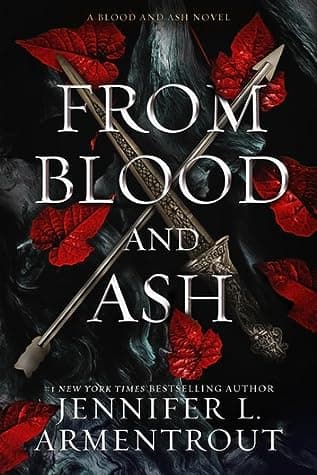
- From Blood and Ash
Jennifer L. Armentrout
4.4 (27k) average on GoodreadsFantasyCompared to "From Blood and Ash," "The Turning" shares the common thread of a powerful female protagonist entangled with a mysterious, often dangerous male lead in a world teetering on the brink. However, Bane's narrative often delves deeper into the psychological darkness and moral ambiguity of its characters and world. Armentrout's series, while featuring significant violence and high stakes, often foregrounds the sensual and romantic elements with a more immediate, fast-paced plot. Bane's prose is generally more dense and descriptive, building a heavier, more oppressive atmosphere, whereas Armentrout's is more accessible and dialogue-driven, making her books feel quicker to consume. "The Turning" often feels like a descent into a specific kind of darkness, while "From Blood and Ash", despite its dark elements, maintains a more pervasive sense of epic fantasy adventure and discovery.
- Harry Potter and the Sorcerer's Stone
J.K. Rowling
4.5 (7M) average on GoodreadsFantasyRescued from a miserable life under the stairs, an orphaned boy discovers he's a wizard destined for a magical school, where he uncovers a dangerous secret tied to the dark wizard who murdered his parents.
- The Hunger Games
Suzanne Collins
4.3 (6.4M) average on GoodreadsFantasyIn a future where children fight to the death on live television, Katniss Everdeen volunteers for the arena, turning a death sentence into a fight for survival and a spark of rebellion.
- 1984
George Orwell
4.2 (3.1M) average on GoodreadsPoliticsIn a future where surveillance and thought control are absolute, a man's search for truth clashes with the Party, showing that hope can be a form of rebellion.
- Divergent
Veronica Roth
4.2 (2.9M) average on GoodreadsFantasyIn a society divided by virtues, a sixteen-year-old's difference from the norm starts a rebellion that threatens her world.
- The Hobbit, or There and Back Again
J.R.R. Tolkien
4.3 (2.9M) average on GoodreadsFantasyA comfort-loving hobbit named Bilbo Baggins is whisked away by a mischievous wizard and a band of dwarves on an unexpected journey to reclaim stolen treasure from a fearsome dragon, discovering courage and a magical ring along the way.





Enjoyed the summary?
A summary gives you the shape of the book. The book itself has the detail, the examples and the voice.
Find The Turning on AmazonAs an Amazon Associate, BookBrief earns from qualifying purchases. How we're funded